
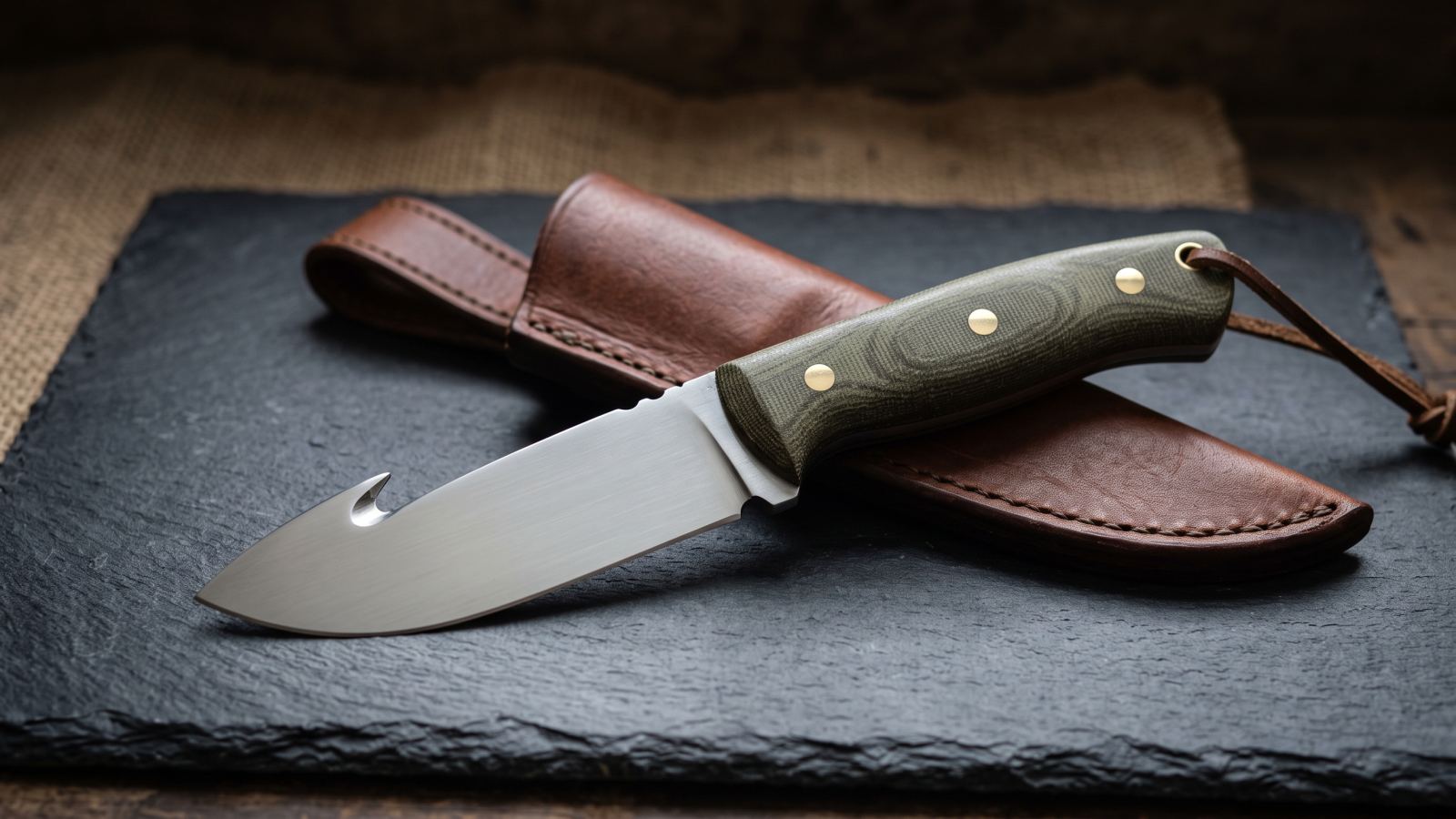
Short answer: a gut hook is a small sharpened hook ground into the spine of a hunting knife, near the tip. You slip the point of the hook under the hide of a downed animal and pull, and it unzips the belly without your blade reaching the stomach or intestines. That is the whole job. It is very good at that one job, mildly annoying for everything else, and it needs a round file or a tapered ceramic rod to sharpen because a flat stone cannot get inside the curve.
What a gut hook is for
Field dressing has one moment that ruins the meat if you get it wrong. You have to open the abdominal wall from sternum to pelvis without puncturing the paunch or the intestines behind it. Nick either one and the carcass gets contaminated, the smell tells you immediately, and you spend the next hour doing damage control in the dark.
The traditional method is to pinch the hide up, make a small entry cut, then run two fingers into the opening as a guide and cut along them with the edge facing up. It works. It also requires two hands, decent light and a steady animal, and if you are alone on a slope with a deer that keeps rolling, it is harder than it sounds.
A gut hook replaces that with a pulling motion. Insert the hook point through the initial cut, hook the hide, pull toward the pelvis. The sharpened inside curve cuts hide and muscle from underneath. The blunt outer curve rides against the organs and pushes them away instead of cutting them. One hand, one motion, no fingers in the way.
Anatomy of the hook
| Part | What it does |
|---|---|
| The throat | The narrow gap you feed hide into. Too narrow and it clogs with hair; too wide and it does not grab. Most working hooks sit around 1/8 to 3/16 in at the mouth. |
| The inside curve | The sharpened part. This is the only cutting surface on the hook. |
| The outer nose | Deliberately blunt and rounded. It is what keeps the hook riding above the viscera. |
| Position on the spine | Usually 1 to 1.5 in back from the tip, so the point is still available for detail work. |
The proportions matter more than the presence of a hook. A hook cut too deep into a thin blade leaves a weak spot; a hook with a fat, rounded throat pushes hide ahead of it instead of cutting through it and just packs with hair. When you look at a gut hook knife, look at the mouth of the hook first.
 Chihuahuan Snake 8.7 Inches Long 4.6 Inches Blade 5.6 Ounce Damascus Gut Hook Hunting Fixed Blade Knife Damascus Hand Made World Class USA Made | BMK-167
 Slatra Damascus Gut Hook Knife 8.7 Inches Long 4.6 Inches Blade 5.6 Ounce Damascus Hunting Fixed Blade Knife Damascus Hand Made World Class Knives USA Made | BMK-163
 Vermillion Coil Handmade Damascus Gut Hook Hunting Knife with Rosewood Handle, Brass Bolster & Mosaic Pins | Collector Hunting Gift | BMK-1179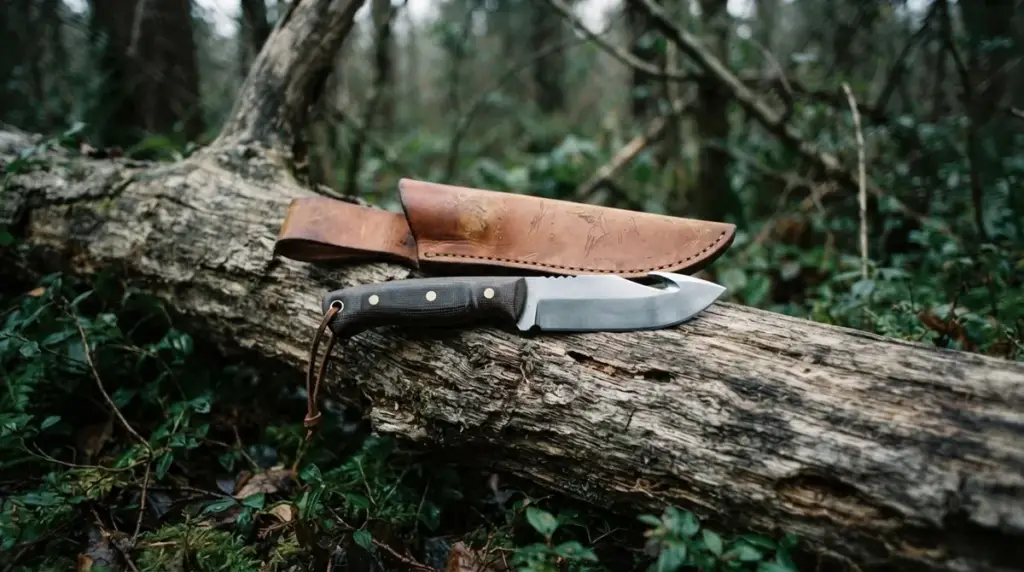
When you actually want one
Be honest about the animal.
| Situation | Gut hook? | Why |
|---|---|---|
| Whitetail, mule deer, antelope | Yes | Thin hide, this is the animal the tool was designed around |
| Hunting alone, in the dark, on a slope | Yes | The one hand pull is genuinely safer than fingers-as-guide |
| Elk, moose, anything with thick hide | Sometimes | The hook works but clogs faster; a well practised knife hand is quicker |
| Hogs | Not really | Coarse bristle packs the throat almost immediately |
| Caping for a shoulder mount | No | Detail work around the head needs the tip, not a hook |
| Small game, birds | No | The hook is bigger than the job |
| General camp and EDC use | No | The hook catches on sheath mouths, pockets and your own forearm |
That last row is the honest downside and nobody selling gut hooks likes writing it. A hook on the spine snags. It catches the welt of a sheath on the draw, it will grab a jacket sleeve, and it makes batoning or any spine-loaded task a bad idea. This is a specialist tool that lives in a hunting pack, not a knife you carry every day.
Gut hook or no gut hook
The argument against is that a sharp knife and practice do the same job, and the people who make that argument are usually right about themselves. Guides who dress twenty animals a season have the entry cut, the finger guide and the sweep down to muscle memory, and a hook is just a snag point to them.
The argument for is that most hunters take one or two animals a year, often in poor light, often tired, often alone. Under those conditions a tool that removes the possibility of puncturing the paunch is worth carrying even if it is theoretically redundant. Redundant and forgiving are not the same thing.
Our position, for what it is worth: if you dress fewer than five animals a season, carry a gut hook. If you dress more than that, you already know which side you are on. The compromise most people land on is a hunting knife with a hook on the spine and a proper drop point below it, which is exactly what a gut hook hunting knife is — one knife that does the zip and then does the skinning too. That is different from a dedicated skinning knife, which trades the hook for a deeper belly.
How to use one without making a mess
- Roll the animal onto its back and, if the ground allows, get the head slightly uphill.
- Make a small starter cut through the hide only, just below the sternum. Two inches is plenty. Use the tip, not the hook.
- Turn the knife so the hook faces down into the cut and the spine of the blade leads.
- Slide the hook in until the hide sits in the throat, lift slightly so the blunt nose stays against the hide and away from the organs, and pull steadily toward the pelvis.
- If it stops, do not force it. It has packed with hair or hit the sternum cartilage. Clear the throat with a thumbnail and restart.
- Swap back to the blade for the diaphragm and the pelvis. The hook is finished at that point.
The single most common error is pushing rather than pulling. A gut hook cuts on the pull. Push it and you are dragging a blunt curve through hide and wondering why nothing is happening.
Sharpening the hook
This is where most gut hook knives quietly become decorative. A bench stone cannot reach the inside of a curve, so people simply stop maintaining it, and after two seasons the hook tears hide instead of cutting it.
What works:
- A round or half-round needle file — the cheapest answer. A chainsaw file in the 4 to 5 mm range fits most hook throats.
- A tapered ceramic rod — the round rod from a crock stick set. Slower than a file, better finish, hard to over-cut.
- Wrapped abrasive — 400 to 600 grit wet and dry paper wrapped around a wooden dowel, for the final polish.
Work only the inside curve, matching the existing angle, and stroke in one direction from the throat outward. Never touch the outer nose. That surface is supposed to be blunt, and every person who has "sharpened the whole hook" has built themselves a tool that cuts intestines. Finish by dragging the hook across a folded piece of leather to knock the burr off.
Two or three passes with a file before the season, and again after each animal, is the whole maintenance programme. Our general notes on sharpening a knife cover the straight edge below the hook.
What to look for when buying
| Check | What good looks like |
|---|---|
| Steel | D2 at 58 to 62 HRC, or a hardened Damascus at 58 to 60 HRC. Field dressing dulls edges fast and a soft blade will not last one animal. |
| Hook throat | Open enough to see daylight through, ground cleanly, no burr left inside from the grinder |
| Tang | Full tang. A hook is a pulling tool and pulling loads the joint between blade and handle. |
| Handle | Micarta, stabilised wood or a textured natural material. It will be handled with wet, bloody hands. |
| Sheath | Leather with a deep welt, or the hook will chew the mouth of the sheath within a season. |
| Blade length | 3.5 to 4.5 in. Longer is unwieldy inside a body cavity. |
On steel specifically: our knife steel chart compares D2, 440C, Damascus and VG-10 side by side, and full tang versus partial tang explains why the tang matters more on this shape than most.
Questions people ask
What is a gut hook knife?
A hunting knife with a small sharpened hook ground into the spine near the tip. The hook is used to open the abdominal wall of a downed animal by pulling, so the blade never has to be pointed at the stomach or intestines.
What is a gut hook used for?
Field dressing, and almost nothing else. It unzips hide and muscle from the sternum to the pelvis in one pull without puncturing the viscera. Some people also use it for cutting cord or seatbelt webbing, which it does well by accident.
Do you really need a gut hook?
No. A sharp knife and the two finger guide method do the same job. What a gut hook buys you is forgiveness — it makes the mistake harder to make when you are tired, alone or working in the dark. If you dress one or two animals a year, that is worth carrying.
How do you sharpen a gut hook?
With a round tool, not a flat one. A 4 to 5 mm round needle file or chainsaw file, or the tapered round rod from a ceramic sharpening set. Work only the inside curve, stroke outward from the throat, and leave the blunt outer nose alone.
What is the best gut hook knife?
The one with a clean, open hook throat, a full tang, a hardened blade at 58 HRC or better, and a handle you can hold with wet hands. Everything else is preference. Blade length between 3.5 and 4.5 inches suits deer sized animals best.
Is a gut hook good for skinning?
The hook itself is not. The blade below it usually is. A gut hook hunting knife is a two-in-one: hook for the opening cut, drop point belly for the skinning. If skinning is the main task, a dedicated skinning knife with a deeper belly does it better.
Can you carry a gut hook knife every day?
You can, but the hook snags sheaths, pockets and sleeves, and it makes the spine of the blade unusable for anything else. Most people keep it in the hunting pack and carry something plainer day to day.
What is a hook knife?
The term covers two different tools. In hunting it means a gut hook knife as described here. In woodworking it means a curved spoon carving knife, which is a completely different object. If you arrived here looking for the carving tool, this is not it.
More reading. Choosing a skinning knife, what makes a hunting knife good, and blade shapes explained.
Shop the knives
Chihuahuan Snake 8.7 Inches Long 4.6 Inches Blade 5.6 Ounce Damascus Gut Hook Hunting Fixed Blade Knife Damascus Hand Made World Class USA Made | BMK-167Slatra Damascus Gut Hook Knife 8.7 Inches Long 4.6 Inches Blade 5.6 Ounce Damascus Hunting Fixed Blade Knife Damascus Hand Made World Class Knives USA Made | BMK-163Vermillion Coil Handmade Damascus Gut Hook Hunting Knife with Rosewood Handle, Brass Bolster & Mosaic Pins | Collector Hunting Gift | BMK-1179More from the workshop
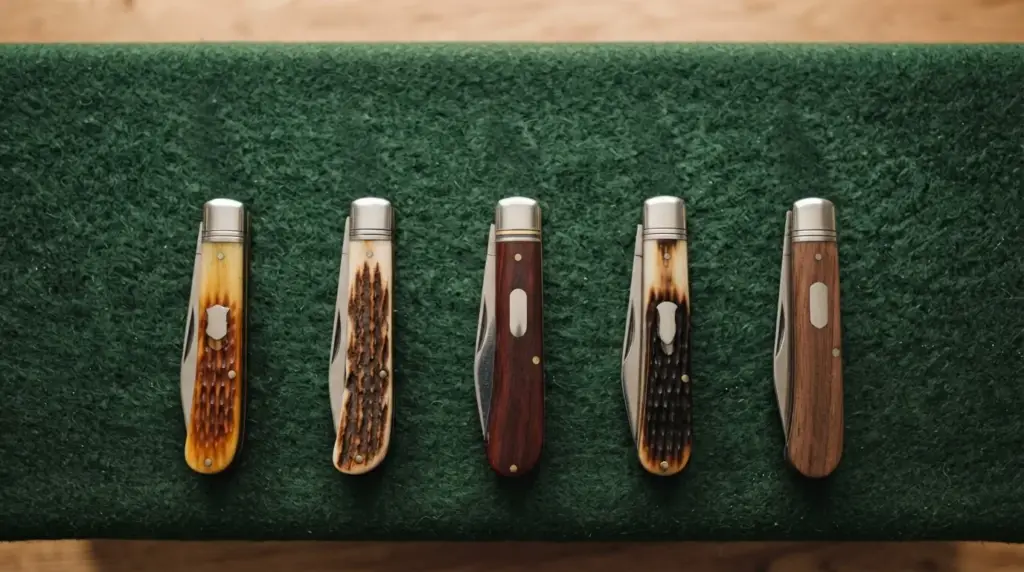
Multi Blade Pocket Knives
Stockman, trapper, barlow and the rest — blade counts, what each blade is for, and how a slipjoint actually holds open.
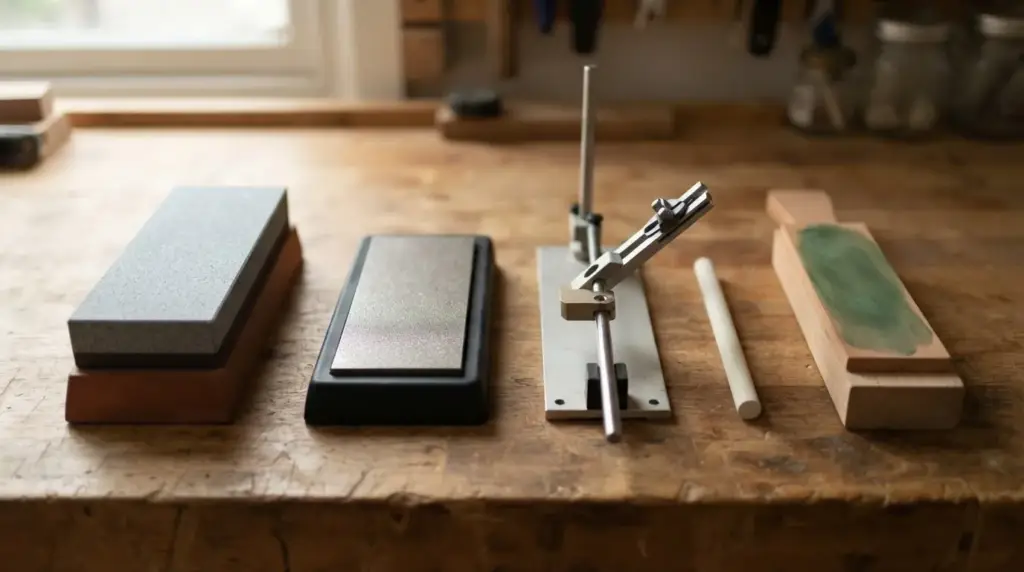
Whetstone, Pull Through, Guided or Rolling: Which Sharpener
Six sharpening systems graded on cost, steel removed per session and who should buy which.
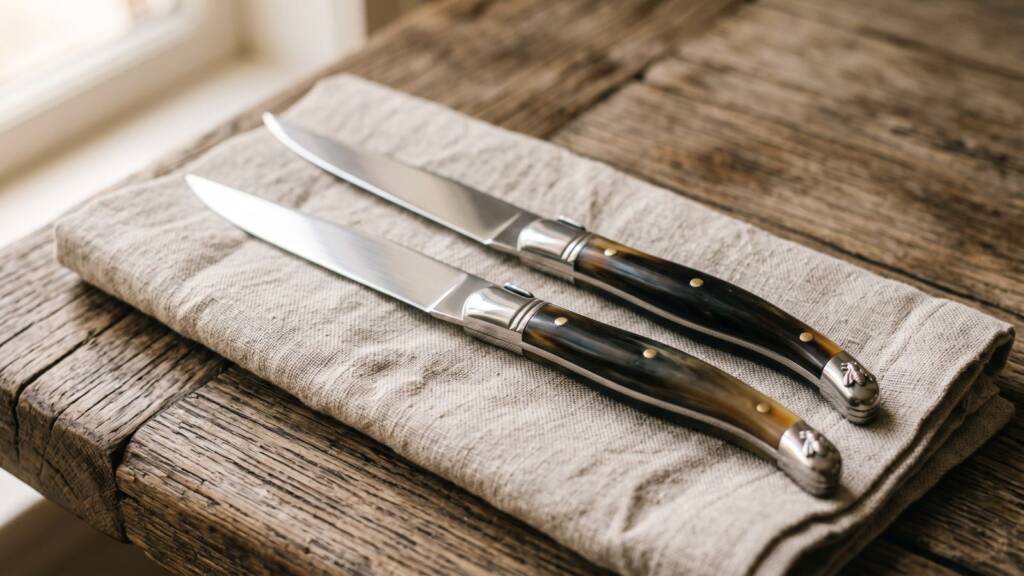
Laguiole Knives Explained
A pattern, not a protected origin. The bee, the cross, the court cases and how to tell a good one.
