
The Laguiole pattern comes from the village of Laguiole on the Aubrac plateau in southern France, where from about 1829 local smiths made a slim folding knife for shepherds and cattlemen. The original was a simple slip joint with a yatagan blade, a slightly curved handle that sits along the hand rather than across it, and a decorative forged shape at the top of the spring. That shape is the reason people argue about Laguiole knives to this day.
The bee, and why it matters. The small forged form at the top of the spring is the pattern signature. Some makers call it a bee, others a fly. On a properly built knife it is either forged as part of the spring itself or cut and fitted by hand, so it sits flush and shares the same finish as the metal around it. On a cheap knife it is stamped from thin sheet and glued on.
-
Caramel 4 Inches Closed Damascus Laguiole Knife Handmade Damascus Pocket Knives | BMK-502
Original price was: $152.00.$122.00Current price is: $122.00. -
Magnum 4.75 Inches Damascus Laguiole Knife Handmade Damascus Pocket Knives French Knife Steak Knife USA Made | BMK-501
Original price was: $152.00.$122.00Current price is: $122.00. -
Hand Forged Steel Laguiole Steak Knife Handmade Pocket Knives French Knife Steak Knife USA Made Wood Handle | BMK-620
Original price was: $186.00.$149.00Current price is: $149.00. -
Stag Horn Hand Forged Steel Laguiole Steak Knife Handmade Pocket Knives French Knife Steak Knife USA Made | BMK-614
Original price was: $218.00.$174.00Current price is: $174.00. -
Toulouse Hand Forged Steel Laguiole Steak Knife Handmade Pocket Knives French Knife Steak Knife USA Made | BMK-626
Original price was: $168.00.$134.00Current price is: $134.00. -
Bordeaux Hand Forged Steel Laguiole Steak Knife Handmade Pocket Knives French Knife Steak Knife USA Made | BMK-616
Original price was: $142.00.$114.00Current price is: $114.00. -
Louvre Museum Hand Forged Steel Laguiole Steak Knife Handmade Pocket Knives French Knife Steak Knife USA Made Wood Handle | BMK-621
Original price was: $146.00.$117.00Current price is: $117.00. -
Marseille Hand Forged Steel Laguiole Steak Knife Handmade Pocket Knives French Knife Steak Knife USA Made Buffalo Handle | BMK-624
Original price was: $180.00.$144.00Current price is: $144.00. -
French Wine Hand Forged Steel Laguiole Steak Knife Handmade Pocket Knives French Knife Steak Knife USA Made Ram Horn Handle | BMK-623
Original price was: $186.00.$149.00Current price is: $149.00. -
Beautiful Hand Forged Steel Laguiole Steak Knife Handmade Pocket Knives French Knife Steak Knife USA Made | BMK-619
Original price was: $146.00.$117.00Current price is: $117.00. -
French Cuisine Hand Forged Steel Laguiole Steak Knife Handmade Pocket Knives French Knife Steak Knife USA Made | BMK-617
Original price was: $186.00.$149.00Current price is: $149.00. -
Hand Forged Steel Laguiole Steak Knife Handmade Pocket Knives French Knife Steak Knife USA Made | BMK-618
Original price was: $186.00.$149.00Current price is: $149.00. -
Hand Forged Steel Laguiole Steak Knife Handmade Pocket Knives French Knife Steak Knife USA Made | BMK-613
Original price was: $136.00.$109.00Current price is: $109.00. -
Lyon Hand Forged Steel Laguiole Steak Knife Handmade Pocket Knives French Knife Steak Knife USA Made | BMK-625
Original price was: $136.00.$109.00Current price is: $109.00. -
French Riviera Hand Forged Steel Laguiole Steak Knife Handmade Pocket Knives French Knife Steak Knife USA Made | BMK-615
Original price was: $142.00.$114.00Current price is: $114.00. -
Hand Forged Steel Laguiole Steak Knife Handmade Pocket Knives French Knife Steak Knife USA Made Wood Handle | BMK-622
Original price was: $146.00.$117.00Current price is: $117.00.
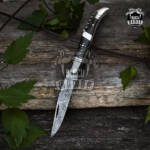
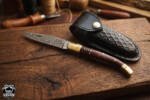
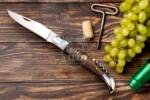
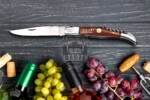

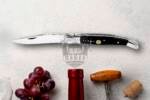
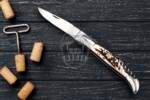
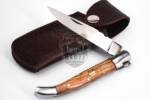
Run a thumbnail along the join: if you feel a step, or if the piece is a different colour or brightness from the spring, it was added afterwards.
Laguiole is not a protected name. This is the single most important thing to understand before you spend money. Laguiole is a place, not a trademark, and French courts have repeatedly confirmed that no maker owns the word. Any factory anywhere in the world can print Laguiole on a box, and most of the knives sold under the name today are made overseas, finished quickly and sold on the strength of the word alone. Judge the knife, never the label.
How to spot a poorly made one. Open and close it slowly and watch four things. The blade should centre between the liners rather than rub one side. The spring should hold the blade firmly open and give a positive half-stop, not flop. The bolsters and handle scales should meet with no gaps you can catch a nail in. And the grind lines should run straight and even to the tip, because wandering grind lines are the first thing that goes when a knife is finished at speed.
What we make. Ours are hand-forged in our Memphis, Tennessee workshop from layered 1095 and 15N20 Damascus, oil quenched to 58 to 60 HRC and acid etched, with handles cut and fitted from ram horn, buffalo horn, olive wood, rose wood and snake wood. Bolsters and springs are fitted in our own shop rather than assembled from bought-in parts, and the pattern on every blade is different because it is created in the fire rather than printed on.
Is a Laguiole a locking knife? Traditionally no. It is a slip joint, held open by spring tension. That is part of why it is legal to carry in more places than a locking folder, and part of why it feels lighter in the pocket.
How do I close it safely? Keep your fingers clear of the blade path and let the spring take the weight. Do not snap it shut, which peens the tang over time.
Care. Damascus is high carbon, not stainless. Wipe the blade dry after use, put a light film of mineral oil on it every few weeks, and add a drop to the pivot so the action stays smooth. Keep it out of the dishwasher, and store it outside any leather pouch so moisture cannot sit against the steel.
What comes in the box? The knife, a certificate of authenticity, care instructions, free expedited US shipping and a lifetime warranty on our workmanship.
Laguiole is not a protected name. This is the single most important thing to understand before you spend money. Laguiole is a place, not a trademark, and French courts have repeatedly confirmed that no maker owns the word. Any factory anywhere in the world can print Laguiole on a box, and most of the knives sold under the name today are made overseas, finished quickly and sold on the strength of the word alone. Judge the knife, never the label.
How to spot a poorly made one. Open and close it slowly and watch four things. The blade should centre between the liners rather than rub one side. The spring should hold the blade firmly open and give a positive half-stop, not flop. The bolsters and handle scales should meet with no gaps you can catch a nail in. And the grind lines should run straight and even to the tip, because wandering grind lines are the first thing that goes when a knife is finished at speed.
What we make. Ours are hand-forged in our Memphis, Tennessee workshop from layered 1095 and 15N20 Damascus, oil quenched to 58 to 60 HRC and acid etched, with handles cut and fitted from ram horn, buffalo horn, olive wood, rose wood and snake wood. Bolsters and springs are fitted in our own shop rather than assembled from bought-in parts, and the pattern on every blade is different because it is created in the fire rather than printed on.
Is a Laguiole a locking knife? Traditionally no. It is a slip joint, held open by spring tension. That is part of why it is legal to carry in more places than a locking folder, and part of why it feels lighter in the pocket.
How do I close it safely? Keep your fingers clear of the blade path and let the spring take the weight. Do not snap it shut, which peens the tang over time.
Care. Damascus is high carbon, not stainless. Wipe the blade dry after use, put a light film of mineral oil on it every few weeks, and add a drop to the pivot so the action stays smooth. Keep it out of the dishwasher, and store it outside any leather pouch so moisture cannot sit against the steel.
What comes in the box? The knife, a certificate of authenticity, care instructions, free expedited US shipping and a lifetime warranty on our workmanship.
How to Spot a Real Laguiole
| Detail | What to Look For | Why It Matters |
|---|---|---|
| The bee | Forged as part of the spine spring, not a glued-on badge | The classic mark of proper Laguiole work |
| The spine | Hand-filed decorative chiseling along the spring | Hours of handwork no factory fakes well |
| The blade | Slim, upswept point; full flat grind | A slicer, not a pry bar, that is the Laguiole way |
| The handle | Solid horn, bone or dense hardwood scales | Plastic means somebody cut a corner |
FAQs
What is a Laguiole knife? A slim French pocket-knife pattern from the village of Laguiole, made since the 1820s, famous for its upswept blade, decorated spine, and the forged bee on the spring. “Laguiole” names the pattern, not a brand, which is why quality varies so wildly and the details in the table above matter.
How do you pronounce Laguiole? “Lah-yol”, the g goes quiet. Say it however you like in your own kitchen; the knife will not judge you.
What makes a French Laguiole a Laguiole
Here is the thing nobody selling French knives likes to say out loud: Laguiole is not a protected name. It is a village in the Aveyron and a knife pattern that came out of it around 1829, and anyone anywhere may stamp the word on a folder. A large share of the French laguiole knives sold worldwide are made far from France. So the honest question is not where the word comes from, it is what the knife actually is.
The pattern has four tells. The slim, gently curving handle that tapers to a point. The bee, the small forged shape where the blade spring meets the handle, which on a good knife is forged as part of the spring and on a cheap one is a stamped chip glued on. The shepherd's cross, a row of pins set into the handle so a shepherd could stand the closed knife in the ground and pray at it. And the yatagan blade profile, that long slender belly which is why a Laguiole slices better than its size suggests.
Ours are forged in our own American shop in the French pattern, with a forged bee and a hand-set cross. We will not tell you they were made in Thiers, because they were not. We will tell you they are made by hand, by people whose names we know, which is more than most French knives on the market can claim.
Are these real French Laguiole knives? They are real Laguiole knives, forged in the French pattern, made in the USA rather than in France. Laguiole is a pattern name, not a protected origin, and a great deal of what is sold as French laguiole is not French either. Ours we can account for start to finish.
What is the bee on a Laguiole knife? The small shape where the spring meets the handle. On a properly made knife it is forged as one piece with the spring; on a cheap one it is a separate piece glued or soldered on. Lift the blade halfway and look at the joint.
What is the shepherd's cross? A row of pins set into the handle in the shape of a cross, so a shepherd in the Aubrac could close the knife, push it into the ground and use it as an altar. It is decorative now, and still the fastest way to spot the pattern.
Is a Laguiole a good everyday pocket knife? Yes, with one caveat: most are slip joints, so there is no lock. That makes them legal in more places and less suited to hard prying. For a table, a picnic or a pocket, few knives cut better for their weight.
Do Laguiole knives make a good gift? They are one of our most engraved items. The slim handle takes initials or a date cleanly, added as a paid option before checkout.
More reading
See the folding pocket knives, the multi blade pocket knives or the steak knives for a matching table set.
Buying for a wedding party? The groomsmen knife sets come as six matched knives, 15% less than buying them singly, and each one can carry its own engraved name.
