

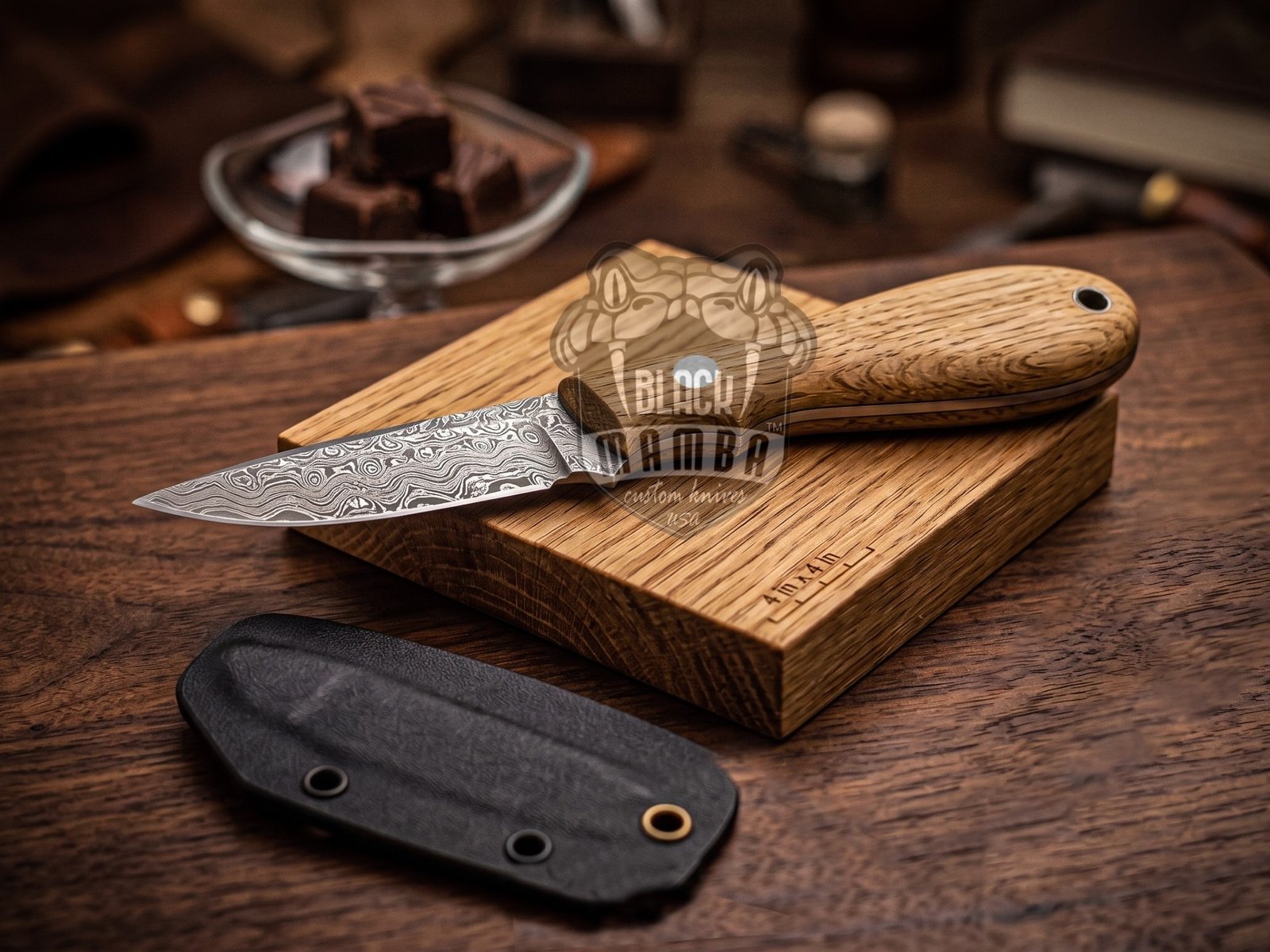
Short answer: never in a drawer loose, and never in a leather sheath long term. A magnetic strip, a slotted block or edge guards will keep an edge sharp for months. The two things that ruin stored knives are contact with other metal and trapped moisture.
The two enemies
Contact. A drawer full of loose knives means every edge is grinding against other steel each time you open it. That single habit dulls knives faster than actual cutting does.
Moisture. Anything that holds damp against steel will corrode it. Leather is the worst offender, and it is the one everyone gets wrong.
Kitchen options, ranked
| Magnetic strip | Best overall. Nothing touches the edge, blades dry in open air, and you can see what you are reaching for. Place the spine on first and roll the blade down, never slap the edge on. |
| In-drawer tray | Each knife in its own slot. Almost as good as a strip and keeps the counter clear. |
| Slotted block | Fine, with one caveat: insert spine down. Sliding the edge along the slot dulls it. Blocks also collect crumbs and hold damp. |
| Edge guards | Cheap, effective, and the right answer if you only own a few knives. Only ever on a completely dry blade. |
| Loose in a drawer | The worst option, and also how most people cut themselves reaching in. |
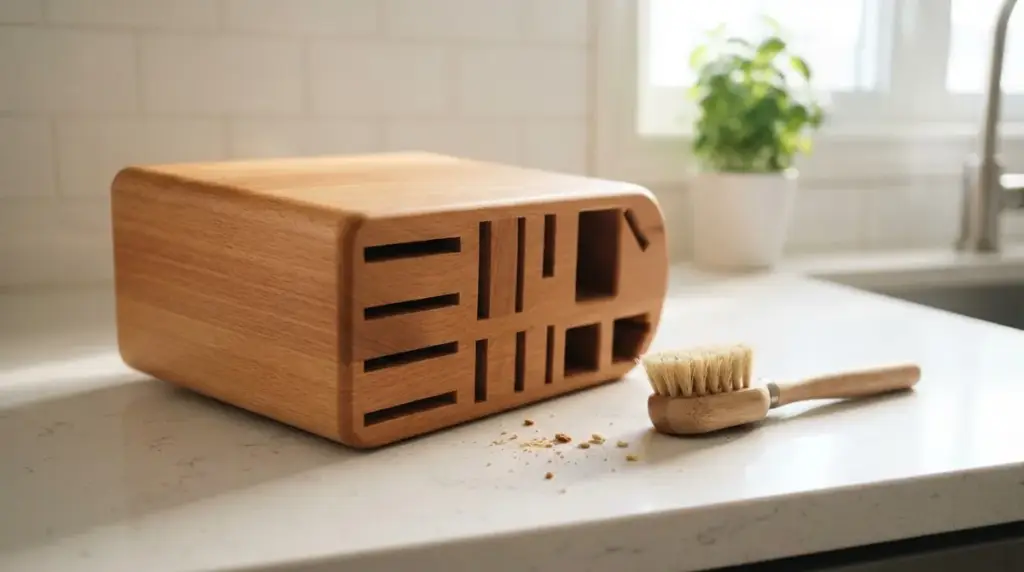
Cleaning a knife block
Empty it, turn it upside down and shake the crumbs out, then use a bottle brush or compressed air in each slot. Wash the outside with a damp cloth, and let it dry completely upside down for a day before knives go back in. Damp slots are how blades corrode inside a block that looks clean.
Do this twice a year. Never put a wet knife back into a block.
Sheaths and long term storage
This is where good knives are lost. Leather is tanned with acidic compounds and it holds moisture. A carbon blade left in a leather sheath over a winter comes out spotted no matter how well you oiled it.
The sheath is for carrying, not for storing. For anything going away for months:
Clean and dry the blade completely. Wipe on a light film of oil. Wrap in paper, or in a cloth roll, never in plastic film or an airtight bag, because those trap condensation against the steel. Store somewhere with stable temperature; a garage that swings from cold to warm produces condensation on every cycle.
Folding knives
Store folders closed and dry, with a drop of oil on the pivot. Do not store one open under spring tension for years. A pocket knife that sits in a jeans pocket in the wash comes out with water in the pivot, and that is the most common way an EDC knife rusts from the inside.
Households with children
A magnetic strip is only safe out of reach. In-drawer trays with a drawer lock, or a block on a high shelf, are the better answer. Whatever you choose, keep it consistent so nobody is ever feeling around blind for a handle.
How to properly store knives, in one pass
The whole method is four steps, and every storage decision below is downstream of them. Clean the blade the moment you finish with it, particularly after anything acidic or salty. Dry it completely, including the bolster and the gap where blade meets handle, which is where water hides. Give it its own space, so no edge touches another piece of metal. Keep that space dry, at stable temperature, away from steam.
Get those four right and the method barely matters. Get them wrong and the best rack in the world will not save the edge.
Wall racks, rolls, cases and saya
| Wall rack | A slotted or dowelled shelf. Air on all sides, nothing rubbing the edge, and it keeps the counter clear. Mount it away from the cooker and the sink, not between them. |
| Knife roll | Made for carrying, and good at it. Cotton or canvas, one knife per pocket, and only ever rolled dry. A roll left in a car boot is a damp box. |
| Hard case | Best for a knife that travels or a collection piece. Foam holds the blade still. Add a silica gel sachet and replace it once a year, because a sealed case with damp inside it is worse than an open drawer. |
| Saya | A close-fitting wooden sheath, traditionally magnolia. It breathes, it does not hold acid the way leather does, and it protects the edge in a drawer. The one rule is that the blade goes in bone dry. |
| Blade folio or slip | Felt or leather-faced sleeves for display knives. Fine for weeks, poor for years, for the same reason a leather sheath is. |
Where not to store a knife
Location does more damage than method. Above the hob is the worst spot in a kitchen: every pan sends steam and vaporised fat straight up onto the steel, and the fat goes sticky and then rancid. Beside the dishwasher is the second worst, because the door vents a cloud of hot damp air at exactly blade height every time it finishes.
Add to the list a damp basement, a windowsill in direct sun, an unheated garage or shed over winter, and the back of a car. Anywhere the temperature swings across the day will condense water onto cold steel, and it does it repeatedly, night after night.
Humidity, and how to control it
Steel corrodes as a function of moisture in the air, not of time. Around 45 to 55 per cent relative humidity is comfortable for both knives and handles. Much drier and wooden scales shrink away from the tang; much wetter and carbon steel starts spotting even under oil.
A cheap hygrometer in the drawer or cabinet tells you more than any amount of guessing. If the number stays high, a few silica gel sachets in a closed drawer or case will bring it down, and they can be dried out in a low oven and reused. In a genuinely damp room, a small dehumidifier is the honest fix.
Long term storage for carbon and Damascus blades
For anything going away for a season or longer, the sequence is fixed. Wash and dry completely. Wipe the whole blade, including the tang and the ricasso, with a light film of a suitable knife oil. Wrap in plain paper or a cotton cloth. Do not use plastic film, cling wrap or a sealed food bag, because any moisture already present has nowhere to go and will pit the blade under the wrapper.
Two additions are worth the small cost. VCI paper, the treated brown paper used for tooling, releases a vapour that lays a microscopic protective layer over the steel and will hold a blade for a year or more. Silica gel inside the box handles whatever humidity the paper does not. Check the blade every few months and re-oil if the film has gone. Full routine for pattern-welded steel is in the Damascus care guide.
Storing knives with children in the house
Assume a child will find whatever you put away, and store accordingly. A magnetic strip needs to be above adult shoulder height and not above a chair, a bench or anything climbable. A block on a high shelf should sit back from the edge so it cannot be pulled down by the handles.
An in-drawer tray with a proper drawer lock is the most reliable answer in a family kitchen, because it works when you are not in the room. Keep the arrangement consistent so nobody ever reaches into a drawer blind, and teach the rule that a knife is carried by one person, blade down, and put straight back rather than left on a counter or in a sink of washing up.
Travel and transport
In a bag, the blade needs two things: it must not move, and it must not be reachable by a hand going in for something else. A guard taped shut, a roll, or a hard case all achieve that. A sheath alone does not, because a knife slides out of most sheaths in a bag that has been kicked around.
For flying, knives go in checked baggage, never in a carry-on, and rules vary by airline and by country. Carry rules on the ground vary too, so check your local law before travelling with a knife. That is a plain caution, not legal advice.
After a journey, take the knife out, wipe it down and let it sit in open air before it goes back into storage. Bags sweat, and a blade that has been sealed in one for a day comes out with more moisture on it than you would expect. If the pivot on a folder has picked up grit on the way, see how to clean a pocket knife.
Questions people ask
Do magnetic strips scratch blades?
A wooden-faced magnetic strip does not. A bare metal one can, and it is also easy to clack a blade onto. Roll the spine on first either way.
Is a knife roll good for storage?
For transport, excellent. For long storage, only if it is cotton or canvas and kept somewhere dry. Never roll a damp knife.
How often should stored knives be checked?
Every few months. Ten seconds to look for spotting, and re-oil if the film has dried off. See the knife oil guide.
What if it has already spotted?
Reversible if caught early. See how to remove rust from a knife.
What is the best way to store knives at home?
A magnetic strip mounted away from the cooker and the sink, or an in-drawer tray with one slot per knife. Both keep each edge clear of other metal and let the blade dry in open air, which are the only two things that matter. Everything else is a variation on those, chosen to fit your kitchen and whether children are in the house.
How should I store knives in a small kitchen with no counter space?
Go vertical or go inside a drawer. A wall rack or magnetic strip on a free stretch of wall costs no counter at all, provided it is not above the hob or beside the dishwasher. Failing that, edge guards in a shallow drawer take almost no room and cost very little. Both beat stacking knives in a jar or a utensil pot, which blunts tips.
Can I keep steak knives in the same block as my kitchen knives?
Yes, as long as each one has its own slot and goes in spine first. The problem with a shared block is never the mix of knives, it is people pushing a wet blade into a slot that never dries out. Dry every knife fully, and clean the block twice a year by shaking out the crumbs and leaving it upside down overnight.
Can I store knives in a garage or a shed?
Not if you want them in good condition next year. An unheated space swings from cold to warm across every day, and each swing condenses moisture onto the steel. Carbon and Damascus blades will spot within a season. If you have no choice, use a sealed hard case with silica gel inside it and check the blades every couple of months.
Should a Damascus knife be stored differently?
Same principles, less tolerance for mistakes. Pattern-welded 1095 and 15N20 is carbon steel, so it wants a film of oil, plain paper or cloth rather than plastic, and a stable dry spot. Never leave it in a leather sheath between uses. A patina is normal and harmless; orange spotting is not, and it means moisture reached the blade.
Is it safe to store a knife in its sheath?
For a few days between uses, yes. For months, no, if the sheath is leather. Leather is tanned with acidic compounds and holds damp against the steel, so blades come out of long storage spotted even when they were oiled going in. Use the sheath for carrying, and a wooden saya, a cloth wrap or a rack for storing.
More from the workshop
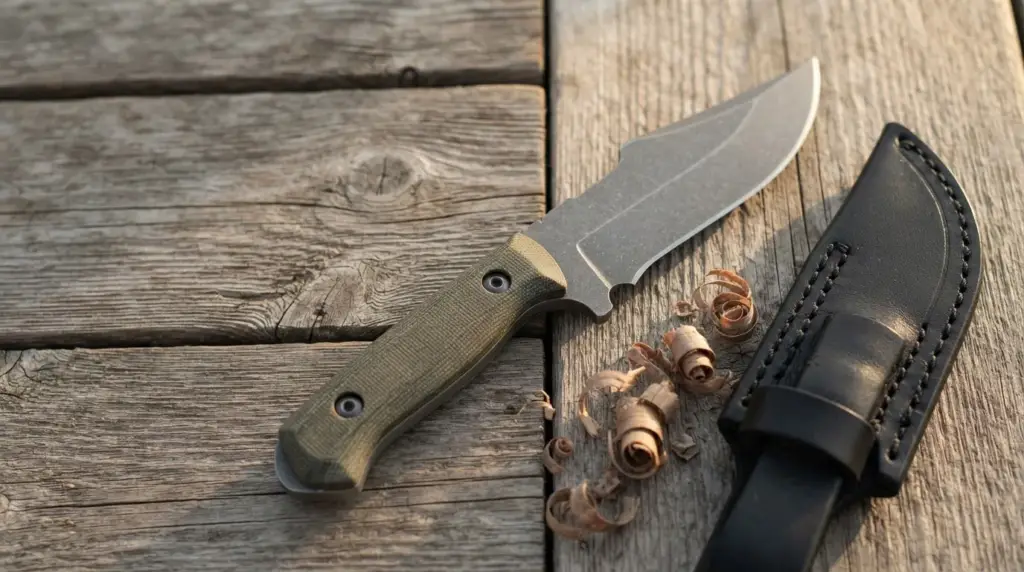
Tracker Knives: The Double Edge Profile and What It Is Good At
The tracker profile explained zone by zone, what it is good at, and what two lighter knives do better.
Fishing Knives: Bait, Fillet, Folding and Saltwater
Sizing a fillet blade, why carbon Damascus loses to salt water, and what our seven fishing listings really are.
Damascus Tomahawks: Head Weight, Haft and What They Chop
What separates a tomahawk from a hatchet, why head weight matters, and the lengths, steels and prices of our ten.
