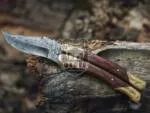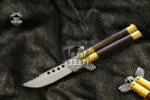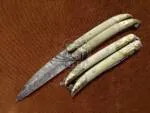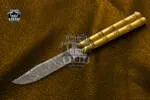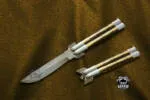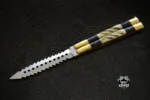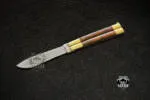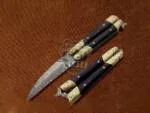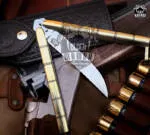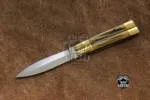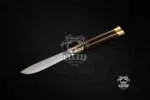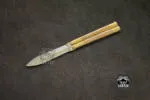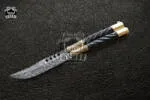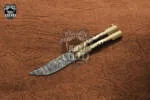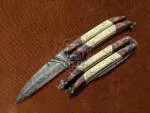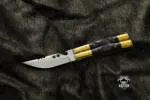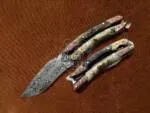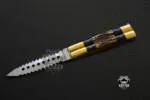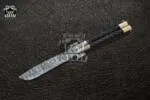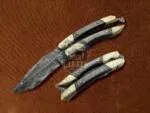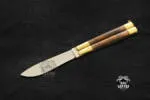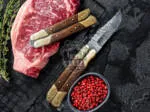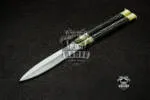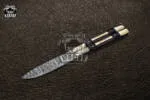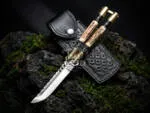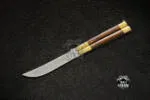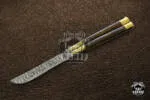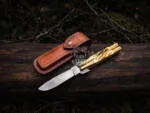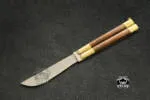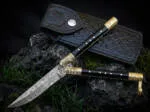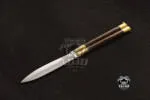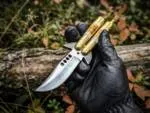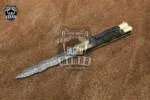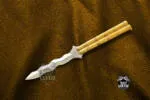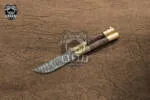
Brass is the traditional balisong handle material and the reason a Batangas-pattern knife feels the way it does. It is heavy for its size, so the handles carry momentum through a rollover and settle into the palm instead of chattering, and it takes a polish that deepens rather than dulls with handling. Every brass balisong here is built in our Memphis workshop with hand-fitted bolsters, pins set by hand and a latch that closes with a clean click.
Why choose brass over stainless? Weight and feel. Brass handles are heavier, which slows the swing slightly and makes the knife feel more planted in the hand. Stainless is lighter and quicker. If you are buying your first balisong to flip, most people find brass easier to control.
Does brass tarnish? Yes, and that is normal. Brass develops a warm patina from skin oils. Leave it if you like the look, or bring the shine back with a soft cloth and a little metal polish. Keep polish away from the blade etch.
What is inside the handles? Most of ours pair brass bolsters with inserts in kamagong wood, buffalo horn, ram horn, stag antler, camel bone or rose wood, so no two are identical.
Are these live blades? Yes. Every balisong we sell is sharpened and heat treated for real cutting. We do not make blunt trainers.
Legality: please check your local law before ordering.
See also wood handle balisongs and stainless steel balisongs.
-
D2 Tool Steel Filipino Balisongs Butterfly Stainless Steel Brass with Walnut Wood Inserts Black Mamba Knives World Class Knives | BMK-484
Original price was: $190.00.$152.00Current price is: $152.00. -
Handmade Damascus Balisong Butterfly Knife Brass Engraved with Camel Bone Hand Forged Damascus Steel Knife Gift USA Made | BMK-2004
Original price was: $305.00.$244.00Current price is: $244.00. -
Damascus Balisong Butterfly Knife Original Traditional Filipino Butterfly Batanga Knife with Handmade Brass Handle | DB-03
Original price was: $273.00.$218.00Current price is: $218.00. -
High Carbon Steel Filipino Balisongs Butterfly Brass with Stainless Brass with Walnut Burl Wood Inserts Black Mamba Knives World Class Knives | BMK-574
Original price was: $451.00.$361.00Current price is: $361.00. -
D2 Tool Steel Filipino Balisongs Butterfly Stainless Steel Brass with Bone with Rose Wood Inserts Black Mamba Knives World Class Knives | BMK-479
Original price was: $190.00.$152.00Current price is: $152.00. -
High Carbon Steel Filipino Balisongs Butterfly Stainless Steel with Walnut Burl Wood Inserts Black Mamba Knives World Class Knives | BMK-446
Original price was: $190.00.$152.00Current price is: $152.00. -
Custom Handmade Damascus Balisong Butterfly Knife Brass Hand Engraved with Buffalo Horn Handle Top Quality Knife USA Made Gift | BMK-2009
Original price was: $339.00.$271.00Current price is: $271.00. -
High Carbon Steel Filipino Balisongs Butterfly Brass Handle Knife, Black Mamba Knives World Class Knives | BMK-611
Original price was: $212.00.$170.00Current price is: $170.00. -
D2 Tool Steel Filipino Balisongs Butterfly Stainless Steel Brass with Bone Inserts Black Mamba Knives World Class Knives | BMK-483
Original price was: $190.00.$152.00Current price is: $152.00. -
High Carbon Steel Filipino Balisongs Butterfly Brass with Buffalo Horn Inserts Black Mamba Knives World Class Knives | BMK-564
Original price was: $190.00.$152.00Current price is: $152.00. -
High Carbon Steel Filipino Balisongs Butterfly Stainless Steel Dye Bone Inserts Black Mamba Knives World Class Knives | BMK-604
Original price was: $190.00.$152.00Current price is: $152.00. -
Damascus Balisong Butterfly Knife Original Traditional Filipino Butterfly Batanga Knife with Handmade Brass and Horn Handle Black Mamba Knives USA | DB-09
Original price was: $273.00.$218.00Current price is: $218.00. -
Damascus Balisong Butterfly Knife Original Traditional Filipino Butterfly Batanga Knife with Handmade Brass and Wooden Handle Black Mamba Knives USA | DB-16
Original price was: $261.00.$209.00Current price is: $209.00. -
Custom Handmade Damascus Balisong Butterfly Knife Brass Engraved with Copper Handle Top Quality Knife USA Made Gift | BMK-2019
Original price was: $342.00.$274.00Current price is: $274.00. -
D2 Tool Steel Filipino Balisongs Butterfly Stainless Steel Buffalo Horn Inserts Black Mamba Knives World Class Knives | BMK-465
Original price was: $190.00.$152.00Current price is: $152.00. -
Balisong Blade Damascus Steel Butterfly Knife Amazing Buffalo Horn Handle Hunting Camping Knife Gift USA Made | BMK-2003
Original price was: $354.00.$283.00Current price is: $283.00. -
D2 Tool Steel Filipino Balisongs Butterfly Stainless Steel Brass with Bone with Rose Wood Inserts Black Mamba Knives World Class Knives | BMK-482
Original price was: $190.00.$152.00Current price is: $152.00. -
Damascus Balisong Butterfly Knife with Beautiful Brass and Bull Horn Handle Handmade Original Traditional Filipino Butterfly Batanga Knife Black Mamba Knives USA | DB-31
Original price was: $261.00.$209.00Current price is: $209.00. -
Brass Engraved with Damascus Handle Butterfly Balisong Filipino Knife Best Quality Black Mamba Knife Gift USA Made | BMK-2006
Original price was: $326.00.$261.00Current price is: $261.00. -
High Carbon Steel Filipino Balisongs Butterfly Brass with Walnut Burl Wood Inserts Black Mamba Knives World Class Knives | BMK-432
Original price was: $190.00.$152.00Current price is: $152.00. -
Damascus Balisong Butterfly Knife Hunting Blade Beautiful Engraved Handle Original Traditional Filipino Butterfly Batanga Knife USA Made | BMK-2013
Original price was: $360.00.$288.00Current price is: $288.00. -
High Carbon Steel Filipino Balisongs Butterfly Razor Sharp Knife with Rose Wood Black Mamba Knives World Class Knives | BMK-407
Original price was: $190.00.$152.00Current price is: $152.00. -
Damascus Balisong Butterfly Knife with Beautiful Brass Handle Handmade Original Traditional Filipino Butterfly Batanga Knife Black Mamba Knives USA | DB-30
Original price was: $255.00.$204.00Current price is: $204.00. -
Handmade D2 Steel Balisong Knife | Stag & Black Resin Handle with Brass Bolsters | Premium Butterfly Knife with Leather Sheath | BMK-734
Original price was: $413.00.$330.00Current price is: $330.00. -
High Carbon Steel Filipino Balisongs Butterfly Stainless Steel High Grains Rose Wood Inserts Black Mamba Knives World Class Knives | BMK-447
Original price was: $190.00.$152.00Current price is: $152.00. -
Damascus Balisong Butterfly Knife Original Traditional Filipino Butterfly Batanga Knife with Handmade Brass Handle and Wooden Handle | DB-05
Original price was: $245.00.$196.00Current price is: $196.00. -
Handmade D2 Steel Balisong Drop Point Knife| Bone & Brass Bolster Handle | Premium Butterfly Knife with Leather Sheath | BMK-712
Original price was: $348.00.$278.00Current price is: $278.00. -
High Carbon Steel Filipino Balisongs Butterfly Brass with High Grains Rose Wood or Walnut Burl Wood Insert Black Mamba Knives World Class Knives | BMK-429
Original price was: $190.00.$152.00Current price is: $152.00. -
Handmade Damascus Steel Balisong Knife | Black Horn & Brass Bolsters | Hand Engraved Handle | Premium Butterfly Knife with Leather Sheath | Personalized Gift | BMK-733
Original price was: $386.00.$309.00Current price is: $309.00. -
High Carbon Steel Filipino Balisongs Butterfly Brass with Ebony Wood Inserts Black Mamba Knives World Class Knives | BMK-609
Original price was: $190.00.$152.00Current price is: $152.00. -
Handmade D2 Steel Balisong Knife | Bone & Brass Bolster Handle | Premium Butterfly Knife with Leather Sheath | BMK-714
Original price was: $386.00.$309.00Current price is: $309.00. -
Damascus Balisong Butterfly Knife with Beautiful Brass and Stag Handle Rain Drop Pattern Handmade Original Traditional Filipino Butterfly Batanga Knife Black Mamba Knives USA | DB-22
Original price was: $273.00.$218.00Current price is: $218.00. -
High Carbon Steel Filipino Balisongs Butterfly Stainless Steel Brass Inserts Black Mamba Knives World Class Knives | BMK-587
Original price was: $538.00.$430.00Current price is: $430.00. -
Damascus Balisong Butterfly Knife with Beautiful Brass Handle Handmade Original Traditional Filipino Butterfly Batanga Knife Black Mamba Knives USA | DB-20
Original price was: $218.00.$174.00Current price is: $174.00. -
Damascus Balisong Butterfly Knife with Beautiful Brass and Ram Horn Handle Handmade Original Traditional Filipino Butterfly Batanga Knife Black Mamba Knives USA | DB-26
Original price was: $245.00.$196.00Current price is: $196.00.