
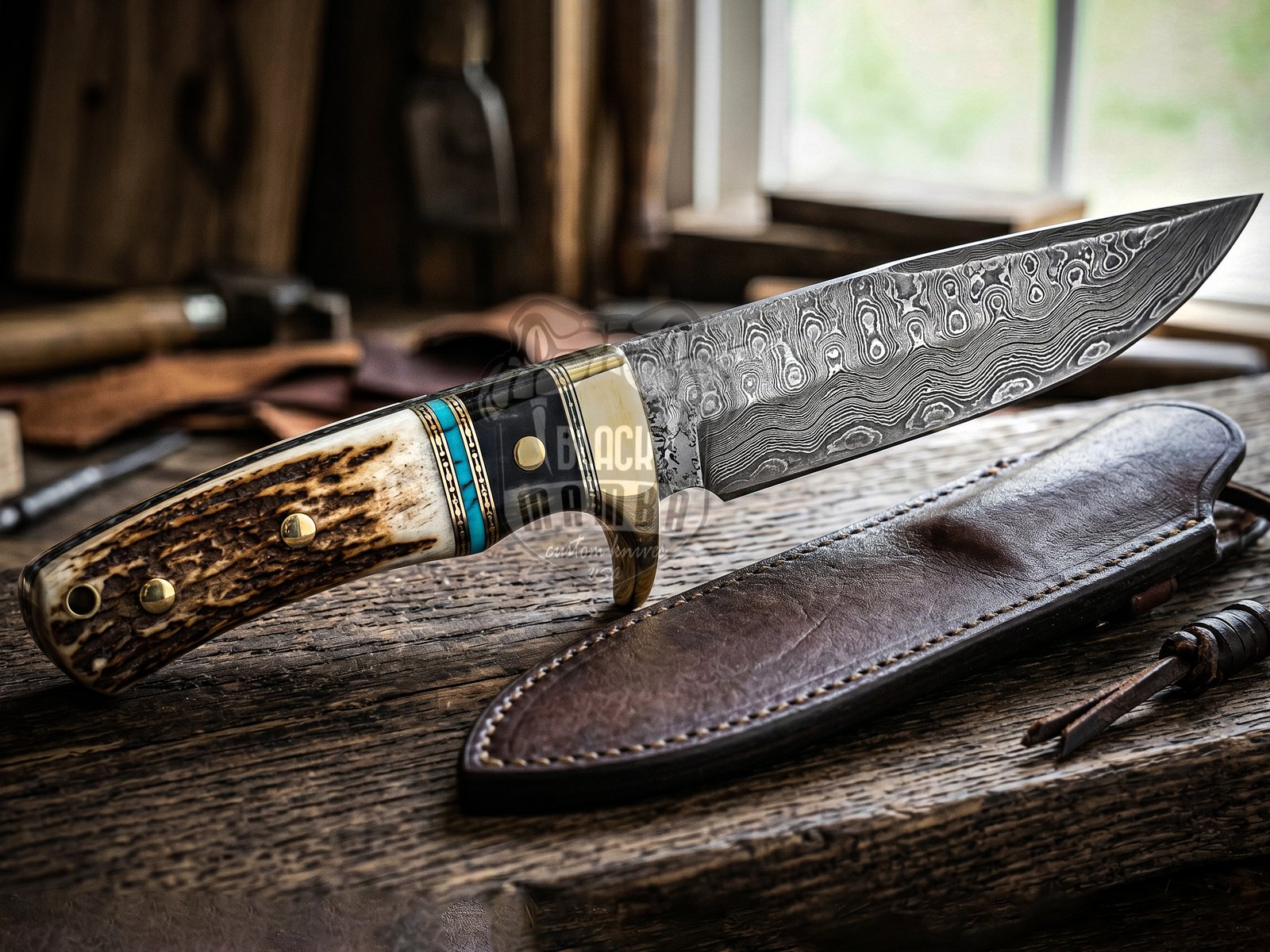
Short answer: blade shape decides what a knife is good at far more than steel does. Drop point for general and hunting work, clip point for fine tip work, sheepsfoot when you never want to stab anything, tanto for a tip that survives abuse, and a wide belly whenever you are skinning.
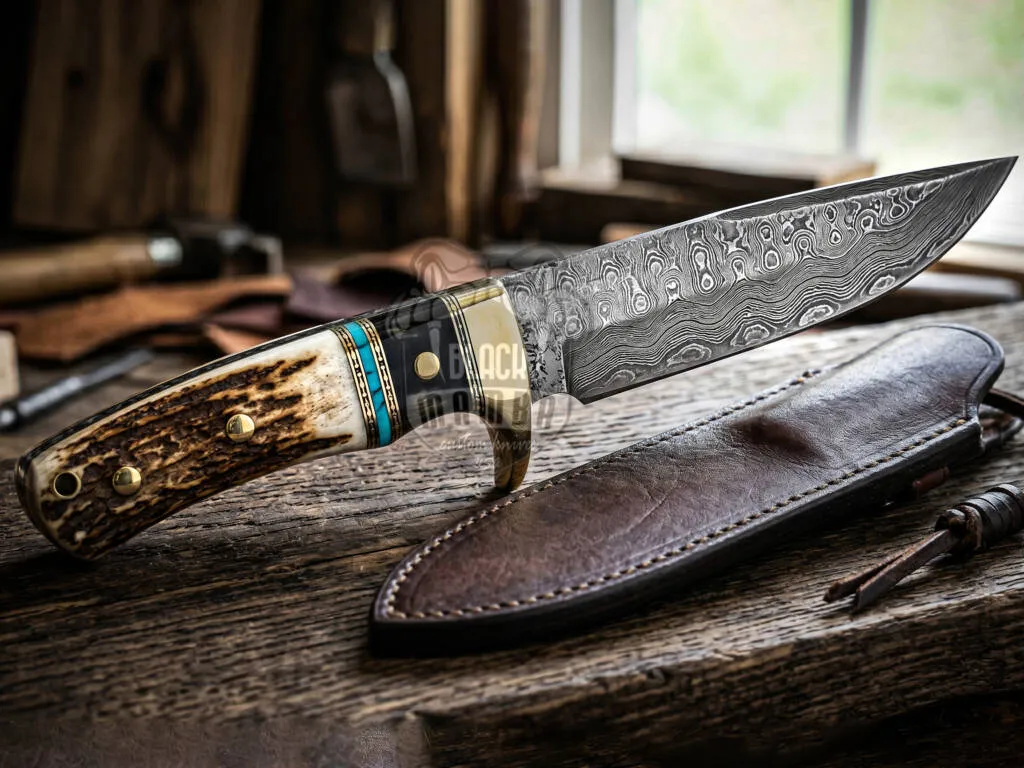
Drop point
The spine slopes gently down to meet the edge, putting the tip low and giving it a lot of steel behind it. Strong tip, plenty of belly, controllable.
This is the right answer for almost everybody. If you are buying one fixed blade for hunting and camping, buy a drop point and stop reading.
Clip point
The front third of the spine is clipped away, either straight or concave, leaving a fine, sharp, forward-set tip. Excellent for piercing and detail work, much easier to break than a drop point. This is the classic bowie profile.
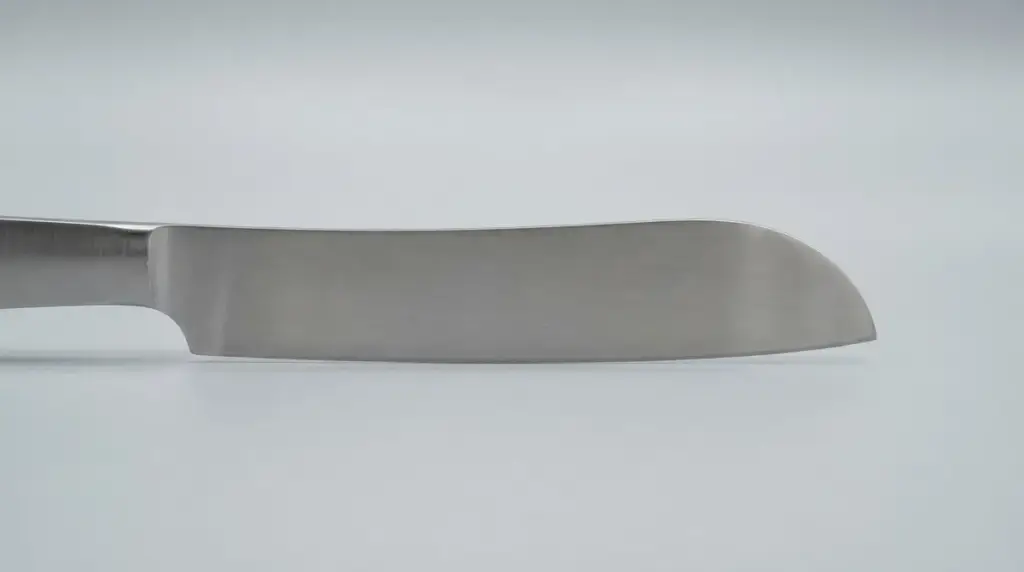
Sheepsfoot
Straight edge, spine that curves down to meet it, effectively no point at all. Designed so a sailor could cut a rope on a pitching deck without stabbing the deck or himself. Superb for controlled cuts on a flat surface, useless for piercing.
Ours in this pattern is the sheepsfoot folder in the pride knives collection, which is the shape we suggest when the knife is a gift and you do not know how much blade experience the person has.
Wharncliffe
Similar idea to a sheepsfoot but the spine tapers in a straight line from the handle, giving a fine usable tip with a completely straight edge. The straight edge means every part of the cut has the same geometry, which is why it is a favourite for whittling and detail cutting.
Tanto
A flat main edge meeting a separate angled tip edge at a defined corner. Enormously strong point because there is a lot of steel right behind it. Poor at slicing because the belly is minimal, and harder to sharpen because you effectively have two edges to keep straight.
Skinner
Wide, deeply curved belly, blunt or low tip. Built entirely for long pulling cuts under hide with the sweep of the edge doing the work. The low tip is deliberate: it is trying not to puncture what is on the other side.
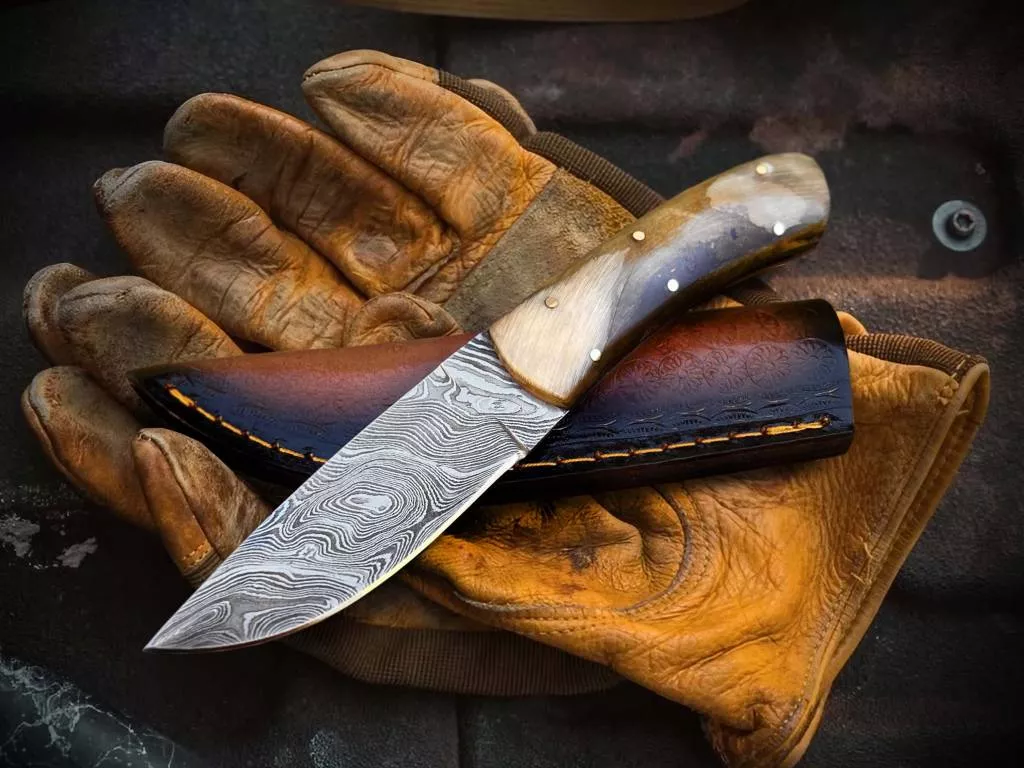
Spear point
Symmetrical, tip on the centreline, often double edged. Balanced piercing, limited belly. Common on daggers and on some throwing designs.
Trailing point
The spine sweeps up so the tip sits above the handle line, creating the largest belly of any shape. Superb slicer for fish and hide, weak tip, and a shape that does not sit well in a pocket.
Choosing by job
| One knife for everything | Drop point |
| Field dressing deer | Drop point, 4 inch |
| Skinning | Skinner or trailing point |
| Boxes, cord, work knife | Sheepsfoot or wharncliffe |
| Hard use tip | Tanto |
| Fine detail | Clip point or wharncliffe |
What shape does not fix
A badly heat-treated blade in a perfect shape is still a bad knife. Shape decides what the knife is for; heat treatment decides whether it holds an edge while doing it. Ours run 58 to 60 HRC, which is where a working edge belongs. More on that in the steel comparison.
The clip point’s most famous home is the bowie — see it in steel in our Damascus bowie knives collection.
The rest of the knife blade shapes and names
Beyond the profiles above there are another dozen types of knife blades. Here is what each is, what it is good at, and where it falls down.
Hawkbill (talon)
A downward-curving edge with the tip aimed at the ground. It hooks material and pulls it into the cut, so it is superb on cord, netting and carpet. Bad on a flat board and awkward to sharpen.
Gut hook
A skinner or drop point with a small sharpened hook in the spine. Slide it under hide and it unzips a deer without nicking the paunch. Outside field dressing it does nothing, and it needs a round rod to sharpen.
Spey
A flat edge sweeping up to a broad, blunt tip. Built for livestock work where a fine point would do damage. Safe for scraping, hopeless at piercing, best known as the stockman’s third blade.
Needle point and dagger
Two symmetrical grinds meeting at an acute centreline tip, usually double edged. Nothing penetrates better. Almost no belly, and the fine tip snaps if you pry. Double-edged carry is restricted in many places.
Leaf
Widest in the middle, tapering to both ends. A genuine compromise: usable belly, a fairly strong tip, good balance. Nothing it does is class-leading, which is why it is a common folding knife blade shape.
Reverse tanto
The angled facet sits on the spine instead of the edge, giving a strong tip over an unbroken curved edge. Tanto tip strength without losing the belly, and it sharpens normally. The thicker tip is less precise.
Harpoon
A drop or clip point with a step cut into the spine near the tip. The harpoon blade shape adds a thumb ramp but cuts exactly like its parent shape.
Recurve
The edge dips inward before sweeping out to the tip, drawing material into the belly under load. A strong slicer on rope and wood. A flat stone cannot reach the concave section.
Kukri
A forward-angled blade with the weight ahead of your hand, turning a swing into a chopping blow. It clears brush and splits kindling above its weight. Clumsy for fine work.
Bowie
A large clip point, often with a sharpened swedge. Big belly, forward tip, enough mass to chop. The trade is size, and the clipped tip is the weakest part.
Karambit
A short, deeply curved hawkbill with a finger ring at the pommel. The ring means it will not leave your hand and the curve suits hooking pulls. Bad at ordinary knife work, and restricted in places.
Cleaver
A tall rectangle of steel with a straight edge and no point. Mass and edge length do the work, so it goes through bone and joints. It cannot pierce or do detail.
Santoku
A kitchen shape with a flat edge and a spine dropping sharply to a low tip, often with hollows to stop food sticking. Excellent for push cuts, poor for rock-chopping.
American tanto and Japanese tanto
They are not the same. The American tanto has a flat main edge meeting a second angled edge at a hard corner, which is where the tip strength comes from. A traditional Japanese tanto is a short knife with a gently curved edge flowing smoothly into the tip, closer to a small drop point than to the angular shape sold under the name.
Knife blade shape chart: blade shapes and their uses
If you want a chart of knife blade shapes and uses to work from, this is it. Six shapes cover most knives sold, and the difference comes down to belly versus tip.
| Drop point | General and hunting use. Strong low tip, good belly. Not the finest tip. |
| Clip point | Piercing and fine work. Fast forward tip that breaks first. |
| Tanto | Hard-use tips and tough material. No belly, two edges to keep sharp. |
| Sheepsfoot | Safe, controlled cuts against a surface. Cannot pierce at all. |
| Wharncliffe | Detail cutting and whittling, even geometry. No belly for sweeping cuts. |
| Trailing point | Skinning and filleting, the largest belly of any shape. Fragile raised tip. |
How blade shape works with grind and edge geometry
Blade shape is the outline seen from the side. Grind is the cross-section behind the edge, and the two decide performance together, which is why blade geometry types matter as much as the shape name.
- Flat grind tapers spine to edge in a straight line. Balanced and easy to sharpen.
- Hollow grind is concave, leaving little steel behind the edge. Frighteningly sharp, and it chips if you push it.
- Scandi grind is one wide bevel to the edge. Bites into wood and is easy to maintain in the field.
- Convex grind curves outward, putting maximum steel behind the edge. The right partner for a chopper.
The pairing is what counts. A tanto tip on a hollow grind gives away most of the tip strength you bought the shape for. Edge angle sits on top: roughly 15 to 17 degrees per side for slicing, 20 or more for a knife that gets batoned. Our blades run 58 to 60 HRC, which supports a working edge at those angles. The method is in our guide to sharpening a knife. One thing shape cannot rescue is how the blade is anchored: see full tang versus partial tang.
Choosing a blade shape by task
EDC. Drop point, leaf or wharncliffe. Pocket knife blade types live or die on control in a small space, and a straight wharncliffe edge cuts boxes and cord more cleanly than a curved belly. Folding knife blade shapes also have to close safely, which rules out a raised trailing tip. See the folding pocket knives.
Hunting and skinning. Drop point for field dressing, skinner or trailing point once the hide comes off, gut hook only if you open a lot of animals. Fixed blade shapes here keep the tip low so you do not puncture the stomach. See the skinning knives.
Kitchen. Santoku or a flat-edged chef profile for board work, cleaver for bone and joints, a fine clip or trailing point for filleting.
Self-defence carry. Shape matters far less than legality. Double-edged daggers, karambits and automatic openers are restricted in many jurisdictions, and rules differ by state and city. This is not legal advice, so check your local law before you carry.
Bushcraft. A 4 to 5 inch drop point or spear point, scandi or flat grind, full tang, no gut hook. You want a blade you can baton, carve and sharpen on a river stone. For where each shape sits in the wider family, see knife types explained.
Questions people ask
What is the difference between a spear point and a drop point?
A spear point is symmetrical, with the tip sitting on the centreline of the blade, so piercing force is balanced through the middle. A drop point is asymmetric: the spine curves down but the tip still sits below the spine line, leaving more belly under it. Spear point vs drop point comes down to piercing balance against slicing belly, and for general cutting the drop point blade shape wins.
Which is better, a drop point or a sheepsfoot?
Neither, they answer different questions. Drop point vs sheepsfoot is really tip versus no tip. Choose a drop point if you ever need to pierce, bore or do detail work with the point. Choose a sheepsfoot if you cut against surfaces you must not damage, work near your own hands, or want a knife that cannot stab anything by accident.
What are the different types of blade points?
Knife point types, also called knife point styles, blade point types or knife tip types, come down to where the tip sits relative to the spine. Drop and clip points sit below it, trailing points sit above it, spear and needle points sit on the centreline, tanto points sit at a hard corner, and sheepsfoot profiles have no point at all. Across the types of blades on knives, these different knife points and blade tip types decide piercing strength and how easily a tip breaks.
What blade shape is best for a pocket knife?
For most people a drop point or a leaf shape. Both give usable belly with a tip strong enough for daily work, and both fold safely. If you mainly open boxes and cut cord, a wharncliffe is better, because the straight edge keeps the same geometry through the whole cut. Of the folding knife blade types on sale, avoid trailing points: the raised tip sits badly in a closed handle. Among the different knife shapes offered on folders, that is the one to skip.
Do blade shapes have official names?
No. Blade shape names and knife shape names are trade conventions, not a standard, and makers use them loosely. The same profile can be sold as a modified drop point by one brand and a spear point by another, and American tanto describes a shape a Japanese smith would not recognise. When you compare blade shape types and knife shape types, or weigh up the shapes of knives on sale, judge the outline in front of you rather than the label on it.
Is a knife blade profile the same as a blade shape?
Yes. Knife blade profiles, knife profiles, knife shapes and blade outlines all describe the same thing: the side view of the blade, meaning where the spine runs, how much belly the edge carries and where the tip ends up. Grind is the separate term, describing the cross-section behind the edge. So when you compare different knife blades, different knife blade shapes, or the types of blades for knives on offer, profile and shape are interchangeable words.
Does blade shape matter more than steel?
For what a knife can do, yes. Of all the types of knife blade shapes, the shape decides whether a knife can pierce, sweep, chop or cut safely against a board, and no steel changes that. Steel and heat treatment decide how long the edge lasts and how well it resists rust while doing it. Get the shape right for the job first, then pick a steel that suits how much maintenance you will actually do.
Design your own knife and set the blade shape yourself →
More from the workshop
Military Knives: The Complete Buying Guide
The 1942 service pattern explained, choosing by branch and steel, engraving and unit orders, what the rules are on base, and how to claim the 15% military discount in about a minute.
How to Tell Real Damascus from a Printed Pattern
Four checks that separate forge-welded steel from a surface-etched imitation.
The Hunting Dagger: Double Edge, Boar Blades and Why It Fell Out of Use
Why the double edge fails at skinning, where the pattern came from, and what our nine daggers really are.
