
Short answer: hard-use fixed blades — hunting knives, bushcraft knives, camp knives — are most often convex or sabre ground, because both leave more steel behind the edge than a full flat or hollow grind would, and that steel is what keeps an edge from rolling or chipping when you're batoning wood or working through a joint. Flat grind still shows up on dedicated skinners, where thin, controlled slicing matters more than raw durability.
Fixed blades trade slicing efficiency for durability
Unlike a chef's knife or a folder, a fixed-blade hunting or outdoor knife is judged mostly on what happens when the edge meets something harder than it expects — bone, a knot, a nail buried in a log. That changes which grinds make sense: the thinnest, most efficient slicing geometries, hollow and full flat, are usually the wrong choice, because they're also the most fragile.
Convex grind — the strongest edge geometry
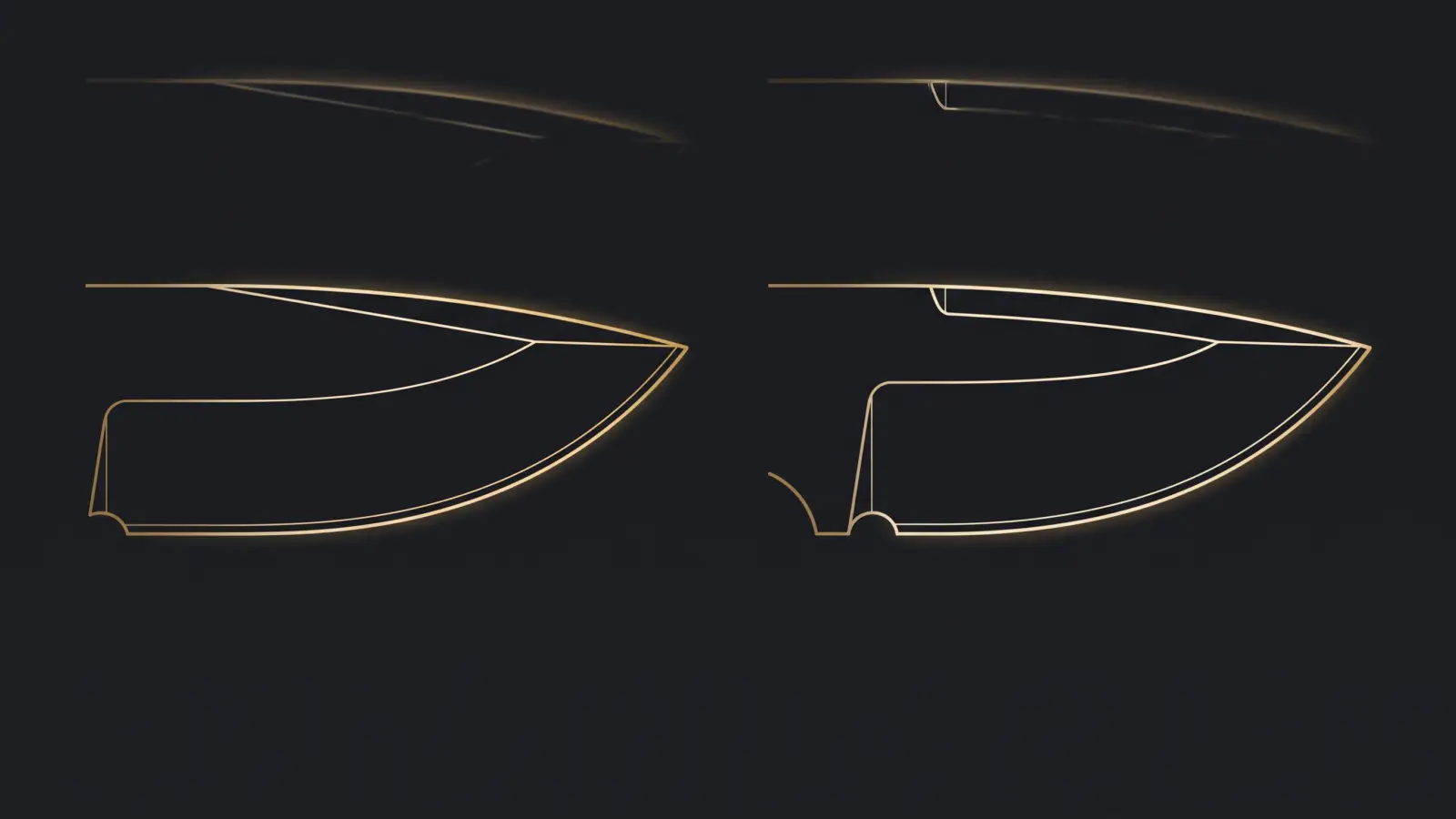
A convex grind curves smoothly outward from the blade face to the edge, with no distinct flat facet at any point — cross-sectioned, it looks like a gentle bulge rather than a wedge. It's mathematically the strongest common grind, because there's no thin, unsupported section anywhere behind the edge. Axes, machetes, and most serious bushcraft knives use it for that reason. The tradeoff is sharpening: there's no single flat angle to reference on a stone, so it's usually maintained by hand on a strop or a soft backing rather than a fixed-angle jig.
Sabre grind — durability with an easier sharpening angle
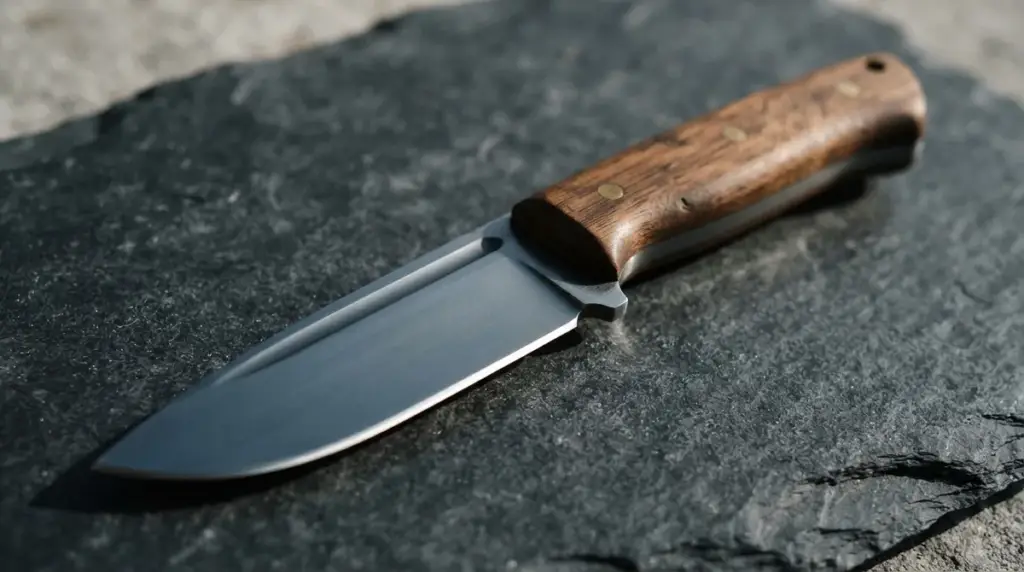
A sabre grind is a partial flat grind that starts partway down the blade rather than at the spine, leaving a noticeably thicker shoulder behind the edge than a full flat grind would. It's not quite as strong as a true convex edge, but it's much easier to sharpen consistently, since it's still a flat bevel with one angle. This is the most common grind on production hunting and survival fixed blades.
Where flat grind still wins — skinning knives
A dedicated skinner spends its life doing thin, controlled slicing along a hide rather than chopping or prying, so the calculus flips: a full flat grind's thinner, more efficient edge is an advantage rather than a liability. That's why skinning knives are one of the few fixed-blade categories where flat grind is still the default rather than the exception — see our skinning knife guide for the rest of what makes that shape work.
Matching grind to the job
- Batoning, chopping, general bushcraft: convex grind.
- All-around hunting knife that also needs to be easy to touch up in the field: sabre grind.
- Skinning and caping specifically: flat grind.
Forging changes how a convex grind gets made
On a factory blade, a convex edge is ground in afterward, usually on a slack belt that lets the wheel flex into the curve. On a hand-forged blade, a smith can shape a good part of that curve directly with the hammer before it ever touches a grinder, which is one reason convex grinds are common on forged hunting knives specifically — the geometry and the process suit each other.
Knife bevel types on a fixed blade: the full vocabulary
Six terms cover almost every fixed blade you will handle. All of them describe the same thing — where steel was taken off the blade face on the way to the edge — which is the plain answer if you are still asking what is a bevel on a knife at the simplest level. Knife bevels differ only in where that removal starts and what shape it follows.
| Scandi | One wide, flat bevel starting low on the blade and running straight to the edge, usually with no secondary bevel at all. |
| Full flat | Straight taper from the spine all the way to the edge. Thin, efficient, least steel left behind the apex. |
| High flat | A flat grind beginning a little below the spine, keeping a narrow band of full-thickness steel along the top for stiffness. |
| Sabre | Flat bevel starting around the middle of the blade, leaving a thick shoulder behind the edge. |
| Hollow | Concave faces cut by a wheel. Very thin at the apex, weakest under twisting loads. |
| Convex | A continuous outward curve with no flat facet anywhere. The most steel behind the edge for a given apex angle. |
What each grind does in wood, game and rope
Wood. Scandi is the reference standard for carving and feather sticks: the wide flat bevel rides on the wood and gives you a physical angle reference, so the cut goes where you point it. Convex is what you want for batoning and chopping, because there is no thin section for a knot to open up. Full flat and hollow will do fine work in wood and will chip if you drive them through anything hard.
Game. Thin wins. Full flat and high flat separate hide from muscle with the least drag, which is why they persist on skinning knives. A sabre grind is the compromise for a knife that also has to break joints and cut through cartilage on the same animal.
Rope and webbing. Rope is abrasive and unforgiving. A hollow grind cuts it beautifully until the apex wears, then falls off quickly; a slightly obtuse convex or sabre edge cuts a little harder and keeps going far longer.
Knife bevel angle by task
Angles below are per side. Treat them as working ranges rather than fixed numbers, and remember that harder steel tolerates the shallower end better than softer steel does.
| Skinning and caping | About 15° per side |
| General hunting and camp use | About 17–20° per side |
| Bushcraft, wood, batoning | About 20–25° per side |
| Scandi bevel | Set by the grind itself, typically shallower per side, but with far more bevel face in contact |
Scandi grinds and why they are easy to freehand
A scandi grind sharpens itself, more or less. Lay the wide bevel flat on the stone and the angle is already decided by the knife — there is nothing to guess, nothing to hold, and you can feel immediately whether both faces of the bevel are sitting down flat. That single property is why scandi knives are recommended to people learning to sharpen without a jig.
The cost is time. Because you are abrading the whole bevel face rather than a narrow strip at the apex, each sharpening moves more metal, and a badly neglected scandi takes real work to bring back. Our sharpening guide covers grit progression and burr detection either way.
Keeping a convex bevel alive on a strop
A convex edge has no flat to reference, so it is maintained by controlled rounding rather than by holding one angle. The usual method is a leather strop over a slightly yielding backing — a mouse mat, a folded towel, a piece of thick felt — loaded with compound. The backing gives just enough for the leather to wrap around the curve, and the edge is drawn spine-first so the apex is never dug into the surface.
Two habits ruin convex edges. Too much pressure sinks the blade deep into soft backing and rolls the apex over into a blunt shoulder. Too many passes with the spine lifted turns the curve into a flat bevel by degrees, and once that has happened the geometry has to be reground rather than stropped back.
Distal taper, and what a plunge line tells you
Distal taper is thickness reduced along the length of the blade, so the spine is thinner at the tip than at the handle. It is separate from the grind and it is why a well-made knife of a given size feels lighter and livelier in the hand than its dimensions suggest — the mass sits where it is useful and the tip stays quick.
The plunge line is where the bevel stops as it runs back towards the handle. Crisp, square and matched on both sides is a mark of care;it is one of the hardest parts of the blade to finish cleanly. Mismatched or wandering plunges do not stop a knife cutting, but they tell you what the finishing standard was. Our guide to hand-forged versus factory knives covers the other tells worth reading on a blade.
Re-profiling a bevel that has been sharpened wrong for years
A knife sharpened at a steeper angle than the maker intended, over and over, ends up with a wide, obtuse shoulder that stops it entering the material. It feels blunt even straight off the stone. The fix is to go back to a coarse stone and reset the whole bevel at the angle you actually want, working until a burr appears along the full length of the edge, then refining as normal. Expect to remove real metal and to spend far longer than a normal sharpening; on a badly rounded edge, half an hour on coarse grit is not unusual. Keep the blade cool if you use a belt, since overheating a thin edge can soften it permanently.
How to choose the right knife grind bevel for a fixed blade
Pick for the failure you can least afford. If a chipped edge would end your day, take a convex or sabre bevel knife and accept slower slicing. If the knife spends its life on hide and meat, take a flat grind and keep it off bone. If you want one blade to carve wood and be easy to maintain in camp, scandi. Steel choice sits alongside this, not instead of it, and both should match the job — the hunting knives we make are ground with that pairing in mind.
Questions people ask
Is convex grind only for axes and machetes?
No — plenty of hunting and camp knives use it too, especially hand-forged blades where a smith can shape the convex curve directly with a hammer and belt rather than grinding it in afterward.
Which grind is easiest to maintain in the field with no jig?
A sabre grind is the easiest to keep consistent freehand, since it's a single flat angle. A convex grind is actually simple to touch up on a strop or leather once you know the technique, but it takes practice to avoid rounding it into something closer to a flat grind by accident.
Does a thicker grind mean a heavier knife?
Not necessarily — grind shape and blade stock thickness are related but separate. A convex or sabre grind on thin stock can still be a light knife; it's the geometry behind the edge, not the total blade weight, that changes.
What is a scandi grind good for?
Working wood, mainly — carving, feather sticks, notches and general bushcraft. The single wide bevel rides flat against the timber and gives you a physical angle reference, so the cut tracks where you point it. It is also the easiest grind to sharpen freehand, since laying the bevel flat on a stone sets the angle for you. It is less suited to fine slicing than a flat grind.
What knife bevel angle should a hunting knife have?
Roughly 15 degrees per side for skinning and caping, around 17 to 20 per side for a general hunting and camp knife, and 20 to 25 per side for a blade that will be batoned or driven through wood. Those are working ranges rather than fixed standards. Harder steel copes better at the shallow end; a softer blade taken too thin will roll at the first hard contact.
How do I strop a convex bevel without flattening it?
Use leather over a slightly yielding backing — a mouse mat, folded towel or thick felt — so the surface wraps around the curve, load it with compound, and draw the blade spine-first with light pressure. Keep the pressure genuinely light. Pressing hard sinks the edge into the backing and rolls the apex, while stropping with the spine lifted gradually converts the curve into a flat bevel that then needs regrinding.
What is distal taper on a fixed blade?
Distal taper means the spine gets thinner from the handle towards the tip, so the blade loses thickness along its length as well as towards the edge. It is separate from the grind. A knife with proper distal taper carries its mass near the hand and keeps the tip quick, which is why it feels lighter and better balanced than its overall dimensions suggest.
What does the plunge line tell you about a knife?
The plunge line is where the bevel ends as it runs back towards the handle, and it is one of the hardest features to finish cleanly. Crisp, square plunges that match on both sides indicate careful hand work and a maker who checked. Wandering or mismatched plunges will not stop a knife cutting, but they show you what the finishing standard was on the rest of the blade.
Can a bevel that has been sharpened at the wrong angle for years be fixed?
Yes, though it means re-profiling rather than sharpening. Years of steeper strokes build a wide, obtuse shoulder that stops the blade entering the cut, so the edge feels dull straight off the stone. Go back to a coarse stone, reset the whole bevel at the angle you want, and keep going until a burr runs the full length. Expect to remove real metal, and keep the edge cool if you use a belt.
Every bevel on this page is ground on one of our fixed blade knives, forged and finished in Memphis.
More guides
- Skinning Knife Guide
- Damascus Hunting Knife Guide
- Full Tang vs Partial Tang
- Chef Knife Bevels Explained
Design your own knife and set the grind →
More from the workshop
Forged or Ground: The Two Ways a Knife Is Made
The two ways a blade is shaped, what each one does to the steel, and what neither can do.
Knives and Swords as Wedding Gifts: Groomsmen, Cake and Budget
Why a set of swords is usually the wrong call, what a party of eight actually costs, and the engraving rules in full.
Damascus vs D2 vs 440C vs VG10: Which Steel
Damascus, D2, 440C and VG10 compared by what each one is actually good at.
