
Everything we know about steel, written down
We forge every blade we sell, so the answers here come off the anvil rather than off a spec sheet. No filler, no affiliate padding. Pick a topic on the left, or start with the four questions we get asked most.
The four questions everybody asks
If you read nothing else, read these. Between them they cover almost every email we get before somebody buys their first hand-forged knife.
Is this Damascus real?
Most of what is sold online as Damascus is a pattern printed or acid-etched onto the surface. Four checks tell you which one you are holding, and you can do all four before you buy.
Which steel do I actually want?
Damascus, D2, 440C and VG10 compared honestly. Which holds an edge, which resists rust, which is easiest to bring back on a stone, and which one suits the way you will really use the knife.
How do I stop it rusting?
Carbon steel patinas. That is the trade for an edge that sharpens easily. Here is the routine that keeps a blade healthy, and how to bring a faded etch back in about ten minutes.
Is hand-forged worth the money?
Sometimes it is not, and we will say so. What the extra cost actually buys you, and the cases where a good factory knife is the smarter purchase.
Which knife is right for you
Blade shapes, everyday carry, hunting and kitchen. Start here if you are not sure what to buy.
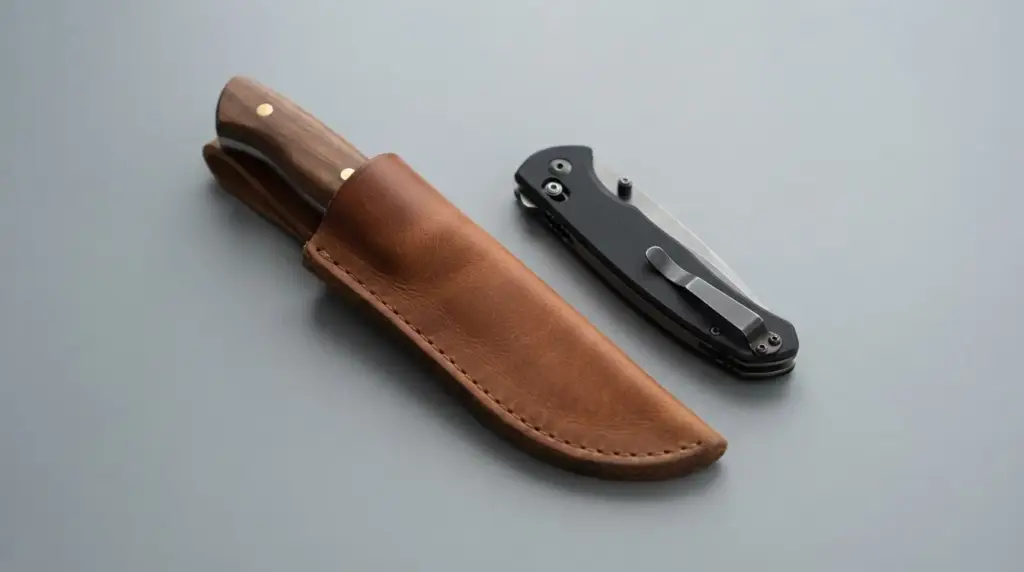
Fixed Blade or Folder: Which One You Should Actually Carry
Cleaning and the law decide this, not strength. Which one most people should carry.
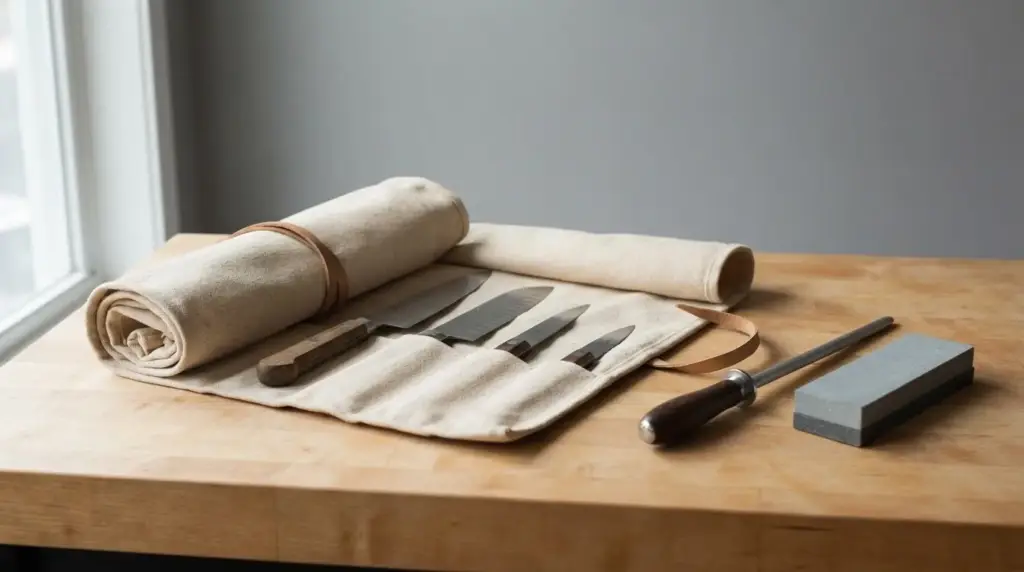
Butchering at Home: The Four Knives That Do the Work
Four knives, the order of work after the animal is home, and the two we do not sell.
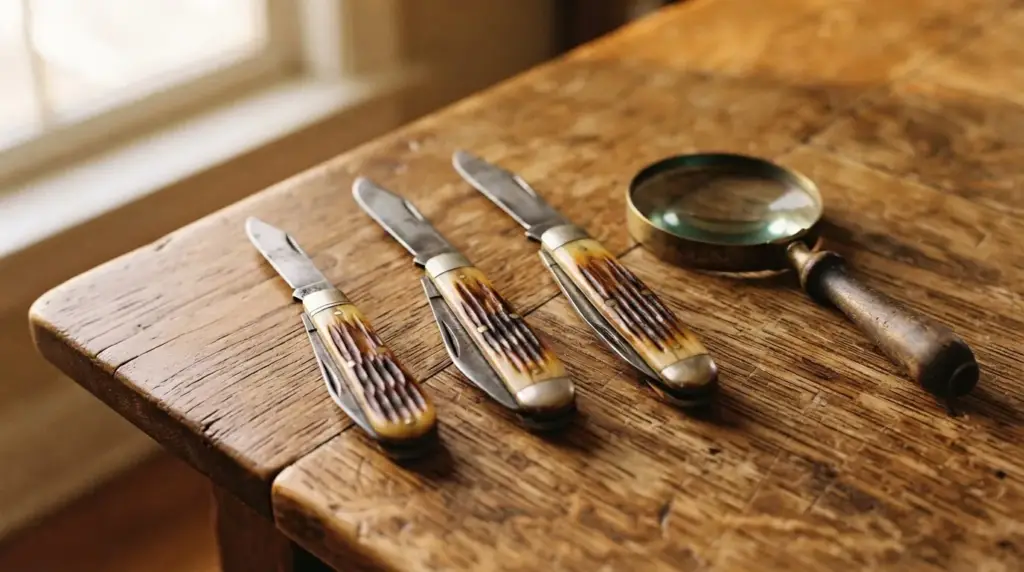
Valuing an Old Pocket Knife: Marks, Condition and Reality
Tang stamps, dot dating, the collector grading scale, and why cleaning it costs you money.
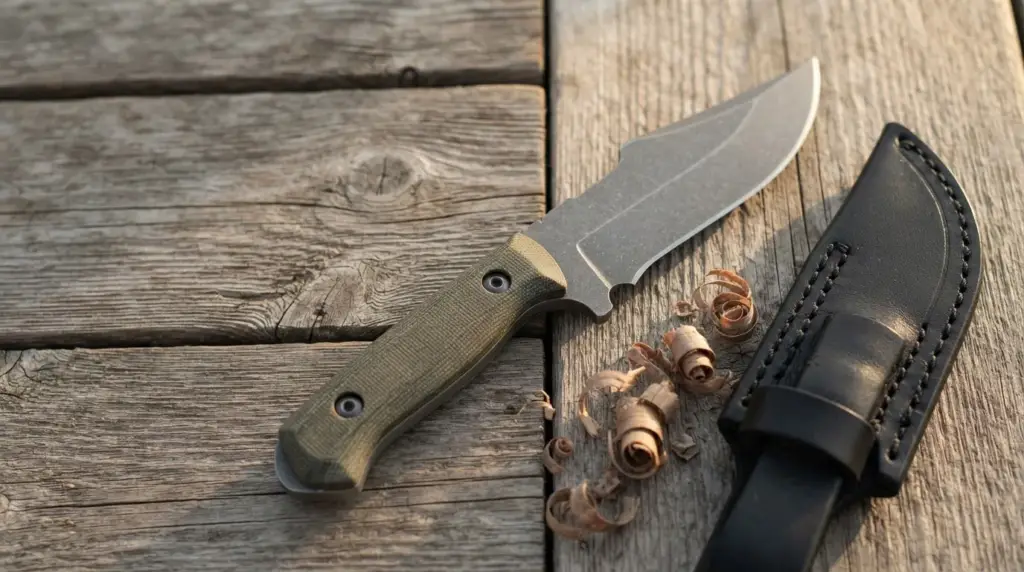
Tracker Knives: The Double Edge Profile and What It Is Good At
The tracker profile explained zone by zone, what it is good at, and what two lighter knives do better.
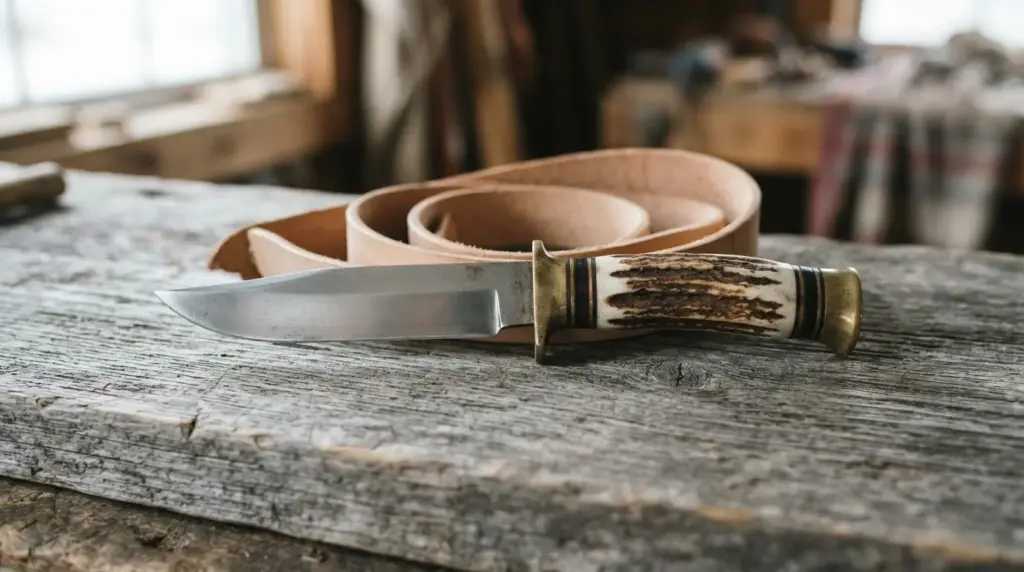
Native American Knives: What Is Authentic and What Is Not
What the Indian Arts and Crafts Act allows a seller to say, what Native made blades actually were, and how to find genuine work.
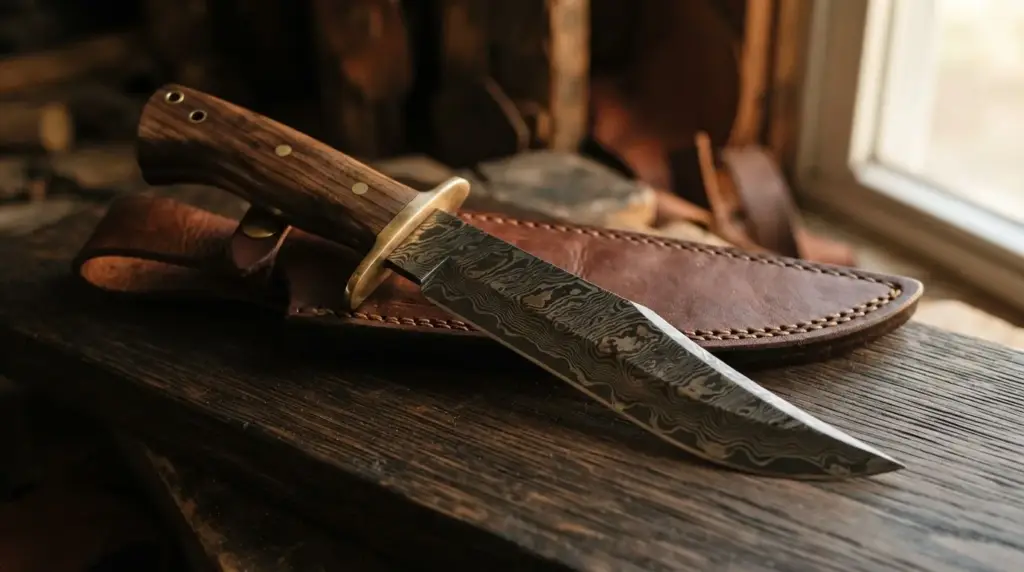
The Damascus Bowie Knife: Sizes, Grinds and What It Is Actually For
Clip points, false edges, grinds and real numbers from our own 27 bowies, plus where a big blade is the wrong tool.
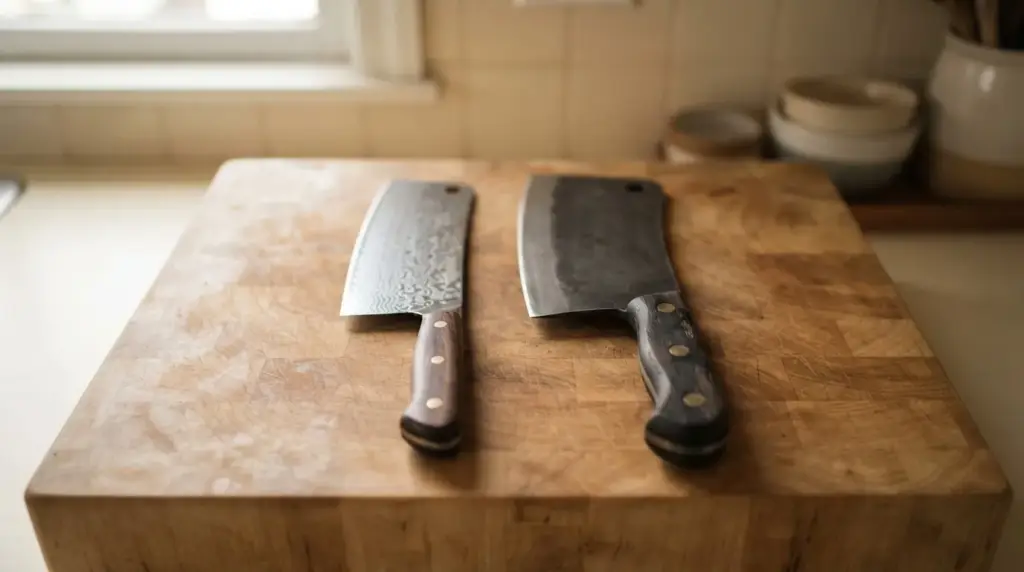
Cleavers: Meat, Vegetable and the One Most People Buy by Mistake
How to tell a vegetable cleaver from a bone cleaver, with measured weights, lengths and steels from our own sixteen.
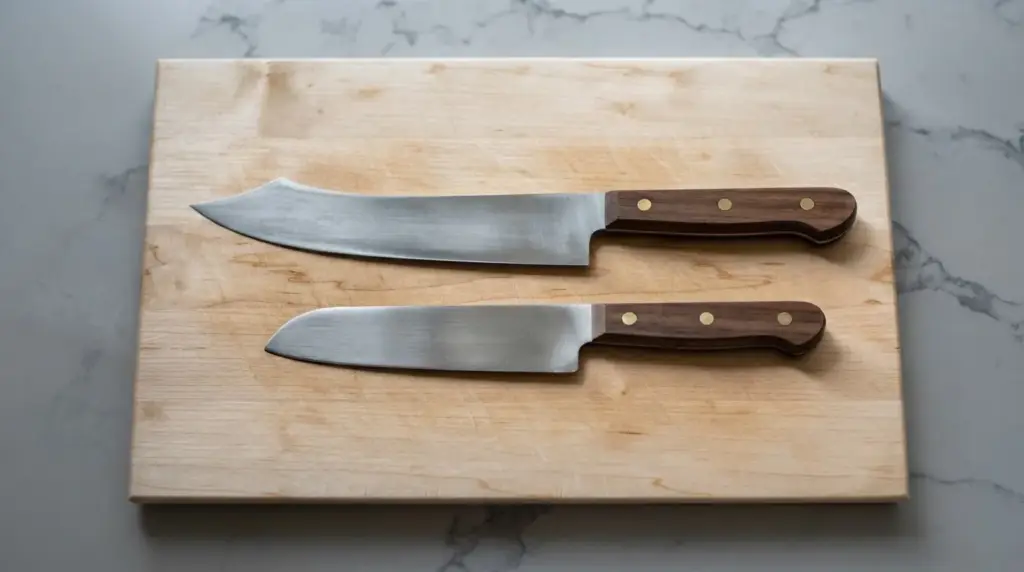
Santoku or Chef Knife: Which One Cuts Better
Blade length, belly, heel height, edge angle, grind and hardness compared, with measurements from our own kitchen line.
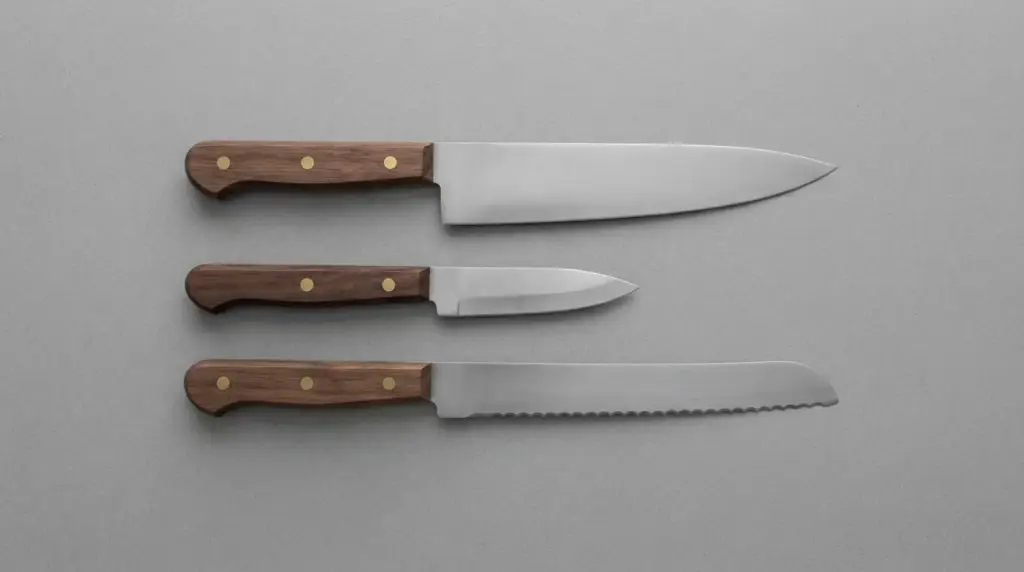
How Many Kitchen Knives You Actually Need
Why three knives beat a fifteen piece block, what a set really contains, and the storage that costs you an edge.
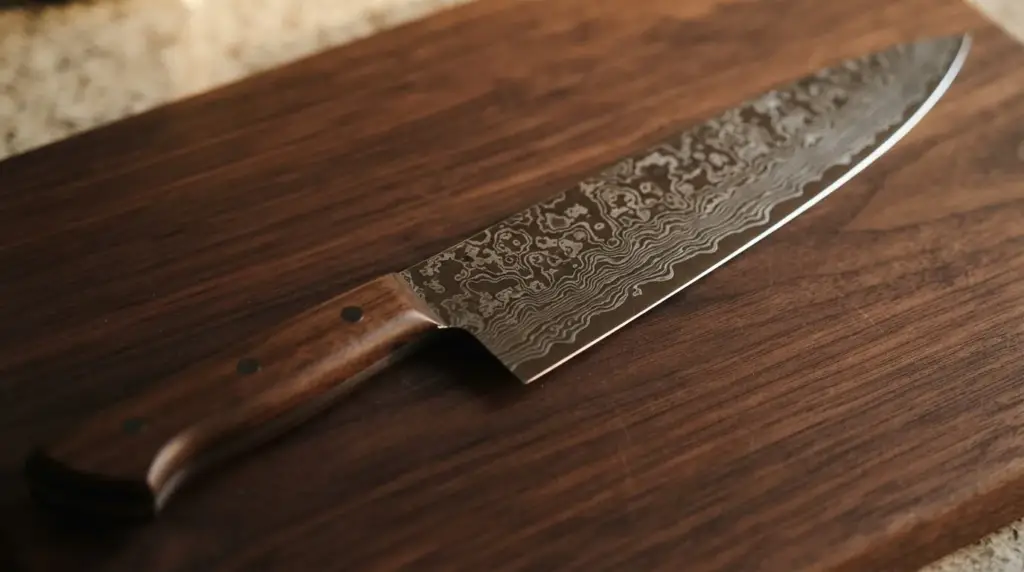
Damascus Chef Knives: Cladding, Core and Real Performance
Clad against coreless Damascus, layer counts, billet steels, hardness, and what sharpening does to the pattern.
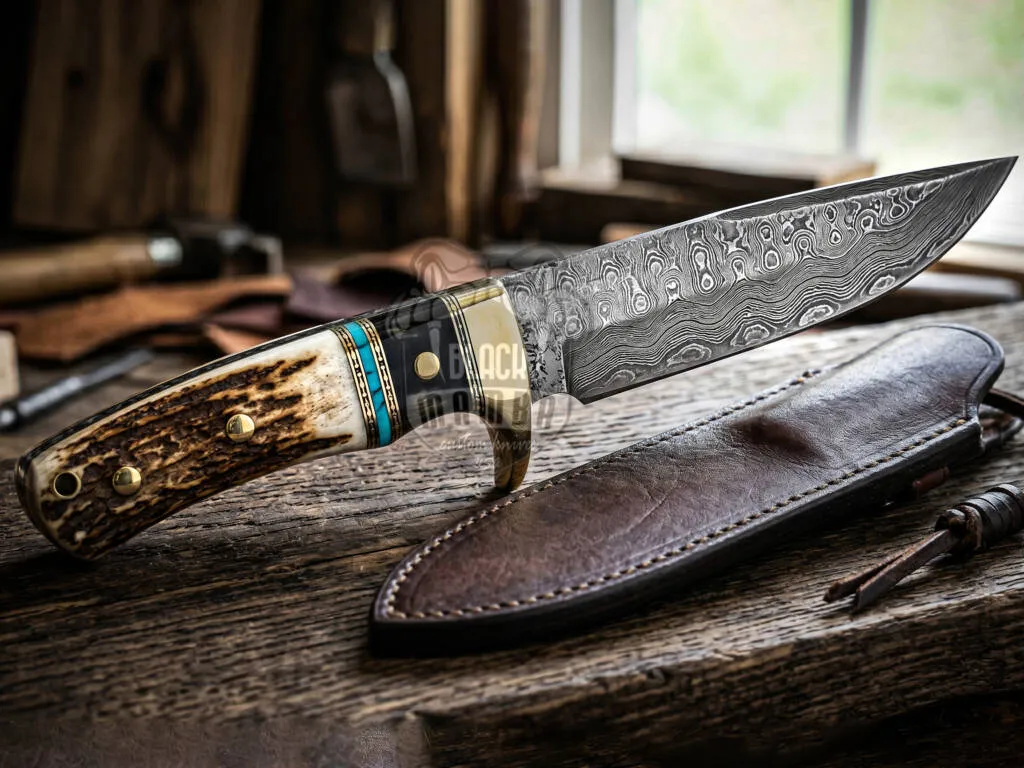
Knife Blade Shapes Explained
What each blade profile is actually built to do, and which one you want.
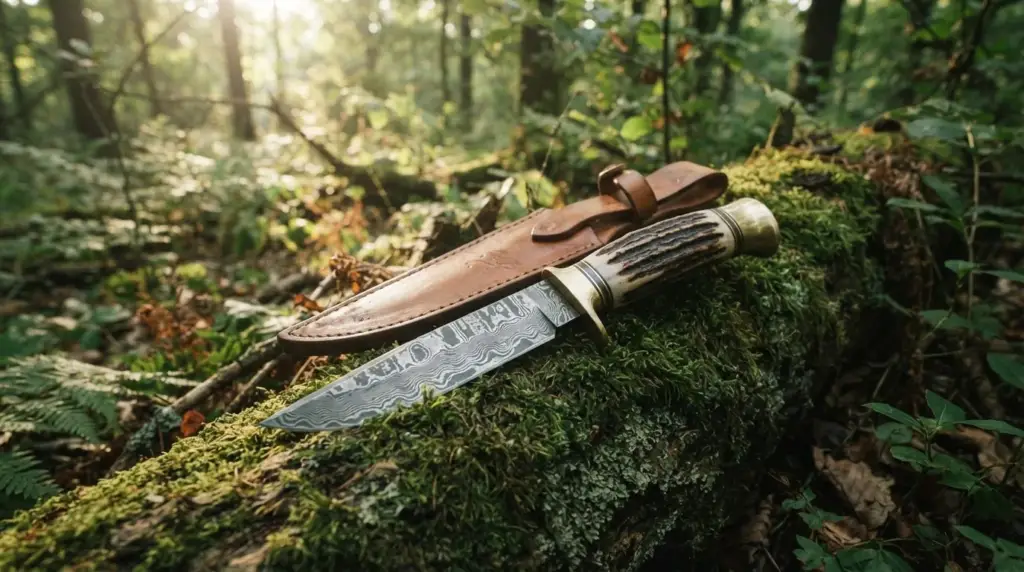
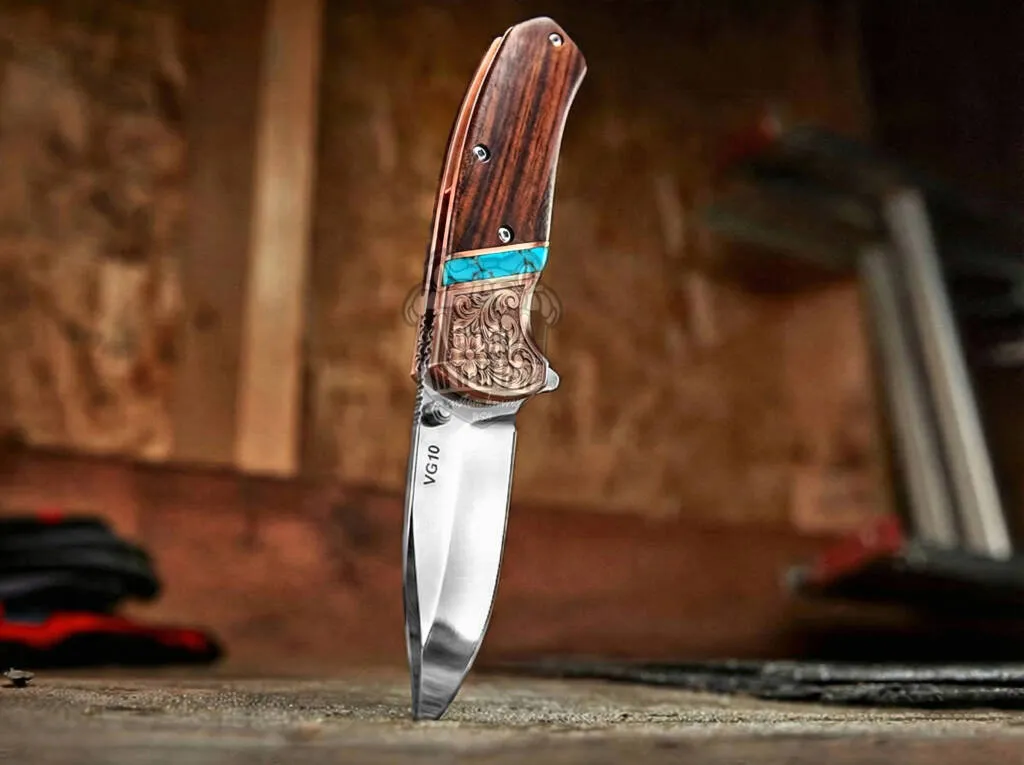
How to Choose an EDC Knife
Weight is why people stop carrying. Buy for Tuesday, not for the emergency.
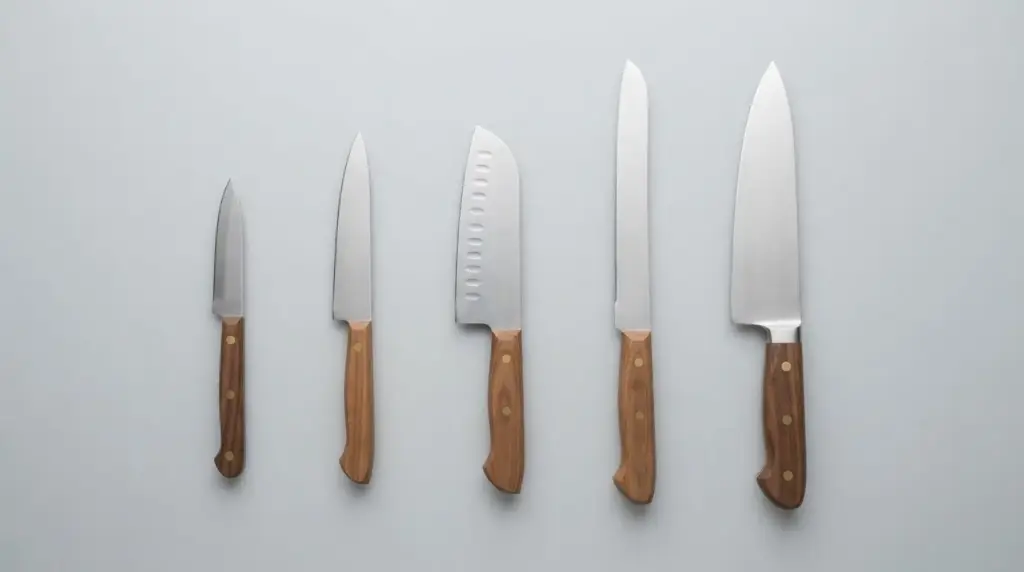
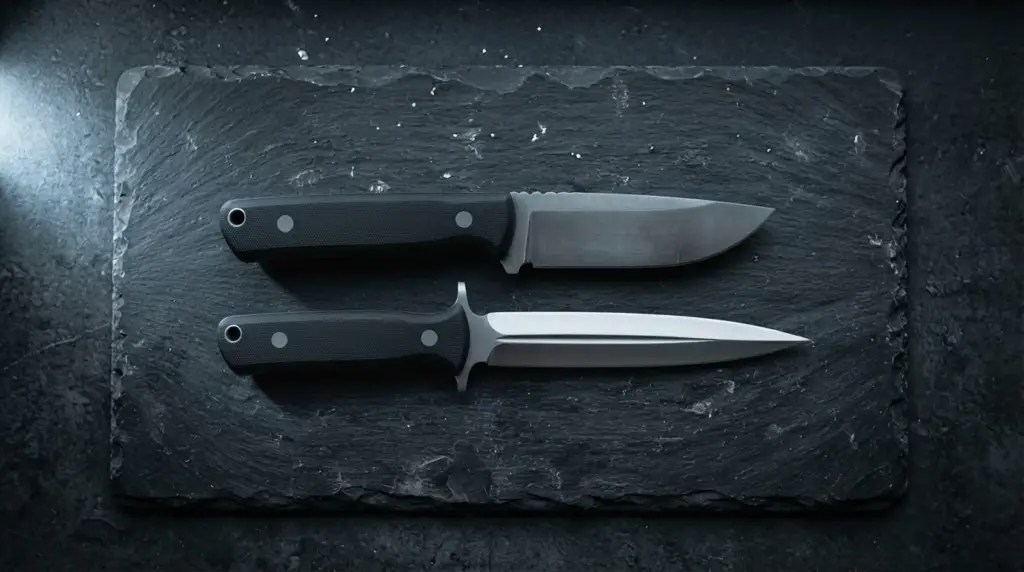
Knife vs Dagger: What Is the Difference?
Every dagger is a knife, not every knife is a dagger. One edge or two changes everything, including what you can legally carry.
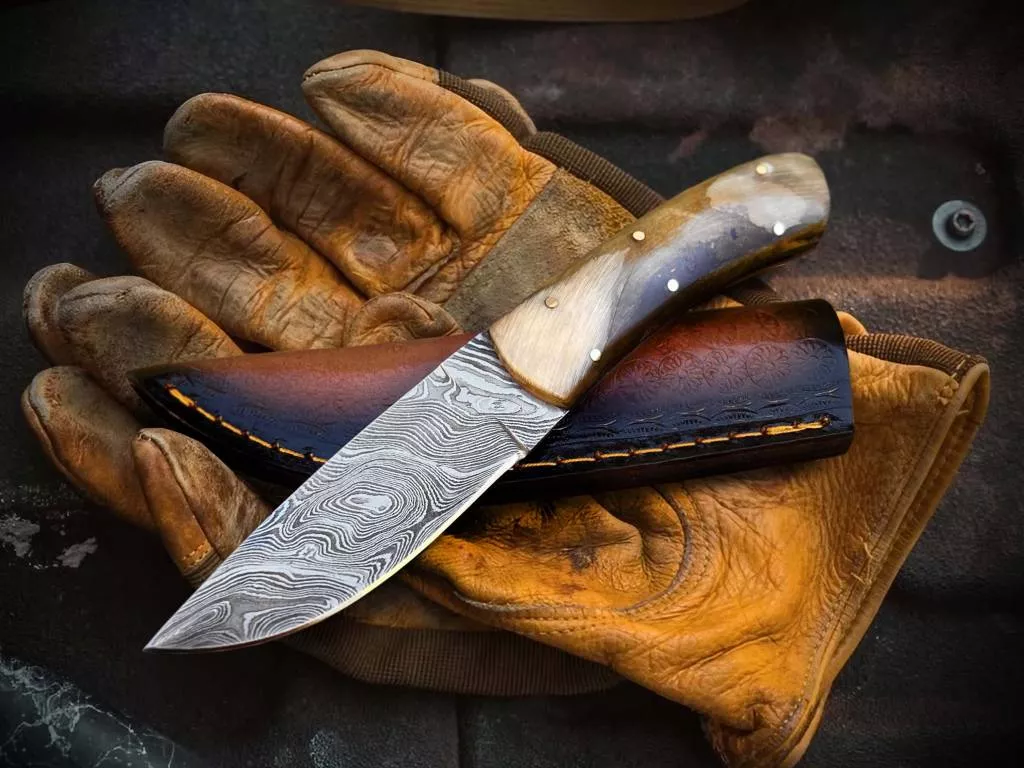
Skinning Knife Guide
Wide belly, low point, three to four inches. Why the shape looks the way it does.
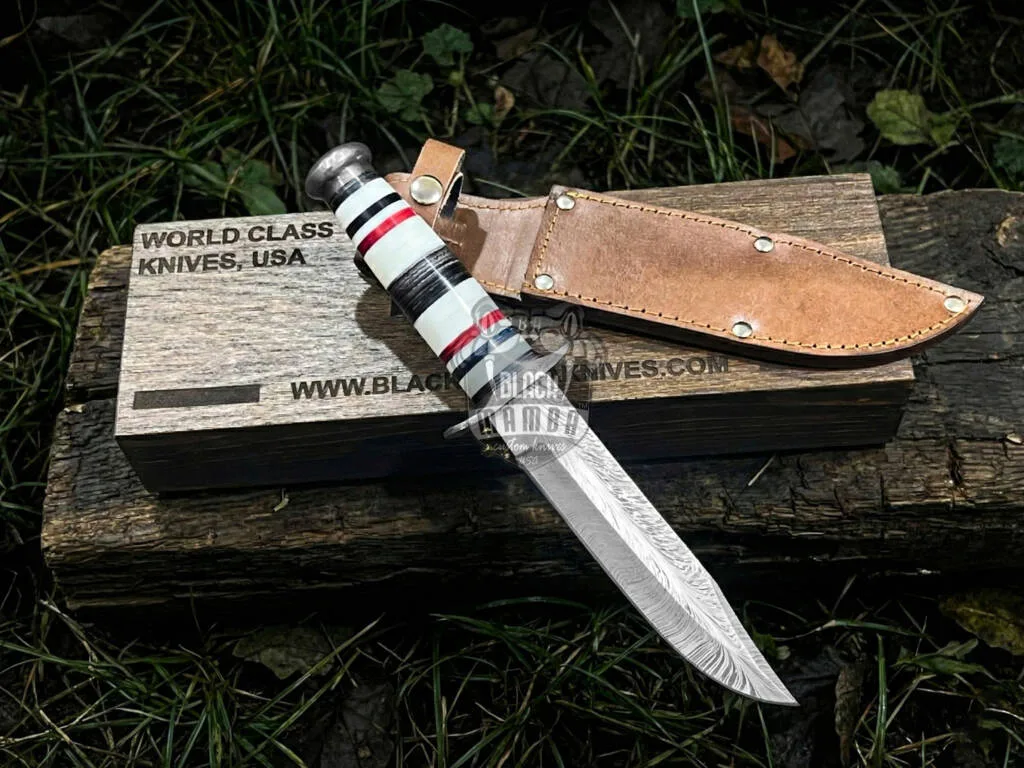
Damascus Hunting Knife Guide
The best hunting edge you can carry, if you will dry it and oil it.
Boning Knife vs Fillet Knife
Stiff works around bone, flexible follows it. They are not interchangeable.
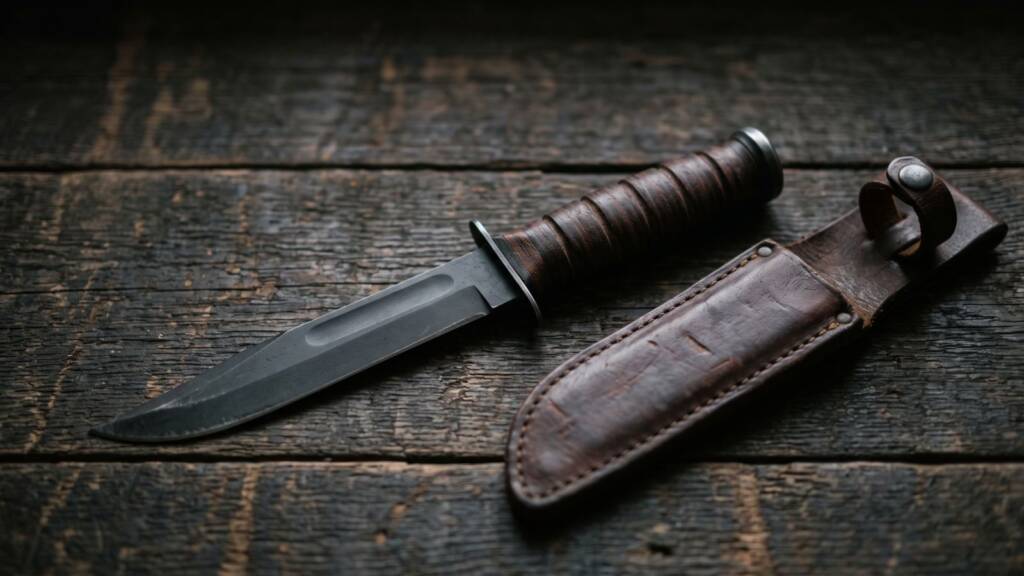
KA-BAR Knife Guide: History, Markings and Value
The 1219C2 pattern explained: wartime makers, dating by markings, real values and what the Corps issues now.
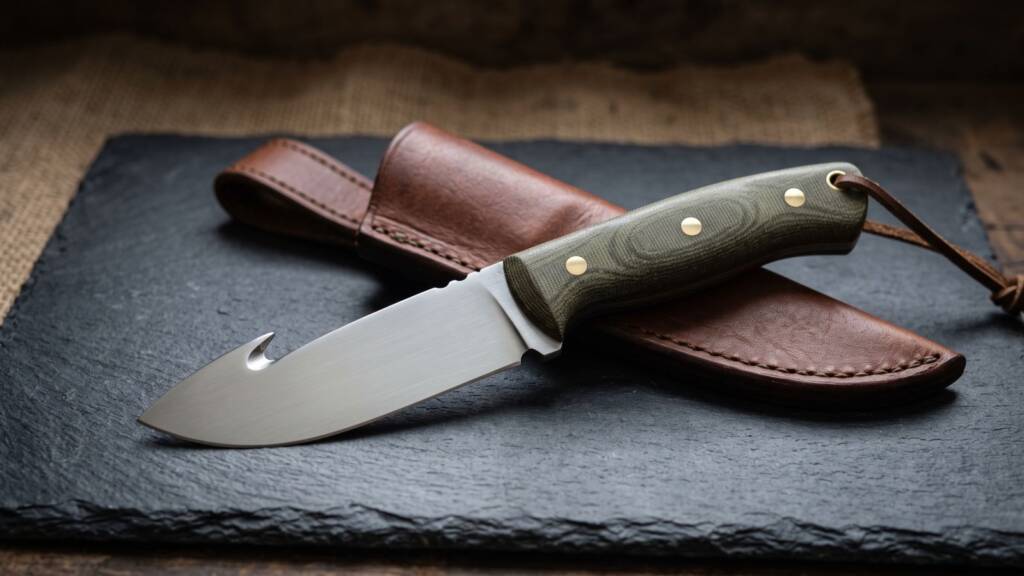
What Is a Gut Hook Knife?
The hook on the spine explained: what it is for, when to skip it, and how to keep it sharp.
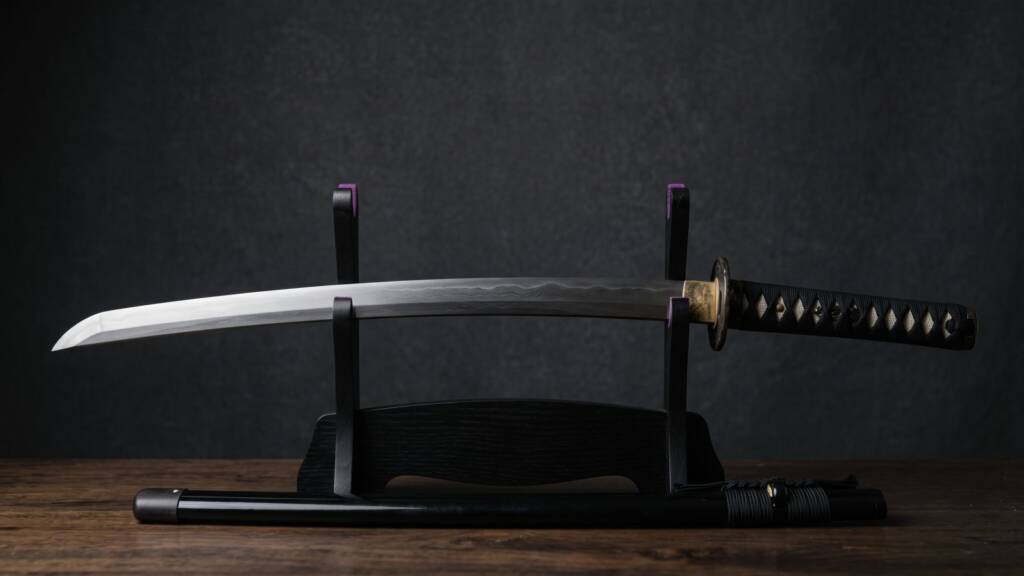
Damascus Katana and Samurai Sword Guide
Pattern welded versus traditional, the stainless warning, tang checks and real price bands.
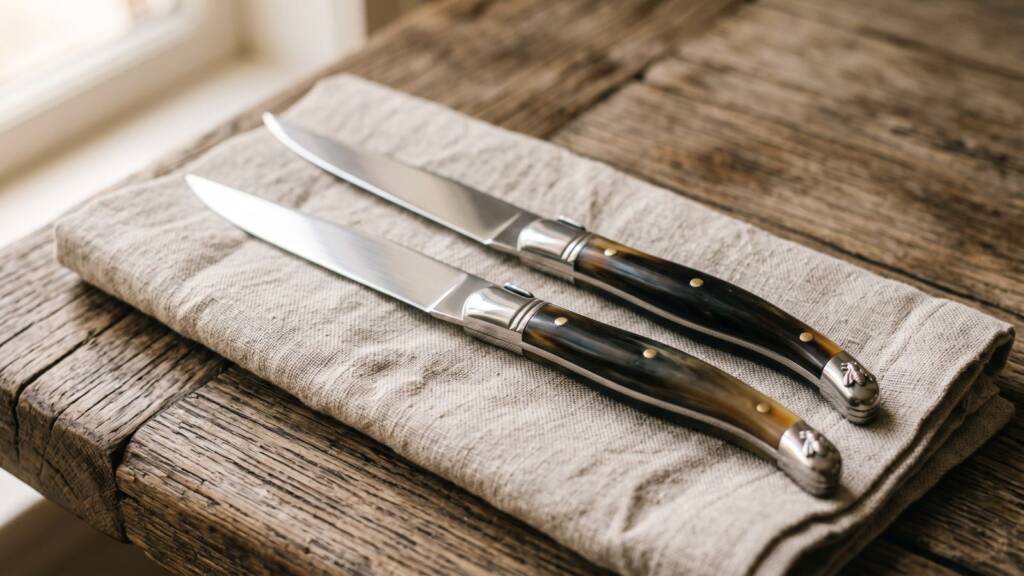
Laguiole Knives Explained
A pattern, not a protected origin. The bee, the cross, the court cases and how to tell a good one.
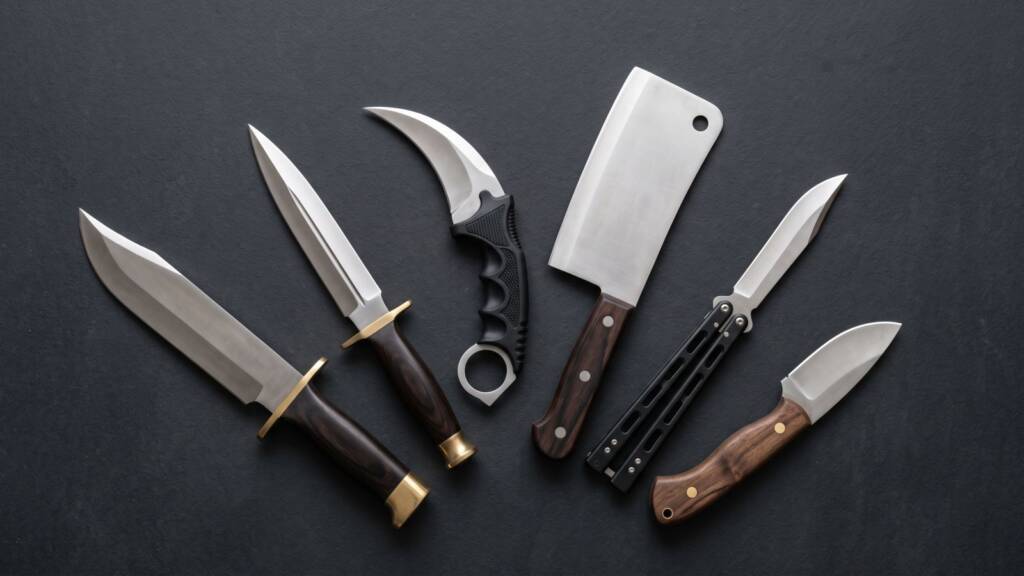
Knife Types Explained
Every knife family in one place: what it is, what it was invented for, and whether it still answers that question.
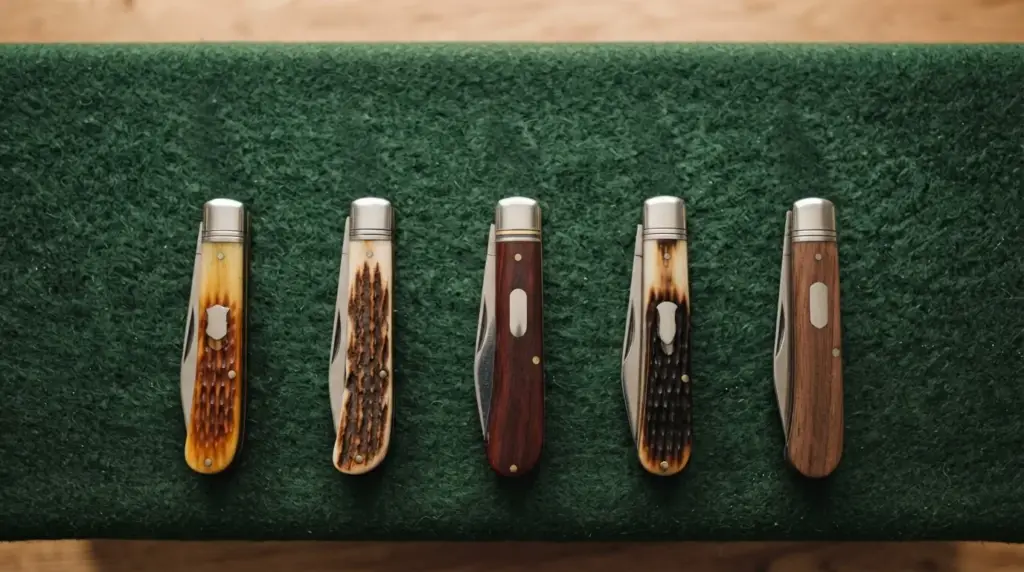
Multi Blade Pocket Knives
Stockman, trapper, barlow and the rest — blade counts, what each blade is for, and how a slipjoint actually holds open.
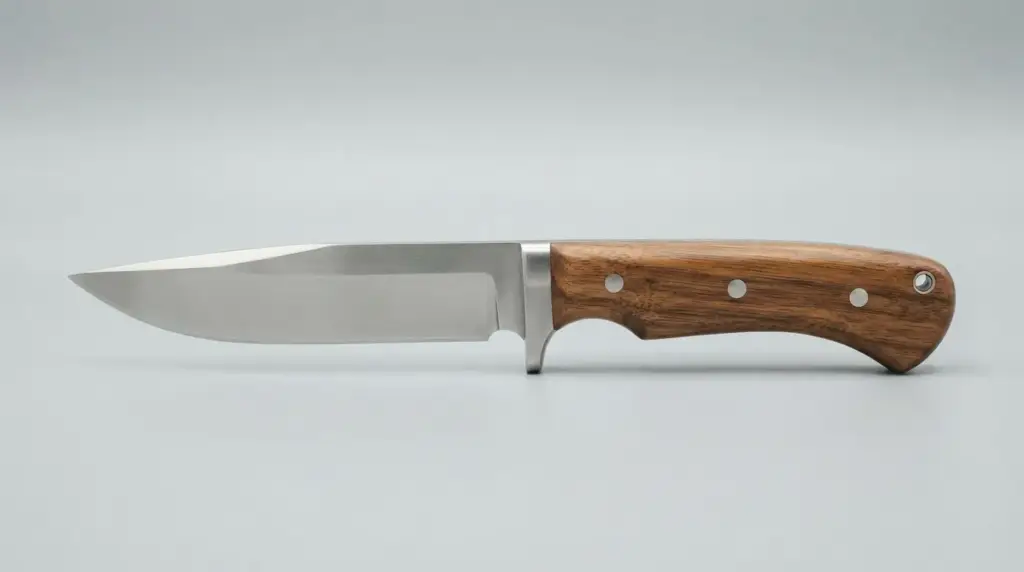
Knife Anatomy: Parts of a Knife Explained
Tip to butt, plus folder and sheath parts - the reference table for ricasso, choil, swedge, tang and the rest.
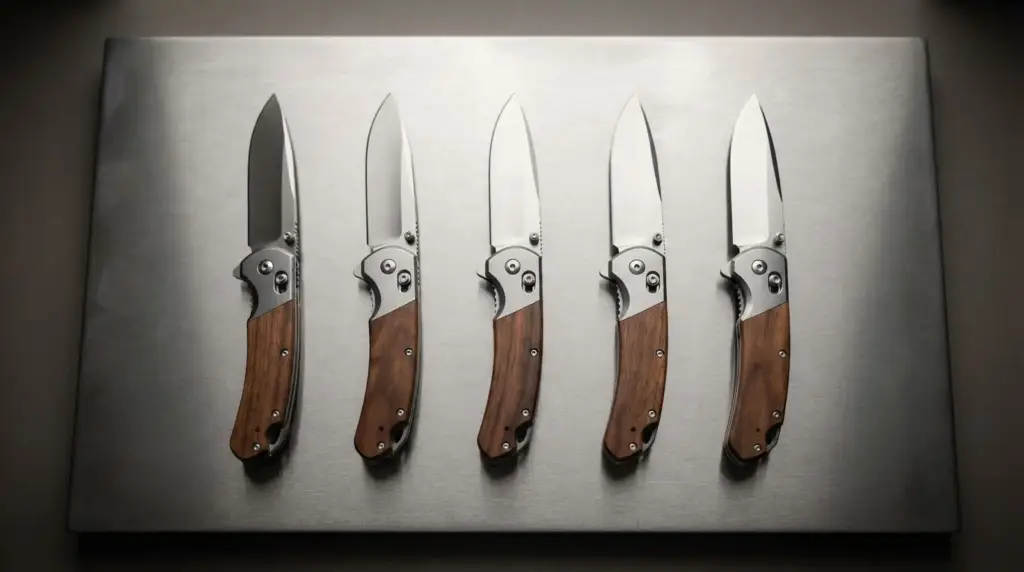
Folding Knife Locks: Liner, Frame, Back and Slip Joint
The six folding locks you will actually meet, how each one fails, and a one minute inspection you can run before you buy.
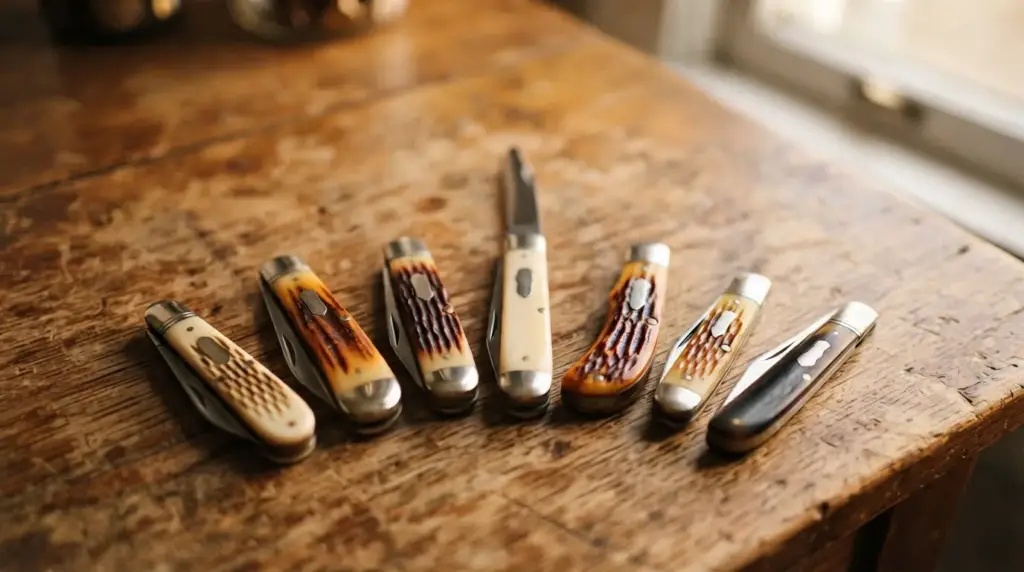
Trapper, Stockman and Barlow: Traditional Pocket Knife Patterns
Frame shapes, blade shapes and bolsters decoded, with the pattern numbering system and an honest note on what we do not make.
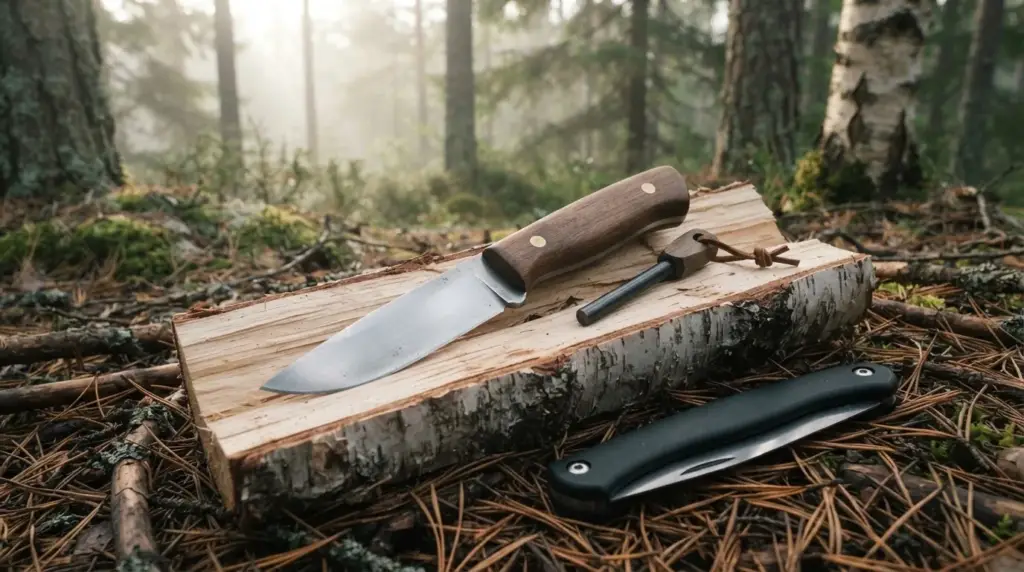
Choosing a Bushcraft or Camp Knife
Length, grind, spine geometry and steel for a camp knife, measured against what our own outdoor range actually offers.
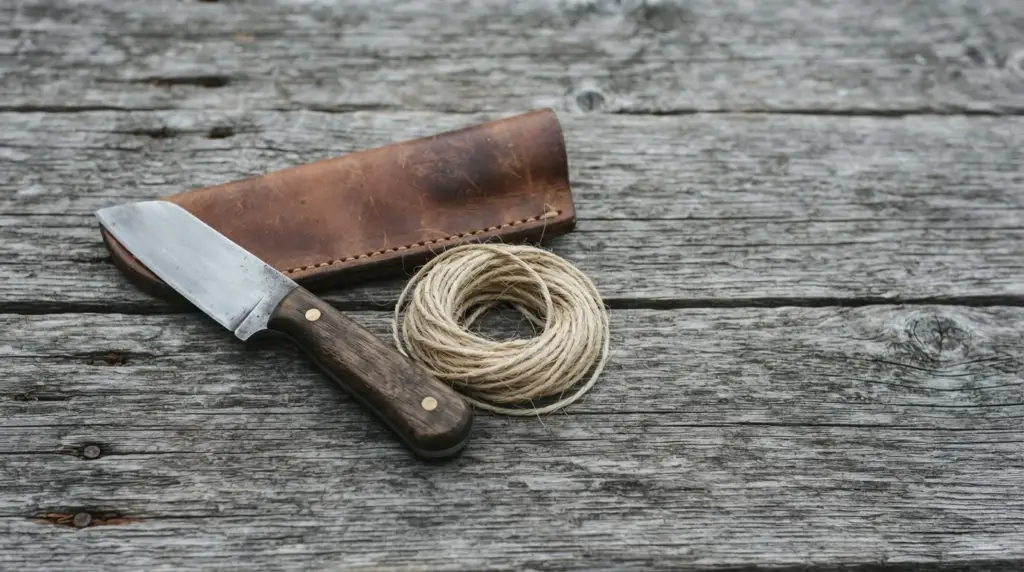
The Cowboy Bull Cutter: A Ranch Pattern Nobody Explains
Why the tip is blunt, what the notched choil does, and the real prices, steels and handles across our 32 bull cutters.
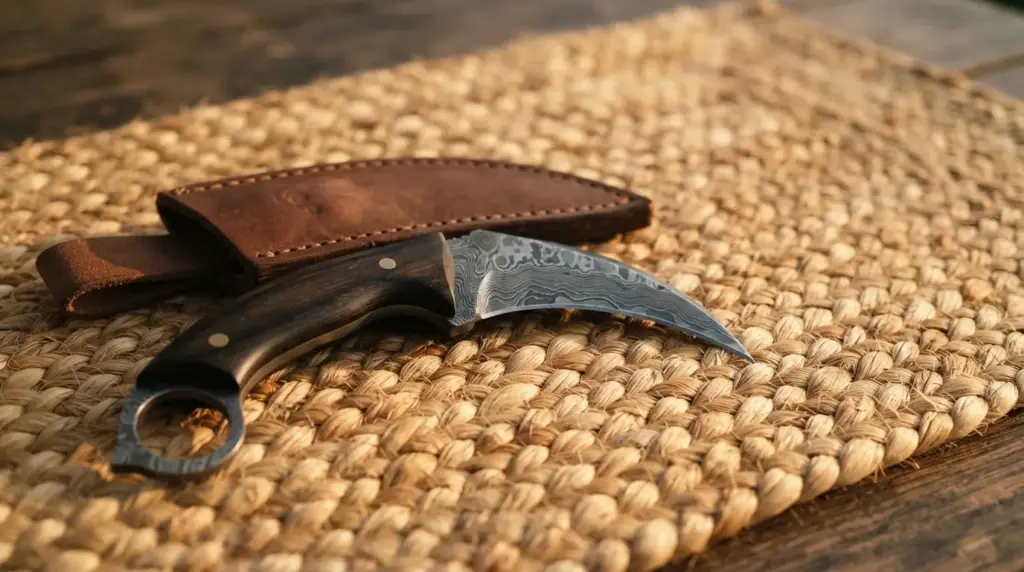
Damascus Karambits: Ring, Curve and Who They Are For
The ring is a retention device and the curve is a farming shape. What that means before you buy one of our eleven.
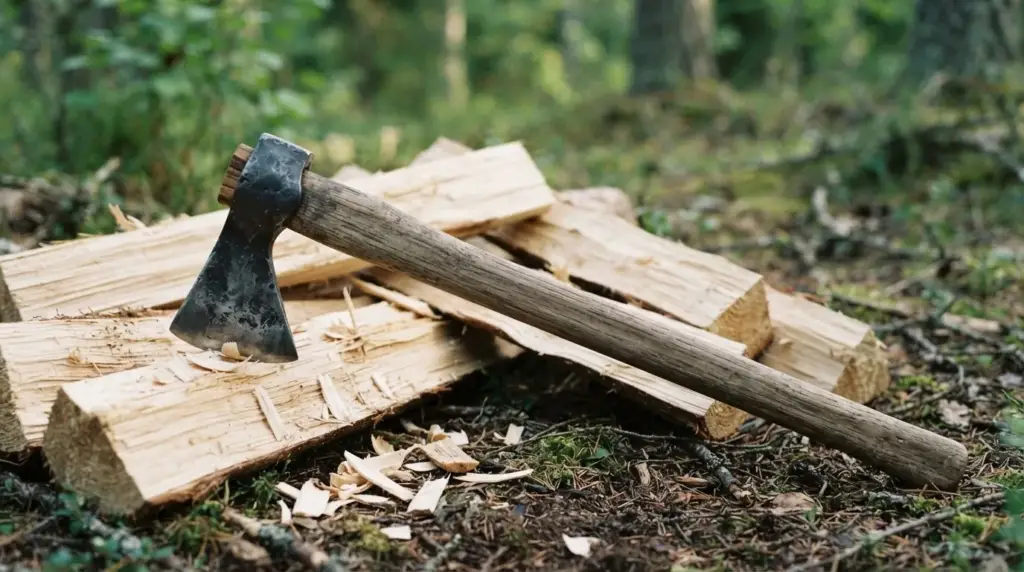
Damascus Tomahawks: Head Weight, Haft and What They Chop
What separates a tomahawk from a hatchet, why head weight matters, and the lengths, steels and prices of our ten.
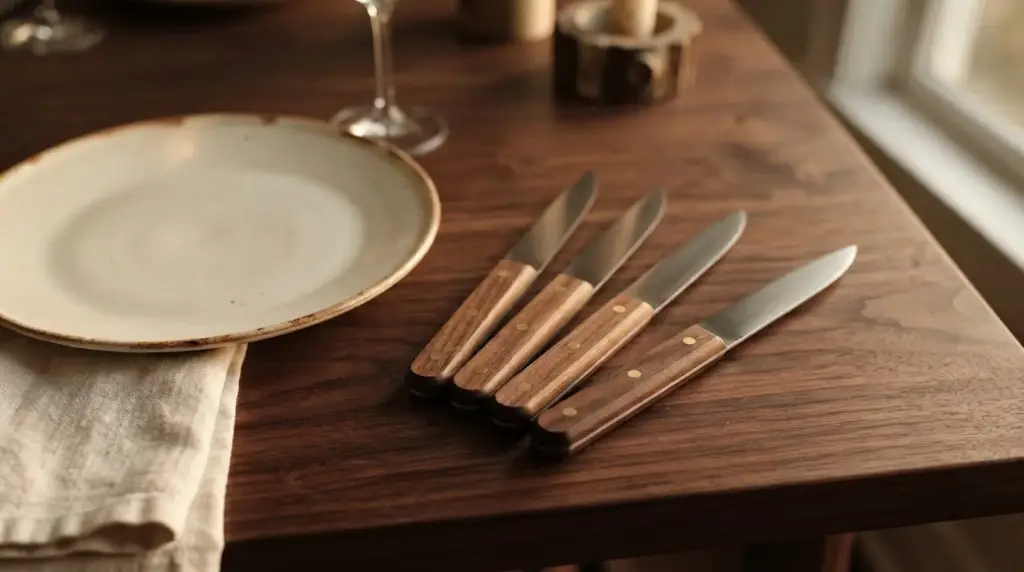
Steak Knives: Serrated, Straight and What a Forged Set Costs
Straight edge against serrated, how many you need, and the real arithmetic of a forged set of four.
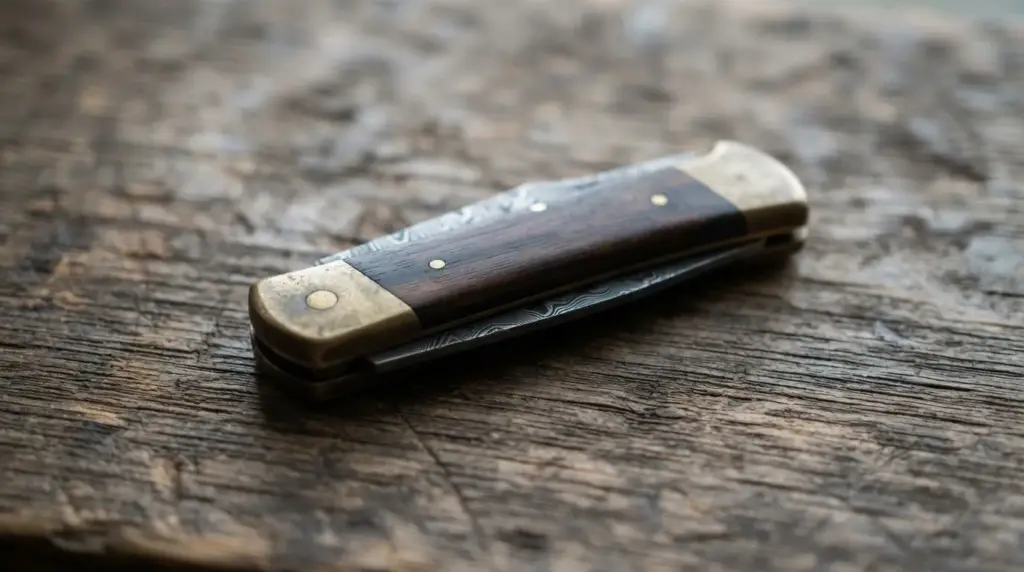
Damascus Pocket Knives: What You Get and What You Give Up
What a Damascus folder is, what 111 of our own listings show, and what it does worse than stainless.
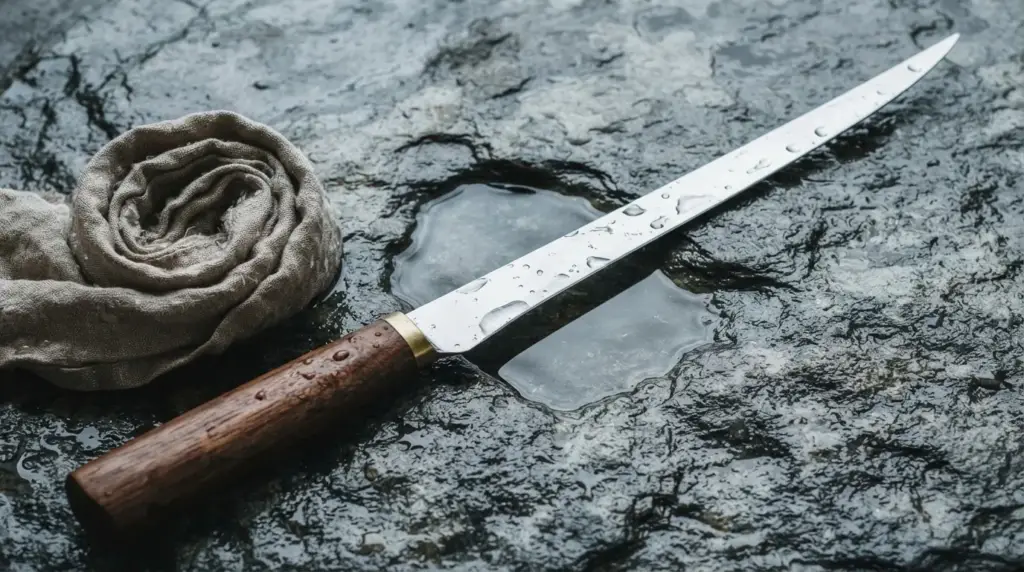
Fishing Knives: Bait, Fillet, Folding and Saltwater
Sizing a fillet blade, why carbon Damascus loses to salt water, and what our seven fishing listings really are.
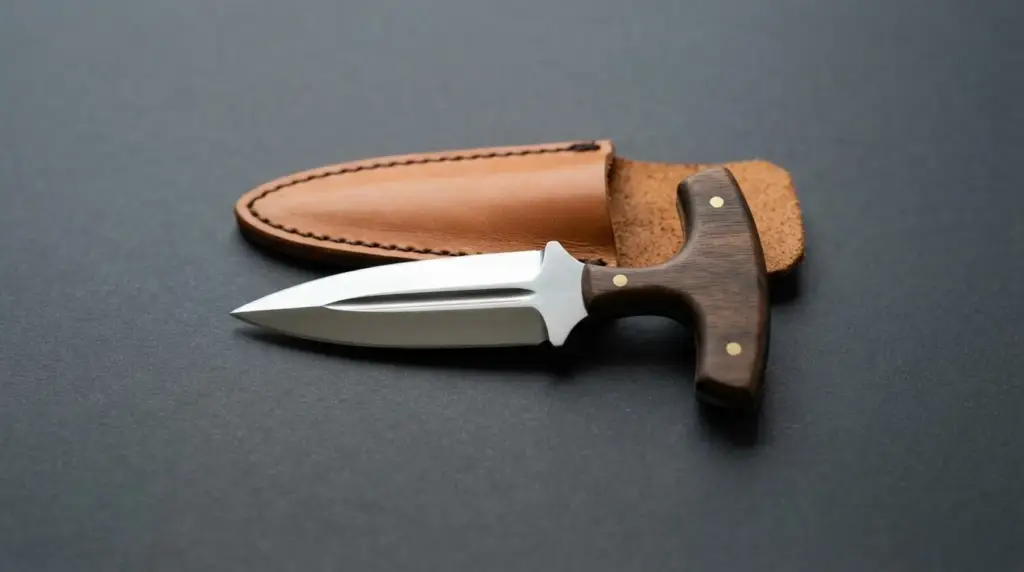
Push Daggers: The Pattern, the Grip and the Law
The legal problem first, then the history, the grip and what our 15 push daggers actually measure.
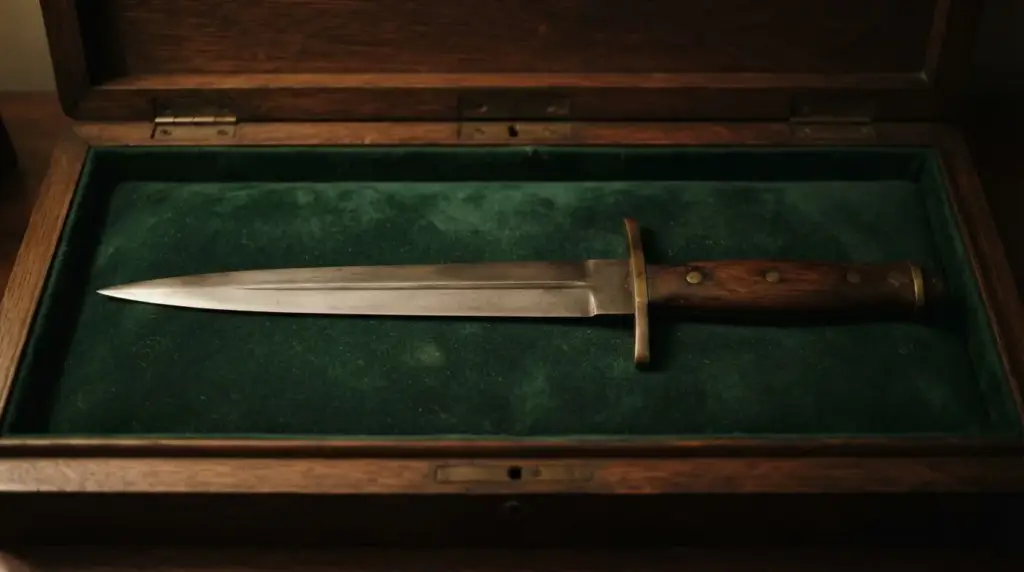
The Hunting Dagger: Double Edge, Boar Blades and Why It Fell Out of Use
Why the double edge fails at skinning, where the pattern came from, and what our nine daggers really are.
Getting an edge back
Angle, burr and strop, and why honing and sharpening are two different jobs.
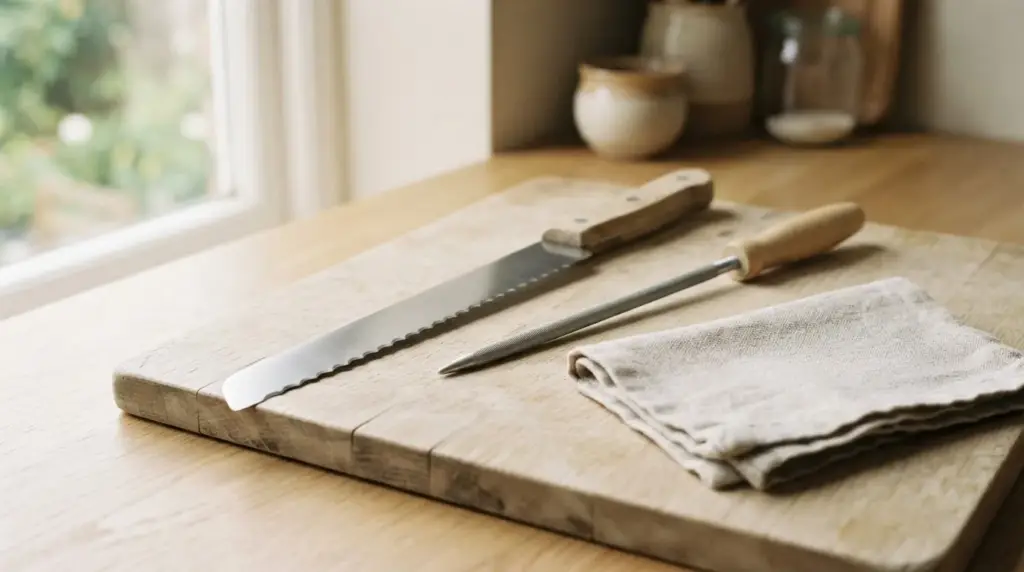
Sharpening a Serrated Edge Without Ruining It
The one procedure a general sharpening guide cannot cover, scallop by scallop with a tapered rod.
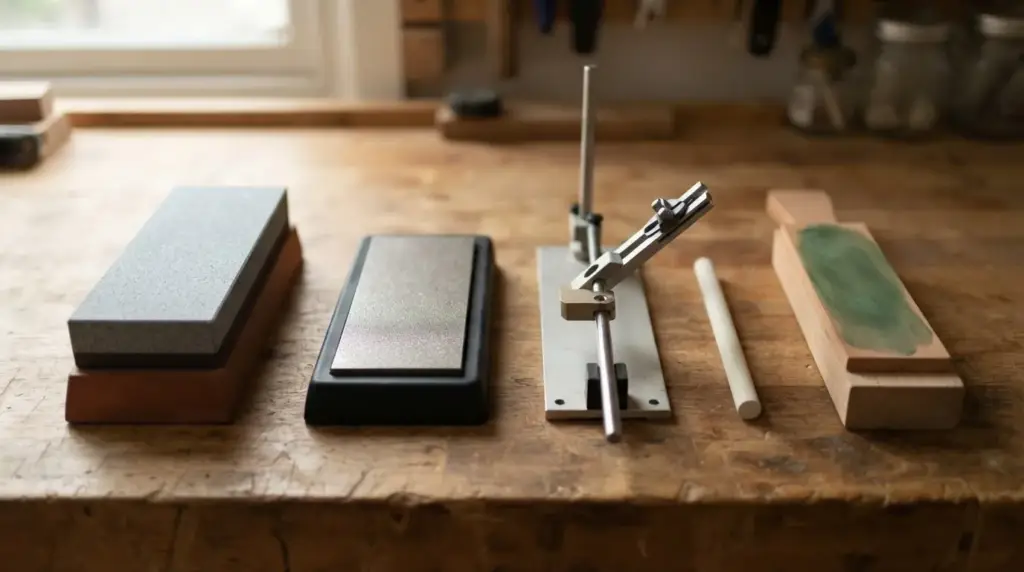
Whetstone, Pull Through, Guided or Rolling: Which Sharpener
Six sharpening systems graded on cost, steel removed per session and who should buy which.
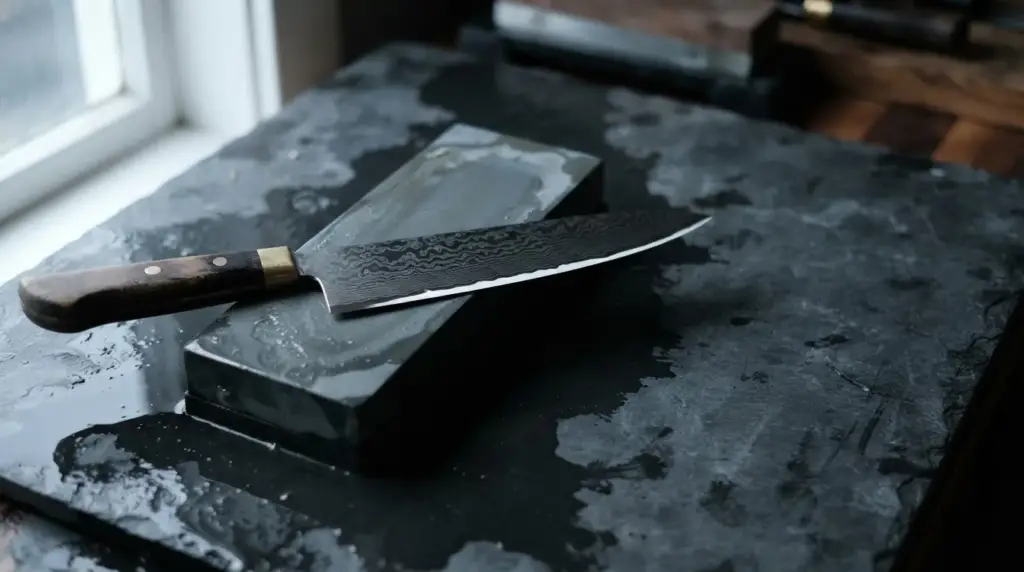
Sharpening a Damascus Knife Without Wrecking the Pattern
What changes when the blade is pattern welded: the bright band on the bevel, grit choice, re etching and stropping.
How to Sharpen a Knife on a Whetstone
Angle, burr and strop: the three things that decide whether a knife gets sharp.
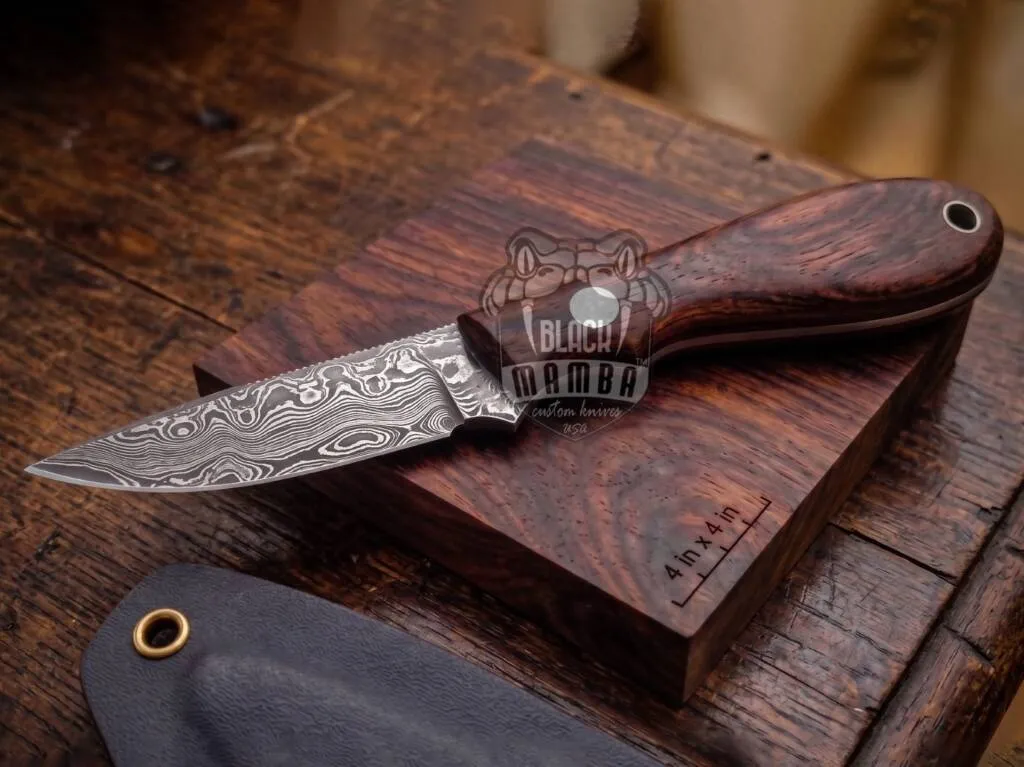
Honing vs Sharpening: What the Rod Actually Does
Why your knife feels dull long before it actually is.
What the blade is made of
Layer counts, steel grades, and how to tell a forged pattern from a printed one. This is where most buying mistakes happen.
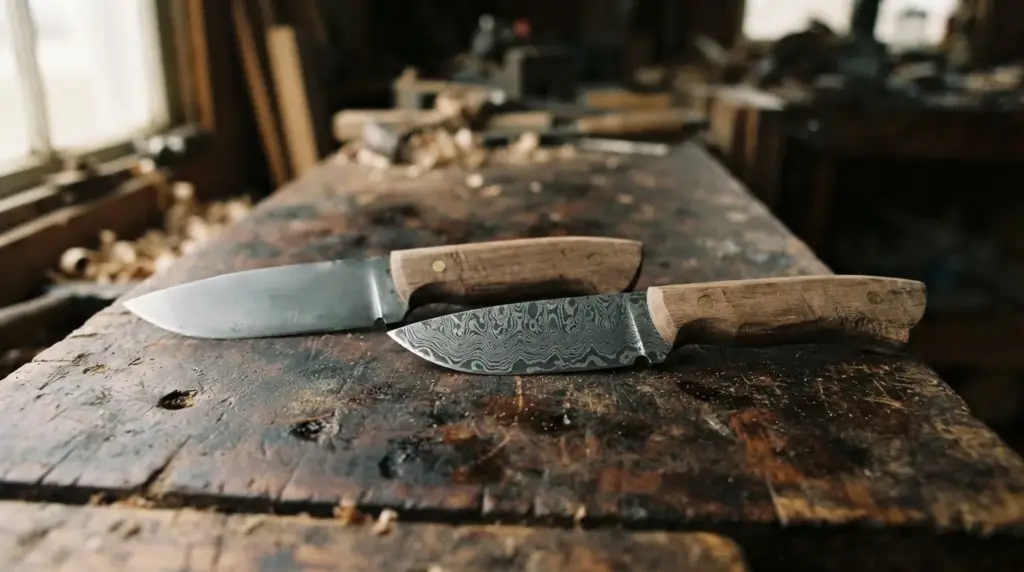
1095 or D2: Two Steels We Actually Sell
The pairwise comparison the steel charts skip, from a catalogue holding 111 D2 knives and 320 Damascus.
Wootz, Crucible Steel and the History Behind the Name
Wootz, the crucible steel trade, and why modern Damascus only borrowed the name.
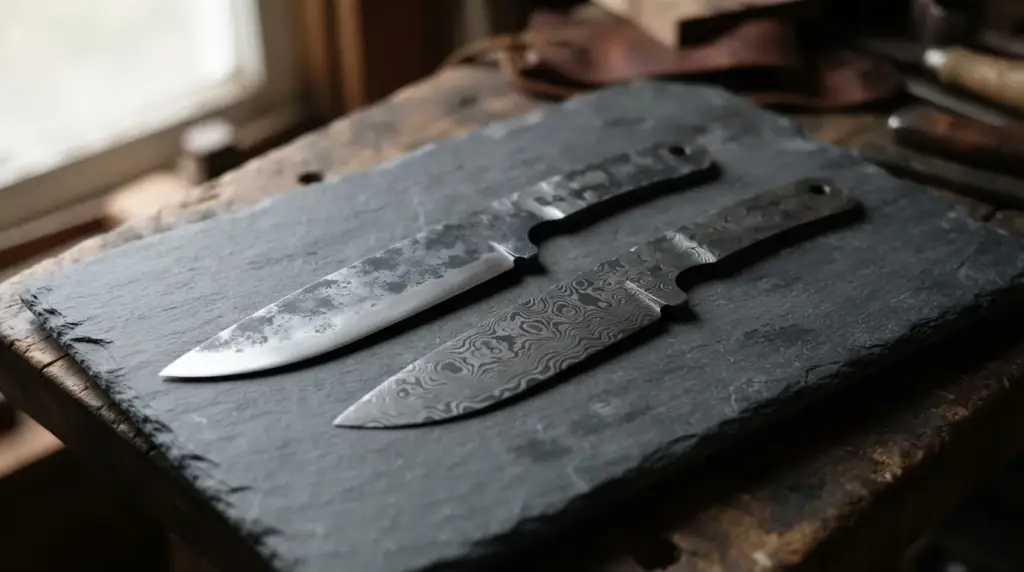
San Mai and Damascus: Two Different Laminates
A three layer core and jacket against a stack of hundreds, and what each one really does.
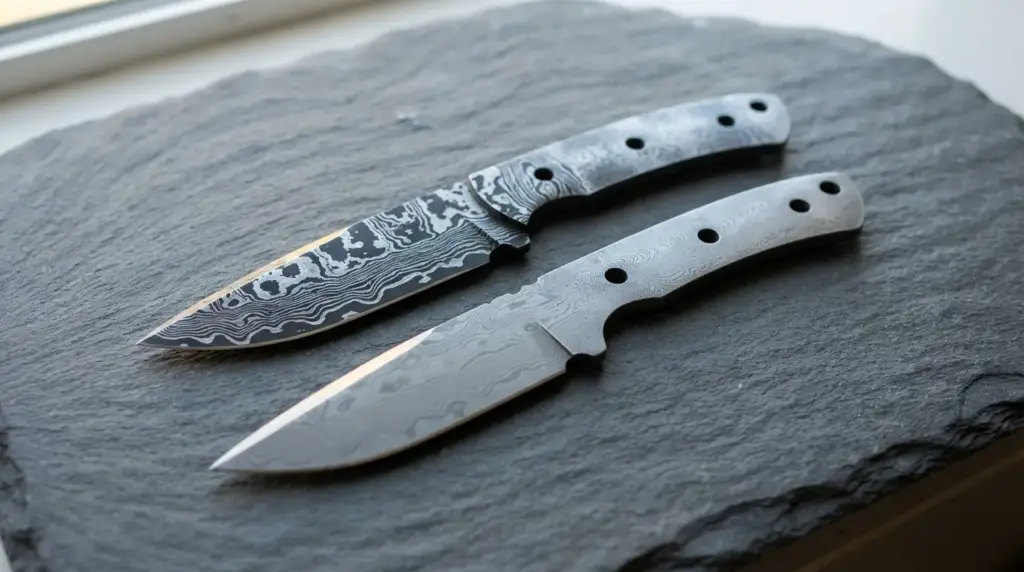
Stainless Damascus and Carbon Damascus: Which Steels Are in the Billet
The steels in each billet, why the contrast comes from the etchant, and what we actually stock.
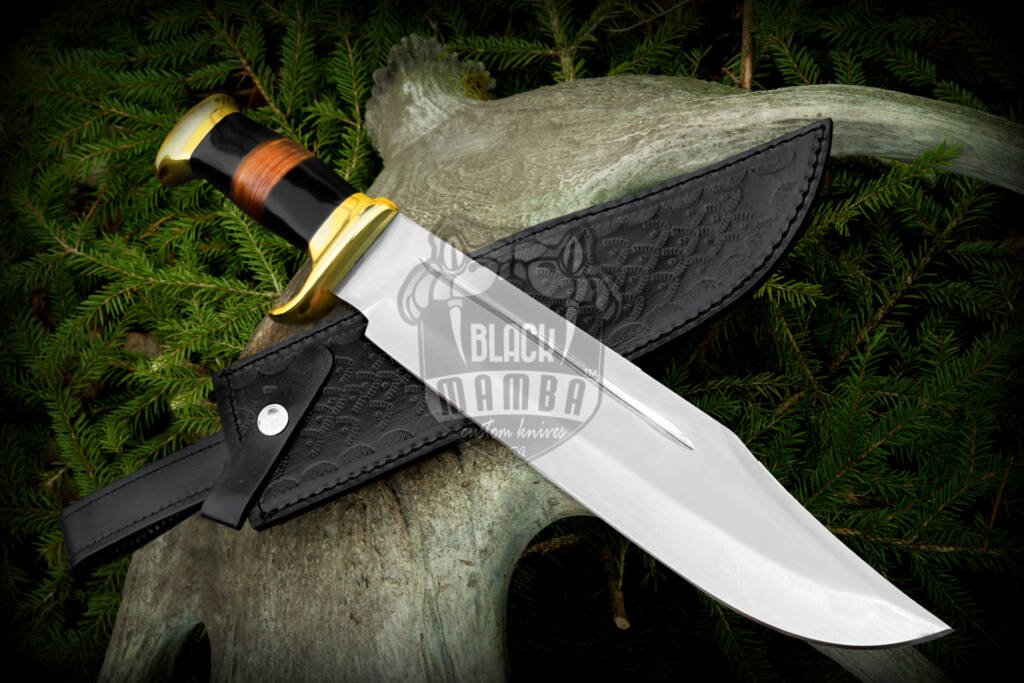
Knife Steel Chart
Four properties that fight each other. Improve one and you give up another.
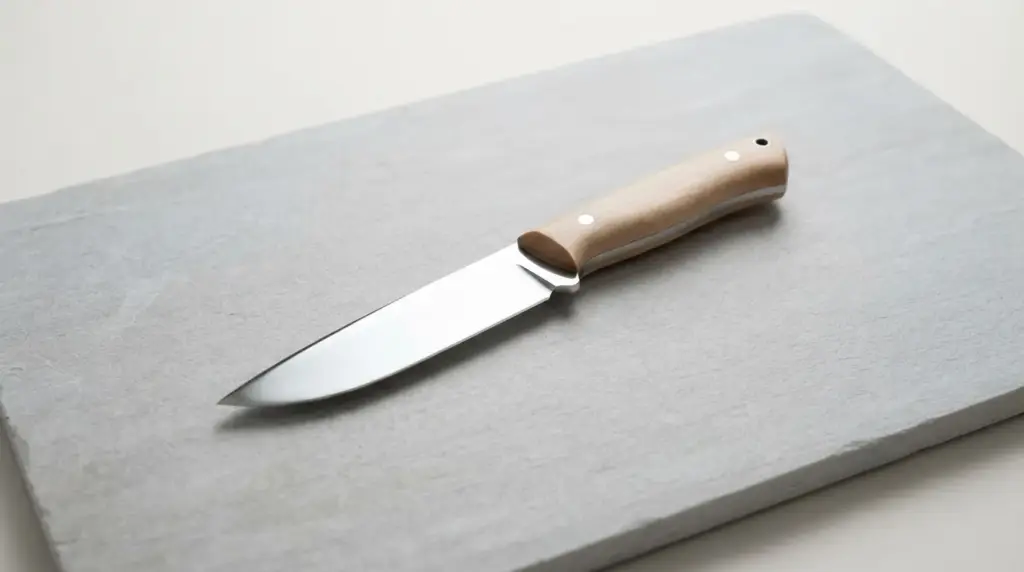
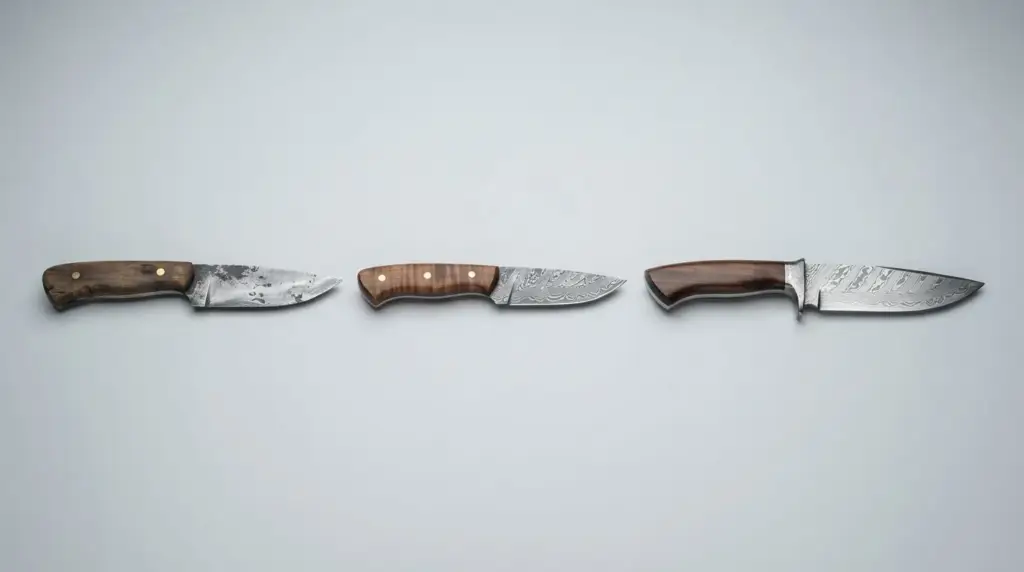
Damascus vs D2 vs 440C vs VG10: Which Steel
Damascus, D2, 440C and VG10 compared by what each one is actually good at.
Carbon vs Stainless Kitchen Knives
Carbon is better to cut with, stainless is better to own. Pick by your habits.
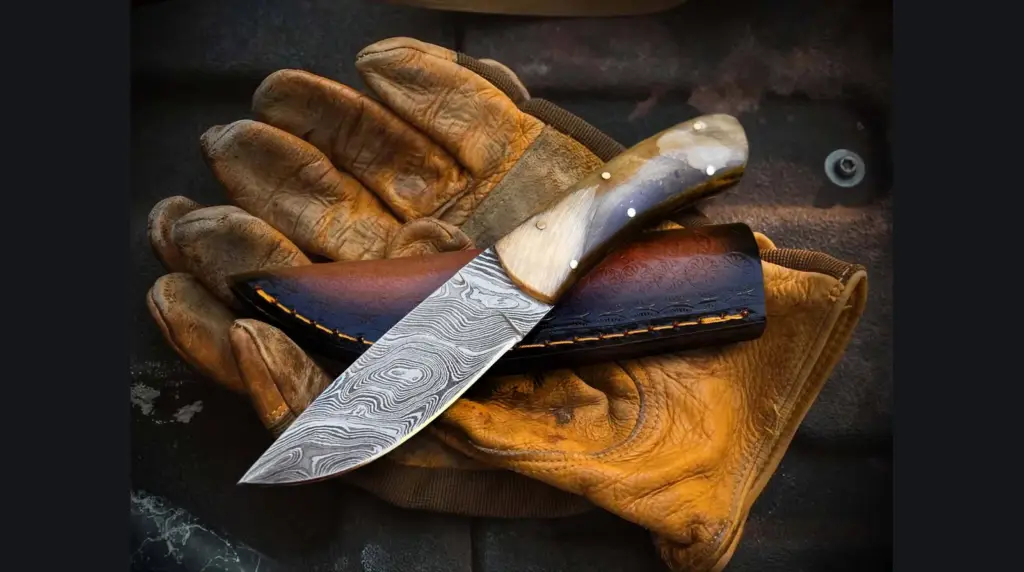
What 352 Layers Actually Means
Where the layer count comes from, and why a bigger number is not a better blade.
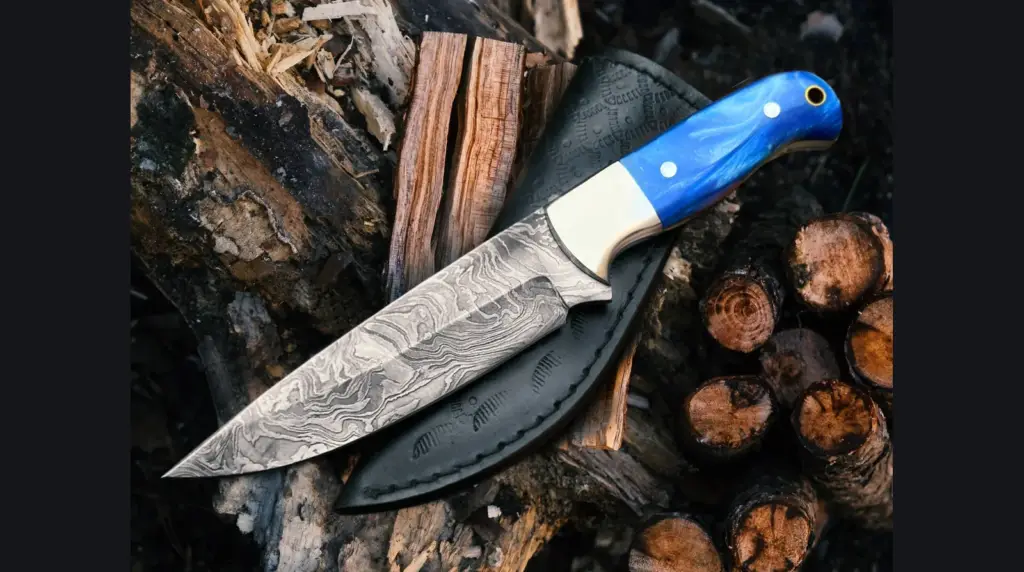
How to Tell Real Damascus from a Printed Pattern
Four checks that separate forge-welded steel from a surface-etched imitation.
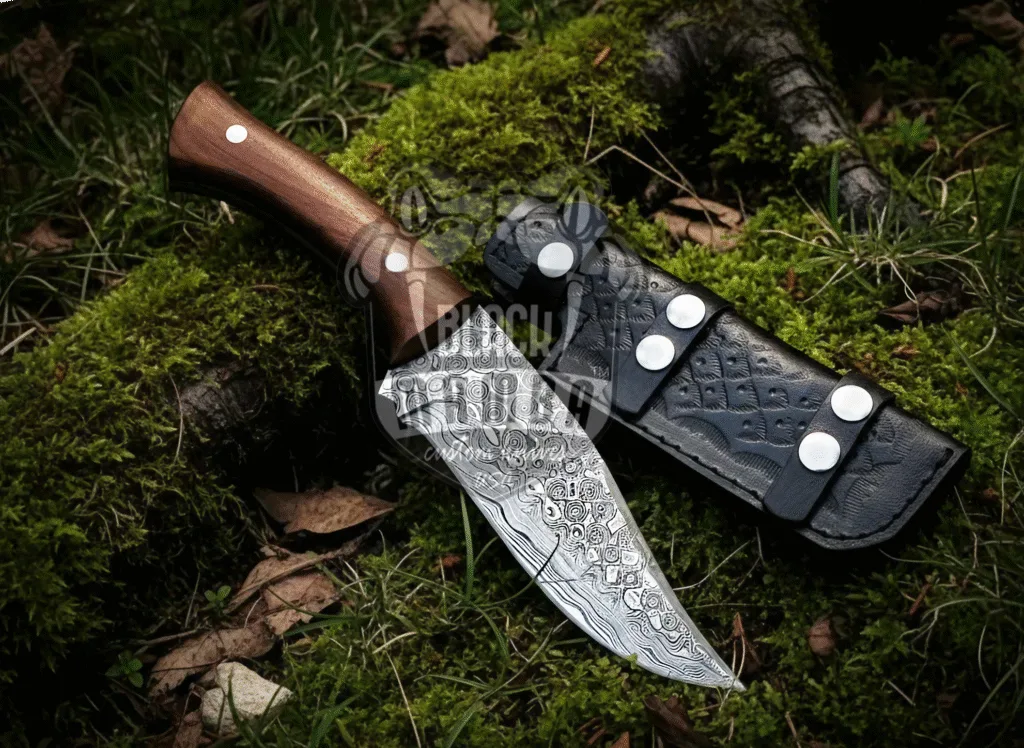
Full Tang Knife Guide: Full Tang vs Partial Tang
Knives break where the blade meets the handle. Tang is what carries that load.
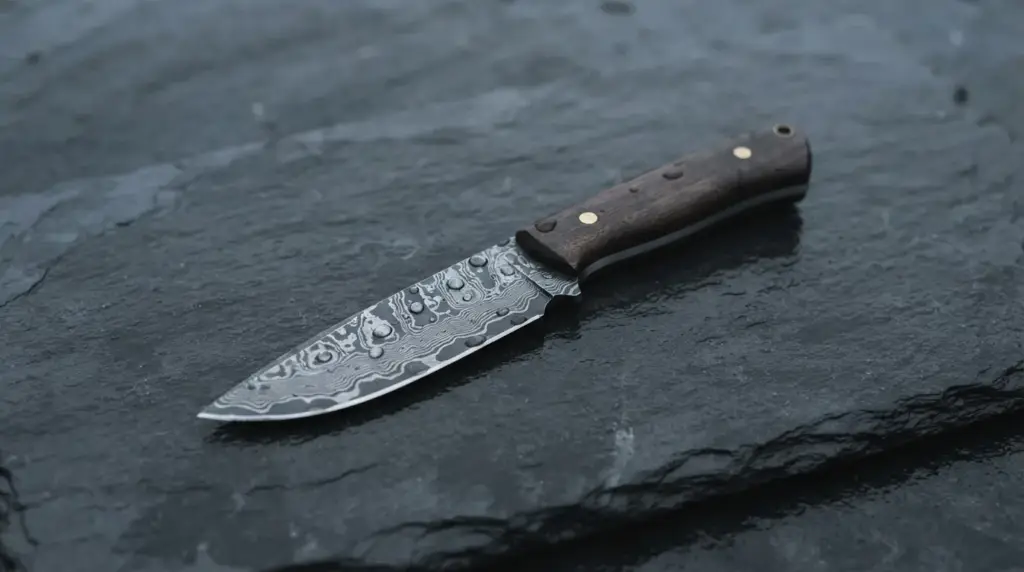
Do Damascus Knives Rust?
Damascus is carbon steel and it rusts. Why the nickel does not help, what causes it, and how to stop it.
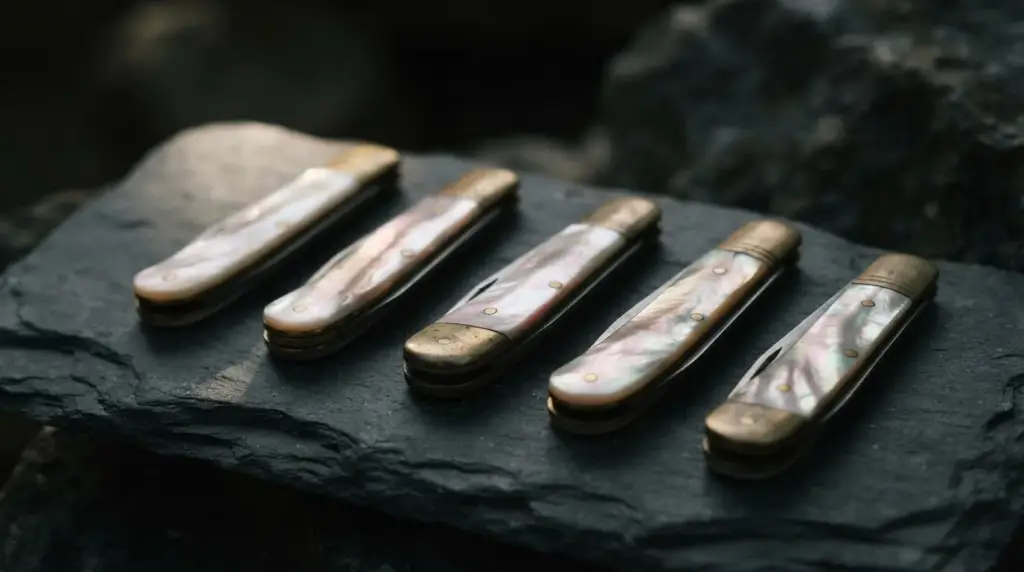
Pearl, Abalone, Stag and Bone: The Exotic Handle Materials
What the exotic handle materials actually do over time, written by the people who have to warranty them.
From billet to finished blade
What happens between a stack of flat steel sheets and the knife in the box, and why that process changes what you pay.
Forged or Ground: The Two Ways a Knife Is Made
The two ways a blade is shaped, what each one does to the steel, and what neither can do.
Heat Treatment: The Step That Decides Whether a Knife Is Good
What heat treatment does to steel, the nine ways it goes wrong, and the hardness we hold.
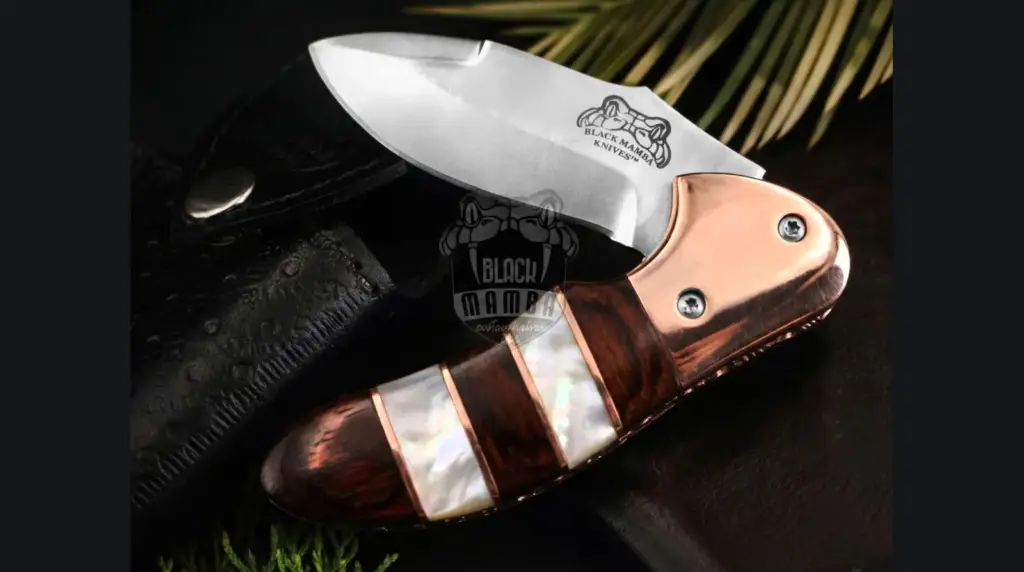
Hand-Forged vs Factory Made Knives
What the extra money buys, and when the factory knife is the smarter purchase.
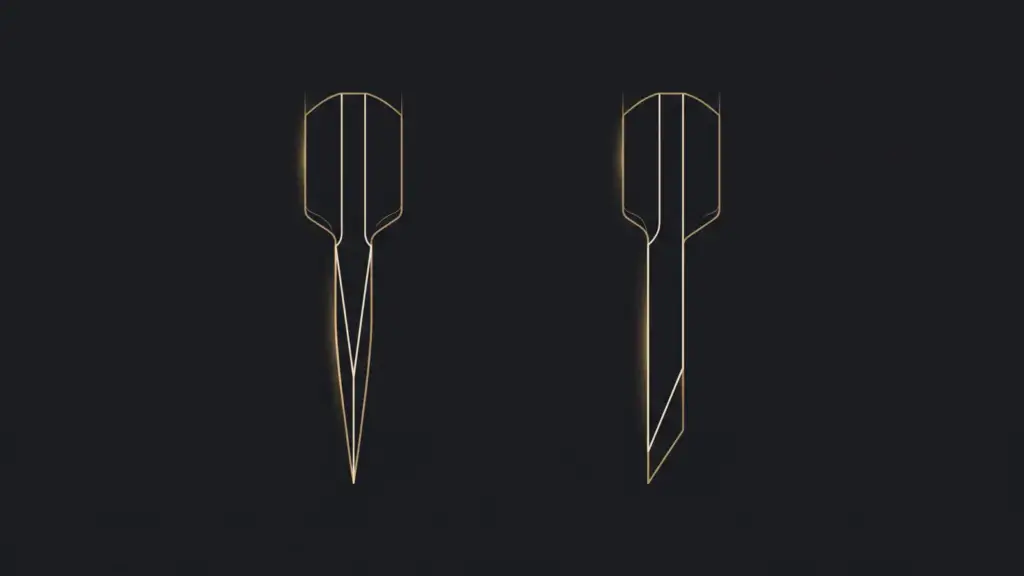
Chef Knife Bevels Explained
What a full flat grind and chisel grind actually do in the kitchen, and which one to buy.
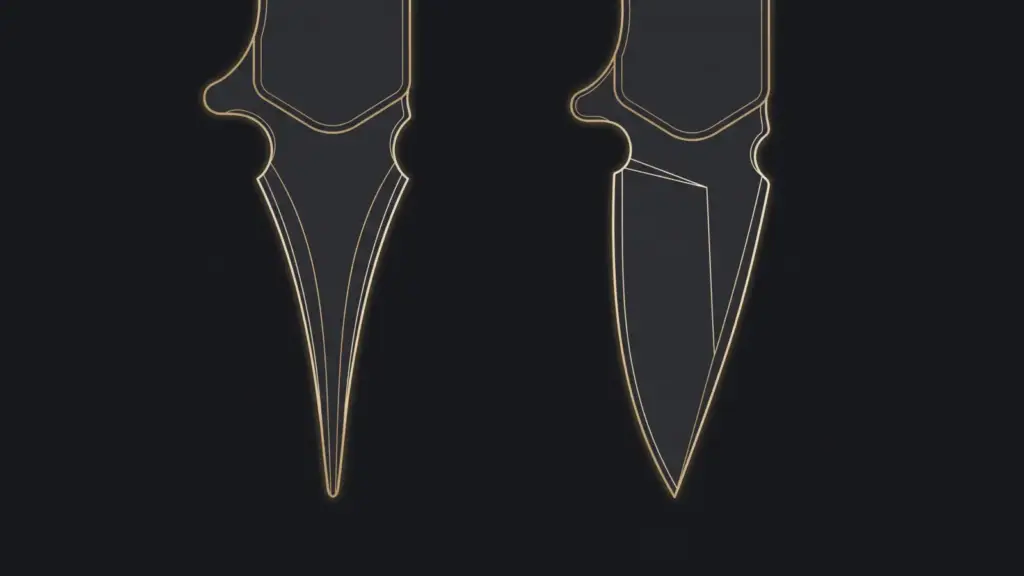
Pocket Knife Bevels Explained
Hollow grind vs sabre grind on a folder, and what each means for everyday carry.

Fixed Blade Bevels Explained
Convex vs sabre grind on a hunting or outdoor fixed blade, and what actually survives hard use.
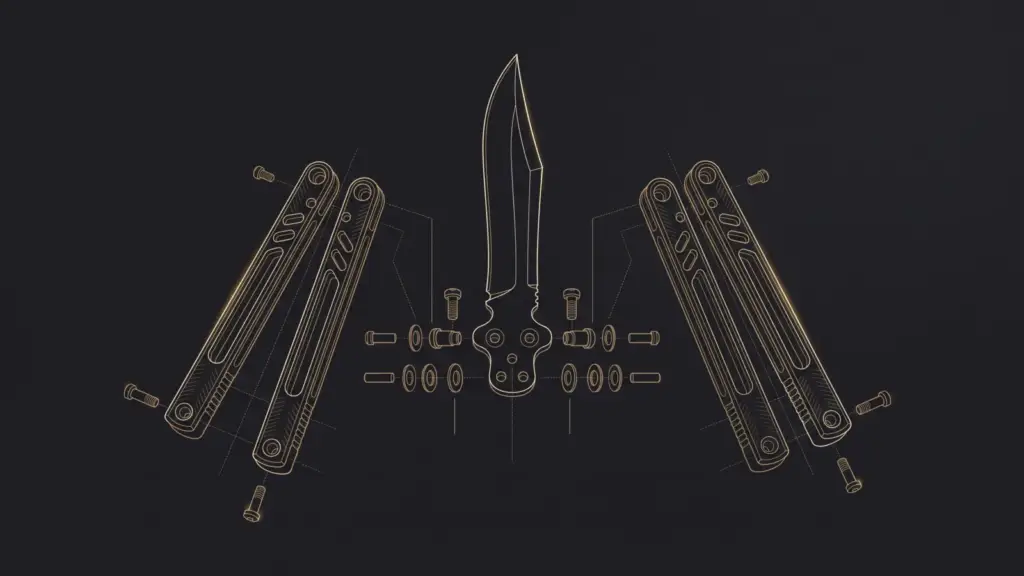
Balisong Construction Explained
Every part of a balisong, and the two structural ways a handle actually gets built.
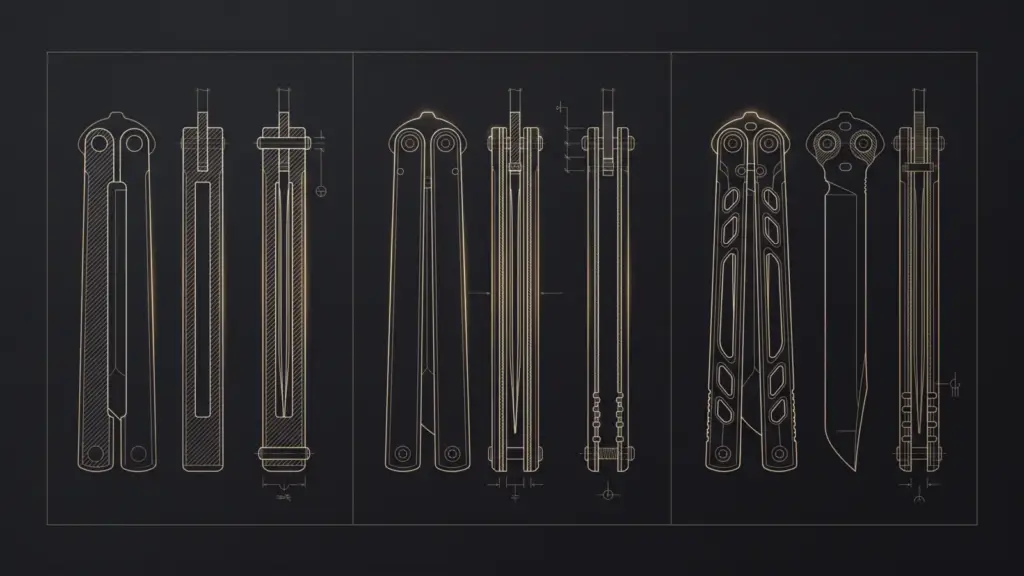
Channel vs Sandwich vs Skeletonized
Channel vs sandwich handles compared, and why skeletonized isn't really a third category.
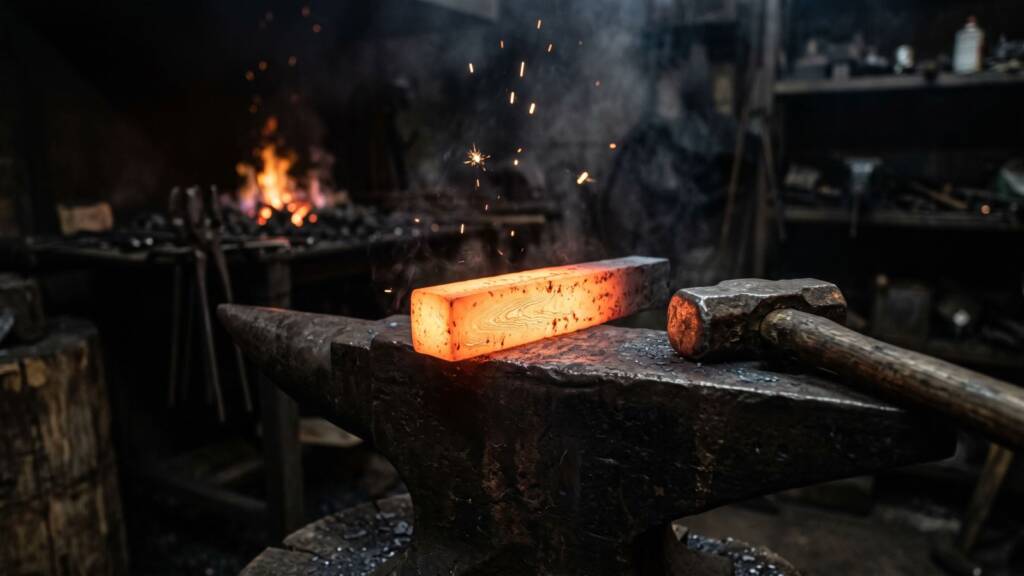
How Damascus Steel Knives Are Made
Billet to blade: forge welding, folding, pattern work, heat treat and the acid etch.
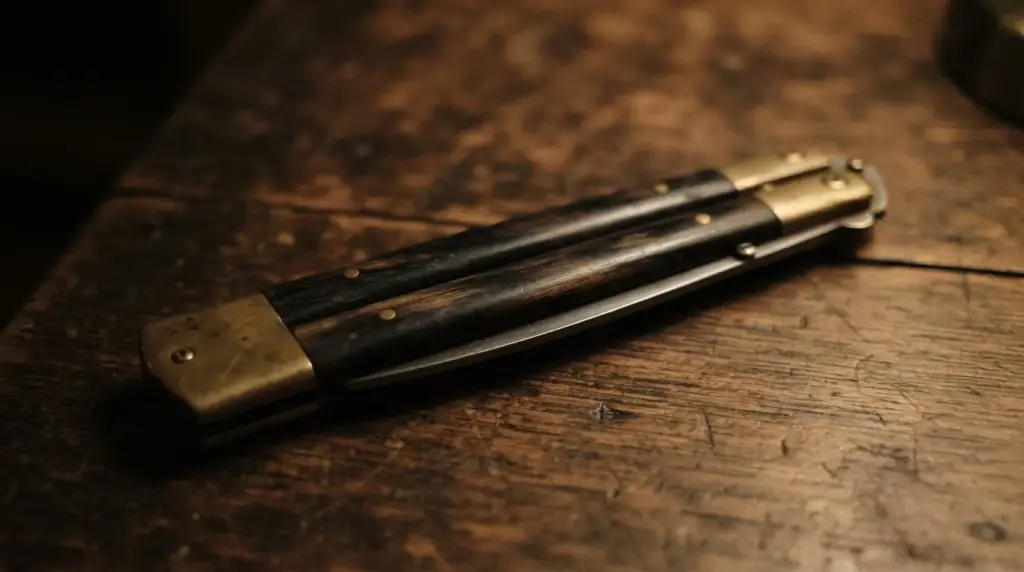
Balisong History and Origins
Batangas, the disputed origin, what balisong really means, and how to tell a traditional knife from a modern one.
Keeping it working
A hand-forged knife is not fragile, but it is not stainless either. Ten minutes of the right habits and it outlives you.
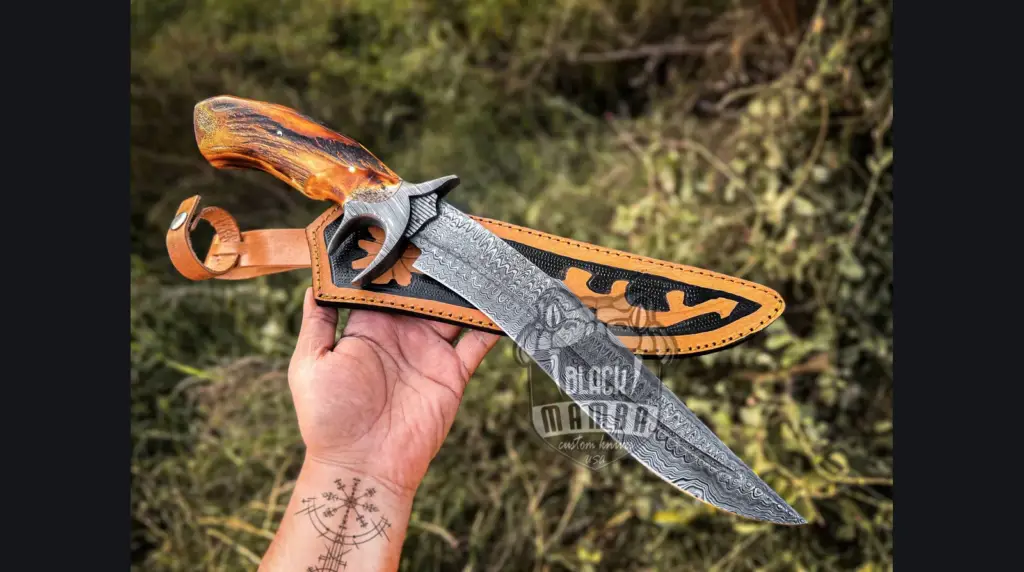
Damascus Knife Care and Sharpening
Stop the rust, sharpen it correctly, and bring a faded etch back in ten minutes.
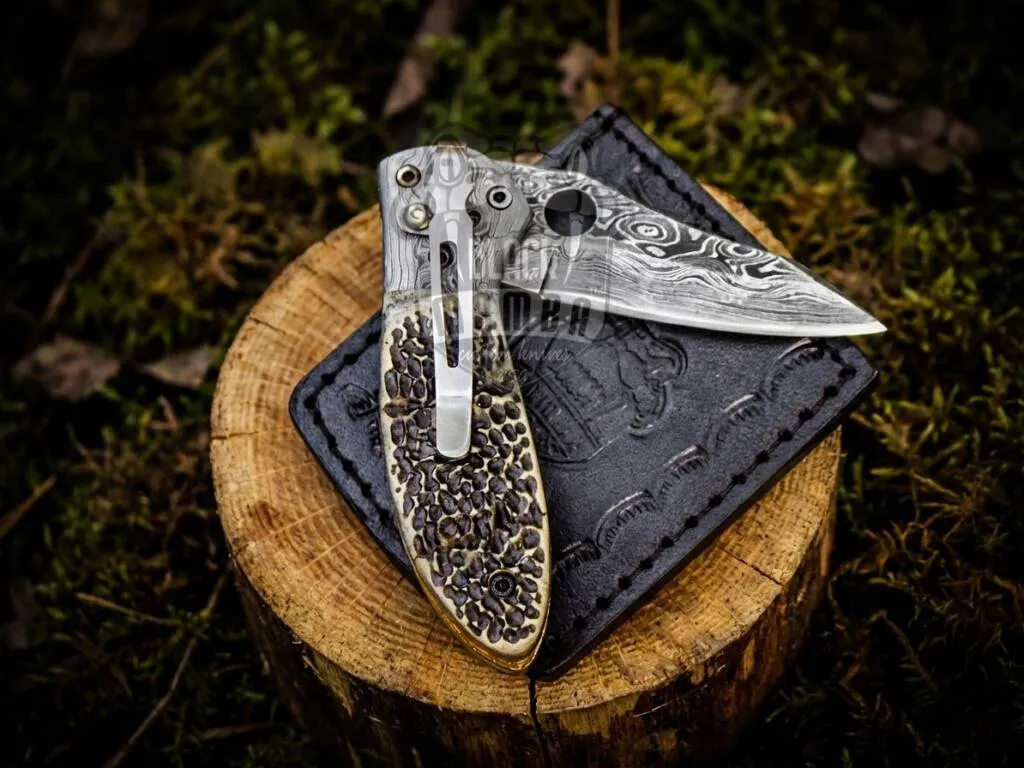
How to Clean a Pocket Knife
Ten minutes twice a year keeps a folder working for a lifetime.
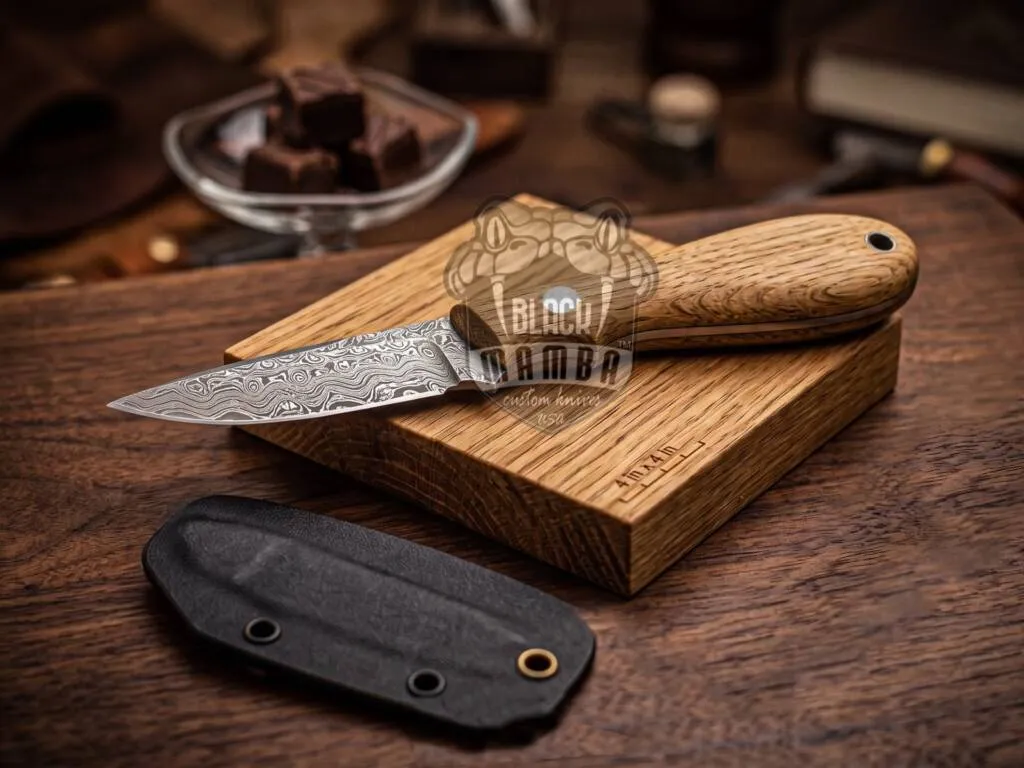
Which Oil to Use on a Knife
Mineral oil for food knives, machine oil for the rest, and never cooking oil.
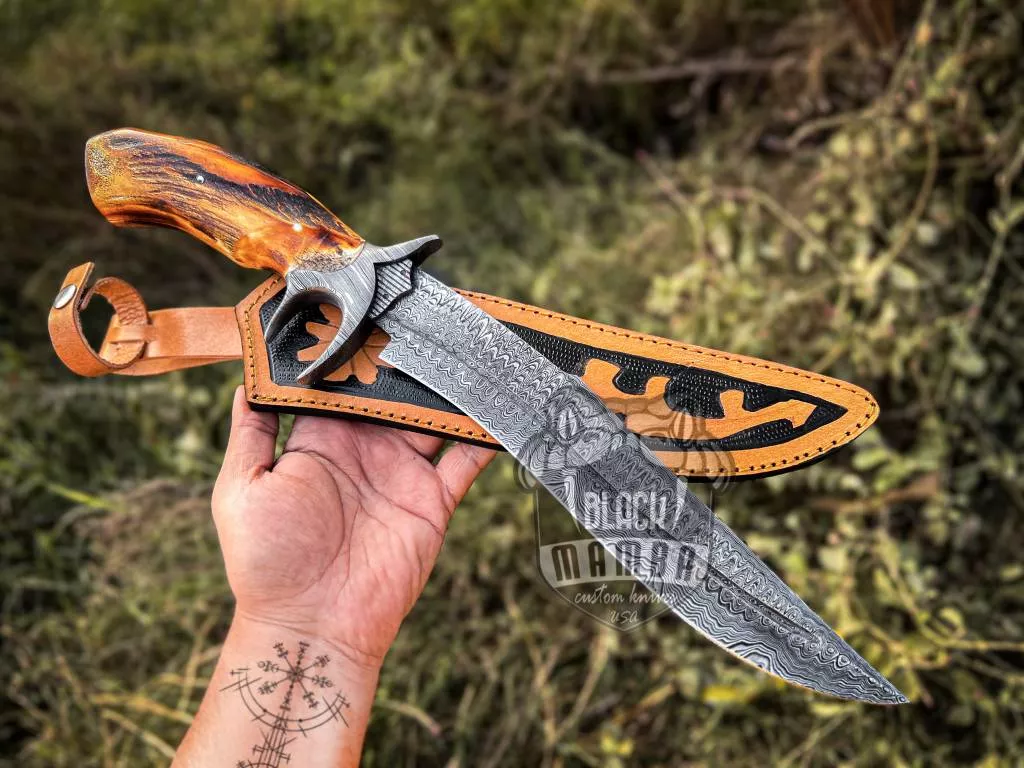
How to Remove Rust from a Knife
Surface rust comes off. Pitting does not. Know the difference before you start.
How to Store Knives Properly
Contact and moisture are what ruin stored knives. Both are easy to avoid.
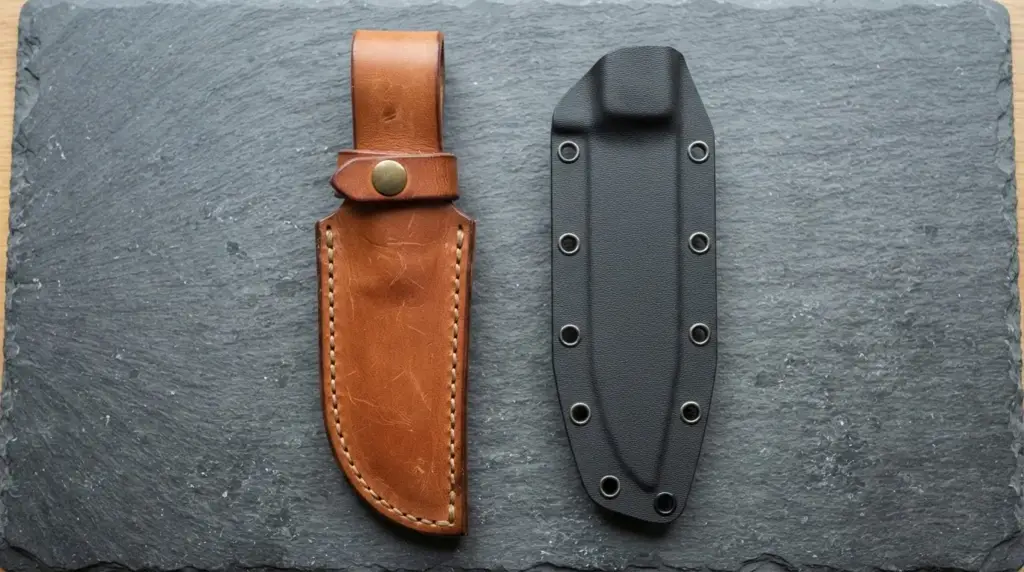
Kydex or Leather: Choosing a Fixed Blade Sheath
Corrosion, retention, thickness, welts and repair compared, and the cases where our own leather is the wrong choice.
Before you carry it
Rules differ by state and by city, and most of what is written online is years out of date. Here is how to check your own properly.
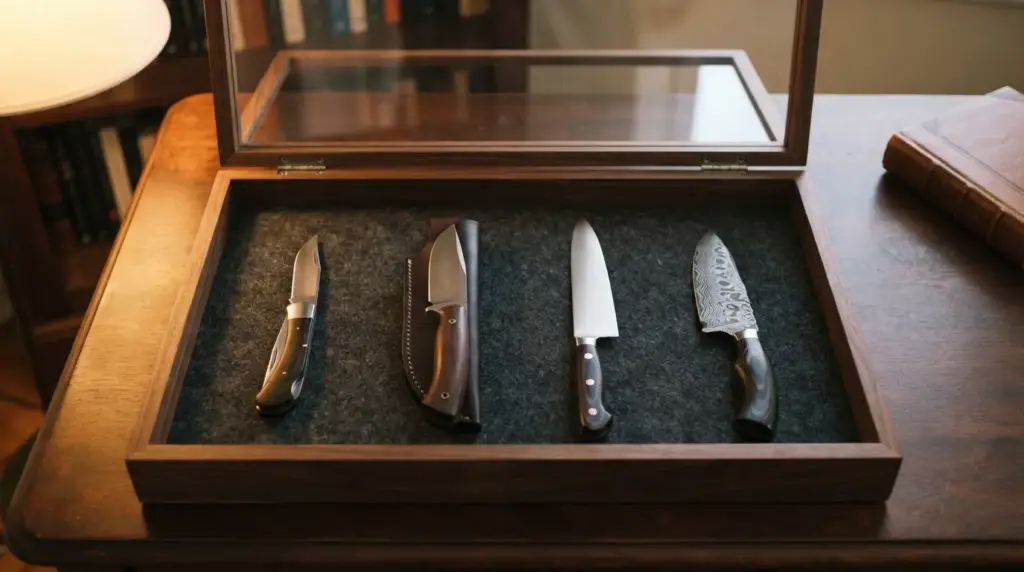
Starting a Knife Collection Without Wasting Money
Four knives, one rule, a budget that holds, and the truth about resale value.
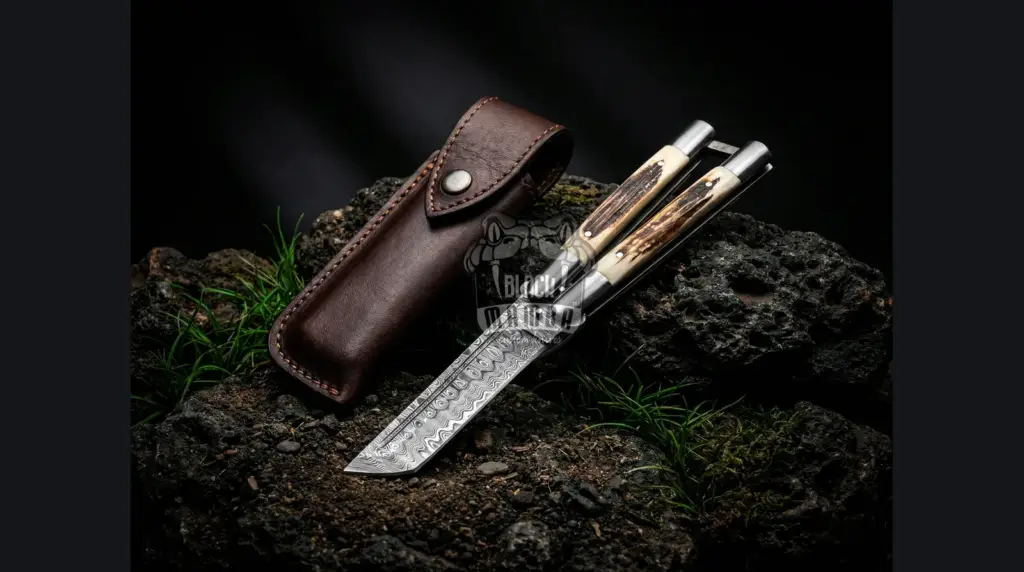
Butterfly Knife Laws in the US: How to Check Your State
Why federal law rarely applies, and how to check your own state properly.
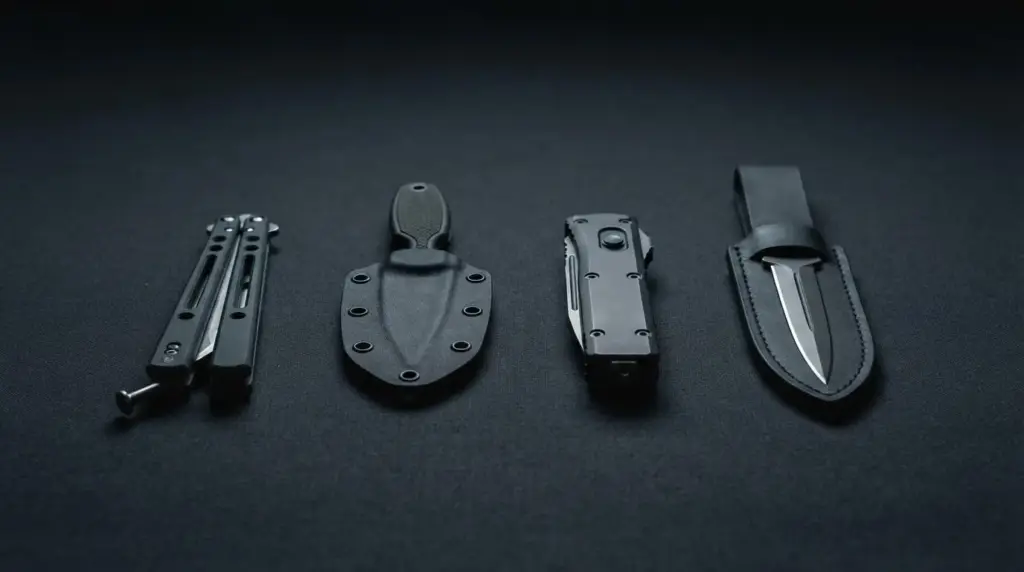
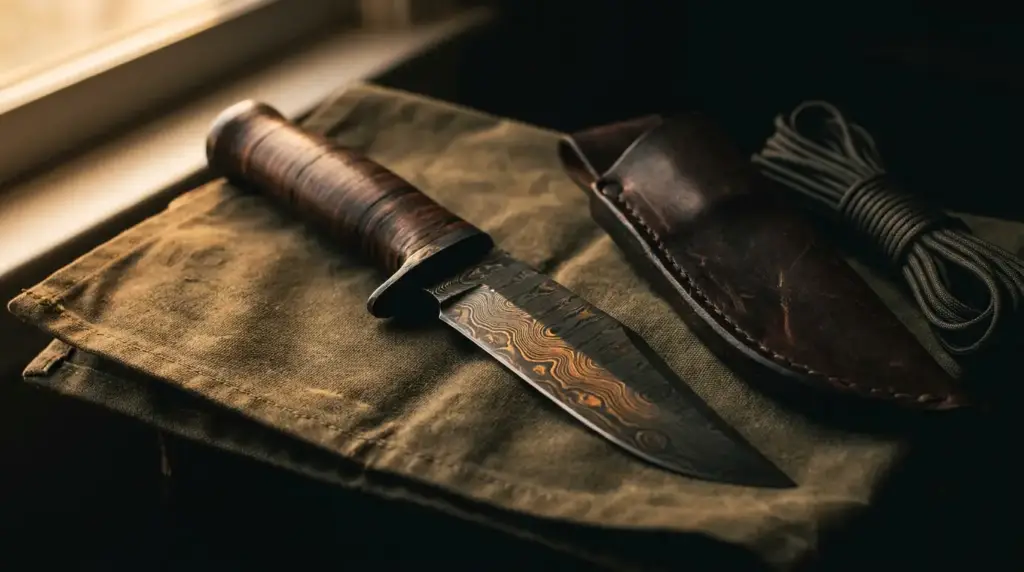
Military Knives: The Complete Buying Guide
The 1942 service pattern explained, choosing by branch and steel, engraving and unit orders, what the rules are on base, and how to claim the 10% military discount.
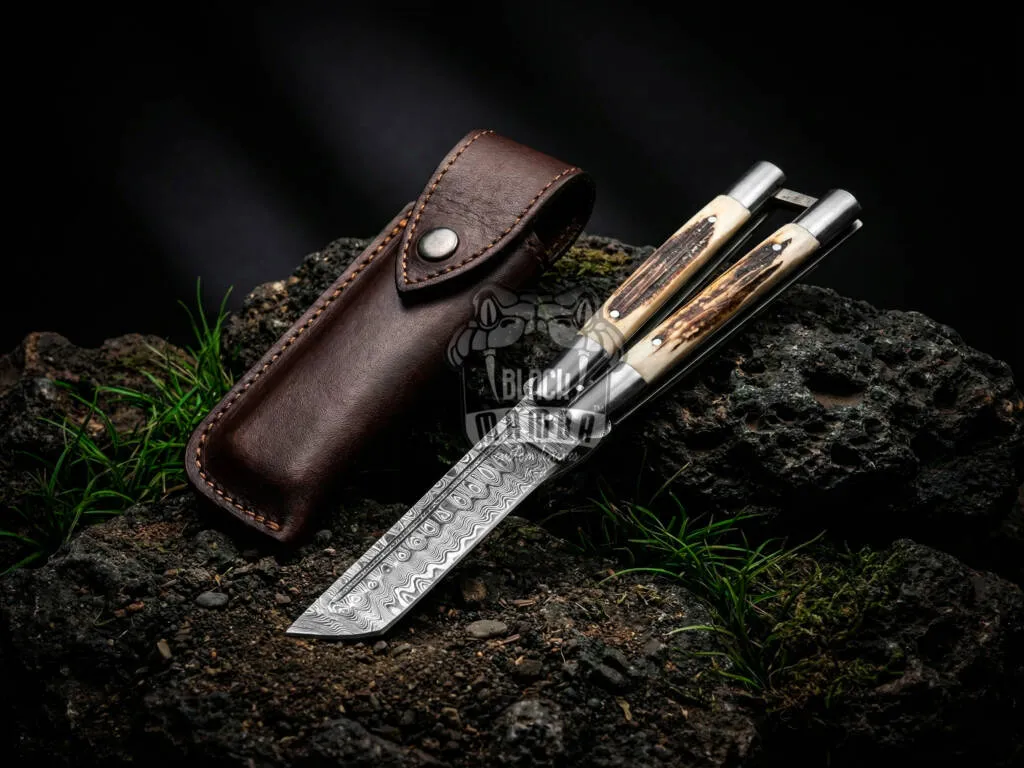
Butterfly Knife Tricks for Beginners
Start on a trainer, get smooth before fast, and learn the close before the open.
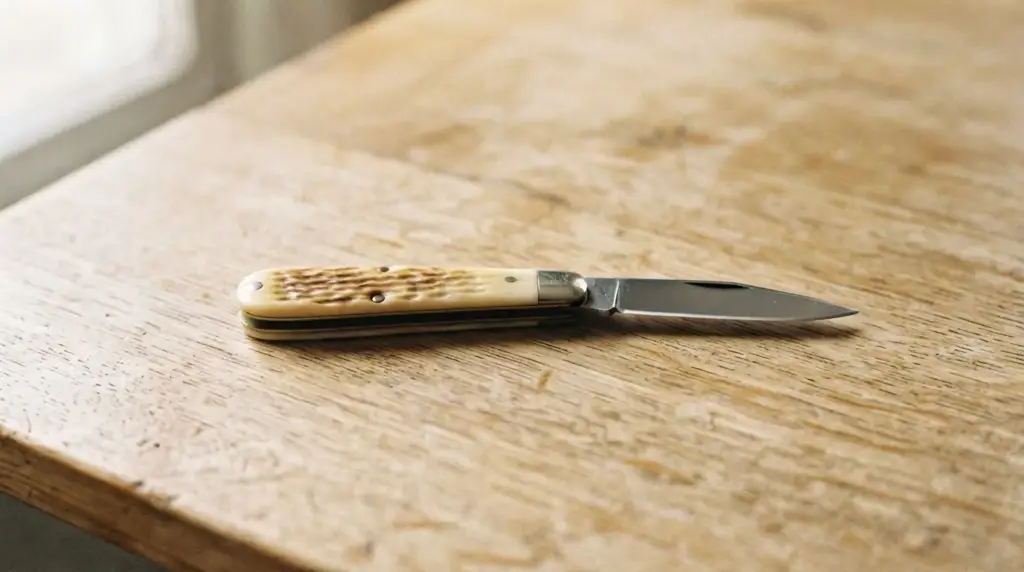
Pocket Knife Laws by State
Statute-cited blade length limits, preemption states and mechanism bans, with every unverified state named.

Flying With a Knife
What TSA actually allows, how to pack a knife in the hold, and where the rules change once you land abroad.
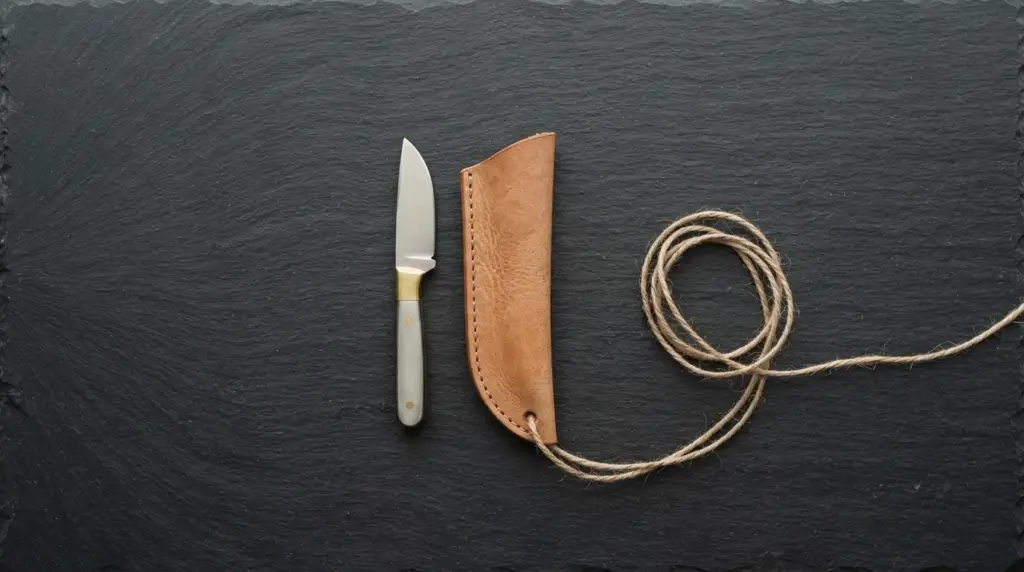
Neck Knives: Carry Position, Sheath Retention and Legal Reality
Neck carry is a concealment question first. Retention, weight, cord safety, and an honest look at what our nine listings really are.
Written by the people at the anvil
We forge what we sell
Our billets are 1095 and 15N20 forge welded in our own Memphis workshop. Nothing here is repeated from a supplier catalogue.
We name the numbers
58 to 60 HRC. 352 layers. 1095 and 15N20. If a guide makes a claim, it gives you the figure so you can check it against anyone else.
We say when not to buy
Two of these guides tell you when a cheaper knife is the better choice. We would rather you buy once and keep it.
Still deciding?
Tell us what the knife is for and we will point you at the right one. No script, no upsell.
