

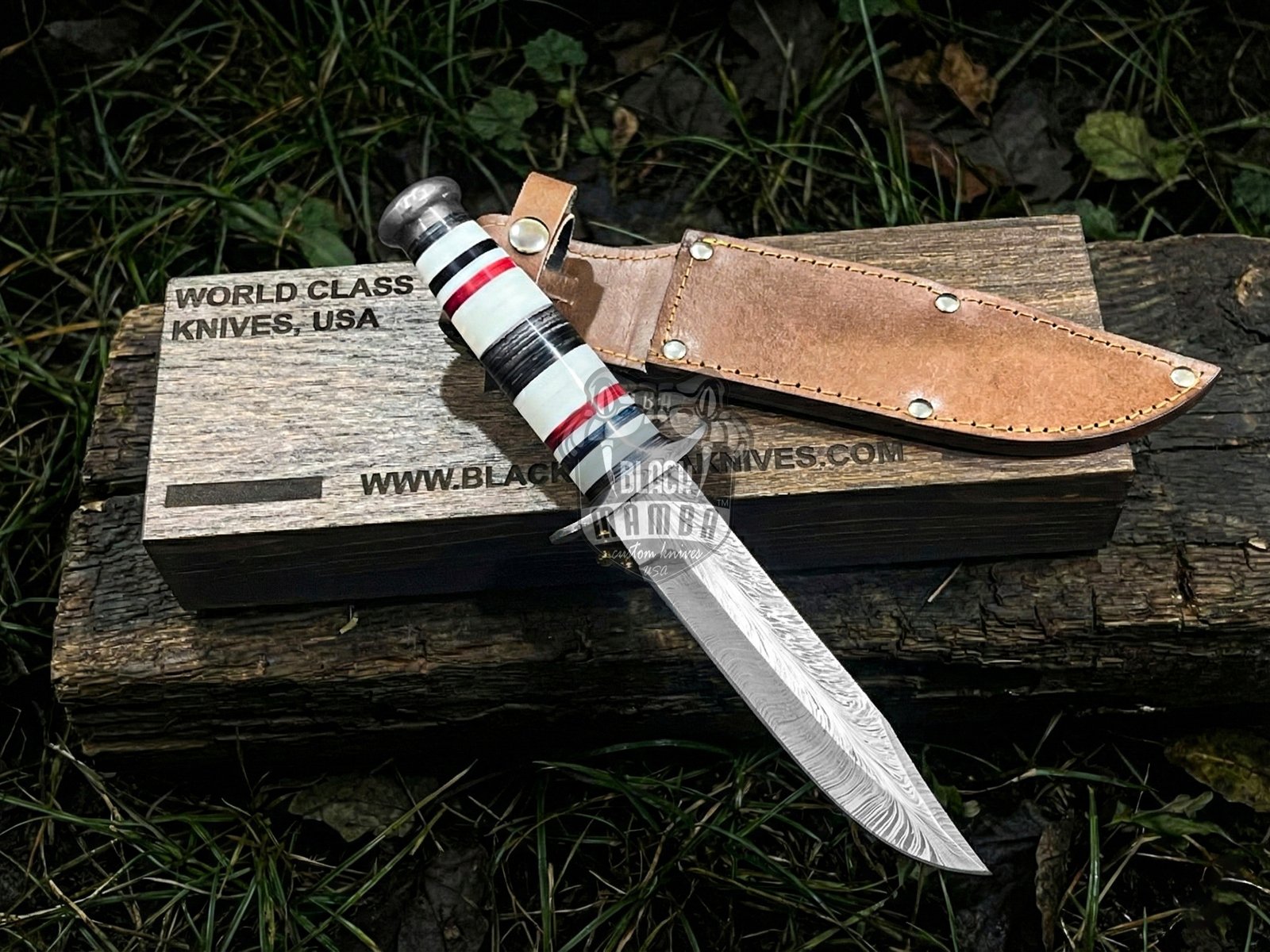
Short answer: hold the blade at a consistent angle, work one side until you raise a burr along the whole edge, do the other side, then strop the burr off. Angle consistency matters more than the stone, the grit, or how long you spend.
What you actually need
A double-sided whetstone in something like 400 and 1000 grit covers ninety per cent of home sharpening. Add a 3000 or higher only if you enjoy the process. You also want a flat surface, a damp cloth under the stone so it does not slide, and water.
Soak a water stone for ten minutes before you start, until the bubbles stop. Oil stones take a few drops of light oil instead. Never use water on a stone made for oil, or you will glaze it.
Finding the angle, and holding it
Most working knives live between 17 and 22 degrees per side. Kitchen knives sit at the shallow end, camp and hunting knives at the steeper end because a thicker edge survives bone and wood.
Twenty degrees is roughly the angle of two stacked quarters under the spine. Set that once, then let your shoulder do the movement rather than your wrist. Wrists rotate, and a rotating wrist rounds the bevel into a curve that will never get sharp.
The burr is the whole game
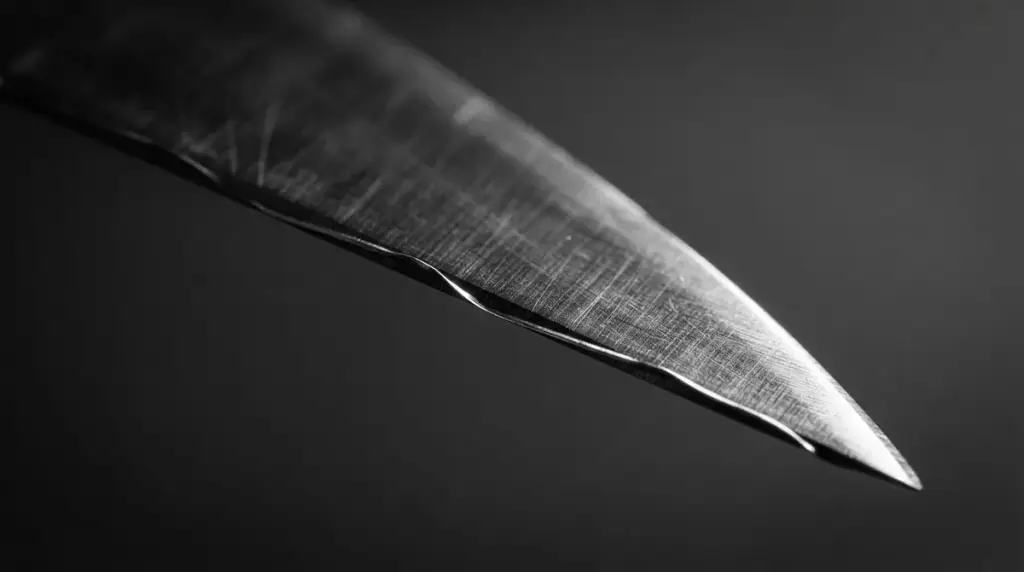
Work one side of the edge, heel to tip, with light pressure. After a couple of minutes run a thumb across the edge on the opposite side, never along it. When you feel a tiny wire catching your skin along the entire length, that is the burr, and it means you have finally reached the very edge.
Until the burr appears you are only sharpening the shoulder of the bevel. Most people stop before this point and wonder why the knife is not sharp.
Now flip and do the same on the other side until the burr moves across. Then lighten the pressure right down and take alternating passes to shrink it.
Stropping
Ten or twelve passes on a leather strop, or on the back of an old belt, spine-first with almost no pressure. This removes what is left of the burr and aligns the edge. Skip it and the knife will feel sharp for one day and dull the next, because that leftover wire simply folds over.
How to know when it is sharp
Hold a sheet of paper by one corner and slice down through it. A sharp edge cuts silently and leaves a clean line. A dull one tears and catches. Do not test on your thumb.
How to sharpen a knife with a whetstone, step by step
To sharpen a knife with a whetstone: soak the stone, set it on a damp cloth, hold the blade at a steady 17 to 22 degrees, work one side until a burr runs the full length of the edge, repeat on the other side, refine on the fine grit, then strop. That sequence is how to sharpen a blade with a whetstone whatever its size; only the angle and the stroke length change.
- Step 1 — Soak the stone. A water stone goes in a bowl for ten minutes, until it stops bubbling. Oil stones take a few drops of light oil and no water.
- Step 2 — Set the stone down. Damp cloth underneath, coarse side up. If the stone slides mid-stroke your angle has gone and so has the bevel.
- Step 3 — Work the first side. Lay the bevel flat, lift to your angle, and push the blade away as if slicing a layer off the stone. Travel heel to tip, light pressure, shoulder moving rather than wrist.
- Step 4 — Find the burr. After two or three minutes, run a thumb across the edge on the far side, never along it. A wire catching your skin from heel to tip is the burr; no burr means you have not reached the edge.
- Step 5 — Turn the knife over. Same angle, same count, until the burr flips to the other side.
- Step 6 — Refine. Move to the fine grit, drop to the weight of the blade, and alternate passes, left, right, left, right. The burr shrinks rather than tearing off.
- Step 7 — Strop. Ten or twelve spine-first passes on leather remove the last of the wire edge.
- Step 8 — Clean up. Rinse the stone, dry the blade, and let the stone air-dry. Damp carbon steel grows rust overnight.
Searches split between how to sharpen a knife on a whetstone and how to sharpen a knife on a wet stone. The word is whetstone, from whet, meaning to sharpen; most are simply used wet, which is where the spelling drifts. Proper whetstone technique has nothing to do with water and everything to do with holding one angle for the whole stroke.
Whetstone grits, and which ones you actually need
Low grit numbers cut fast and scratch deeply, high numbers cut slowly and polish. Sharpening knives on a whetstone means walking the edge from one to the other.
| 220 to 400 | Repair grit. Resets a bevel and removes chips, at the cost of a lot of steel. |
| 800 to 1000 | The working grit, where a dull knife becomes sharp. If you own one stone, own this one. |
| 3000 | Refining. Turns a toothy edge smooth enough to push through tomato skin. |
| 6000 and up | Polish. Visible on the bevel, and honestly optional. |
Start coarse only if the edge is chipped, rolled, or so blunt that five minutes on 1000 raises no burr. Otherwise start at 1000 and save the steel; a 1000/3000 combination stone covers nearly everything.
How long does it take to sharpen a knife on a whetstone?
How long to sharpen a knife on a whetstone depends on how bad the edge is, not on how good you are. Honest ranges:
| Touch-up on a tired edge | 3 to 5 minutes on 1000 grit, plus a strop |
| Genuinely dull kitchen knife | 10 to 20 minutes, most of it waiting for the burr |
| Chipped or abused edge | 30 to 45 minutes, starting at 400 grit or coarser |
Double these for your first attempt. If half an hour on a fine stone raises no burr, the grit is too fine — drop coarser rather than grinding on in hope.
How to sharpen a whetstone: flattening and lapping
Stones wear in the middle, where you use them. After a few sessions the face is dished, and a dished stone cannot put a flat bevel on a blade — it rounds the edge instead. That is usually why a stone that used to work seems to do nothing.
Lay a steel rule across the face. If light shows under the middle, flatten it: rub the stone on a coarse diamond plate under running water, or wet-and-dry paper on plate glass, until a pencil grid drawn on the face has gone. Done every few sessions it takes a minute; left for a year, twenty.
Whetstone, oil stone, diamond plate, ceramic rod or pull-through
- Water stone (whetstone). Fastest cutting of the traditional stones, widest grit range. Needs soaking and flattening. The default choice.
- Oil stone. Slower, harder, stays flat for years, no soaking. Uses oil, never water, and once oiled cannot go back.
- Diamond plate. Cuts hard steels quickly and stays flat by design. Good on harder steels such as D2 at 58 to 62 HRC, and doubles as your flattening plate.
- Ceramic rod. Not a sharpener. It realigns an edge between sharpenings — see honing versus sharpening.
- Pull-through. Fine on a supermarket knife; it scrapes steel away rather than grinding it. Keep it off hand-forged blades.
How to sharpen a pocket knife with a whetstone
If you are learning how to use a whetstone to sharpen a pocket knife, the method is identical and only the scale changes. Take short strokes over one part of the stone, because a three-inch blade wandering across a full-size stone loses its angle halfway. Lift the handle slightly round the curve so the tip meets the stone at the same angle as the belly, and stop before the tip runs off the end — that is how tips snap.
Keep water out of the pivot, dry the knife open, then oil the joint — see our guide to cleaning a pocket knife. Locking folding knives are usually ground steeper than kitchen blades, so 20 degrees a side is a safe start.
How to sharpen a hunting knife with a whetstone
Sharpen a hunting knife with a whetstone at a steeper angle than a kitchen knife: 20 to 22 degrees per side rather than the 17 or 18 a kitchen knife gets. A thin edge is superb on vegetables and fragile against bone. Two extra degrees leave more steel behind the edge, so it survives instead of rolling on the first rib.
Skinners and drop points carry a long curved belly, which does most of the cutting. Sweep the handle round as you travel towards the tip so the curve gets the same passes as the flat, or the blade ends up sharp in the middle and blunt where it matters. Our hunting knives are ground at that steeper geometry.
Questions people ask
How often should I sharpen?
Far less often than you hone. A knife in daily kitchen use needs a stone every one to two months, and a honing rod every few uses. See the difference between the two in our honing guide.
Are pull-through sharpeners bad?
They work, and they remove far more steel than a stone does because they scrape rather than grind. On a cheap knife that is a fair trade. On a hand-forged blade you paid real money for, it is not.
Does Damascus sharpen differently?
No. Our billets are 1095 and 15N20 at 58 to 60 HRC, and they take an edge quickly and hold it well. The etched pattern is unaffected by sharpening the edge. See care and sharpening for keeping the rest of the blade healthy.
My knife will not take an edge at all
Either you are not reaching the very edge, which the burr test will tell you, or the edge is chipped and needs a coarser stone first to reset the bevel.
Skinners reward a proper edge more than any other blade — browse our Damascus skinning knives to see the deep-belly grind this guide keeps sharp.
Do I have to soak a whetstone before I use it?
Soak a traditional water stone for about ten minutes, until the bubbles stop rising. It needs to be saturated, or it will pull water off the surface mid-stroke and stop cutting. Splash-and-go stones only need wetting under the tap. Oil stones are never soaked in water at all — a few drops of light oil, and keep water away from them permanently.
Is a wet stone the same thing as a whetstone?
People mean the same tool, but the spelling is whetstone. It comes from the old verb whet, to sharpen, not from being wet. The confusion sticks because most of them are used with water, so searches for how to sharpen a knife on a wet stone or with a wetstone are asking about exactly the stone described above. Everything in this whetstone sharpening guide applies whichever way you spell it.
Which grit whetstone should I buy first?
One 1000/3000 combination stone. The 1000 side does the actual sharpening on any normally dull knife, and the 3000 refines the edge afterwards. Add a 400 later only if you have to reset a chipped bevel, and a 6000 only if you enjoy polishing. Buying a very fine stone first is the usual beginner mistake — it will barely touch a blunt knife.
How many strokes per side does a whetstone need?
Sharpening a knife using a whetstone is measured in burrs, not strokes. Stay on the first side until you feel a burr along the entire edge, which might be twenty passes on a slightly dull knife or two hundred on a neglected one. Then match that on the second side, and finish with ten to twenty light alternating passes. Anyone quoting a fixed stroke count is guessing at how blunt your knife is.
Why has my whetstone stopped sharpening?
Usually it is dished. The middle wears faster than the ends, and a hollow stone rounds the bevel instead of flattening it, so the knife never gets sharp however long you work. Flatten it against a coarse diamond plate or wet-and-dry paper on glass. The other common causes are a glazed surface clogged with steel swarf, or a stone that has dried out mid-session.
Should I push or pull the blade when sharpening on a whetstone?
Either works, and consistency matters far more than direction. Most people push the blade edge-first away from them, which gives better control over the angle. Pulling edge-trailing is gentler and less likely to gouge a soft stone. Pick one, use the same motion for every pass, and keep the pressure light — leaning on the stone rounds the edge and wears the stone unevenly.
More from the workshop
Field Dressing a Deer: The Cuts and the Knives
The field dressing sequence in order, sorted by which knife is in your hand, with the published cooling and CWD guidance.
The Cowboy Bull Cutter: A Ranch Pattern Nobody Explains
Why the tip is blunt, what the notched choil does, and the real prices, steels and handles across our 32 bull cutters.
Do Damascus Knives Rust?
Damascus is carbon steel and it rusts. Why the nickel does not help, what causes it, and how to stop it.
