
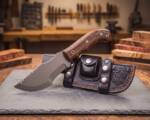
Handmade tracker knives built on the Tom Brown survival profile, a deep chopping belly up front, a straight utility section behind it, and a sawback spine, all on one thick blade. One knife that chops, carves, skins and preps fire.
Every Black Mamba tracker is hand-ground in Memphis, TN from D2 tool steel or hand-forged Damascus, fitted with a full leather tracker sheath, and backed by our lifetime warranty.
Where the tracker shape came from
Tom Brown Jr. spent decades teaching wilderness survival and got tired of watching students carry three tools to do one job. So the profile was drawn up as an honest compromise: chop with the front belly, carve with the straight section, saw with the spine. Then a 2003 Benicio del Toro film put it on screen, and a blade designed for quiet fieldwork became one of the most recognisable knife silhouettes ever made. These things happen.
The shape earns its keep with or without the movie. A tracker knife is thick, heavy and deliberately unsubtle, the one you carry when you cannot be sure what the day is going to ask of you.
-
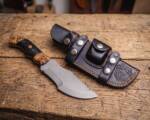
Amber Sovereign Handmade D2 Steel Tracker Knife | Tom Brown Style Mirror Polished Blade | Rosewood Handle with Gold Stainless Screws | Black Leather Tracker Sheath | Bushcraft Survival & Camping Gift | BMK-1114
Original price was: $268.00.$228.00Current price is: $228.00. -
Summit Burl Handmade D2 Steel Tracker Knife | Tom Brown Style Mirror Polished Blade | Olive Burl Wood Handle with Stainless Pipe Inlay | Black Leather Tracker Sheath | Bushcraft Survival Collector Knife & Gift | BMK-1115
Original price was: $297.00.$252.00Current price is: $252.00. -
-
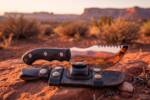
Crimson Vein Handmade D2 Steel Bushcraft Knife | Tracker Style Mirror Polished Blade | Black G10 Handle with Red Fiber Spacer & Mosaic Pin | Black Leather Sheath | Survival Camping & Hunting Gift | BMK-1113
Original price was: $268.00.$228.00Current price is: $228.00. -
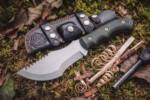
Jade Warden Handmade D2 Steel Tracker Knife | Tom Brown Style Mirror Polished Blade | Olive Green G10 Handle with Stainless Screws | Black Leather Tracker Sheath | Bushcraft Survival & Camping Gift | BMK-1118
Original price was: $268.00.$228.00Current price is: $228.00. -
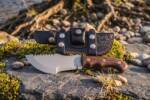
Tiger Amber Handmade D2 Steel Tracker Knife | Tom Brown Style Mirror Polished Blade | Orange & Brown Tiger Micarta Handle with Stainless Screws | Black Leather Tracker Sheath | Bushcraft Survival & Camping Gift | BMK-1117
Original price was: $268.00.$228.00Current price is: $228.00. -
Ember Burl Handmade D2 Steel Tracker Knife | Tom Brown Style Stone Washed Blade | Black Micarta Handle with Olive Burl Wood Bolsters & Brass Pipe Inlay | Black Leather Tracker Sheath | Bushcraft Survival Collector Knife & Gift | BMK-1111
Original price was: $326.00.$277.00Current price is: $277.00. -
Obsidian Crest Handmade D2 Steel Tracker Knife | Tom Brown Style Mirror Polished Blade | Black Micarta Handle with Stainless Screws | Black Leather Tracker Sheath | Bushcraft Survival & Camping Gift | BMK-1112
Original price was: $268.00.$228.00Current price is: $228.00. -
Moss Talon Handmade D2 Steel Tracker Knife | Tom Brown Style Stone Washed Blade | Olive Green Micarta Handle with Gold Stainless Screws | Black Leather Tracker Sheath | Bushcraft Survival & Camping Gift | BMK-1116
Original price was: $239.00.$203.00Current price is: $203.00. -
Golden Timber Handmade D2 Steel Tracker Knife | Tom Brown Style Stone Washed Blade | Walnut Wood Handle with Gold Screws & Mosaic Pin Inlay | Black Leather Tracker Sheath | Bushcraft Survival & Camping Gift | BMK-1108
Original price was: $239.00.$203.00Current price is: $203.00. -
Timber Fang Handmade D2 Steel Tracker Knife | Tom Brown Style Stone Washed Blade | Walnut Wood Handle with Mosaic Pin Inlay | Black Leather Tracker Sheath | Bushcraft Survival & Camping Gift | BMK-1107
Original price was: $239.00.$203.00Current price is: $203.00.
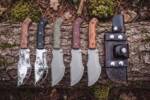
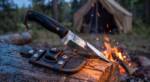
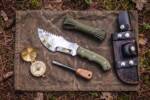
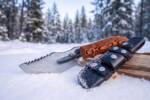
Tracker vs bushcraft vs bowie
| Blade | Profile | Best at | Weakness |
|---|---|---|---|
| Tracker | Deep front belly, straight rear section, sawback spine, 1/4 in stock | Chopping, notching, sawing and skinning with one blade | Heavy; overkill for light camp chores |
| Bushcraft | Straight 4 to 5 in drop point, scandi or flat grind | Carving, feather sticks, fine control work | Will not chop; you need a saw or axe alongside it |
| Bowie | Long clip point, thinner stock, big belly | Slicing, general field use, presence | Clip point is delicate for batoning and prying |
Short version: if you already know exactly what you are going to cut, a specialist blade wins. If you do not, the tracker wins.
D2 or Damascus
Most of this collection is ground from D2 tool steel, it holds a working edge a long time and shrugs off abuse, which is the sensible choice for a knife that gets swung at wood. The hand-forged Damascus trackers are for people who want the layered pattern and do not mind keeping a light film of oil on the blade. Both run 58 to 60 HRC, both are full tang, both ship with the same leather sheath and the same lifetime warranty.
Browsing wider: see our D2 tool steel knives, hunting knives and Damascus Bowie knives, or read the full tang vs partial tang guide before you pick.
Questions people ask
What is a tracker knife actually for? One blade covering four jobs: the forward belly chops and notches, the straight middle section carves and slices, the sawback spine cuts notches and green wood, and the point handles skinning and fine work. It exists so you can carry one tool instead of a knife, a saw and a small axe.
Is the sawback spine any good, or is it decoration? It works on green wood, notches and bone, which is what it was designed for. It is not a carpentry saw and it will not race through a seasoned log. Judge it as a survival feature, not a workshop tool.
D2 or Damascus for a tracker? D2 if the knife is going to be used hard and stored in a sheath, better edge retention and more corrosion resistance. Damascus if you want the pattern and will wipe it down and oil it. Neither is stainless; both want to be dry.
Is a tracker too heavy for all-day carry? It is heavier than a bushcraft knife, and that weight is the whole point, it is what lets the blade chop. On the belt in a leather sheath it carries fine. In a pocket it does not, but then neither does an axe.
Are tracker knives legal to carry? They are fixed-blade knives, and fixed-blade carry laws vary by state and city in the US. Check your local blade-length and open-carry rules before carrying one in public. We ship to all US states.
New in this collection: Jade Warden D2 Steel Tracker Knife, Tiger Amber D2 Steel Tracker Knife, Moss Talon D2 Steel Tracker Knife and Summit Burl D2 Steel Tracker Knife.
Buying for a wedding party? The groomsmen knife sets come as six matched knives, 15% less than buying them singly, and each one can carry its own engraved name.
