
Short answer: buy smaller than you want to. A three inch blade under four ounces gets carried every day; a big impressive knife gets carried for two weeks and then lives in a drawer. Weight is the reason people stop, every time.
Be honest about what you actually cut
Write down what you cut in a week. For most people it is packages, tape, string, zip ties, a loose thread, fruit at a desk, and the occasional bit of food. None of that needs a four inch blade.
People buy for the imagined emergency instead of the actual Tuesday. Buy for Tuesday.
Size
| Under 2.5 in | Disappears in a pocket. You start fighting it on anything bigger than an envelope. |
| 2.75 to 3.25 in | The sweet spot. Enough for real work, small enough to forget. |
| 3.5 to 4 in | Capable, noticeably heavier, and in some places a legal issue. |
| Over 4 in | Not an EDC knife. That is a belt knife. |
Weight matters more than length. Under four ounces and you forget it is there. Over six and you notice it every time you sit down.
Folding or fixed
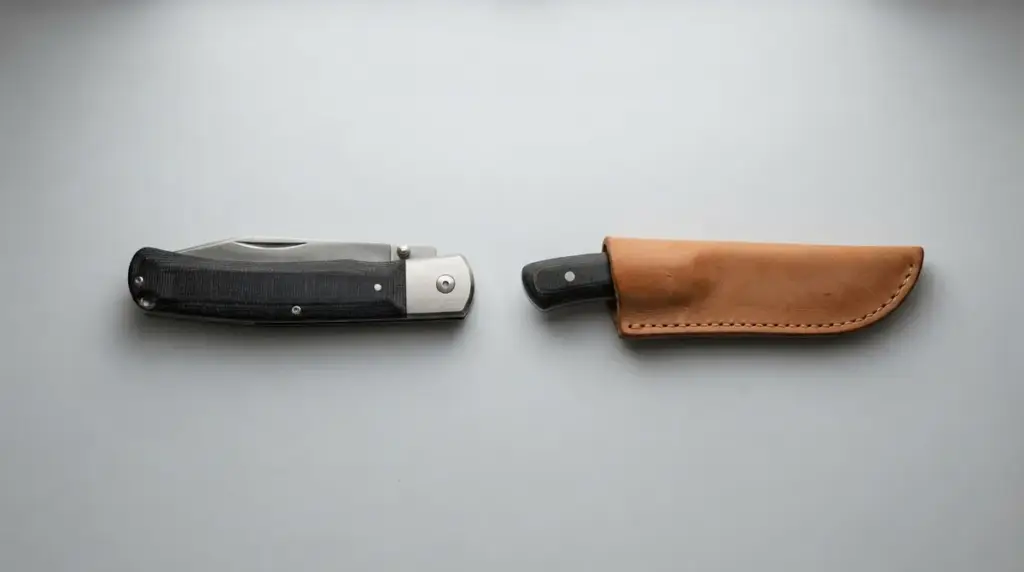
Folding is what most people mean by EDC: it disappears in a pocket, clips to a seam and looks unremarkable when you take it out. The cost is a pivot, which collects grit and needs occasional cleaning.
A small fixed blade is faster into the hand, stronger, and has nothing to fail. The cost is carry: it needs a sheath, and a neck knife on a cord is usually the practical answer.
Blade shape
A drop point is the safe default. A sheepsfoot or wharncliffe is better if you mostly cut on a flat surface and never need to pierce anything. A tanto is strong at the tip and poor at slicing, which is the opposite of what most EDC work needs. Full breakdown in blade shapes explained.
Handle: the part you actually feel
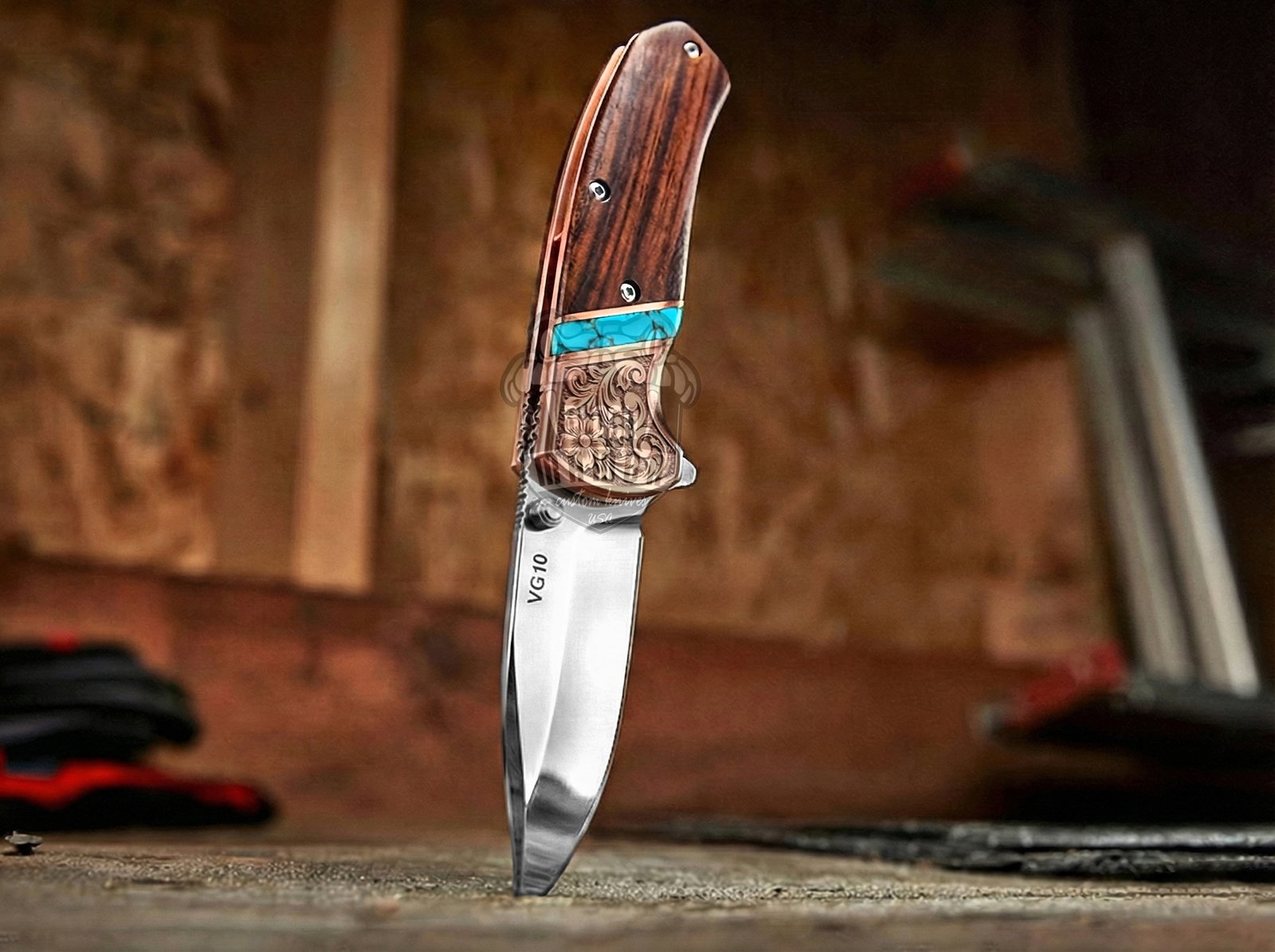
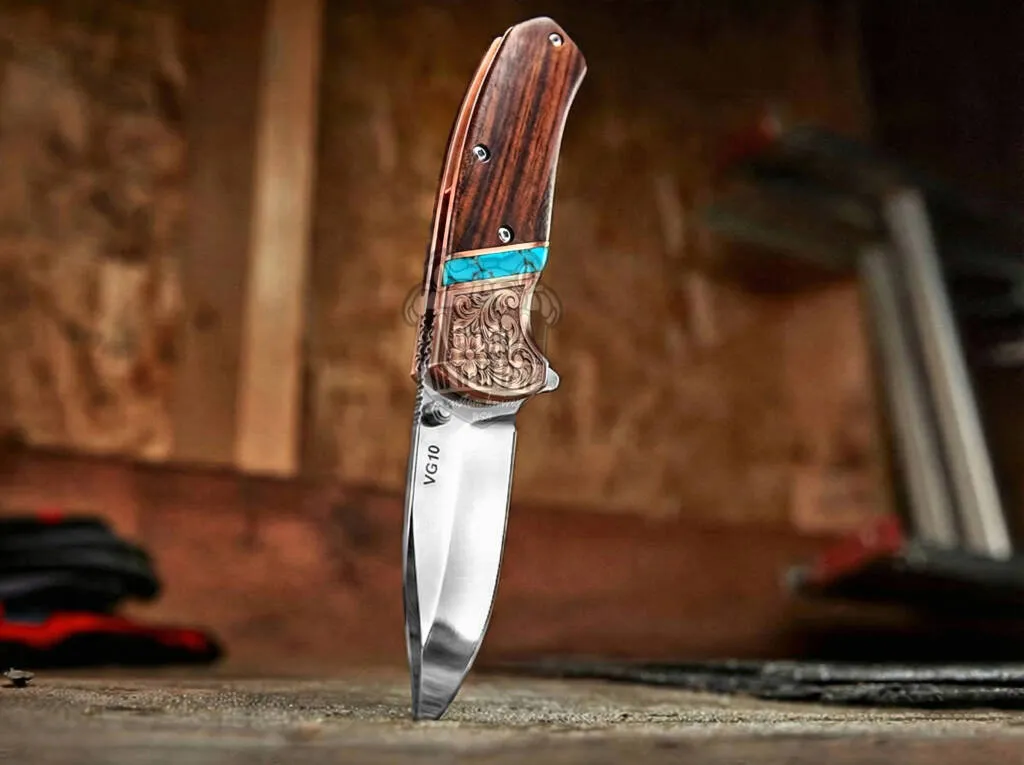
The blade is what you look at, the handle is what you live with fifty times a day. Micarta and G10 grip when wet and shrug off knocks. Rosewood, olive wood and buffalo horn are warmer in the hand and age with use. Brass and pearl are for a knife you want people to ask about.
Poured resin sits apart from both: waterproof, stable in any weather, and different in every knife because each block is poured on its own. Our pride knives use a stabilized honeycomb version of it.
There is no wrong answer here, only what you want to touch every day.
Steel
Our Damascus is 1095 and 15N20 forge welded at 58 to 60 HRC. It takes a very fine edge and comes back on a stone in minutes, and it will develop a patina from pocket carry. Some people chase that; some do not. If you do not, our D2 folders resist staining much better. Side by side comparison in the steel guide.
The details that decide whether you keep carrying it
Clip position. A knife that sits deep in the pocket is comfortable; one that rides high catches on everything.
One handed opening. Once you have it you will not go back.
How it looks. An EDC knife comes out in front of colleagues. A pocket knife with a wood handle reads very differently from a black tactical folder, and that matters more than most buying guides admit.
Blade length, and the one thing to check before you carry
A 3 inch pocket knife is the length most people should buy, and it is the length most carry rules are written around. Three inches opens boxes, cuts cord, trims a thread, breaks down packaging and handles food at a desk without looking like a weapon when it comes out.
Below 2.5 inches you start working harder for the same cut. Above 3.5 inches the weight rises fast and so does the attention the knife draws. Blade length limits and carry rules differ by state, city and country, so check your local law before you carry. That is a plain caution, not legal advice.
Locking mechanisms compared
| Liner lock | A leaf of the inner liner springs behind the blade. Light, cheap to make well, easy to close one-handed. Weak point is that your fingers cross the blade path when you release it. |
| Frame lock | The same idea using a thicker slab of the handle itself. Stronger and it tightens under grip pressure. Adds weight, and a hard grip can make the lock stick. |
| Back lock | A spine-mounted bar drops into a notch. Very secure, symmetrical, no handedness. Needs two hands to close comfortably, and it is the traditional choice on a wood-handled folder. |
| Axis-style bar lock | A spring-loaded bar rides over the tang. Ambidextrous, closes without fingers near the edge, and the smoothest to use. More parts, so more to keep clean. |
| Slipjoint | No lock at all, just a backspring holding it open. The classic pocket knife. Slim, light, nothing to fail, and the pattern many traditional carriers still prefer. Do not put lateral load on the blade. |
No lock is a substitute for technique. Cut away from your fingers, and never trust a lock while stabbing or twisting.
One-hand opening: stud, hole, flipper, front flipper
A thumb stud is the most common and the easiest to learn, but it is handed unless the knife has one on both sides. A thumb hole is cleaner, snags nothing in a pocket, and works either way round. A flipper tab is the fastest of the lot and needs a good detent to work properly, so a bad flipper is worse than none. A front flipper sits on the spine at the back of the blade, opens with a thumb roll, and looks like nothing at all when closed, which is the point.
Pocket clip position and deep carry
Clip position decides whether you keep carrying a knife more than almost any other detail. Tip-up puts the edge away from the pocket mouth and lets you get a grip straight onto the opener; tip-down is slower but reassuring on older designs. Right or left mounting matters if the knife only offers one side.
A deep carry clip drops the whole knife into the pocket so only a small tab shows. It is more comfortable when you sit down, less likely to catch on a seatbelt or a car door, and far less conspicuous at work. A high-riding clip is easier to draw and wears a shiny line onto the seam of every pair of trousers you own. If you carry a pocket knife with a clip every day, buy the deeper one.
Blade steel for everyday carry, by budget
Steel choice is a trade between how long the edge lasts, how easily it comes back, and how much it stains. For a knife you sharpen yourself, easy is worth more than long.
| 440C stainless | 58 to 60 HRC. The forgiving choice: rust resistant, sharpens on anything, ideal for a first EDC knife or one that gets wet. |
| D2 tool steel | 58 to 62 HRC. Holds an edge much longer, semi-stainless rather than stainless, and asks more of you at the stone. A good working upgrade. |
| 1095 and 15N20 Damascus | 58 to 60 HRC. Takes the finest edge of the three and comes back in minutes. Carbon steel, so it patinas with pocket carry and needs drying and a wipe of oil. |
Side-by-side figures are in the knife steel chart.
Handle size, grip and weight
Measure the handle against your closed hand, not against a photograph. A handle shorter than your palm is wide forces a three-finger grip, which is fine for opening packages and tiring for anything sustained. Look for a finger choil or a slight palm swell rather than aggressive contouring, because contours only fit one hand size.
Weight is the number that decides whether a knife stays in your pocket. Under four ounces disappears; over six announces itself every time you sit down. Titanium and G10 keep weight down, brass and heavy woods put it back, and a full steel liner adds more than most people expect.
Which blade shape for which EDC task
Match the shape to what you cut most. A drop point is the all-rounder and the right default. A sheepsfoot or wharncliffe has a straight edge and a blunt nose, which is the best combination for cutting on a flat surface, opening boxes without stabbing the contents, and working near your own hand. A clip point gives a finer tip for picking out splinters and detail work. A spear point splits the difference and looks formal on a gentleman's folder. Full breakdown in blade shapes explained.
What most people actually need
A folding knife with a 3 inch drop point blade, a lock you can close one-handed, a deep carry clip, a handle you like touching, and steel you are willing to sharpen. Under four ounces. That is the specification behind most of the knives people are still carrying five years later.
Everything beyond that is preference rather than performance: pattern, handle material, hardware, how it looks when it comes out at work. Buy the boring specification first and let the character sit on top of it. Our range of folding pocket knives is a reasonable place to see what those choices look like side by side.
Questions people ask
How much should a first EDC knife cost?
Enough that the steel is properly heat treated, which is where the money goes. Below that you are buying a shape, not a knife.
How often will I sharpen it?
Strop weekly, stone every month or two with daily use. See honing vs sharpening.
Anything legal to check?
Blade length limits and carry rules differ by state and city. Please check your local law before ordering.
Is a 3 inch pocket knife big enough for everyday carry?
For almost everyone, yes. Three inches of blade handles packaging, cord, zip ties, tape, fruit and light food prep, which is the honest list of what a day asks of a knife. It also stays under the length limit most carry rules are written around. Going to four inches adds weight and attention without adding much you will actually use.
Which lock is best on an EDC knife?
An axis-style bar lock if you want the easiest and safest one-handed close, a frame lock if you want strength in a simple design, a back lock if you want security and do not mind two hands. A liner lock is perfectly good and the most common. Strength differences matter far less than getting a lock you can close without your fingers crossing the edge.
Does an everyday carry knife need a pocket clip?
If you want to carry it daily, yes. A clipped knife sits in a known place and comes out the same way every time; a loose one sinks under keys and a phone and gets left at home. Choose a deep carry clip if you sit down a lot or work somewhere a visible knife would be awkward. Tip-up mounting is faster to draw.
Is Damascus a sensible steel for an EDC knife?
Yes, if you will look after it. Our Damascus is 1095 and 15N20 at 58 to 60 HRC. It takes a finer edge than most stainless steels and comes back on a stone in minutes, which is what you want in a knife you sharpen yourself. It is carbon steel, so pocket carry will darken it into a patina and it needs drying and an occasional wipe of oil.
Is 440C good enough for a pocket knife?
It is the sensible starting point. At 58 to 60 HRC, 440C resists rust well, sharpens on almost any stone, and forgives being left damp in a pocket after a wet day. It gives up some edge retention against D2, but a steel you will actually maintain beats a harder one you avoid sharpening.
Do I need a multi-tool as well as a pocket knife?
Only if you regularly need pliers. A multi-tool with a pocket knife blade is a compromise on both counts: the blade is short, the grind is thick, and the whole thing is heavy enough that most people stop carrying it. If the driver and pliers earn their place in your week, carry both and keep the knife small.
How often does an EDC knife need cleaning?
Every month or two with daily carry, and immediately after it gets wet or dusty. Pocket lint packs into the pivot and behind the lock face, which is what makes an action feel gritty and a lock feel sticky. Flush it, dry it, and put a drop of oil on the pivot. Store it closed and dry.
More from the workshop
The Hunting Dagger: Double Edge, Boar Blades and Why It Fell Out of Use
Why the double edge fails at skinning, where the pattern came from, and what our nine daggers really are.
Fishing Knives: Bait, Fillet, Folding and Saltwater
Sizing a fillet blade, why carbon Damascus loses to salt water, and what our seven fishing listings really are.
Knife Blade Shapes Explained
What each blade profile is actually built to do, and which one you want.
