
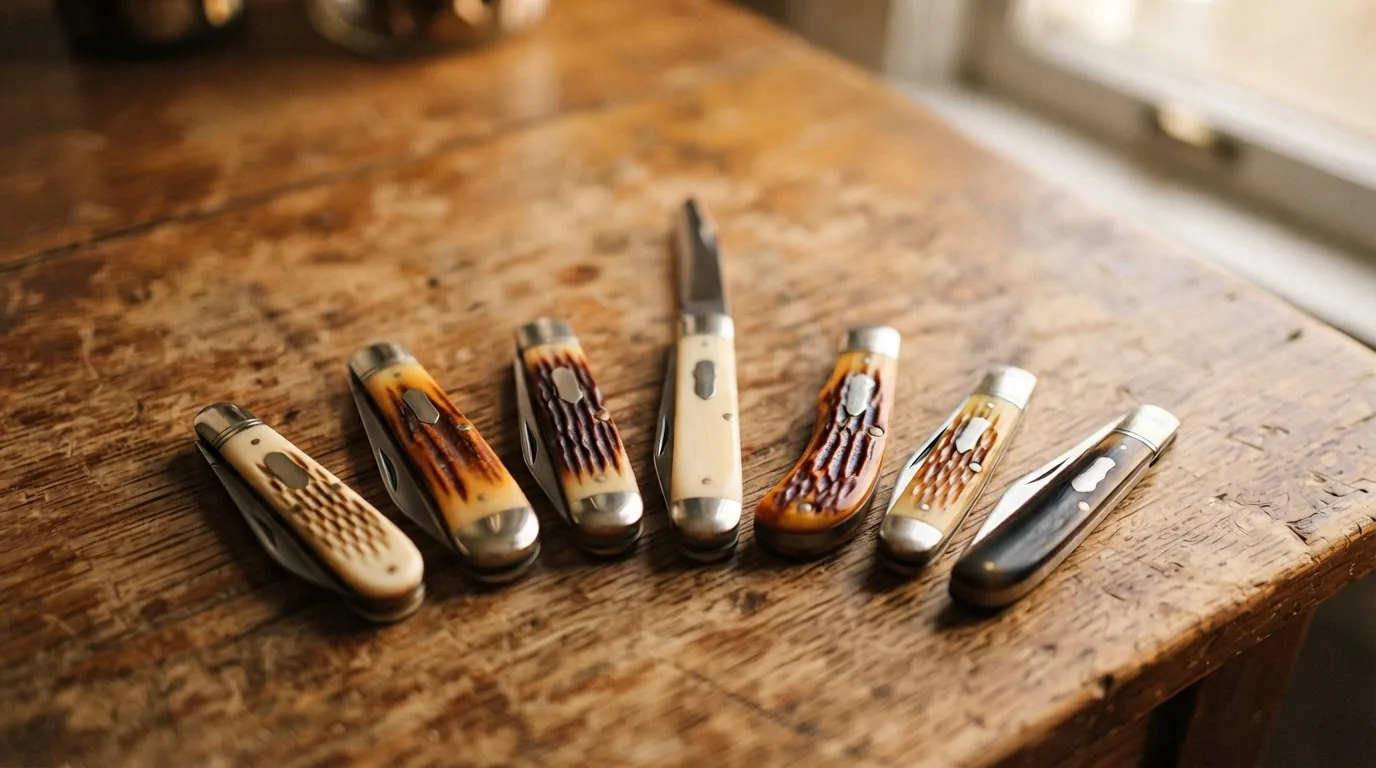
Short answer: a traditional pocket knife pattern is a named combination of frame shape, blade count and blade shapes that the cutlery trade has repeated for a century or more. The stockman is a serpentine frame with three blades, the trapper is a serpentine frame with a clip and a spey blade at the same end, and the barlow is a jack frame with one long bolster. Almost all of them are slip joints, which means they do not lock. Once you can read a frame, a blade shape and a bolster, every pattern name in the catalogue stops being jargon and starts being a description.
Pattern, frame and blade are three different words
Most articles about traditional knives list pattern names and stop there, which is why so many buyers can recite the word stockman without being able to identify one on a table. Three words are doing separate jobs. The frame is the outline of the closed knife: handle shape, bolster position and how many ends carry pivots. The blades are the cutting shapes fitted into it. The pattern is the agreed name for a particular frame carrying a particular blade set. Change the blade set and the pattern name changes even if the frame is identical. That is the whole vocabulary. Everything below is detail.
Frame shapes and what the names mean
The frame vocabulary is where most guides give up, and it is the part that makes the rest legible.
 Magnum 4.75 Inches Damascus Laguiole Knife Handmade Damascus Pocket Knives French Knife Steak Knife USA Made | BMK-501
 Tri Fold Pocket Knife | Super Steel 3 Blades Knife Black Mamba Knife Hunting Knife Steak Knife Multi Purpose | BMK-003
 Penta Fold Pocket Knife | Super Steel 5 Blades Color Camel Bone Knife Black Mamba Knife Hunting Knife Steak Knife Multi Purpose USA Made Gift | BMK-007
Jack. All blades pivot from the same end of the frame. Barlows, peanuts and most single blade traditionals are jacks.
Pen. Blades pivot from both ends. In older trade usage the jack and pen distinction is about which ends carry pivots, not about size, although the word pen knife also survives as a general term for a small light knife.
Equal end. The frame is the same width at the butt as at the pivot end. Straight, symmetrical and easy to make.
Serpentine. The frame carries a shallow S curve, narrower in the middle, so the butt drops away from the blade end. Stockmen and trappers are serpentine and that curve is the reason they sit so well in a hand.
Sleeveboard. The frame tapers steadily from wide at the pivot end to narrow at the butt, like an old ironing board.
Swell centre. The frame bulges in the middle and narrows at both ends. The congress is the classic example.
Canoe. Rounded and pointed at both ends with a swell in the middle, exactly like the boat.
Gunstock and dogleg. Frames with a deliberate kink, borrowed from rifle stocks and from the shape of a hind leg.
Now the bolsters. A double bolster knife has metal at both ends. A single bolster knife, which is what makes a barlow a barlow, has one long bolster at the pivot end and nothing at the butt. A bolsterless knife, like a sodbuster, has none at all, which is cheaper and lighter and is why the pattern was a farm knife.
The blade shapes traditional patterns use
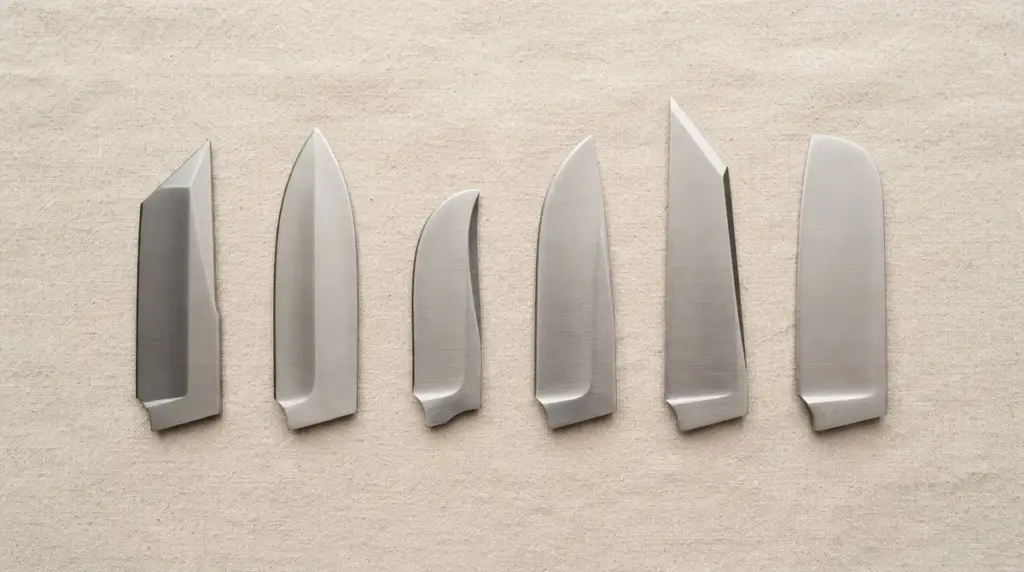
Six blade shapes account for nearly every traditional pattern in production.
Clip point. The spine is clipped away toward the tip, giving a fine point that gets into small spaces. Usually the master blade.
Spear point. Symmetrical about the centre line, with a point in the middle of the blade. Strong and general purpose.
Pen. A small spear point. It exists because people used to cut quills with it, and it survives because it is the right size for fingernails, tape and string.
Sheepsfoot. Straight edge, spine curving down to meet it, so there is effectively no point. Made for cutting on a board or against a surface without stabbing what is underneath.
Wharncliffe. Like a sheepsfoot but the spine falls in a long straight taper from the handle, giving a genuinely sharp point on a straight edge. Excellent for detail cuts.
Spey. Broad, with a blunt rounded tip. It is on stockmen and trappers because the original job, castrating livestock, is one where a sharp point is a hazard to the animal and the handler. Today it is the blade people use for scraping and for anything where they do not want to puncture.
A seventh, the coping blade, is a narrow straight edged blade found on congress patterns and whittlers for fine woodwork. If any of this is unfamiliar, our blade shapes guide covers the same shapes on fixed blades.
The patterns, side by side
Closed lengths vary between makers and between sizes of the same pattern, so read the column as typical rather than as a specification.
| Pattern | Frame | Blades | Typical closed length | Original job |
|---|---|---|---|---|
| Stockman | Serpentine | Clip, sheepsfoot, spey | 3.25 to 4 inches | Livestock and ranch work |
| Trapper | Serpentine | Clip and spey, both at one end | About 4.125 inches | Fur trade, skinning and general work |
| Barlow | Jack, one long bolster | One or two, usually clip and pen | 3.25 to 3.5 inches | A cheap, tough working knife |
| Peanut | Jack | Clip and pen | About 2.625 inches | Small pocket carry |
| Canoe | Canoe | Spear and pen, opposite ends | About 3.625 inches | Gentleman's pocket knife |
| Congress | Swell centre | Two sheepsfoot, coping, pen | About 3.5 inches | Fine work and grooming |
| Whittler | Jack | Large master plus two small on split springs | 3.25 to 3.75 inches | Wood carving |
| Muskrat | Serpentine | Two identical clip blades, opposite ends | About 4 inches | Skinning small game |
| Sodbuster | Bolsterless | One large drop or clip point | 3.75 to 4.75 inches | Farm knife, cheap and strong |
| Texas toothpick | Slim jack | One long clip point | 3.5 to 5 inches | Slim carry, fish and small game |
| Swayback | Dogleg | One wharncliffe | About 3.5 inches | Detail cutting |
Stockman, trapper and barlow in detail
The stockman is the pattern most people mean when they picture a traditional pocket knife. A serpentine frame carries three blades on two springs: a clip master at one end, and a sheepsfoot and a spey at the other. That combination is not decoration. The clip does fine work, the sheepsfoot cuts on a surface without spearing it, and the spey scrapes and cuts without a point. It is the closest thing traditional cutlery has to a three tool set in one handle, which is why it outsold everything else for most of a century.
The trapper is a serpentine frame carrying a long clip and a long spey, both pivoting from the same end and both nearly as long as the frame. It is bigger than a stockman and gives you two full length blades instead of three short ones. If you have ever wondered why a trapper feels so much more substantial than a stockman of the same nominal size, that is why: the blade to frame ratio is far higher.
The barlow is defined by its bolster, not by its blades. One long bolster caps the pivot end and there is nothing at the butt. That bolster was originally a manufacturing decision. A long single bolster braces the pins where the load is, uses less material than two, and produces a knife that could be sold cheaply to people who worked for a living. The barlow is the pattern that made a decent pocket knife affordable, and the shape has outlived the economics that caused it.
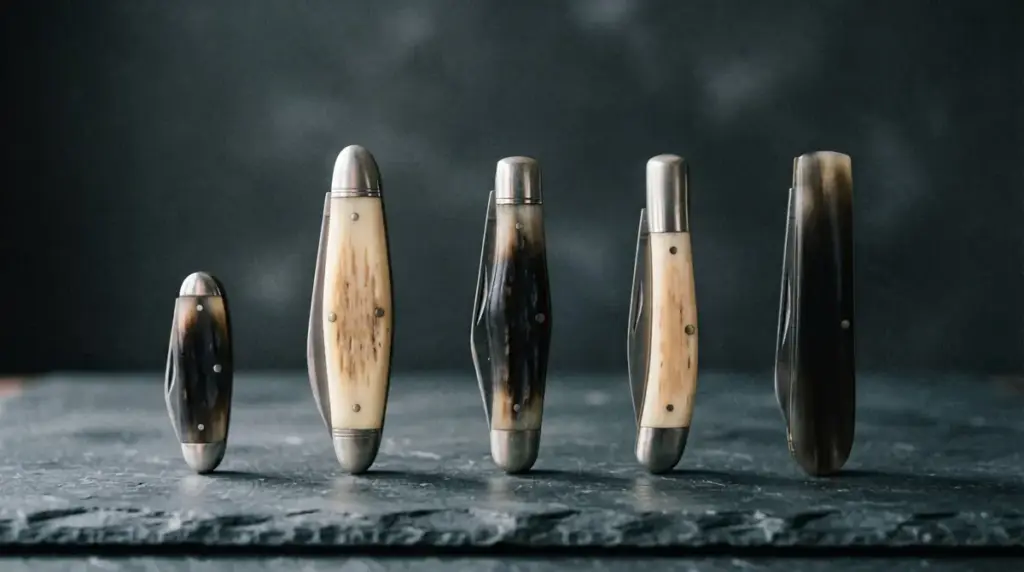
Peanut, canoe, congress, muskrat and sodbuster
The peanut is the smallest pattern still in wide production, at around two and five eighths inches closed with a clip and a pen blade. It is the answer to the person who says they never carry a knife because a knife is too big.
The canoe takes its name from the frame, which swells in the middle and tapers to a rounded point at each end, with spear and pen blades at opposite ends. It has no working history worth speaking of, which is fine, because not every knife needs one.
The congress is a swell centre frame carrying four blades: two sheepsfoot, a coping and a pen. It is the pattern people mean when they say traditional knives are over engineered, and it is genuinely awkward to carry, but the blade set is superb for fine work. Our multi blade pocket knives guide goes further into what four springs do to a knife's thickness.
The muskrat is odd and deliberate: two identical long clip blades at opposite ends. The logic is that you skin with one until it dulls, then turn the knife around, so you never stop to sharpen mid job.
The sodbuster is the plainest thing in the catalogue: no bolsters, one big blade, a simple frame. It exists because a farm knife has to be cheap enough to lose and strong enough to abuse.
Shields, springs, nail nicks and long pulls
Three more details worth knowing before you buy.
The spring is the flat bar that bears on the tang and holds a blade open or closed. One spring can serve two blades, one at each end. That is why blade counts are usually even numbers on pen frames and why the three blade stockman needs a specific two spring layout. More springs means a thicker knife, always.
The nail nick is the crescent groove you catch a fingernail in to open a blade. A long pull is the same idea drawn as a long shallow groove along the blade. Both exist because a traditional knife is opened with two hands, and neither works well with gloves or with short nails. That is a real ergonomic limitation of the whole category, not a fault in a particular knife.
The shield is the inlaid emblem set into the handle covering. It is decorative, it is also a maker's signature, and on old knives it is one of the things collectors use to date a piece.
How pattern numbers work
The traditional trade encodes a whole knife in a short number, and Case's system is the one most people meet. A four digit Case number breaks down as follows: the first digit is the handle material, the second digit is the number of blades, and the last two digits are the factory pattern number, which identifies the handle die and therefore the frame.
So 6318 reads as bone handle, three blades, pattern 18, which is the medium stockman. Change the handle to genuine stag and the same knife becomes 5318. Change it to genuine pearl and it becomes 8318. The frame and the blade set have not moved.
| First digit | Handle material in the Case scheme |
|---|---|
| 1 | Walnut |
| 2 | Slick black or black composition |
| 3 | Yellow composition |
| 4 | White composition |
| 5 | Genuine stag and stag variants |
| 6 | Jigged bone, imitation jigged bone or laminated wood |
| 7 | Curly maple, other woods, tortoise shell |
| 8 | Genuine pearl, abalone or paua |
| 9 | Imitation pearl or cracked ice |
| 10 | Micarta |
Letters after the number carry the rest. SS means stainless steel and CV means chrome vanadium, which is the carbon steel option. SH means a sheepsfoot master blade. DR means a drill hole in the rear bolster. Other makers use their own schemes, so do not carry Case's code across to a different brand, but the principle of frame plus blade count plus covering is common to the whole trade.
Every one of them is a slip joint
With very few exceptions, a traditional pattern is a slip joint. The backspring holds the blade open and resists a push on the spine, but nothing locks. The resistance is called the pull and is graded from a light two to a very stiff eight or nine.
This is not a defect and it is not an oversight. A slip joint has few parts, almost nothing to wear out of tolerance, and it remains legal to carry in jurisdictions that restrict locking blades. It also means a traditional pattern is the wrong knife for anything that loads the spine. If you want to understand what you are giving up and what you are getting, we have set the mechanisms out side by side in folding knife lock types. Please check your local law before ordering either kind.
Which of these we make, and which we do not
Here is the awkward part. We do not make a single one of these patterns.
We list 111 folding pocket knives, and on 30 August 2026 not one of them was sold as a stockman, a trapper, a barlow, a peanut, a congress, a canoe, a muskrat, a whittler or a sodbuster. Our five multi blade folders are two three blade knives at $135 and three five blade knives at $179 to $188, and none of them is built to a named traditional frame. They also carry a four inch blade, where a medium stockman's master blade is closer to two and a half. That is a different kind of knife wearing a similar silhouette.
Our folders run $70 to $845 with a median of $128, and their published blade lengths run 1.5 to 7 inches with a median of 3 inches. What we are good at is hand-forged Damascus blades and the handle materials that go with them: 138 of our 609 products use bone, stag or horn, and 158 use wood, which are the coverings the traditional trade coded as 5, 6 and 7. What we do not do is the frame engineering that a real stockman requires, and pretending otherwise would waste your money.
If you want a genuine traditional pattern, buy from a house that has cut those handle dies for decades. Come to us for the blade, the steel and the finish. The nearest thing we make to a traditional working pattern is the cowboy bull cutter, which shares the spey logic of a stockman's third blade, and even that is a different animal.
Buying a traditional pattern that still works
Four things separate a good example from a bad one, and none is the brand on the shield.
Blade walk and talk. Open and close each blade. It should snap open, snap shut and give a clean sound. Mushy travel means a tired spring or a dirty joint.
Blade rap and centring. A closed blade should not touch the spring hard enough to dull the edge, and it should sit centred in the well rather than rubbing a liner.
Flush at both positions. The spring should sit level with the frame when the blade is open and when it is closed. A proud spring in either position is poor fitting.
Steel you can sharpen. Traditional patterns are thin ground and easy to sharpen, and that is the point of them. Carbon steel like chrome vanadium takes a keener edge and will patina, stainless will not patina and takes slightly longer to bring back. Neither is wrong. Our steel chart sets out the trade in detail.
And the last one, which is not a check but a rule. A traditional knife is a two handed knife with no lock. Do not buy one expecting it to do the job of a modern locking folder, and do not hand one to somebody and tell them it is safe because it is old fashioned.
Questions people ask
What is the difference between a stockman and a trapper?
A stockman is a serpentine frame with three blades, a clip at one end and a sheepsfoot and spey at the other. A trapper is a serpentine frame with two long blades, a clip and a spey, both pivoting from the same end. The trapper is generally the larger knife with more usable blade length.
Why does a stockman have a blunt blade?
That is the spey blade, and it is blunt on purpose. The original job was castrating and marking livestock, where a sharp point risks injuring the animal and the person holding it. It is now the blade people reach for when scraping or cutting against something they do not want to puncture.
What makes a barlow a barlow?
The bolster. A barlow has one long bolster at the pivot end and no bolster at the butt. That is the defining feature. The blade set varies and does not change the name.
Do traditional pocket knives lock?
Almost none of them do. They are slip joints, held open by a backspring that resists a push on the spine without locking. A few modern traditionals are offered with a back lock, but the classic patterns are not locking knives.
What is a serpentine frame?
A frame with a shallow S curve, narrower through the middle, so the butt drops away from the blade end. Stockmen, trappers and muskrats use it because that curve fills a closed hand better than a straight frame does.
What do the numbers on a Case knife mean?
The first digit is the handle material, the second is the number of blades, and the last two are the factory pattern number that identifies the frame. So 6318 is a bone handled three blade pattern 18, which is the medium stockman. Letters after the number cover the steel and blade variations, with SS for stainless and CV for chrome vanadium.
Which traditional pattern is best for everyday carry?
A medium stockman if you want three blade shapes, a peanut if you want the smallest thing that is still useful, and a sodbuster if you want one large blade and no fuss. All three are two handed knives, so if you often have one hand full, a modern folder is the honest answer.
What is a nail nick and why is it so hard to use?
It is the crescent groove you hook a fingernail into to open the blade. It is hard to use with gloves, wet hands or short nails because it was designed in an era when nobody expected one handed opening. A long pull, which is a longer shallow groove, is a little easier.
Are traditional patterns good for hunting?
A trapper or a muskrat will field dress a deer and generations of hunters did exactly that. A dedicated fixed blade is easier to clean, safer without a lock and faster to work with. Our skinning knife guide explains why the fixed blade wins on hygiene alone.
Does Black Mamba Knives make traditional patterns?
No. As of 30 August 2026 none of our 111 folders is sold as a named traditional pattern, and our five multi blade folders are not built to traditional frames. We make hand-forged Damascus blades. For a genuine stockman or barlow, buy from a maker who cuts those handle dies.
More guides. Multi blade pocket knives, blade shapes and what each one is for, knife anatomy and the names of the parts, the cowboy bull cutter explained, and the bull cutter category itself.
Shop the knives
Magnum 4.75 Inches Damascus Laguiole Knife Handmade Damascus Pocket Knives French Knife Steak Knife USA Made | BMK-501Tri Fold Pocket Knife | Super Steel 3 Blades Knife Black Mamba Knife Hunting Knife Steak Knife Multi Purpose | BMK-003Penta Fold Pocket Knife | Super Steel 5 Blades Color Camel Bone Knife Black Mamba Knife Hunting Knife Steak Knife Multi Purpose USA Made Gift | BMK-007 Queen Snake 8.5" Long Damascus Pocket Knife Damascus Hunting Knife Stag Antler Handle Pocket Clip Knife with Leather Sheath USA Made | BMK-445
More from the workshop
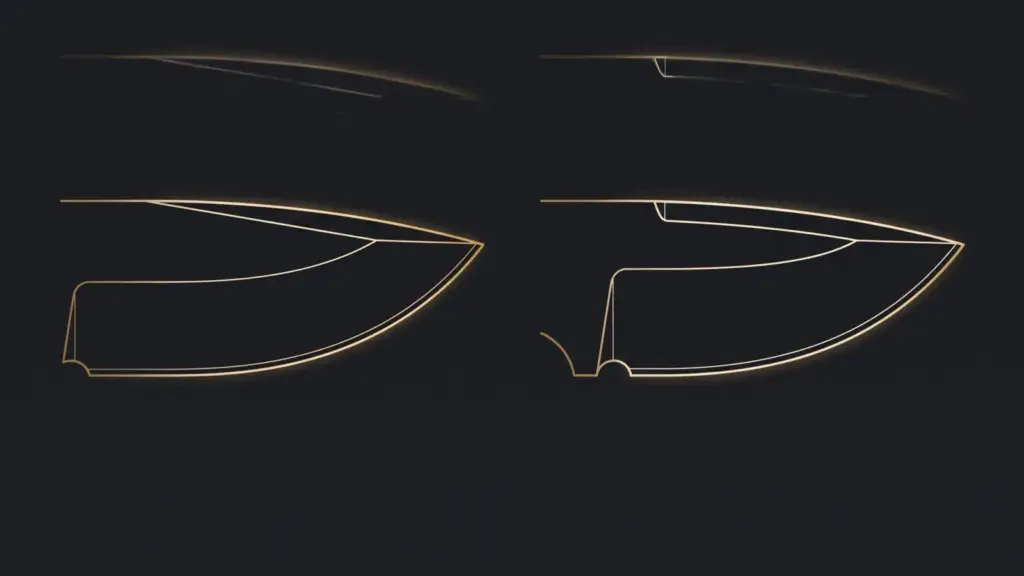
Fixed Blade Bevels Explained
Convex vs sabre grind on a hunting or outdoor fixed blade, and what actually survives hard use.
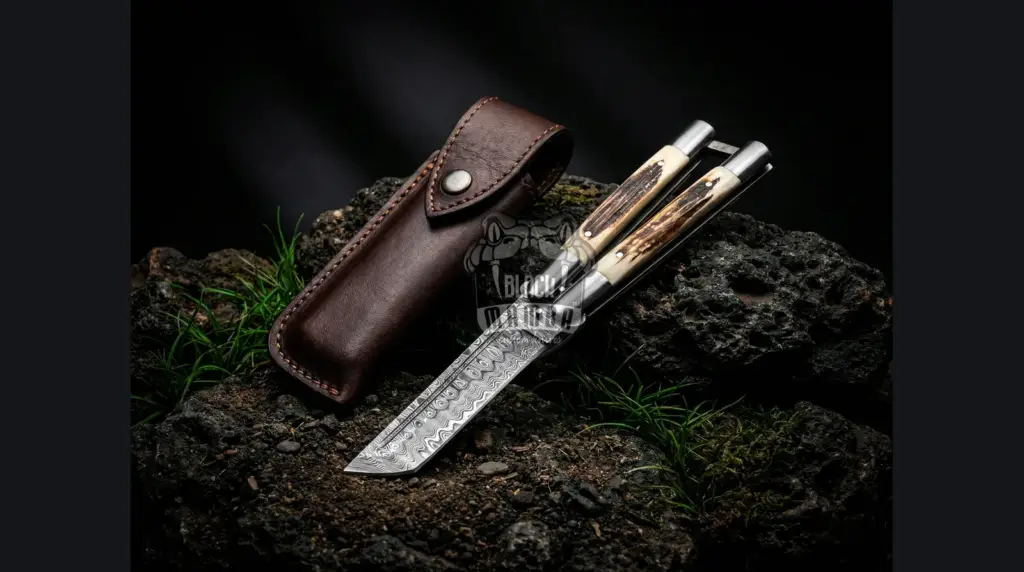
Butterfly Knife Laws in the US: How to Check Your State
Why federal law rarely applies, and how to check your own state properly.
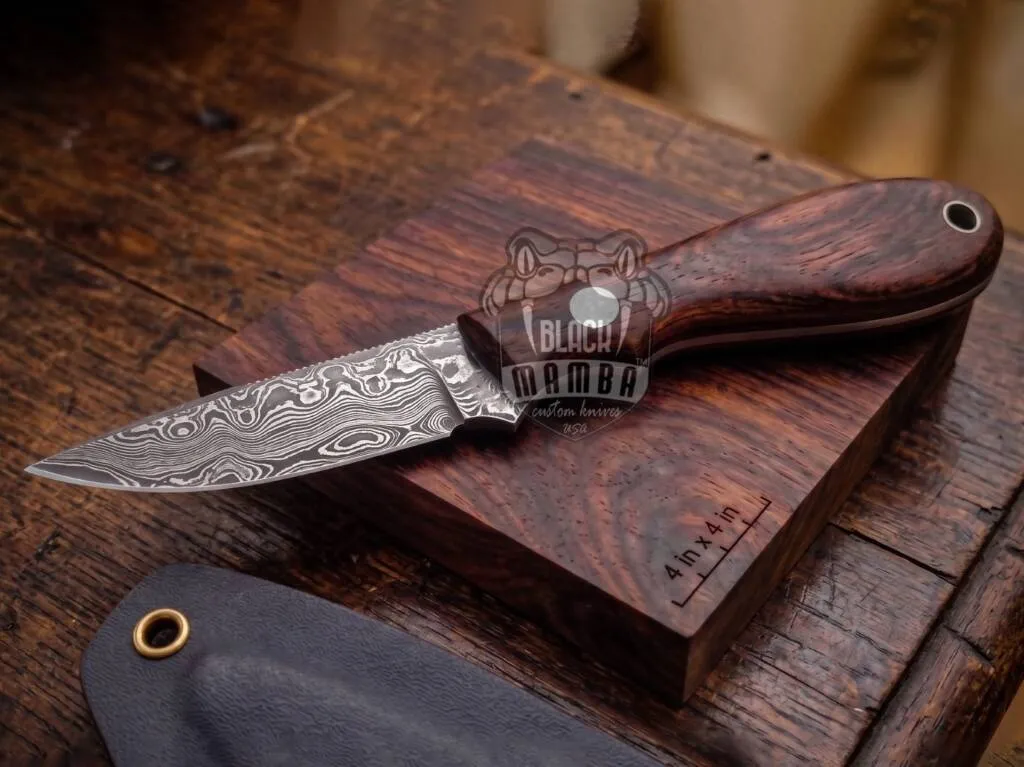
Carbon vs Stainless Kitchen Knives
Carbon is better to cut with, stainless is better to own. Pick by your habits.
