
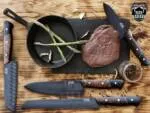
A kitchen knife earns its place by how it feels after the twentieth cut, not the first. These are our chef knives, santokus, nakiris, cleavers and paring knives, forged in our own shop and finished by hand.
Steel
Our Damascus is 1095 and 15n20 folded and hardened to 58 to 60 HRC. It takes a keener edge than most stainless and is easy to bring back on a whetstone. It is reactive steel, so it wants drying after use. If your knife will sit wet by a sink, choose one of our 440C blades instead.
Which shape
An eight inch chef knife is the one knife most kitchens actually need: long enough to rock through onions, short enough to control. A santoku is flatter and better for straight downward chopping. A nakiri is for vegetables only and is very good at it. A cleaver is for bone and squash, not for fine work.
-
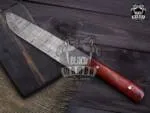
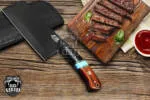
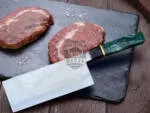
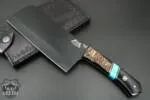
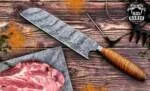
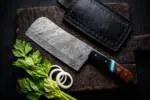
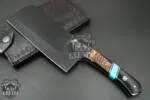
Black Panther Damascus Chef Cleaver Blade Knife World Class Knives | BMK-708-DS
Original price was: $468.00.$374.00Current price is: $374.00. -
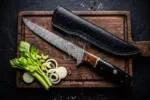
Snow Leopard Damascus Steel Chef Knives Set with Dagger Hand Made Black Mamba Knives | BMK-707
Original price was: $925.00.$740.00Current price is: $740.00. -
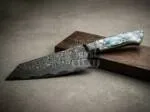
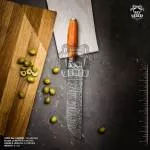
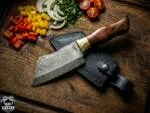
Black Mamba Vortex Edge Handmade Sanmai Bunka Chef Knife with | Sea Shell Handle | Sanmai Bolster & Leather Sheath | BMK-675
Original price was: $318.00.$254.00Current price is: $254.00. -
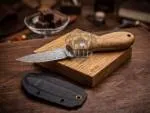
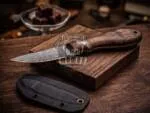
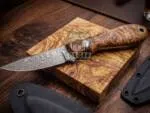
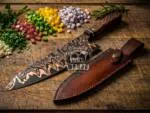
Olive Warbler Handmade Damascus Fudge Knife with Olive Wood Handle Cutting Board & Leather Sheath | USA Made Camping & Hunting Gift | BMK-745
Original price was: $189.00.$151.00Current price is: $151.00. -
Ikura Pro Kitchen Knife Large Meat Cutting Knife 9.7 Inches Straight Blade Knives Damascus Knife Sharp Knife with Paddock Wood Handle | BMK-711
Original price was: $186.00.$149.00Current price is: $149.00. -
C Yukio Chef Knife 13 Inches Long 7.5 Inches Blade 11 Ounce Razor Sharp Hand Made 440c Chef Knives Black Mamba Hand Made World Class Knives | BMK-152-440
Original price was: $151.00.$121.00Current price is: $121.00. -
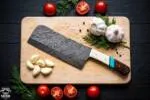
Walnut Wren Handmade Damascus Fudge Knife with Walnut Wood Handle & 4×4 Cutting Board | USA Made Camping & Hunting Gift | BMK-747
Original price was: $189.00.$151.00Current price is: $151.00. -
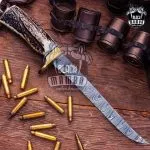
Black Mamba Knives Red Deer Chef Knife Antler Kitchen Knife Fillet Stag Knife Damascus Chef Knife USA Made | BMK-719
Original price was: $381.00.$305.00Current price is: $305.00. -
African Buffalo 12 Inches Long 7 Inches Blade 16.5 Ounce 440c Stainless Steel Black Coated Chef Cleaver Knife Hand Made Black Mamba Knives | BMK-628
Original price was: $206.00.$165.00Current price is: $165.00. -
Molly Knife SERIES 13.5″ Long 8.2 “Blade 9.1 Oz Razor Sharp Hand Made Damascus Steel Chef Knives Black Mamba Hand Made World Class Knives Made in USA | BMK-113-R
Original price was: $158.00.$126.00Current price is: $126.00. -
Marsh Buffalo Resin Buffalo Mirror Shine Blade Cleaver Knife 13 Inches Long 8 Inches Blade Super Steel VG Chef Cleaver Blade Knife Hand Made World Class Black Mamba Knives | BMK-710-VG
Original price was: $403.00.$322.00Current price is: $322.00. -
Acorn Thrush Handmade Damascus Fudge Knife with Oak Wood Handle Compact Kitchen & Camping Knife with Cutting Board & Leather Sheath USA Style Gift | BMK-743
Original price was: $186.00.$149.00Current price is: $149.00. -
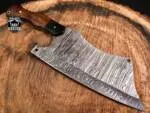
African Buffalo Damascus Cleaver Knife 12 Inches Long 7 Inches Blade 18 Ounce Damascus Chef Cleaver Blade Knife Hand Made World Class Black Mamba Knives | BMK-703-DS
Original price was: $164.00.$131.00Current price is: $131.00. -
African Buffalo Mirror Shine Blade Cleaver Knife 13 Inches Long 8 Inches Blade 17 Ounce Super Steel VG Chef Cleaver Blade Knife Hand Made World Class Black Mamba Knives | BMK-710-VG
Original price was: $468.00.$374.00Current price is: $374.00. -
Black Cats 440c Stainless Steel Black Coated Chef Knives Set Hand Made Black Mamba Knives | BMK-708
Original price was: $708.00.$566.00Current price is: $566.00. -
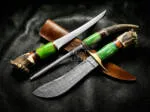
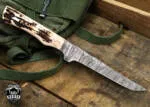
Green Heron Handmade Hunting and Fillet Knife with Leather Sheath & Stag Handle – Premium Personalized Gift | BMK-722
Original price was: $903.00.$722.00Current price is: $722.00. -
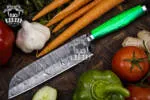
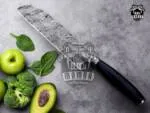
Bonito Pro Kitchen Knife Damascus Utility Knife 7 Inch Damascus Chef’s Knives Damascus Steel Sharp Paring Knife with Ergonomic Handle | BMK-715
Original price was: $151.00.$121.00Current price is: $121.00. -
Brown Trout Chef Knife 13.5″ Long 8.2 “Blade 9.1 Oz Razor Sharp Hand Made Damascus Steel Chef Knives Black Mamba Hand Made World Class Knives Made in USA | BMK-113-W
Original price was: $158.00.$126.00Current price is: $126.00. -
Black Panther 12 Inches Long 7 Inches Blade 18 Ounce 440c Stainless Steel Black Coated Chef Cleaver Knife Hand Made Black Mamba Knives | BMK-702
Original price was: $206.00.$165.00Current price is: $165.00. -
Silver Barracuda Damascus Fish Fillet Knife with Leather Sheath | Fishing Knife for Camping and Hunting | BMK-566
Original price was: $180.00.$144.00Current price is: $144.00. -
Shishamo 8 Inches Damascus Knife Damascus Fish Fillet Knife Utility Knife Chef’s Knives Ergonomic Handle with Leather Sheath Black Resin, Walnut Wood Spacer and Brass File Work Spacer, Decorative Pin | BMK-716
Original price was: $160.00.$128.00Current price is: $128.00. -
BLACK MAMBA KNIVES Bao Bao Damascus Cleaver Knife 10 Inches Long 5 Inches Blade 14 Ounce Damascus Chef Cleaver Blade Knife Hand Made World Class | BMK-706
Original price was: $196.00.$157.00Current price is: $157.00. -
Copper Egret Handmade Damascus Copper Steel Chef Knife | Rosewood & Copper Spacer and Rose Wood Bolster Handle | Custom Gift | Collector Blade | BMK-709
Original price was: $434.00.$347.00Current price is: $347.00. -
Yellowfin Chef Knife 13″ Long 8 “Blade 10 Oz Razor Sharp Hand Made Damascus Chef Knives Kitchen Knives Black Mamba Hand Made World Class Knives | BMK-113-OL
Original price was: $158.00.$126.00Current price is: $126.00. -
Colorado Snake 7.8 Inches Damascus Knife Damascus Fish Fillet Knife Utility Knife Chef’s Knives Ergonomic Handle with Leather Sheath | BMK-713
Original price was: $186.00.$149.00Current price is: $149.00. -
Fugu Knife SERIES 13″ Long 8 “Blade 10 Oz Razor Sharp, Superb Edge Retention, Hand Made Damascus Professional Chefs Knives Kitchen Knives Black Mamba Hand Made World Class Knives | BMK-113-G
Original price was: $158.00.$126.00Current price is: $126.00. -
BLACK MAMBA KNIVES Black Panther Damascus Chef Cleaver Blade Knife Chopper Knife World Class Knives | BMK-705-DS
Original price was: $207.00.$166.00Current price is: $166.00. -
Black Mamba Knives Black Panther 12 Inches Long 7 Inches Blade 16.5 Ounce 440c Black Coated Chef Cleaver Knife Blade Knife Hand Made | BMK-702
Original price was: $206.00.$165.00Current price is: $165.00. -
Kodiak Bmk-714_Damascus Blade Cleaver Knife 14.5 Inches Long 9 Inches Blade 18 Ounce Super Steel VG Chef Cleaver Blade Knife Hand Made World Class Black Mamba Knives
Original price was: $473.00.$378.00Current price is: $378.00. -
Sable Fish Chef Knife13.5″ Long 8.2 “Blade 9.1 Oz Razor Sharp Hand Made Damascus Steel Chef Knives Black Mamba Hand Made World Class Knives Made in USA | BMK-113-BL
Original price was: $158.00.$126.00Current price is: $126.00. -
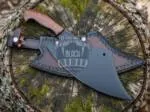
Iron Cleaver Hunter | Handmade Cleaver Kitchen Knife with Leather Sheath | Carbon Coated Chopper and Chef Knife | BMK-647
Original price was: $229.00.$183.00Current price is: $183.00. -
Rosewood Robin Handmade Damascus Fudge Knife with Rosewood Handle – USA Made Camping & Hunting Gift | BMK-746
Original price was: $189.00.$151.00Current price is: $151.00. -
Sea Urchin Pro Kitchen Knife Fillet Knife 13 Inch Fish Fillet Knives Damascus Steel Sharp Knife with Wenge Wood USA Made | BMK-710
Original price was: $151.00.$121.00Current price is: $121.00. -
Qinling Panda 12 Inches Long 7 Inches Blade 16.5 Ounce 440c Stainless Steel Black Coated Chef Cleaver Knife Hand Made Black Mamba Knives USA Made | BMK-627
Original price was: $206.00.$165.00Current price is: $165.00. -
Black Mamba Knives Unagi Pro Kitchen Knife Utility Knife 7 Inch Chef’s Knives Vg10 Japanese Stainless Steel Sharp Paring Knife with Ergonomic Handle | BMK-629
Original price was: $120.00.$96.00Current price is: $96.00.

Questions people ask
Do these go in the dishwasher? No. The heat and detergent will dull the edge, attack the etch and split natural handle scales. Hand wash, dry immediately.
How often should I sharpen? Hone on a rod every few uses; a full sharpen once or twice a year is enough for home cooking. Sharpen the edge only, never the flats, or you grind through the pattern.
Is Damascus better than stainless in a kitchen? It holds a finer edge and looks better. Stainless is more forgiving if you leave knives wet. Pick for your habits, not the marketing.
More reading. Read our guides on telling real Damascus from a printed pattern, what 352 layers means and caring for a Damascus blade.
Blade shapes at a glance
| Knife | Typical blade | Best at | Skip it if |
|---|---|---|---|
| Chef knife | 8 in, curved belly | Everything, onions, herbs, meat, the rocking cut | Nothing. Buy this one first |
| Santoku | 6 to 7 in, flatter edge | Straight downward chopping, thin slicing | You prefer to rock rather than chop |
| Nakiri | 6 to 7 in, straight, blunt tip | Vegetables, and very good at it | You want one knife for everything |
| Cleaver | 7 to 8 in, heavy | Bone, squash, hard squash-adjacent objects | Fine work, it is not a slicer |
| Paring knife | 3 to 4 in | In-hand peeling, trimming, detail work | Board work, too short to be safe |
| Boning / fillet | 6 in, narrow, flexible | Following bone and skin | General prep |
If you buy two, make it an 8 inch chef knife and a paring knife. That pair covers most of what a home kitchen actually does; everything else is a preference.
Hand forged, not stamped
Most kitchen knives sold in the US are stamped, cut from a rolled sheet by machine, ground, and shipped. Ours are hand forged: the billet is heated, drawn out and shaped on the anvil, then heat treated, ground, fitted and sharpened by hand in our workshop in Memphis, Tennessee. That is where the price difference is, and it is also why no two blades are identical.
Handles are stabilised burl, olive, walnut, buffalo horn, camel bone, Micarta and resin. Natural materials want hand washing and the occasional drop of oil; Micarta and resin do not care.
Related: cleavers, D2 steel knives, 440C stainless and engraved knife gifts, a chef knife with a name on it is the easiest wedding present there is.
What is the one knife I should buy? An eight inch chef knife. It is long enough to rock through an onion and short enough to control, and it will do ninety per cent of what a home cook needs. Add a paring knife when you get tired of using the big one for small jobs.
Damascus or 440C for a kitchen? Damascus takes a finer edge and looks considerably better on a magnetic rack. 440C is stainless and forgives being left wet by the sink. If you are honest about washing up straight away, take the Damascus; if not, take the 440C.
Are these knives full tang? Yes, the steel runs the full length of the handle and is pinned through. That is what stops a blade working loose from its scales after a few years of use. Our full tang vs partial tang guide shows the difference.
Can a kitchen knife be engraved? Yes, engraving is a paid add-on and is done in our own shop before the knife ships. It is the most common request we get on chef knives bought as gifts.
How sharp do they arrive? Hand sharpened and ready to use. Keep a honing rod nearby, use a wooden or plastic board rather than glass or stone, and the edge will last a long time between real sharpenings.
Latest off the anvil in this collection: Damascus Fudge Knife with Walnut Wood Handle & 4×4 Kitchen Knife, Damascus Fudge Knife with Rosewood Handle, USA Made Kitchen Knife, Damascus Fudge Knife with Olive Wood Handle Cutting Kitchen Knife and Damascus Fudge Knife with Paddock Wood Handle Kitchen Knife.
More reading. A chef knife is held by the blade, not the handle. Our guide to choosing a knife for smaller hands explains the pinch grip and why a 6 to 7 inch blade still works.
Damascus chef knives, and what a hand forged one actually gives you
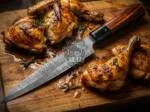
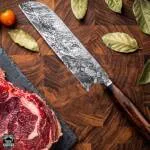
A Damascus chef knife is bought with the eye and kept for the edge. Ours are forged from layered 1095 and 15N20 at 58 to 60 HRC, ground thin behind the edge, and finished by the person who made them. That thin grind is the part that matters on a board: it parts an onion instead of wedging it apart, and it is the single biggest difference between a real Damascus steel chef knife and a stamped blade with a pattern printed on the side.
Blade lengths here run from 5 inch cleaver-profile knives up to 9 inch chef and breaking blades, with most of the range sitting at 7 to 8.2 inches. That is the working size for a home kitchen. If your hands are on the smaller side, the answer is not a shorter blade, it is the pinch grip, and our guide to choosing a knife for smaller hands covers it.
Not everything in a kitchen wants Damascus. We also make 440C stainless and VG10 kitchen knives, and for a household that will not hand wash and dry, stainless is the honest recommendation rather than the cheaper one.
Which Damascus kitchen knife for which job
| Knife | Blade | What it is for |
|---|---|---|
| Chef knife | 7 to 8.2 in | The one knife that does most of the work. Rocking cuts, dicing, breaking down vegetables. |
| Chef cleaver | 5 to 9 in | Heavy through bone and joint, and a flat edge that is superb for scooping and crushing garlic. |
| Meat cutting and breaking knife | 9 to 10 in | Long straight edge for slicing roasts and portioning large cuts in one pass. |
| Bunka | 6 to 7 in | Japanese profile with a reverse tanto tip. Precision work and a flat section for push cuts. |
| Utility knife | 5 to 7 in | The gap between a paring knife and a chef knife. Most used and least talked about. |
| Fillet knife | 7 to 9 in | Thin and flexible, follows the bone. Fish and fine trimming. |
| Paring knife | 3 to 4 in | In-hand work: peeling, hulling, deveining. |
| Fudge and board knife | compact | Short, stiff, sold with its own cutting board. Confectionery, cheese, camp cooking. |
Butcher work, cleavers and breaking knives
Butchering is a different job from prep and it wants a different blade. Weight forward, a spine thick enough to survive bone contact, and enough length to slice a whole muscle in one draw rather than sawing at it.
Our heavy end covers that: Damascus chef cleavers at 12 to 14.5 inches overall with 7 to 9 inch blades and 16 to 18 ounces of head weight, plus straight-edged meat cutting knives around 9.7 inches for portioning. A Damascus butcher knife and a cleaver are not quite the same tool. The cleaver goes through joints and small bone. The straight blade takes the meat off cleanly once the bone is out of the way. Most people who process their own game or buy in bulk end up owning one of each.
Black coated 440C versions of the same cleaver profile are there for anyone who wants the weight without the maintenance. Same shape, same heft, no patina to manage.
Hand forged kitchen knives, not stamped cutlery
Almost every kitchen knife sold in America is stamped: a blade shape punched out of a rolled sheet, ground, and fitted with a moulded handle. It is an efficient way to make a knife and it is why a set can cost forty dollars.
Hand forged kitchen knives are made the other way round. The steel is heated, drawn out, and shaped under a hammer before anyone grinds a bevel, which is what lets a maker put thickness where the blade needs it and take it away where it does not. Folded steel kitchen knives go a step further, because the billet has to be welded and folded before the blade even exists.
What you actually get for that is threefold. The grind is thinner behind the edge, because a hand maker is not building in a safety margin for a warranty department. The handle is fitted to the tang rather than moulded around it. And there is a person who can re-handle or re-profile the knife in ten years, which is not a service a factory offers.
Every one of these is made, ground, heat treated and finished in our own workshop in Memphis, Tennessee. Damascus cooking knives, 440C, VG10 and D2 all come off the same benches.
More questions about our kitchen knives
Do you sell a Damascus steel chef knife set? Yes. The Snow Leopard Damascus chef knives set ships as a matched group, and there is a black coated 440C chef knives set for anyone who wants the same shapes in stainless. Individual knives can also be bought one at a time and matched later, since the handle materials repeat across the range.
Can I order custom Damascus kitchen knives? Yes. Handle material, blade length and finish can all be specified, and engraving is a paid option at checkout. Custom work is quoted per piece because the bench time varies.
What is the difference between a Damascus chef knife and a cleaver here? The chef knife is thin behind the edge and built for slicing and dicing. The cleaver is heavy, flat and built to go through joints. They are not interchangeable and most kitchens want both.
Are these hand forged or hand finished? Hand forged. The billet is welded, drawn out and folded in our shop before anything is ground, and the heat treat happens on the same benches. We do not buy in finished blades and fit handles to them.
What is a good first Damascus kitchen knife? A 7 to 8 inch chef knife. It will do most of the work in any kitchen, and it is the size where a thin grind is most noticeable. Add a paring knife second and a cleaver third.
More reading. Are Damascus knives worth it covers whether Damascus suits a kitchen at all, and what a real Damascus knife costs explains the price bands.
Buying for a wedding party? The groomsmen knife sets come as six matched knives, 15% less than buying them singly, and each one can carry its own engraved name.
