
Buy the knife for the job you actually do
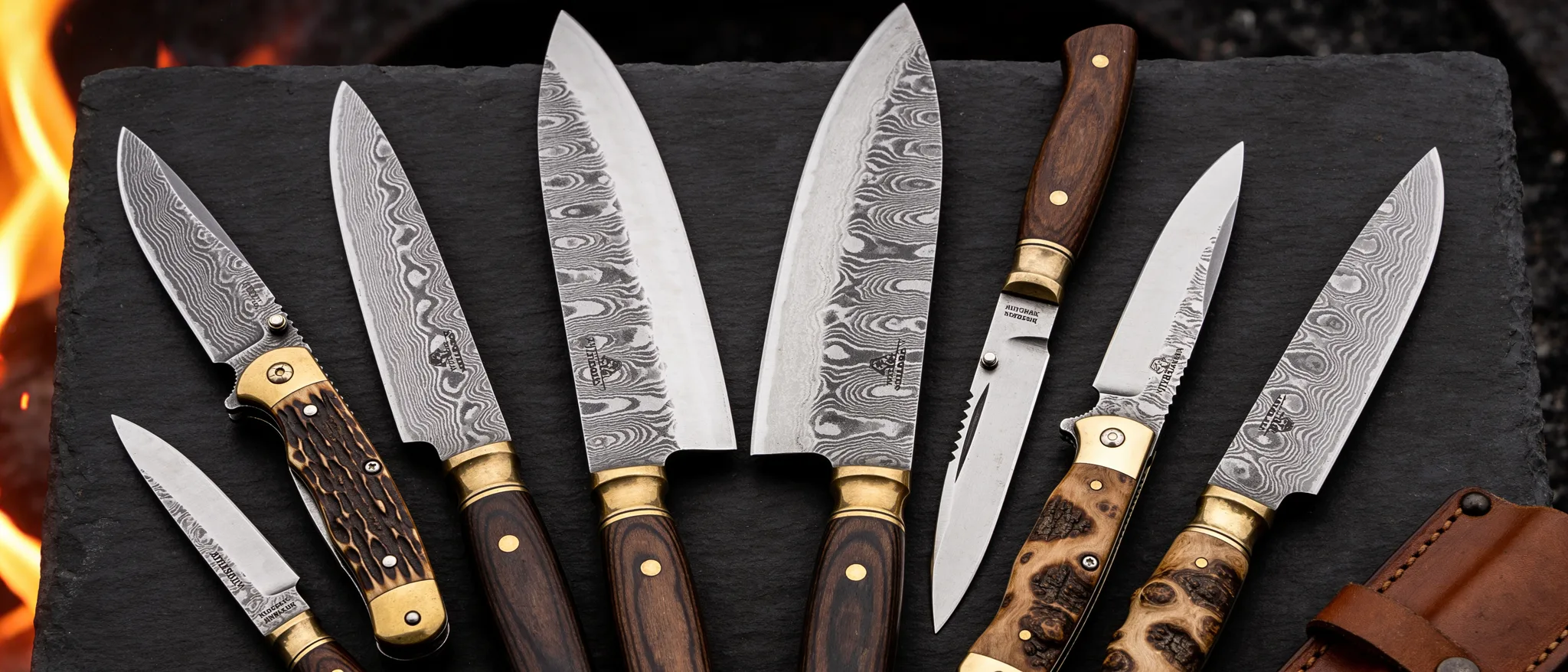
Most people buy the knife they imagine using once and then leave it in a drawer. Pick by the job you do forty times a week instead. Every knife below is forge welded, heat treated and finished in our workshop in Memphis, Tennessee.
This narrows it down fast
Fixed or folding?
If the knife will be used hard, wet, or outdoors for days, take a fixed blade. A pivot is a hinge full of grit after three days in the woods, and batoning is how folding knives die. If it has to disappear into a pocket, take a folder.
Carbon or stainless?
Our Damascus is 1095 and 15N20 — it takes a very fine edge and comes back on a stone in minutes, but it will patina and it will spot if you put it away wet. If the knife lives on a boat or in a wet pack, take 440C or D2 instead.
Still torn? The steel comparison guide puts all four side by side with what each is genuinely good at.
The knife that is in your pocket right now
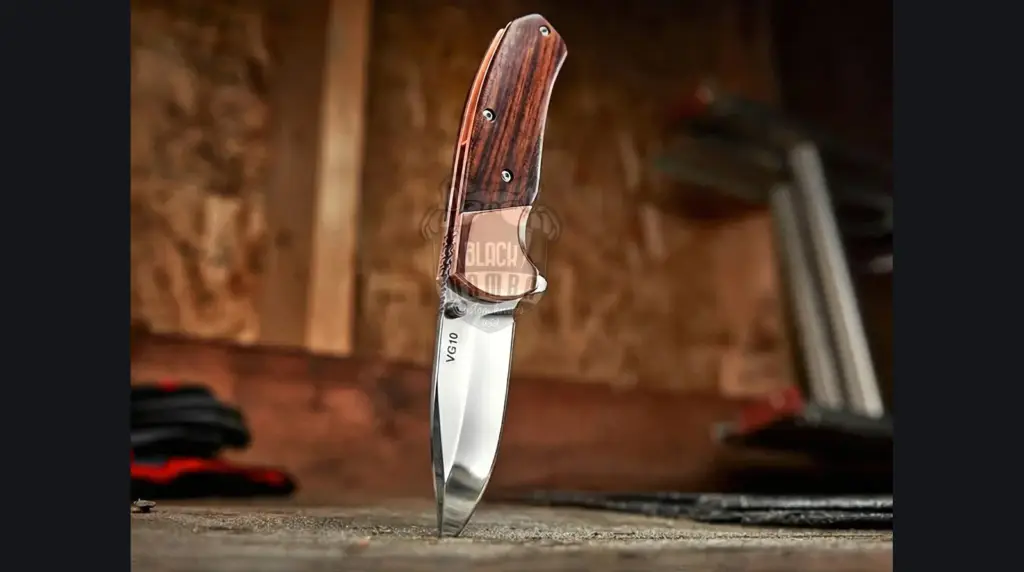
The best EDC knife is the one you did not leave at home. Weight is the single most common reason a knife stops being carried, so buy smaller than instinct tells you.
Three inches of blade opens boxes, cuts cord, trims a loose thread and handles food. Four inches does the same jobs and rides heavier all day. Under two and a half you start fighting the tool. Handle material is the part you actually feel: micarta and G10 grip when wet and shrug off knocks, rosewood and buffalo horn warm in the hand and age with use, brass and pearl are for the knife you want people to ask about.
Twenty minutes that decide the whole season
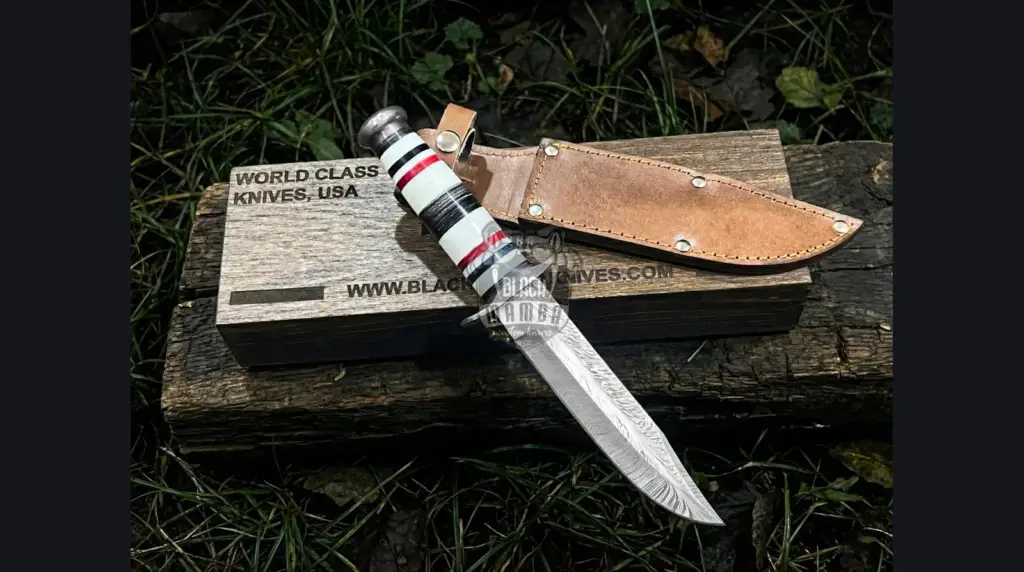
A hunting knife earns its keep in about twenty minutes of work a year, and those twenty minutes decide whether the meat comes out clean.
If you are buying one knife for deer, take a four inch drop point. The lowered, rounded tip is far less likely to nick the stomach wall than a clip point. A clip point gets into tighter work but demands more care. A skinner has a wide sweeping belly built for long pulling cuts under the hide rather than piercing. Three and a half to four and a half inches of blade covers almost all North American big game — longer blades look impressive and get in the way inside a rib cage.
Every fixed blade we make is full tang, so the steel runs the whole length of the handle and there is no join to fail when you are levering a joint apart. Leather sheath included.
The cut that saves the meat
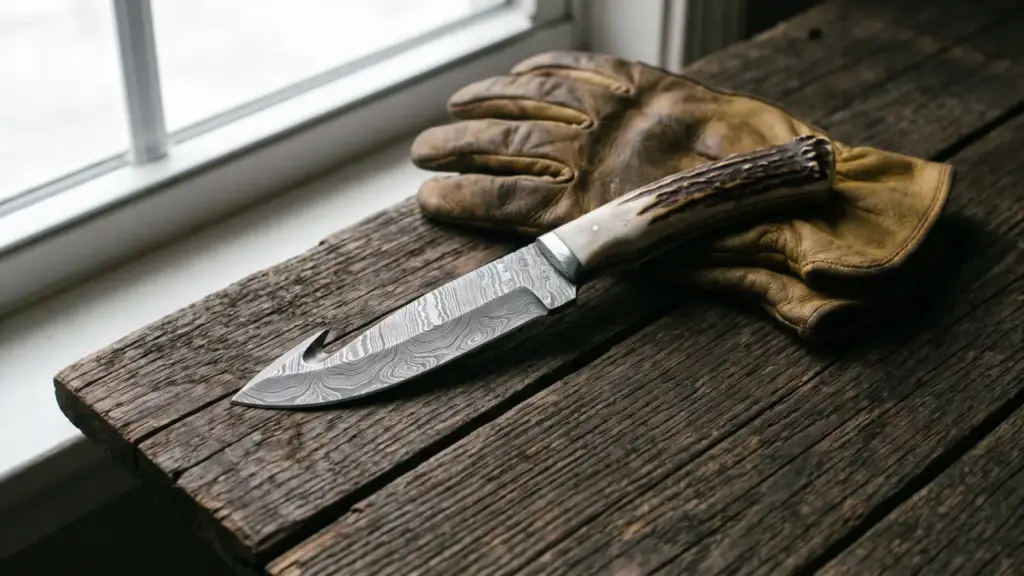
A hunting knife can skin an animal. A skinning knife does it without wasting a quarter inch of meat along the way.
The wide, sweeping belly rolls under the hide in long arcs, separating skin from muscle in single passes instead of short stabbing cuts that nick what you are trying to keep. A gut hook opens the abdomen without pushing into the cavity, which is the puncture that turns a clean field dress into a mess. Three to four inches of blade. Short enough to control, long enough to work a deer from brisket to pelvis. If you only skin two or three animals a year the hunting knife does double duty. If you process more than that, or if you sell the hide, a dedicated skinner pays for itself the first weekend.
The one you reach for forty times a day
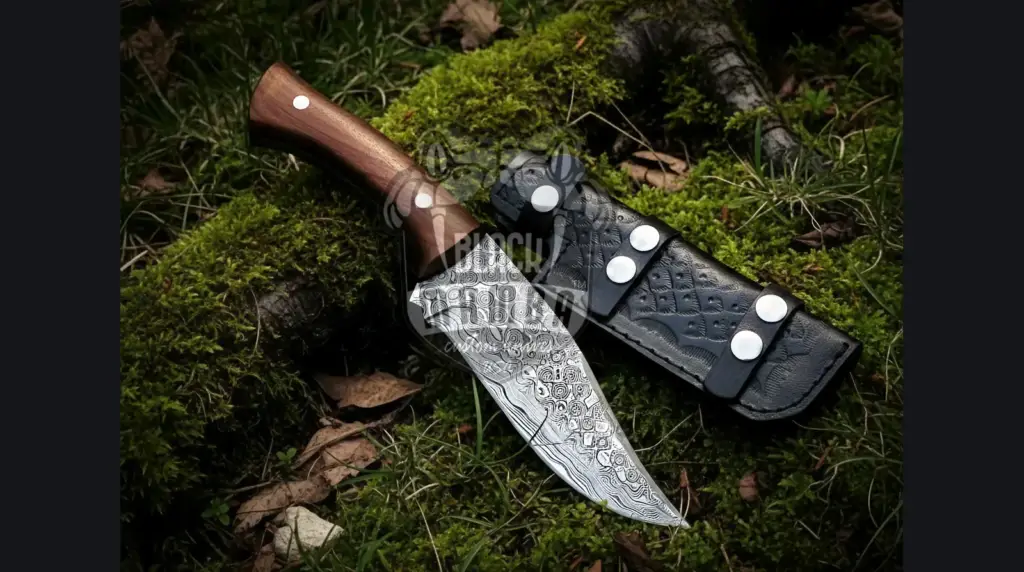
Splitting kindling, stripping bark, opening a bag of rice, cutting cord. Nothing specialist — just constant.
Under eight inches overall and you lose the leverage to split wood. Past thirteen and the knife stops being useful for the small jobs, which is most of them. Eight to eleven inches overall with a four to six inch blade covers everything a camp knife is asked to do. A bushcraft edge wants stronger geometry because it meets wood; a hunting edge wants a thinner, keener grind because it meets hide.
When a knife is not enough
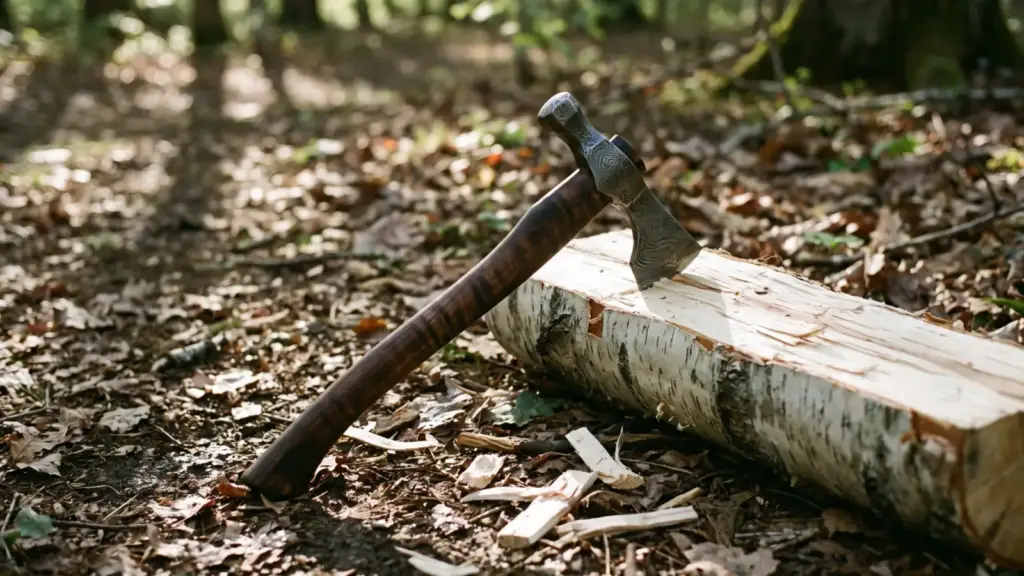
Some jobs need more steel, more weight and a longer arc. Splitting rounds, clearing a trail, driving stakes, breaking down a camp.
A tomahawk puts the weight forward of the grip where physics wants it. Ours are forged from a single billet, poll and all, with no weld between the head and the eye. Tracker knives split the difference: a chopping section up front, a finer edge toward the handle, and enough belly to do light carving when the big work is done. Neither replaces a full size axe. Both outperform a camp knife the moment the wood gets thicker than your wrist.
Flex is the whole point
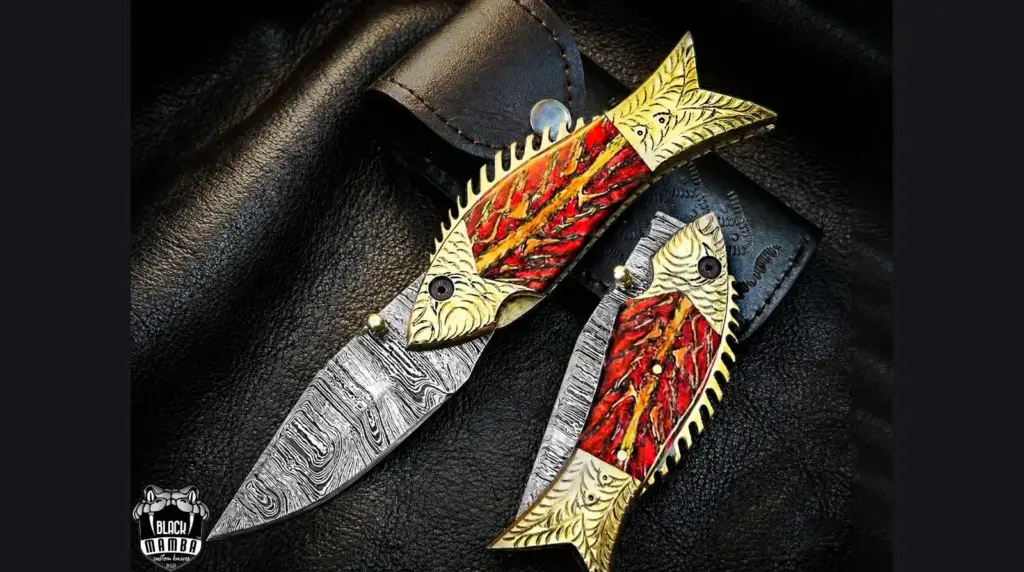
The blade has to bend along the ribs and follow the spine, lifting the fillet in one pass instead of sawing it into three pieces.
Soft flex suits panfish and trout. Medium flex is the all-rounder for walleye, bass and most inshore species. Stiff belongs on salmon, big catfish and offshore work. Six inches for panfish, seven to nine for the middle, nine and up for the big ones. A dull fillet knife tears flesh and costs you yield, so strop it before every session — this is the one knife that should be sharper than everything else you own.
Used more than everything else combined
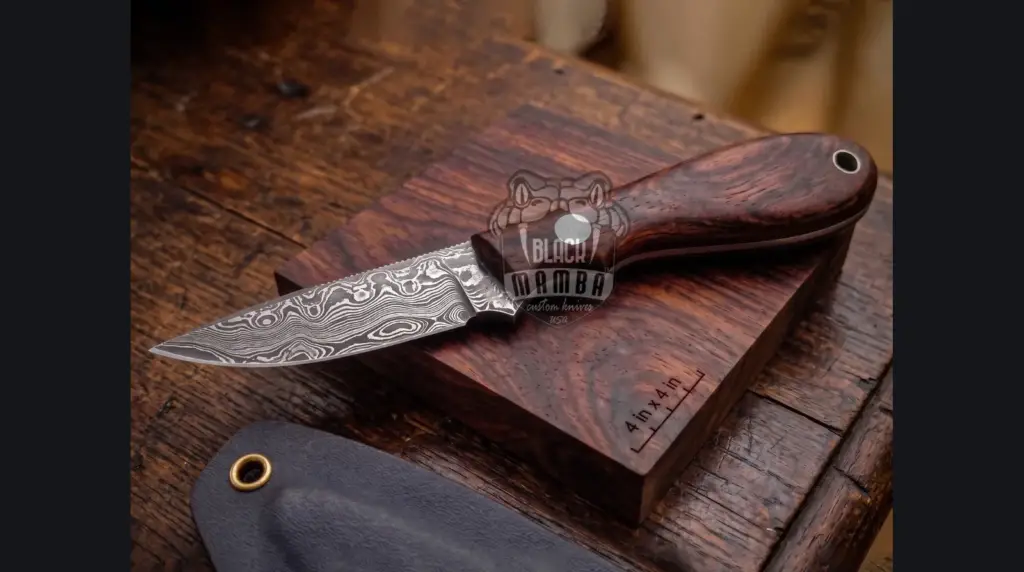
Same forge, same steel, ground thinner — because food is not wood.
Chef knives, cleavers, boning and paring blades at the same 58 to 60 HRC. A kitchen blade is ground at a shallower angle than a field knife, which is what makes it glide through an onion and what makes it a poor choice for prying. Hand wash and dry immediately; a carbon blade left in a wet sink overnight will spot.
Half knife, half skill
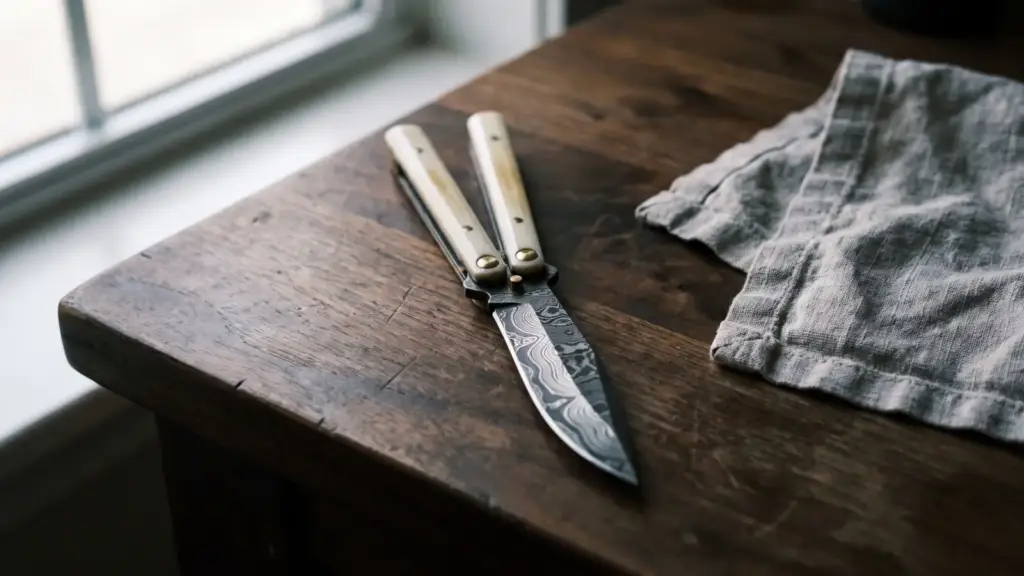
A balisong is a folding knife with two handles that rotate around the blade. It is also the only knife category with its own trick vocabulary.
Aerials, chaplins, rollovers. The flipping community treats these as a skill platform as much as a cutting tool, so balance and handle play matter more than they do on any other folder. Our Damascus balisongs run the same 1095 and 15N20 layered steel as the rest of the shop. Brass, bone and micarta handles in both channel and sandwich construction depending on the model. Check your state and local law before ordering, because balisongs are restricted in some jurisdictions.
Built for work that does not stop
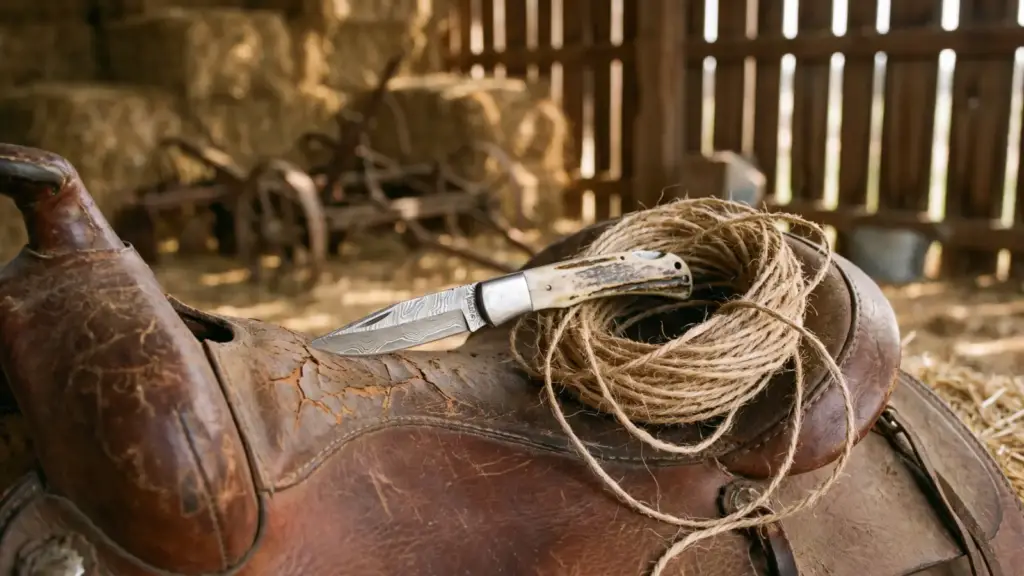
Cutting bale twine, trimming hooves, notching ear tags, slicing rope. A bull cutter is the ranch hand's pocket knife.
The blade is short and stout with a blunt, rounded tip that will not stab through a boot or into a horse when things move suddenly. Handles are bone, wood or horn, materials that grip in a glove and age with use instead of cracking in the sun. These are working folders, not display pieces, though most of them look good enough to start a conversation at the sale barn.
Designed around grip retention
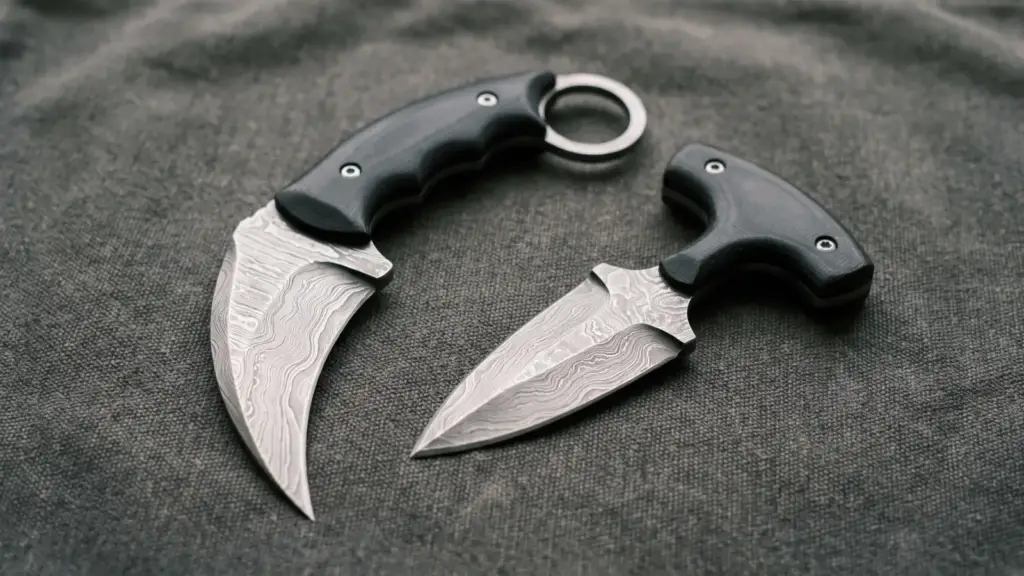
A karambit hooks around the index finger so it cannot be stripped from the hand. A push dagger sits between the knuckles and drives straight forward.
Both are purpose built for a grip that holds under stress. Our karambits are forged with the same layered Damascus as our field knives, full tang, with a pronounced finger ring and a hawkbill blade. Push daggers are double edged and compact, carried in a kydex or leather sheath. These are not everyday utility knives and we do not pretend otherwise. Know your local law before you order.
The ones that go on the wall
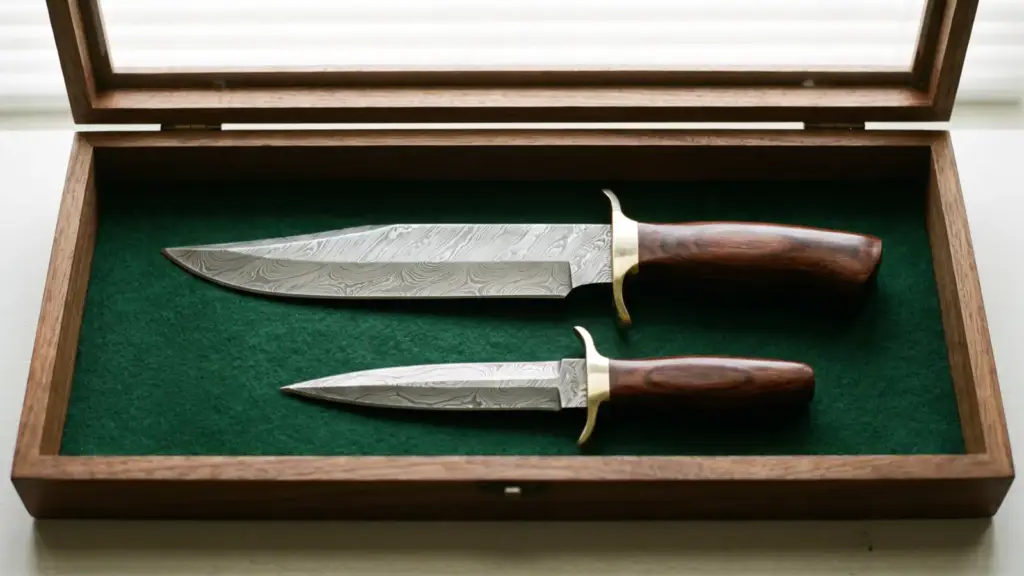
Swords, bowies, daggers and laguiole folders. Bought to own, handled carefully, and displayed where people ask about them.
Every collector piece is still a functional blade forged from the same billets we use for field knives. The difference is finish and detail: fuller grinds, filework on the spine, guard work, and handle materials chosen because they look good behind glass. A 24 inch Damascus sword is still balanced to cut. A hand engraved laguiole still folds into a pocket. They just happen to be the pieces nobody puts in a sheath and forgets about.
The gift they actually keep
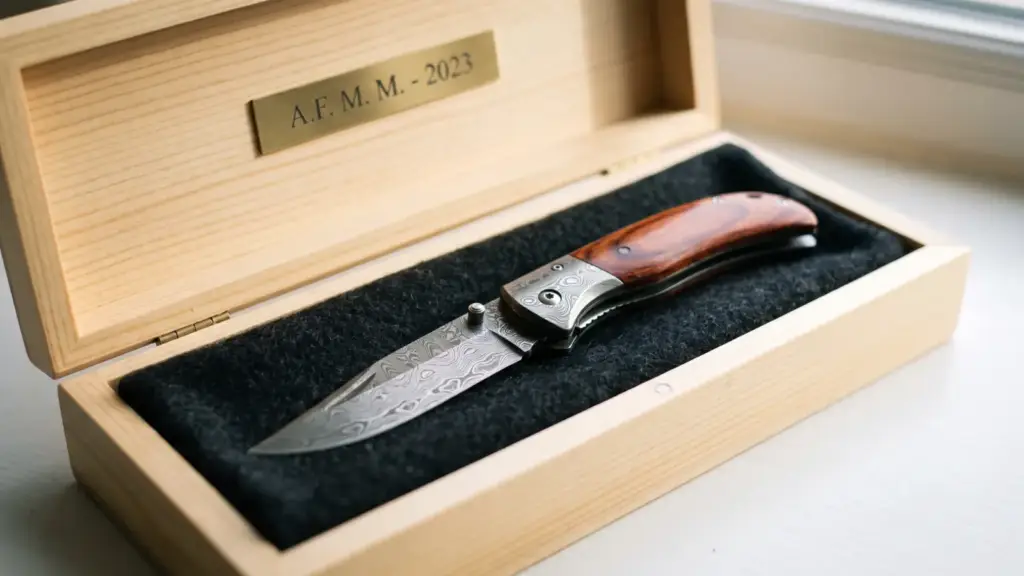
A handmade Damascus knife with their name on it is not going in a drawer. It goes on a mantle, in a display case, or into the field the next morning.
We engrave in house for $29. Names, initials, dates, unit numbers, whatever the occasion calls for. Groomsmen sets, wedding party favours, retirement gifts. The women's collection runs the same steel in smaller, lighter frames with refined handle materials. Every knife ships in a leather sheath or a wooden gift box depending on the model.
Nothing to open, nothing to seize
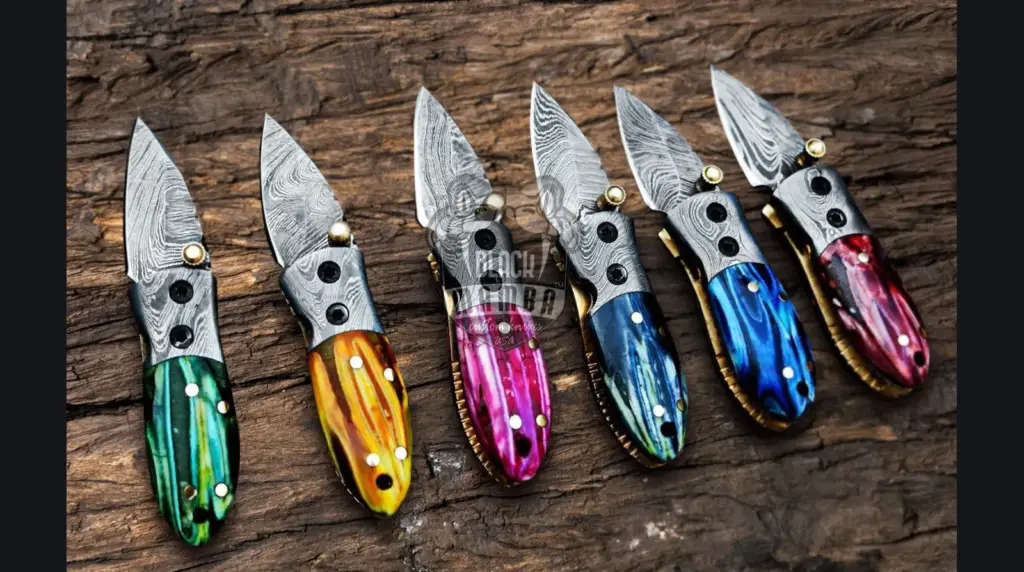
A small fixed blade worn on a cord under a shirt, flat against the chest in a friction sheath.
Hunters carry one when the main knife is bloody or buried in a pack. Anglers like them because there is nothing to open with wet hands. Keep it under about four ounces — heavier than that and it swings when you move and stops being worn. Two to three and a half inches of blade, full tang, and a sheath you have tested upside down before you trust it.
Three things worth knowing
Engraving is $29 and done here
Names, initials, dates, unit numbers. Cut in our own shop before the knife ships, not sent out to a third party.
Carbon steel will patina
That is the trade for an edge that sharpens this easily. Wipe it dry, oil it occasionally, never store it wet in leather. Full routine in the care guide.
Check your local law
Blade length and carry rules differ by state and by city. Please check your local law before ordering.
Not sure yet?
Tell us what the knife is for and roughly what you want to spend. We will point you at two or three and tell you which we would carry.
