
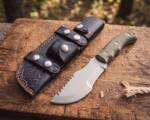
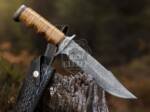
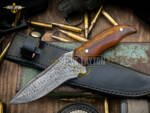
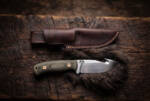
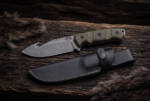
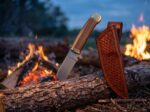
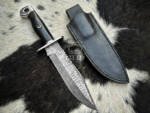
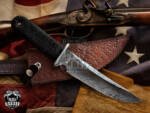
A fixed blade has no pivot, no lock and no moving parts. The steel runs from the tip through the handle in one piece, so the whole knife carries the load. That is why hunters, campers and collectors still reach for one when the work gets serious. Every fixed blade on this shelf is forged and finished in our Memphis shop and ships with a hand stitched leather sheath. Around half are hand forged Damascus in 1095 and 15N20, and there are D2, 440C, high carbon and stainless blades here too. Drop points and skinners for field work, bowies for camp, daggers and karambits for collectors, trackers for bushcraft. Blade lengths run from under three inches on a small utility knife to over nine inches on a bowie, so start with the job and let the size follow.
-
-
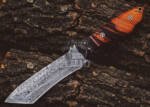
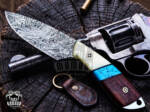
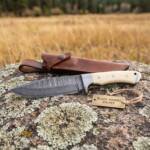
Aokigahara Damascus Tanto Knife 12 Inches Long 7 Inches Blade 12 Ounce Damascus Fixed Blade Hunting Knife Tanto Knife Damascus Hand Made World Class Knives USA Made | BMK-118
Original price was: $162.00.$130.00Current price is: $130.00. -
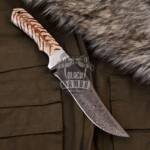
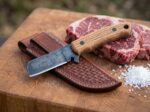
Black Mamba Knives Dragon Knife 12″ Long 7“ Blade 13oz Damascus Steel Fixed Blade Hunting Knife Hand Made World Class Knives USA MAde | BMK-105
Original price was: $186.00.$149.00Current price is: $149.00. -
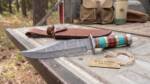
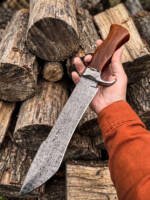
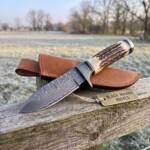
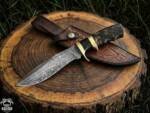
Sequoia Knife 15.5 Inches LONG 10 Inches BLADE 15 Ounce Damascus Steel Fixed Blade Hunting Bowie Knife Handmade Damascus Knife Black Mamba Knives USA Made | BMK-153
Original price was: $229.00.$183.00Current price is: $183.00. -
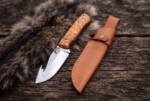
Python Snake KNIFE 9.5″ Long 4.5 “Blade 8.8oz Damascus Steel Fixed Blade Bowie Skinner Hunting Skinner Knife Handmade Damascus Knife Black Mamba Hand Made World Class Knives USA Made | BMK-117
Original price was: $141.00.$113.00Current price is: $113.00. -
Golden Tree Snake Damascus Knife 10 Inches Long 5 Inches Blade 10 Ounce Damascus Steel Fixed Blade Hunting Knife Hand Made World Class Knives USA Made | BMK-155
Original price was: $186.00.$149.00Current price is: $149.00. -
Blue Racer Lizard 8 Inches Long 3.5 Inches Blade 5.6 Ounce Damascus Skinner Fixed Blade Hunting Knife Black Mamba Handmade Knives USA Made | BMK-170
Original price was: $129.00.$103.00Current price is: $103.00. -
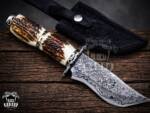
PERSIAN YUMA BLACK Knife 9″ Long 4.5″ Blade” 10.5 Oz Damascus Fixed Blade Hunting Knife Real Stag Handle Knife Black Mamba Hand Made World Class Knives USA Made | BMK-111-B
Original price was: $325.00.$260.00Current price is: $260.00. -
Red Diamond Knife 11.2 in Long 6 in Blade 9.5 Ounce Damascus Fixed Blade Hunting Knife Hand Made World Class Knives USA Made | BMK-175
Original price was: $206.00.$165.00Current price is: $165.00. -
Yakushima Knife 12 Inch Long Damascus Fixed Blade Hunting Bowie Skinner Handmade Knife Outdoor Bowie Knife | BMK-150
Original price was: $173.00.$138.00Current price is: $138.00. -
C PERSIAN YUMA Knife 9″ Long 4.5″ Blade” 10.5 Oz Damascus Steel Fixed Blade Hunting Knife Brown Calcite Spacers Black Mamba Hand Made World Class Knives USA Made | BMK-111-B
Original price was: $325.00.$260.00Current price is: $260.00. -
Cottonmouth Knife Long 9.2 Blade 7 Ounce Damascus Steel Aero Blade Hunting Fixed Blade Knife Black Mamba Hand Made World Class Knives USA Made | BMK-172
Original price was: $126.00.$101.00Current price is: $101.00. -
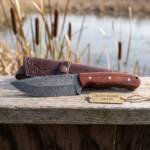
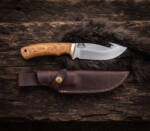
Trail Boss Camping Hunting Damascus Knife Best for Hunter Handmade Damascus Steel Knife with Leather Handle USA Made Gift | BMK-223
Original price was: $164.00.$131.00Current price is: $131.00. -
Great White Knife 11 Long 7.5 Blade Damascus Knife | BMK-110
Original price was: $129.00.$103.00Current price is: $103.00. -
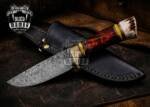
Copperhead Snake 13″ Long 8″ Blade 12oz Damascus Steel Hunting Bowie Handmade Knife with Stabilized Wood Black Mamba Hand Made World Class Knives LIMITED LUXURY EDITION | BMK-1003-LQ
Original price was: $542.00.$434.00Current price is: $434.00. -
Black Rat Snake 12″ Long 7″ Blade 11oz Damascus Steel Hunting Fixed Blade Bowie Handmade Knife Black Mamba Hand Made World Class Knives LIMITED LUXURY EDITION | BMK-1002-LQ
Original price was: $434.00.$347.00Current price is: $347.00.
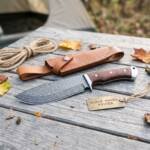
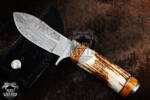
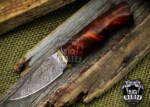
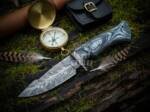
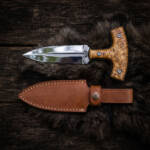
What a fixed blade gives you that a folder does not
There is no pivot to loosen, no lock to fail and no gap for blood, sand or fish scale to collect in. The steel runs from the tip all the way through the handle, so the whole knife takes the load instead of a pin taking it. That is why a fixed blade is still the knife people pick for field dressing, batoning kindling or anything that involves leaning on the edge. The trade is carry. A folder disappears in a pocket; a fixed blade needs a sheath on your belt, which is why every one on this shelf ships with one.
Start with the blade length, not the looks
Under three inches is a neck knife or a small utility blade, light enough to forget you are wearing it and fine for opening, trimming and small game. Three to four inches is the size most people should own: enough blade to dress a deer, short enough to control near a joint. Four to six inches covers general hunting and camp work. Past six inches you are into bowie country, better at chopping and splitting than at anything delicate. Pick the job first and the length will pick itself.
The steels on this shelf, and what each one is for
Roughly half of these knives are hand forged Damascus, folded from 1095 and 15N20 and brought to 58 to 60 HRC. The rest are single steels we reach for when a customer wants something specific, usually low maintenance or a harder working edge.
| Steel | Edge holding | Rust resistance | Pick it for |
|---|---|---|---|
| Damascus, 1095 and 15N20 | Very good | Low, it needs oil | Pattern, tradition, a knife you will look after |
| D2 tool steel | Excellent | Better than carbon, not stainless | Hard use, long sessions between sharpening |
| 440C stainless | Good | High | Wet work, fishing, coastal air, low maintenance |
| High carbon and spring steel | Good, easy to resharpen | Low, it needs oil | Camp and ranch knives you sharpen in the field |
None of them is the best steel. Damascus and high carbon take a keen edge and will rust if you leave them wet. Stainless forgives neglect and gives up a little edge retention for it. D2 sits between the two and is the one to pick if you would rather sharpen less often.
Blade shapes you will see here
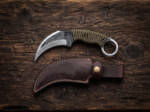
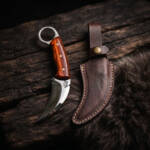
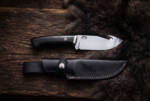
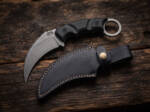
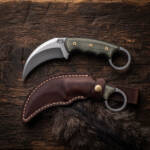
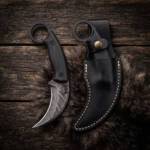
Drop point is the default hunter, strong tip, easy to control, good at almost everything. Clip point gives you a finer tip for detail work and is what most bowies use. Skinners run a deep belly for long sweeping cuts through hide. A gut hook is a notch on the spine for opening an animal without nicking the paunch, useful if you dress a lot of game and dead weight if you do not. Tantos and daggers are collector and tactical shapes. Karambits curve like a claw and index off a finger ring.
Sheath, care and what comes in the box
Every fixed blade here ships with a hand stitched leather sheath cut for that blade. Leather is the right carry and the wrong storage. It holds moisture against steel, so wipe the blade dry, put a light film of mineral oil on it and keep the knife out of the sheath if it is going in a drawer for the winter. Engraving is available on most of these, up to twenty characters, and engraved knives cannot be returned. Expedited shipping inside the US is free and the craftsmanship warranty runs for the life of the knife.
Common questions
Are all of these full tang? Most are, and the product page says so where it applies. A few stacked leather handle builds are through tang, which is a different construction, not a weaker one.
Which fixed blade should a first time buyer get? A four inch drop point in D2 or Damascus. It covers hunting, camp and general outdoor work and it is the size you are least likely to outgrow.
Do I need a gut hook? Only if you field dress regularly. Most hunters use one a handful of times and then carry a plain drop point instead.
Will a Damascus fixed blade rust? It can, because 1095 and 15N20 are carbon steels. Dry it, oil it and it will outlast you. If you want to skip that routine, buy 440C.
Are these made in the USA? Yes. They are forged, ground, heat treated and finished in our own shop in Memphis, Tennessee.
Can I have one made to my own spec? Yes, through our custom order page. Pick the steel, the handle and the length and we build it.
More reading. How fixed blade bevels work, full tang against partial tang, telling real Damascus from a printed pattern and how to care for a Damascus blade.
Browse by type
Every knife on this shelf also sits in a smaller collection: hunting knives, bowie knives, skinning knives, gut hook knives, tracker knives, karambit knives, daggers, push daggers, cowboy bull cutter knives and fishing knives. If you would rather carry a folder, start at the folding pocket knives instead.
