
Description
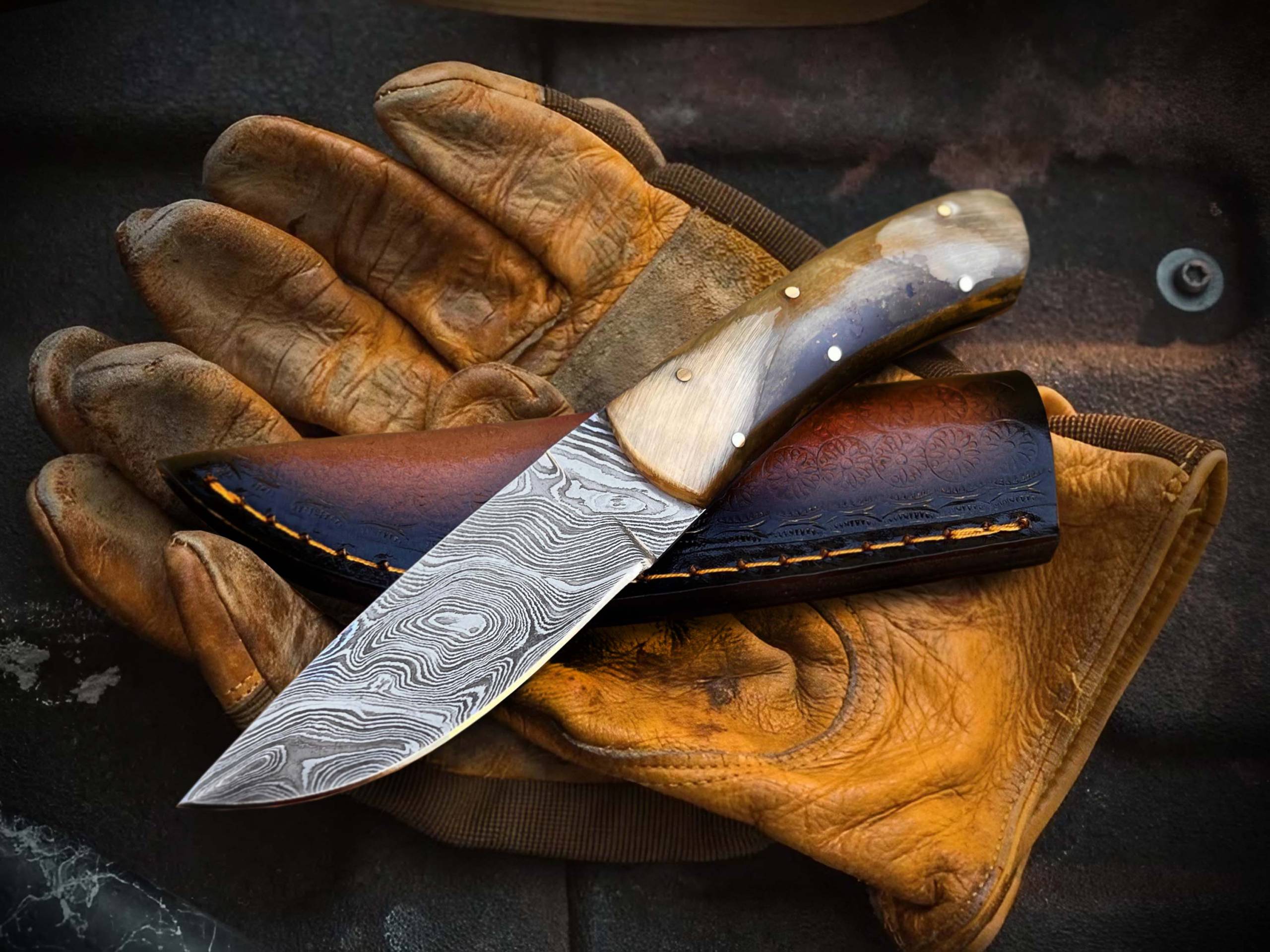
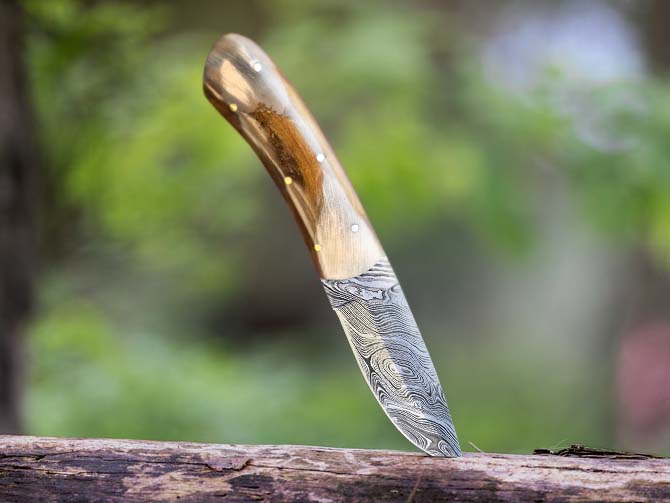
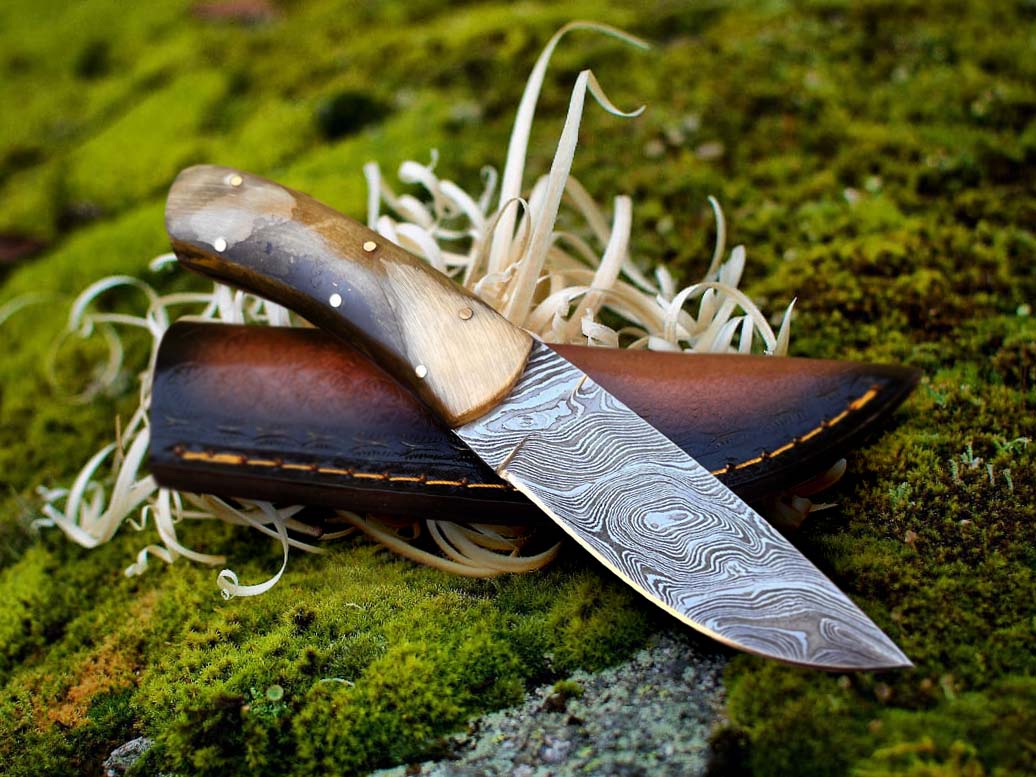
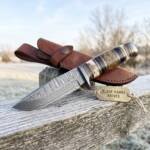
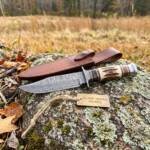
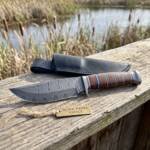
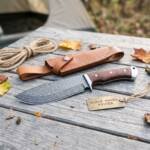
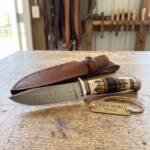
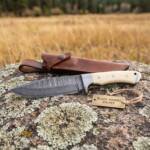
Pale, translucent buffalo horn over a twist Damascus blade, and a tooled leather sheath stitched in orange thread. The Hornback Skinner is small, plain in outline, and finished far better than its size suggests.
| Steel | 1095 + 15N20 Damascus, 352 layers |
| Handle | Natural horn scales, cream through smoky grey |
| Hardness | 58–60 HRC, oil tempered |
| Included | Hand-stitched leather sheath |
Where it belongs: in a jacket pocket on a cold morning, or on a belt beside a bigger knife. Short skinners exist because control beats reach once the animal is down. You steer a blade this size with your fingertips, working close to the hide, and the sweeping belly does the peeling while the point stays out of the way.
Horn that lets light through
Buffalo horn varies enormously. This piece has been cut from a pale section, so the scales run cream through smoky grey with darker veins drifting through them, and held up to a window the thin areas glow. Horn is keratin, the same material as a fingernail, which makes it tougher and more forgiving than bone: it flexes slightly rather than cracking, and it warms in the hand almost immediately. Steel pins hold it, set flush. Because horn is a natural section rather than a manufactured slab, the figure on your knife will be its own.
The blade and the pattern
Twist Damascus, 352 layers of 1095 against 15N20, run up to 58–60 HRC and given an oil temper. The rope-like figure runs from the tang out to a fine upswept point. The grind is thin behind the edge, which is what a skinner needs, and it means the knife slices rather than pushes.
The sheath is part of the purchase
The leather has been hand-stitched and tooled with a running pattern along the welt, and it holds the knife deep with only the handle proud. That is worth noticing because a cheap sheath ruins a good small knife: too loose and it walks out on a hillside, too tight and you fight it with cold fingers. Break the leather in by seating and drawing the knife twenty or thirty times before you take it out.
Care. Clean the blade with water and a cloth, dry it at once, and oil it. Twist patterns hide moisture in the low spots of the etch, so dry more thoroughly than the blade looks like it needs. Horn is the opposite problem to bone: it can dry out and go dull, and a very small amount of oil worked in with a fingertip once a year restores the depth. Do not leave the knife in the sheath in storage, do not put horn near a fire, and do not wash it with detergent, which strips the surface.
Questions
Is a small blade really better for skinning? Usually. The reasoning is in our skinning knife guide.
What oil should I use on the blade? Several will do; see which oil to use on a knife.
How does horn compare with bone here? Softer, warmer, more forgiving. The Bonefang Hunter in buffalo bone is the direct comparison.
Model: BMK-883
Harold Reed –
Can’t stop showing this off to everyone who comes over. This is why Black Mamba Knives is my go to for anything knife related. Blade geometry makes it glide through cuts with barely any effort. Edge retention has been great even after regular use in the field. Even the small details in the damascus pattern are crisp and clean. Couldn’t be happier with this.
Kenneth Ramirez –
My husband was speechless when I showed them this knife. Steel has a gorgeous pattern that looks different in every light. If you’re on the fence just get it. You won’t regret it.
Anthony West –
My wife couldn’t stop talking about this after I unboxed it. Even the small details in the damascus pattern are crisp and clean. Leather sheath is thick and well stitched. Not the cheap stuff you usually get. 10/10 would buy again.
Marcus Garcia –
It’s a alright knife. Nothing extraordinary though. Handle material felt a bit different than pictured. Sheath fit is a bit loose for my liking. Might work fine for casual use.