
A fishing knife lives in the worst conditions a blade can face: salt, water, and long spells shut in a damp box. That is why the steel choice matters more here than the shape.Fillet blades. Long, narrow and flexible, so the blade can follow the backbone and ride over the ribs rather than cutting through them. Six to eight inches suits most freshwater and inshore fish; nine inches and up is for salmon and larger saltwater species.Steel. For boat and saltwater use, 440C stainless is the right answer and we will say so plainly. Our Damascus takes a finer edge and looks far better, but it is reactive carbon steel and it will spot if it is put away wet. If the knife lives in a tackle box, choose stainless.
-
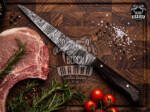
Chihuahuan Snake 8.7 Inches Long 4.6 Inches Blade 5.6 Ounce Damascus Gut Hook Hunting Fixed Blade Knife Damascus Hand Made World Class USA Made | BMK-167
Original price was: $206.00.$165.00Current price is: $165.00. -
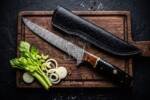
Colorado Snake 7.8 Inches Damascus Knife Damascus Fish Fillet Knife Utility Knife Chef’s Knives Ergonomic Handle with Leather Sheath | BMK-713
Original price was: $186.00.$149.00Current price is: $149.00. -
Sea Urchin Pro Kitchen Knife Fillet Knife 13 Inch Fish Fillet Knives Damascus Steel Sharp Knife with Wenge Wood USA Made | BMK-710
Original price was: $151.00.$121.00Current price is: $121.00. -
Shishamo 8 Inches Damascus Knife Damascus Fish Fillet Knife Utility Knife Chef’s Knives Ergonomic Handle with Leather Sheath Black Resin, Walnut Wood Spacer and Brass File Work Spacer, Decorative Pin | BMK-716
Original price was: $160.00.$128.00Current price is: $128.00. -
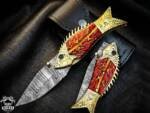
The Golden Koi | Fish-Shaped Damascus Folding Knife with Engraved Brass Handle | BMK-642
Original price was: $207.00.$166.00Current price is: $166.00. -
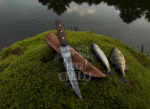
Silver Barracuda Damascus Fish Fillet Knife with Leather Sheath | Fishing Knife for Camping and Hunting | BMK-566
Original price was: $180.00.$144.00Current price is: $144.00.
Ours. Full tang, hardened to 58 to 60 HRC, with grippy handle materials and a fitted sheath.Will a Damascus fillet knife rust? Yes, if neglected. Rinse the salt off, dry it, wipe a little mineral oil down the blade, and it will last a lifetime. Ignore it for a weekend in a wet bag and it will spot.How flexible should a fillet blade be? Enough to flex under light hand pressure, not so much that it wanders. Stiffer blades suit bigger fish.Can I use it for bait? Yes, but a thin fillet edge is not a chopping edge. Keep it off bone and shell.
Not sure which one you need? See boning knife vs fillet knife.
Sheath and carry on the water
Every fixed-blade fillet and bait knife here ships with a hand-stitched leather sheath included, wet-formed to the blade and drilled at the tip so water drains instead of sitting against steel. Full-grain cowhide, waxed saddle stitch, welted edge, belt loop. If your fishing knife lives in a tackle box rather than on a belt, say so at checkout and we will build it a flat pouch sheath instead.
One honest warning: leather and salt water are not friends. Rinse the sheath in fresh water at the end of a saltwater day, let it dry away from direct heat, and condition it a couple of times a season. Treat it that way and it will outlast several rods.
Does the fishing knife come with a sheath? Yes, a hand-stitched leather sheath is included with every fixed blade, wet-formed to that model and drain-drilled at the tip.
Will a leather sheath survive salt water? With a rinse and a dry after each saltwater trip, yes. Left wet and salty in a hatch, no leather survives, ours included.
What is the best steel for a fishing knife? 440C stainless. It holds a fillet edge and shrugs off brine far better than carbon Damascus, which wants oiling after every trip.
Do you make a floating or dive knife? Not a floating handle, but our 440C fixed blades are the right steel for dive and boat work. Ask and we will point you at the models divers actually buy.
Three jobs, three blades
A fishing kit does not need one knife, it needs the right one for the job in front of you. Filleting wants length and flex. Bait work wants a short stiff blade you do not mind abusing on shell and bone. Anything on a boat wants steel that survives salt and a sheath that drains.
| Job | Blade | What matters most |
|---|---|---|
| Filleting | 6 to 9 inches, thin and flexible | Flex under light pressure, a tip that follows the bone |
| Bait and chum | 3 to 5 inches, stiff | A blade you can push through shell without worrying |
| General boat work | 4 to 6 inches, medium | Corrosion resistance and a sheath that will not hold water |
Salt water is the real test
Steel choice matters more here than on any other knife you own. 440C is the low maintenance answer and the one to pick if the knife lives in a tackle box between trips. Damascus in 1095 and 15N20 takes a finer edge and looks better, and it will spot if you put it away wet, every time. Whichever you choose, the routine is the same and it takes a minute: rinse the salt off with fresh water, dry the blade and the inside of the sheath, then wipe a film of mineral oil down the steel. The knives that die on boats are the ones that go back into a damp leather sheath.
Browse the rest
If you are mostly breaking down fish in a kitchen rather than on a dock, look at the kitchen and chef knives instead. For a general outdoor blade that will also handle a fish, start at the hunting knives or the wider fixed blade knives.
Buying for a wedding party? The groomsmen knife sets come as six matched knives, 15% less than buying them singly, and each one can carry its own engraved name.
