
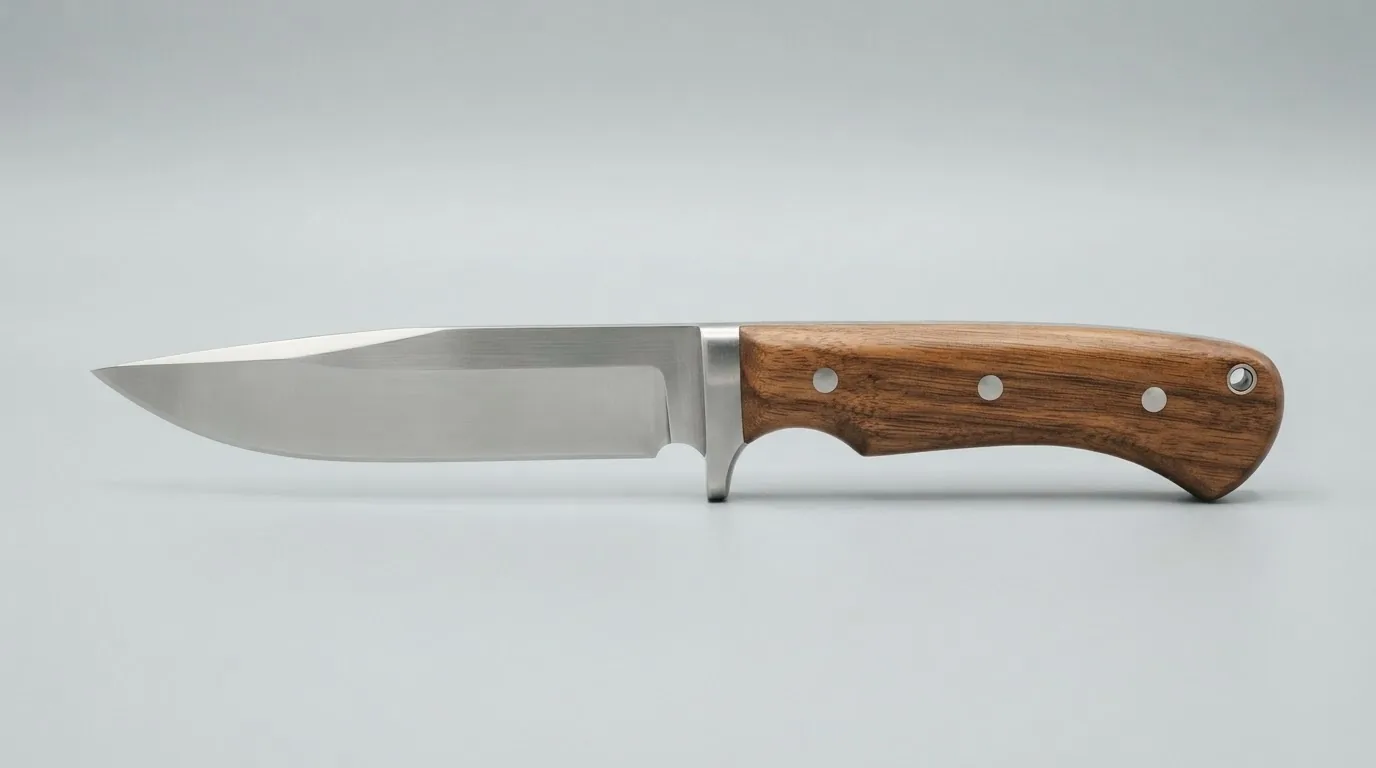
Short answer: A knife has three groups of parts — the blade (point, edge, belly, heel, spine, swedge, fuller, grind, bevel), the junction where blade meets handle (choil, sharpening notch, ricasso, plunge line, guard or bolster), and the handle (tang, scales, liners, pins, lanyard hole, butt, pommel). Folders add a pivot, a lock and an opening feature; sheaths add a welt, a belt loop and retention.
Why the vocabulary is worth learning
Most bad knife purchases come from a description the buyer did not fully parse. A spec sheet reading "full tang, 4mm spine, hollow grind, swedged clip point, brass bolsters" tells you almost everything about how that knife will behave — but only if the words mean something to you.
It also makes every other question answerable. Sharpening advice talks about bevels and plunge lines. Lock failures happen at the detent and the stop pin. A sheath that eats its own stitching is missing a welt. Learn the map once and the rest stops being guesswork.
The blade, from tip to heel
- Point or tip. Where the spine and edge converge. The thinnest, weakest part of any knife and the first thing to break if you pry.
- Edge. The sharpened portion, running from the tip back to where the sharpening stops.
- Belly. The curved section of edge toward the tip. Curve is what lets an edge slice and skin rather than just push-cut.
- Heel. The rear-most part of the edge, closest to the handle. This is where your force is greatest, so it takes the heavy cuts.
- Spine. The unsharpened back. Blade thickness is measured here, and it is the number that tells you most about whether a knife is a slicer or a pry bar.
- Swedge. An unsharpened bevel ground along the spine near the tip. It thins and lightens the point so it penetrates better. If that bevel is actually sharpened, it is a false edge, not a swedge.
- Fuller. A groove forged or milled along the flat. It removes weight while keeping stiffness for the mass that remains. It is not a blood groove.
- Grind. The primary geometry taking the blade from full spine thickness down toward the edge — flat, hollow, convex, scandi or chisel. The grind decides how the knife cuts.
- Bevel. The small final bevel that forms the cutting edge, sitting on top of the grind. This is the part you touch when you sharpen — see pocket knife bevels explained.
Blade outlines — clip, drop, tanto, sheepsfoot, spear — are a subject of their own, covered in knife blade shapes.
Where the blade meets the handle
This short stretch of steel causes more terminology arguments than the rest of the knife.
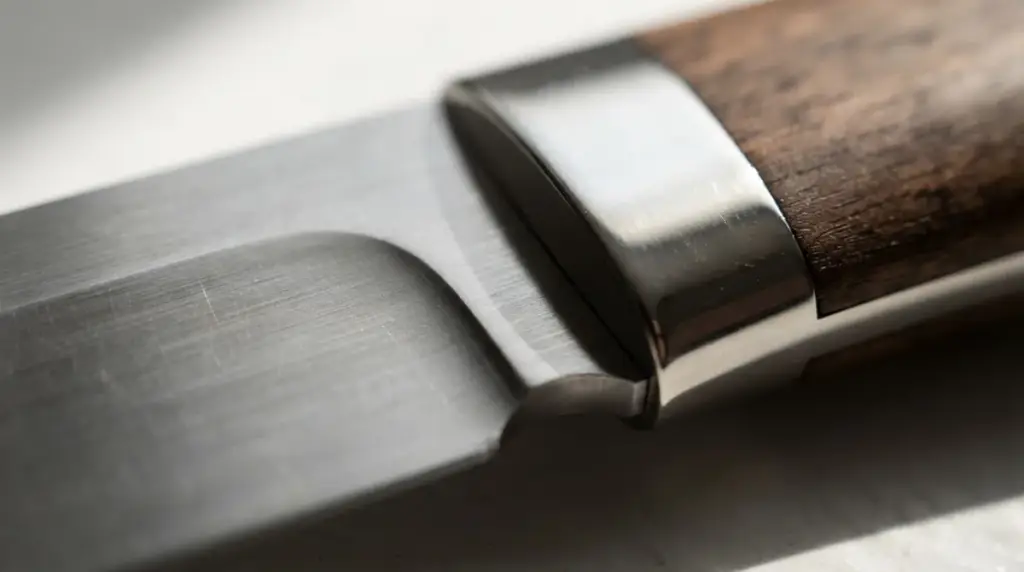
- Ricasso. The flat, unsharpened section of blade between the end of the grind and the handle or guard. Maker's marks and steel stamps usually live here.
- Plunge line. The line where the grind begins, running from spine to edge at the front of the ricasso. Two plunge lines that are even and level with each other are among the clearest signs of careful grinding.
- Choil. The unsharpened cutout where the edge stops. A finger choil is a large one, sized to take an index finger so you can choke up for control. The same word gets used for both.
- Sharpening notch. A small notch at the very end of the edge, giving a stone somewhere to run out. Without one you end up with an unsharpened stub at the heel that catches on everything.
- Guard. A crossbar, or a projection on one side only, stopping your hand sliding forward onto the edge. Functional.
- Bolster. A metal collar at the front of the handle. On a fixed blade it adds mass and reinforces the joint; on a folder it sits at the pivot end. Partly decorative, and not the same thing as a guard.
The handle
- Tang. The blade steel continuing back into the handle. Full tang follows the whole handle outline; hidden, stick and rat-tail tangs are narrower and buried. It matters more than almost anything else on a hard-use knife — see full tang vs partial tang.
- Scales. The handle slabs fixed either side of a full tang. Wood, micarta, G10, bone, horn, stacked leather.
- Liners. Thin metal plates. On a folder they are the structural frame; on a fixed blade, a thin layer between tang and scale, often for contrast.
- Pins. Rods through tang and scales holding them together. Plain pins, threaded Corby bolts, or patterned mosaic pins.
- Lanyard hole or tube. A hole through the rear of the handle for cord. Genuinely useful over water or in gloves.
- Butt. The rear end of the handle, whatever it is made of.
- Pommel. A fitted cap at the butt, common on hidden-tang knives where it is threaded or peened onto the tang. On many knives the butt is simply the end of the tang and there is no pommel.
The whole vocabulary in one table
| Point / tip | Where spine and edge meet. Weakest point on the knife. |
| Belly | Curved part of the edge near the tip. Does the slicing. |
| Heel | Rear of the edge, nearest the handle. Takes the heavy cuts. |
| Spine | Unsharpened back. Where blade thickness is measured. |
| Swedge | Unsharpened bevel on the spine near the tip. Sharpened, it is a false edge. |
| Fuller | Groove along the flat. Saves weight, keeps stiffness. Not a blood groove. |
| Grind | Geometry from spine toward the edge. Flat, hollow, convex, scandi, chisel. |
| Bevel | The small final bevel that forms the cutting edge. What you sharpen. |
| Ricasso | Flat unsharpened steel between grind and handle. Carries the maker's mark. |
| Plunge line | Where the grind starts at the ricasso. Evenness shows grinding quality. |
| Choil | Cutout where the edge ends. A finger choil is large enough to hold. |
| Sharpening notch | Small notch letting a stone run off the edge cleanly. |
| Tang | Blade steel continuing into the handle. Full, hidden, stick or rat-tail. |
| Scales | Handle slabs fixed either side of a full tang. |
| Bolster / guard | Collar at the front of the handle / crossbar stopping the hand sliding forward. |
| Pommel | Fitted cap at the butt, common on hidden-tang knives. |
Parts only folders have
- Pivot. The screw or pin the blade rotates on, and what sets how the knife feels. Adjustable on most modern folders.
- Washers or bearings. What the blade turns against. Bronze or PTFE washers are forgiving; caged ball bearings are faster and less tolerant of grit.
- Backspring. On slipjoints and lockbacks, the flat spring running the handle's length, pressing on the blade tang.
- Detent. A small ball, usually in the lock bar, dropping into a shallow hole in the blade to keep it shut in your pocket. It is also what makes a flipper snap open.
- Lock bar. The moving part holding the blade open — a liner lock, frame lock, or the rocking bar of a lockback.
- Stop pin. The pin the tang rests against when open, and often when closed. It takes the load, not the lock.
- Standoffs or backspacer. Pillars or a full-length spacer holding the handle sides apart.
- Pocket clip. Tip-up or tip-down, left or right. Check which before you buy if you are left-handed.
- Thumb stud, thumb hole or flipper tab. The three common opening features. A tab sits proud of the spine when closed and vanishes into the handle when open.
Which of these you get depends on the type of knife — that map is in knife types explained.
Sheath parts
- Welt. A strip of leather sandwiched between the two sheath layers along the stitch line, holding them apart so the edge rides in a channel instead of sawing through the thread. A leather sheath without one cuts its own stitching.
- Belt loop. Fixed, snapped, or a dangler letting the sheath swing when you sit.
- Retention strap. The snap strap over handle or guard that stops the knife leaving the sheath. On moulded sheaths retention is friction from the shape of the pocket instead.
- Drainage hole. A hole at the tip end so water runs out rather than pooling against the point. The difference between a dry blade and a rusted tip.
Which parts matter when buying, and which are decoration
- Spine thickness and grind. These decide whether the knife slices or pries. Nothing else outranks them.
- Tang construction. How the blade is anchored is how the knife survives.
- Plunge lines and edge evenness. Uneven plunges usually mean the rest was rushed too.
- Sharpening notch. Small feature, large effect on how easy the knife is to maintain for years.
- Lock and detent on a folder. A lock that slips or a detent that lets the blade open in a pocket is a safety problem, not a preference.
- Handle attachment. Pins or bolts through the tang last. Scales held on by adhesive alone do not.
- Welt and retention on a sheath. The two things that decide whether it still works in five years.
Mostly decoration: fullers on a small knife, mosaic pins, filework along the spine, decorative bolsters, a swedge on a knife never used point-first, a spiked pommel. None are faults — they are just not reasons to choose one knife over another.
Terms sellers misuse
- "Full tang" applied to a stub or rat-tail tang. If the tang is not visible as a continuous strip along the handle edge, ask for a photograph.
- "Blood groove" for a fuller. It is a weight-saving groove, and the name is pure marketing.
- "Surgical steel." Not a specification. It names no alloy and implies no property. A real listing names steel and hardness.
- "Damascus" for acid-printed or laser-etched stainless. Genuine pattern-welded steel carries the pattern through the thickness of the blade, not just on the surface — see real vs fake Damascus.
- "Bolster" and "guard" used interchangeably. A guard stops your hand; a bolster is a collar. A knife can have one, both or neither.
- "Swedge" and "false edge" used interchangeably. One is sharpened and one is not, and it can affect what the knife is legally treated as in some places.
- "Hand forged" for a blade cut from flat bar and ground to shape. Forging moves steel to change the outline; stock removal does not.
- A hardness number with no steel named. "60 HRC" means nothing alone. Ours are 1095/15N20 Damascus at 58–60, D2 at 58–62, 440C at 58–60.
Questions people ask
What is the ricasso on a knife?
The ricasso is the flat, unsharpened section of blade between the end of the grind and the handle or guard. It is where the maker's mark and steel stamp usually sit, and on some knives it gives you somewhere to place a thumb for close control. Its front edge is the plunge line, where the grind begins.
What are the main parts of a knife blade?
Point, edge, belly, heel, spine, grind and bevel are the core seven. The point is where spine and edge meet, the belly is the curved part of the edge that slices, and the heel is the rear of the edge where your force is greatest. A blade may also carry a swedge or a fuller.
What is a choil on a knife?
A choil is the unsharpened cutout where the edge stops before the ricasso. A finger choil is a large one, sized to take an index finger so you can choke up for detail work. A sharpening notch is a much smaller cutout giving a stone somewhere to run off, so no unsharpened stub is left at the heel.
Is a fuller a blood groove?
No. A fuller is a groove forged or milled along the flat to remove weight while keeping most of the stiffness. Blood groove is marketing language attached later, and it does not describe any function the groove performs. On smaller knives a fuller is usually cosmetic.
What is the difference between a swedge and a false edge?
A swedge is an unsharpened bevel ground along the spine near the tip, thinning and lightening the point. A false edge is the same bevel sharpened. Sellers use the words interchangeably, but the distinction is real, and in some places whether that back bevel is sharpened affects how the knife is classified.
What is the difference between a bolster and a guard?
A guard is a crossbar or projection that stops your hand sliding forward onto the edge, and it is purely functional. A bolster is a metal collar at the front of the handle that adds mass and reinforces the joint. A knife can have both, one or neither, and the words are not interchangeable.
What are the parts of a pocket knife?
A folder has the blade parts of any knife, plus a pivot the blade turns on, washers or bearings it turns against, a stop pin it rests on when open, a detent holding it shut in your pocket, a lock bar or backspring, standoffs or a backspacer, a pocket clip, and an opening feature — thumb stud, thumb hole or flipper tab.
What is a welt on a knife sheath?
The welt is a strip of leather sandwiched between the two layers of a sheath along the stitch line. It holds them apart so the blade sits in a channel rather than against the thread. Without one the edge saws through the stitching and the sheath fails, often within a season of regular use.
Design your own knife, part by part →
More from the workshop
Cleavers: Meat, Vegetable and the One Most People Buy by Mistake
How to tell a vegetable cleaver from a bone cleaver, with measured weights, lengths and steels from our own sixteen.
Damascus vs D2 vs 440C vs VG10: Which Steel
Damascus, D2, 440C and VG10 compared by what each one is actually good at.
Engraving a Knife: What Works and What Ruins the Blade
What engraving costs, what fits in 20 characters, and why the handle beats the blade.
