

Short answer: channel and sandwich are the two real structural categories — a channel handle is one solid machined block, a sandwich handle is two scales built around spacers with an open gap between them. "Skeletonized" gets sold as a third option, but it's more accurately a weight-reduction treatment — extra material cut away in a pattern — usually applied on top of a sandwich build, occasionally a channel one. We'll say that plainly rather than list it as an equal third category, because it isn't one.
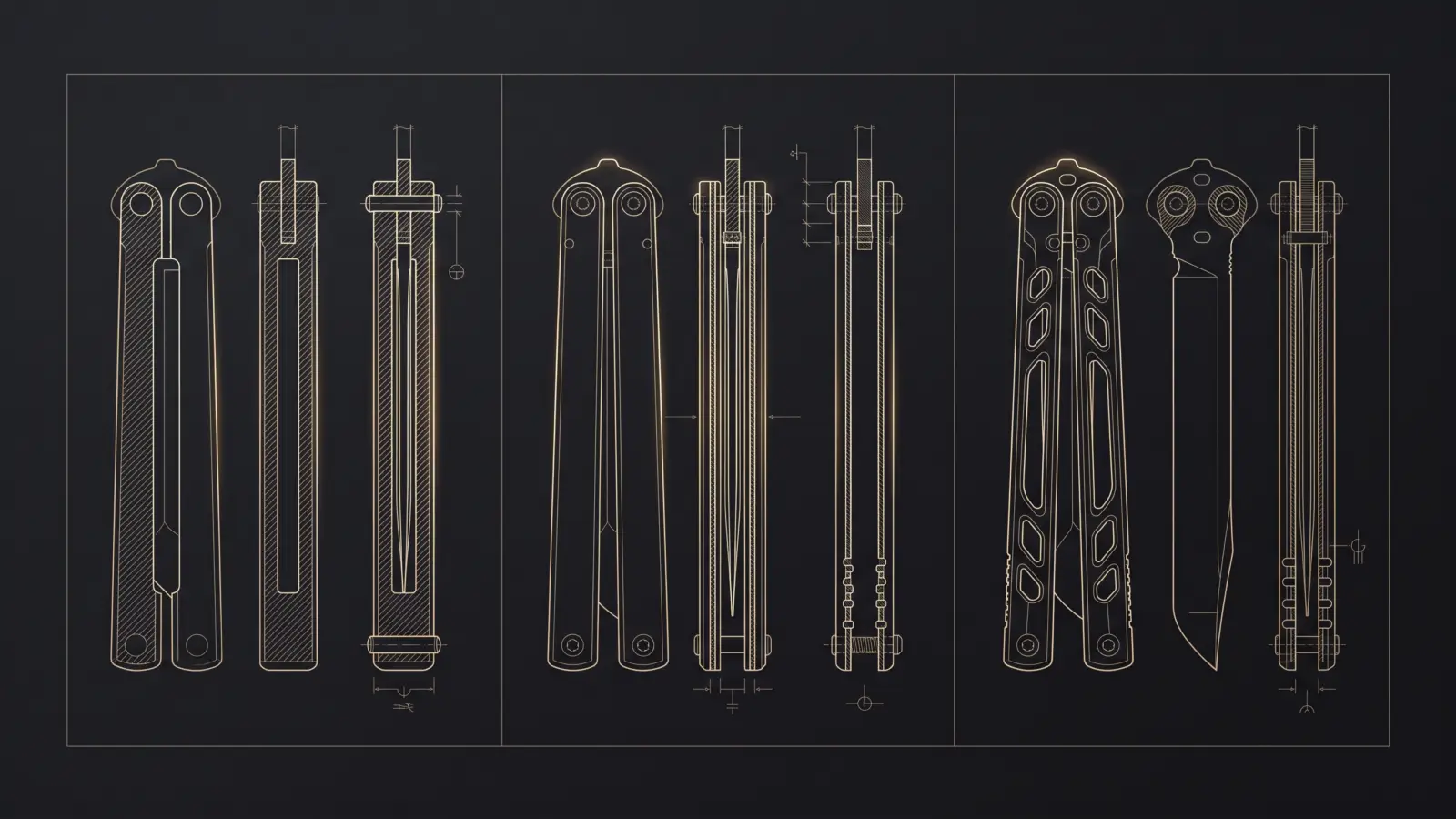
Channel construction
One solid piece of material per handle, with the blade's resting groove milled straight into it. Aluminum is the most common material because it machines easily and keeps weight reasonable; steel and titanium channel handles exist but run heavier. Nothing about the handle body is fastened together, so there's very little to loosen or rattle over years of flipping. The cost is that a channel handle can't be opened up for a deep clean or customized part by part, and per unit of size it's the heaviest of the common builds.
Sandwich construction
Two flat scales — G10, titanium, aluminum, carbon fiber — built around internal spacers and standoffs, with the gap between the scales forming the blade channel. It's lighter than an equivalent channel handle, and because it's just fastened hardware, it comes apart for cleaning or for swapping a scale or spacer. The open channel also means the blade tang is exposed to your fingers during a flip, which some flippers use as tactile feedback and others find less contained than a closed channel handle.
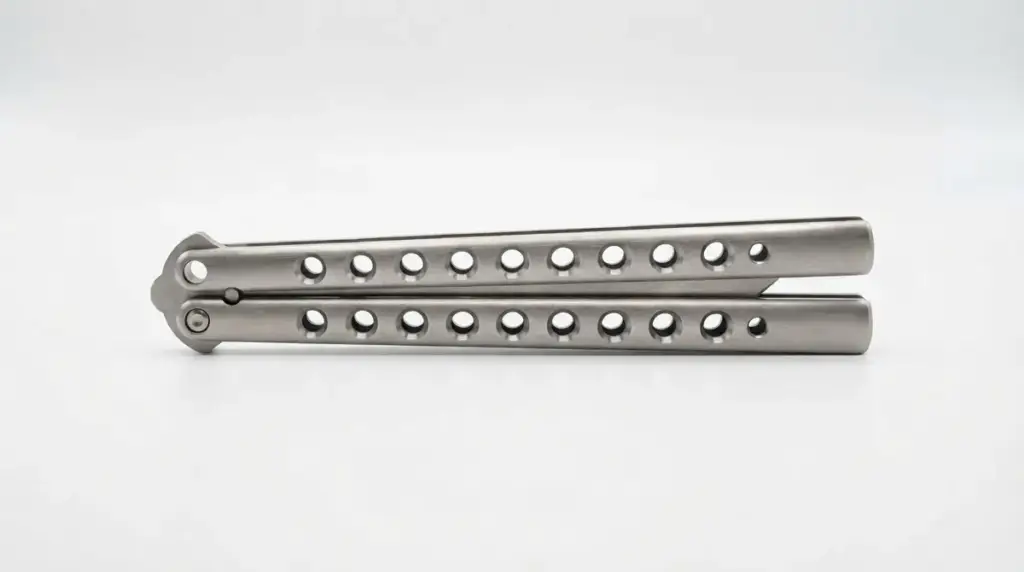
Skeletonized — a treatment, not a construction type
Here's the part worth being straight about: "skeletonized" describes handles, usually sandwich-built ones, that have had extra material milled out in a cutout pattern once the basic structure already exists. It is not a separate way of building a handle from the ground up the way channel and sandwich are. A skeletonized handle sheds real weight and shifts balance toward a faster, lighter-feeling flip, but it's doing that as a modification on top of channel or sandwich construction, not as an alternative to either. Listings that present it as a co-equal third "construction type" are describing the same underlying build with extra holes cut into it.
Weight, durability, and maintenance
- Weight: channel (heaviest) → sandwich (lighter) → skeletonized sandwich (lightest).
- Durability, things to loosen: channel (fewest fasteners, most durable) → sandwich (more hardware, needs occasional retightening) → skeletonized (same hardware as sandwich, slightly less handle material around it).
- Serviceability: channel (cannot be disassembled beyond pivots and latch) → sandwich and skeletonized (fully serviceable, scales, spacers, and pivots can all be swapped).
- Flip feel: channel (contained, momentum-heavy) → sandwich (faster, more tactile, open channel) → skeletonized (fastest, most balance-forward).
Which one to buy
- Learning to flip, want the most forgiving handle: channel construction, fewer parts to work loose while you're still dropping it.
- Already flipping regularly, want to tune pivot tension and swap parts: sandwich construction.
- Competitive or high-speed flipping where every gram matters: a skeletonized sandwich build.
- Collecting or display, not regular flipping: either works, though channel construction tends to show fewer signs of wear sitting in a collection over time.
For the full parts breakdown
This guide covers the structural differences between the builds. If you want every individual part named and explained — tang pins, bushings versus bearings, the latch, the kicker — that's covered in full in balisong construction explained.
How each construction is actually manufactured
Most of the channel vs sandwich balisong argument traces back to how the handles are cut, so it is worth knowing what happens on the machine.
A milled channel, from solid bar stock
A channel handle starts as solid bar, usually aluminium, sometimes titanium or steel. The blade channel is milled into it as a deep blind slot, cut in several passes with a long thin end mill because the tool must reach full depth without deflecting. Most of the bar ends up as swarf. Profile, pivot bores and latch pocket are machined into the same piece, so the handle leaves the machine complete and is never assembled.
Stacked liners and spacers, for a sandwich
A sandwich handle starts as flat sheet. The scales are cut from it by waterjet, laser or a shallow profiling pass, and the spacers and standoffs are made separately as small turned parts. Nothing needs deep milling, which is the point. The gap left between the two scales when they are screwed around those spacers is the blade channel, so its width is set by a spacer thickness, not a cutting tool.
Milled-out pockets, for a skeletonized handle
Skeletonizing is a second operation on a part that already exists. A finished scale or channel block goes back into a fixture and a pattern of pockets and through-holes is cut into it. On a flat scale that is quick and shallow. On a solid channel block it is far slower, because the tool works around an existing cavity and the remaining walls must stay thick enough to hold the pivot. That is why skeletonized balisong handles are mostly sandwich builds.
Weight, balance and what it does to a flip
Total weight is the number people quote; where it sits matters more. A channel handle carries its mass in continuous walls running the full length, so it behaves like a long, even lever: slow, predictable rotation with plenty of stored momentum, forgiving of imperfect timing and tiring over a long session.
A sandwich handle carries most of its mass in the two scales and the hardware, clustered nearer the pivot end, so it comes round faster off the same wrist movement. Skeletonizing shifts the balance point again, and the direction depends on where the pockets sit. Material removed near the tip pulls the balance back to the pivot and makes the handle whip; material removed near the pivot pushes it out and slows it down. Two skeletonized handles of identical weight can flip nothing alike, which shows up first in aerial work.
Repairability, and what a hard drop actually does
Everybody drops a balisong. What matters is what the drop does.
- Channel. The corner dents, and the displaced metal pushes inwards into the blade channel. The handle cannot be opened, so a dent that fouls the blade has to be filed out from the mouth of the channel, and a deep one is not a home repair. A damaged pivot bore ends the handle.
- Sandwich. The impact usually goes into a spacer or a screw rather than the scale, so the knife comes out of it slightly out of register and feeling vague. Loosen everything, reseat, retorque and it is generally back. A cracked G10 scale is a part you buy, not a knife you replace.
- Skeletonized. Stress concentrates at the thin webs between the pockets, so a hard landing on a cutout edge is likelier to bend or crack the scale than the same landing on a solid one. It is still a replaceable part.
A sandwich handle strips down for a proper clean. A channel handle can only be flushed and dried, much the same problem as a folder, covered in how to clean a pocket knife.
Why the prices differ
Cost is machine time and wasted material, in that order. A channel handle holds a machine for a long cycle, removing most of an expensive bar to cut a deep slot, and long thin cutters wear quickly. A sandwich handle is cut from sheet in a fast operation and a scale that goes wrong is cheap to remake. That is why channel construction usually costs more at the same material and finish quality, and why a very cheap channel balisong is worth a second look at the tolerances.
Skeletonizing adds a second setup and more cycle time, so a skeletonized handle costs more than the plain version of the same handle despite containing less metal.
Noise and feel
The two builds sound different, and experienced flippers pick by it. A channel handle is a closed box, so the tang striking the inside gives a low, dull knock with no ring, and your fingers never touch the tang mid-rotation. Butterfly knife handles built as sandwiches have an open gap, so the strike is brighter and higher pitched, and slack in the spacers becomes a rattle you hear before you feel it. Many flippers treat that as an early warning to retorque.
Skeletonized handles are loudest, because the pockets act as openings and there is less material to damp the strike. They also move more air, which some people read as a lighter, faster feel independent of the weight actually saved.
Beginner or experienced
The standard advice is that beginners buy channel construction, and it is right for the wrong reason. The benefit is not strength. It is that a beginner drops the knife constantly, will not yet retorque hardware, and gets a handle with almost nothing to work loose.
It stops being right once you flip regularly. By then you want to tune pivot tension, swap a worn scale and strip the handle after a dusty week, and a sandwich build lets you do all three. If the knife you want is a sandwich build, buy it and learn to use a hex driver.
Whichever build you land on, a beginner is better off without an edge for the first few weeks. Any balisong in our shop can be ordered with a Trainer Blade, the same knife with a blunt, unsharpened edge, at the same price as the live one. The butterfly knife trainer guide picks it up from there.
A buying checklist
- Ask which construction it is, in those words. Listings often show only a photograph.
- If it is a sandwich, ask whether spacers and scales are sold separately. A serviceable design with no spares is not serviceable.
- Check whether the pivots are screwed or peened. Peened pivots cannot be tuned.
- Ask for the weight and for where it balances, not just the weight.
- If it is skeletonized, look at where the pockets sit. Cutouts near the tip make a whippy handle.
- Check the blade steel and its hardness range; the knife steel chart explains the numbers.
- Plan how you will store it. A balisong left in a damp pocket corrodes at the pivots first; see how to store knives.
Questions people ask
Is a skeletonized handle weaker?
Marginally, since material has been removed from the handle body — but the cuts are placed to avoid structural points like the pivot and spacer mounts, so a well-designed skeletonized handle isn't fragile, just lighter.
Can a channel handle be skeletonized too?
Less commonly, but yes — it's rarer because milling cutout patterns into a solid channel block is more machining work than doing the same to a flat sandwich scale, which is part of why skeletonizing is mostly associated with sandwich builds.
Does construction type affect legality?
No — legality is about blade length, mechanism, and your local law, not handle construction. See our guide on butterfly knife laws for that.
Which is better for flipping, a channel or a sandwich balisong?
Neither, and they suit different hands. A channel handle spreads its weight along solid walls, so it rotates slowly and predictably and forgives late timing. A sandwich handle carries its mass nearer the pivot and comes round faster off the same wrist movement, which rewards clean timing and punishes sloppy timing. Most flippers own both eventually and pick by how a trick feels rather than by the build.
Why do channel balisongs cost more than sandwich ones?
Machine time and wasted metal. A channel handle is milled as a deep blind slot out of solid bar, which takes a long cycle with long thin cutters that wear fast, and most of the bar becomes swarf. Sandwich scales are cut from flat sheet in a quick operation with simple spacers, and a scale that goes wrong is cheap to remake. Same material, same finish, different bill.
What happens if you drop a balisong on concrete?
It depends on the build. A channel handle dents at the corner, and the displaced metal pushes into the blade channel where you cannot easily get at it. A sandwich handle usually takes the hit through a spacer or a screw and comes out slightly out of register, which a strip, reseat and retorque will fix. A cracked scale is a part you order.
Are skeletonized balisong handles louder?
Yes, noticeably. The cutouts act as openings and there is less material left to damp the tang strike, so the knock comes out brighter and carries further than on a solid handle. Sandwich builds are already louder than channel ones for the same reason, since the open gap between the scales lets the sound out. A rising rattle usually means the hardware wants retorquing.
Can you clean inside a channel handle?
Only by flushing and drying it. There is nothing to disassemble beyond the pivots and the latch, so grit and lint have to be washed out of the open end and driven out with compressed air, then the pivots re-oiled. A sandwich handle strips down completely, which is the main practical advantage it has over a channel build for anyone who flips outdoors.
Does a skeletonized handle change the balance as well as the weight?
More than it changes the weight, and the direction depends on where the pockets are cut. Material taken out near the tip pulls the balance point back towards the pivot and makes the handle whip round quickly. Material taken out near the pivot pushes the balance outwards and slows it down. Two skeletonized handles of the same weight can flip nothing alike.
More guides
More from the workshop
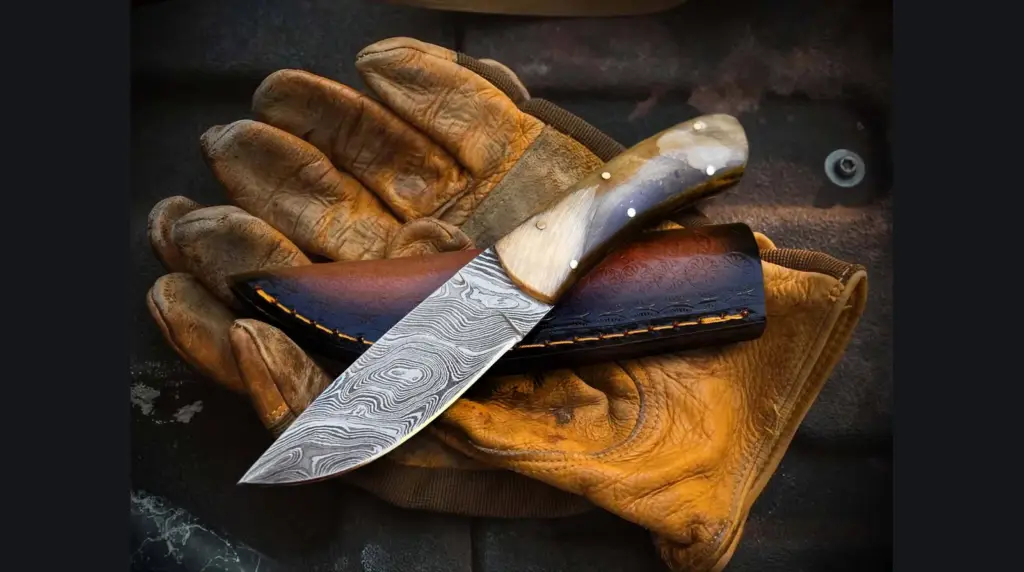
What 352 Layers Actually Means
Where the layer count comes from, and why a bigger number is not a better blade.
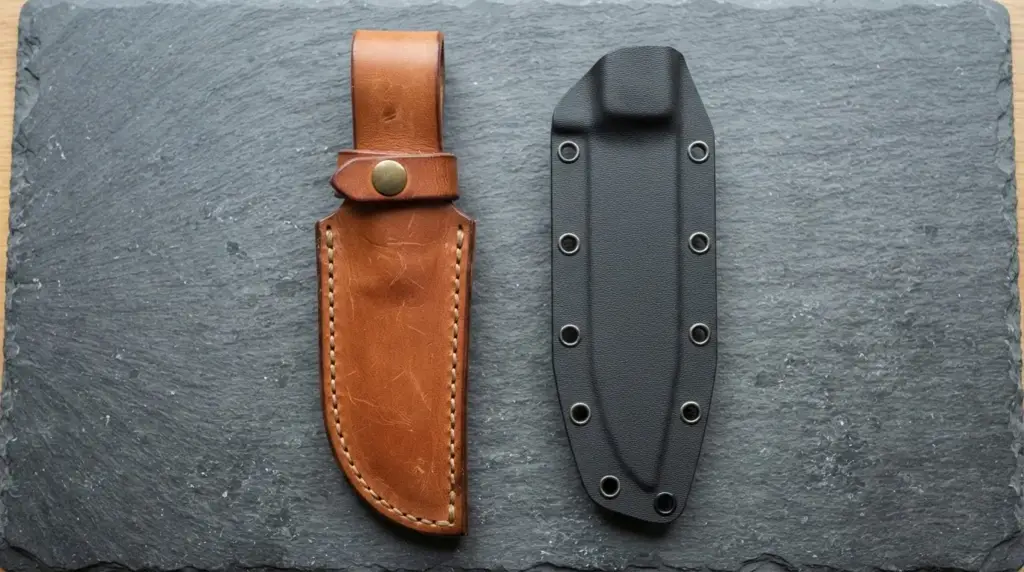
Kydex or Leather: Choosing a Fixed Blade Sheath
Corrosion, retention, thickness, welts and repair compared, and the cases where our own leather is the wrong choice.
Matching Knives for Couples: His and Hers Without the Gimmick
How to pair two knives by hand size and task instead of buying one design in two colours.
