
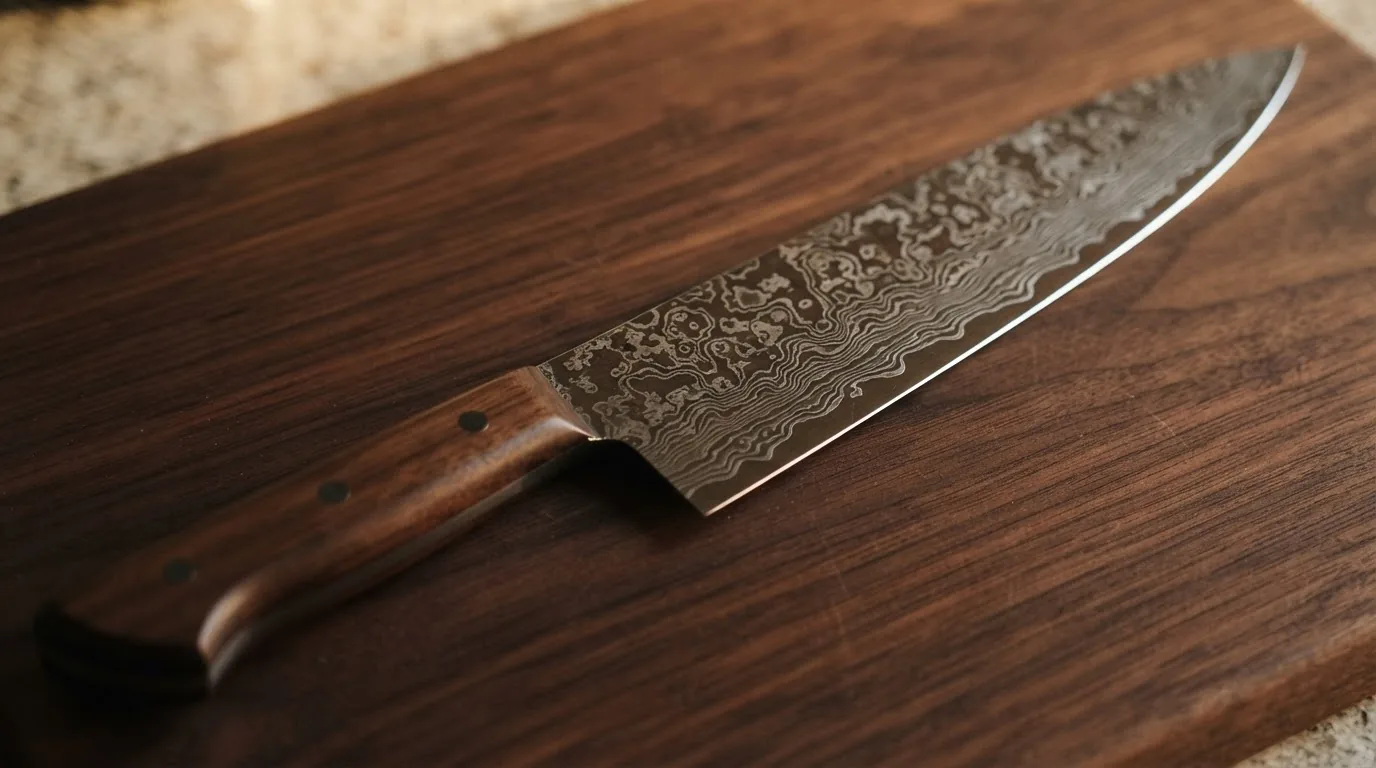
Short answer. Two completely different knives are sold as a Damascus chef knife. One is clad: a hard mono steel core with layered steel welded to each side, so the pattern is decoration wrapped around a plain cutting edge. The other is coreless or full pattern welded, where the layers run all the way through and the edge itself is layered. Clad is what most Japanese kitchen Damascus is. Coreless is what most hand forged western Damascus is, ours included. Neither cuts better because of the pattern. At the same price, a well heat treated mono steel blade will usually outperform a fully layered one, and we sell the layered ones.
The two things sold as a Damascus chef knife
The word Damascus on a kitchen listing describes an appearance, not a construction. Underneath it sit two constructions that behave differently in the hand and at the stone.
A clad blade is built like a sandwich. A core of one steel, chosen entirely for how it cuts, is forge welded between two outer layers. In a Japanese knife that outer material is often a stack of alternating stainless layers, which is where the pattern comes from. The core is exposed only along the very edge, as a thin bright line you can see if you look at the bevel in good light. Everything you sharpen is core. Everything you see is cladding.
A coreless blade, sometimes called full pattern welded or wild Damascus, is one homogeneous billet of alternating steels folded and drawn out. There is no separate core. The layers run through the whole cross section and out through the edge, so the edge itself is made of alternating bands of two steels. That is the traditional western forge approach, and it is what almost every hand forged Damascus knife on the open market is, ours included.
Cutlery shops and review sites mostly do not make this distinction. They list layer counts and steel names as if the two were the same thing. Which one you own changes how you sharpen it, what happens to the pattern over years, and what the blade will tolerate.
Clad and coreless at the edge
The difference matters most at the last half millimetre, because that is the only part of a knife that does any cutting.
On a clad blade the edge is one steel. If the core is a modern powder metallurgy steel run at 62 or 63 HRC, that is what you cut with, and the softer cladding protects it and supplies toughness. Hard where it must be hard, soft where it must survive impact. It is a good design and it is why serious kitchen makers use it.
On a coreless blade the edge alternates between the two billet steels every few thousandths of an inch. In a 1095 and 15N20 billet, the 1095 takes and keeps a keener edge and the 15N20 is tougher and more resistant to chipping. What you get at the edge is a fine repeating sequence of both, which is genuinely tough and marginally toothier under a microscope. What you do not get is a single steel optimised for cutting. You get an average of two.
| Feature | Clad Damascus | Coreless Damascus |
|---|---|---|
| What the edge is made of | One core steel | Alternating layers of both steels |
| Where the pattern is | Cladding only, stops at the bevel | Through the whole cross section |
| Pattern on the bevel | None, a clean bright line | Yes, the layers cut through |
| Typical hardness available | Up to 62 to 64 HRC in the core | Usually 58 to 61 HRC |
| Sharpening | One steel, predictable burr | Two steels, slightly uneven wear |
| Common in | Japanese kitchen knives | Hand forged western work |
| Thinning over years | Can expose the cladding line | Pattern persists, shifts appearance |
How to tell them apart before you buy
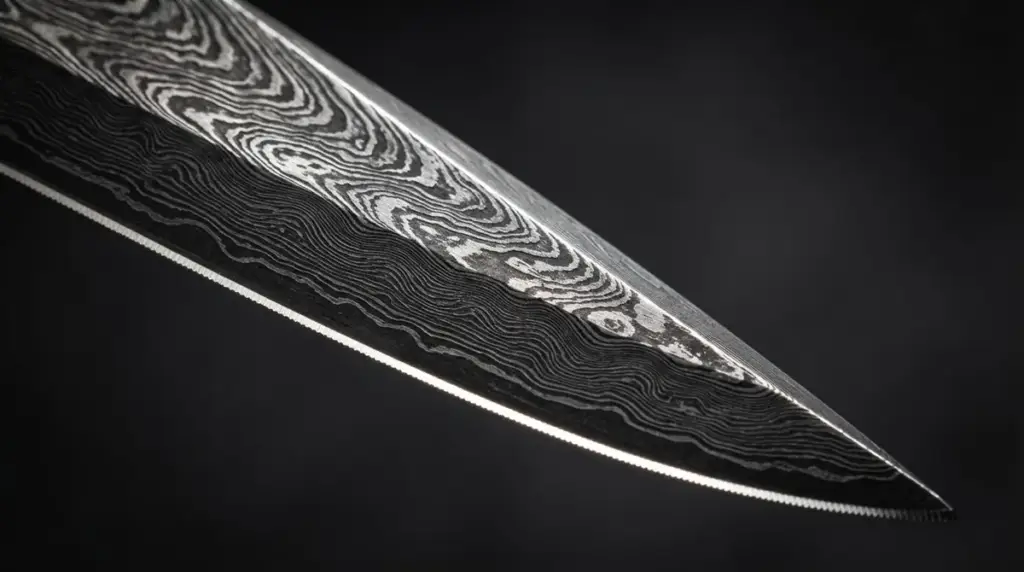
You do not need the seller to be honest. You need one photograph of the bevel, taken from the side with light raking across it. On a clad blade the narrow polished band above the edge is uniform and bright, with a visible boundary line where cladding stops and core begins; the pattern sits above that line and never crosses it. On a coreless blade the pattern runs straight down through the bevel and out to the edge, because you are looking at the cut face of the billet.
The second test is the spine. On a clad blade you can often see the three layer structure end on at the spine, as a stripe of core sandwiched between two cladding layers. On a coreless blade the spine shows the same pattern as the sides.
A third rule, and an unkind one: if a listing gives a layer count in the hundreds and also names a modern stainless core steel, it is clad. Nobody makes a 256 layer coreless billet from a powder metallurgy stainless and then sells it for two hundred dollars. If a listing gives a layer count in the hundreds and names 1095 and 15N20, it is coreless. Our own listings are the second kind.
If neither the bevel nor the spine is photographed and nobody will answer the question, that is your answer. Etched imitations are covered separately in our guide to real against fake Damascus.
Layer count, and why the number is nearly meaningless
Layer counts sell knives and explain almost nothing. A smith stacks alternating sheets, forge welds them into one bar, cuts it, stacks it again and rewelds. Each fold doubles the count. Seven sheets folded five times is 224 layers. The number records how many folding operations happened, not how well any of them went.
Past a point the layers become thinner than the grain structure of the steel and the pattern stops being visible as distinct bands. Between roughly 100 and 400 layers you get the pattern most people recognise. Above that the pattern goes silvery and indistinct, and the maker usually manipulates the billet, twisting or ladder cutting it, to get the figure back. A 1,000 layer blade is not better than a 200 layer blade. It has had more heat cycles, which is a risk as much as an achievement, because every weld is a chance for a cold shut.
For buying purposes, treat the layer count as a description of the pattern, in the same category as the handle wood. It is not a performance specification.
The steels in the billet
Pattern welded Damascus needs two steels that behave differently under an etchant, so that the acid darkens one and leaves the other bright. That requirement, not cutting performance, is what selects the pair.
| Steel | Role in the billet | Behaviour |
|---|---|---|
| 1095 | The dark layers | High carbon, takes a keen edge, rusts readily |
| 15N20 | The bright layers | Nickel bearing, tough, resists the etch |
| 440C | Stainless billets, dark layers | Stainless, etches with far less contrast |
| 416 | Stainless billets, bright layers | Stainless, poor contrast against 440C |
| Modern PM stainless | Clad cores only | Very hard, never the pattern itself |
The consequence is direct. The pair that produces the best looking Damascus, 1095 with 15N20, is a carbon pair, and it will not behave as if it were stainless. Stainless pairs etch with far less contrast, which is why most sellers avoid them and why most patterned kitchen Damascus you can afford is carbon.
Hardness and heat treat in a kitchen blade
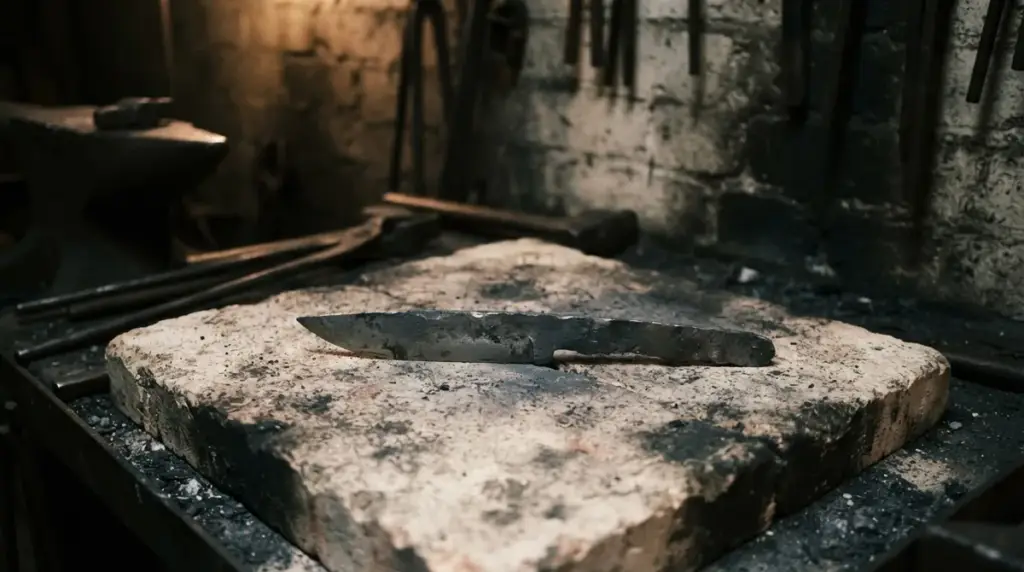
This is the section every competing page skips, and it decides how the knife feels. Hardness on the Rockwell C scale sets the trade between edge retention and toughness. Below 56 HRC a kitchen blade dulls too fast and takes a burr that folds instead of breaking off. Between 58 and 61 it holds a working edge and can be reset on a waterstone at home. Above 62 it holds a fine edge for a remarkably long time and chips if you twist it in a squash or hit a bone.
We hold our 1095 and 15N20 pattern welded Damascus to 58 to 60 HRC. That is a deliberate choice toward being sharpenable and survivable rather than toward maximum edge retention. Here is the inconvenient consequence, stated plainly: a clad Japanese kitchen knife with a 63 HRC powder steel core will hold a fine edge substantially longer than ours will. If edge retention is the only thing you are buying on, buy that instead. What ours give you in return is a blade you can bring back on a basic 1000 grit stone in ten minutes without a diamond plate, and one that will not shatter if it goes off the counter onto tile.
The other half of heat treat is normalising and grain refinement, which nobody photographs and nobody can verify from a listing. A properly thermal cycled billet has a fine grain and breaks with a grey velvet fracture. One that has not has a coarse grain and a sparkly fracture, and it chips whatever hardness it reads. That is why hand forged Damascus varies so much between makers at the same nominal specification.
Where the pattern lives, and what sharpening does to it
The etch that makes Damascus visible is not paint and it is not deep. It is a controlled corrosion of the more reactive layers, and on most blades it sits in the top few thousandths of an inch of the surface. That has two consequences in a kitchen.
First, on a coreless blade, sharpening removes pattern. Every pass takes material off the bevel, where the pattern is thinnest, so over a few years the bevel goes bright and the pattern retreats up the blade. That is normal, and it is why a coarse stone is a bad idea on a Damascus kitchen knife: it removes in one session what a fine stone removes in a year.
Second, the pattern can be re etched. A light ferric chloride etch brings it back, and any competent maker will do this as part of a refinish. On a clad blade there is nothing to bring back on the bevel, because there was never pattern there. Understanding which construction you own tells you which of those two futures you are in.
What Damascus does and does not do for cutting
The honest list is short.
It does not make a blade sharper; sharpness is apex geometry and the abrasive you finished on. It does not make a blade harder; that is the heat treat. It does not make a blade rustproof, and in a carbon billet it is slightly worse than plain 1095 because the weld interfaces are preferential corrosion sites. It does not add meaningful edge retention, because that comes from carbides and folding does not create carbides.
What it does do is give a slightly toothier edge in a coreless billet, because two steels wear at different rates and the edge develops a fine microscopic scallop. Whether that is an advantage depends entirely on what you are cutting: it helps with tomato skin and it is irrelevant to everything else. It also provides a genuine and non trivial amount of toughness in a billet like 1095 and 15N20, because the nickel bearing layers arrest cracks. And it looks the way it looks, which is the actual reason almost everyone buys it, and there is nothing wrong with that as long as it is named.
Food acids, patina and the real care burden
A carbon Damascus kitchen knife is higher maintenance than a stainless one, and kitchens are the worst environment a knife meets. Tomato, lemon, onion and vinegar all attack carbon steel within minutes. You will get a patina, which is a stable grey oxide layer and is protective rather than damage. What you must avoid is red rust, which pits. Wipe the blade dry as you work, wash and dry it immediately after use, never use a dishwasher, never leave it in a sink, and put a thin film of food safe oil on it if it will sit unused for a week.
One habit specific to Damascus: do not leave the blade sitting on a wet board with a slice of lemon on it while you deal with something else. That is where the vast majority of the corrosion complaints we receive actually happen, and five minutes is enough to leave a mark that will not polish out without taking pattern with it.
What our own 44 kitchen knives actually are
Pulled live from the catalogue on 30 August 2026. There are 609 published products on this site and 320 of them are Damascus. The kitchen and chef category holds 44 knives, and 30 of those 44 name Damascus in the title. Prices run from $90 at the floor through a median of $142 to $694 at the ceiling.
| Figure | Value |
|---|---|
| Published products on the site | 609 |
| Damascus products | 320 |
| Kitchen and chef category | 44 |
| Of those, Damascus in the title | 30 |
| Kitchen price floor, median, ceiling | $90, $142, $694 |
| Kitchen listings publishing a blade length | 36 of 44 |
| Median published blade length | 7.0 in |
| Kitchen listings stating tang construction | 3 of 44 |
| Billet steels used | 1095 with 15N20 |
| Held hardness | 58 to 60 HRC |
Two things in that table are uncomfortable for us. Only 3 of 44 kitchen listings state the tang construction, which is a documentation failure we are correcting. And our Damascus is coreless carbon, so everything said above about food acids and patina applies to it and not to somebody else's stainless clad blade.
What to pay, and when to buy mono steel instead
Buy a Damascus chef knife because you want the object. That is a legitimate reason and it is the reason most people have. If you also want it to cut, insist on the hardness figure, the billet steels, the tang construction and a photograph of the bevel before you spend anything.
Buy mono steel instead if any of these is true. You want the longest edge retention for the money, where a clad or mono blade at 62 HRC beats a coreless billet at 59. You put knives in a dishwasher, in which case do not buy carbon anything. You cook a lot of acidic food and know you will not dry the blade. Or your budget is under about $80, where a patterned blade buys pattern at the expense of heat treat.
We sell 320 Damascus knives. We would still rather you bought the right knife than ours.
Questions people ask
Is a Damascus chef knife better than a normal one?
Not because of the pattern. Damascus is a construction method that produces a visible layered figure. It does not raise hardness, sharpness or corrosion resistance. At the same price a well heat treated mono steel or clad blade will usually cut for longer between sharpenings. What a coreless billet genuinely adds is toughness and a slightly toothy edge.
What is the difference between clad and coreless Damascus?
Clad has a hard mono steel core with layered steel welded to each side, so the pattern is decoration and the edge is one steel. Coreless is layered all the way through, so the edge itself alternates between the two billet steels. Look at the bevel: if the pattern runs down through it, the blade is coreless.
How many layers should a Damascus chef knife have?
The number matters far less than the sellers imply. Between about 100 and 400 layers you get the pattern most people recognise. Above that the figure goes indistinct unless the smith manipulates the billet. A high layer count means more welding operations, which is more chances for a cold shut, not automatically a better knife.
Will a Damascus kitchen knife rust?
If it is carbon Damascus, which most affordable patterned Damascus is, then yes if you neglect it. Wipe it dry as you work, wash and dry immediately, never use a dishwasher and never leave it wet in a sink. A grey patina is protective and normal. Red rust is not, and it pits.
Does sharpening remove the Damascus pattern?
On a coreless blade, yes, slowly, at the bevel. Each sharpening takes pattern off where the layers are thinnest. Use a fine stone rather than a coarse one and the process takes years. The pattern can be brought back with a light etch. On a clad blade there was no pattern on the bevel to lose.
What hardness are your Damascus kitchen knives?
Held to 58 to 60 HRC in 1095 and 15N20. That is a deliberate compromise toward home sharpenability and impact survival, and it is below the 62 to 64 HRC that some clad Japanese knives run in the core. Theirs will hold a fine edge longer. Ours can be reset on a basic 1000 grit stone.
Can I put a Damascus chef knife in the dishwasher?
No, and this is not a warranty formality. Dishwasher detergent is strongly alkaline, the cycle is hot and long, and carbon steel comes out of it pitted. It also swells and cracks natural handle materials and loosens the pins. Wash by hand and dry immediately.
Why does my Damascus knife not look like the photograph?
Because the pattern is an etch that lives in the top few thousandths of an inch of the surface, and it dulls with use, with polishing and with acidic food. It can be re etched. If the pattern disappeared entirely after a wash rather than fading with use, the blade was printed or laser marked rather than forged, which is a different problem.
Is Damascus worth the money for a kitchen knife?
If you want a knife you enjoy looking at and you will maintain it, yes. If you want the maximum cutting performance per dollar, no. Under about $80 a patterned blade is spending on pattern at the expense of heat treat, and a plain factory knife will cut better for longer.
What steels are in your Damascus billets?
1095 and 15N20. The 1095 supplies the carbon and darkens under the etch; the 15N20 carries nickel, resists the etch and stays bright, and adds toughness. That pair is chosen because it produces contrast, which is why almost all affordable patterned Damascus is carbon rather than stainless.
More guides. Read are Damascus knives worth it for the value question, how Damascus steel is made for the forging process, real against fake Damascus before you spend, chef knife bevels explained for grind detail, and Damascus knife care for the maintenance. Or browse kitchen and chef knives. Please check your local law before ordering.
More from the workshop
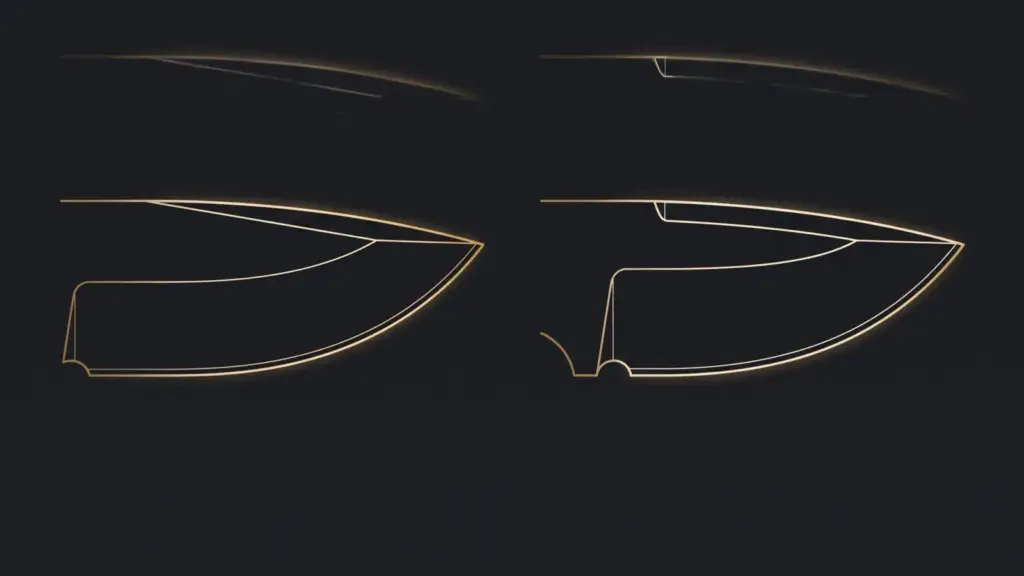
Fixed Blade Bevels Explained
Convex vs sabre grind on a hunting or outdoor fixed blade, and what actually survives hard use.
Christmas Knife Gift Guide
What to buy for whom, the engraving cutoff dates nobody publishes, and the penny tradition that settles the old superstition.
Knives and Swords as Wedding Gifts: Groomsmen, Cake and Budget
Why a set of swords is usually the wrong call, what a party of eight actually costs, and the engraving rules in full.
