
Short answer: classic slip-joint folders are usually hollow ground for a fine, precise slicing edge; most modern tactical and EDC folders use a sabre grind instead, because it leaves more steel behind the edge for harder use. Full flat grinds show up on both. None of the three is "better" in the abstract — it depends on whether the knife spends its life opening mail or prying things open.
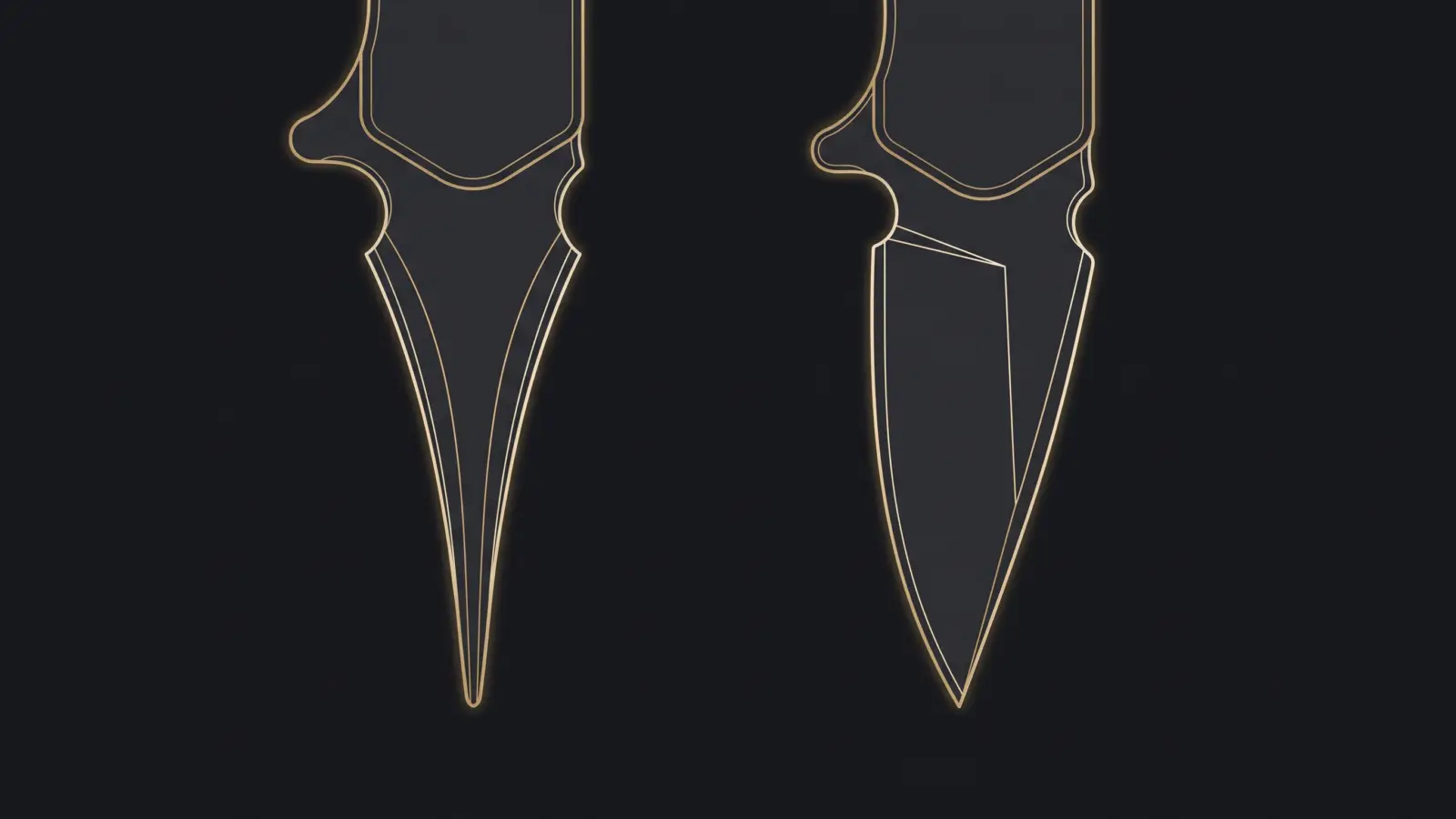
Why folders get judged on grind differently than fixed blades
A folding knife blade is shorter and thinner to begin with, so the grind matters more to how it actually performs — there's less steel mass to fall back on if the edge geometry is fragile. That's part of why hollow grinds, which are impractical on a big outdoor fixed blade, work well on a three-inch folder.
Hollow grind — the traditional choice
A hollow grind is concave: it's ground on a rotating wheel that carves a curved bevel into each face, leaving very little material directly behind the edge. That geometry produces an extremely fine, precise edge — the classic feel of an old slip-joint, the kind of pocket knife your grandfather carried. It's excellent for slicing and easy to keep shaving-sharp, but it's the weakest of the common grinds under lateral stress, so it's not the grind you want for prying or hard use.
Sabre grind — the modern EDC default
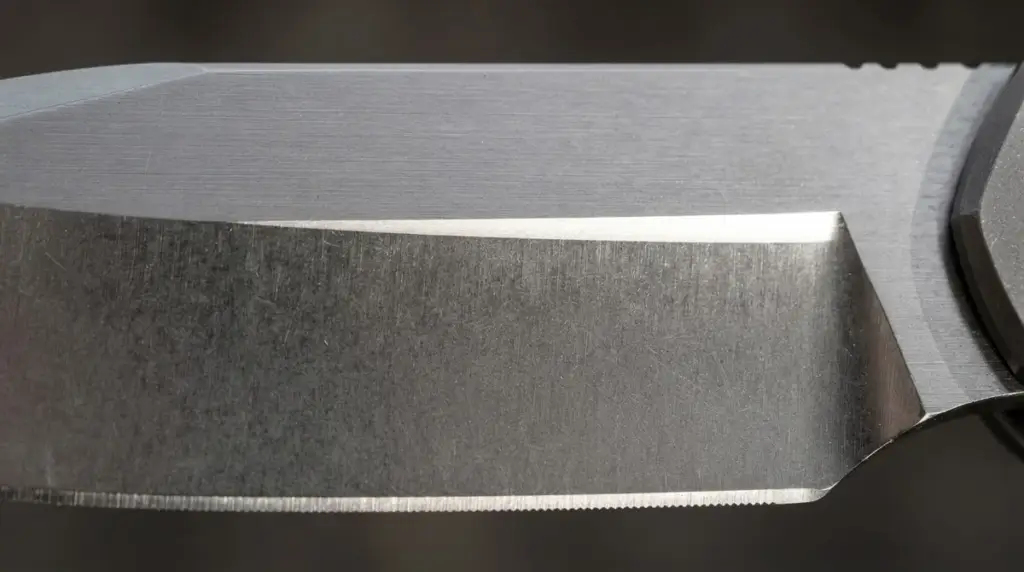
A sabre grind is a partial flat grind that starts roughly halfway down the blade instead of at the spine, so the blade stays thicker behind the edge than a full flat grind would leave it. Most tactical and hard-use folders — the kind meant to also open boxes, cut cord, or take the odd bit of abuse — are sabre ground for exactly that reason. It slices less efficiently than a full flat or hollow grind, but it's noticeably tougher, and it's become the default on modern production EDC knives.
Where flat grind fits
A full flat grind — the same wedge-shaped taper used on most chef's knives — also shows up on plenty of folders, usually positioned as a middle ground: better slicing than a sabre grind, sturdier than a hollow grind. It's common on gentleman's folders and slicing-focused EDC knives that aren't expected to see hard use.
Which grind for which kind of carry
- Traditional or slip-joint, mail and box opening, fine slicing: hollow grind.
- Daily carry that also has to work hard occasionally: sabre grind.
- Mostly slicing, rarely prying, wants a cleaner cut than a sabre grind gives: full flat grind.
Grind and blade steel are two separate decisions
It's easy to conflate a knife's steel with its grind because they're usually mentioned in the same breath, but they're independent choices. A hollow-ground blade in a tough steel and a sabre-ground blade in a brittle one both exist, and either can disappoint you if you only checked one spec. When you're comparing folders, ask about grind and steel separately — our steel chart covers the second half of that question.
What is a bevel on a knife, and what does it mean on a folder?
The bevel is the angled band of steel that runs down each face of the blade to meet at the cutting edge. Asked the other way round — what is the bevel of a knife you already have in your pocket? — it is the shiny strip along the edge that catches the light differently from the rest of the blade. On a folder there are usually two bevels stacked on top of each other: the primary grind, which shapes most of the blade face, and a narrow secondary bevel at the very edge that does the cutting.
Folders make this matter more than most knives do, because the blade is short and the stock is thin. There is not much steel available, so where it is removed changes the feel of the knife immediately.
Knife bevel types you actually meet on a folder
Four cover almost everything on the shelf:
| Hollow | Concave faces cut by a wheel. Very thin behind the edge, superb slicer, least tolerant of twisting. Common on small blades and traditional slip-joints. |
| Full flat | Straight taper from spine to edge. Balanced slicing and strength, easy to freehand. |
| High flat | A flat grind starting just below the spine. Nearly the slicing of a full flat with a whisker more spine thickness left for stiffness. |
| Chisel | Ground on one face only, back left flat. Turns up on some tactical folders because it is quick to grind, quick to sharpen, and very thin at the apex. |
A hollow grind suits small blades in particular. On a three-inch folder the concave face has little distance to travel, so the blade never gets so thin that it flexes, and you get an edge that parts cardboard and rope with almost no push. Put the same geometry on a long chopper and it becomes fragile.
Chisel-ground folders behave like the single-bevel kitchen knives they borrow from: the edge sits on one side, so the blade steers a little in a deep cut, and it is handed.
The secondary micro-bevel, and why factory folders come with one
Nearly every folder leaves the factory with a micro-bevel: a strip half a millimetre to a millimetre wide, ground a few degrees steeper than the primary grind, right at the apex. It exists for practical reasons rather than cosmetic ones. It is fast to apply on a production line, it is consistent enough to pass inspection on every blade, and a slightly more obtuse apex survives shipping, display and the first careless user far better than a fully acute one would.
It is also the part you maintain. Day-to-day sharpening removes a fraction of a millimetre from that strip, not from the whole blade face. The primary grind only gets touched when the micro-bevel has crept so wide that the knife starts to feel like it is wedging rather than cutting.
Blade stock thickness versus how sharp a folder feels
Two folders can carry the same edge angle and the same steel at the same hardness — a 1095 and 15N20 Damascus blade sits at 58 to 60 HRC either way — and one will feel noticeably sharper. The difference is usually stock thickness. A thicker blade has to shoulder more material aside once the apex has gone in, and your hand reads that resistance as bluntness even though the edge itself is fine.
So a knife bevel angle is only half the answer. Thin stock with a modest angle often outcuts thick stock with an aggressive one,.
Sharpening a folder without hitting the ricasso or the pivot
The main hazard on a folder is the unsharpened flat between the edge and the handle — the ricasso — and the pivot area just behind it. Run the blade too far back on the stone and you round the ricasso, scratch the finish and, on a poorly timed stroke, catch the stone against the pivot hardware.
Stop the stroke while the heel of the edge is still on the stone rather than chasing the last millimetre into the ricasso. Work with the blade locked open and the handle well clear of the stone edge, keep the pivot dry of slurry, and dry and re-oil the joint afterwards — a wet pivot is how a folder starts to bind. Our sharpening guide covers stroke and burr work in general, cleaning a pocket knife deals with what collects in the joint, and knife oil covers what to put back in.
Why a recurve is hard to sharpen
A recurve blade dips inward before sweeping up to the tip, and a flat stone cannot reach into that dip. The stone rides on the two high points either side and leaves the belly of the curve untouched, so the knife ends up sharp at the heel and tip and dull exactly where you do most of your cutting. Rod-shaped or narrow stones, or a strop wrapped over a dowel, are the practical answers.
The choil and the sharpening notch
A sharpening notch is a small cut-out where the edge ends and the ricasso begins. It gives the stone somewhere to run out, so you can sharpen right to the heel without rounding the flat behind it. A finger choil is larger, meant for a forward grip, and shortens the usable edge accordingly. Either one makes sharpening easier to finish cleanly; a blade with neither needs you to lift off early and accept a slightly softer heel.
How to choose the right knife grind bevel for the way you carry
Work backwards from what the knife opens. Mostly packaging, tape and food: hollow or high flat, with the factory micro-bevel maintained as it came. Mixed daily use with the occasional job it was not designed for: full flat. A knife carried for hard use where the edge will meet staples and grit: leave the apex slightly more obtuse than looks impressive. Browse the folding pocket knives and compare grind and stock thickness alongside steel, not instead of it.
One aside, because it brings people here by mistake: searches for blade geometries for your band knife are usually about industrial band knives — continuous machine blades used for cutting foam, meat and textiles. The vocabulary overlaps, but the geometry advice on this page is for pocket knives.
Questions people ask
Does grind affect how often I need to sharpen?
Yes, but not the way most people expect. A thinner grind (hollow, full flat) gets sharp faster on a stone but also dulls faster under hard use. A sabre grind takes a bit more work to bring back to full sharpness but holds an edge longer under stress.
Can a folder be both hollow and sabre ground?
Not in the primary grind — those describe two different bevel shapes on the same blade face. What you will see combined is a sabre primary grind with a very fine secondary edge bevel, which is effectively the modern default on most quality folders.
Is a locking mechanism connected to grind at all?
No — lock type (liner lock, frame lock, back lock) is about how the blade is held open, completely separate from how the edge itself is shaped. A knife's grind and its lock are chosen independently.
Why do factory folders come with a secondary micro-bevel?
Because it is fast, repeatable and durable. A strip well under a millimetre wide, ground a few degrees steeper than the primary grind, can be applied consistently to every blade on a production line, and the slightly more obtuse apex survives shipping, handling and early misuse better than a fully acute edge would. It is also the part you maintain from then on, so sharpening removes very little steel each time.
Which knife bevel types work best on a small folding blade?
Hollow and high flat grinds suit short blades particularly well. On a three-inch folder the ground face has little distance to cover, so the blade stays stiff while getting very thin behind the edge, which is what makes a small knife slice above its size. Full flat is the safer all-rounder. Chisel grinds appear on some tactical folders, but they are handed and steer slightly in a deep cut.
Can I sharpen a recurve folder on a flat stone?
Not properly. A flat stone bridges the inward dip of a recurve and only touches the high points either side, so you end up sharp at the heel and tip and dull through the belly where most cutting happens. Use a round or narrow rod, a narrow slip stone, or a strop wrapped over a dowel so the abrasive can follow the curve into the hollow of the edge.
What is the sharpening notch on a folder for?
It is a small cut-out where the sharpened edge ends and the unsharpened ricasso begins, and it gives the stone somewhere to run out. That lets you sharpen right to the heel without rounding over the flat behind it. A finger choil is a bigger version meant for a forward grip and shortens the usable edge. On a blade with neither, lift off early and accept a slightly softer heel.
Does a thicker blade make a pocket knife feel less sharp?
Often, yes, even at the same edge angle and hardness. Once the apex has entered the material, the rest of the blade has to push it aside, and thicker stock takes more force to do that. Your hand reads the extra resistance as bluntness. Compare blade stock thickness alongside the bevel angle rather than assuming a steeper looking edge is the problem.
How do I sharpen a folder without hitting the ricasso or the pivot?
Stop each stroke while the heel of the edge is still on the stone instead of chasing the last millimetre back into the ricasso. Keep the blade locked open, hold the handle clear of the stone edge, and keep slurry off the pivot. Dry the joint afterwards and put a drop of oil back in, since water and grit left in a pivot are what make a folder start to bind.
More guides
More from the workshop
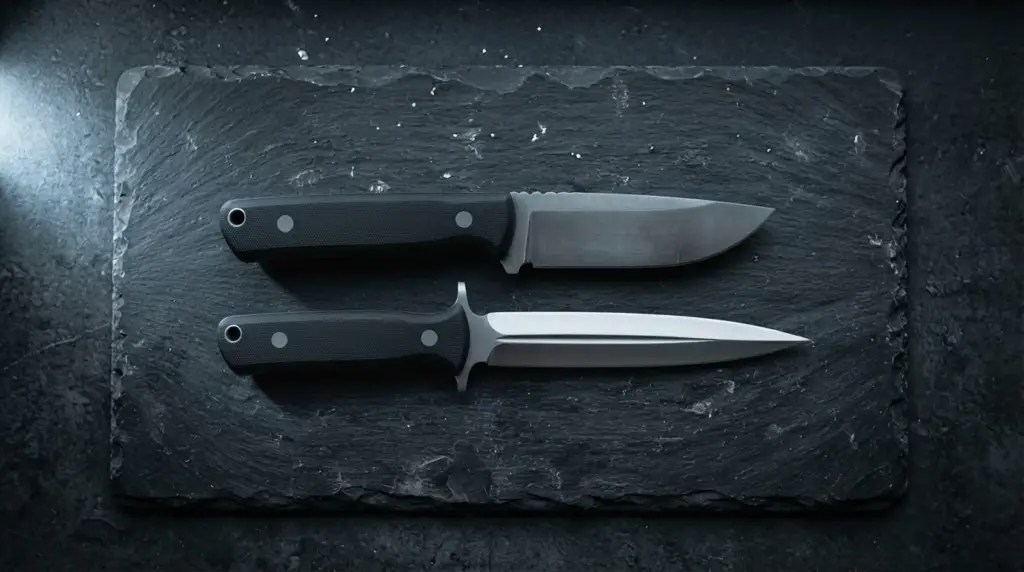
Knife vs Dagger: What Is the Difference?
Every dagger is a knife, not every knife is a dagger. One edge or two changes everything, including what you can legally carry.
Flying With a Knife
What TSA actually allows, how to pack a knife in the hold, and where the rules change once you land abroad.
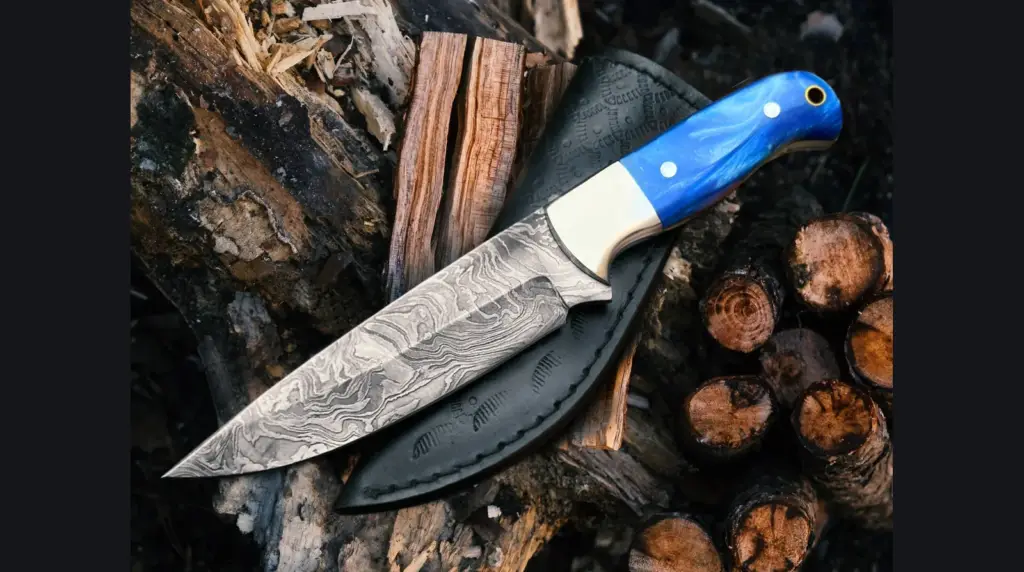
How to Tell Real Damascus from a Printed Pattern
Four checks that separate forge-welded steel from a surface-etched imitation.
