
Short answer: knife "type" and knife "blade shape" are two different questions and people mix them up constantly. A Bowie is a type. A clip point is a shape. A Bowie usually has a clip point, but so do a dozen knives that are not Bowies. This page covers the types — what each family of knife is, what it was invented to do, and whether it is still the right answer to that problem. If you want the shapes, that is our blade shapes guide.
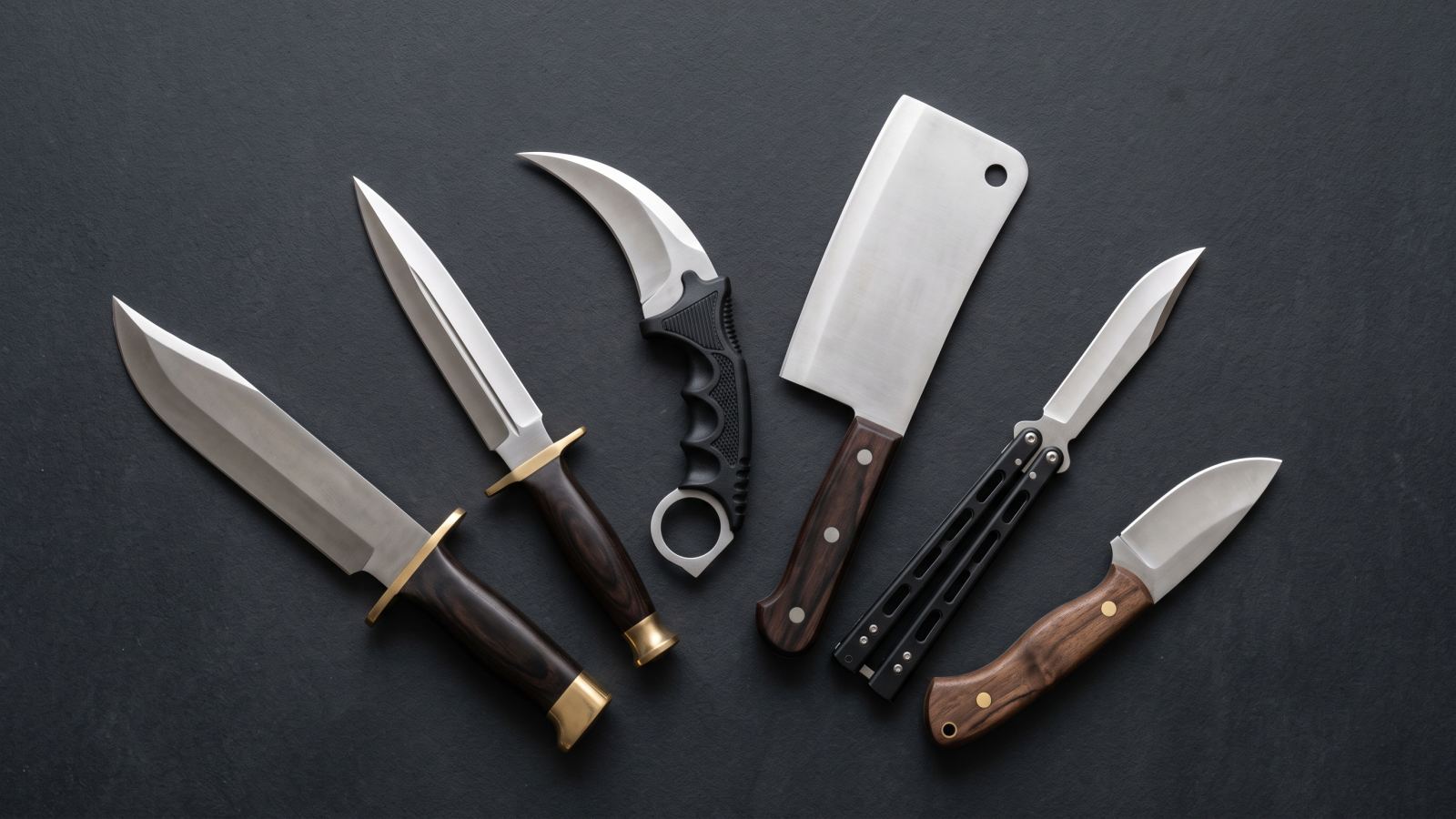
Fixed blades that came from work
Every one of these started as a solution to a specific job, and the shape is the fossil record of that job.
| Type | What it is | Made for |
|---|---|---|
| Bowie | Large fixed blade, clip point, deep belly, usually a crossguard. 6 to 12 in of blade. | 1830s American frontier. One knife that had to slice, chop and defend. Still the template for big American fixed blades. |
| Hunting knife | Modest fixed blade, 3.5 to 5 in, drop point, pronounced belly | Field dressing and skinning. The belly does the work; the point stays out of trouble. |
| Skinner | Short, wide, very deep sweeping belly, blunt or trailing point | Separating hide from carcass with the curve, not the tip. Almost no point on purpose. |
| Gut hook | A hunting knife with a sharpened hook cut into the spine | Unzipping the abdomen without puncturing the organs. One job, done well. |
| Caping knife | Small, fine, needle pointed fixed blade | Detail work around the head and shoulders for a mount. Precision, not power. |
| Fillet knife | Long, thin, very flexible blade | Following the bones of a fish. Flex is the feature, not a defect. |
| Cleaver | Heavy rectangular blade, thick spine, blunt profile | Splitting bone and joints by mass. A Chinese vegetable cleaver is a different, thinner tool with the same silhouette. |
| Kukri | Forward angled blade with a distinct bend, weight forward of the hand | Nepalese work and fighting knife. The angle converts a cut into a chop without a longer blade. |
| Machete | Long, thin, light, minimal point | Vegetation. Not a survival knife, whatever the packaging says. |
| Tomahawk | Light axe on a straight haft | Chopping, breaching, throwing. Lighter and faster than a felling axe. |
If you are choosing a fixed blade for hunting rather than reading for interest, our guides on what makes a hunting knife good, skinning knives and gut hooks go into each properly. The hand forged collection covers most of the families above.
Fixed blades that came from fighting
Different design brief entirely. These are optimised for penetration and reach rather than for slicing, and it shows in the geometry.
| Type | What it is | The design logic |
|---|---|---|
| Dagger | Symmetrical, double edged, tapering to a centred point | Two edges and a point on the centre line means it penetrates the same from any grip angle. It also means no spine to put a thumb on, which is why daggers are poor at ordinary cutting. |
| Stiletto | Very narrow dagger, minimal edge, long taper | Pure thrusting geometry. Historically for getting through armour gaps. |
| Push dagger | Short blade set perpendicular to a T-shaped grip held in the fist | The blade runs along the axis of the arm, so the force comes from the whole body rather than the fingers. Also called a punch dagger or push knife. |
| Karambit | Strongly curved blade, ring at the end of the handle for the index finger | Southeast Asian, originally a farm tool for roots and rice. The ring means it cannot be dropped or stripped from the hand; the curve pulls rather than pushes. |
| Trench knife | Fixed blade with an integrated knuckle guard | Confined space fighting, First World War. Mostly a collector category now. |
| Neck knife | Any small fixed blade worn on a cord in a friction sheath | Not a blade shape at all — a carry method. Speed of access is the whole point. |
Our knife versus dagger guide goes deeper on why a double edge changes so much, and the daggers, push daggers, karambits and neck knives are each their own collection. One thing to say plainly: several of these types are restricted in some states and cities. Please check your local law before ordering.
Folding knives
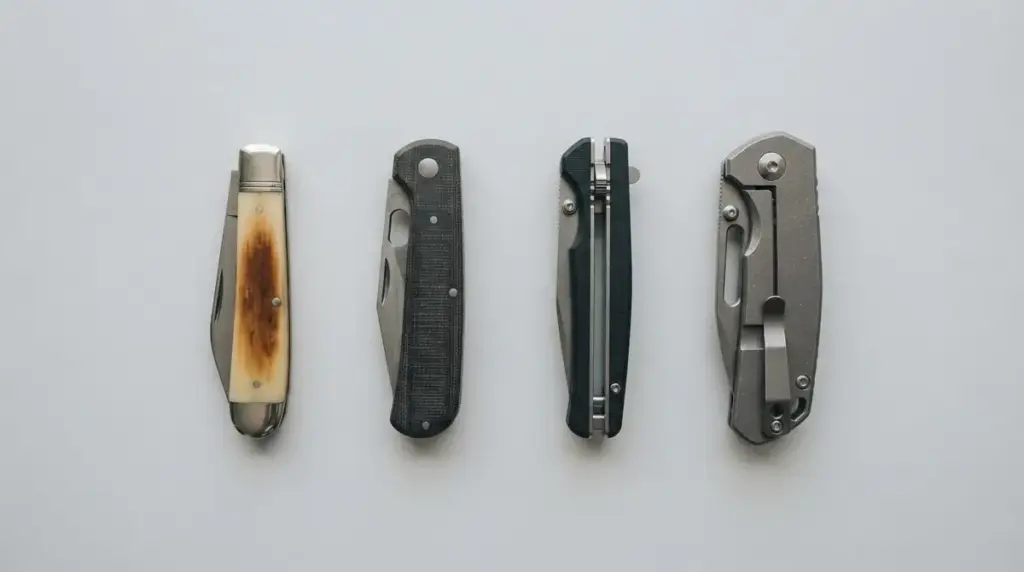
A folder is defined by its lock and its opening method, not by its blade. Two knives with identical blades and different locks are different tools.
| Type | What it is |
|---|---|
| Slipjoint | No lock at all. A spring holds the blade open by friction. The traditional pocket knife, and legal in more places than anything else precisely because it does not lock. |
| Lockback | A spine mounted bar drops into a notch in the blade. Strong, simple, needs two hands to close safely. |
| Liner and frame lock | A leaf of the handle springs behind the blade tang. One handed to open and close. The modern default. |
| Multi blade | Two, three or four blades on one or both ends of a single frame — a main blade plus a pen blade, sheepsfoot or spey. |
| Balisong (butterfly knife) | Two handles that rotate around the tang and close over the blade. Filipino in origin. The sandwich or channel construction of those handles is what separates a good one from a rattling one. |
| Automatic / switchblade | A spring deploys the blade at the press of a button. Federal law restricts interstate commerce in these; state law varies widely. |
| Ballistic knife | A blade that is launched from the handle by a spring. Manufacture, sale, import and possession in interstate commerce are prohibited under United States federal law. These are not sold by legitimate retailers. |
| Laguiole | A French pattern rather than a mechanism: slim slipjoint, decorated backspring ending in a bee, often a cross of pins in the handle. |
If a folder is what you are after, choosing an EDC knife is the practical version of this table, and balisong construction and channel versus sandwich versus skeletonised cover the butterfly knives specifically. Collections: folding pocket knives, balisong butterfly, multi blade and Laguiole.
Kitchen knives
| Type | Blade | What it is actually for |
|---|---|---|
| Chef's knife | 8 in, curved belly | The one knife that does eighty per cent of the work. The curve is for rocking. |
| Santoku | 6 to 7 in, flatter, sheepsfoot tip | Japanese answer to the chef's knife. Flat edge favours push cutting over rocking. |
| Nakiri | Rectangular, flat, thin | Vegetables only. Straight down cuts, full contact with the board. |
| Boning knife | 5 to 6 in, narrow, stiff | Working around joints and bones. Stiff, unlike a fillet knife. |
| Paring knife | 3 to 4 in | In-hand work away from the board. |
| Bread knife | Long, serrated | Crust. The one place serration is genuinely correct. |
| Steak knife | 4 to 5 in, plain edge if it is any good | Table use. A serrated steak knife tears the fibres; a plain one cuts them. |
| Cleaver | Heavy rectangle | See above. Bone, not vegetables, unless it is the thin Chinese kind. |
More on these in boning versus fillet and carbon versus stainless in the kitchen. Collections: chef and kitchen, cleavers and steak knives.
Swords, since people ask
Not knives, but the same questions arrive. A katana is a curved, single edged Japanese sword with a two hand grip. A tanto is the Japanese dagger, and confusingly "tanto" in modern knife marketing means an angular American point shape that has little to do with it. A longsword is straight, double edged and two handed. A scimitar or kilij is curved and single edged from the Middle East and Turkey. A falchion is a broad, curved, cleaving European blade. Our Damascus katana guide covers the buying side, and the sword collection is here.
How to actually choose
- Name the task, not the knife. "I break down deer" leads somewhere. "I want a cool knife" leads to a drawer full of them.
- Fixed or folding is the first fork. Fixed is stronger and faster; folding is carried more often. The best knife is the one in your pocket.
- Then pick the family from the table above.
- Then blade shape, then steel, then handle. In that order. Most people do it backwards and start with steel.
- Check your local law before you buy. Especially for automatics, balisongs and double edged blades.
Questions people ask
What is a bowie knife?
A large fixed blade with a clip point, a deep belly and usually a crossguard, typically 6 to 12 inches of blade. It came out of the 1830s American frontier as a single knife that had to slice, chop and defend, and it is still the template for big American fixed blades.
What is a dagger knife?
A symmetrical double edged blade tapering to a point on the centre line. The symmetry means it penetrates equally from any grip angle. The trade off is that there is no spine to place a thumb on, so daggers are poor at ordinary cutting work.
What is a push dagger?
A short blade mounted perpendicular to a T-shaped grip that sits in a closed fist, so the blade runs along the line of the forearm. Also called a punch dagger or push knife. The force comes from the arm and body rather than the fingers.
What is a karambit knife?
A Southeast Asian knife with a strongly curved blade and a ring at the end of the handle for the index finger. It began as an agricultural tool for roots and rice. The ring makes it very hard to drop or disarm, and the curve is designed to pull rather than push.
What is a cleaver knife?
A heavy rectangular blade with a thick spine, designed to split bone and joints by weight rather than by edge sharpness. The thin Chinese vegetable cleaver looks similar but is a completely different tool and should not be used on bone.
What is a balisong knife?
A folding knife with two handles that rotate around the blade tang and close over the blade. It originates in the Philippines. Its build quality lives in the handle construction — sandwich or channel — and in how tightly the pivots are fitted. People learning to flip usually start on a trainer, which is a balisong with a blunt edge. Every one we make can be ordered either way at the same price, and our butterfly knife trainer guide covers it properly.
What is a butterfly knife?
The same thing as a balisong. "Butterfly knife" is the English name for the Filipino balisong. Legality varies significantly by state, which we cover in butterfly knife laws.
What is a hook knife?
The term covers two different tools. In hunting it means a gut hook knife, which has a sharpened hook in the spine for opening a carcass. In woodworking it means a curved spoon carving knife. They share nothing except the word.
What is a gut hook?
A small sharpened hook ground into the spine of a hunting knife near the tip. You slip it under the hide and pull, and it opens the abdominal wall without the blade ever pointing at the organs.
What is a ballistic knife?
A knife whose blade is launched from the handle by a spring. Manufacture, sale, importation and possession in interstate commerce are prohibited under United States federal law. No legitimate retailer sells them, and anything advertised as one is usually something else.
What is a stiletto knife?
A very narrow dagger with a long taper and minimal cutting edge, built for thrusting rather than slicing. Historically it was designed to find the gaps in armour.
What is a neck knife?
Any small fixed blade carried on a cord around the neck in a friction sheath. It describes how the knife is carried, not what shape it is. The appeal is that it is faster to reach than a pocket.
What is a kukri?
A Nepalese knife with a distinctive forward bend that puts the weight ahead of the hand. The angle turns a cut into a chop without needing a longer blade, which is why it works as both a tool and a fighting knife.
What is the difference between a knife type and a blade shape?
A type is a whole family with a purpose — Bowie, cleaver, karambit. A shape describes the profile of the blade — clip point, drop point, tanto, sheepsfoot. One knife has both. A Bowie is a type that usually carries a clip point shape, but plenty of non-Bowies carry the same shape.
What type of knife should a beginner buy?
A drop point folding knife with a locking blade, three to three and a half inches, in a steel you can sharpen easily. It does almost everything, it is legal in most places, and it teaches you what you actually use before you spend money on a specialist.
More reading. Blade shapes explained, choosing an EDC knife, and shop by use, and what is actually made in the USA.
Design your own knife from any of these shapes →
More from the workshop
How to Sharpen a Knife on a Whetstone
Angle, burr and strop: the three things that decide whether a knife gets sharp.
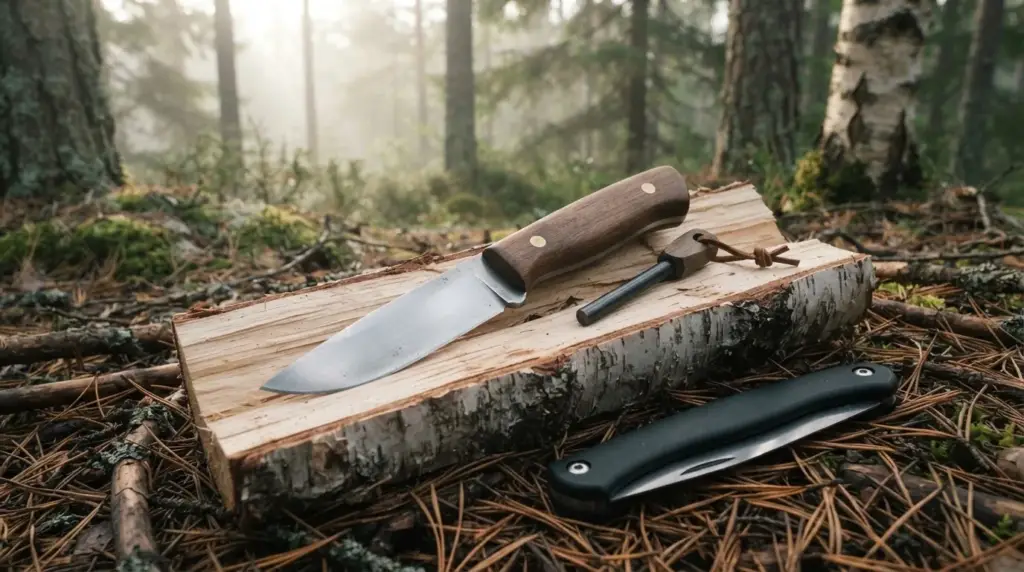
Choosing a Bushcraft or Camp Knife
Length, grind, spine geometry and steel for a camp knife, measured against what our own outdoor range actually offers.
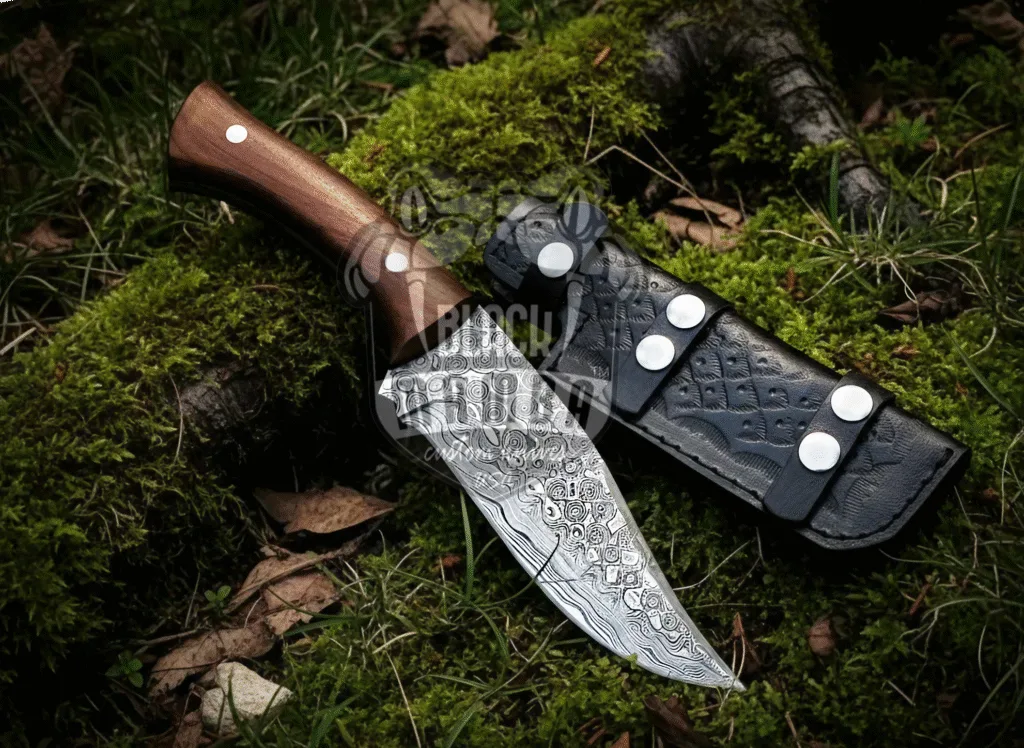
Full Tang Knife Guide: Full Tang vs Partial Tang
Knives break where the blade meets the handle. Tang is what carries that load.
