
Hand-forged Damascus knives, made in the USA. Every Black Mamba™ blade is forge welded from 1095 and 15N20 to 352 layers, heat treated to 58–60 HRC and finished by hand in our Memphis, Tennessee workshop — handcrafted, with custom designs available on request. Browse expertly forged Damascus blades across the full premium USA-made collection: Damascus hunting knives, pocket knives and folders, chef and kitchen knives, bowies, skinners, karambits, daggers, swords and axes. Free expedited US shipping, a hand-stitched leather sheath with every knife, and a lifetime warranty.
-
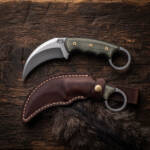
Bush Viper Hand Forged High Carbon Steel Karambit Knife with Olive Green Paracord Handle & Leather Sheath | Survival EDC Gift | BMK-1184
Original price was: $125.00.$100.00Current price is: $100.00. -
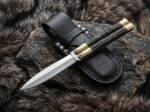
Onyx Fang Handmade Damascus Karambit Knife with Buffalo Horn Handle, Brass Spacers & Damascus Finger Ring | Collector Gift | BMK-1190
Original price was: $203.00.$162.00Current price is: $162.00. -
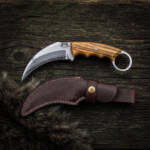
Smokeclaw Hand Forged High Carbon Steel Karambit Knife with Olive Wood Handle, Mosaic Pin & Leather Sheath | Traditional EDC Gift | BMK-1183
Original price was: $131.00.$105.00Current price is: $105.00. -
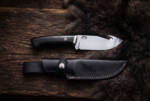
Midnight Horn Handmade D2 Steel Gut Hook Hunting Knife with Buffalo Horn Handle, Stainless Bolster & Leather Sheath | Classic Hunting Gift | BMK-1176
Original price was: $138.00.$110.00Current price is: $110.00. -
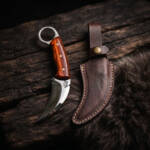
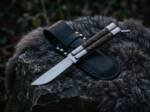
Copper Crescent Handmade D2 Steel Mirror Polished Karambit Knife with Rosewood Handle & Leather Sheath | Classic EDC Gift | BMK-1186
Original price was: $141.00.$113.00Current price is: $113.00. -
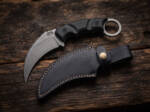
Shadowstone Handmade D2 Steel Stonewashed Karambit Knife with Black Micarta Handle & Leather Sheath | Tactical EDC Gift | BMK-1188
Original price was: $135.00.$108.00Current price is: $108.00. -
Verdant Reaper Handmade D2 Steel Satin Karambit Knife with Olive Green Micarta Handle & Leather Sheath | Everyday Carry Gift | BMK-1187
Original price was: $133.00.$106.00Current price is: $106.00. -
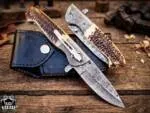
Queen Snake 8.5″ Long Damascus Pocket Knife Damascus Hunting Knife Stag Antler Handle Pocket Clip Knife with Leather Sheath USA Made | BMK-445
Original price was: $168.00.$134.00Current price is: $134.00. -
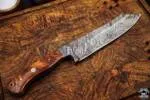
Yukio Chef Knife 13 Inches Long 7.5 Inches Blade 11.6 Ounce Razor Sharp Hand Made Damascus Chef Knives Kitchen Knife Black Mamba Hand Made World Class Knives | BMK-152
Original price was: $141.00.$113.00Current price is: $113.00. -
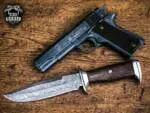
Yakushima Knife 12 Inch Long Damascus Fixed Blade Hunting Bowie Skinner Handmade Knife Outdoor Bowie Knife | BMK-150
Original price was: $173.00.$138.00Current price is: $138.00. -
Viper 7″ Long 3″ Blade” 5.6oz Damascus Pocket Knives Handmade Damascus Folding Knife Hand Made World Class Knives USA Made | BMK-403
Original price was: $126.00.$101.00Current price is: $101.00. -
Sequoia Knife 15.5 Inches LONG 10 Inches BLADE 15 Ounce Damascus Steel Fixed Blade Hunting Bowie Knife Handmade Damascus Knife Black Mamba Knives USA Made | BMK-153
Original price was: $229.00.$183.00Current price is: $183.00. -
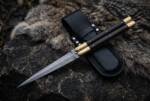
Egyptian Cobra KNIFE 9.5″ Long 4.5 “Blade 8.8oz Fixed Blade Hunting Bowie Skinner Handmade Damascus Steel Knife Black Mamba Hand Made World Class Knives USA Made | BMK-116
Original price was: $141.00.$113.00Current price is: $113.00. -
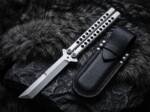
D2 Tool Steel Filipino Balisongs Butterfly Stainless Steel Bone Inserts Black Mamba Knives World Class Knives | BMK-476
Original price was: $190.00.$152.00Current price is: $152.00. -
BLACK MAMBA KNIVES Hippopotamus 6.5″ Long 3″ Blade” 5oz Damascus Pocket Clip Knives Handmade Damascus Pocket Folding Knife Black Mamba Hand Made World Class Knives | BMK-411
Original price was: $129.00.$103.00Current price is: $103.00. -
BLACK MAMBA KNIVES Garter Snake Pocket Knife 7 in Long 3 in Blade 8 Ounce Damascus Pocket Knife Folding Knife with Paddock Wood Handle Hand Made World Class Knives USA Made | BMK-636
Original price was: $136.00.$109.00Current price is: $109.00. -
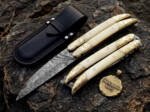
Cottonmouth Custom Made Damascus Steel Folding Pocket Knife, Handle Made with Tortoise Shell, 7″ Inches Long | BMK-563
Original price was: $155.00.$124.00Current price is: $124.00. -
Ribbon Snake 6.5 Long 2.8 Blade 4.5 Ounce Damascus Pocket Clip Knives Handmade Damascus Pocket Folding Knife with Leather Cover Hand Made World Class Knives USA Made | BMK-428
Original price was: $129.00.$103.00Current price is: $103.00. -
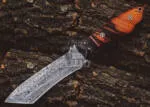
Aokigahara Damascus Tanto Knife 12 Inches Long 7 Inches Blade 12 Ounce Damascus Fixed Blade Hunting Knife Tanto Knife Damascus Hand Made World Class Knives USA Made | BMK-118
Original price was: $162.00.$130.00Current price is: $130.00. -
High Carbon Steel Filipino Balisongs Butterfly Brass with Rose Wood Inserts Black Mamba Knives World Class Knives | BMK-610
Original price was: $320.00.$256.00Current price is: $256.00. -
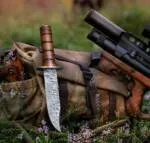
Ka-bar 12″ Long 7″ Blade 13.5oz Damascus Steel Fixed Blade Hunting Bowie Handmade Knife Black Mamba Hand Made World Class Knives Limited Luxury Edition | BMK-1001-LQ
Original price was: $325.00.$260.00Current price is: $260.00. -
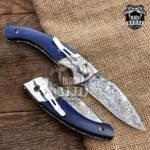
452 Damascus Pocket Knife Blue Lagoon Folding Knife Custom Knife Hand Made USA Made
Original price was: $413.00.$330.00Current price is: $330.00. -
Green Tsetse Fly 3.5″ Long 1.5″ Blade” 2oz Damascus Neck Knives Handmade Damascus Pocket Folding Knife with Mammoth Tooth Handle Black Mamba Hand Made World Class Knives USA Made | BMK-415-GR
Original price was: $146.00.$117.00Current price is: $117.00. -
Brown Raccoon 6.5 Long 2.5 Blade 3.5 Ounce Damascus Pocket Knife Handmade Damascus Pocket Folding Knife with Leather Cover Hand Made World Class Knives USA Made | BMK-426
Original price was: $119.00.$95.00Current price is: $95.00. -
Forge Quill Handmade Beautiful Luxury Pen with Damascus Steel Gift USA Made | BMK-701
Original price was: $136.00.$109.00Current price is: $109.00. -
Frilled Shark Damascus Steel Knife 12 Inches Long 7 Inches Blade 8.1 Ounce Damascus Fixed Blade Hunting Thin Bowie Knife Hand Made World Class Knives USA Made | BMK-160
Original price was: $194.00.$155.00Current price is: $155.00. -
Brown Argus D2 Tool Steel Filipino Balisongs Butterfly Knife Black Mamba World Class Knives | BMK-405
Original price was: $196.00.$157.00Current price is: $157.00. -
High Carbon Steel Filipino Balisongs Butterfly Razor Sharp Knife with Rose Wood Black Mamba Knives World Class Knives | BMK-407
Original price was: $190.00.$152.00Current price is: $152.00. -
D2 Tool Steel Filipino Balisongs Butterfly Stainless Steel Ram Horn Inserts Black Mamba Knives World Class Knives | BMK-461
Original price was: $168.00.$134.00Current price is: $134.00. -
Handmade Damascus Balisong Butterfly Knife Brass Engraved with Camel Bone Hand Forged Damascus Steel Knife Gift USA Made | BMK-2004
Original price was: $305.00.$244.00Current price is: $244.00. -
High Carbon Steel Filipino Balisongs Butterfly Stainless Steel High Grains Rose Wood Inserts Black Mamba Knives World Class Knives | BMK-568
Original price was: $190.00.$152.00Current price is: $152.00. -
BLACK MAMBA KNIVES Altus Titanium Pocket Knife 7 in Long 3 in Blade 7.5 Ounce Damascus Pocket Knife Tanto Folding Knife with Titanium Handle Hand Made World Class Knives | BMK-423
Original price was: $136.00.$109.00Current price is: $109.00. -
Vulcan 7″ Long 3″ Blade” 5.2oz Damascus Pocket Clip Knives Handmade Damascus Pocket Folding Snake Wood Knife Hand Made World Class Knives USA Made | BMK-404
Original price was: $178.00.$142.00Current price is: $142.00. -
Corn Snake 3″ Long 3.5″ Blade” 4oz Damascus Pocket Clip Knives Handmade Damascus Pocket Folding Knife Hand Made World Class Knives | BMK-633
Original price was: $125.00.$100.00Current price is: $100.00. -
Burmese Pythons Damascus Hunting Fixed Blade Knife | BMK-171
Original price was: $139.00.$111.00Current price is: $111.00.
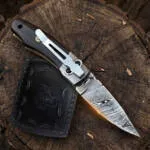
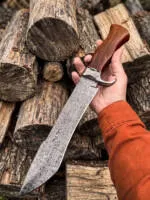
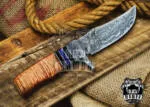
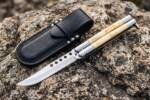
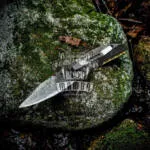
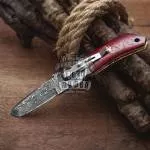
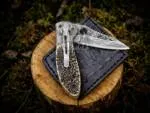
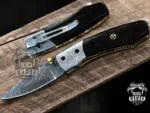
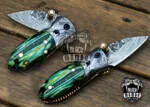
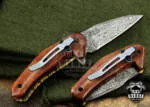
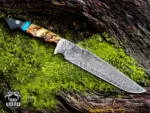
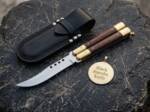
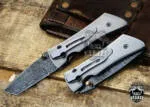
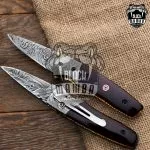
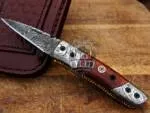
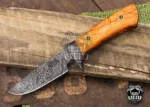
What makes a Black Mamba Damascus knife
Every Damascus blade in this shop starts as a stack of two steels: 1095, a high-carbon steel that takes a hard edge, and 15N20, a nickel-bearing steel that resists the acid etch. Those layers are forge welded, drawn out, folded and re-welded until the billet reaches 352 layers, then heat treated to 58–60 HRC — hard enough to hold an edge through real work, soft enough not to chip on bone.
The pattern you see is not printed, coated or laser etched. It is the actual boundary between those two steels, running all the way through the blade. Grind the knife down by half and the pattern is still there, because it is structural rather than cosmetic.
All of it happens in one workshop in Memphis, Tennessee — forging, grinding, heat treatment, handle fitting, sharpening and engraving. No overseas billets, no imported blanks finished in the USA. If that distinction matters to you, our country of origin page spells it out.
Every fixed blade ships with a sheath
Each fixed blade knife here comes with a hand-stitched leather sheath cut and moulded for that specific blade — not a generic pouch that half fits. Full-grain leather, waxed thread, and a retention strap where the shape needs one. Folding knives ship in a leather pouch or slip instead.
It matters more than it sounds. A knife with sheath that does not fit rattles, wears the edge and eventually falls out of the belt loop; and a blade stored in a damp sheath is the single most common way a high-carbon knife gets ruined. Ours are made to hold the blade properly and to be taken off it when the knife goes into storage.
Real Damascus, and how to tell
A large share of the “Damascus” knives sold online are stainless blades with a pattern printed or acid-stencilled onto the surface. They look convincing in a photograph and they wear off. Three checks separate the two: the pattern should continue over the spine and into the tang, it should be visible on the cutting bevel where the steel was ground away, and it should be slightly uneven — hand-forged layers never repeat perfectly. Our real vs fake Damascus guide has photographs of both.
Which steel should you buy
We forge and grind four steels, and the honest answer is that none of them wins on everything. Pick the compromise that suits how the knife will actually live.
| Steel | Edge holding | Rust resistance | Sharpening | Buy it when |
|---|---|---|---|---|
| Damascus (1095 + 15N20) | Good | Low — needs oil | Moderate | You want the pattern and will care for it |
| D2 tool steel | Excellent | Good (semi-stainless) | Hard | The knife has a job and gets used hard |
| 1095 high carbon | Fair | Low — will patina | Very easy | You sharpen in the field and like a patina |
| 440C stainless | Fair | Excellent | Easy | Wet conditions, minimum maintenance |
Most collections here are offered in more than one steel, so the shape you want rarely locks you into a single answer.
Damascus steel knives, Damascus blades, and what to call them
People search for the same object half a dozen ways, so it is worth saying plainly what each phrase means here. A Damascus steel knife and a Damascus blade knife are the same thing: a blade of pattern welded steel, in our case layered 1095 and 15N20, forged and then etched so the layers show. Damascus steel for knives is not a grade you order from a mill. It is a construction, which is why no two Damascus blades come out of the shop alike.
A real Damascus knife carries the pattern all the way through the metal. On a true Damascus steel knife you will see the layers continue into a freshly ground edge bevel, along the spine, and on the exposed tang. The printed imitations show a pattern on the face of the blade and nothing anywhere else. That one check settles the question, and our guide on telling real Damascus from a printed pattern walks through it in thirty seconds.
Every Damascus knife blade on this page is forged, ground, heat treated and finished in our own workshop in Memphis, Tennessee, and runs 58 to 60 HRC. There is no second imported line under another label. If you want the honest argument for and against the steel, are Damascus knives worth it covers what pattern welding does and does not do, and what a real Damascus knife costs covers the price bands.
Browse the Damascus collection
Everything below is hand-forged in the same Memphis shop. Start with what the knife is for.
Fixed blades and field knives
- Fixed blade knives
- Hunting knives
- Damascus Bowie knives
- Skinning knives
- Gut hook knives
- Tracker knives
- Cowboy & bull cutter knives
- Fixed blade knives with leather sheath
- Damascus knife sets
Folding and everyday carry
Tactical and collector
Kitchen, steel and gifts
- Kitchen & chef knives
- D2 tool steel knives
- 440C stainless steel
- Engraved knife gifts
- Military & veteran knives
- Wholesale & custom logo
Questions people ask
What is a Damascus knife? A Damascus knife has a blade forge welded from alternating layers of two steels, drawn out and folded until the layer count is high, then acid etched so the boundary between them shows as a pattern. Ours are 1095 and 15N20 at 352 layers. The pattern runs through the steel rather than sitting on the surface.
Are Black Mamba Damascus knives made in the USA? Yes. Every blade is forged, ground, heat treated, fitted, sharpened and engraved in our workshop in Memphis, Tennessee. We do not import blanks or finished blades. The company has been making knives there since 2009.
How can I tell real Damascus from a printed pattern? Check three places: the spine, the tang and the cutting bevel. On a real forged blade the pattern continues over all three, because it is the structure of the steel. A printed or stencilled pattern stops at the flat of the blade and wears off with use.
Does a higher layer count make a better knife? No. Layer count controls how the pattern looks, not how well the blade cuts. 352 layers is our standard because it gives a clear, well-defined figure. Edge retention comes from the steel choice and the heat treatment, which is why we publish the hardness.
How hard are your blades? 58 to 60 HRC across the range. That is a deliberate middle: harder steel chips when it meets bone, softer steel rolls its edge. Thin kitchen blades sit at the top of that band and choppers at the bottom.
Will a Damascus blade rust? It can, because high-carbon steel is not stainless. Wipe it dry after use, keep a light film of oil on it, and do not store it in a damp leather sheath. Treated that way a Damascus blade lasts generations; neglected in a wet sheath it will spot within weeks.
What is included with a knife? A hand-stitched leather sheath or pouch made for that blade, a certificate of authenticity, and care instructions. Shipping within the US is free and expedited, and every knife carries our lifetime warranty against defects in materials and workmanship.
Can I have a knife engraved? Yes. Engraving is a paid add-on and is done in the same shop before the knife ships, so nothing is sent out to a third party. Blade, bolster and handle engraving are all possible depending on the piece.
Are these real Damascus knives? Yes. The billets are layered 1095 and 15N20, forge welded and folded in our own shop before any blade is ground. The pattern runs through the steel rather than being etched onto the surface, which you can confirm by looking at the edge bevel.
What is the difference between a Damascus blade and a Damascus steel blade? Nothing. They are two names for the same thing, a blade made from pattern welded steel. The phrase Damascus steel is often used to sound more technical, but there is no separate material behind it.
How hard are your Damascus steel knives? 58 to 60 HRC, oil tempered. That is the range where the blade takes a fine edge and holds it without becoming brittle enough to chip.
