
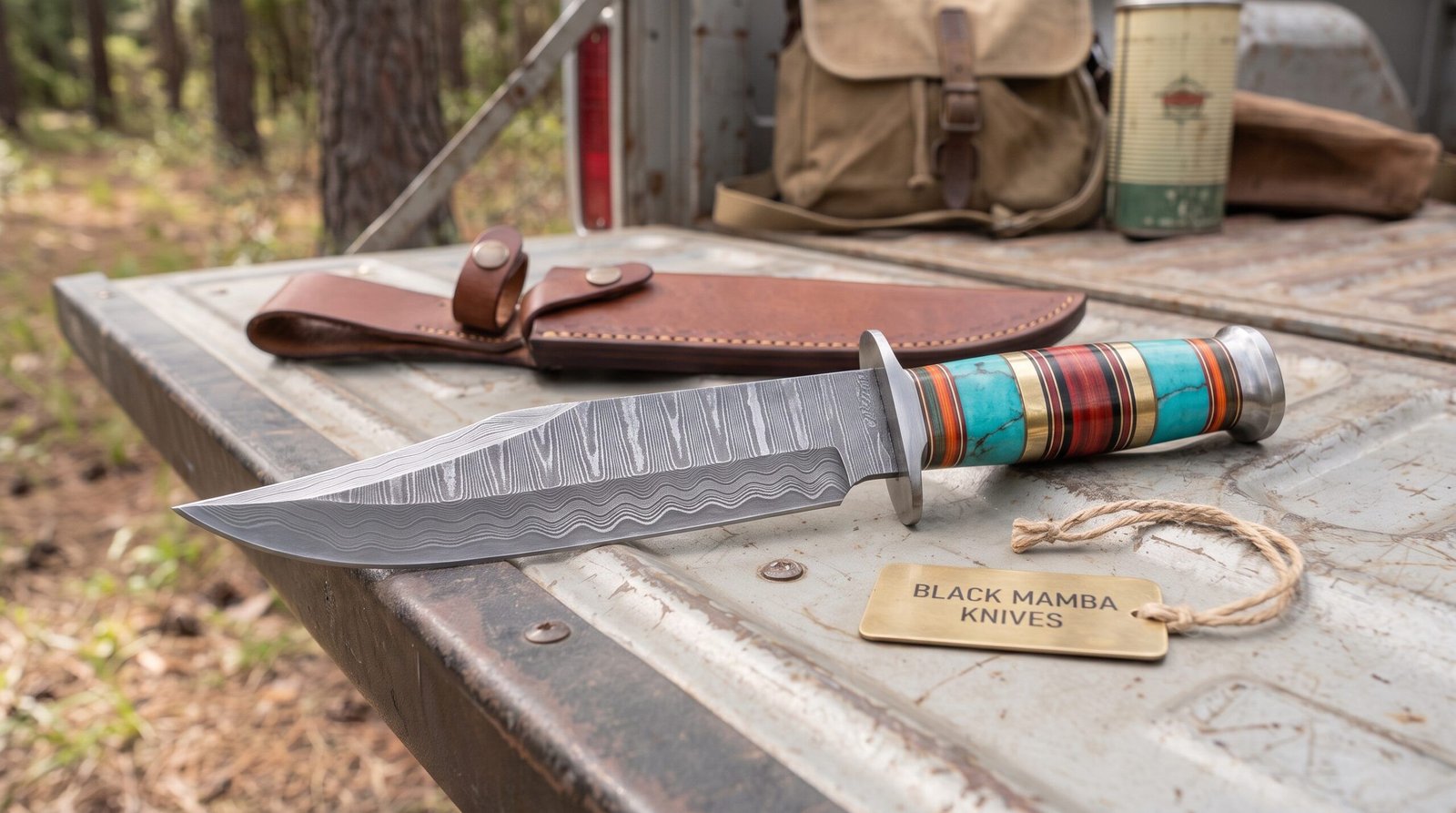
Short answer: a Black Friday knife deal is only worth buying if the knife was worth its normal price in the first place. Check that the "was" price is real, that the Damascus pattern is forged into the steel rather than printed on it, and that the knife is built well enough to last. The percentage off is the last thing to look at, not the first. Here is how to check each one in a few minutes.
Start with the price before the discount
Every year someone discovers a $600 Damascus chef knife marked down to $49 and feels very clever for about a week. The knife was never $600. Nobody ever paid $600 for it. The "was" price exists so the "now" price looks like a gift.
The Federal Trade Commission has guidance on exactly this. A former price used in a sale comparison is supposed to be a price the item was openly offered at, in good faith, for a reasonably long time. A price that was set for one afternoon so it could be crossed out later does not count. Plenty of sellers ignore that, so the checking falls to you.
Three quick ways to check. Search the exact model name and see what it sells for elsewhere, since the same factory knife often turns up under several brand names. Look at the listing on a price history tool or an archive of the page from a month ago. And ask yourself whether the "was" price sounds like something you would ever have paid. If the answer is a laugh, so is the discount.
Real Damascus or a printed pattern
This is where most bad Damascus knife sale purchases go wrong. Real Damascus, which knife makers call pattern welded steel, is made by stacking two or more steels, forge welding them into one billet, folding or twisting it, and then etching the finished blade in acid. The two steels react differently to the acid, which is what shows the pattern. The pattern goes all the way through the blade.
A fake is a single plain steel with a pattern laser etched or printed onto the surface. It photographs well. It does not survive much sharpening, and it gives itself away if you know where to look.
| What to check | Forged Damascus | Printed or laser etched |
|---|---|---|
| The spine | Layers visible along the top edge of the blade | Plain, uniform steel |
| The edge bevel | Pattern flows into the sharpened edge | Pattern stops where the bevel starts |
| Both sides | Similar but never identical | Often a perfect mirror image |
| Under a fingernail | Slight texture you can feel | Completely flat |
| After sharpening | Pattern stays | Pattern wears off the edge |
The full set of checks, with photos of what to look for, is in our guide to real vs fake Damascus. If you are still deciding whether Damascus is worth the money at all, are Damascus knives worth it answers that honestly, including when the answer is no.
Steel: what the listing should tell you
A good listing names the steel. Damascus is commonly made from a high carbon steel such as 1095 paired with a nickel bearing steel such as 15N20, which etches bright and gives the light layers their shine. Some makers use stainless steels for a Damascus that resists rust better. Any of these can make a good knife if the heat treatment is right.
Hardness is measured on the Rockwell C scale, written HRC, and most hunting and kitchen blades sit somewhere around 56 to 60. A seller who lists the hardness has usually thought about it. A seller whose entire steel description is "surgical grade" or "military grade" is hoping you will not ask. Neither phrase means anything specific.
One more thing. Carbon Damascus can rust if it is put away wet. That is the steel behaving normally, not a defect. A listing that promises a carbon Damascus blade will never stain is either wrong or describing a different steel.
Construction checks that take thirty seconds
Fixed blades. Look for a full tang, meaning the steel runs the full length of the handle and is visible between the handle scales. Pins should sit flush. There should be no gap between the guard and the handle, and the sheath stitching should be even and tight.
Folding knives. Open it and try to wiggle the blade side to side and up and down. There should be no play. The blade should sit centered in the handle when closed, and the lock or backspring should hold it firmly open.
Handles. Natural materials like stag, horn and wood should be fitted without gaps. Resin should be clear of cracks and bubbles. If a handle looks glued rather than fitted, it probably was.
Red flags in a knife deal
- A countdown timer that resets every time you reload the page.
- A discount over 70% on something described as hand forged.
- The same product photos showing up on several unrelated stores.
- No steel named, no maker named, no return policy you can find.
- Twenty piece "Damascus" kitchen sets for less than the price of one decent chef knife.
What is actually worth buying on Black Friday
Buy the knife you will use, not the one with the biggest red number next to it. For most people that is a hunting knife, an everyday folder or a chef knife. These are also the knives where good steel and good construction make the most difference, because they get used hard.
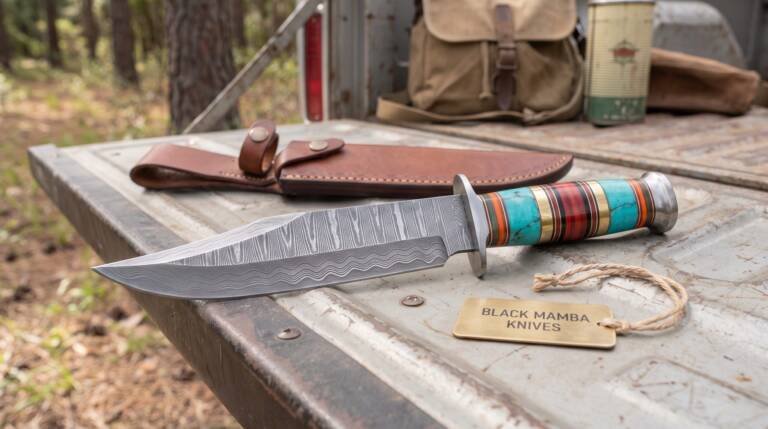
For hunting, look at the Damascus hunting knives. The Chihuahuan Snake gut hook, with a 4.6 inch blade, is our best seller at $206. The Dragon bowie, a 7 inch clip point with a stacked resin handle, is $300.
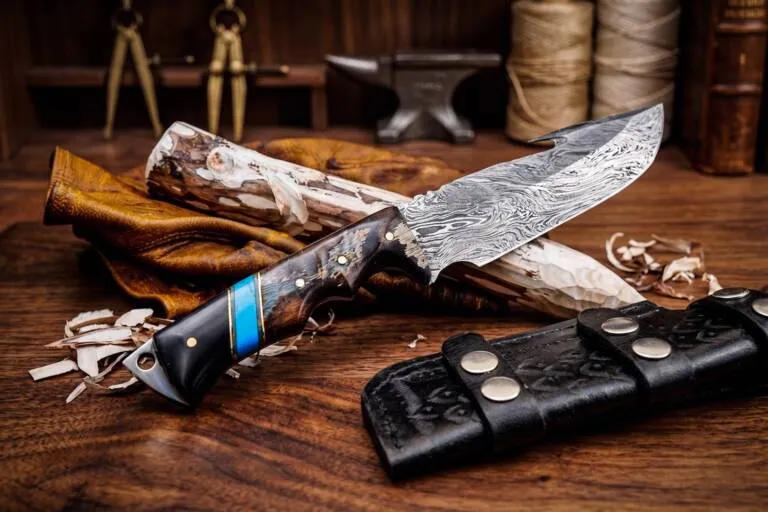
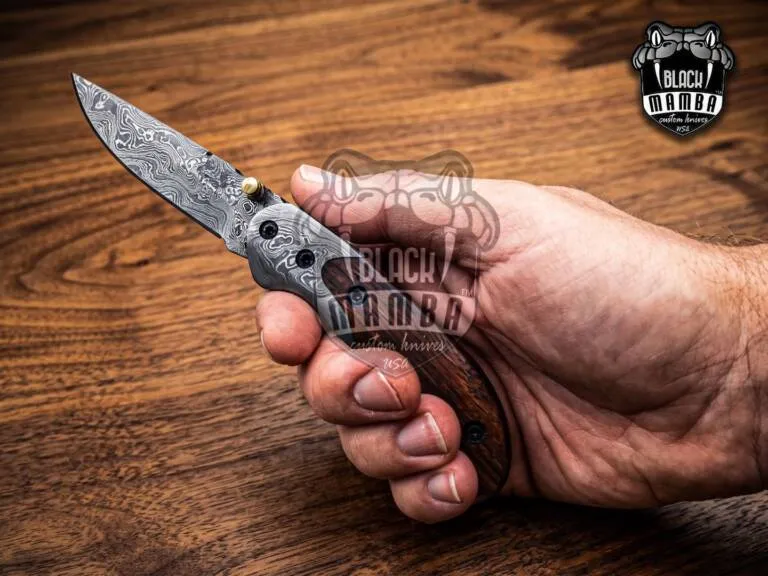
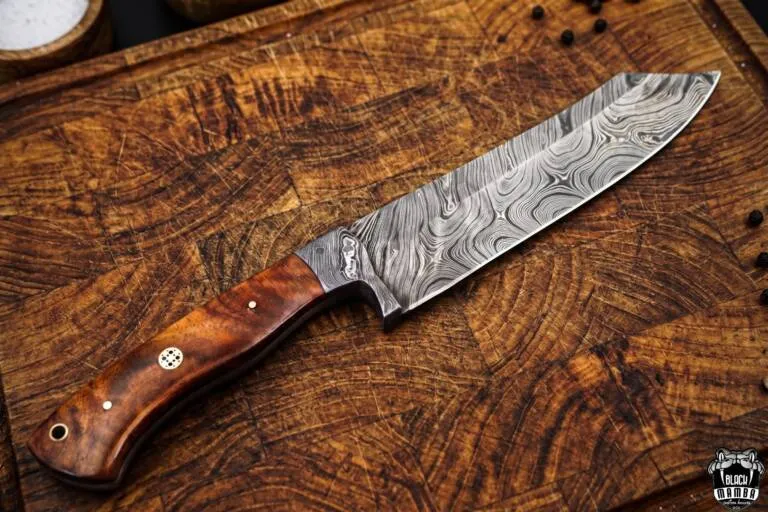
For everyday carry, the folding pocket knives are where to start. The Fallen, with a 3 inch Damascus blade, is $112. In the kitchen, the Yukio chef knife has a 7.5 inch Damascus blade at $141, and the rest sit in the chef knife collection.
How offers work on this site
When we run an offer, it shows in the bar at the top of every page and again on each product page, above the add to cart button. If it is there, it applies. If it is not, there is no secret code hiding somewhere. Every knife ships free inside the US, comes in a presentation box, and is covered by our free lifetime craftsmanship warranty whether you bought it on Black Friday or on a slow Tuesday in March.
If you are buying for Christmas, the Christmas knife gift guide sorts knives by who you are buying for, and the knife gifts page does the same across the whole shop.
Questions people ask
Are Black Friday knife deals worth it?
Some are. A real discount on a well made knife you would have bought anyway is a good deal. A huge discount on an inflated price for a knife of unknown steel is not. Check the normal price first, then the knife, then the discount.
How can I tell if a Damascus knife is real?
Look at the spine and the sharpened edge. On forged Damascus the layers show along the spine and the pattern flows into the edge bevel. On a printed or laser etched fake, the spine is plain and the pattern stops where the edge begins.
Is a Damascus knife sale a good time to buy?
It can be, as long as the knife is genuine and the original price was honest. A Damascus blade from a real maker costs more to make than a plain steel one, so a price that seems impossibly low usually is.
What does HRC mean on a knife listing?
It is hardness on the Rockwell C scale. Most hunting and kitchen knives sit around 56 to 60 HRC. Harder steel holds an edge longer but can chip; softer steel is tougher and easier to sharpen.
Do Damascus knives rust?
Carbon Damascus can rust if it is left wet or dirty. Wipe it dry after use and give it a light coat of oil now and then. Stainless Damascus resists rust better but still deserves the same basic care.
Where to start
Pick the job first, then the knife. Hunters should start with the Damascus hunting knives, everyday carriers with the folding pocket knives, and cooks with the chef knives. Check the bar at the top of the page for whatever offer is running, and ignore every countdown timer you see this week, including the ones in your inbox.
Shopping for someone specific? Try Christmas gifts for dad, stocking stuffers for men or gifts for hunters.
More from the workshop
Boning Knife vs Fillet Knife
Stiff works around bone, flexible follows it. They are not interchangeable.
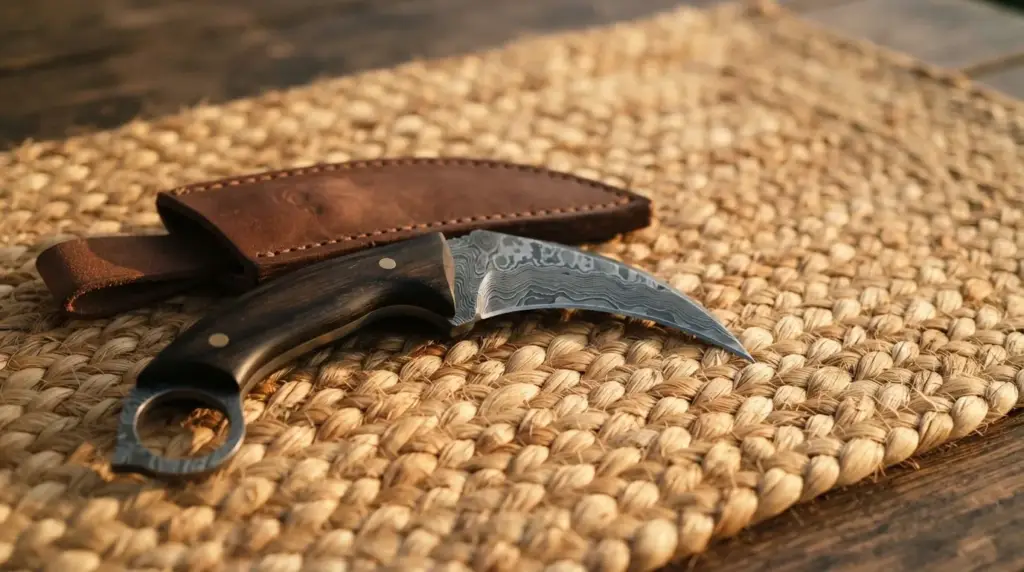
Damascus Karambits: Ring, Curve and Who They Are For
The ring is a retention device and the curve is a farming shape. What that means before you buy one of our eleven.
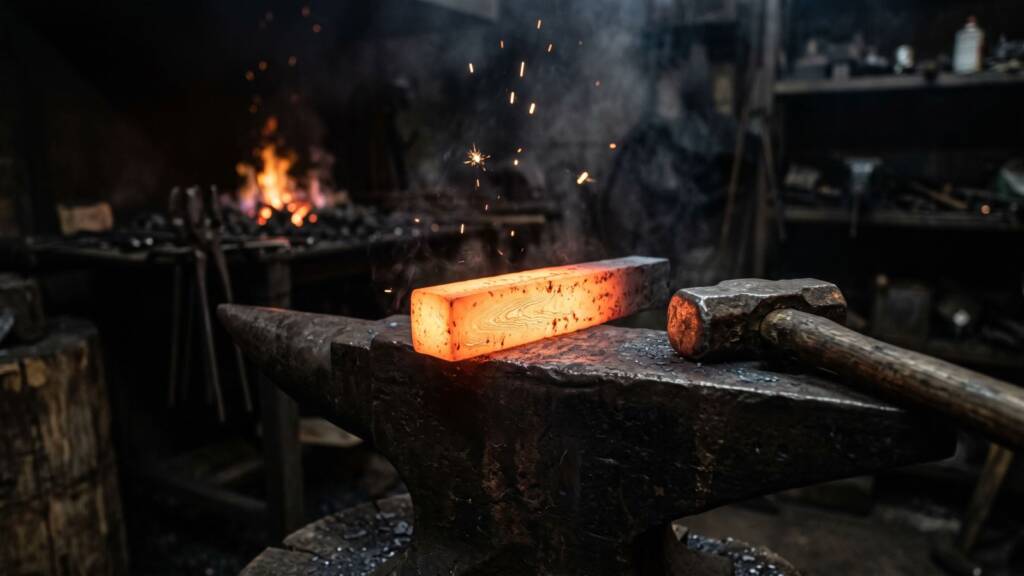
How Damascus Steel Knives Are Made
Billet to blade: forge welding, folding, pattern work, heat treat and the acid etch.
