

Short answer: warm water, a drop of dish soap, an old toothbrush, then dry it completely and put one drop of oil on the pivot. Ten minutes, twice a year, and a folding knife lasts a lifetime. Never put one in a dishwasher.
What actually makes a folder stiff
It is almost never rust. It is pocket lint, dust and skin oil packing into the pivot and under the liners, then setting hard. That grit also acts like sandpaper every time you open the knife, which is what wears a pivot out.
The routine
1. Open it and lock it. Work on a knife that cannot close on your fingers.
2. Warm water, a drop of dish soap, an old toothbrush. Scrub the blade, the spine, and especially around the pivot and inside the handle scales. A wooden toothpick gets into the corners a brush cannot.
3. Rinse briefly. Do not soak it. Water sitting inside a handle overnight is how a carbon blade rusts from the inside.
4. Dry it completely. Cloth first, then leave it open somewhere warm for an hour. Compressed air, or a hairdryer on low, gets water out of the pivot faster.
5. One drop of oil on each pivot. One. Open and close the knife ten times to work it in, then wipe the outside dry. More oil does not mean smoother, it means a lint magnet.
6. Wipe the blade with an oiled cloth if it is carbon steel.
Handle materials need different care
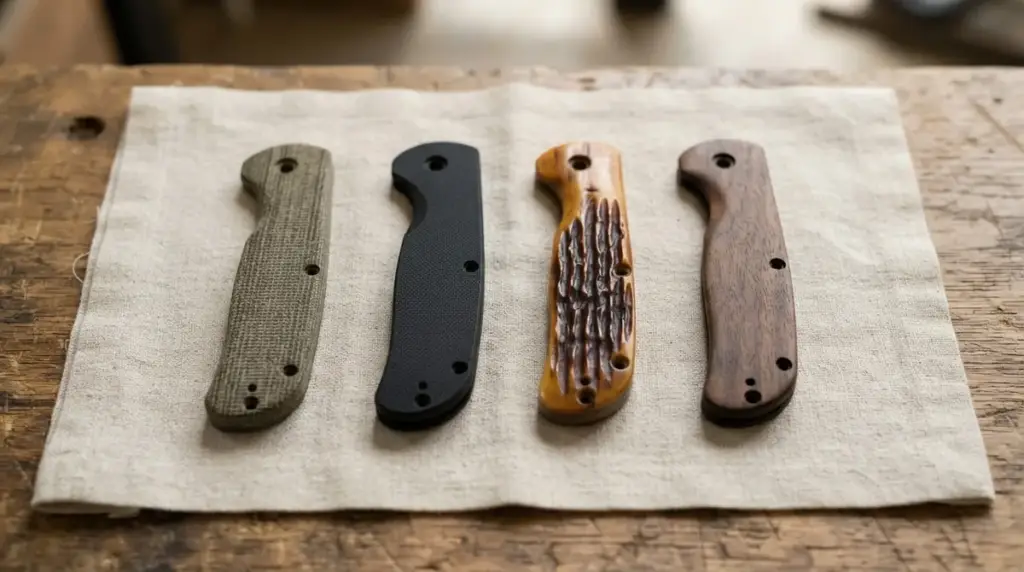
| Micarta and G10 | Bulletproof. Scrub as hard as you like. |
| Wood | Quick wash, dry immediately, and a wipe of mineral oil a couple of times a year to stop it drying out and shrinking away from the bolsters. |
| Bone, stag, horn | Never soak. These absorb water, swell and crack. Damp cloth only. |
| Pearl and shell | Damp cloth, nothing abrasive, no solvent. It is a natural material and it scratches. |
| Brass bolsters | They will patina. That is normal. A metal polish brings the shine back if you want it. |
What not to do
No dishwasher. Heat, harsh detergent and steam will ruin wood and bone scales, dull the edge against the rack, and drive water into the pivot.
No WD-40 as a lubricant. It is a water displacer and it evaporates, leaving a sticky film that attracts grit. It is fine for flushing a seized pivot, but oil the knife properly afterwards.
Do not fully strip the knife unless you are comfortable reassembling it. Most folders can be cleaned perfectly without touching a screw, and a stripped pivot screw is a much bigger problem than a stiff action.
How to clean a pocket knife: the full deep clean, step by step
The deep clean is that routine done slowly and in order. Set aside twenty minutes, over a towel.
1. Open the knife and lock it. Every step below is done with the blade open. A slip-joint that will not lock should be braced open, never held against your hand.
2. Flush the pivot first. Run warm water into the pivot from both sides while working the blade open and closed thirty times. Most grit leaves here, before a brush touches the knife.
3. Warm soapy water and an old toothbrush. A drop of washing-up liquid in a cup of warm water is enough. Scrub the blade flats, spine, choil, lock face and scales, keeping the brush moving so you lift grime out rather than push it deeper.
4. Cotton buds and dental floss for the liner channel. Most people miss this. A cotton bud reaches inside the handle where a brush cannot, and unwaxed dental floss drawn back and forth through the channel between liner and blade drags out the compacted lint that makes an action gritty.
5. Rinse briefly, then compressed air. Blow through the pivot and along the liner channel from both sides. Canned air is fine; a hairdryer on low works too.
6. Dry it completely. Cloth first, then leave it open somewhere warm for an hour. A knife that feels dry outside can still hold water behind a liner.
7. Re-lubricate. One drop of oil each side of the pivot, cycle the blade ten times, then wipe the outside dry. If the knife touches food, use a food-safe oil — see which oil to use on a knife.
8. Check the action and the lock. It should open cleanly and lock with no play.
How to clean a folding knife without taking it apart
You almost never need to. Flushing, brushing, floss, air and oil clean ninety-nine folders out of a hundred, and every step above is done with each screw still in place.
There are good reasons to keep it that way. Most makers treat disassembly as a warranty void, so the moment you back out a pivot screw you are on your own. Pivot screws are usually thread-locked soft stainless, and a badly fitting driver rounds one in seconds. A detent ball that rolls off the bench is the end of that knife's snap. The short version of how to clean folding knife pivots is water, floss, air and oil, with no screwdriver involved.
Sticky and gummy pivots: sap, adhesive and packed lint
Sticky and gritty are different faults. Gritty is abrasive and comes out with water and floss. Sticky is residue: pine sap, label adhesive, dried fruit sugar, or old oil gone gummy and glued pocket lint into a felt pad inside the channel.
Residue needs a solvent rather than a scrub. Isopropyl alcohol at 70 per cent or higher is the safe default: it shifts sap, adhesive and old oil, flashes off fast, and will not attack steel, Micarta or G10. Mineral spirits handle stubborn cases. A water-displacing spray is fine for flushing a gummed pivot, but it is not a lubricant, so oil the knife properly afterwards.
Keep solvents off natural handle materials and off any finish you cannot replace. Acetone strips coatings and ruins pearl. After any solvent, wash, dry and re-oil.
How to clean a knife blade without scratching it
How to clean a pocket knife blade is no different: scrub along it, spine towards edge, never in circles. Circular scrubbing leaves a haze that shows badly on a satin finish and worse on Damascus. Keep steel wool away from the knife entirely. The rules for how to clean knife blades hold whether the steel is Damascus, D2 or 440C; only the drying urgency changes, because carbon and Damascus start to spot within minutes of being left damp. A clean blade gets dried at once and left with a thin film of oil.
What changes with the handle material
Cleaning pocket knife handles is where people go wrong. How to clean pocket knife scales depends on the material. Micarta, G10 and stainless take the full treatment: under the tap, scrub hard, solvent if needed, dry.
Wood, bone and stag never go under the tap. Use a barely damp cloth and a cotton bud, keep water on the metal and away from the scales, and dry them the moment you finish. Water gets under bone and stag and swells it, which cracks scales and lifts them off the bolsters months later.
After the knife gets wet, and after it goes in the sea
Fresh water is a same-day job, not an emergency. Dry the knife, blow out the pivot, oil it.
Saltwater is an emergency. Salt keeps drawing moisture out of the air long after the knife feels dry, so it carries on corroding inside the handle for weeks. Rinse in fresh water as soon as you can, rinse again at home while cycling the blade, wash with soap, dry hard with heat and air, then oil more heavily than usual. Treat mud, sand and blood the same way; sand is worst, because it grinds.
How often to clean a pocket knife
| Every week | Wipe the blade dry. Ten seconds. |
| Every month | A drop of oil on the pivot and a wipe down of the scales. |
| Twice a year | The full deep clean above. |
| Straight away | After saltwater, mud, sand, sap, food or blood. |
A carbon or Damascus blade wants the shorter end of every interval. A stainless folding pocket knife is more forgiving, but not immune. A clean pocket knife still opens in year ten like it did on day one.
Stiff, rusty, or genuinely seized
Work out which one you have before forcing anything. A stiff action still moves, it just drags: that is grit or gummed oil, and the deep clean fixes it.
A rusty action moves but feels rough and squeaks, and you can usually see orange in the pivot or along the flats. Flush it, deal with the corrosion, then oil it — the method is in how to remove rust from a knife.
A seized knife will not move at all. Do not lever it with a screwdriver or hammer it open; you will bend a liner or snap a lock bar. Stand the pivot in penetrating oil or isopropyl alcohol overnight, then rock the blade a degree at a time. Most free after two or three soaks. If yours does not, disassembly, or a maker, is the honest answer.
Questions people ask
How often?
A wipe and a drop of oil monthly for a carry knife. A proper clean twice a year, or immediately after it gets wet, salty or dirty.
Mine is already stiff and gritty
Flush the pivot with hot soapy water while working the blade open and closed, dry thoroughly, then oil. That fixes almost every stiff folder without any disassembly.
What oil should I use?
Depends whether the knife touches food. We wrote a full answer: which oil to use on a knife.
There are already rust spots
Easy to reverse if you catch it early. See how to remove rust from a knife.
What is the best pocket knife cleaner?
Warm water and washing-up liquid. There is no dedicated pocket knife cleaner worth buying. Soap lifts skin oil and lint, which is what actually clogs a folder, and it will not harm steel or handle scales. Keep isopropyl alcohol on the bench for sap and adhesive, and keep a proper knife oil for lubricating afterwards. Soap cleans, alcohol dissolves, oil protects.
How do I clean a pocket knife blade with dried food on it?
Soak a cloth in hot soapy water, lay it over the blade for a few minutes, then wipe along the flats from spine to edge. Softening the residue first stops you scrubbing it off with something abrasive and hazing the finish. A wooden toothpick lifts anything left in the grind line or the choil. Rinse, dry at once, and re-oil a carbon or Damascus blade.
Can I use rubbing alcohol or acetone on a folding knife?
Isopropyl alcohol is safe on steel, Micarta and G10, and it is the best first choice for sap, adhesive and gummed oil. Acetone is not. It strips coatings, attacks some synthetic scales and ruins pearl and finishes you cannot replace. Whichever you use, keep it off wood, bone and stag, and wash and re-oil the knife afterwards, because the solvent takes the lubrication with it.
Does taking a folding knife apart void the warranty?
Usually yes. Most makers treat disassembly as a warranty void, and the wording is normally on their own care or warranty page, so check it before you reach for a driver. The practical risks matter more: rounded pivot screws, a lost detent ball, and pivot tension you then have to set by feel. A full clean does not need the knife apart.
Can I put a pocket knife in an ultrasonic cleaner?
You can, with sensible limits. Use plain warm water with a little soap, keep the cycle short, and only for knives with synthetic or steel handles. Wood, bone, stag and pearl should never go in. Afterwards the knife is completely stripped of lubrication and full of water, so dry it with heat and air and re-oil the pivot straight away or you will have rust within days.
My knife went through the dishwasher. What now?
Deal with it the same day. Wash it by hand, flush the pivot, dry it thoroughly with heat and compressed air, then oil generously, because detergent has removed every trace of lubrication. Check the edge as well, since racks and heat blunt and sometimes chip one. Wood and bone scales that have swollen or lifted will not go back, and that is the damage you cannot undo.
More from the workshop
Wootz, Crucible Steel and the History Behind the Name
Wootz, the crucible steel trade, and why modern Damascus only borrowed the name.
Sharpening a Damascus Knife Without Wrecking the Pattern
What changes when the blade is pattern welded: the bright band on the bevel, grit choice, re etching and stropping.
1095 or D2: Two Steels We Actually Sell
The pairwise comparison the steel charts skip, from a catalogue holding 111 D2 knives and 320 Damascus.
