
Short answer: The balisong is a two-handled folding knife most closely associated with Batangas province in the Philippines, where families have made them by hand for generations. Its exact origin is genuinely disputed — the popular "broken horn" translation of the name is folk etymology, and the competing claim that the design arrived from Europe has never been settled either way.
What "balisong" is said to mean
Two explanations circulate, and you will see both stated as fact.
The first is that balisong comes from the Tagalog words baling sungay, meaning something like broken or folded horn, a reference to handles made from carabao horn. It is repeated everywhere. It is also the shape a folk etymology usually takes: a neat, satisfying after-the-fact explanation built out of words that happen to sound similar. No documentary evidence supports it.
The second is that the knife is named for Barangay Balisong, a village in the municipality of Taal in Batangas long associated with blade making. That has the advantage of matching where the knives actually come from, but it leaves open whether the place named the knife or the knife named the place.
Both are plausible. Neither is proven. Anyone who tells you flatly what balisong means is reporting a tradition, not a source.
"Butterfly knife" is the English name, and it comes from the obvious place: the two handles swing apart and around like a pair of wings. In some older writing you will also see "fan knife", for the same reason.
Batangas and the Filipino making tradition
Whatever the origin, the making tradition is not in doubt. Batangas province, and Taal in particular, is the recognised centre of Filipino balisong production, and it has been a knife-making area for a long time. The work has typically been done in small family workshops rather than factories — a forge, a few hands, skills passed down within a household.
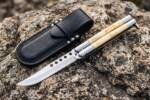 D2 Tool Steel Filipino Balisongs Butterfly Stainless Steel Bone Inserts Black Mamba Knives World Class Knives | BMK-476
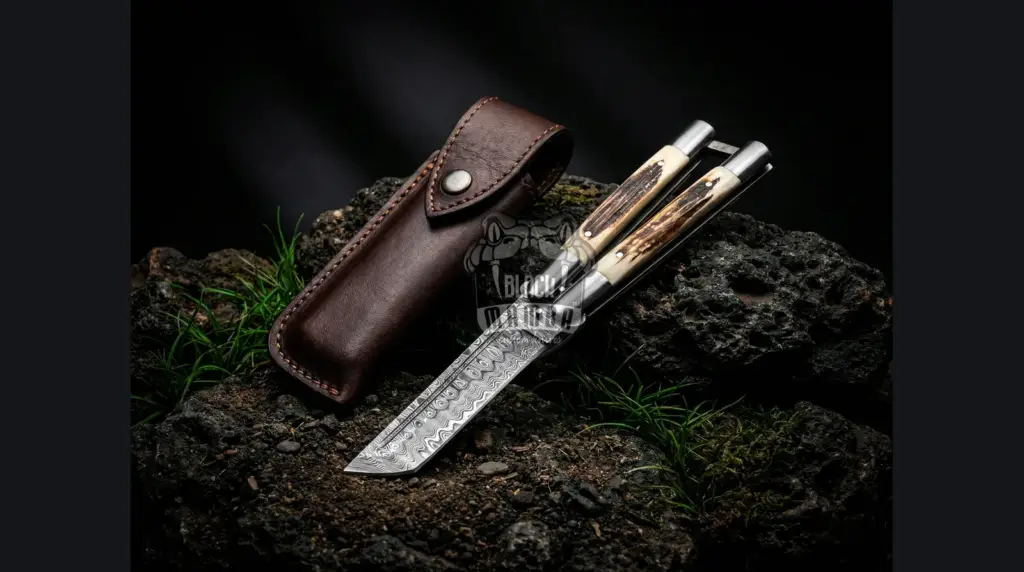
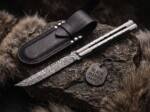 Damascus Balisong Butterfly Knife Original Traditional Filipino Butterfly Batanga Knife with Handmade Steel and Raindrop Handle Black Mamba Knives USA | DB-12
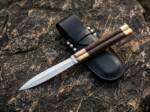 High Carbon Steel Filipino Balisongs Butterfly Brass with Ebony Wood Inserts Black Mamba Knives World Class Knives | BMK-609
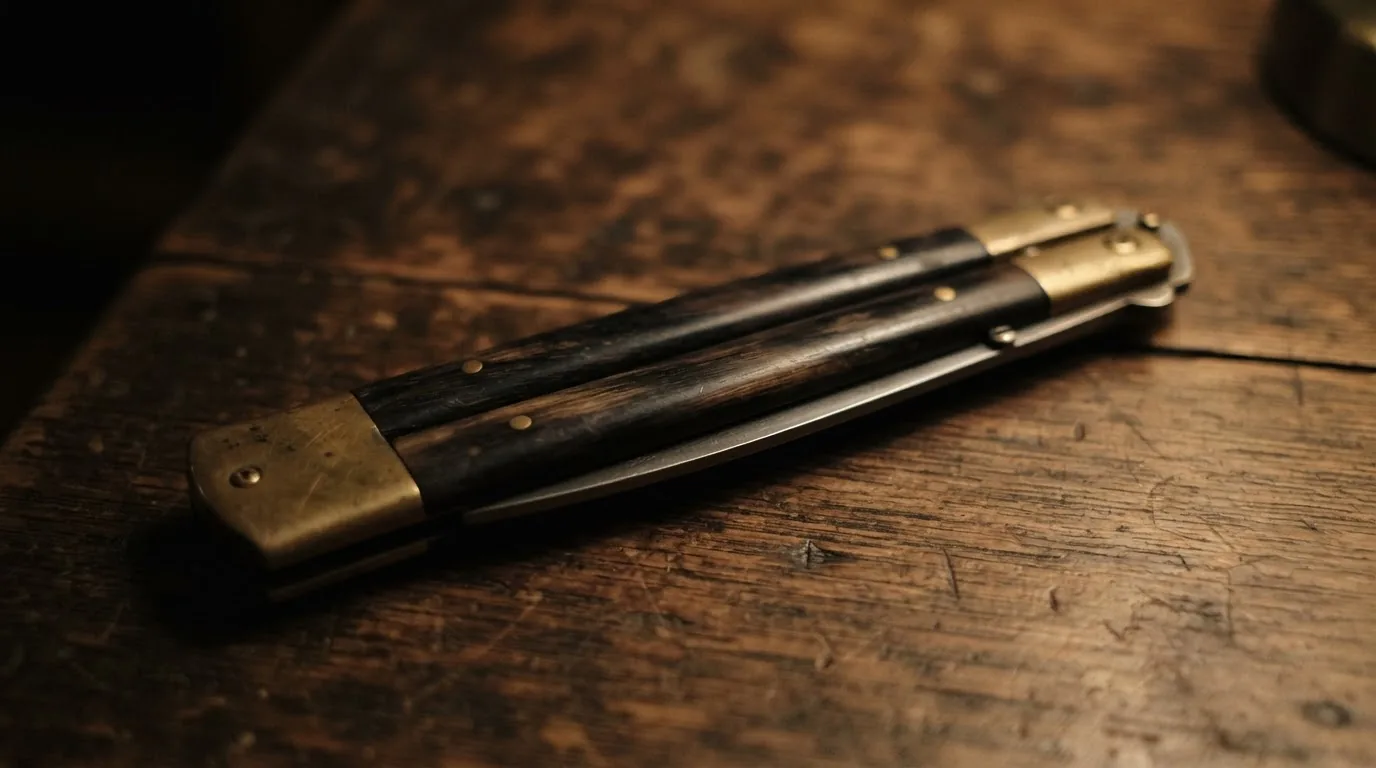
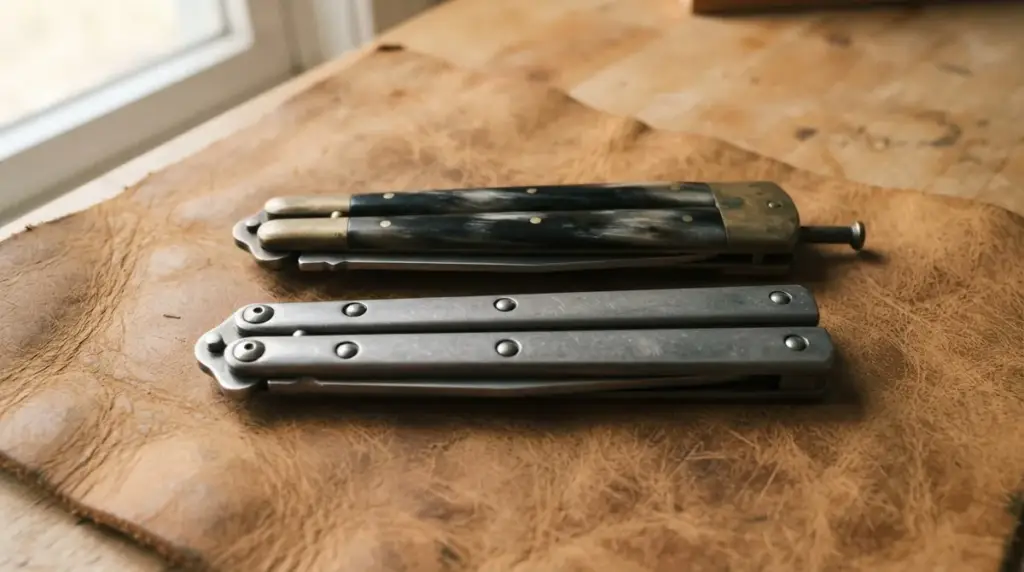
The materials reflect that. Blades were commonly forged from whatever good steel was available, which in practice meant salvaged leaf spring, bearing races and worn files. Handles were carabao horn, bone, hardwood or brass. Pins were cut, set and peened over by hand. Nothing about it was standardised, and two knives from the same shop in the same year can differ in dimensions and finish.
That is worth holding on to, because it explains why traditional balisongs are hard to date and hard to attribute. Most are unmarked. There are no serial numbers, no catalogue records for most workshops, and no continuous documentary trail.
The European claim, presented fairly
There is a real, long-running argument about whether the balisong is an indigenous Filipino invention or a Filipino refinement of something that arrived from Europe.
The case for a European ancestor usually points to the pied du roi, a French folding measuring instrument with two arms pivoting on a common axis, versions of which are known from the eighteenth century and some of which incorporated a small blade. The mechanism is recognisably similar. Given several centuries of Spanish colonial presence in the Philippines and the trade that came with it, the argument runs, the layout could easily have travelled.
The case for independent Filipino development points out that a two-handled pivoting folder is not a difficult idea to arrive at, that Batangas already had an established blade-making culture, and that similarity of mechanism is not evidence of transmission.
Our honest position is that neither case has been demonstrated. There is no securely dated Philippine example old enough to settle it, and no documented transfer from Europe either. Treat it as an open question.
One claim you should discount: the frequently repeated assertion that balisongs existed in the Philippines around 800 AD. It appears on a great many websites and in a great deal of product copy. We have never seen a source for it, and we would not repeat it.
How the knife spread through the twentieth century
Several strands, none of which are as tidy as they are usually told.
- Filipino martial arts. The balisong is used in arnis, eskrima and kali, where the folding mechanism suits a knife that is carried closed and deployed quickly. The manipulation skills that became modern flipping have roots here.
- American servicemen. The most commonly given account of how the knife reached the United States is that personnel stationed in the Philippines bought them locally and brought them home, particularly during and after the Second World War and through the long postwar base era. This is oral history repeated by collectors rather than documented trade records, and it is best treated that way.
- Commercial production and visibility. Through the later twentieth century the balisong moved from a regional knife to a recognisable one, helped by film and television appearances that gave it a reputation as a weapon rather than a tool.
- The legal backlash. That reputation produced restrictions. Through the 1980s and 1990s a number of jurisdictions in the United States and elsewhere legislated specifically against butterfly knives, and some of those restrictions are still in force while others have since been narrowed or struck down.
- Flipping and the trainer. The modern flipping community formed around manipulation as a skill in its own right, and it produced the trainer — a balisong with an unsharpened blade or a blunt bar in place of one — so people could learn without opening a hand.
Traditional construction versus modern
| Blade | Traditional: hand-forged, often from salvaged spring or bearing steel, finished by file and stone. Modern: ground from certified stock with known heat treatment. |
| Handles | Traditional: carabao horn, bone, hardwood or brass inserts, pinned to metal liners in sandwich construction. Modern: titanium, steel, aluminium or G10, often milled from one piece. |
| Pivots | Traditional: plain pins, cut to length and peened over by hand. Modern: screwed pivots with washers or bearings, adjustable for tension. |
| Latch | Traditional: a sprung latch, usually on the bite handle. Modern: sprung, magnetic, spring-free or absent entirely. |
| Tolerances | Traditional: fitted by eye and hand, so each knife is slightly its own thing. Modern: machined, repeatable, tuned. |
Neither is straightforwardly better. A traditional Batangas knife is a hand-made object with the character that implies. A modern balisong is more consistent, more adjustable and easier to keep running. If you want the mechanical detail, we cover it in balisong construction explained and channel, sandwich and skeletonized handles. Balisong Butterfly also sells balisong knives, if you want to compare a few more before you choose.
What makes a "true" Batangas balisong
There is no official standard, and it is important to say so. "Batangas pattern" is collector usage, not a certification, and the word now appears on knives with no connection to the province at all.
What collectors generally mean by it is a knife made in Batangas in the traditional way, with most of the following: a hand-forged blade rather than a stamped or laser-cut one; sandwich-construction handles built from liners with horn, bone or wood inserts pinned through; visible hand-peened pin heads rather than screws; tang pins that stop the blade against the handles; a sprung latch; and bolsters at the pivot end. The overall proportions tend to be long-handled and slim compared with modern flippers.
Take any claim of a specific age or workshop with caution. Most traditional balisongs carry no maker's mark and no date, so an attribution is usually a dealer's judgement rather than a documented fact.
Collecting traditional balisongs
- Look at the pins. Hand-peened heads should be domed and slightly irregular. Perfectly uniform heads or visible screw slots mean a modern or rebuilt knife.
- Check the horn. Horn dries, shrinks and cracks with age, and it can be attacked by insects. Shrinkage away from the liners and hairline splits are common and are not automatically a fault, but they affect value.
- Open and close it slowly. The blade should sit centred between the handles and the tang pins should stop it cleanly. A blade that hits the inside of a handle has been rebuilt, re-pinned or bent.
- Look for regrinding. An old blade sharpened for decades gets narrow, and the grind lines stop matching the profile. That is honest wear, not damage, but price it accordingly.
- Be sceptical of stories. Provenance in this field is thin. Buy the knife in front of you on what it is, not on what it is said to be.
If flipping is what draws you rather than collecting, start with a trainer and read butterfly knife tricks first. The balisongs we make are at balisong butterfly knives. Any of them can be ordered as a trainer, the same knife with a blunt edge for the same price, by picking Trainer Blade above Add to Cart.
One line on legality
Butterfly knives are restricted in some places and unrestricted in others, and the rules change. Check what applies where you live and where you are travelling before you buy or carry one — we set out what we could verify in butterfly knife laws. This is general information, not legal advice.
Questions people ask
What does balisong mean?
There are two common explanations and no settled answer. One holds that it comes from the Tagalog baling sungay, broken or folded horn, after horn handles. The other is that it takes its name from Barangay Balisong in Taal, Batangas. The first is widely repeated but has the character of folk etymology, and neither is supported by documentary evidence.
Where did the butterfly knife originate?
The making tradition is centred on Batangas province in the Philippines, especially Taal, and that much is not disputed. Whether the design itself was invented there or adapted from a European folding tool that arrived through colonial trade is an open argument. There is no securely dated early example and no documented transfer, so both accounts remain claims.
Why is it called a butterfly knife?
Because of how it opens. The two handles rotate apart around separate pivots and swing around the blade like a pair of wings before closing back together. The same movement gave it the older English name "fan knife". Both are descriptive names coined by English speakers, not translations of the Filipino word.
Is the balisong Filipino or European?
It is Filipino in the sense that matters most — Batangas is where the knife was made, refined and carried, and where the craft tradition lives. Whether the mechanism originated there is separate and unresolved. The European case points to the French pied du roi folding measure; the Filipino case points to an established local blade culture and an idea simple enough to reach independently.
How old is the balisong?
Nobody can say precisely. You will often see a date around 800 AD quoted for a Philippine origin; we have never found a source for it and would not repeat it. What can be said is that Batangas has made these knives for generations and that they were established well before they became widely known outside the Philippines in the twentieth century.
What is a Batangas balisong?
Collector shorthand for a knife made in Batangas in the traditional way: a hand-forged blade, sandwich-construction handles with horn, bone or wood inserts pinned to liners, hand-peened pins rather than screws, tang pins, bolsters and a sprung latch. There is no official standard behind the term, and it is now used as a marketing word by makers with no link to the province.
What were traditional balisong handles made of?
Carabao horn is the material most associated with them, along with bone, hardwood and brass. These were used as inserts pinned to metal liners rather than as solid handles. Horn ages: it dries, shrinks slightly away from the liners and can develop hairline cracks, which is normal on an old knife and something to inspect before buying.
What is a balisong trainer?
A balisong with no cutting edge — either an unsharpened blade or a blunt bar in its place — built purely for practising manipulation. It came out of the modern flipping community, and it is how anyone sensible learns. The handles, latch and pivots behave the same as a live knife, so the skills transfer directly.
Are butterfly knives legal?
It depends entirely on where you are. Some jurisdictions restrict or prohibit them, some do not, and the position has changed in several places in recent years. Check your current local law before buying or carrying one, and check again before travelling with one. Our summary is in the butterfly knife laws guide, and it is general information rather than legal advice.
Shop the knives
D2 Tool Steel Filipino Balisongs Butterfly Stainless Steel Bone Inserts Black Mamba Knives World Class Knives | BMK-476Damascus Balisong Butterfly Knife Original Traditional Filipino Butterfly Batanga Knife with Handmade Steel and Raindrop Handle Black Mamba Knives USA | DB-12High Carbon Steel Filipino Balisongs Butterfly Brass with Ebony Wood Inserts Black Mamba Knives World Class Knives | BMK-609 High Carbon Steel Filipino Balisongs Butterfly Brass Handle Knife, Black Mamba Knives World Class Knives | BMK-611
 Damascus Balisong Butterfly Knife with Beautiful Wooden Handle Rain Drop Pattern Handmade Original Traditional Filipino Butterfly Batanga Knife Black Mamba Knives USA | DB-29
More from the workshop
How to Remove Rust from a Knife
Surface rust comes off. Pitting does not. Know the difference before you start.
Butterfly Knife Laws in the US: How to Check Your State
Why federal law rarely applies, and how to check your own state properly.
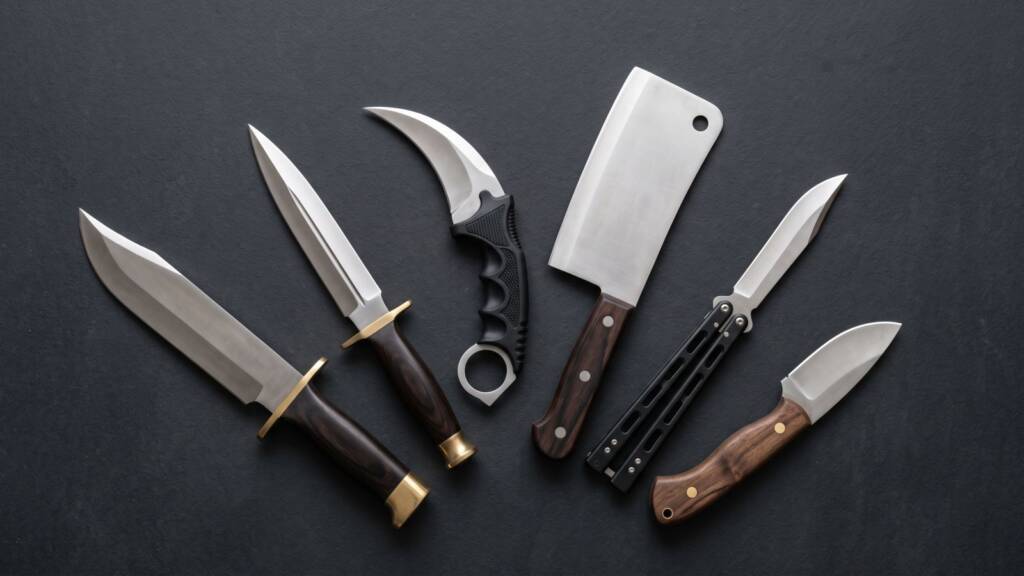
Knife Types Explained
Every knife family in one place: what it is, what it was invented for, and whether it still answers that question.
