
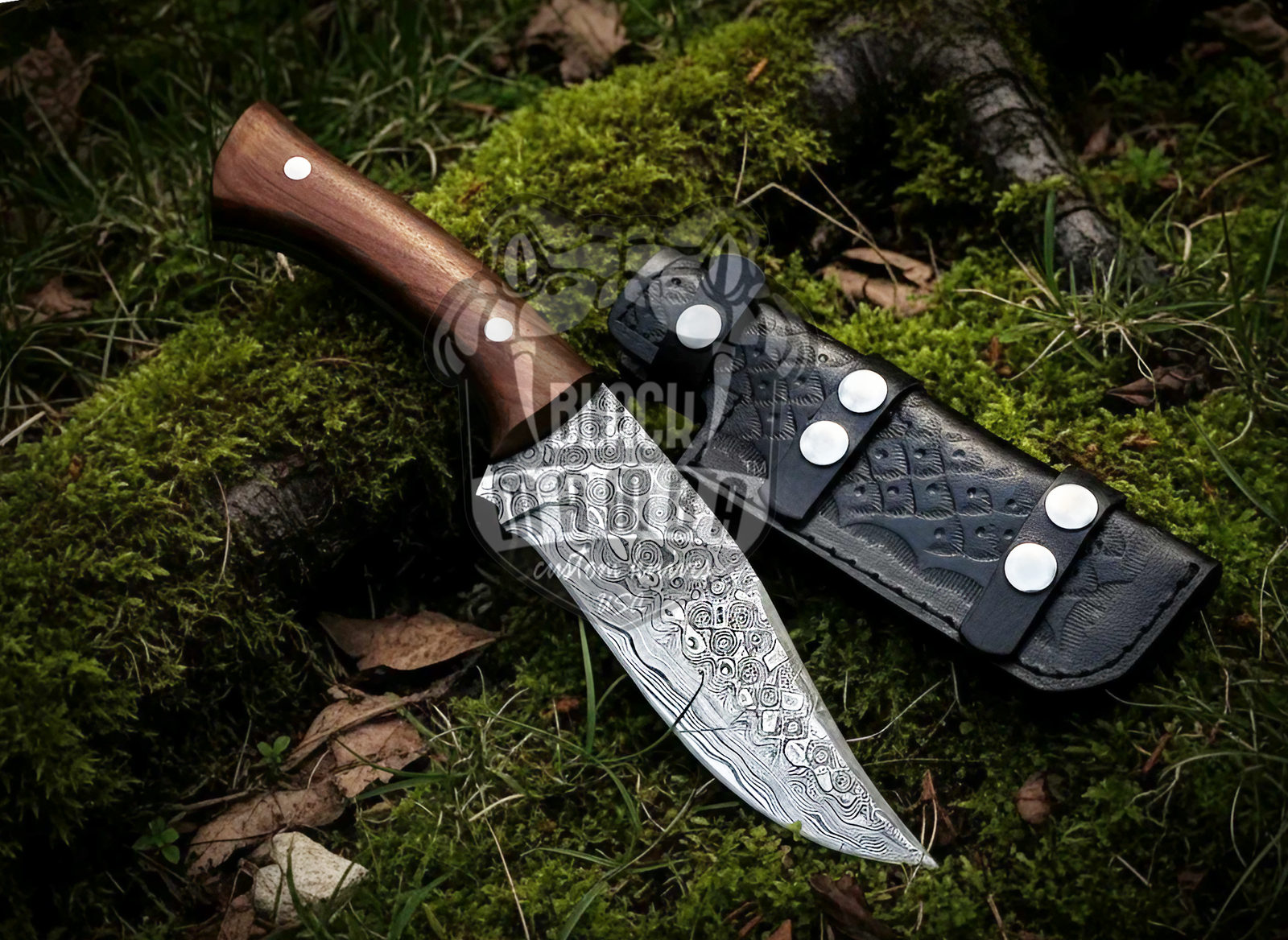
Short answer: full tang means the steel runs the whole length and width of the handle as one piece. Partial tang means it does not. On any knife that will be levered, batoned or used hard, full tang is not a preference, it is the difference between a knife and a handle full of regret.
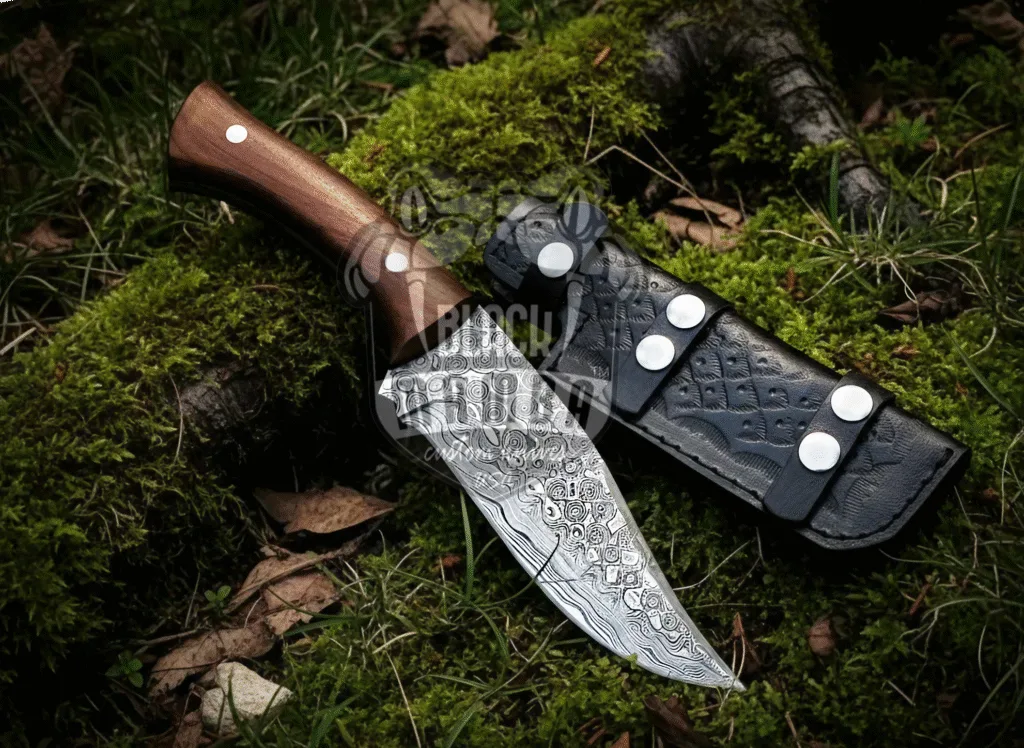
What is the tang of a knife?
The tang is the part of the blade that continues past the sharpened edge and into the handle. It is one piece of the same steel as the blade, not a separate part bolted on. Everything you hold when you use a knife is either tang, or scales attached to tang.
So when somebody says a knife is full tang, they mean that piece of steel runs the entire length and the entire width of the handle, and you can see it along the edges between the scales. When they say partial, half, hidden or rat tail, they are describing how much of that steel is missing, and where.
It matters because a knife almost never fails in the blade. It fails at the join. The tang is the join.
How to tell if a knife is full tang
Look at the edge of the handle. On a full tang knife you see a strip of steel sandwiched between the two scales, running unbroken from the blade to the butt. Often the profile of the handle is the steel.
If the handle is a single solid piece of wood or horn with no visible steel along the edge, the tang is hidden inside, and it is almost certainly narrower than the handle.
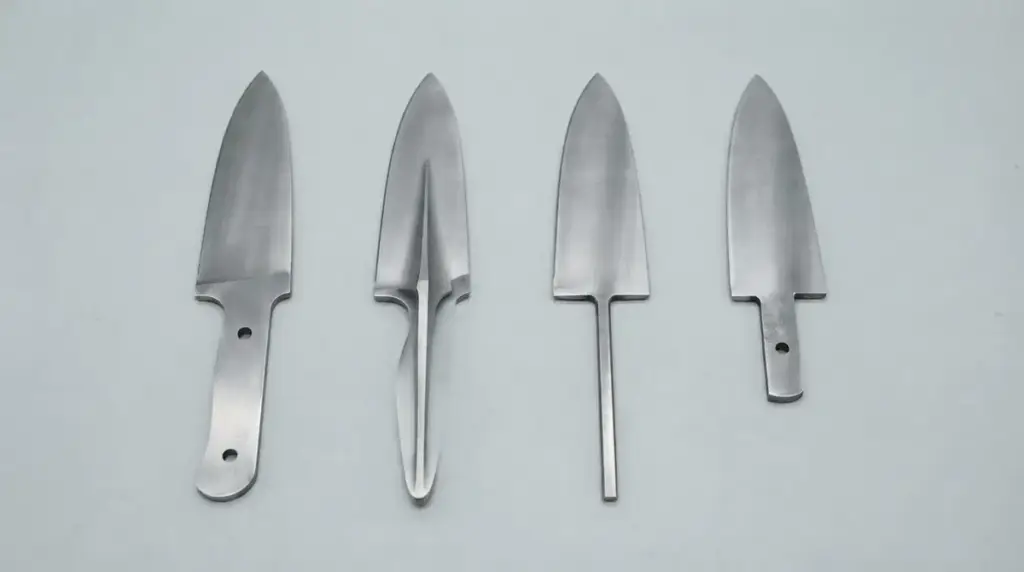
Tang types: full, tapered, hidden, rat tail and partial
| Full tang | Steel matches the handle outline exactly. Strongest. Heaviest. |
| Tapered tang | Full length and width but thinned toward the butt. Same strength where it matters, better balance. Harder to make. |
| Hidden or stick tang | A narrower tang running through a solid handle, secured with a pommel nut or epoxy. Traditional, lighter, and strong enough if well made. |
| Rat tail tang | A thin rod, often welded to the blade. This is the one to avoid. |
| Half or partial tang | Stops partway into the handle. Fine for a paring knife, wrong for a field knife. |
Full tang vs partial tang: where knives actually break
Almost never in the middle of the blade. They break at the ricasso, the point where the blade meets the handle, because that is where every lever load concentrates.
Prying a joint apart, batoning through a log, twisting to free a stuck blade: all of that puts a bending force right at that junction. A full tang carries it across the whole width of the handle. A rat tail tang carries it through a rod the thickness of a pencil, and worse, through a weld.
This is why every fixed blade we make is full tang. It is not marketing, it is where the failures happen.
When a hidden tang is fine
Hidden tangs are traditional on Scandinavian knives, on kitchen knives and on many beautiful custom pieces, and a properly made one is strong. The tang is thick, it runs most of the handle length, and it is pinned or peened rather than glued alone.
The problem is that you cannot inspect it. With a full tang you can see the construction. With a hidden tang you are trusting the maker, which is fine when you know the maker and risky when you do not.
What full tang costs you
Weight, and balance. A full tang fixed blade is heavier and often sits more blade-forward than a hidden tang knife of the same size. That is why tapered tangs exist: keep the width, lose the mass at the butt, get the balance back.
It also costs more steel and more grinding time, which is part of why full tang knives cost more.
Full tang meaning, defined properly
Full tang meaning: the blade steel runs the full length and full width of the handle as one continuous piece, with the scales pinned either side of it. That is the entire full tang definition. To define full tang in six words: the handle is the blade.
The tang of a knife is the unsharpened rear section of the same bar of steel the blade was ground from, running back into the handle, not a separate part joined on. So what is a knife tang, plainly: the part of the blade you cannot see.
Where is the tang on a knife? Behind the ricasso, under your grip. Named parts:
- Ricasso — the flat unsharpened section between edge and handle, where bending loads concentrate.
- Shoulder — the step where blade width narrows into tang. A sharp inside corner is a stress riser.
- Tang — the steel inside the handle.
- Scales — the two handle slabs fixed to each face of the tang.
- Pins — rods through scales and tang that stop them moving.
- Butt — the rear end of the handle.
- Pommel — a cap or nut at the butt, used on hidden and through tang builds.
Types of knife tangs: the full reference
Knife tang types are a spectrum, not two boxes. The longer list:
| Full tang | Steel matches the handle outline exactly, scales pinned either side. |
| Encapsulated tang | Full tang with handle material moulded round the edges, no steel visible. |
| Tapered tang | Full length and width, thinned towards the butt for balance. |
| Skeletonised tang | Full tang with holes milled through to save weight. |
| Extended tang | Full tang protruding past the handle as an exposed pommel you can hammer with. |
| Hidden or stick tang | A narrower tang buried in a solid handle, held by epoxy and often a pommel nut. |
| Through tang | A hidden tang exiting the back of the handle, peened over a pommel or held by a nut. |
| Push tang | A short tang pushed into a pre-drilled handle and glued. |
| Rat tail tang | A thin rod, often welded to the blade rather than forged from it. |
| Half tang | Full width, stopping roughly halfway down the handle. |
| Partial or stub tang | Short, narrow or both. A partial tang knife suits a kitchen, not the woods. |
Full tang vs hidden tang
Full tang vs hidden tang comes down to inspection, not strength. A well made hidden tang is strong; you cannot check it, and the label covers everything from a thick forged tang with a peened pommel to a pencil-thin rod in epoxy.
Hidden tang vs full tang in practice: hidden tang wins on weight and looks. Full tang wins on visible evidence and on surviving abuse it was never designed for. A hidden tang knife that loses its handle is a workshop job. A full tang knife with a cracked scale still works with tape on it.
Through tang vs hidden tang
Through tang vs hidden tang is a subset argument, not a separate category. Every through tang is a hidden tang; not every hidden tang goes through.
A through tang exits the back of the handle and is locked mechanically, either peened over a pommel plate so the metal spreads like a rivet head, or threaded and pulled tight with a nut. Both put the handle in compression, so the glue is only a sealant. A plain hidden tang relies on epoxy and fit alone, so of two traditional knives, the one with a peened or nut-secured pommel is the safer buy.
Full tang vs half tang sword
Full tang vs half tang sword is a different problem, and a more serious one. A sword tang, the nakago in Japanese terms, carries a metre of steel on a far longer lever, so shoulder forces are multiples of what a hunting knife sees.
Traditional swords use a through tang: the nakago runs the length of the grip, held by bamboo pegs or a pommel nut, so the fittings come apart for inspection. Wall-hangers and replicas are often the opposite, a rat tail rod welded to the base of the blade. That weld sits where the bending load peaks, it is usually not heat treated with the blade, and it fails without warning. Such a sword is harmless on a wall and dangerous the moment somebody swings it, because when it lets go the blade leaves at speed.
What to look for: a tang clearly one piece with the blade, visible at the pommel as peened metal or a nut, no weld line at the shoulder, and a maker who states the construction rather than "battle ready".
How full tang is marketed against what you get
"Full tang" is not a regulated term. Read it carefully.
- Full length, not full width. A tang can reach the butt at half the handle's width. That is a hidden tang wearing the label.
- Pins that hold nothing. Decorative pins get set into scales over a narrow tang. Continuous steel along the handle edge is the test.
- Photographs of a different knife. Check the listing photo's handle edge against the model ordered.
- Silence on the weld. A tang "attached", "fitted" or "joined" is a weld. Forged knives say forged.
Steel and heat treatment cannot rescue bad geometry, though they decide everything else, as the knife steel chart and hand forged versus factory knives set out. The tracker knives show full width steel along the whole outline.
Questions people ask
Does a folding knife have a tang?
Not in this sense. A folder's strength comes from the pivot and the lock, not from a tang. That is exactly why you do not baton a folding knife.
Do kitchen knives need full tang?
No. A kitchen knife is never levered, so a well made hidden tang is fine. Full tang in a kitchen knife is mostly about balance and feel.
Are exposed rivets a sign of full tang?
Usually, but not always. Some hidden tang knives use decorative pins. The reliable test is whether you can see continuous steel along the edge of the handle.
Which tang type does Black Mamba use?
Every fixed blade is full tang. See the hunting fixed blades or camping and bushcraft knives.
Want full tang in its natural habitat? Every blade in our Damascus bowie knives collection runs full tang from tip to pommel.
What does full tang mean on a knife?
It means the blade steel continues through the handle at full length and full width, as a single unbroken piece, with the handle scales pinned to either side of it. If you can see a continuous strip of steel around the outline of the handle, that is a full tang.
Is a full tang knife stronger than a half tang?
Yes, by a wide margin under lever loads. A half tang stops partway into the handle, so every prying or batoning force concentrates at the point where the steel ends. That is a stress riser, and it is where the knife will eventually snap.
What is a rat tail tang?
A thin rod of steel running through the handle, often welded to the blade rather than forged as one piece. It is the weakest common construction and the one worth avoiding in any knife you intend to use hard. Cheap decorative swords are full of them.
Is full tang worth the extra money?
For a fixed blade you will actually use, yes. It costs more because it uses more steel and more grinding time, and it buys you the one thing you cannot add later: a handle that will not part company with the blade. For a display piece or a paring knife, no, it makes little difference.
Are all Black Mamba fixed blades full tang?
Yes, every one. Hand forged, heat treated in our own shop, and full tang from tip to pommel. It is not a premium option we upsell; it is how we build them.
How many types of knife tangs are there?
There is no fixed count, because makers name them by shape rather than by standard. In practice the types of knife tangs worth knowing are full, encapsulated, tapered, skeletonised and extended, all of which run the full width, then hidden or stick, through tang, push tang, rat tail, half and partial, which do not. Everything else is a variation on those.
What is a half tang knife?
A half tang knife has a tang that keeps the full width of the handle but stops around halfway down it, with the rest of the handle being wood or resin alone. It is stronger than a rat tail and weaker than a full tang, and it fails at the point where the steel ends, since that is where lever loads concentrate.
Rat tang vs full tang: how much does it actually matter?
Rat tang vs full tang is the widest gap in knife construction. A full tang spreads bending force across the whole handle width. A rat tail carries it through a rod the thickness of a pencil, usually through a weld as well. For batoning, prying or any levering, that is the difference between flex and a clean break at the shoulder.
Is a tapered tang still a full tang?
Yes. A tapered tang runs the full length and full width of the handle, and is only ground thinner from the shoulder towards the butt. The steel stays at full thickness where the loads are, so strength is effectively unchanged, and the knife balances closer to your hand. It is more work to make, which is why it is less common.
Is a full tang sword safe to swing?
Safer than a welded one, but tang construction is only part of it. A sword should have a tang forged as one piece with the blade, heat treated with it, and secured at the pommel by peening or a nut. If the listing does not say how the tang is made, or shows a weld line at the shoulder, treat that sword as a display piece.
Can a partial tang knife be converted to full tang?
No. The tang is part of the blade, forged or ground as one piece with it, so adding steel means welding, and a weld at the shoulder is the failure you were trying to avoid. A loose handle on a partial tang knife can be re-set with epoxy and pins, but the construction underneath does not change.
Full tang knives we make
If you came here to buy rather than to read, start with the hunting knives, the Damascus bowie knives, the tracker knives or the skinning knives. Every fixed blade in all four collections is full tang and ships with a hand-stitched leather sheath.
You can see the whole range together in the fixed blade knives collection.
Design your own knife and choose the tang →
More from the workshop
Heat Treatment: The Step That Decides Whether a Knife Is Good
What heat treatment does to steel, the nine ways it goes wrong, and the hardness we hold.
Push Daggers: The Pattern, the Grip and the Law
The legal problem first, then the history, the grip and what our 15 push daggers actually measure.
Honing vs Sharpening: What the Rod Actually Does
Why your knife feels dull long before it actually is.
