
Description
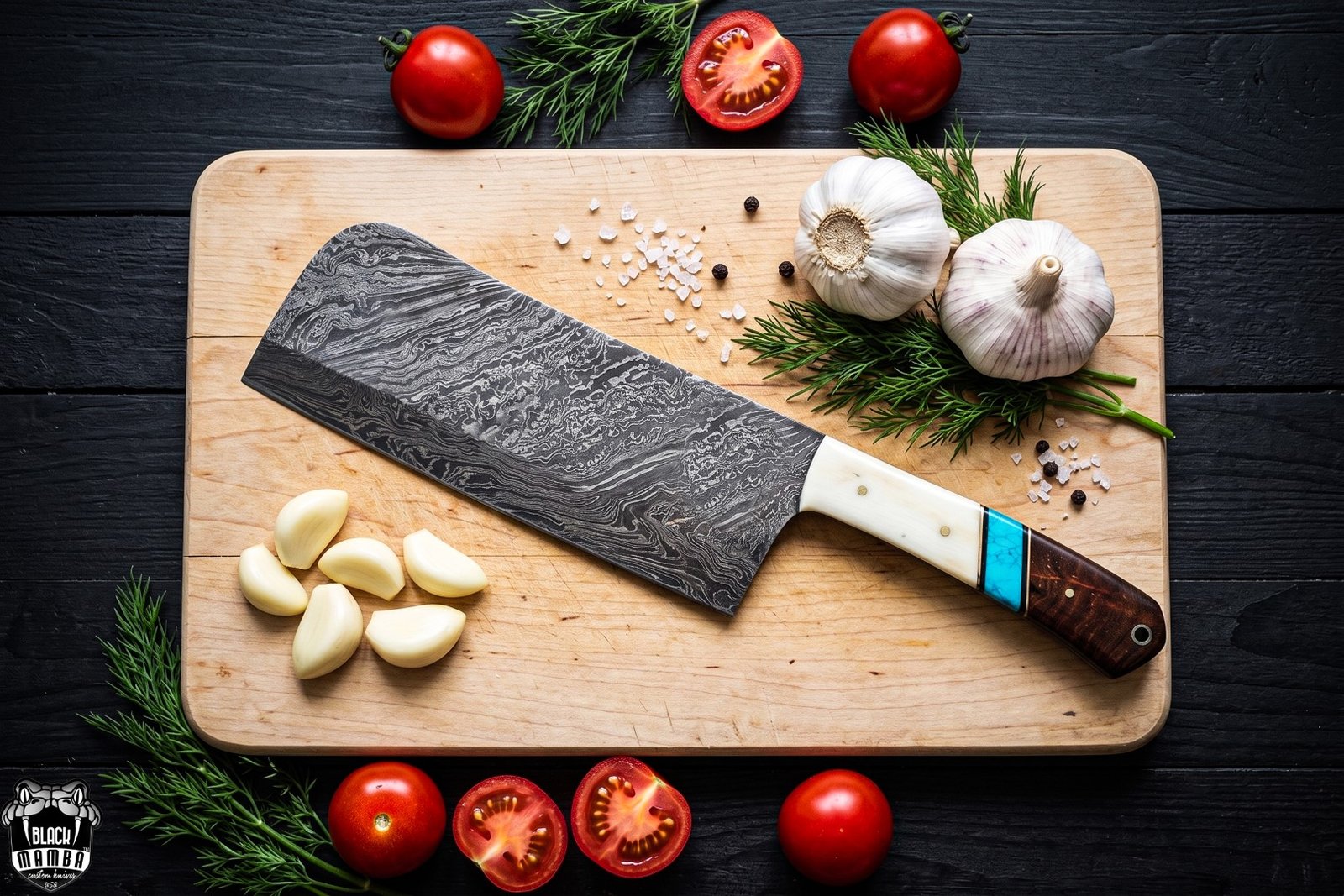
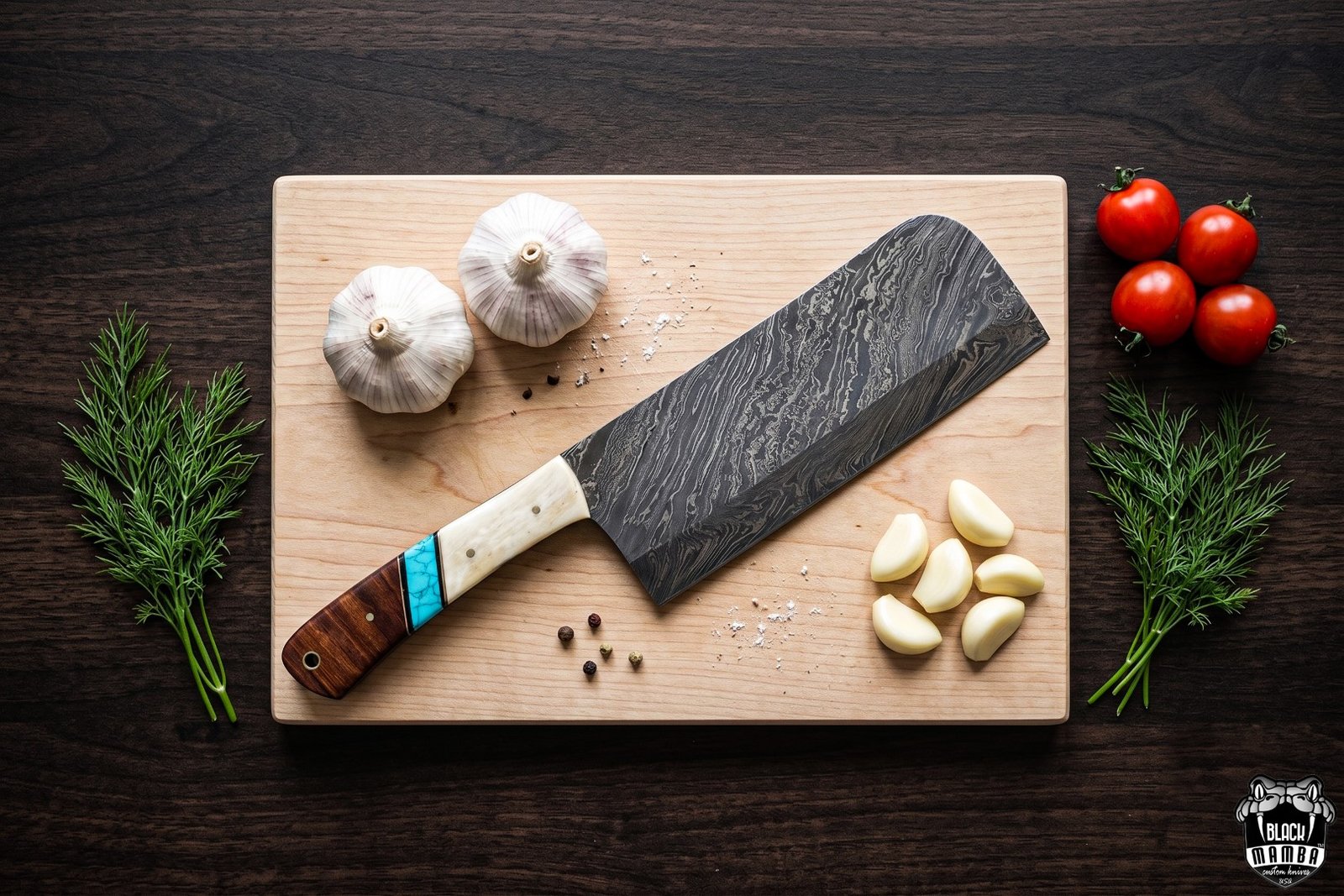
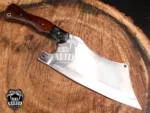
Twelve inches of cleaver with a seven inch edge — this is the big one, built for a board you can stand at rather than a crowded countertop.
| Overall length | 12 inches |
| Blade length | 7 inches |
| Handle length | 5 inches |
| Steel | 1095 + 15N20 Damascus, 352 layers |
| Hardness | 58–60 HRC, oil tempered |
| Weight | 15 oz |
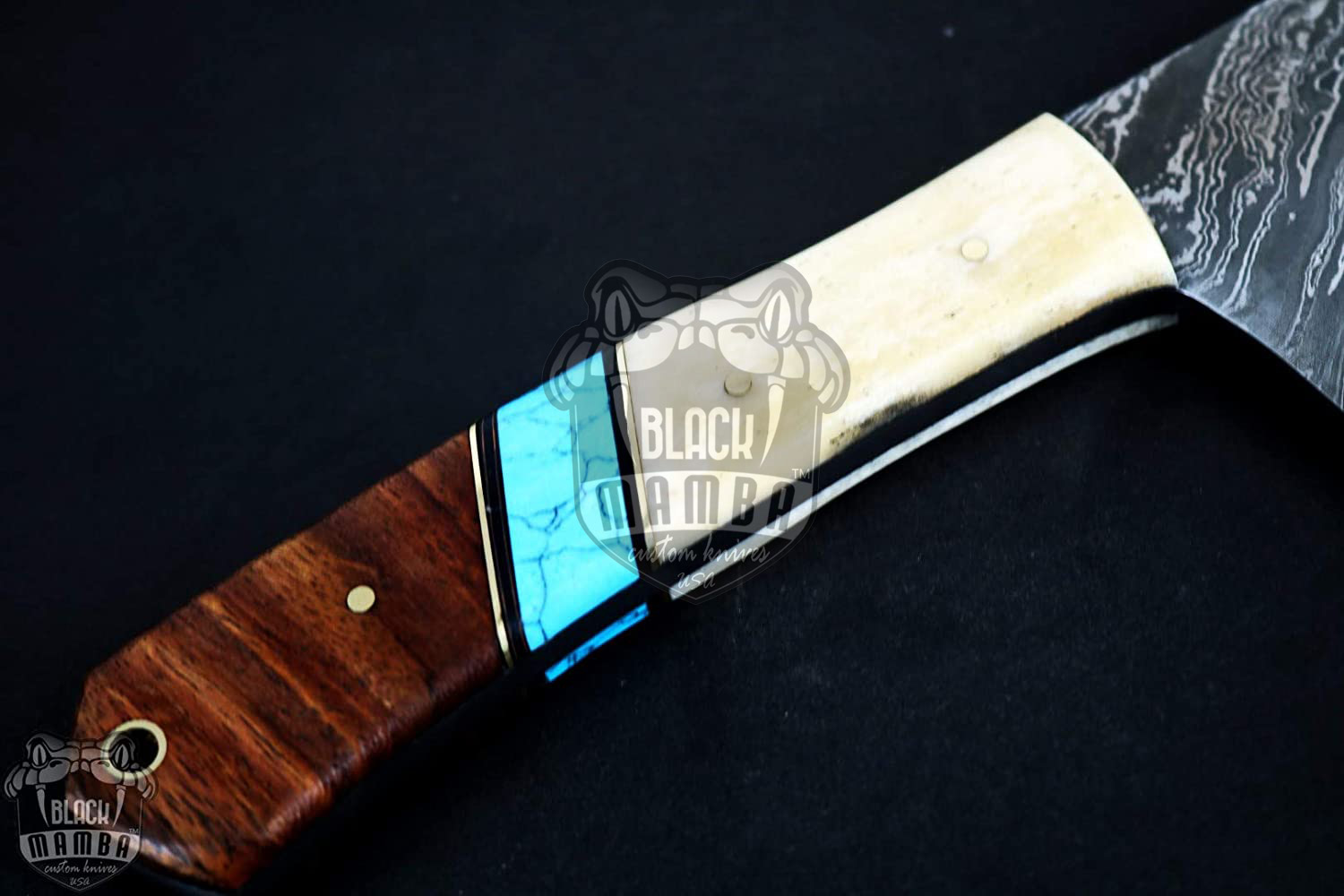
| Handle | Walnut wood handle with blue resin bolster |
| Pattern | Wind & Mix twist Fire pattern Damascus Blade, Extreme custom Brass File-work |
| Included | Hand-stitched leather sheath |
Put it to work on: volume. Cases of vegetables, whole cabbages, a rack of ribs separated between the bones, garlic crushed a dozen cloves at a time under the flat. Fifteen ounces means you commit to the cut and the knife carries it through.
What seven inches changes
A six inch cleaver cuts. A seven inch cleaver lets you cut in one pass. Slice a cabbage half and the edge clears the far side before the near side has finished, so you get one clean face rather than a hinge you have to tear. That single-pass reach is the whole reason cooks who prep for a crowd end up preferring the longer blade, and it is why this one weighs what it does.
The billet
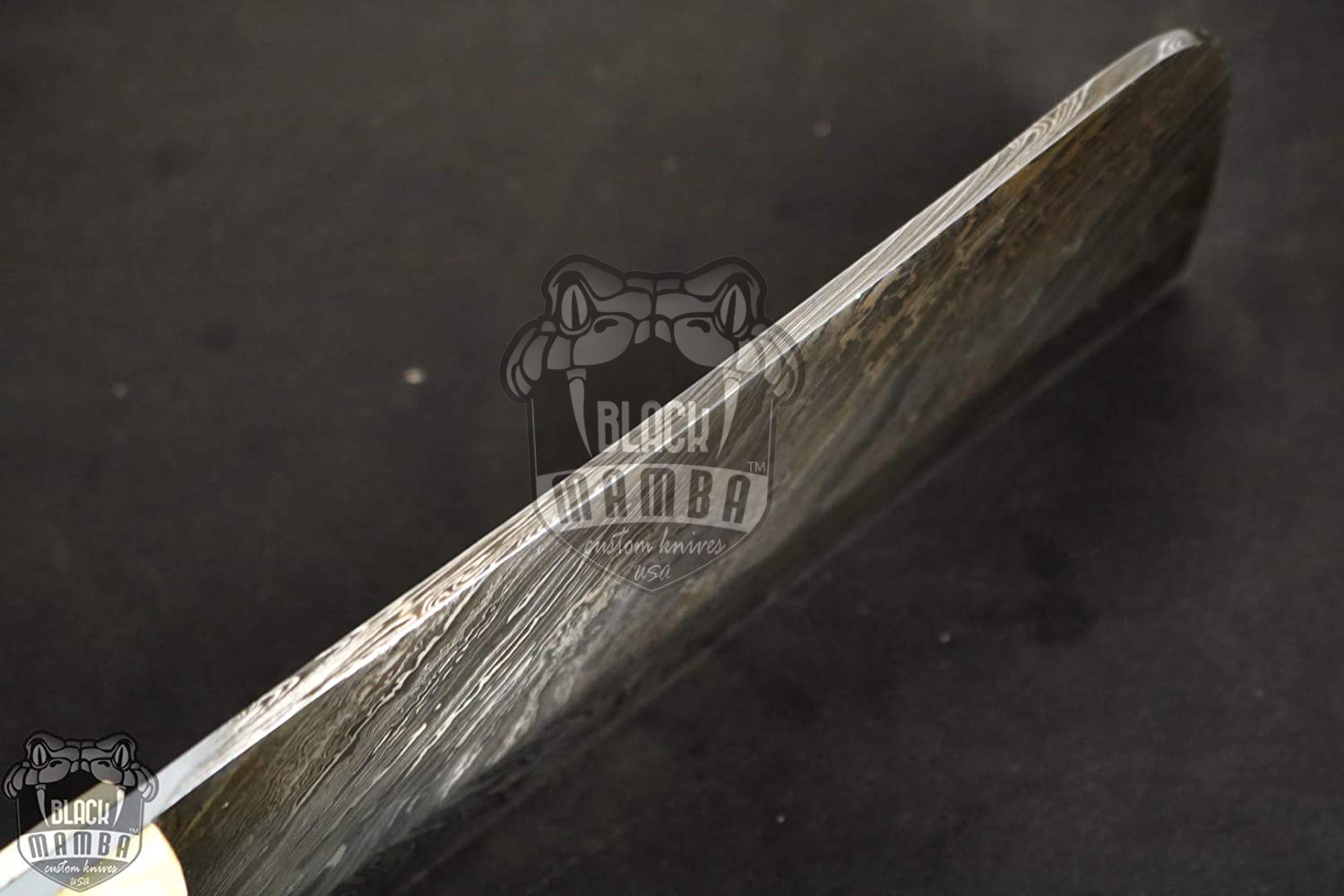
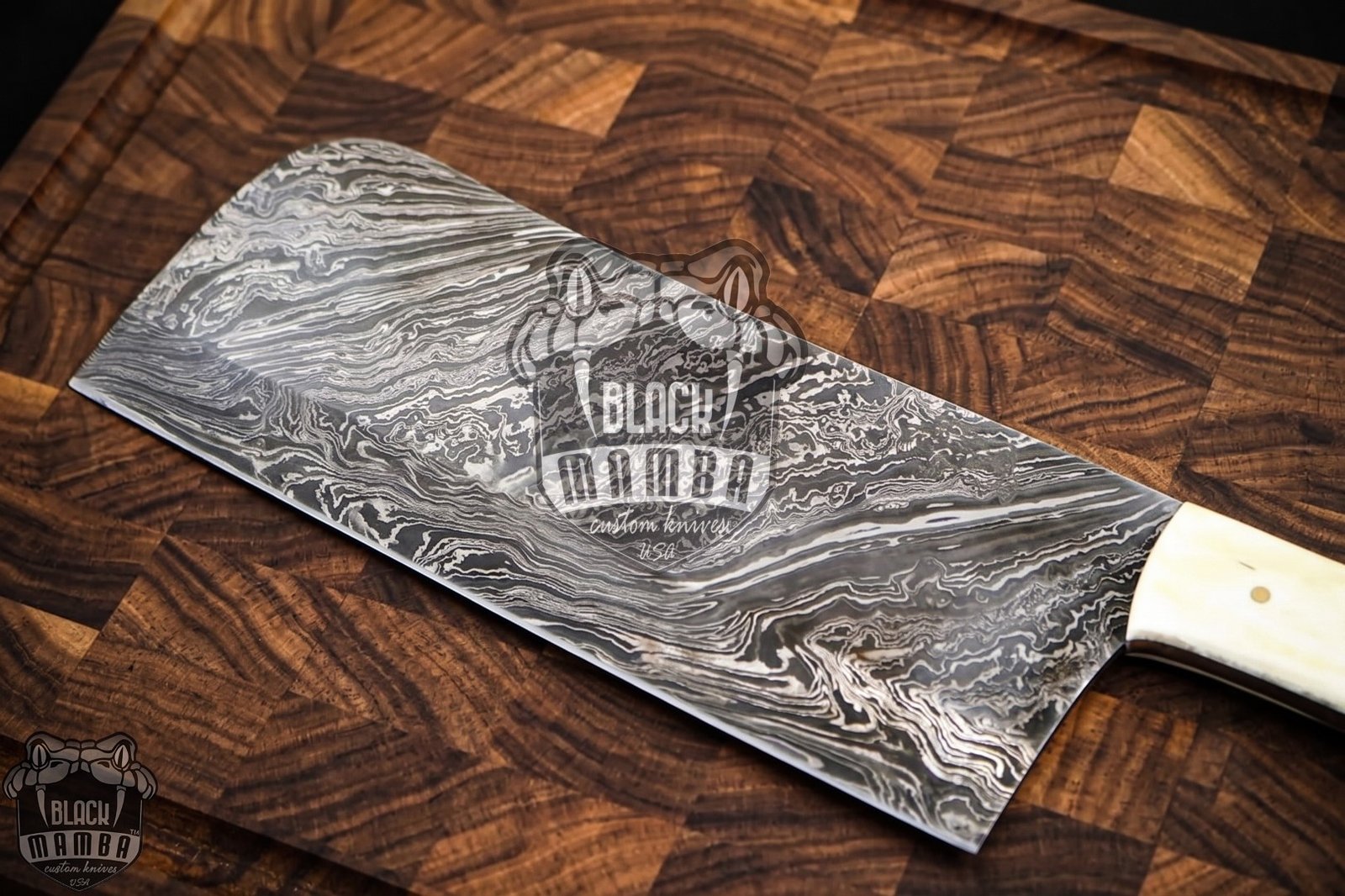
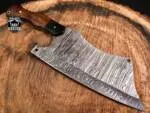
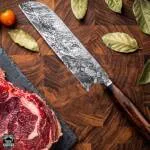
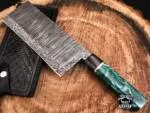
Two steels are stacked, welded, drawn and folded until the count reaches three hundred and fifty-two, then the bar is twisted before the blade is cut from it. The twist is what produces the tight feathered figure you can see running along the spine. It is structural — the pattern is the cross-section of the folds, not a finish applied afterward.
The handle stack
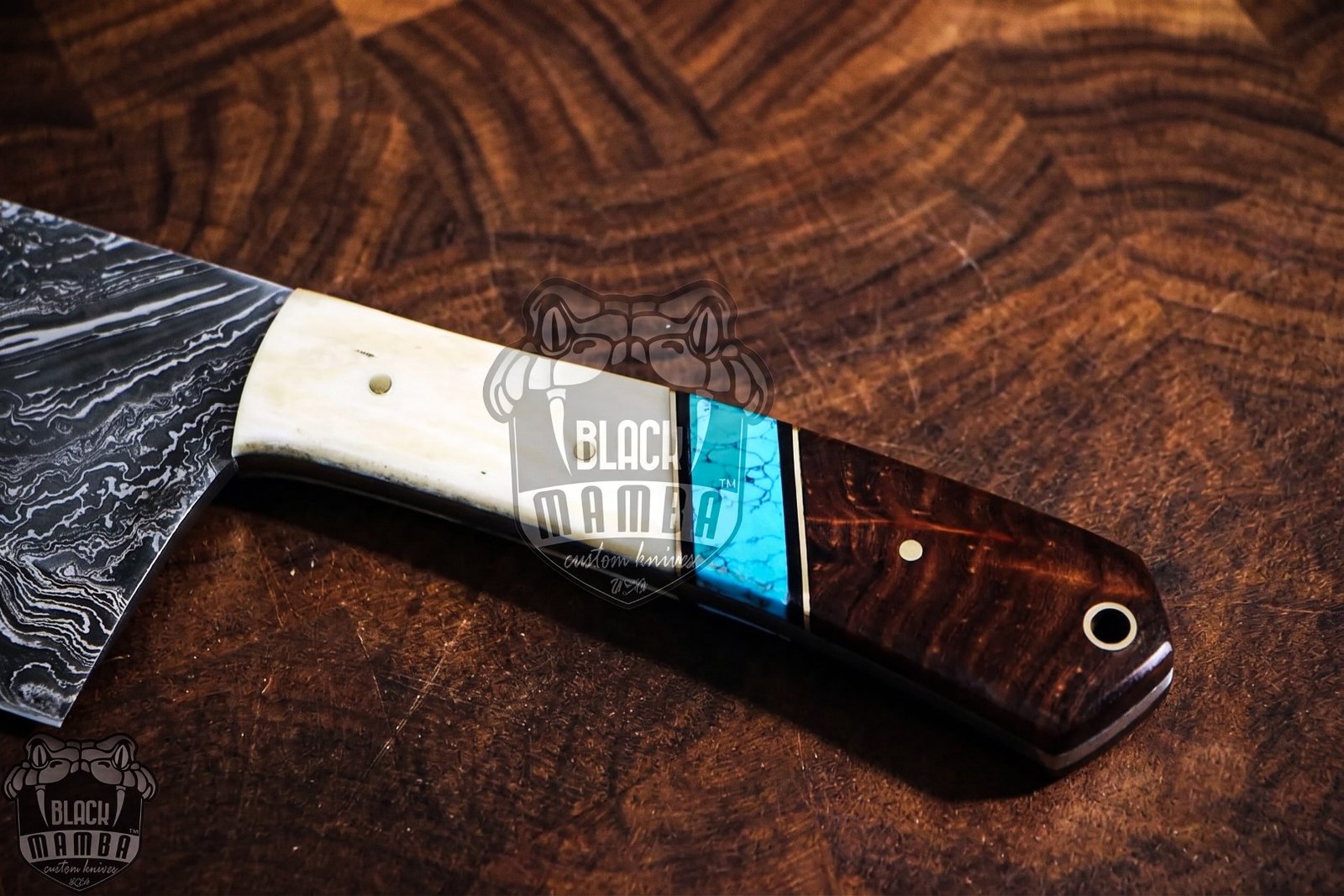
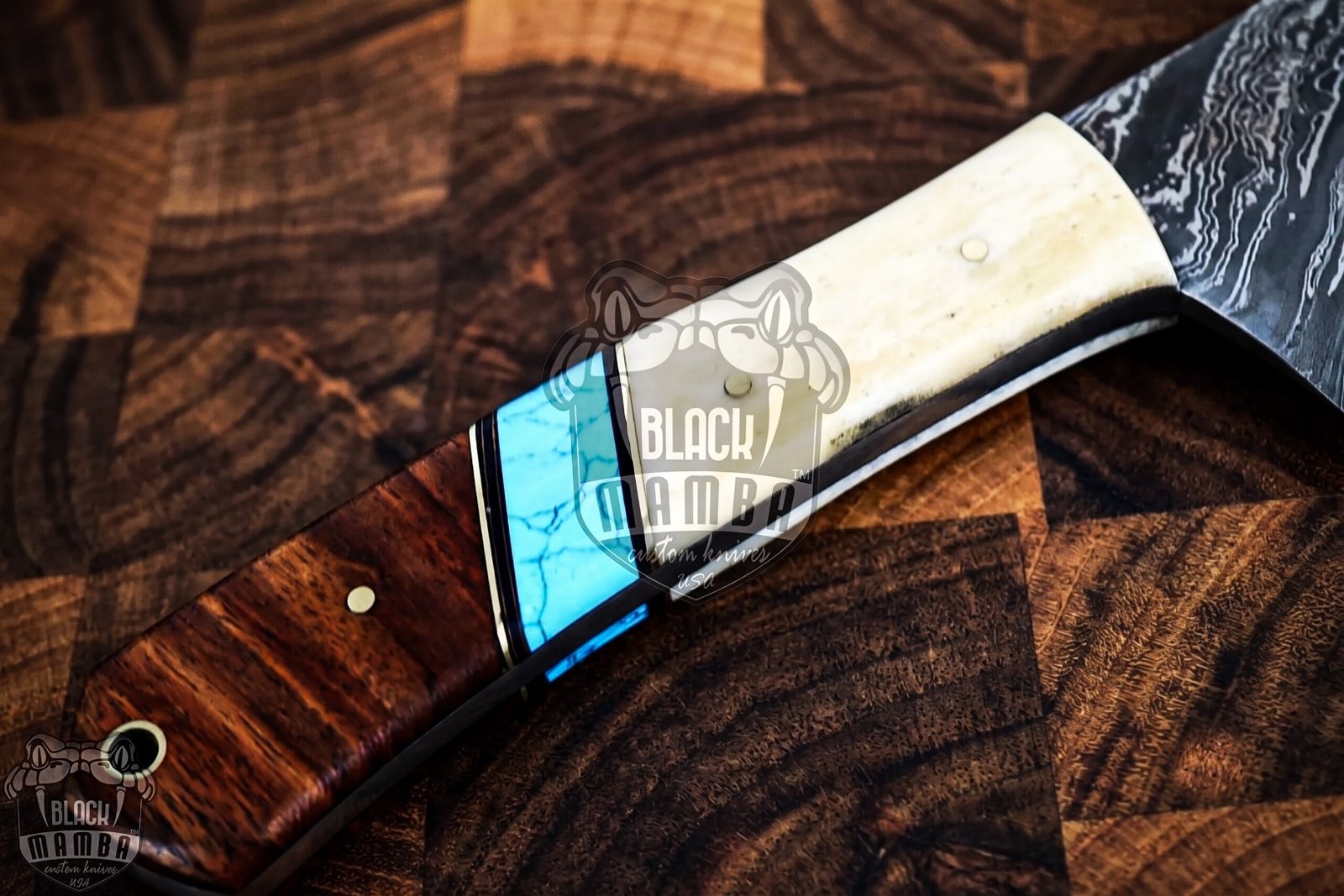
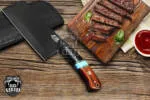
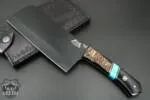
The grip is built in layers rather than carved from one block: a pale section at the front, a band of blue resin, then dark figured hardwood running back to the butt. The resin band does two useful things. It gives your index finger a locating point so you find the same grip in the dark, and it seals the joint where two materials meet, which is where a laminated handle usually fails. Because each section is fitted and pinned in turn, a damaged piece can be replaced without rebuilding the whole grip.
Care: dry it the moment you are finished. Carbon steel at this size holds water in the bevel and will spot overnight. Wipe, oil lightly, and let the handle dry fully before it goes in a block or a drawer. Acidic food — tomato, citrus, onion — will grey the steel faster; that patina is normal and stops deeper rust taking hold. Never the dishwasher: the heat will move the resin band.
FAQs
Is it too heavy for everyday use? For fine work, yes. Keep a paring knife alongside it. For anything you would otherwise lean on, the weight is the feature.
Can it be sharpened at home? Yes, on a standard bench stone. The edge geometry is conventional and needs no special jig.
Does the pattern wear off? No. It runs through the full thickness of the blade.
Start with how Damascus steel is made, then read our 352 layer guide on why the fold count matters, and weigh it against carbon versus stainless kitchen knives.
Model: BMK-703A

COURTNEY DUBOIS (verified owner) –
Alexander Richardson –
Not quite what I was hoping for. Handle had some rough edges that needed sanding down myself. Not sure I’d recommend this one.
Cody Howard –
I collect knives and this one is top notch. Leather sheath is thick and well stitched. Not the cheap stuff you usually get. This one’s a keeper for sure.
Marco Lee –
Set my expectations low going in and this blew right past them. Handle feels amazing and the balance is perfect. Pommel and guard are solid, no wobble anywhere on the knife. Happy customer here, through and through.
Ryan Reed –
Mostly happy with this one, just a small gripe or two. Good to see it’s made in the USA in Memphis, shipping was quick too.
Edward Kim –
Stellar quality for the price point. Every piece of the fit and finish looks hand checked before it shipped. Weight and balance make it feel like a real working knife not some cheap import. So worth it.