
Description
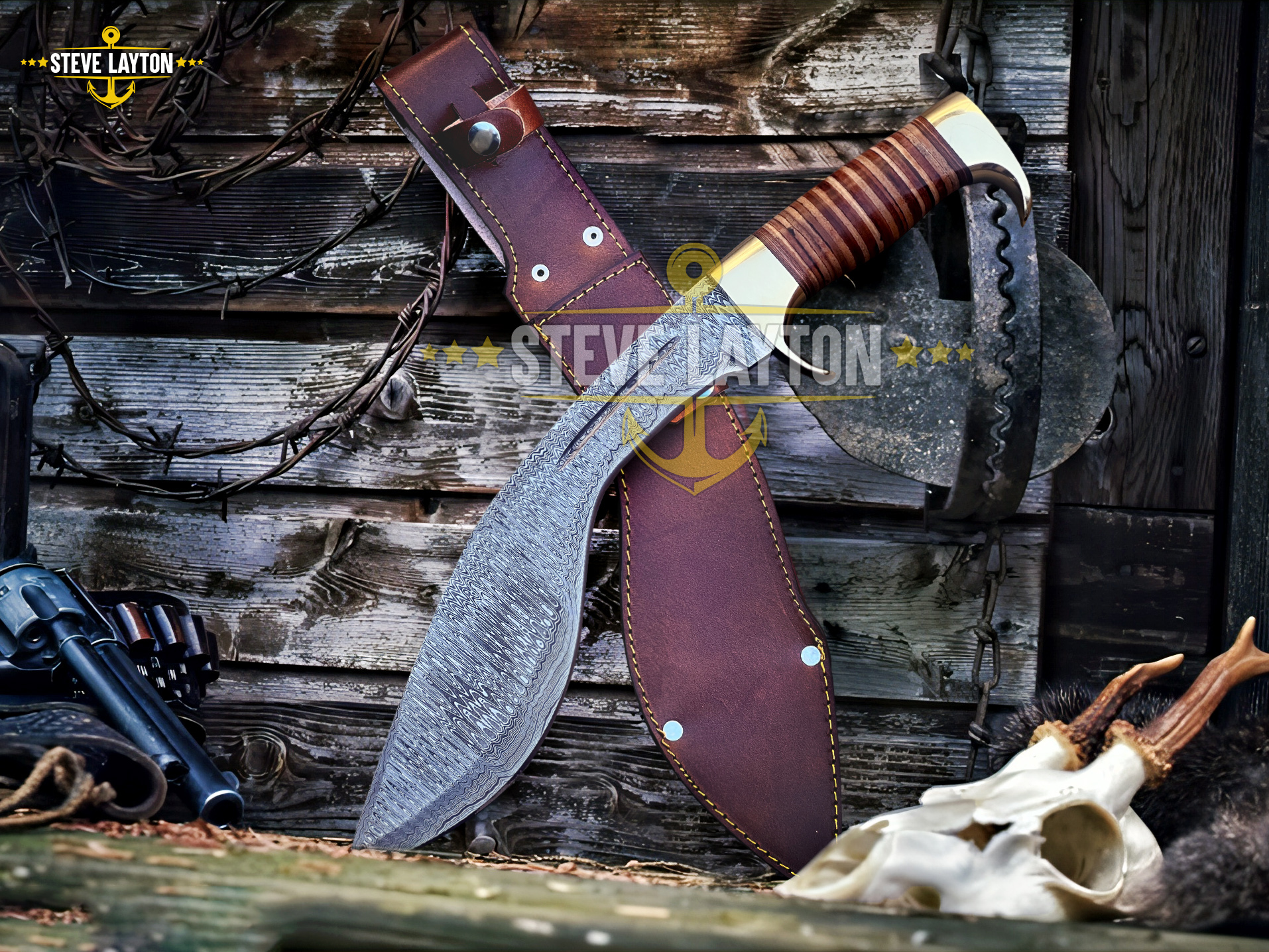
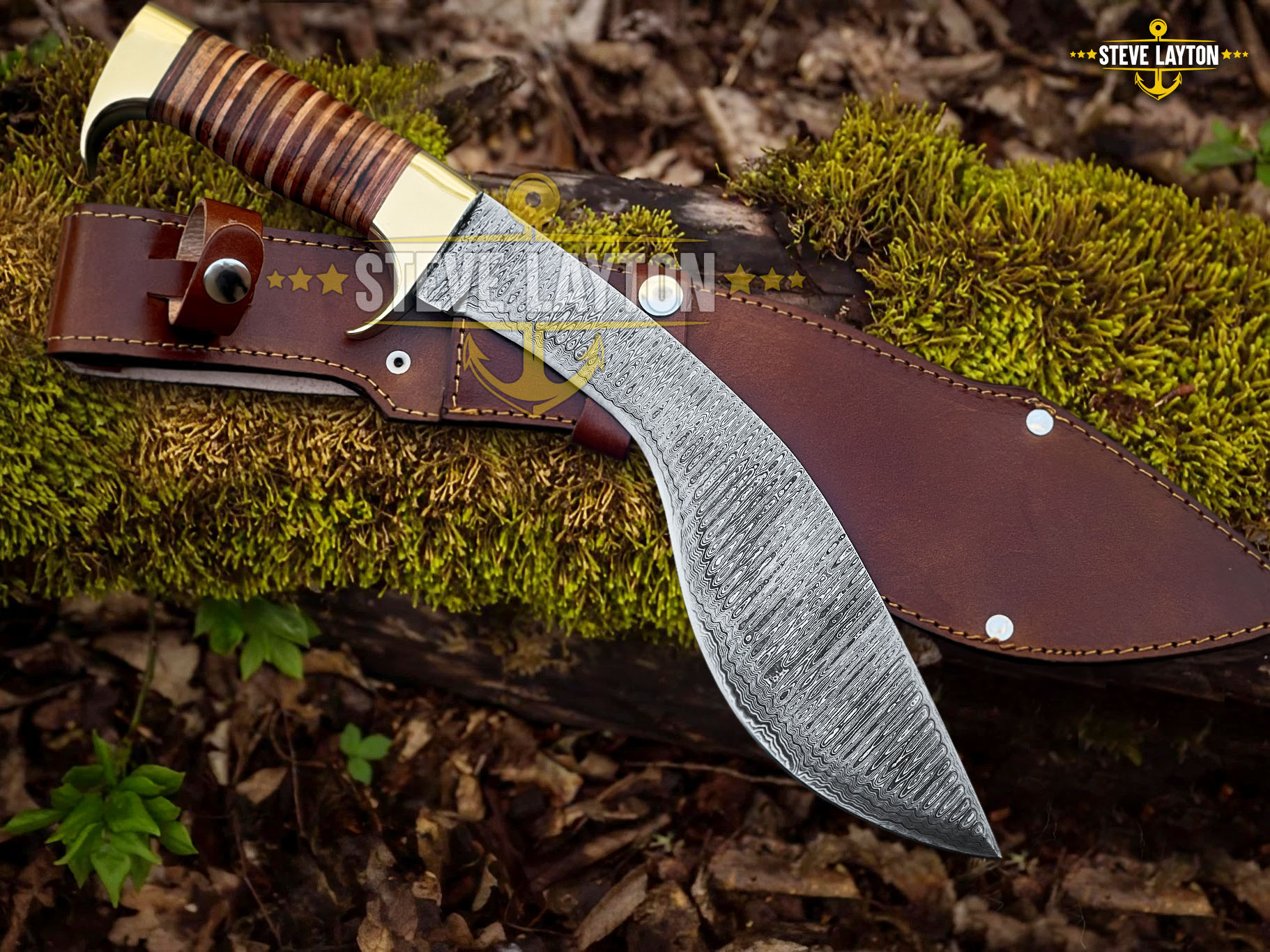
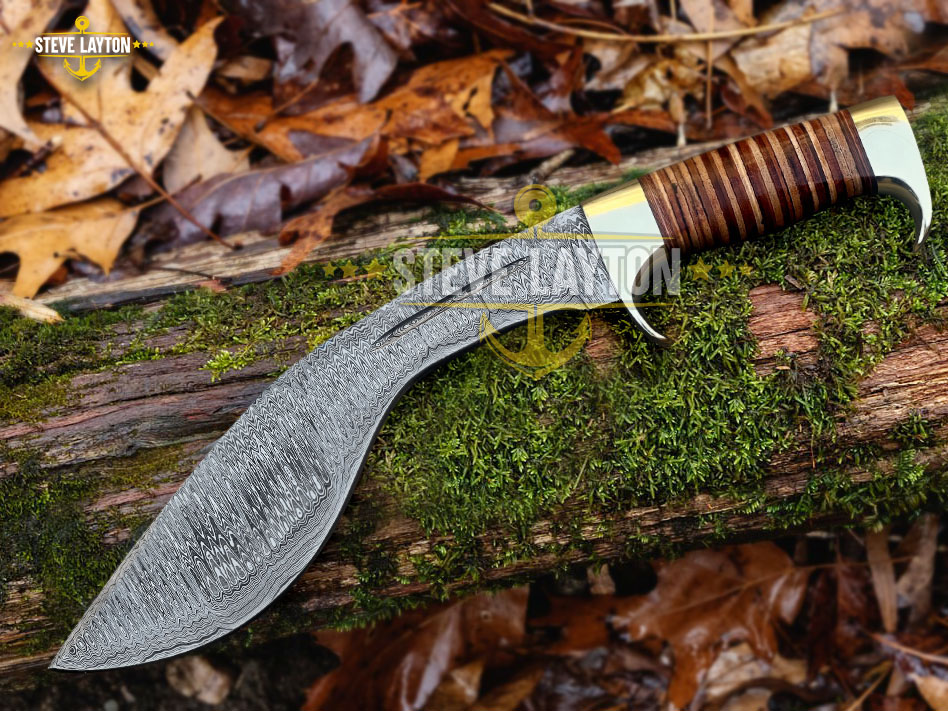
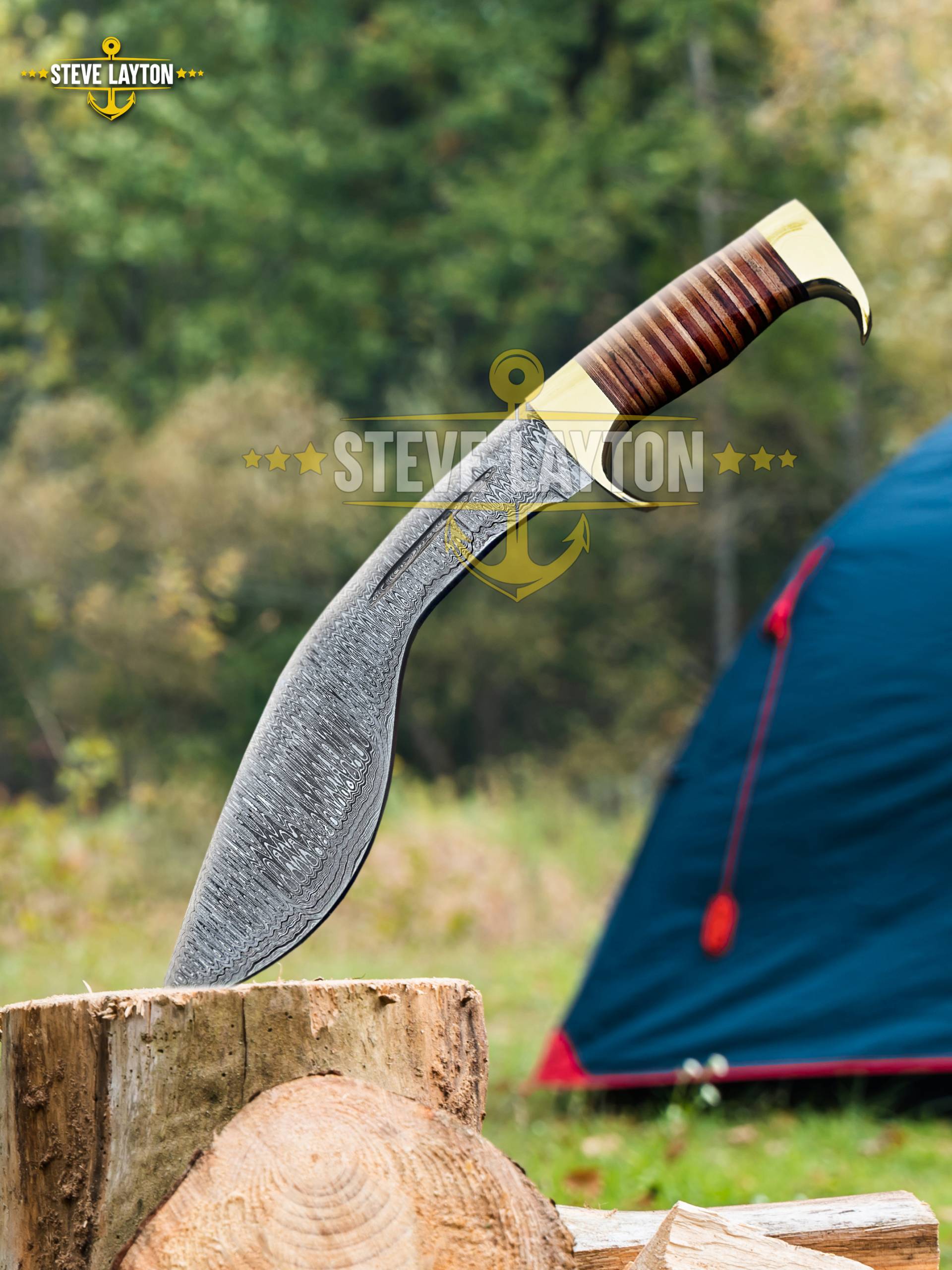
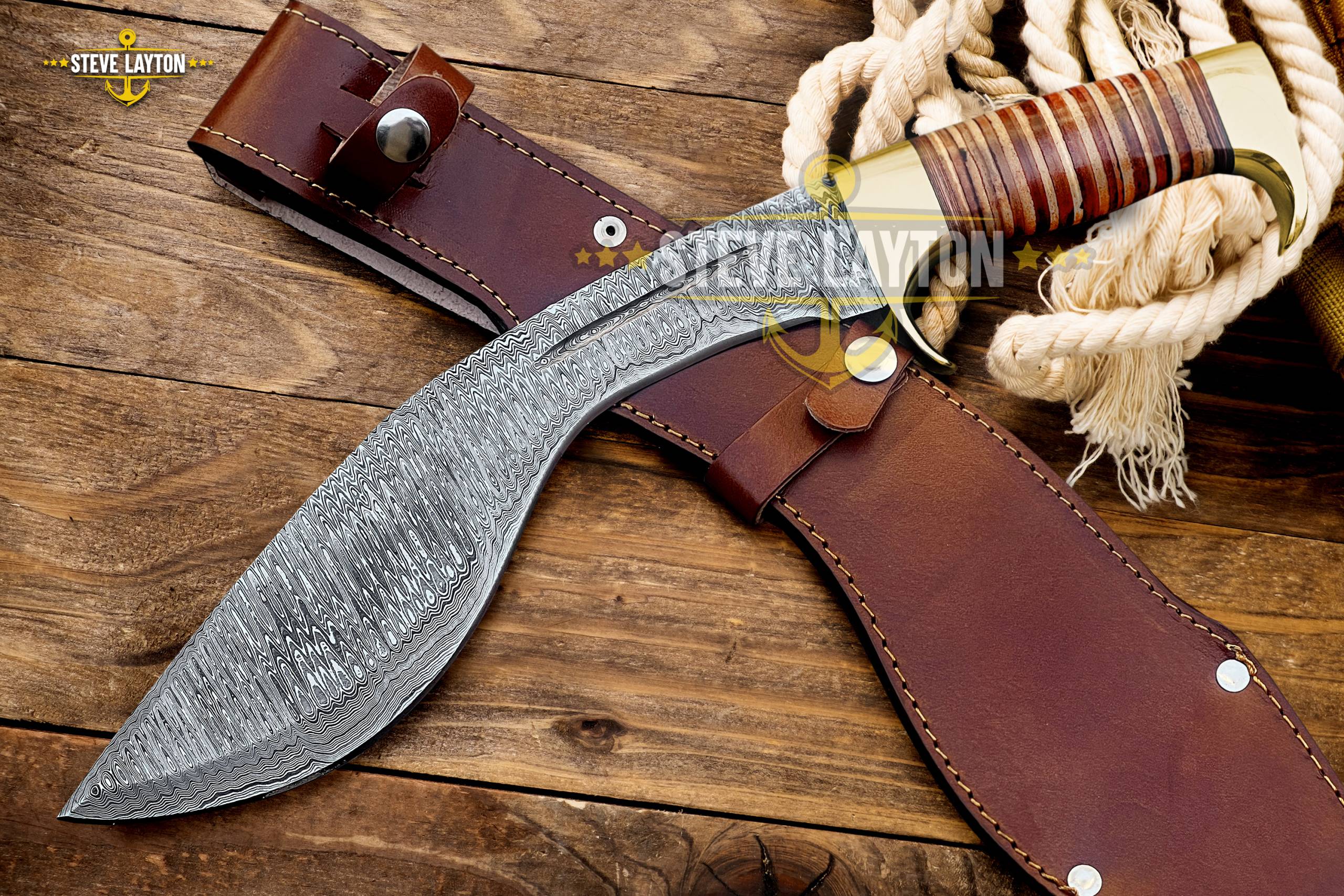
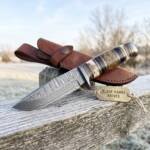
A kukri does nearly all of its work with the forward third of the blade, and this one carries eleven inches of hand-forged Damascus into that curve.
| Overall length | 16 inches |
| Blade length | 11 inches |
| Handle length | 5 inches |
| Handle | Stacked leather washers capped in brass |
| Steel | 1095 + 15N20 Damascus, 352 layers |
| Hardness | 58–60 HRC, oil tempered |
| Weight | 21 oz |
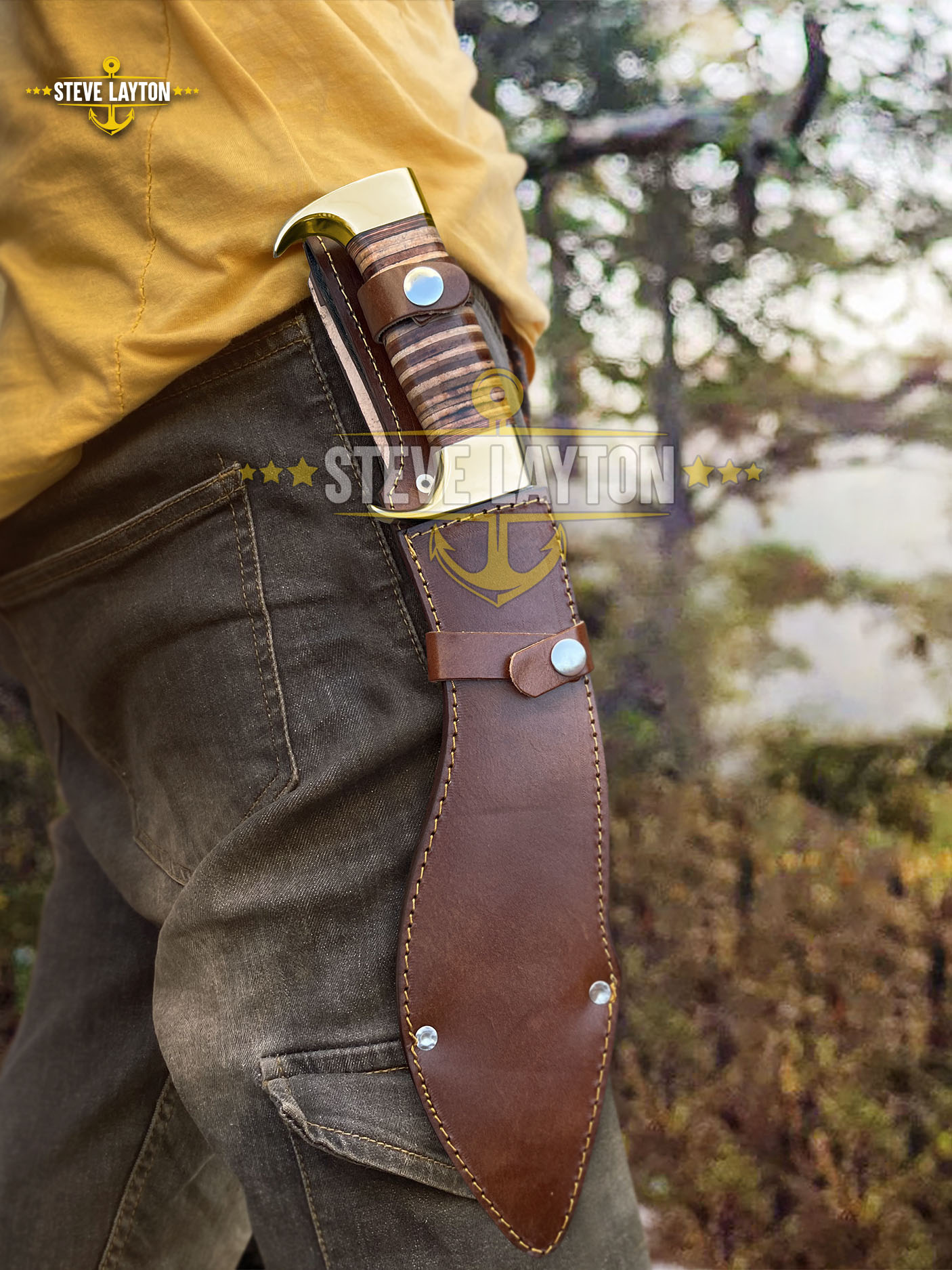
| Included | Hand-stitched leather sheath |
Made for: clearing brush, splitting kindling, camp butchery and anyone who wants a chopper that is not a machete. The recurve puts the impact point well ahead of your hand, so the blade does the swinging and your wrist only steers it.
Where the profile helps and where it hurts
That forward belly concentrates force at the widest part of the steel, which is why a kukri out-chops a straight blade of identical length. The same geometry works against you at the tip. Fine point work is awkward, carving a feather stick is a chore, and nobody should be caping a squirrel with it. Buy it to chop and let a smaller knife handle detail.
What twenty-one ounces feels like
Mass is the whole argument for a knife shaped like this. At 21 oz it drives through green wood with real authority, and your forearm will know about it after twenty minutes of steady work. If your reference point is a five-ounce belt knife, slow down for the first session and take fewer, heavier cuts rather than fast ones.
How a stacked leather grip ages
Leather washers are pressed onto the tang, shaped to the hand and capped in brass front and back. Leather kills shock better than any solid material, which is why service knives kept using it long after synthetics were available. It darkens under the palm, picks up the shape of your grip, and comes back with a little leather conditioner once or twice a year. Standing water is the one thing it will not forgive.
Keeping it right: pattern-welded 1095 and 15N20 are both carbon steels, so this blade rusts if you are careless with it. Dry it every single time, especially after wet or acidic work, and leave the flats lightly oiled before it goes into storage. Store it out of the sheath, because leather holds damp against steel. Our Damascus care and sharpening guide covers the recurve, which needs a rod or a narrow stone rather than a flat bench stone.
Questions buyers ask about this kukri
Will it take down a wrist-thick branch? In two or three swings, yes, provided you strike at a shallow angle rather than straight on.
How does the sheath carry? The hand-stitched leather sheath has a belt loop and a snap retention strap over the bolster. At this length most people carry it on a pack rather than a belt.
Is there a straight-bladed version? Yes. The USMC KA-Bar with stacked leather uses the same handle on a conventional clip point. Our military knife buying guide sets the two patterns side by side.
Forged, fitted and finished in the United States, and shipped from our Memphis bench with a lifetime warranty against defects.
Model: SL-025
Edward Robinson –
This turned out to be way better than I thought it would be. Leather sheath is thick and well stitched. Not the cheap stuff you usually get. This is going straight into my daily rotation.
Andre Diaz –
Absolutely very pleased by this knife. Sheath snaps shut securely and doesn’t feel flimsy at all. Would not hesitate to order again.
Rachel Morris –
Set my expectations low going in and this blew right past them. Made in the USA and shipped worldwide with no issues on my end. This is why Black Mamba Knives is my go to for anything knife related. This has quickly replaced my old go to knife for field dressing. Already planning my next pickup from this maker.
Sandra Gomez –
Got this for Father’s Day and now I want one for myself too. Came in a nice gift box which made it feel even more special. Made in the USA and shipped worldwide with no issues on my end. Took it out camping right away and it handled everything I threw at it. Great buy overall.
Antonio West –
Can’t stop showing this off to everyone who comes over. Came in a nice gift box which made it feel even more special. Blade holds a razor edge right out of the box. Even the small details in the damascus pattern are crisp and clean. Zero complaints from me on this purchase.
Ryan Kim –
Best knife I’ve ever owned. Hands down. Will definitely order again for another one.
Donald Watson –
Turned out better than I expected going in. Would order again despite the minor gripes.
Dorothy Collins –
It’s a nothing special knife. Nothing extraordinary though. It’s fine but I expected a little more for the price. Neutral on this one overall.
Hunter Ramirez –
Top quality craftsmanship on this one. Handle has a great grip even with wet or gloved hands. Sheath snaps shut securely and doesn’t feel flimsy at all. Will definitely order again for another one.
Christopher Morris –
Ended up ordering a second one after how happy I was with the first. Not my first order from Black Mamba Knives and it won’t be my last. Handle feels amazing and the balance is perfect. Blade geometry makes it glide through cuts with barely any effort. Weight and balance make it feel like a real working knife not some cheap import. Love it.
Mary Brooks –
Didn’t think a knife at this price could feel this premium. Highly recommend this one.
Natalie Cox –
This showed up faster than expected and looked incredible. Sheath snaps shut securely and doesn’t feel flimsy at all. Shipping was fast and everything arrived well packaged.
Anthony Miller –
This knife has already earned a permanent spot in my collection. Not my first order from Black Mamba Knives and it won’t be my last. Already thinking about what to order next from this seller.