
Description
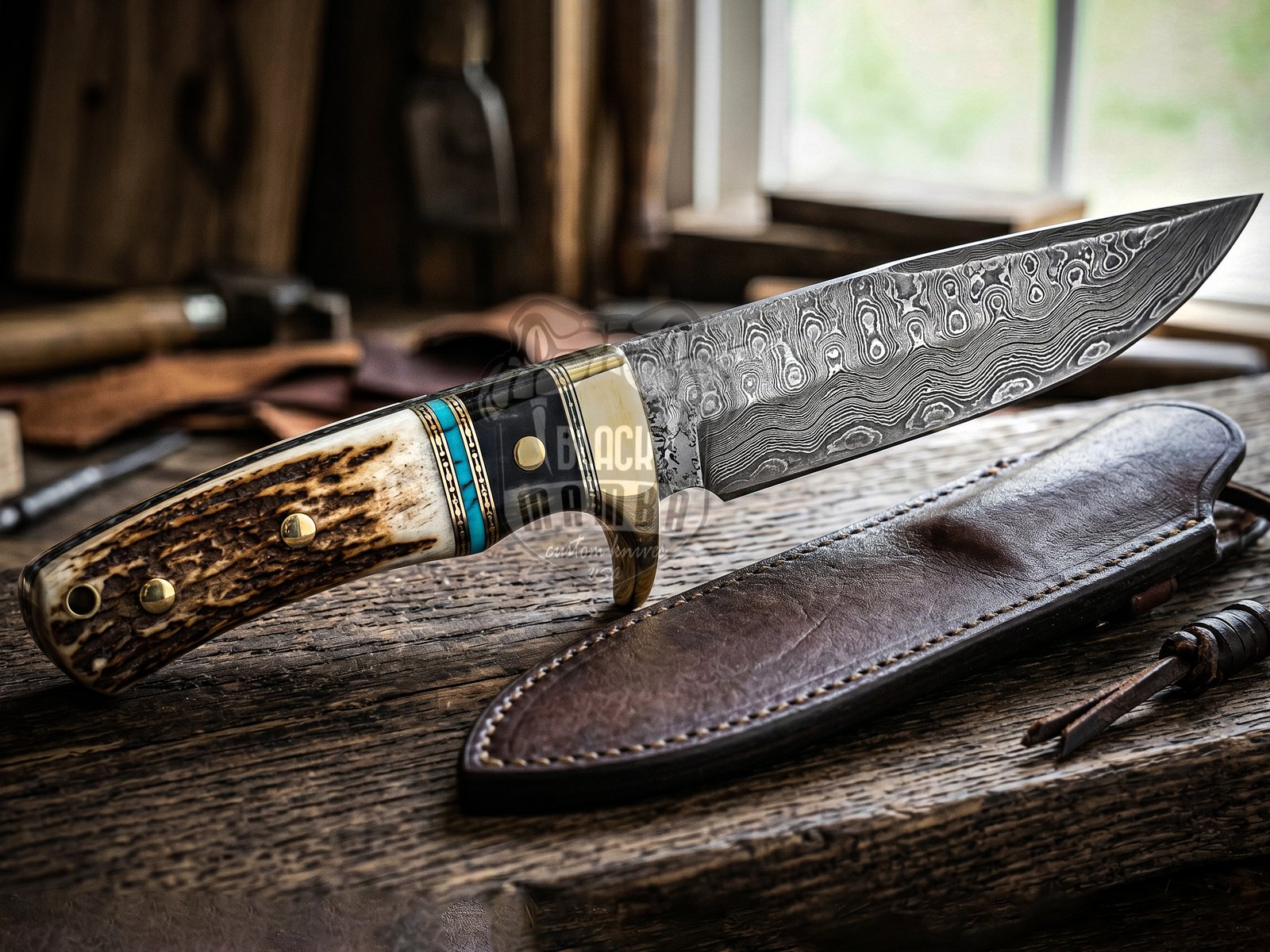
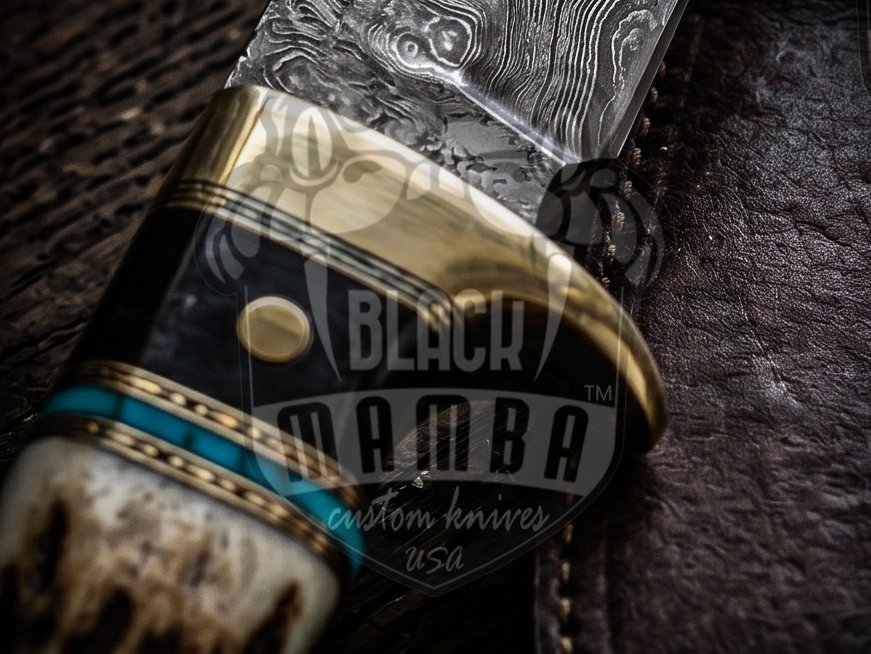
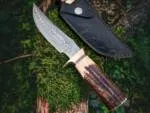
Eleven inches overall, six of blade, and a handle stacked from stag horn, camel bone, turquoise and brass. The Damascus runs in a tight pool-and-eye pattern from ricasso to point.
| Overall length | 11 inches |
| Blade length | 6 inches |
| Handle length | 5 inches |
| Steel | 1095 + 15N20 Damascus |
| Hardness | 58–60 HRC, oil tempered |
| Handle | Stag Horn & Turquoise |
| Included | Hand-stitched leather sheath |
Built to be used on: whitetail and elk. Six inches of drop point is enough blade to break down a large animal in one session without swapping tools, and the stag gives grip when your hands are cold and wet.
Stag horn is not bone
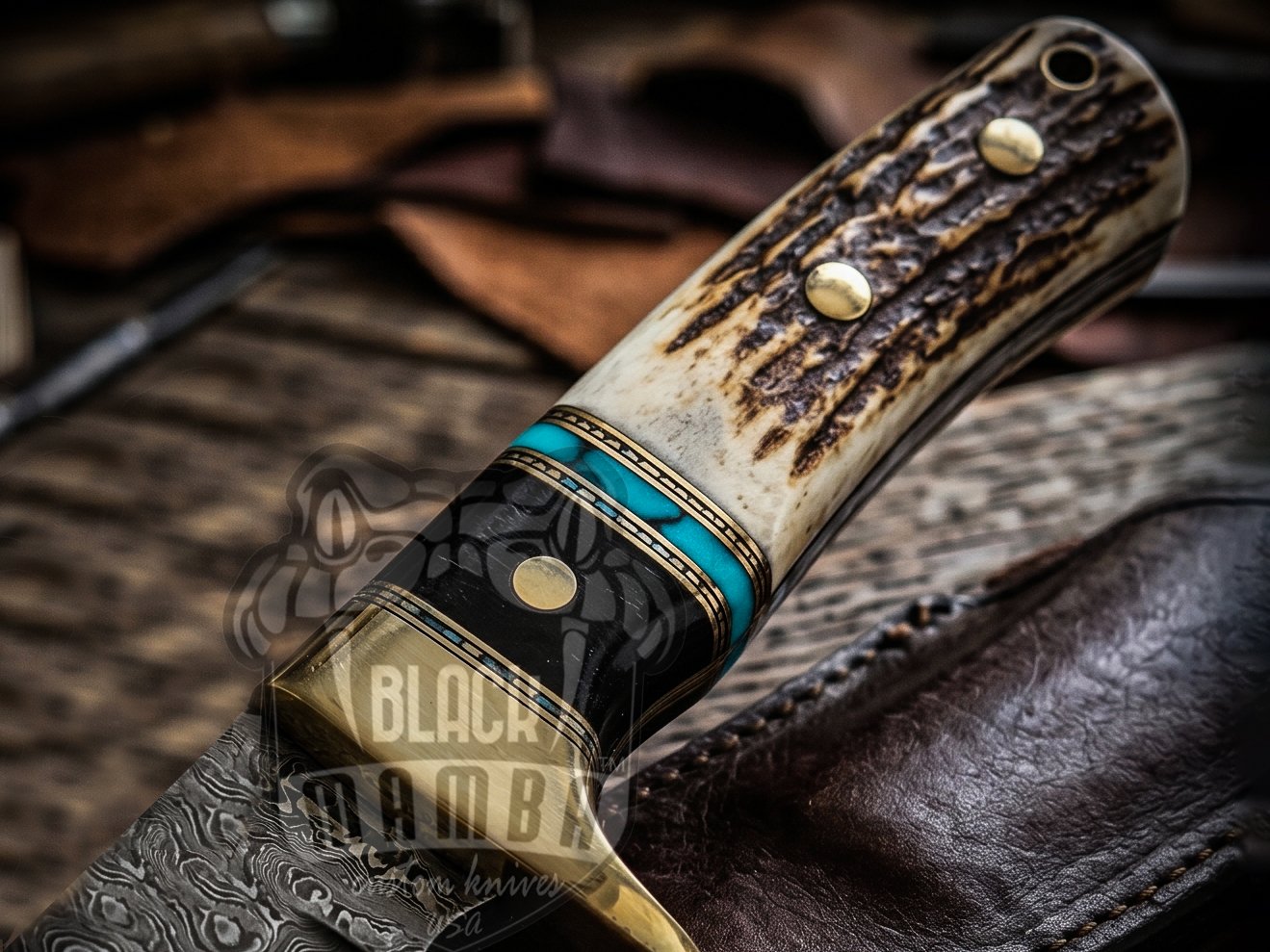
The scales are shed antler, which is a dense, porous material with a rough natural surface on the outside and a smoother core beneath. That texture is why stag has stayed the traditional hunting handle: it grips harder when it is wet than it does when it is dry, which is the opposite of most timbers. Every set is a different color and a different crown shape because it grew that way. Our hunting knife buying guide compares handle materials for field use.
The turquoise and brass stack
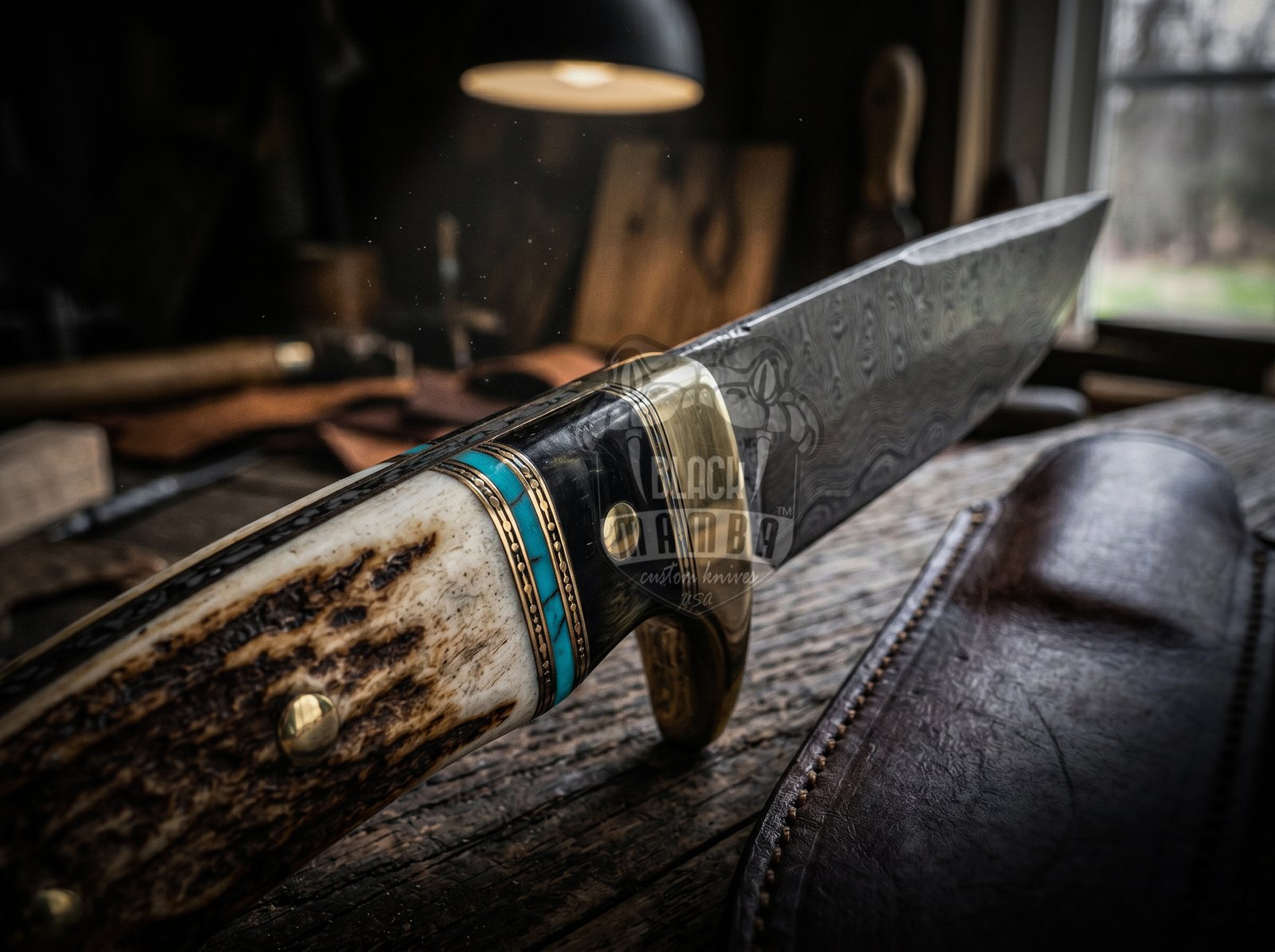
Between the stag and the brass bolster there is a band of turquoise, a black spacer and a length of light bone, each pinned in sequence. Brass pins run through the antler. Brass rather than steel is deliberate: it will not rust when a wet handle sits in a sheath overnight, and it patinas to a warm color that suits antler.
Six inches, and what it does
A six inch drop point is a general hunting blade rather than a specialist. It will skin, but a dedicated skinner with more belly does it faster; our skinning knife guide explains why. For heavier ranch work in twist-pattern Damascus, look at the twist Damascus bull cutter.
Reading the pool-and-eye pattern
The tight rings running the length of this blade are a pool-and-eye variant: dimpled like raindrop, but with the depressions set closer together so the circles crowd and overlap instead of sitting in open rows. It is harder to grind cleanly, because the layers are more distorted and a heavy hand on the belt cuts straight through an eye and leaves it half formed.
Why the handle is stacked
Stag alone would leave no visual break between blade and grip. The bone, turquoise and black spacers give the eye somewhere to stop, and they let the maker true the length so the handle finishes at five inches whatever the antler measured.
Care: antler and carbon steel both dislike a damp sheath. Dry the blade in the field, and empty the sheath when you get home. Oil the steel monthly. The stag itself needs nothing, but if it ever looks chalky, a trace of mineral oil worked in with a cloth will bring the color back without making it slippery.
FAQs
Will my stag look like the photograph? The color and crown will differ. Antler is shed material and every piece is unique.
Does the brass need polishing? Only if you want it bright. Most hunters let brass go dark and leave it.
Is six inches too long for field dressing? No, but it takes a steadier hand than a four inch blade. Choke up on the ricasso for close work.
Model: BMK-742

Nicole Hernandez –
No regrets on this purchase at all. Took it out camping right away and it handled everything I threw at it. This seller clearly takes pride in their work.
Brandon Wells –
Honestly one of my better purchases in a while. Edge retention has been great even after regular use in the field. Shipping was fast and everything arrived well packaged.
Kimberly Wilson –
This seller clearly knows what they’re doing with quality like this. Even the small details in the damascus pattern are crisp and clean. Handle has a great grip even with wet or gloved hands. Leather sheath is thick and well stitched. Not the cheap stuff you usually get. Already telling my friends to check this out.
Diego Mitchell –
This blade came razor sharp right out of the box. Weight and balance make it feel like a real working knife not some cheap import. Would send this as a gift again in a heartbeat.
Carol Wood –
Can’t stop showing this off to everyone who comes over. This has quickly replaced my old go to knife for field dressing. This store just earned a repeat customer.
Ruth Mitchell –
This is hands down one of the best knives I’ve bought online. Sheath snaps shut securely and doesn’t feel flimsy at all. Even the small details in the damascus pattern are crisp and clean. Beyond happy with how this turned out.