
Description
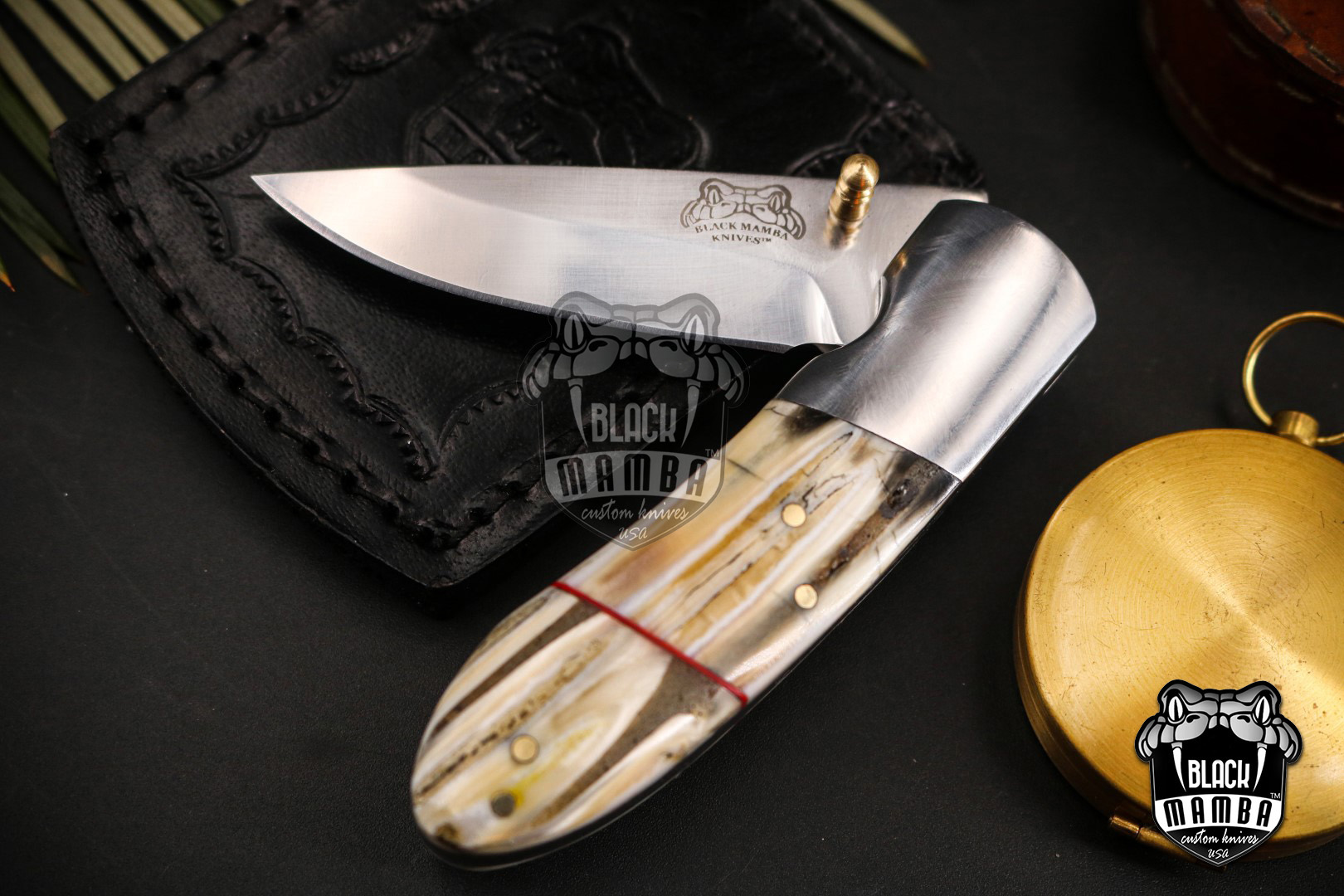
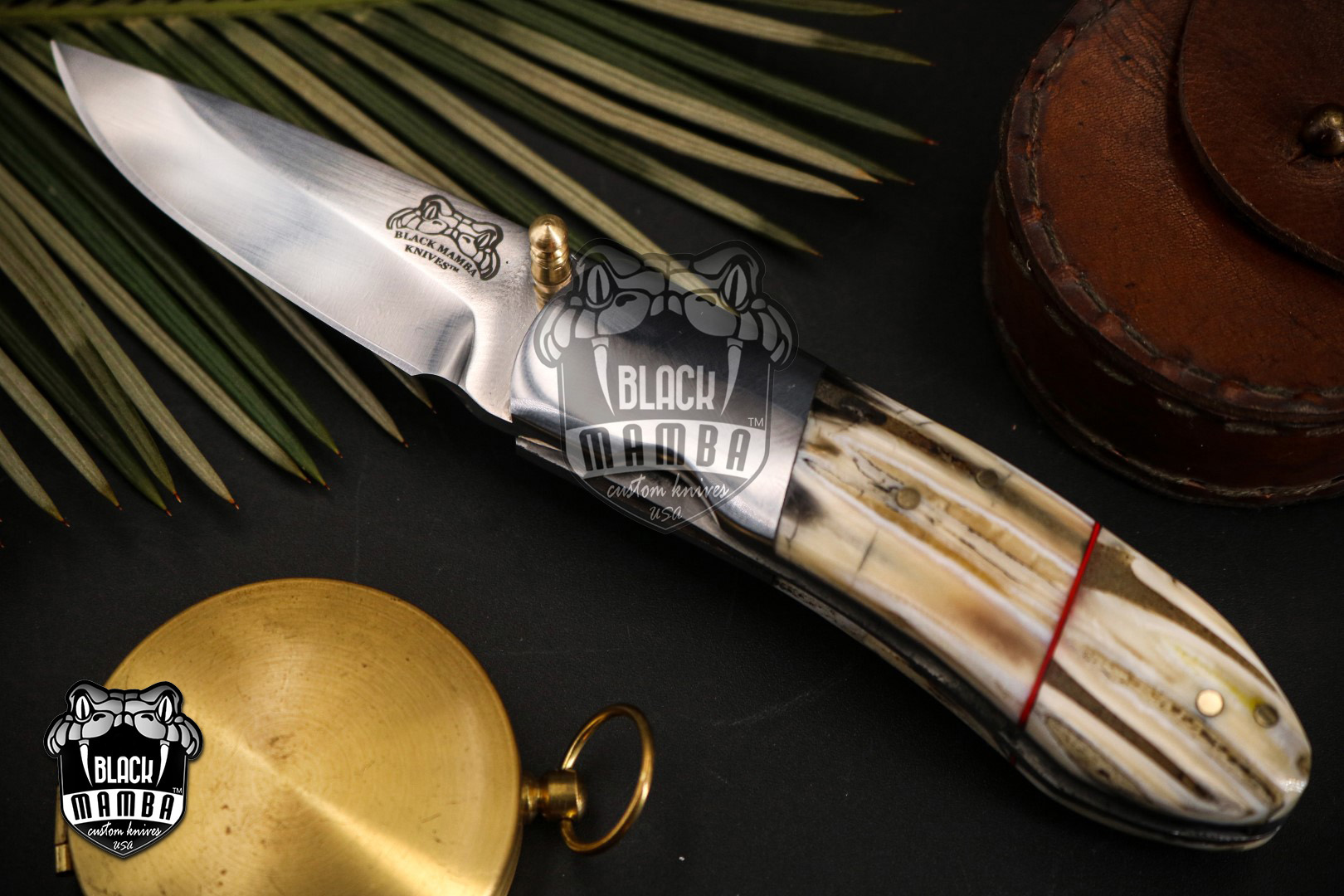
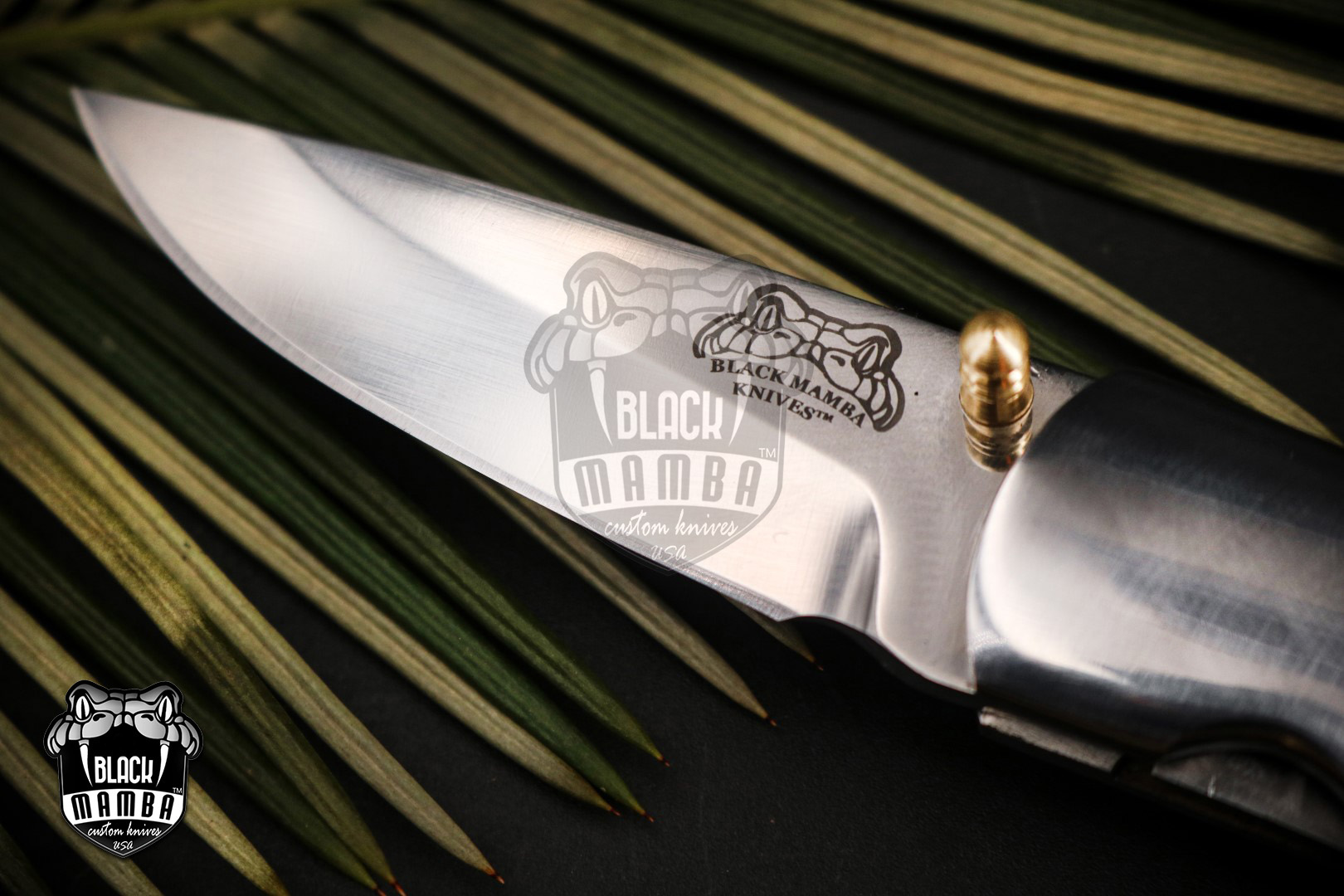
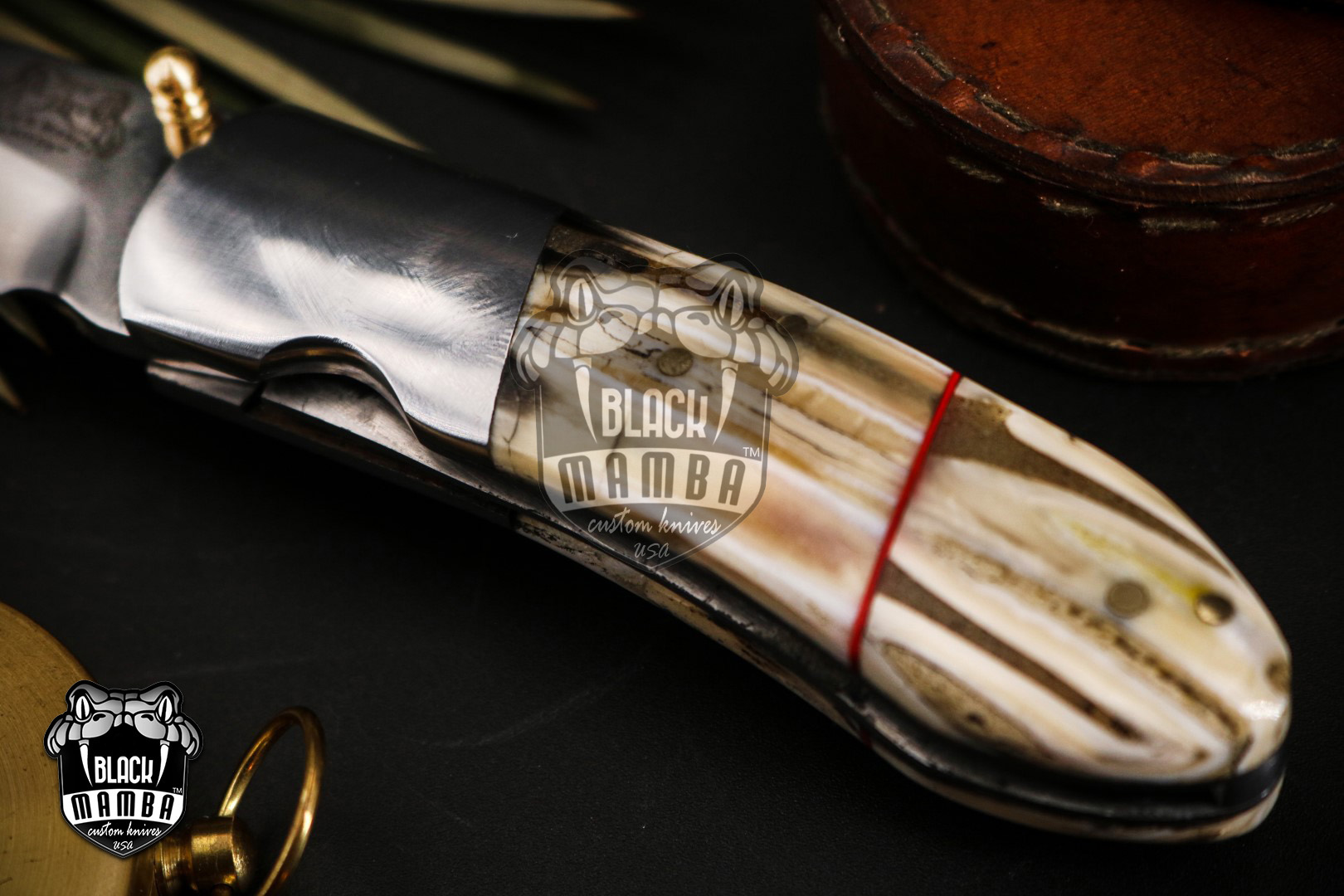
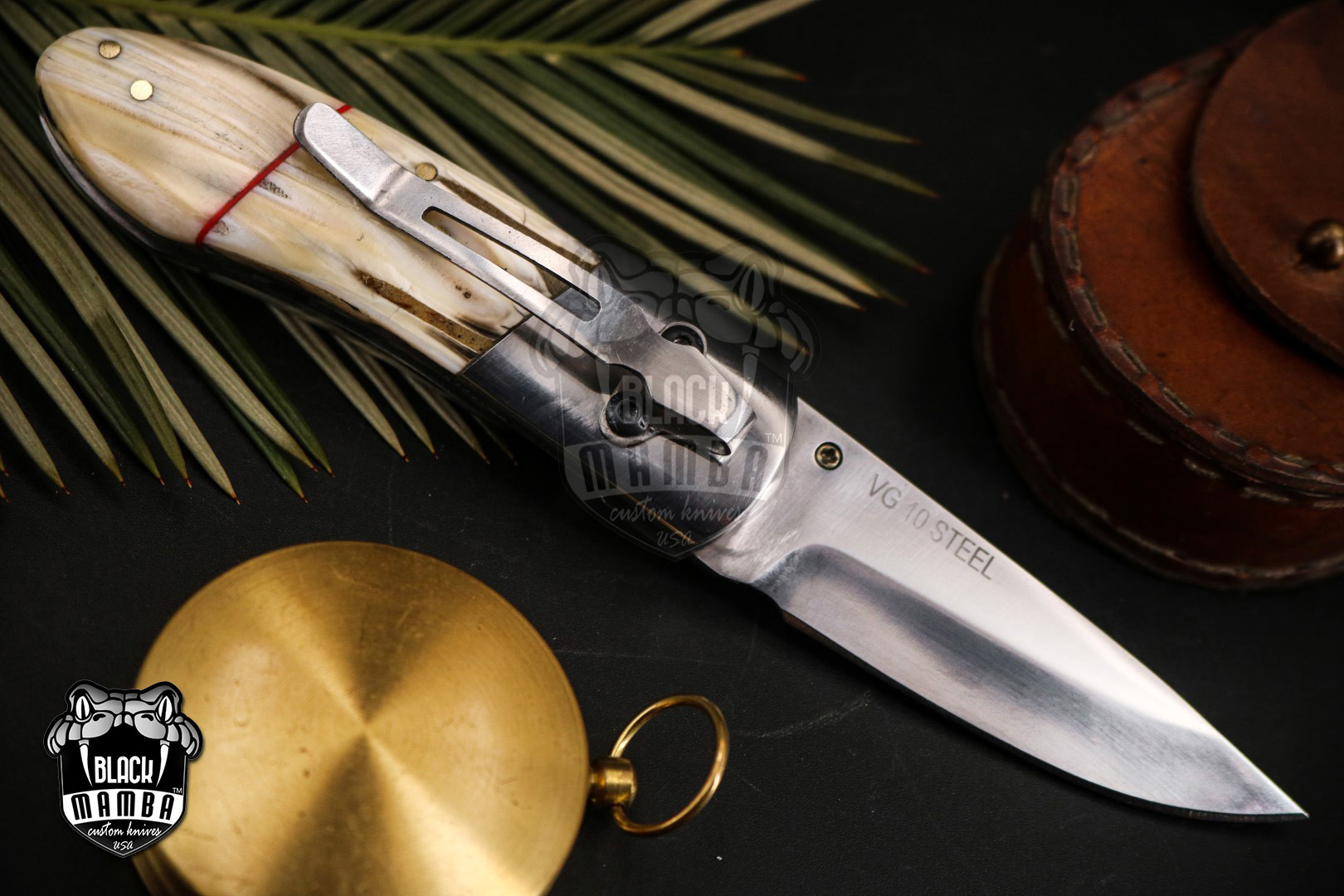
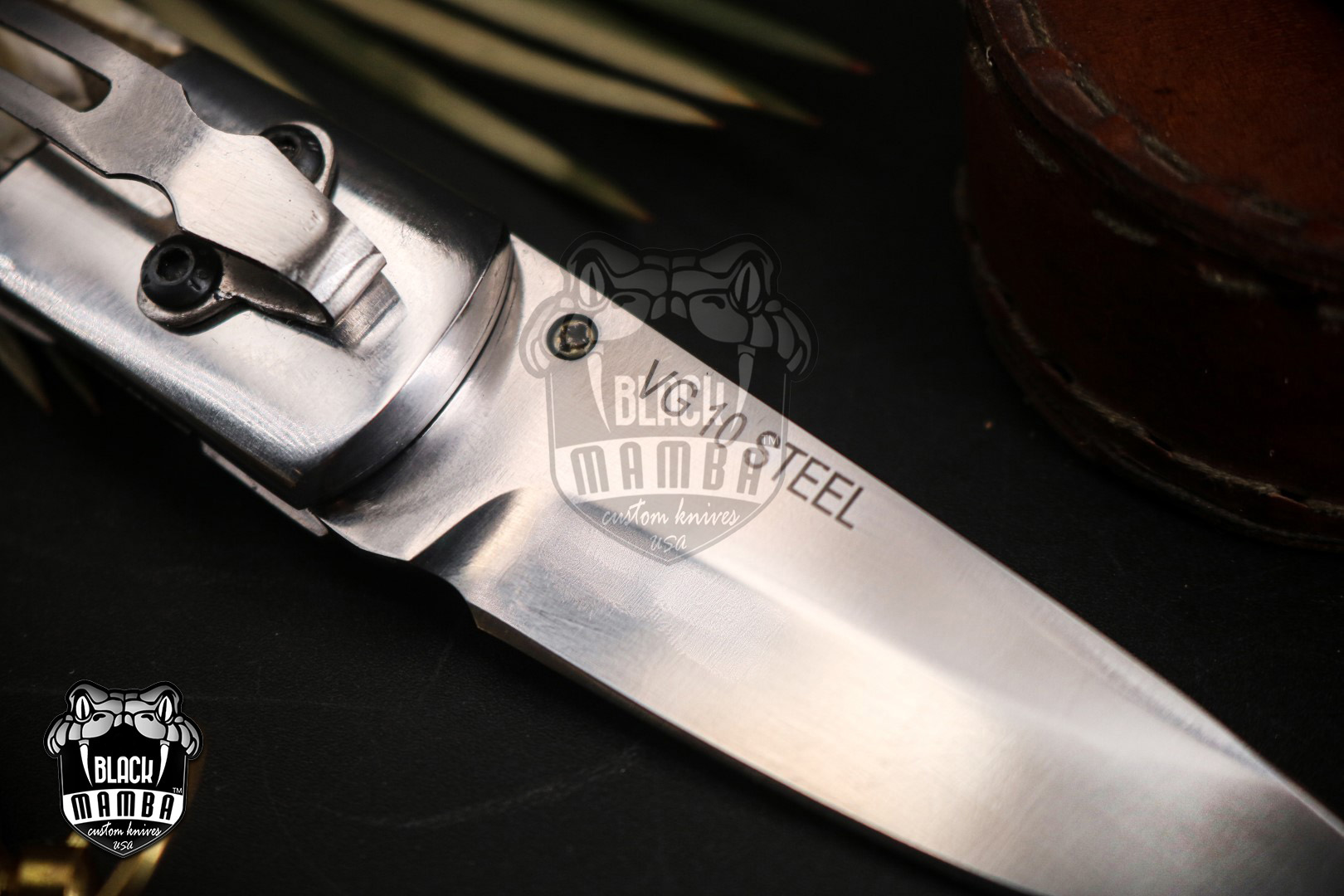
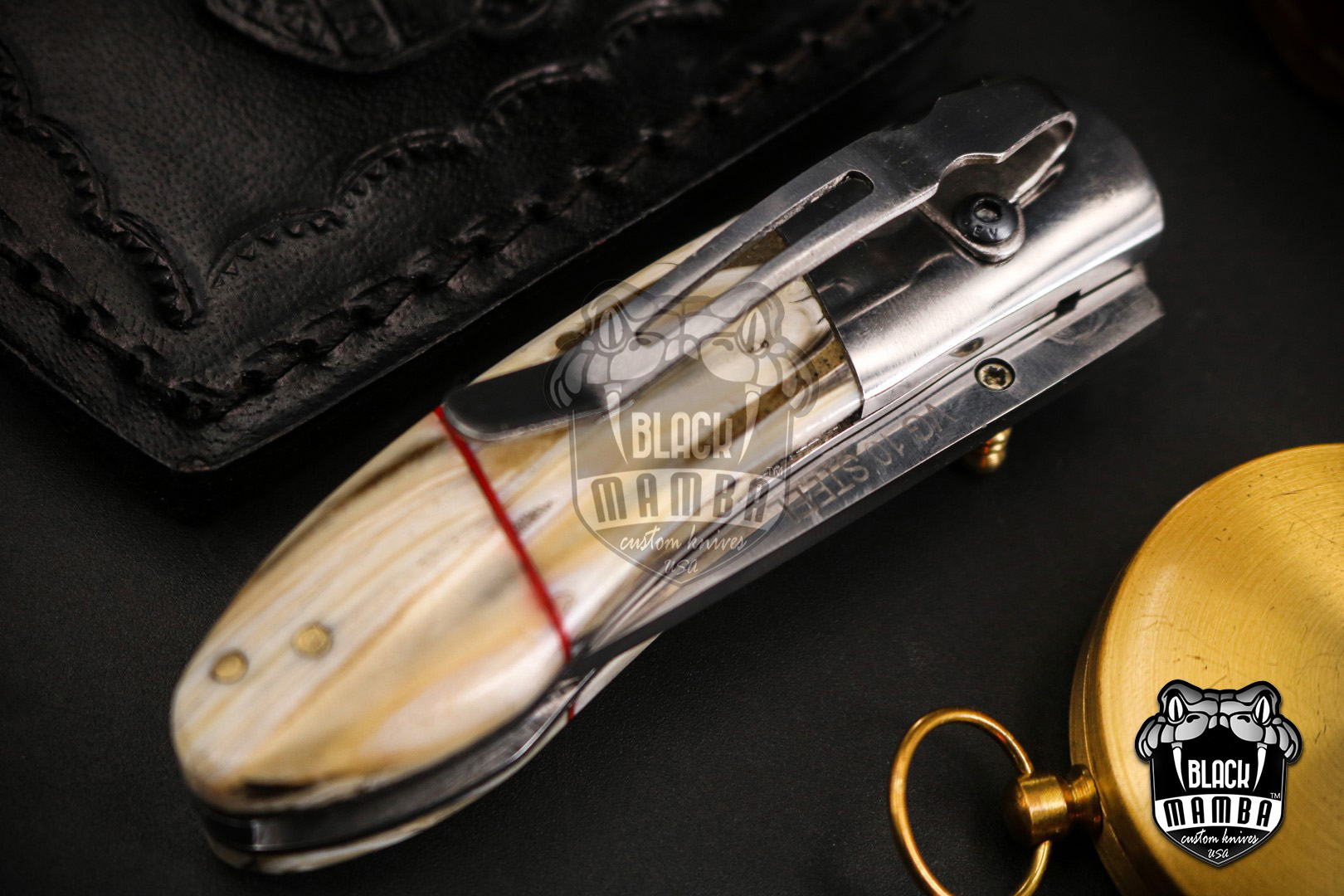
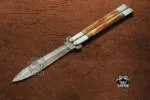
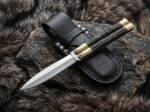
Mammoth handle scales, a steel bolster, and a polished 3 inch drop point in a folder that closes down to 7 inches overall.
| Overall length | 7 inches |
| Blade length | 3 inches |
| Handle length | 4 inches |
| Steel | 1095 + 15N20 Damascus, 352 layers |
| Hardness | 58–60 HRC, oil tempered |
| Weight | 6.5 oz |
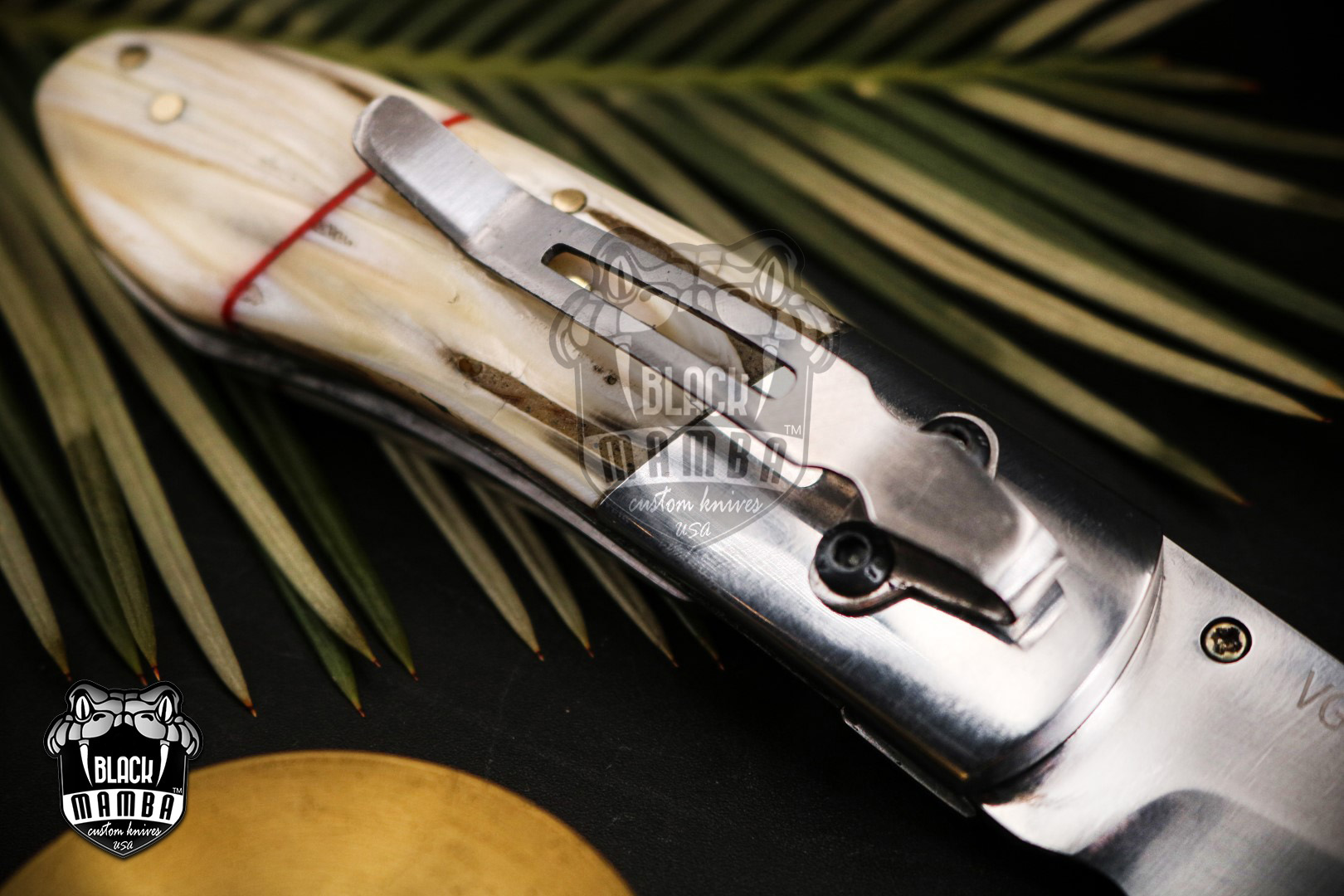
| Handle | mammoth handle with Steel bolster |
| Pattern | Mirror Shine Blade |
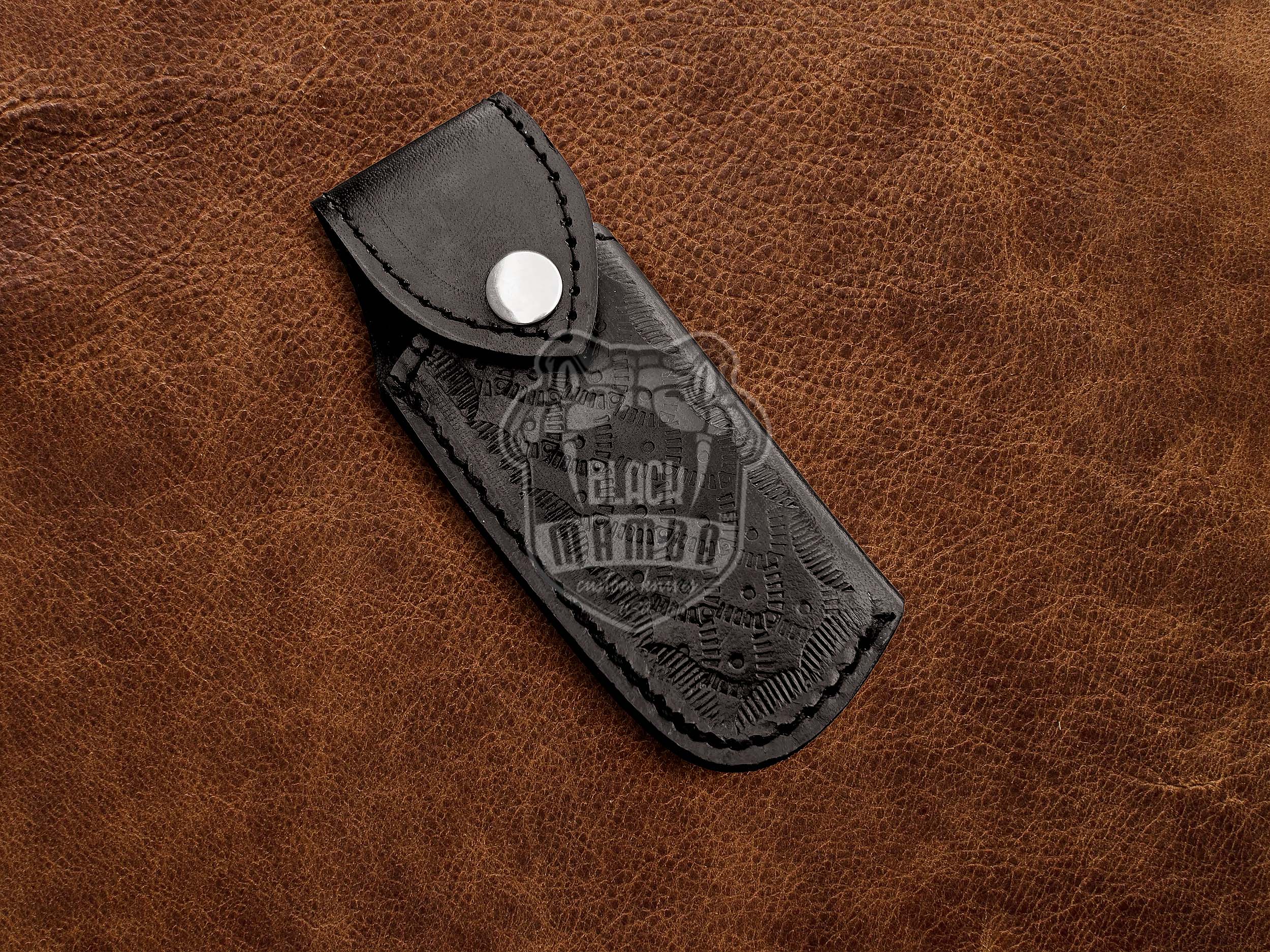
| Included | Hand-stitched leather sheath |
Meant for: daily carry by someone who wants the handle to be the interesting part. Mammoth is fossil material, tens of thousands of years old, and the streaking through it is mineral staining picked up while it sat in the ground. No two sets are alike and none of it can be reproduced.
What mammoth actually is
It is fossilized ivory or bark from tusks recovered from permafrost, stabilized before it is cut into scales. That stabilization is what makes it usable on a working knife rather than a display piece — untreated fossil material moves with humidity, and stabilized material does not. The colors are natural, not dyed.
A 3 inch blade
Three inches is the length that stays out of trouble in most places and still does the great majority of what people actually cut: packaging, cord, food, a stubborn tag. It also means the closed knife is 4 inches of handle, which is short enough to sit flat in a front pocket.
The steel bolster
The bolster carries the pivot and takes the load every time you open the knife. Putting steel there rather than extending the scale material means the wear happens on the part designed for it, and the mammoth is protected at the end where it would chip first.
The closed knife
Four inches closed is the number that decides whether a folder gets carried. It clears the bottom of a front pocket, it does not print through lighter trousers, and it disappears in a jacket. Seven inches open still gives you a full-fisted grip.
Why this one photographs differently every time
Fossil material cannot be matched from batch to batch, so the streaking and the color balance shift between knives. The one in the photograph is representative of the run rather than an exact preview of yours.
Care: keep it simple and mechanical. Dry the blade before you fold it so nothing is trapped at the pivot, flush the joint with warm water if grit gets in, dry it, and put a single drop of light oil on the pivot. Store it out of the leather sheath rather than sealed inside it, and see how to store knives properly if it is going away for a while.
FAQs
Is mammoth legal to buy and own? Yes. Mammoth is a fossil species and is not covered by the ivory restrictions that apply to elephant.
Will the handle chip? Stabilized mammoth is tough, but it is a natural material. Do not use the handle as a hammer.
Want something with a very different look? The all-Damascus sheepsfoot folder is the opposite approach — no organic material at all. Pivot cleaning is covered in our pocket knife cleaning guide.
Model: BMK-VG11
Frank Wilson –
This showed up faster than expected and looked incredible. Will definitely order again for another one.
Anthony Thompson –
Genuinely thoroughly impressed with how this turned out.
Sarah Reyes –
Wanted to like this more than I actually do. Pocket clip felt loose and shifted around in my pocket. Blade had noticeable play when opened. Just an average purchase. Wouldn’t rush to buy again.
Todd Barrett –
Wish I had gone with a different shop for this one. Blade wobbles side to side even after tightening the pivot. Would not recommend based on my experience.
Caleb Lewis –
Got this for my dad and now I want one for myself too.