
Description
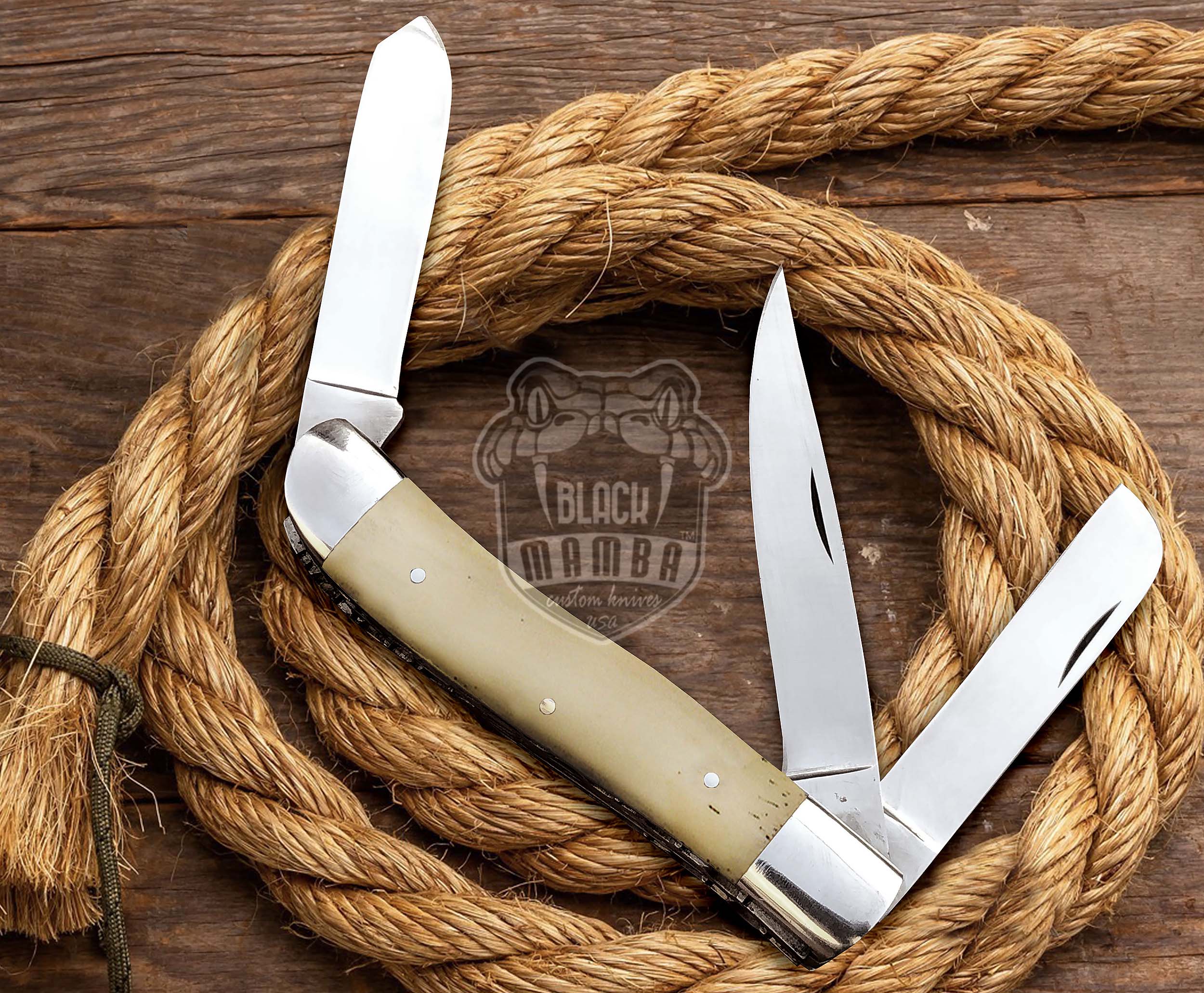
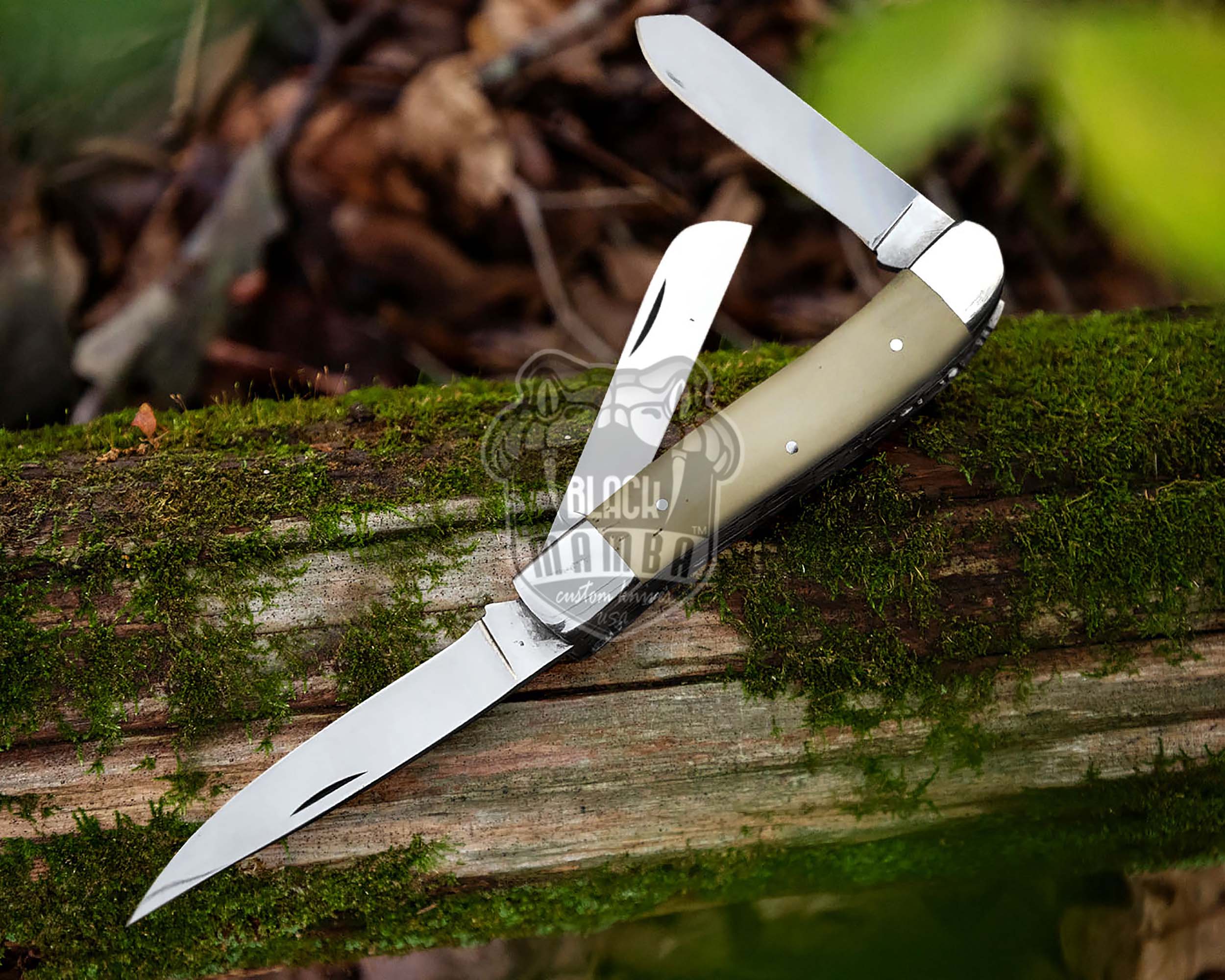
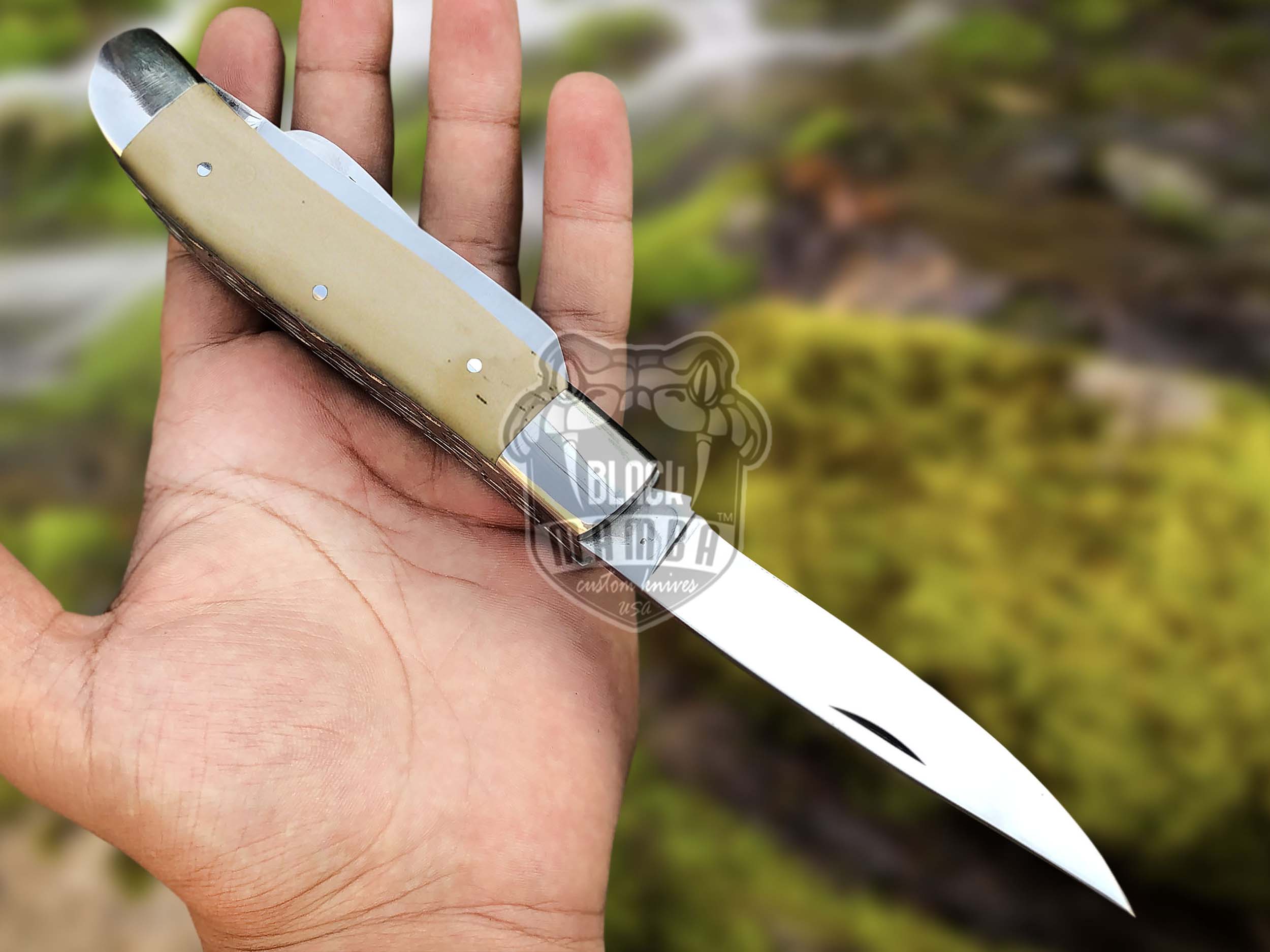
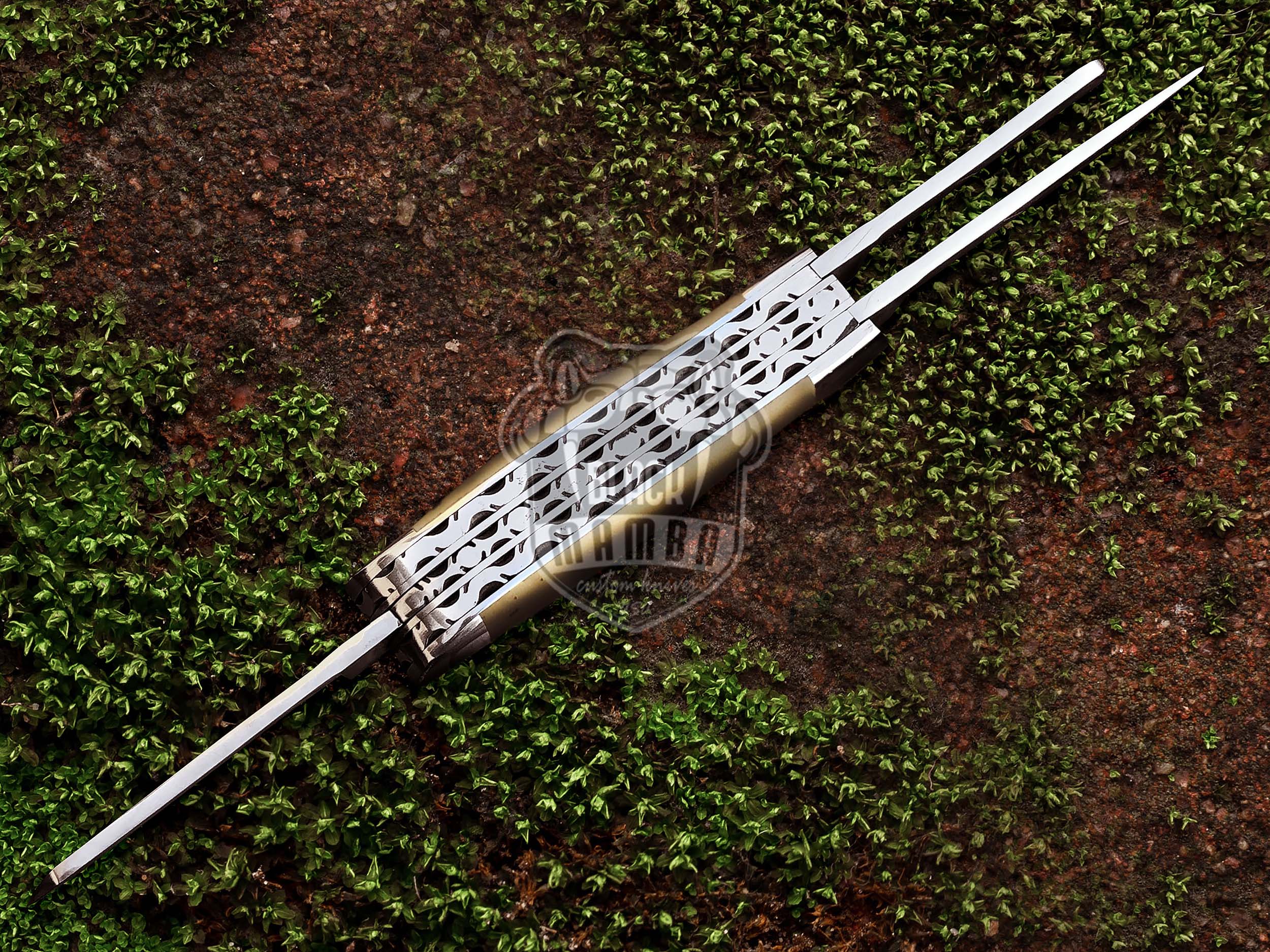
Three blades, one camel bone frame, and file-work cut into every spine. The tri fold is the old American pocket pattern: a main blade for cutting and two smaller ones to grind through the jobs that would dull the first.
| Overall length | 8.3 inches |
| Blade length | 4 inches |
| Handle length | 4.3 inches |
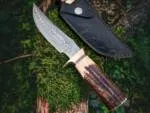
| Steel | 1095 + 15N20 Damascus, 352 layers |
| Hardness | 58–60 HRC, oil tempered |
| Weight | 10 oz |
| Handle | Camel Bone |
| Pattern | Mirror shine Blade, Extreme custom File-work |
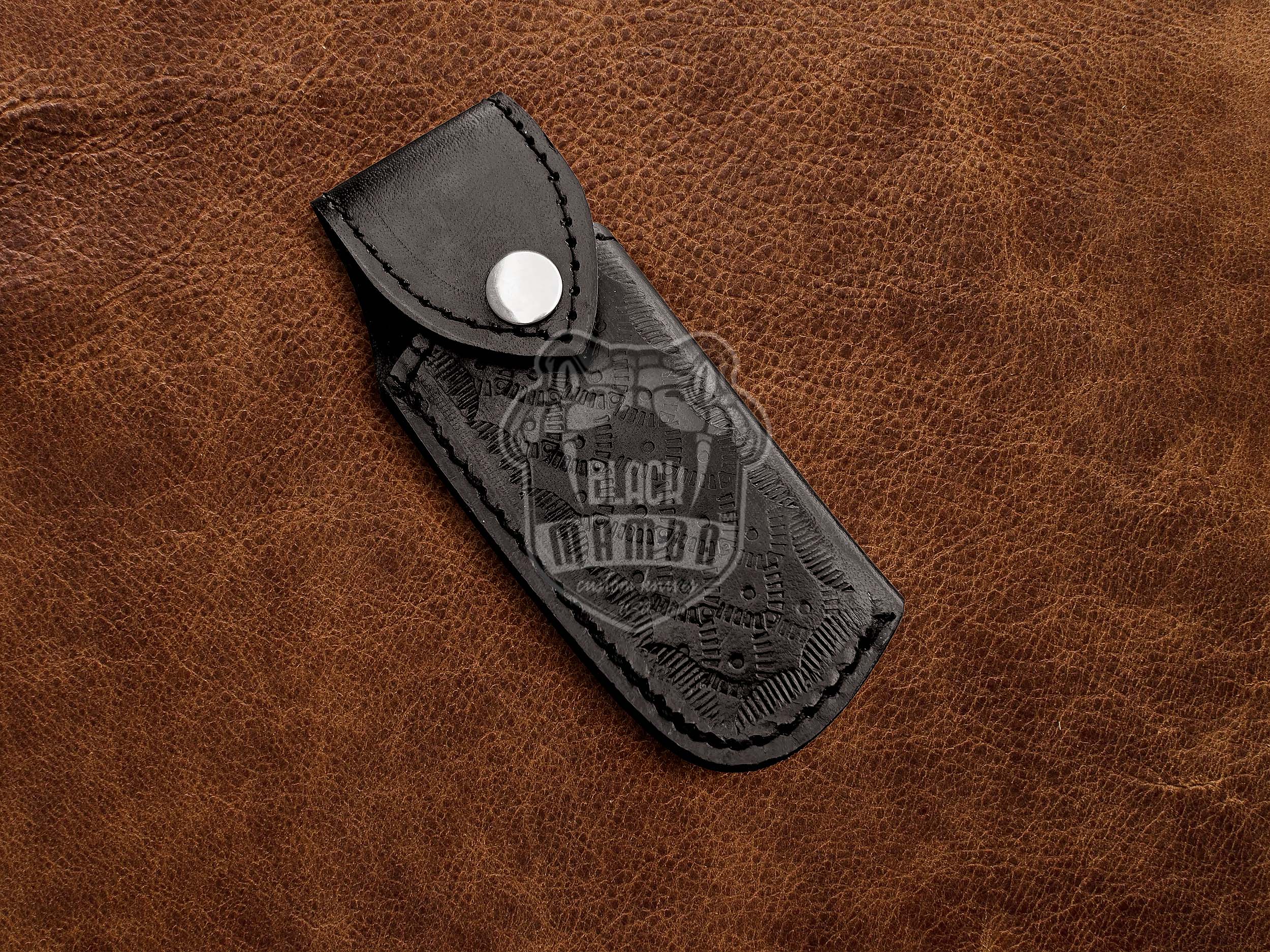
| Included | Hand-stitched leather sheath |
Why three blades instead of one good one
A single-blade folder is a compromise. You sharpen it for slicing, then use it to scrape, lift a staple or open a paint tin, and the edge pays for it. Splitting the work across three blades lets you keep one genuinely sharp. That is the whole logic of the pattern and the reason farmers carried them for a century. The cost is bulk, a heavier pocket than a modern one-hand folder, and nail nicks that need two hands to open. Multi blade pocket knives covers which blade combinations are actually worth carrying.
Built for: the traditionalist. Someone who wants a knife their grandfather would recognize, in materials their grandfather could not have afforded.
Camel bone and what handling does to it
Camel bone is dense, takes dye well and wears smooth rather than slick. Over a few years the raised areas polish where your fingers sit while the recesses hold a little more color, so the handle ends up mapping the way you hold it. It is harder than antler and less forgiving, and a hard drop onto tile can chip a scale where wood would only dent. Keep it out of prolonged damp, since bone can swell fractionally and bind the blades.
Upkeep
Care: the mirror finish on these blades shows everything, fingerprints included, so wipe them with a dry cloth after handling and not only after cutting. Oil the joints twice a year and open each blade fully while you do it so the oil reaches the springs. The file-work along the spines traps lint, which a toothbrush clears. Do not soak the knife to clean it, because water sits in the backsprings and reappears as rust weeks later. The bone scales want an occasional wipe of mineral oil and nothing heavier.
FAQs
Which blade should I keep sharpest? The main one. Give the smaller blades the scraping and odd jobs and you will rarely need to touch the big one.
Will the blades rub against each other? They sit on separate pivots and clear one another when closed. If a blade feels tight when new, work it a dozen times with a drop of oil at the joint.
Is it a good gift for someone who already owns a fixed blade? Usually yes, because it fills a different slot entirely. If they need the opposite, a Damascus fixed blade hunting knife is the other half of a kit.
What is the file-work for? Nothing functional. It is hand-cut decoration on the spines, and the clearest sign of how much bench time went into the knife. Parts of a knife explained names the rest of it.
Cut, fitted and finished in Memphis, Tennessee.
Model: BMK-803A

DeShawn Smith –
Incredible craftsmanship on this one. Slices through everything like butter, no sawing needed. Beyond happy with how this turned out.
Jerome Cole –
It’s nothing special. Not great not bad. Does the job in the kitchen but nothing special. Wouldn’t say no to it but wouldn’t rave about it either.
Angela Sullivan –
This knife has quickly become my favorite piece in the collection. Balance in hand is perfect for detail work at the cutting board. Edge held up great through a full week of daily cooking. This shop clearly takes pride in their work.
Ryan Young –
This turned out to be way better than I thought it would be. Has become my main prep knife in the kitchen since it arrived. Cool knowing this was handmade right in Memphis and shipped out fast. Couldn’t be happier with this.
Jennifer Howard –
Kept picking this knife up just to admire it after it arrived. Edge held up great through a full week of daily cooking. Beyond happy with how this turned out.