
Description
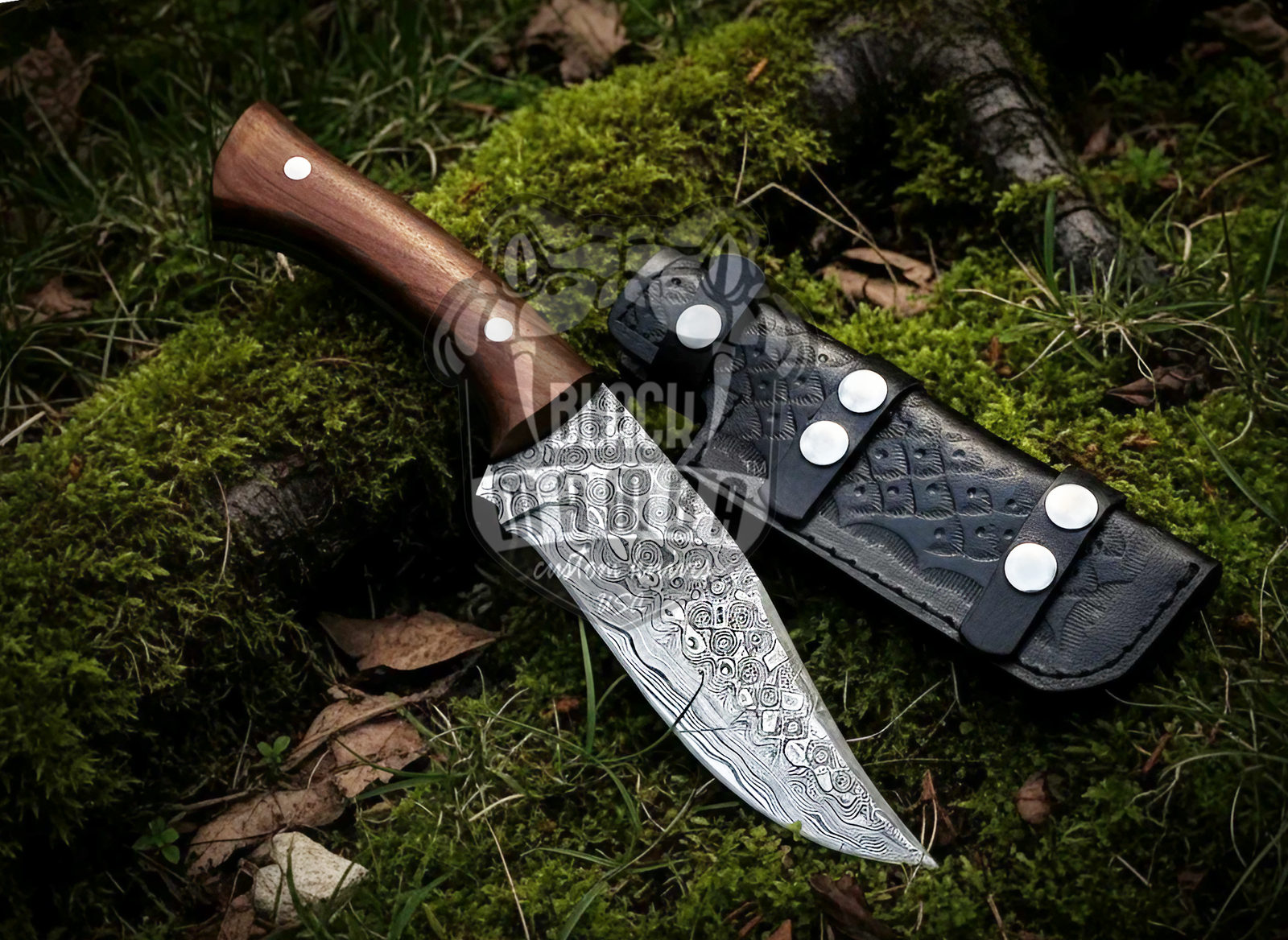
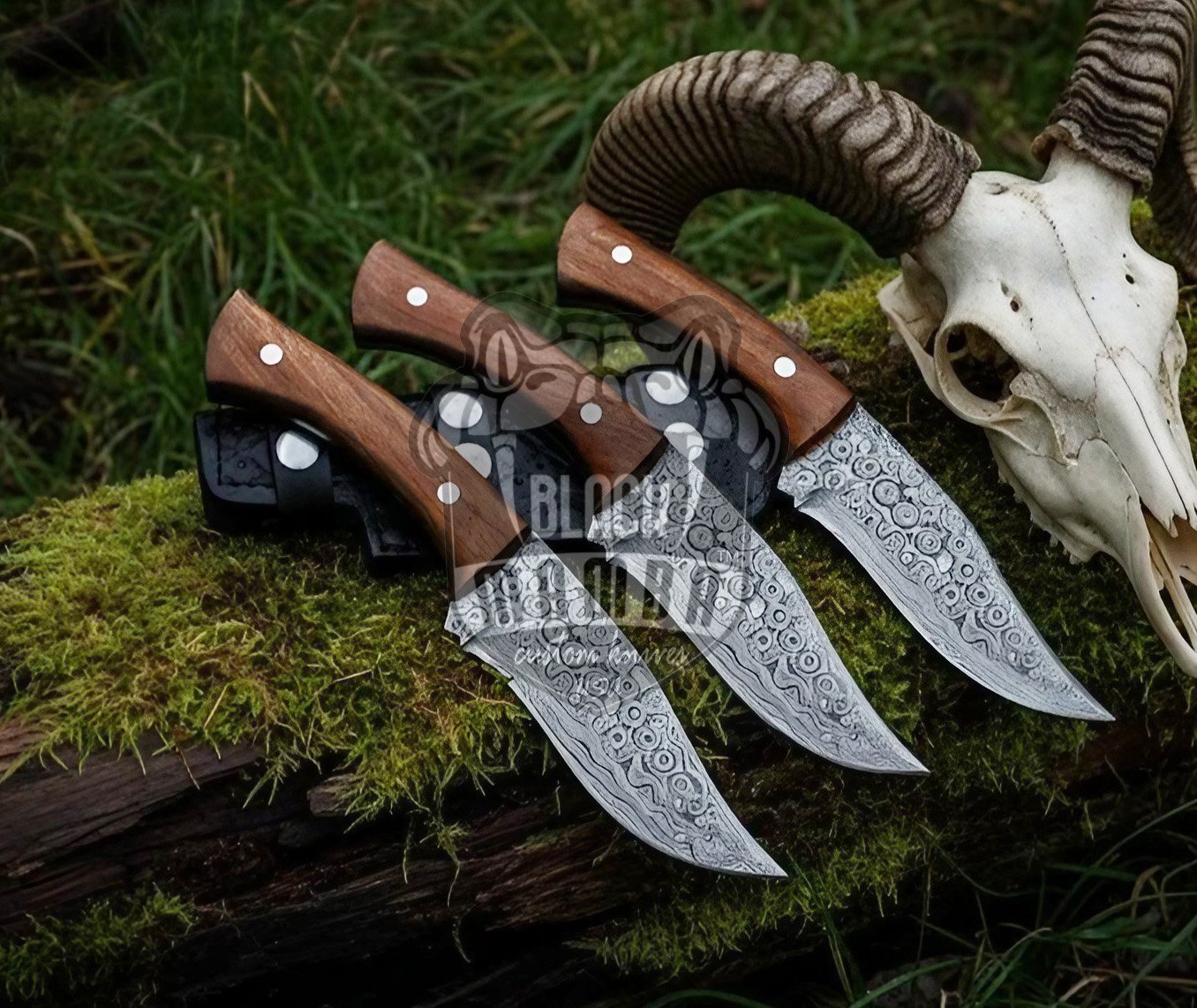
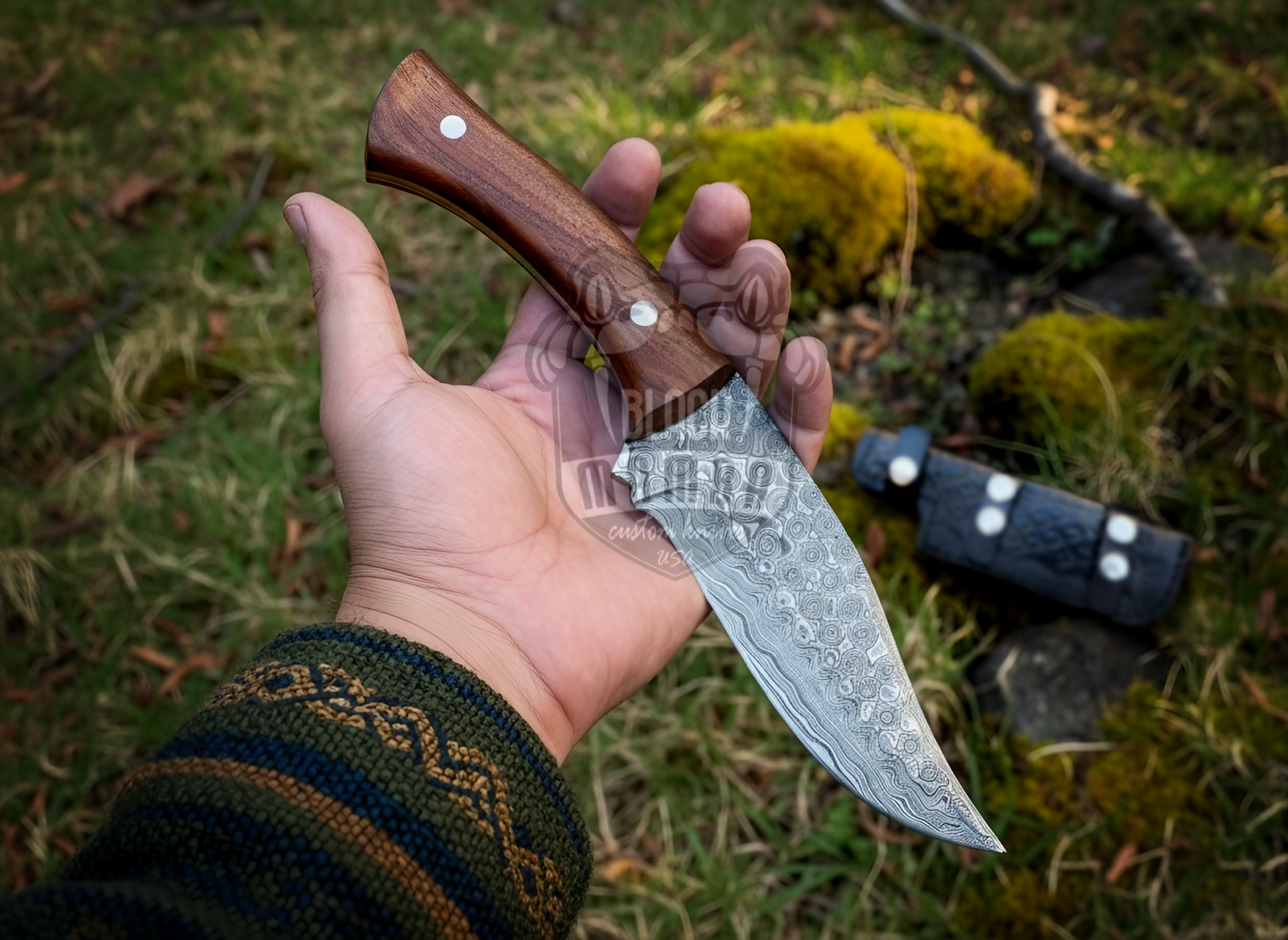
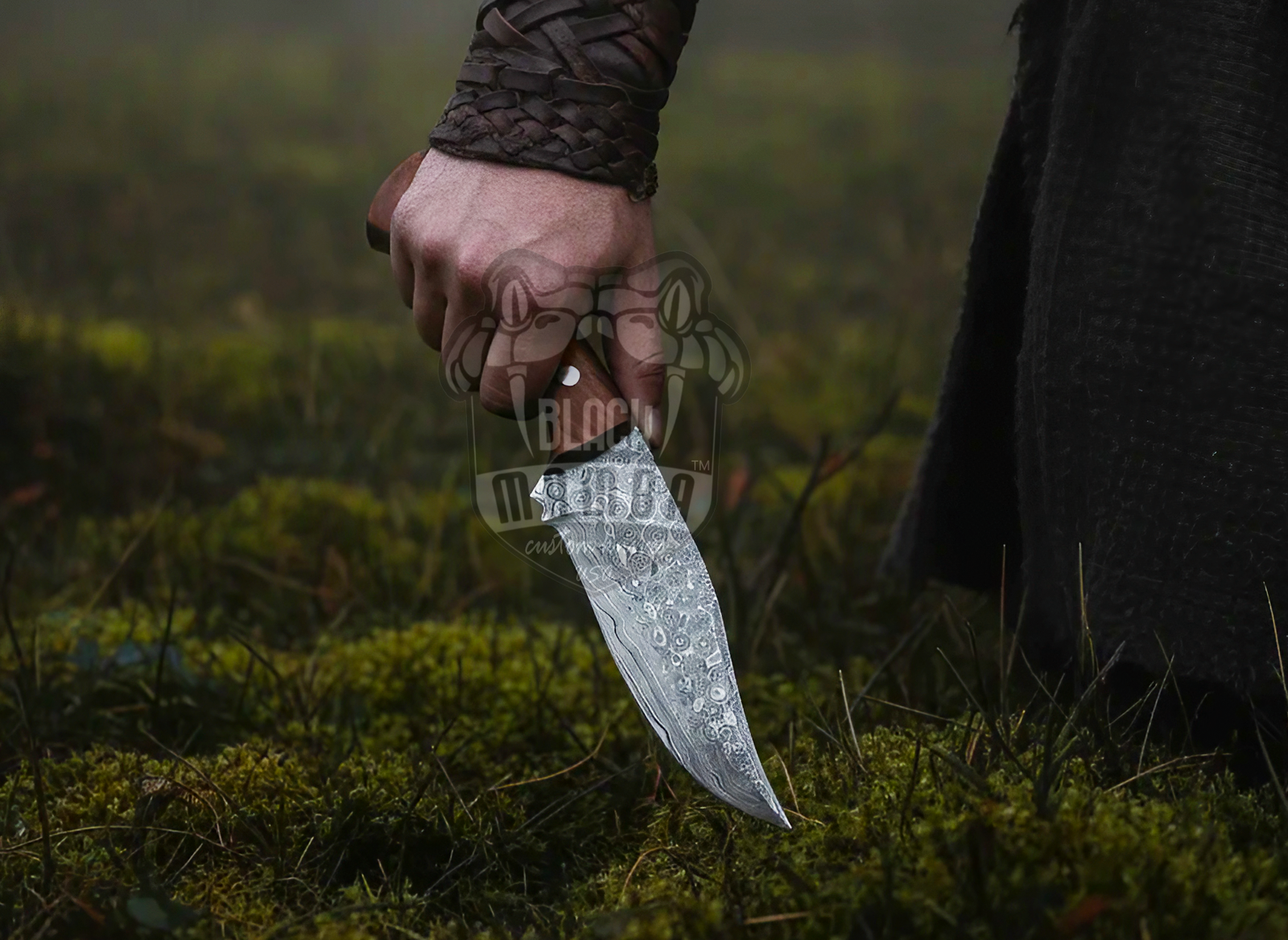
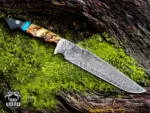
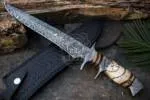
This is the knife we point at when someone asks what hand-forged Damascus actually looks like. Nine inches overall, five of blade, and a pattern that runs the full width of the steel because it is in the steel rather than on it.
| Overall length | 9 inches |
| Blade length | 5 inches |
| Handle length | 4 inches |
| Steel | 1095 + 15N20 Damascus |
| Hardness | 58–60 HRC, oil tempered |
| Handle | Pinned wood handle |
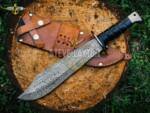
| Included | Hand-stitched leather sheath |
Built for: field dressing and camp work. Five inches of edge with a deep belly covers skinning, caping and general cutting, and the four inch handle keeps your grip close enough to the work for real control. A hand-stitched leather sheath is included.
The pattern is forged, not printed
Layers of 1095 and 15N20 are forge welded, drawn out, folded and welded again until the count reaches the hundreds. The two steels differ in nickel content, so when the finished blade is acid etched they darken at different rates and the layering appears. That is why the pattern shows on the edge bevel and on the spine as well as the flat. A printed pattern stops at the surface; ours will still be there after twenty sharpenings. If you want to check your own, read the Damascus hunting knife guide.
Five inches is the skinner’s compromise
Shorter blades are better around the head and feet, and longer ones open a body cavity faster. Five inches does both adequately and neither perfectly, which is exactly why it is the most common size in a hunting kit. The belly is where the work happens: a long curved section lets you draw the edge under hide with the point held clear. Our skinning knife guide covers the technique.
58 to 60 HRC, and what that means at the edge
That range is hard enough to hold an edge through a whole animal and soft enough that the edge rolls rather than chips when you hit bone. Harder steel would stay sharp longer and break more. A rolled edge comes back with a few passes on a steel or a fine stone; a chipped one needs regrinding. For a knife meant to be used in the field with nothing but a pocket stone, this is the right hardness.
After the field: Blood and stomach contents are acidic and they will etch pattern-welded carbon steel within hours. Rinse, dry thoroughly, and oil the blade before it goes in your pack. Do not leave it sheathed and wet overnight. Long-term, keep it out of the leather. Two minutes of attention after a hunt is the whole routine, and it is the difference between a blade that looks like this in thirty years and one that does not.
Buyer questions
Is this real Damascus? Yes. Pattern-welded 1095 and 15N20, forge welded and acid etched, hardened to 58–60 HRC. Not a printed or laser-etched imitation.
Will it rust? It can, like any high-carbon steel. Dry it and oil it and it will not. Most owners develop a light patina over a season, which is protective and normal.
What else should I look at? If you want a Damascus skinner with a different profile, the Silver Boa Snake is close in size with a narrower blade.
Model: BMK-890

Barbara Gomez –
Genuinely blown away with how this turned out. Took it out camping right away and it handled everything I threw at it. This is my new favorite in the collection.
George Anderson –
Best knife I’ve ever owned. Hands down. Love that this comes out of Memphis and still ships worldwide this quickly. Blade holds a razor edge right out of the box. Came in a nice gift box which made it feel even more special. Took it out camping right away and it handled everything I threw at it. Couldn’t be happier with this.
Donna Bryant –
This knife has already earned a permanent spot in my collection. Handle feels amazing and the balance is perfect. Fit and finish is museum quality. You can tell real craftsmen made this by hand. This has quickly replaced my old go to knife for field dressing. Will definitely order again for another one.
Travis Ramos –
Didn’t think a knife at this price could feel this premium. Blade holds a razor edge right out of the box. Would not hesitate to order again.