


Description
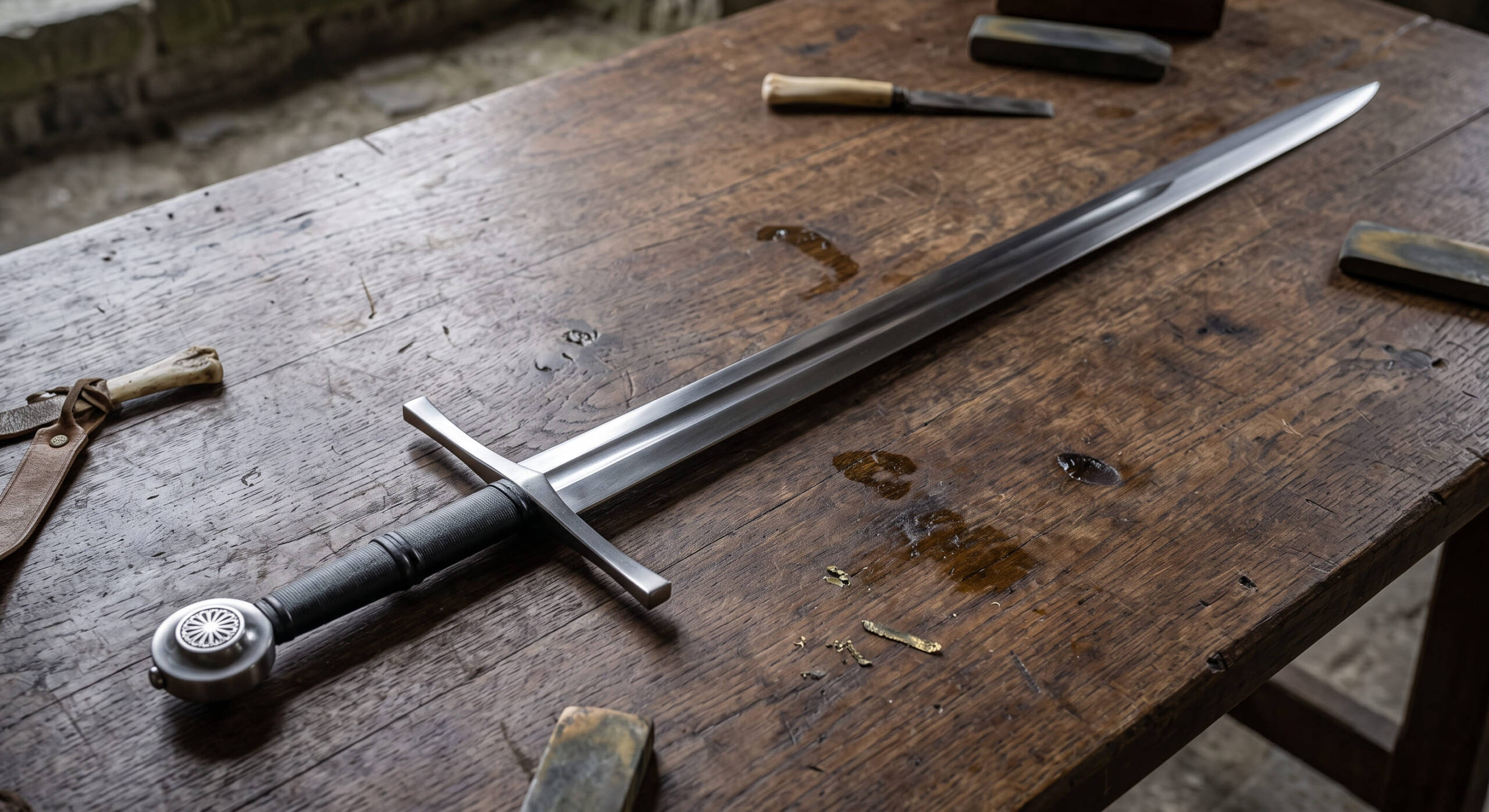
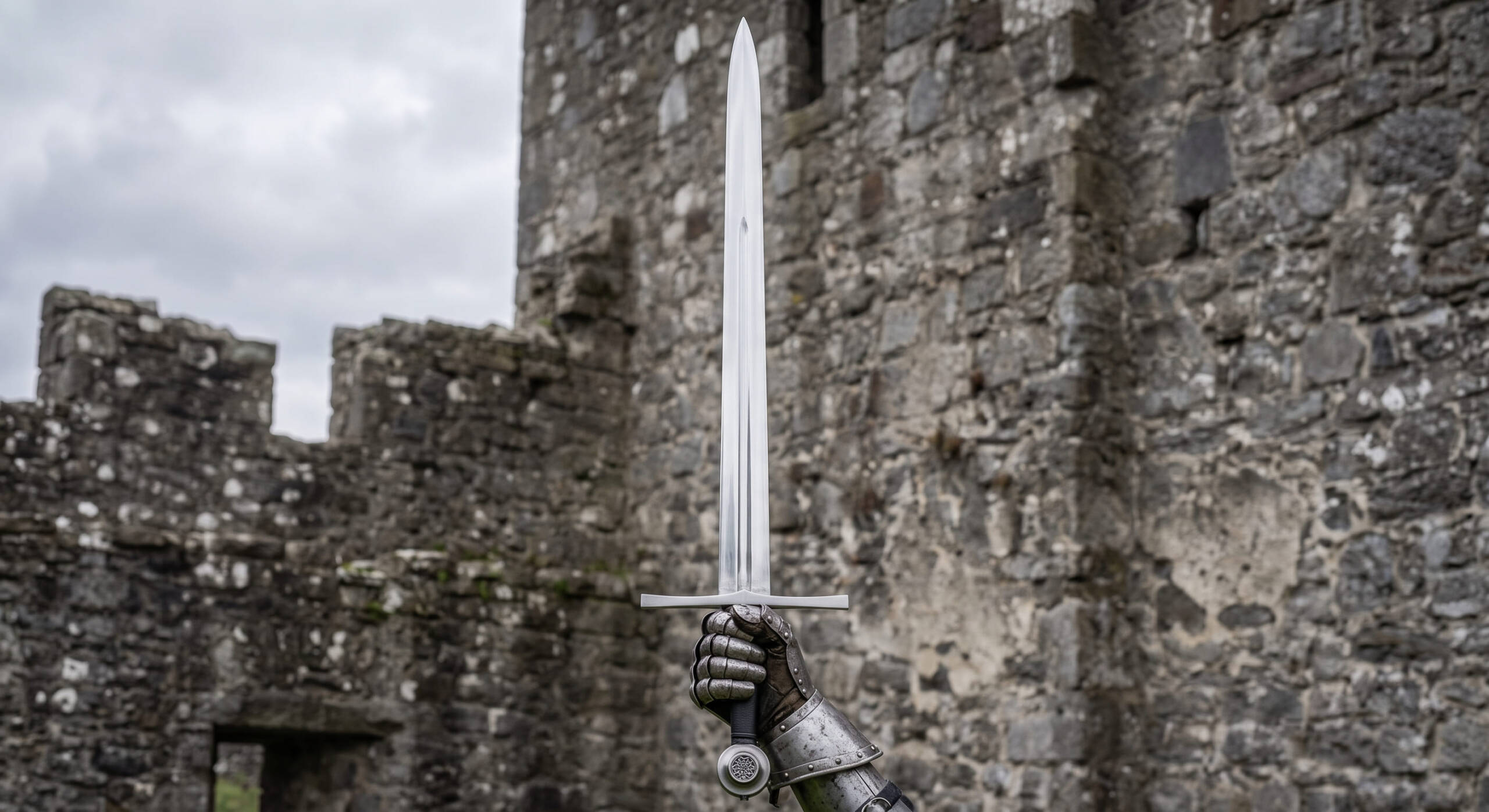
Ironcross is a thirty-six inch medieval European longsword, which means it is built around two hands rather than one. The blade is straight, double edged, mirror polished, with a narrow fuller running down from the guard and a diamond cross-section carrying the last stretch to the point.
The crossguard is a long straight steel bar. The grip is wrapped in black leather over its full two-handed length and broken up by steel risers, so the hands find their positions by feel. Behind it sits a steel disc pommel with a rosette engraved into the face.
| Overall length | 36 inches |
| Blade | Straight double edged, narrow fuller, diamond cross section |
| Steel | D2 tool steel |
| Finish | Mirror polished |
| Guard | Long straight steel crossguard |
| Grip | Black leather wrapped, two handed, with steel risers |
| Pommel | Steel disc with engraved rosette |
| Included | Fitted leather scabbard |
Who it’s aimed at: the buyer who wants the sword everyone pictures when they hear the word. It is the largest thing in this group by a clear margin: thirty-six inches needs real wall. If you are buying for a room rather than a case, this is the one that fills it.
How this longsword is put together
The tang runs the full length of the grip and is peened over at the pommel. Peening means the end of the tang is hammered out cold so it spreads and locks pommel, guard and grip into one assembly under compression — no screws, no threaded pommel nut, no epoxy holding it together. It is how a longsword is supposed to be built. The full tang versus partial tang guide uses this sword as its worked example.
Diamond section versus a flat blade
The fuller stops partway down and the cross-section becomes a diamond — a raised central ridge running to the point. A fullered blade is efficient at cutting; a diamond section is stiff, and stiffness is what a point needs to drive through resistance instead of flexing aside. Fuller below, diamond above, is a compromise European smiths arrived at deliberately: cut with the middle, thrust with the last third.
The risers on the grip
Those raised steel bands are not trim. On a two-handed grip your hands need to know where they are without looking, and a riser gives the leading hand something to register against under the guard and the trailing hand something to brace on near the pommel. They also stop the leather wrap creeping along the tang over years of handling, which is the usual way a long grip goes loose. On a sword this size the two hands do different jobs — the front hand aims, the back hand drives — and the risers are what let you find both positions in the dark.
Ongoing care: a mirror finish shows everything, so wipe the blade after handling and keep a thin oil film on it. D2 is a high chromium tool steel — more corrosion resistant than plain carbon, still not stainless, and reviewed against the alternatives in our knife steel comparison. Keep the leather grip out of damp and store the sword out of its scabbard.
FAQs
Is it full tang? Yes — the tang runs the length of the grip and is peened at the pommel, which is how a longsword is meant to be assembled.
Can the pommel be unscrewed? No. It is peened on, not threaded, so the assembly is permanent.
Is it a sparring sword? No. D2 is a tool steel, not a spring-tempered sparring steel.
Is a scabbard included? Yes, a fitted leather scabbard.
What is the shorter alternative? The Oak Reaver medieval falchion is 24 inches, one handed and single edged.
Make it a gift: add laser engraving at checkout. Every order ships from Memphis, TN with a lifetime warranty — backed by 2,000+ verified customer reviews.
Model: BMK-1136
Alan Sullivan –
My buddy couldn’t stop talking about this after I unboxed it. Handle feels amazing and the balance is perfect. Good to know real Memphis craftsmen are behind this, and shipping was quick too. This will not be my last order from this company.
Donna Vance –
This knife is a genuine work of art. Took it out camping right away and it handled everything I threw at it. Can’t say enough good things about this purchase.
Gary Miller –
Not going to lie. This exceeded my expectations by a lot. Came in a nice gift box which made it feel even more special. Happy customer here, through and through.
Hunter Morales –
Genuinely thoroughly impressed with how this turned out. Handle feels amazing and the balance is perfect. 10/10 would buy again.
Jerome Wilson –
This knife is a genuine work of art. Every piece of the fit and finish looks hand checked before it shipped. Definitely bookmarking this seller for future orders.
Nathan Turner –
My neighbor was speechless when I showed them this knife. Every piece of the fit and finish looks hand checked before it shipped. This is my new favorite in the collection. Ordered from Black Mamba Knives before and the quality stays consistent every time.
Brenda Bryant –
Top notch quality for the price point. Steel has a gorgeous pattern that looks different in every light. This is my new favorite in the collection.