
Description
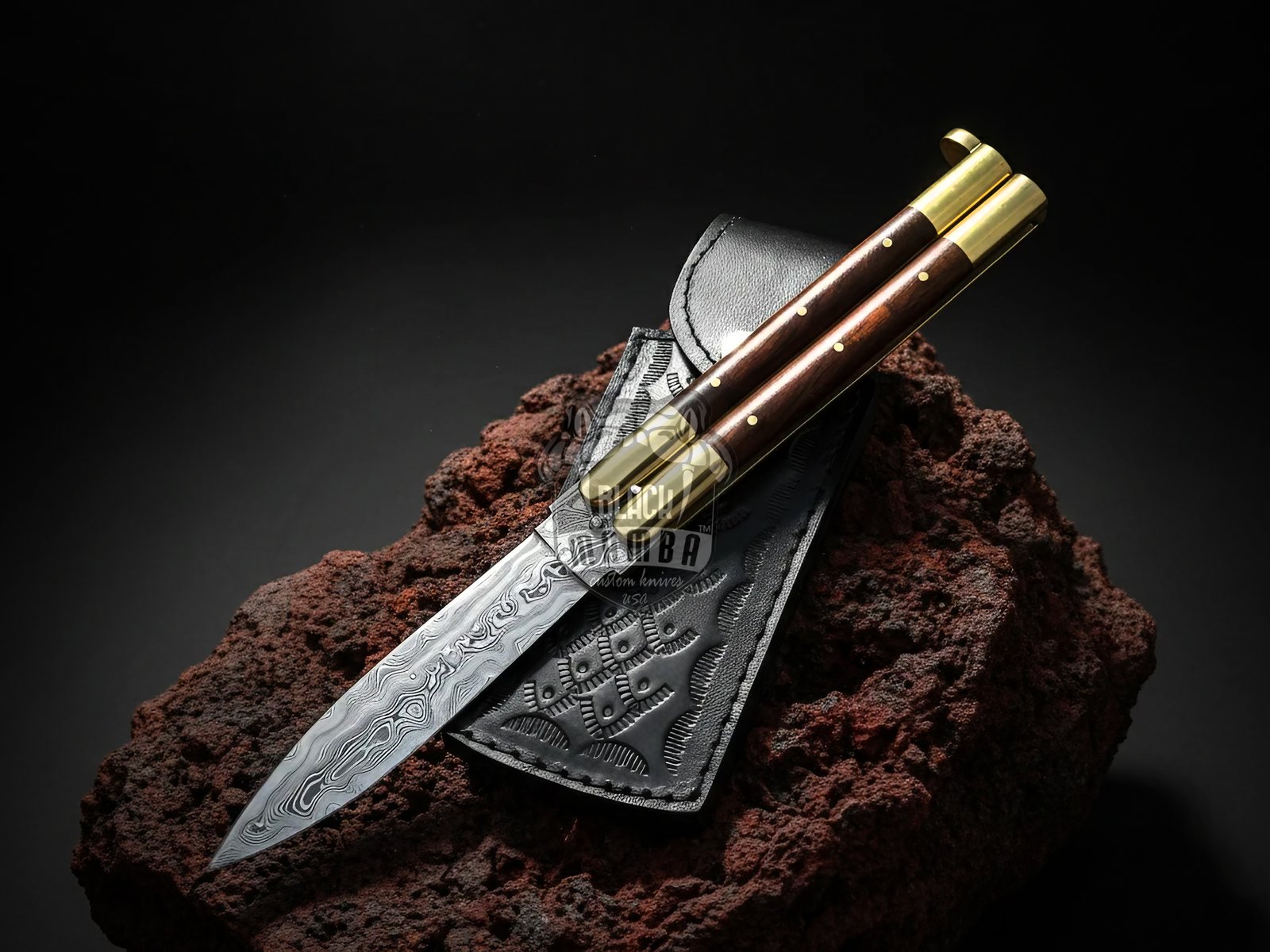
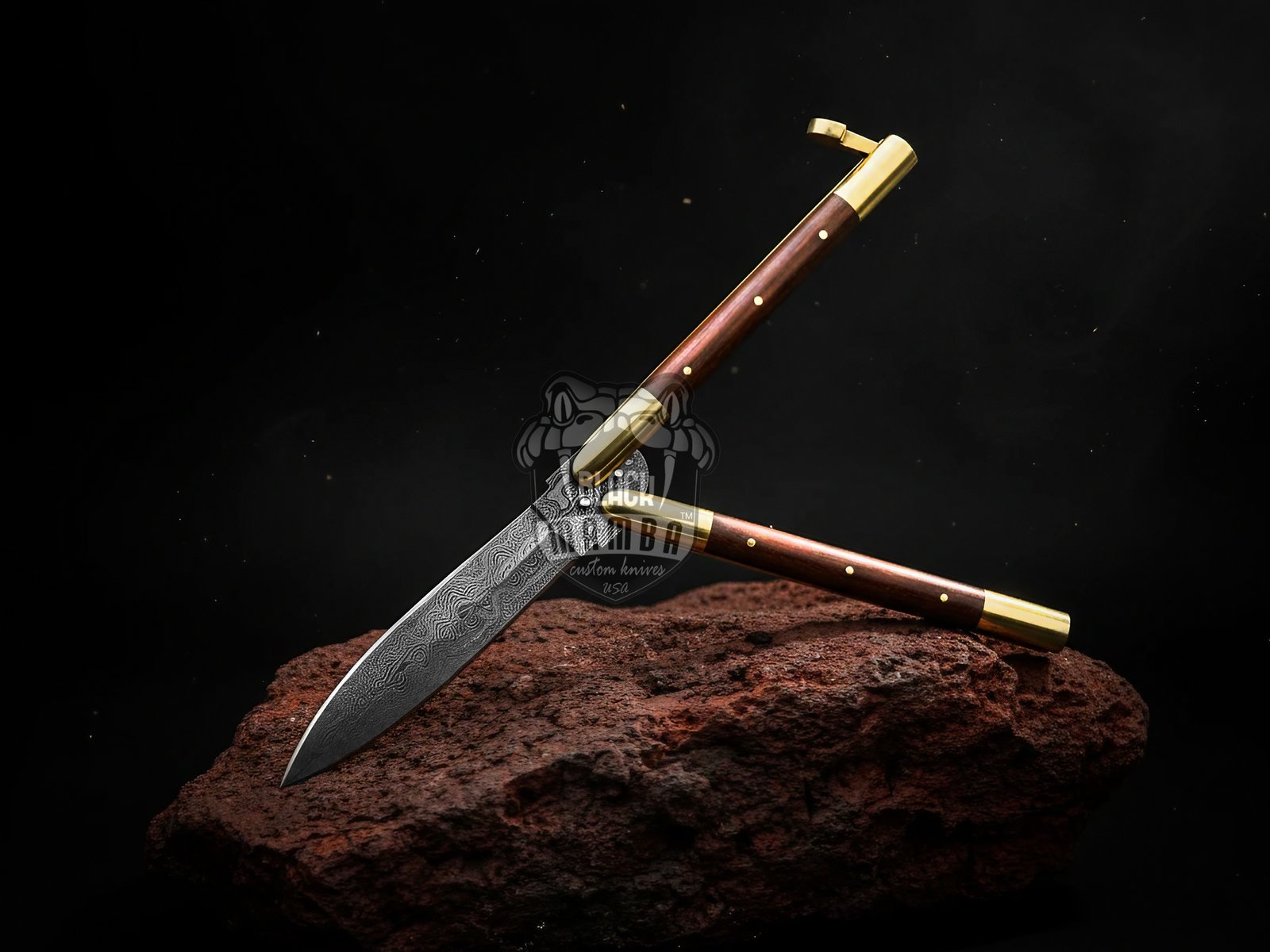
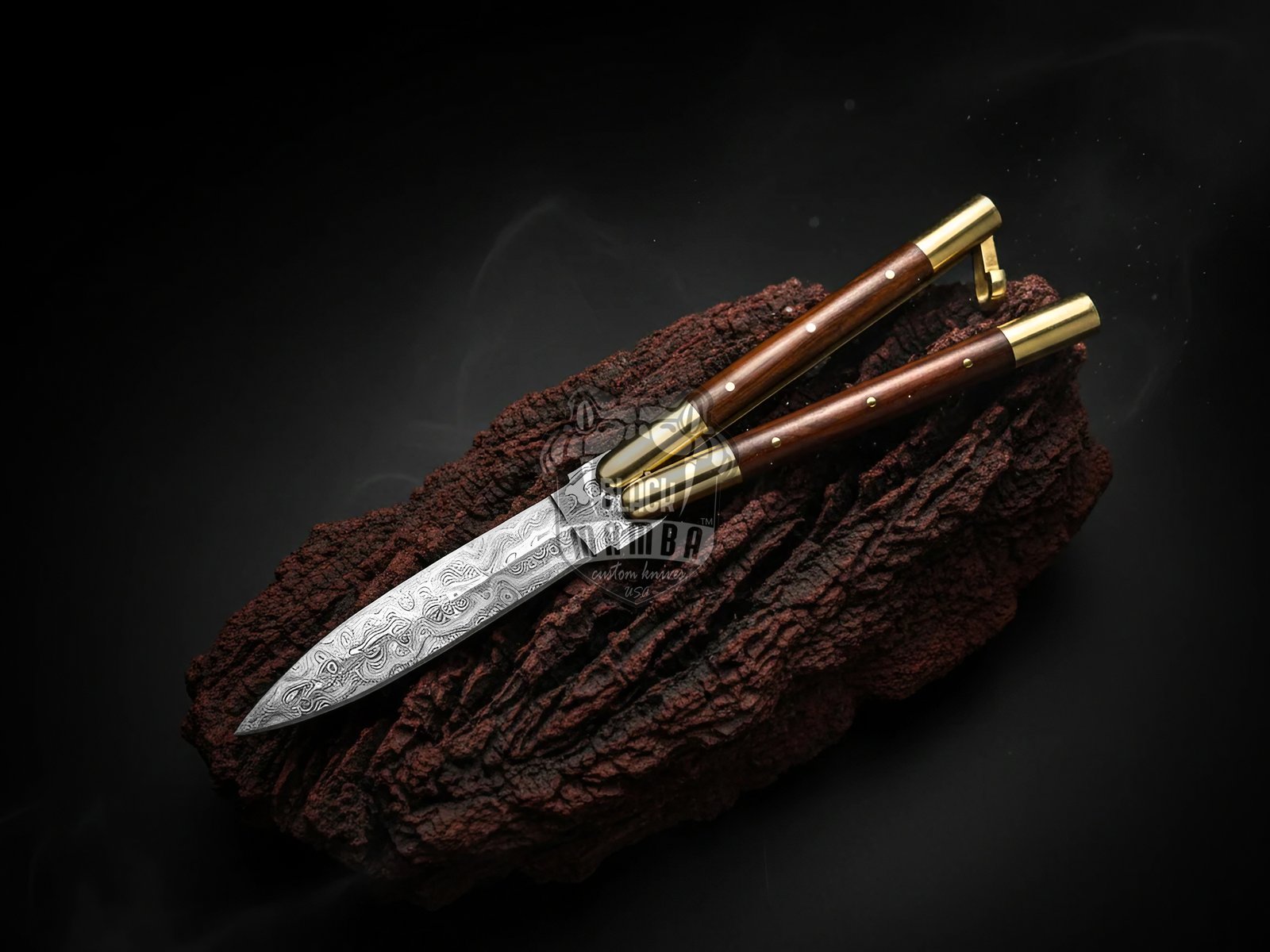
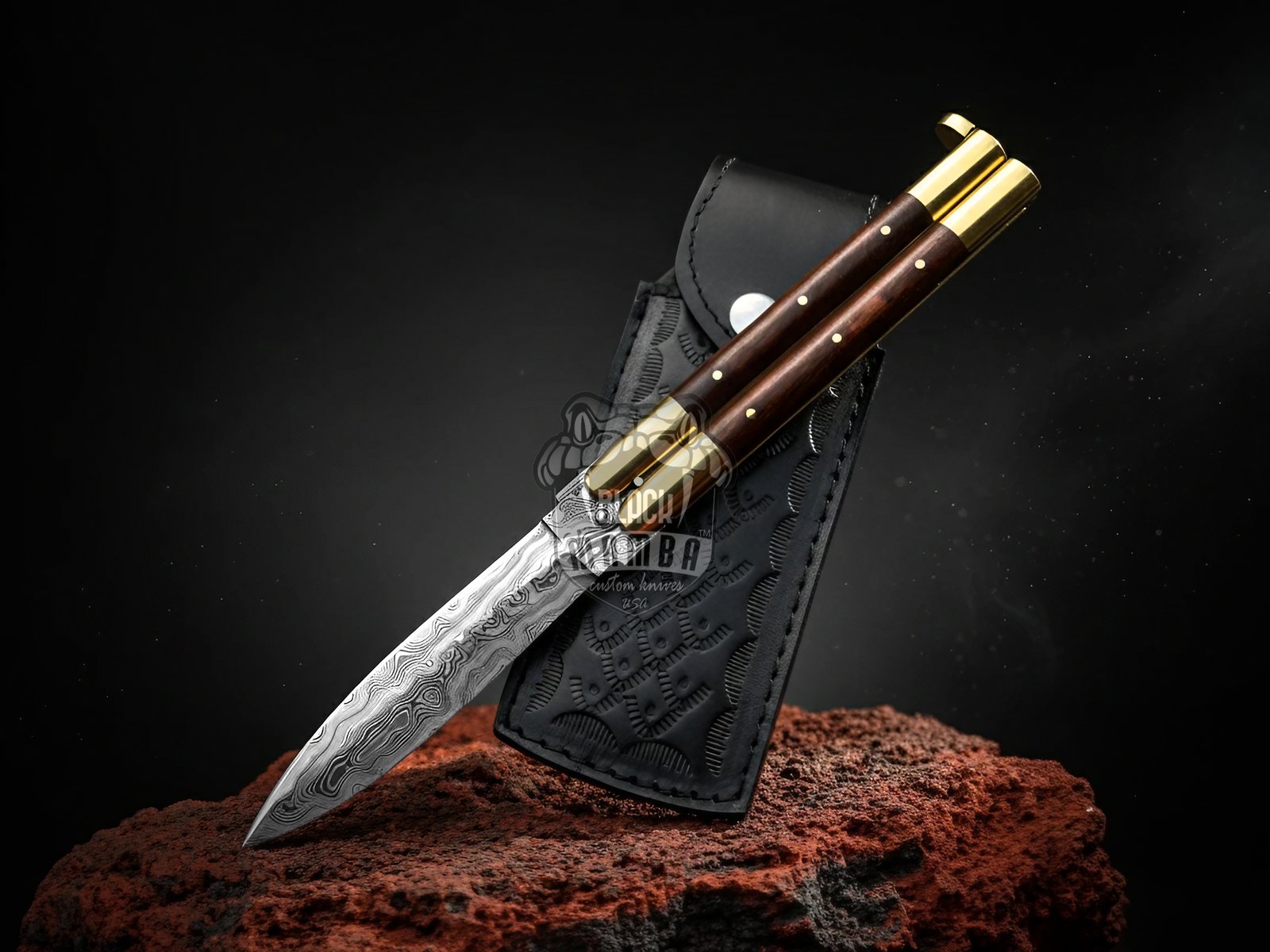
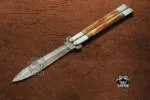
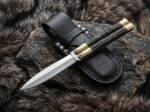
Rosewood panels, polished brass at both ends, and a forged Damascus blade taken to a slim spear point. Nothing on this knife is trying to be clever. It is the plain, well-proportioned version of a full-size butterfly knife, and the money has gone into the billet and the fit rather than into ornament.
| Overall length | 11.4 inches |
| Handle length | 5.9 inches |
| Handle | Rosewood with brass |
| Steel | 1095 + 15N20 Damascus |
| Hardness | 58–60 HRC, oil tempered |
Brass ages on its own schedule
The bolsters will not stay bright, and you should decide now whether that bothers you. Handled regularly, brass moves from yellow to a deeper gold and then to soft brown, quickest where fingers rest. Some owners bring it back every few months with polish and a cloth. Others let it run and prefer the result at year three. Both are legitimate. The one thing to avoid is taking an abrasive polish to brass that sits flush against the etched blade, because whatever hazes the brass will haze the pattern next to it just as happily.
Rosewood needs almost nothing
Rosewood is naturally oily, which is why it has been the default for tool handles for a couple of centuries. It shrugs off moisture better than most decorative woods and asks for a wipe rather than a regimen. It does react to light: a knife left on an open shelf will be visibly deeper in colour after a year than an identical one kept in a drawer. Neither is wrong, but if you own two and display one, they will drift apart.
The blade under the trim
Two high-carbon steels, oil tempered to the hardness listed above, on a full-size frame. Brass is far softer than any of that, so expect bolster dings and marks long before the edge has anything to say. Those marks are the first honest sign a knife gets used. If you are still learning to judge a forged pattern by eye, forged against printed Damascus is worth ten minutes, and the trick fundamentals will tell you whether this weight suits your hands. Similar materials, different blade shape: the double-edge rosewood and brass build.
How it swings
Mass sits at the bolsters, which is where you want it on a flipper. Rotations start with a little more effort than a short trainer asks for and then carry themselves through, so timing matters more than force. Brass pins run through the wood at even spacing and the panels are set flush, so nothing catches a knuckle mid-rotation. Latch, pivots and channel are fitted by hand until the two handles close together rather than one after the other.
Care in plain terms
Dry it after handling. Put a thin film of oil on the flats every few weeks if you live somewhere humid, and a drop in each pivot when the action starts to feel dry. Do not leave it inside the sheath for months. That is the entire routine, and it takes about as long as making coffee.
Sheath, law and origin
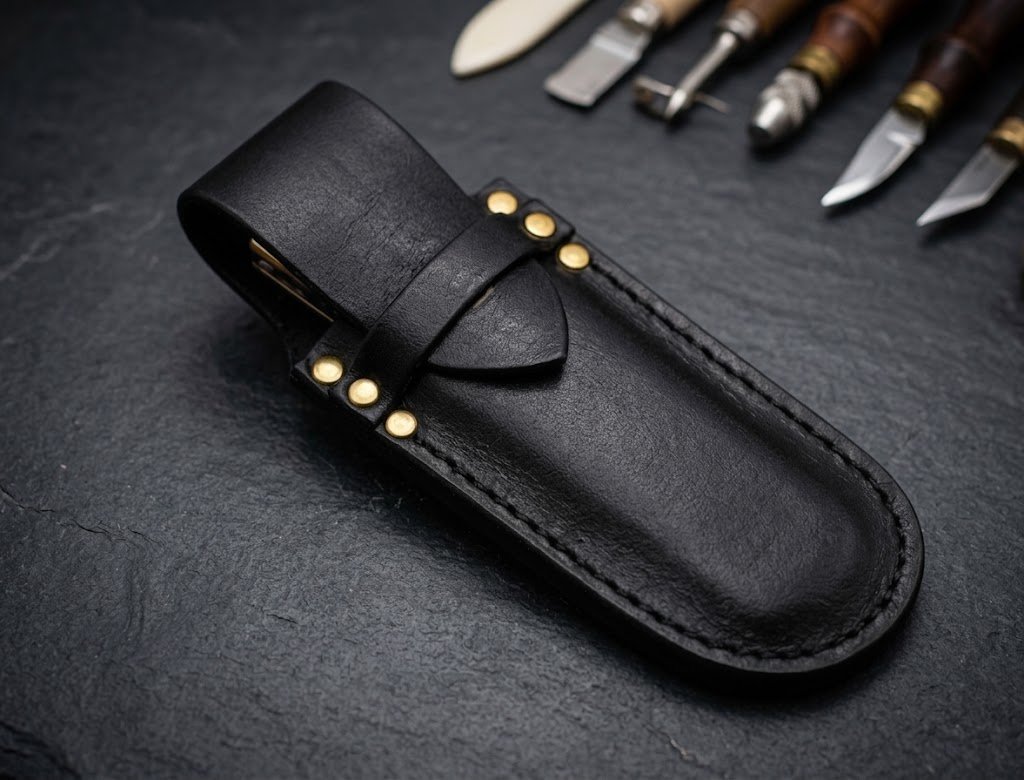
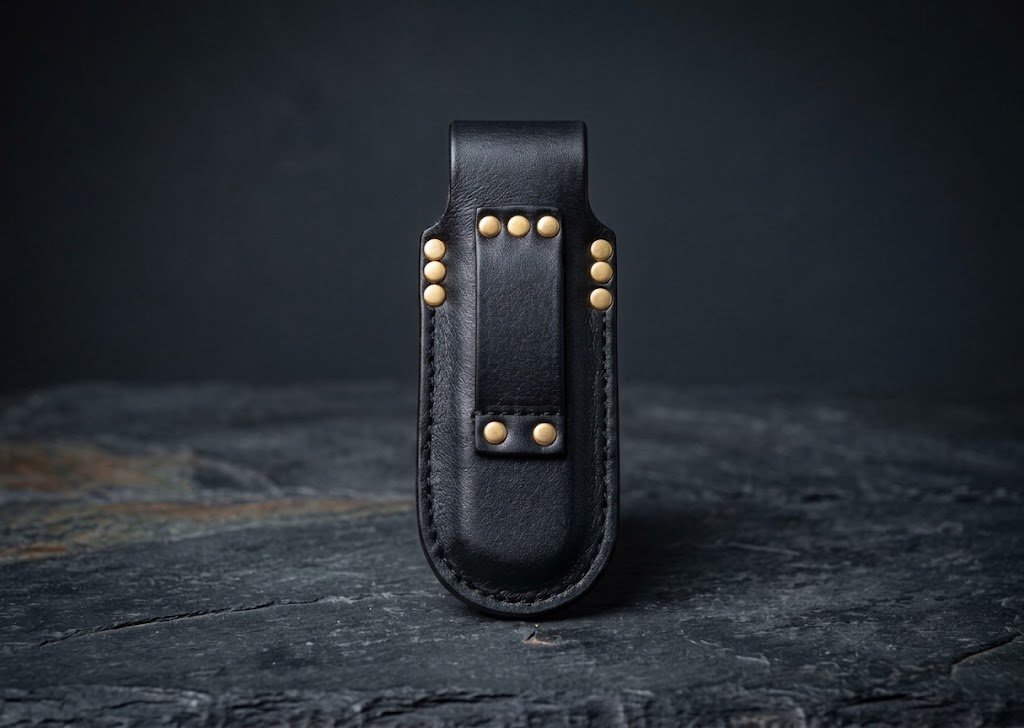
The sheath is stitched black leather with a tooled face. Check your local rules on balisong ownership before you order, since they are not consistent between states or countries. Forging, grinding, heat treatment, handle fitting and sharpening all take place at our Memphis bench, and the knife is warranted for life against faults in our work.
Model: BMK-725
Want a different handle or blade? Browse all of our balisong knives for sale.
Pamela Hunt –
Turned out better than I expected going in. Action is good though it needed a little tightening on the pivots. Blade is sharp but not quite razor sharp out of the box. Glad I made this purchase.
Betty Vance –
Five stars isn’t even enough honestly. Good to know real Memphis craftsmen are behind this, and shipping was quick too. This is my third order from Black Mamba Knives and they never disappoint. This is my new favorite in the collection.
Ryan Hall –
This balisong has quickly become my favorite piece in the collection. Weight is perfectly balanced for flipping. Happy customer here, through and through.
Kevin Rivera –
Outstanding quality for the price point. Action is smooth right out of the box, no break in needed. Already planning my next pickup from this seller.
Grace Howard –
Knew this balisong was special the second I opened the box. This flips cleaner than knives twice the price. Comes with a nice pouch which is a nice touch. This is exactly why I keep coming back to this store.
Amanda Wood –
Very disappointed with this balisong. Latch barely holds the knife closed. Not what I expected for the price paid.
Cody Scott –
Can’t stop showing this off to everyone who comes over. Already added a few more items from this store to my cart.