
Description
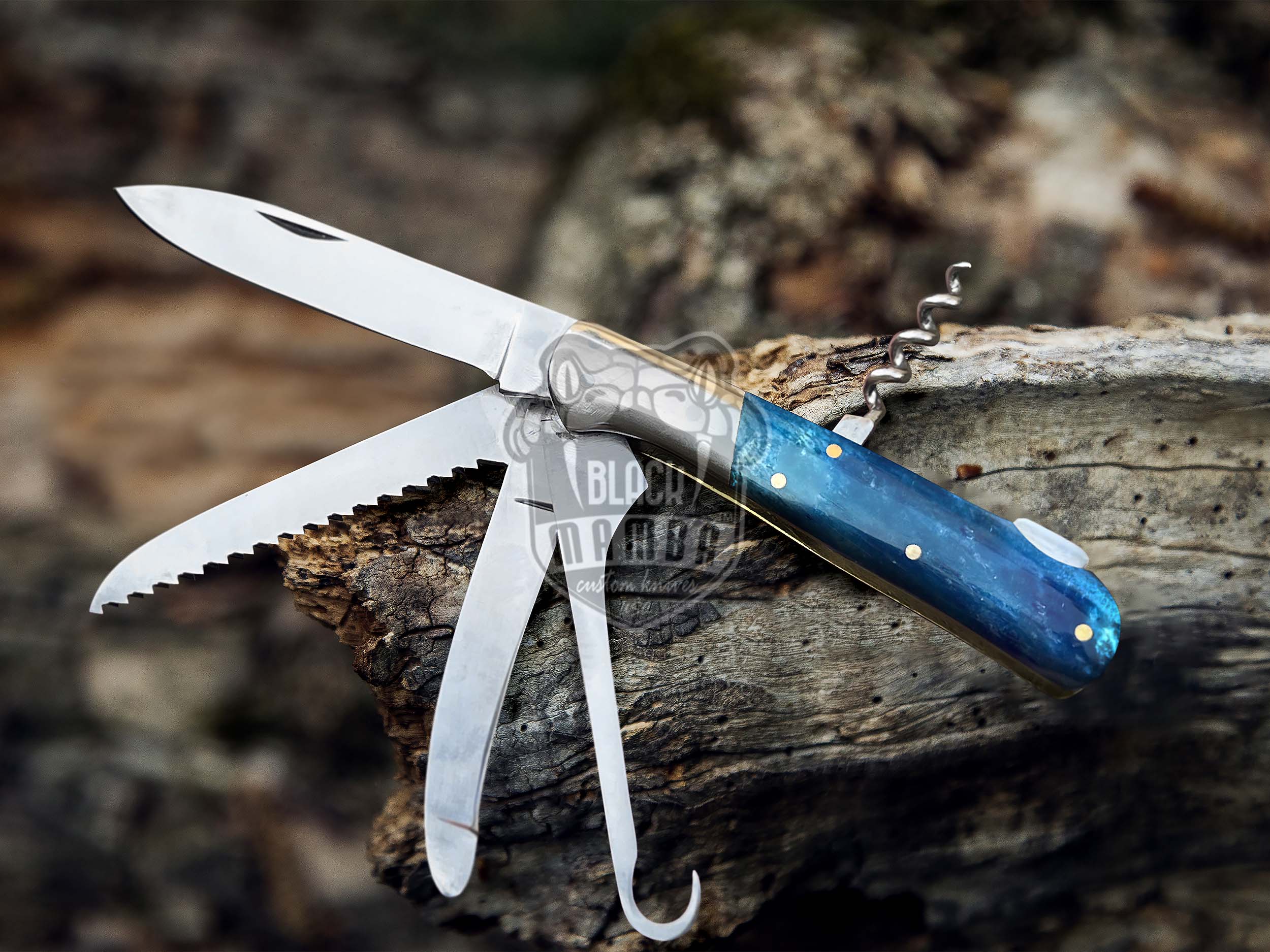
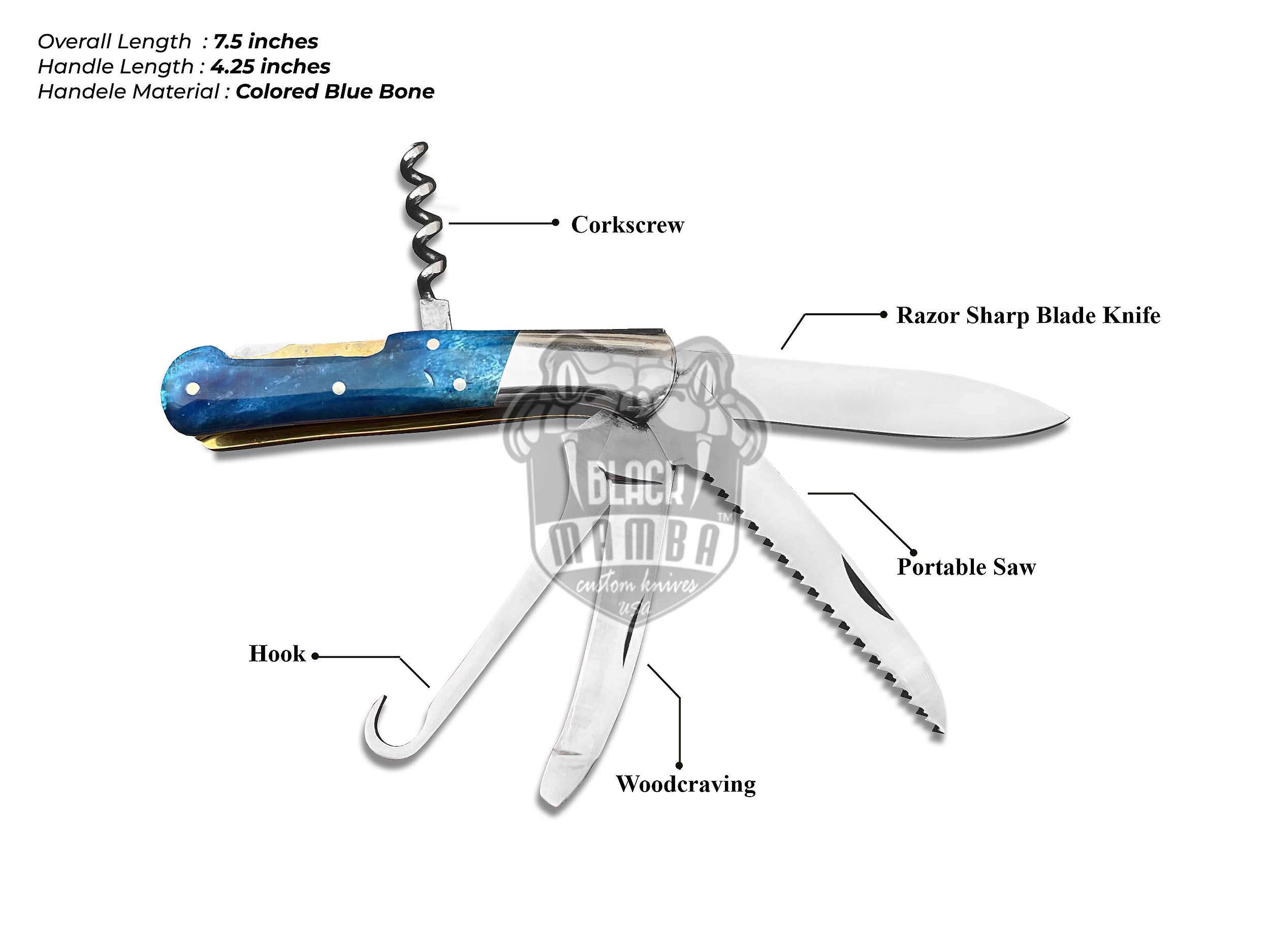
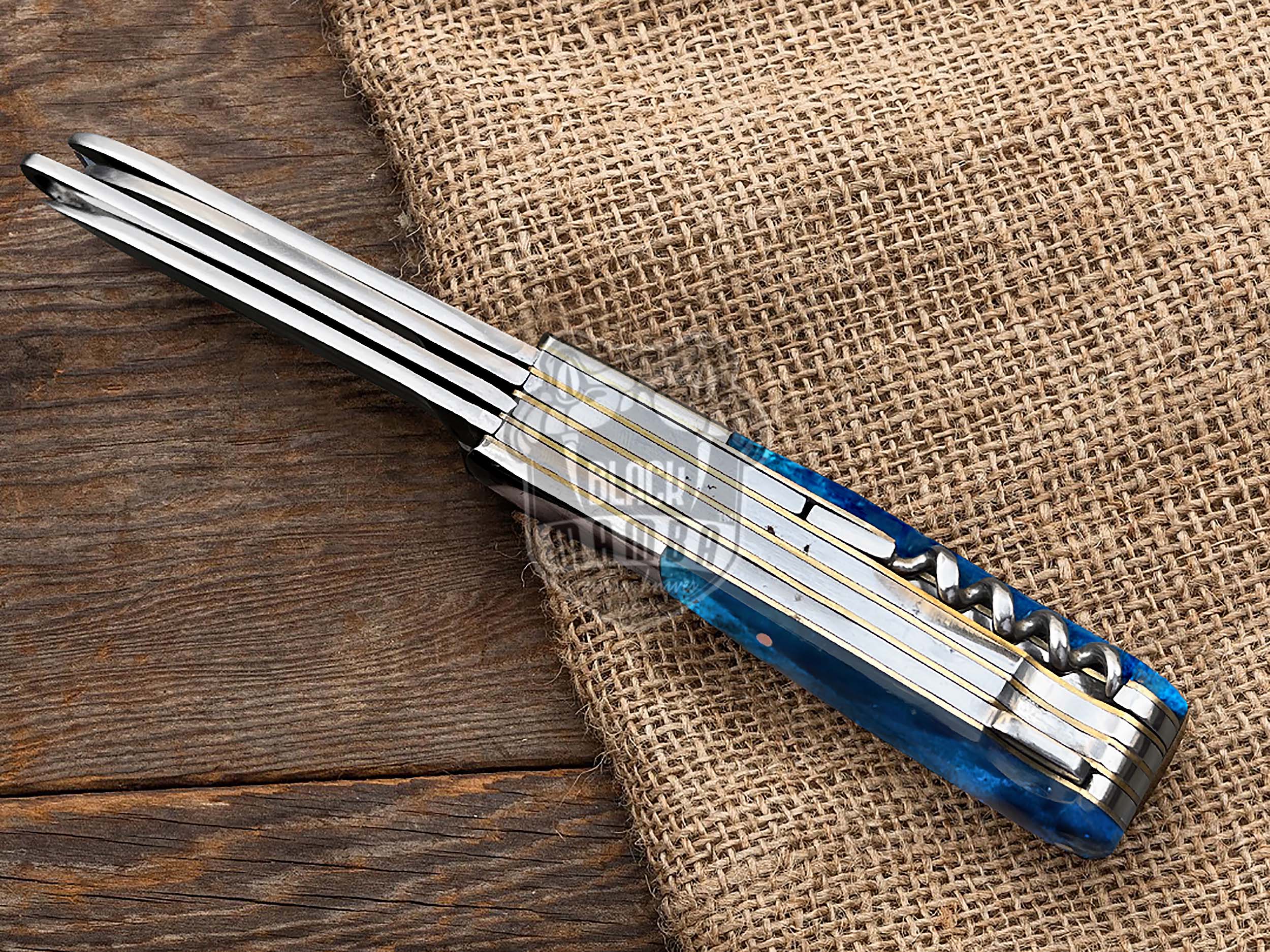
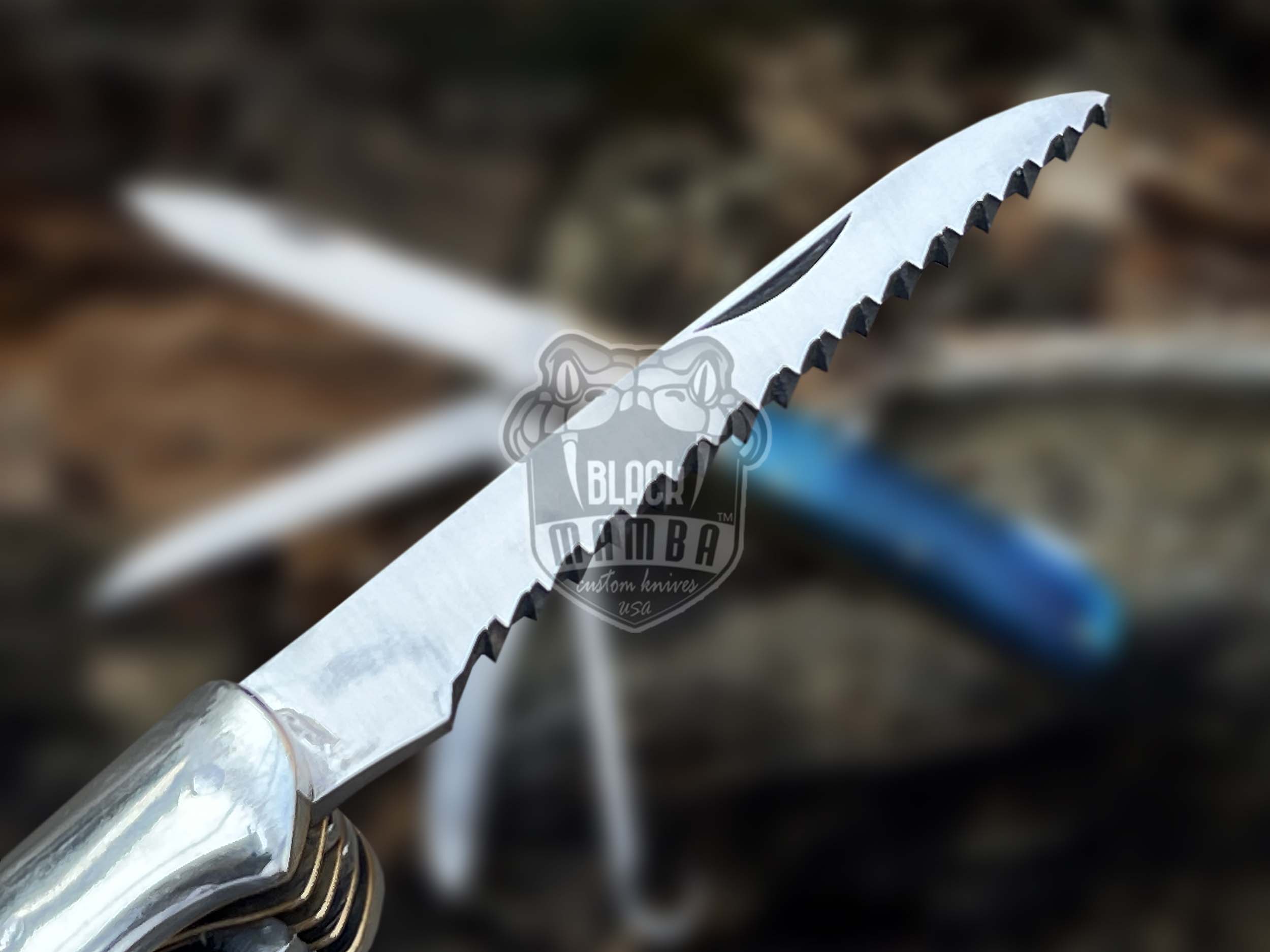
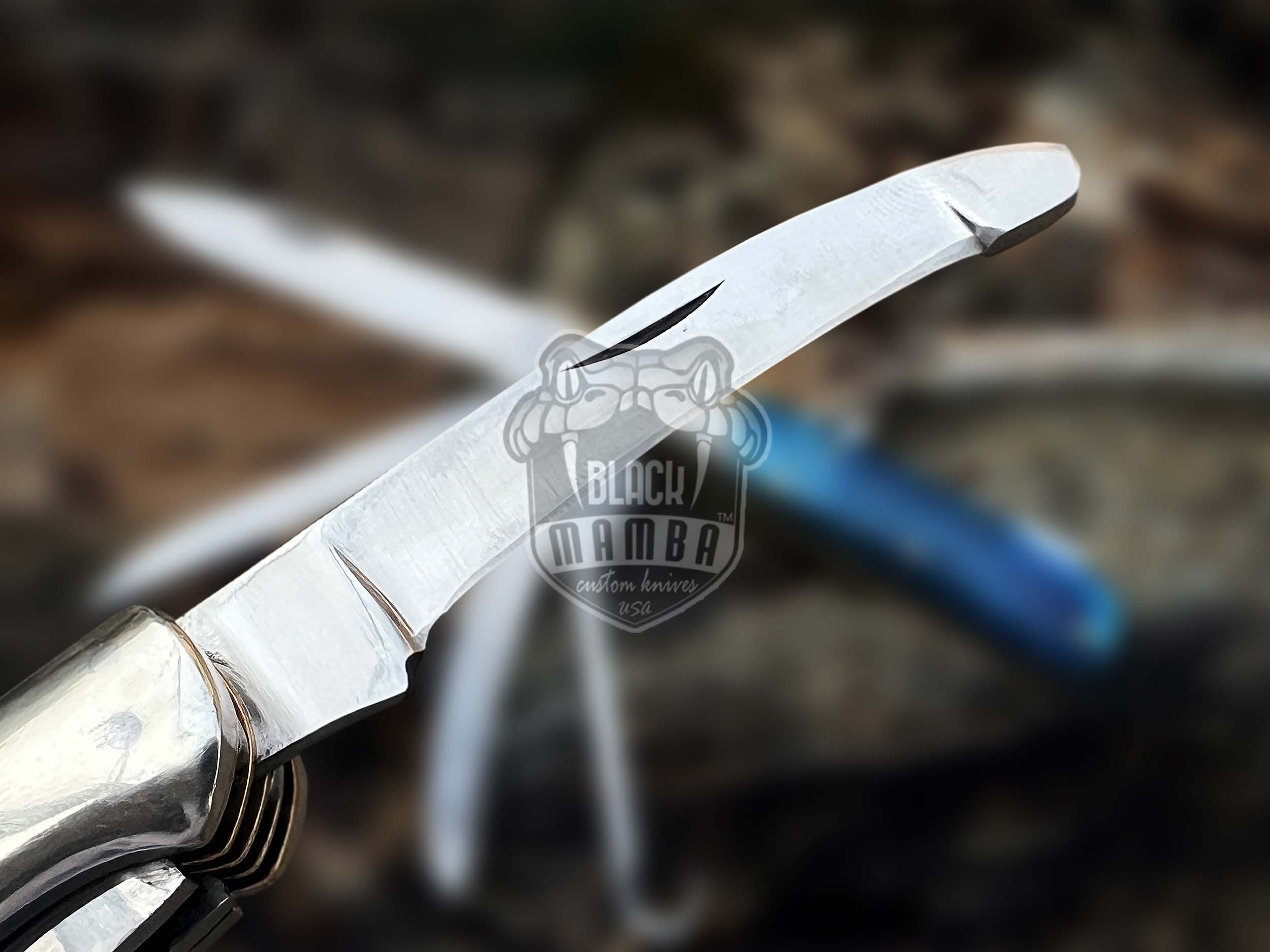
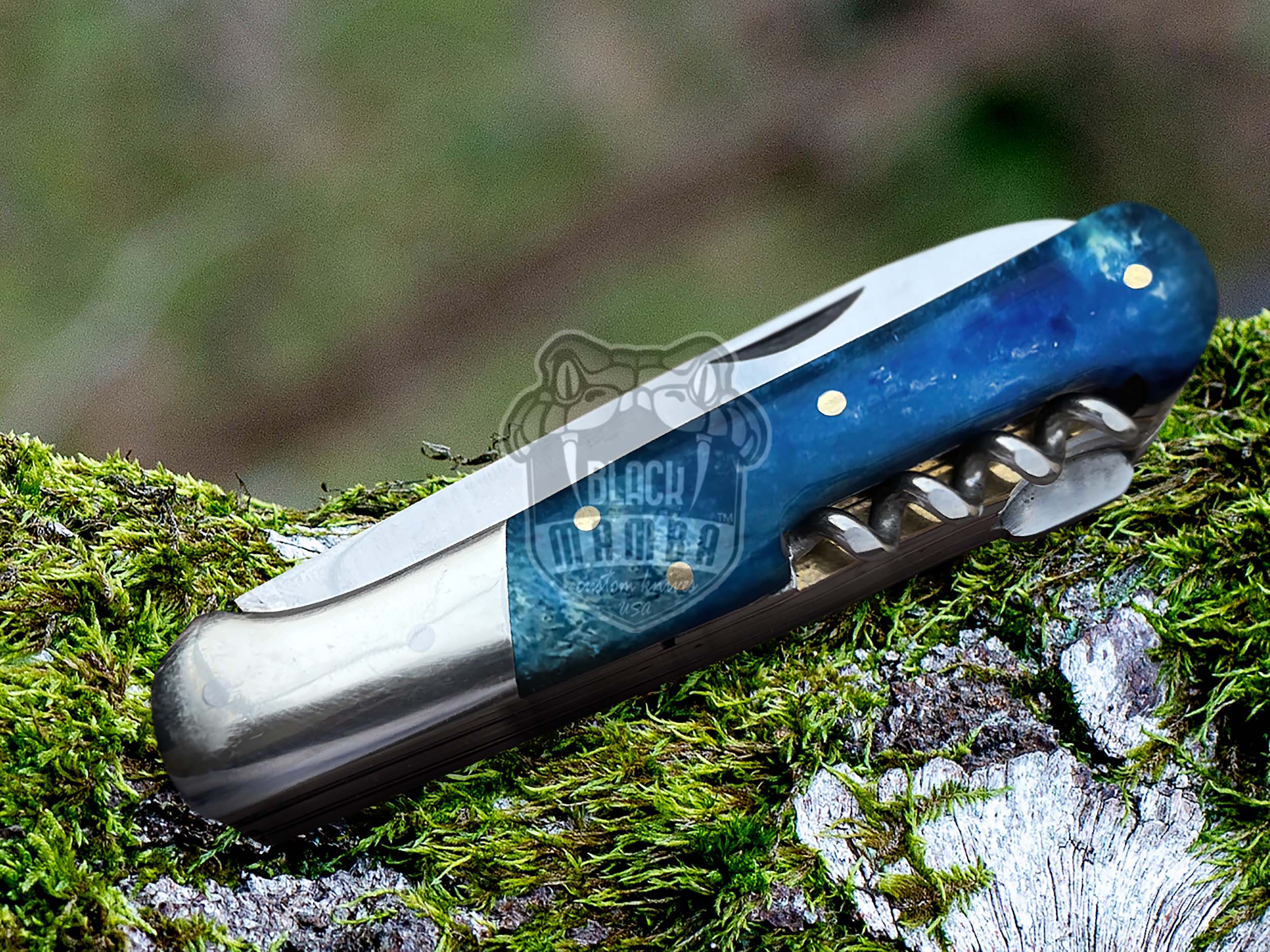
Five blades in one camel bone frame. The penta fold is the maximalist end of the traditional pocket pattern, more edges than most people will ever use at once, arranged so each comes out without disturbing the others.
| Overall length | 8.3 inches |
| Blade length | 4 inches |
| Handle length | 4.3 inches |
| Steel | 1095 + 15N20 Damascus, 352 layers |
| Hardness | 58–60 HRC, oil tempered |
| Weight | 10 oz |
| Handle | Camel Bone |
| Pattern | Mirror shine Blade, Extreme custom File-work |
| Included | Hand-stitched leather sheath |
Built for: gifting, mostly, and for the collector who already owns the sensible knives. Ten ounces of multi-blade folder is a statement before it is a tool.
Ten ounces, and what that means in practice
This is not a knife you forget you are carrying. Ten ounces is about the weight of a full soda can, and five blade wells plus their springs are where it comes from. In a coat pocket, a glovebox or a tackle bag it is fine. Dropped into thin trousers with nothing to hold it, it will pull all day. Anyone shopping for a daily carry should be honest about that and buy a two-blade pattern instead.
Do you need five blades?
Truthfully, no. Two cover most of what anyone does and three is generous. The fourth and fifth exist because the pattern is a demonstration of what a maker can fit into one frame without the knife becoming unusable, since the springs have to be timed so no blade fights another. Judge it as craft and it makes sense. Judge it as tool per ounce and it does not. Multi blade pocket knives is honest about which layouts are practical.
Five pivots to look after
Care: five blades means five pivots and five springs, and every one is a place for grit and moisture to sit. Open each blade fully, put a single drop of oil at the joint, work it, then wipe the outside dry. Doing that twice a year prevents almost every problem these knives develop. Camel bone is stable but dislikes sitting damp for days, so a knife that gets wet should be opened out and left to dry rather than closed and pocketed. Keep an oiled cloth for the blades, because high-carbon steel spots quickly wherever two blades touch and trap moisture between them.
Who it suits
Collectors, gift buyers, and anyone drawn to the traditional pattern for its own sake. Someone looking for one knife to do everything is better served by a fixed blade, and a Damascus tracker knife handles camp work this cannot touch. Knife types explained is a useful map if you are still deciding.
FAQs
Can I have the blades sharpened locally? Yes, but tell whoever does it that the steel is high-carbon at the hardness listed above, and ask them not to use a powered belt, which can draw the temper.
Will all five stay tight over time? With occasional oiling, yes. Springs loosen from grit, not from use.
Sprung, timed and hand-finished in Memphis, Tennessee.
Model: BMK-803C
Sandra Hall –
Rock solid craftsmanship on this one. Telling everyone I know to check this maker out.
Sharon Bryant –
This knife has already earned a permanent spot in my collection. Has become my main prep knife in the kitchen since it arrived. Cleans up easy and hasn’t shown any rust or staining. Edge geometry makes thin slicing so much easier than my old knife. Will definitely order again for another one.
David Moore –
This knife punches way above its price point. Edge held up great through a full week of daily cooking. If you’re on the fence just get it. You won’t regret it.
Patrick Bailey –
Set my expectations low going in and this blew right past them. Slices through everything like butter, no sawing needed. Would not hesitate to order again.
Anna Torres –
Best knife I’ve ever owned. Hands down. Balance in hand is perfect for detail work at the cutting board. Happy customer here, through and through.
Anna Baker –
Didn’t think a knife at this price could feel this premium. Edge geometry makes thin slicing so much easier than my old knife. Shipping was fast and everything arrived well packaged.