


Description
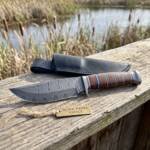
Redvein is the plainest knife in this group and probably the one that will get used the most. Black canvas Micarta, brass pins, a bright satin D2 blade, and a single thin red liner running the length of each scale — one flourish, and otherwise nothing to polish, nothing to baby, nothing to lose sleep over when it comes back from a wet weekend looking like it worked.
The steel
D2 is the reason this knife punches above its weight. It is a high-carbon, high-chromium tool steel whose hardness sits in the high fifties, and it is loaded with chromium carbides that resist abrasion far better than the soft stainless found on most factory hunting knives. In practice that means you can break down an animal, cut cordage, open feed sacks and still have an edge worth using at the end of the day. It is semi-stainless rather than stainless: dry it and it behaves, neglect it in a damp sheath and it will spot. Our steel chart shows where it lands against everything else we use.
| Overall Length | 9 inches |
|---|---|
| Blade Length | 4.5 inches |
| Handle Length | 4.5 inches |
| Blade Steel | D2 tool steel |
| Blade Finish | Polished satin |
| Blade Style | Drop point with integral gut hook |
| Handle Material | Black canvas Micarta with red fiber liners |
| Fittings | Brass pins, lanyard hole |
| Tang | Full tang |
| Sheath | Handmade black leather belt sheath with stud closure (included) |
Handle
Black canvas Micarta with red fiber liners, pinned in brass, with a lanyard opening through the butt. Micarta is cotton duck cloth soaked in phenolic resin and cured hard; it will not absorb blood or water, it will not shrink away from the tang in a dry winter, and the fine weave left by sanding grips better once it is wet than most textured polymers do dry. The red liner is a thin sliver of fiber sheet sandwiched under each scale — invisible from above, a clean stripe from the side, and the sort of detail that costs a maker time and a factory nothing because a factory does not bother.
Grind and gut hook
Flat ground drop point, generous belly, fine point, and an integral gut hook cut into the spine ahead of the jimping. The hook is filed and polished on the inside of the curve so it slips under hide and unzips it in one motion, keeping the tip clear of the stomach wall. That single feature is why gut hook knives keep selling to people who actually hunt: it removes the riskiest cut in field dressing and makes it repeatable in poor light.
Sheath and shop
The included belt sheath is black leather, cut and wet formed to this blade in our Memphis, Tennessee workshop, stitched, edge burnished and closed with a snap strap. The knife itself is profiled, hardened, ground and hand finished in the same building by the same small crew — no outsourced blanks, no anonymous supply chain.
Care in plain language
Dry it before it goes away, taking a second to swab the inside of the hook where blood collects. Storage oil once or twice a year is ample. The Micarta cleans with warm soapy water and an old toothbrush. Keep the knife out of the sheath between trips so trapped damp cannot work on the steel, and stay away from dishwashers entirely. A fine ceramic rod keeps the main edge honest between real sharpenings — our explanation of honing versus sharpening is worth reading if you have been using those words interchangeably.
Also worth a look
Same working recipe, different colourway: Fernline swaps the black scales for olive green canvas Micarta on a plain dark brown sheath.
Model: BMK-1172
Logan Jefferson –
Wasn’t sure what to expect but this knife nailed it. Took it out camping right away and it handled everything I threw at it. Fit and finish is museum quality. You can tell real craftsmen made this by hand. Great buy overall.
Ryan White –
Photos don’t do this knife justice at all. This has quickly replaced my old go to knife for field dressing. Worth every penny.
Sandra Morris –
Genuinely super impressed with how this turned out. Pommel and guard are solid, no wobble anywhere on the knife. Already planning my next pickup from this company.
Shane Bailey –
This knife completely won me over the moment I picked it up. This has quickly replaced my old go to knife for field dressing. Cool knowing this was handmade right in Memphis and shipped out fast. So worth it.
Malik Hall –
This knife is reasonably good. Just a couple small things kept it from 5 stars.