


Description
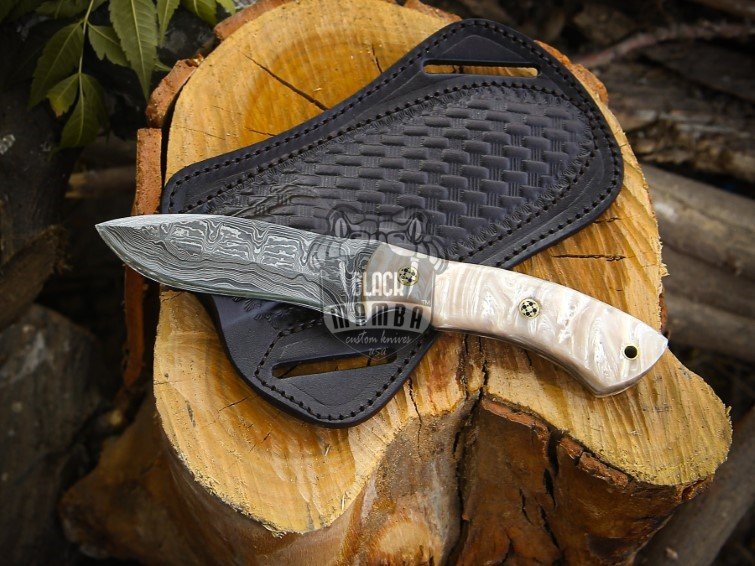
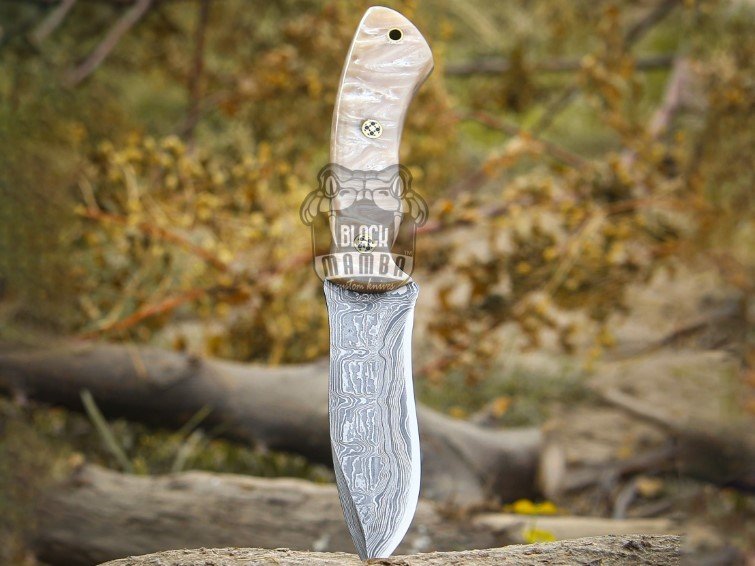
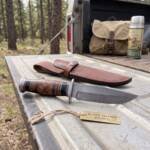
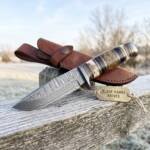
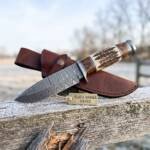
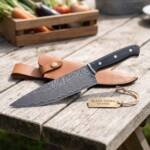
Four inches of ladder-patterned steel, a belly that sweeps unbroken from the choil to the point, and pearl shell scales pinned through with mosaic rod.
| Overall length | 9 inches |
| Blade length | 4 inches |
| Handle length | 5 inches |
| Steel | 1095 + 15N20 Damascus, 352 layers |
| Hardness | 58–60 HRC, oil tempered |
| Handle | Pearl Shell Mosaic Pin |
| Included | Hand-stitched leather sheath |
Suited to: skinning. The long curve is the working part of this blade, and the profile is built so the point stays clear of the hide while the belly does the cutting. It is a dressing knife with a dress handle, which is an unusual combination and worth understanding before you buy.
Care: pearl sets the rules here. Warm water and a soft cloth on the handle, nothing abrasive, no solvent, and no hot water, because heat is what breaks the bond between shell and tang over time. Get the blade properly dry before it goes near leather. The basketweave tooling on the sheath holds water in its grooves for longer than a smooth finish would, so let it dry face up after a wet day instead of dropping it into a pack. The blade itself needs drying and nothing more.
What the sweeping belly does
On a hide, the cut is made by the curve rather than by the point. A long continuous belly lets you draw the knife in a single stroke and keeps a section of edge in contact the whole way, which is why a skinner is shaped like this and a utility knife is not. Keeping the point up and out of the way is the technique. A straighter blade forces you into short strokes and puts the tip where it can nick through.
Pearl scales on a working knife
The honest problem: pearl is the most delicate material we fit, and this is a knife for a job involving blood, water and rocks. It will not fall apart, but it will chip if you drop the knife onto stone, and it will not forgive being pried with. Buy it knowing that. If you want the same blade under a handle you can be rough with, choose horn or micarta instead, and if you want pearl paired with a wood frame, the Royal Pearl hunting knife splits the difference.
What the mosaic pins tell you
Each pin is a bundle of rod set in a matrix and sliced across, so its face carries a small pattern of its own. They are decorative, but they are also evidence: mosaic pin stock has to be fitted, peened and sanded flush by hand, and it shows immediately when it has not been. Look at whether the pattern on each pin face is complete and whether the pin sits level with the shell around it. Our knife anatomy guide names the rest of the parts if any of this is unfamiliar.
Questions about this skinner
Is this a Laguiole? No. It is a fixed blade skinner. It shares nothing with the folding Laguiole pattern beyond being made by hand.
How does the sheath carry? The belt slots run horizontally, so it sits flat along the belt rather than hanging vertically off it.
Is four inches the right length for skinning? For deer and hogs, comfortably. Our skinning knife guide covers where longer and shorter blades each stop making sense.
Model: BMK-699


Betty Young –
Ordered late at night on a whim and woke up glad I did. Every piece of the fit and finish looks hand checked before it shipped. Already thinking about what to order next from this company.
Eric Torres –
This knife is nice but not quite perfect. Sheath is nice. Wish it had more padding but it does the job. Handle looks great though it’s a little smaller than I imagined. Good product. Just not quite perfect.
Robert Kelly –
This exceeded what I pictured in my head before ordering. Sheath snaps shut securely and doesn’t feel flimsy at all. This maker clearly takes pride in their work.
Jerry Turner –
Ended up ordering a second one after how happy I was with the first. Steel has a gorgeous pattern that looks different in every light. 10/10 would buy again.
Sophia Howard –
Wasn’t sure what to expect but this knife nailed it. Made in the USA and shipped worldwide with no issues on my end.
Aaron Gray –
Five stars isn’t even enough honestly. Black Mamba Knives keeps setting the bar higher with each order. Steel has a gorgeous pattern that looks different in every light. Exactly the kind of quality that keeps me coming back.