
Description
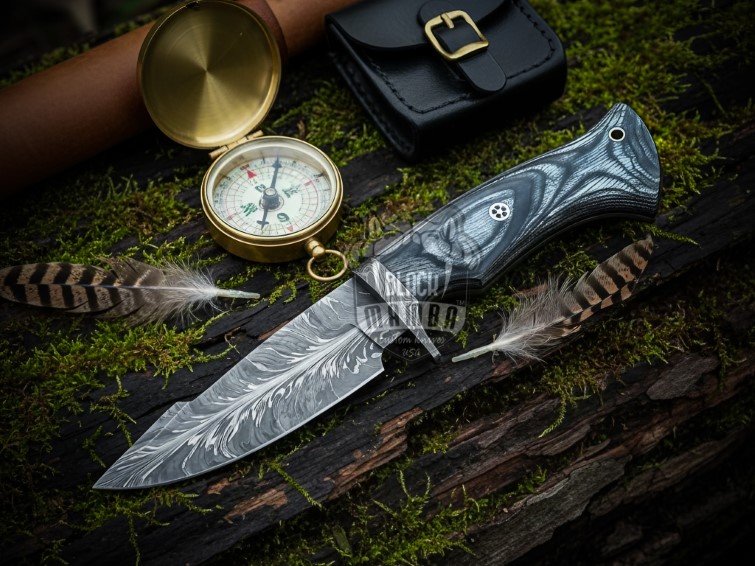
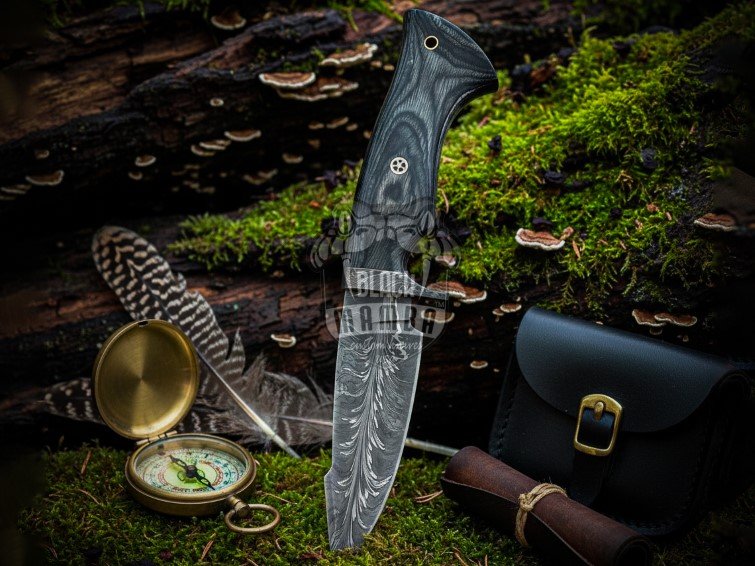
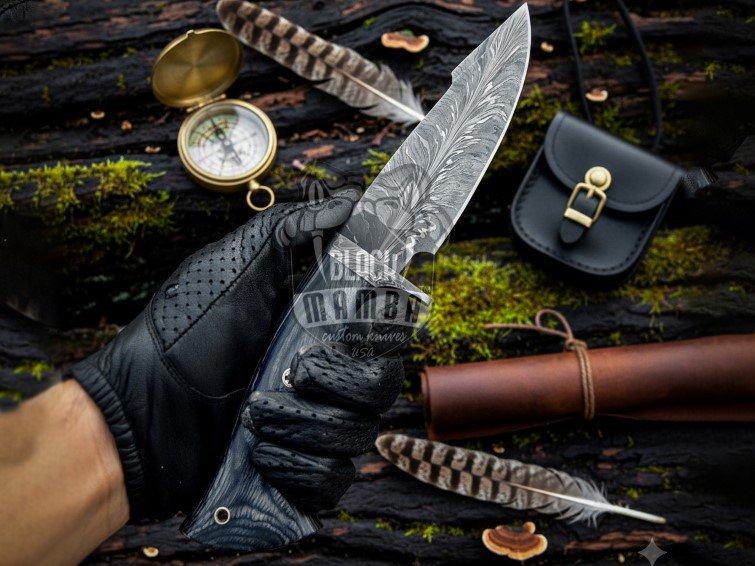
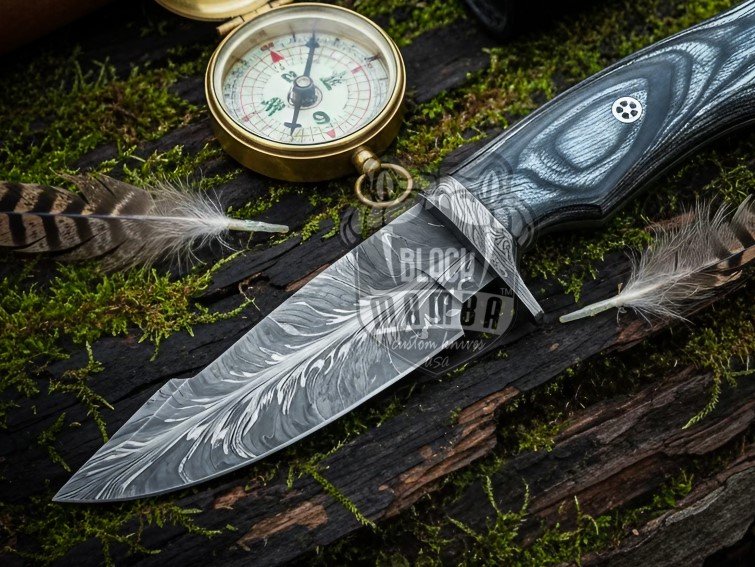
Feather Damascus is the hardest common pattern to forge. The billet is cut, folded and drawn so the layers split along a central spine and sweep outward, and if the smith gets the placement wrong the feather comes out lopsided or breaks up entirely. The Pathfinder carries that pattern along a five inch blade.
| Overall length | 10 inches |
| Blade length | 5 inches |
| Handle length | 5 inches |
| Steel | 1095 + 15N20 Damascus |
| Hardness | 58–60 HRC, oil tempered |
| Handle | Damascus Feather |
| Included | Hand-stitched leather sheath |
How the feather is made
A plain twist or ladder pattern is forgiving. A feather is not. The billet has to be cut at the right depth, folded around a former and forged back down with the layers still tracking, all inside a narrow heat range. Most billets that go in do not come out clean. That is why feather knives cost more than the same steel in a random pattern, and it is a real difference in labor rather than a marketing one. How Damascus steel knives are made follows the process from billet to etch.
Built for: someone who wants the knife looked at. It works, and five inches of high-carbon blade with a full-length handle does camp and trail jobs without complaint, but the pattern is why people buy it and there is no point pretending otherwise.
Equal blade and handle
Matching blade and handle length is a comfortable balance for general use. You get enough edge for camp cutting and enough handle to choke back for detail work, and the balance point sits close to the guard rather than out toward the tip. It is not a chopper, since ten inches overall at knife weight will not split rounds, and it is longer than most people want purely for skinning. It sits in the middle, which is the point of it.
Protecting the pattern
Care: a feather pattern is worth protecting, because re-etching cannot restore it once the steel pits. Dry the blade fully after use, including under the guard where water collects, and keep a thin oil film on it between outings. Do not run it through a dishwasher and do not leave it in the sheath, because leather is tanned with salts that pull moisture onto steel. When you sharpen, keep the bevel even along its length, since an uneven bevel makes the feather look crooked even when the edge is fine. Fixed blade bevels explained covers matching the grind you already have.
FAQs
Will the feather show on both sides? Yes, though the two faces are never identical. The pattern is symmetrical by intention and organic in fact.
Is it too showy to actually carry? Not at all. It marks like any working blade, and many owners like that it does.
What if I want a tactical shape instead? Look at a different geometry entirely. A Damascus tanto knife puts the strength at the tip rather than in the belly.
How does it carry on a belt? Ten inches overall rides comfortably on a hip in the supplied leather, though it becomes a noticeable presence once you sit down in a truck.
Forged, etched and sheathed in Memphis, Tennessee.
Model: BMK-667

Armando L. (verified owner) –
Although it doesn’t have the exact same feather design, still, it’s a beautiful blade nonetheless.
Emily Mitchell –
Not going to lie. This exceeded my expectations by a lot. Fits great in the pocket without feeling bulky. Opens smooth every time with just a flick of the thumb. Zero complaints from me on this purchase.
Susan Bailey –
Perfect gift. Perfect quality. No complaints. Liner lock is tight with zero blade play. Opens smooth every time with just a flick of the thumb. Happy customer here, through and through. This is why Black Mamba Knives is my go to for anything knife related.
Colton Cole –
Was nervous ordering something like this online but so glad I did. This has become my daily carry piece without question. Opens smooth every time with just a flick of the thumb. Fits great in the pocket without feeling bulky. This is the kind of purchase that makes online shopping worth it.
Betty Stewart –
This pocket knife has quickly become my favorite piece in the collection. Liner lock is tight with zero blade play. Detent is snappy without being stiff to open. Worth every penny.
Travis Hughes –
Pretty impressed. Just a couple minor things I’d tweak. Blade is sharp but not quite razor sharp out of the box. Pocket clip works fine, just a bit tight at first. Would buy from this shop again.