
Description
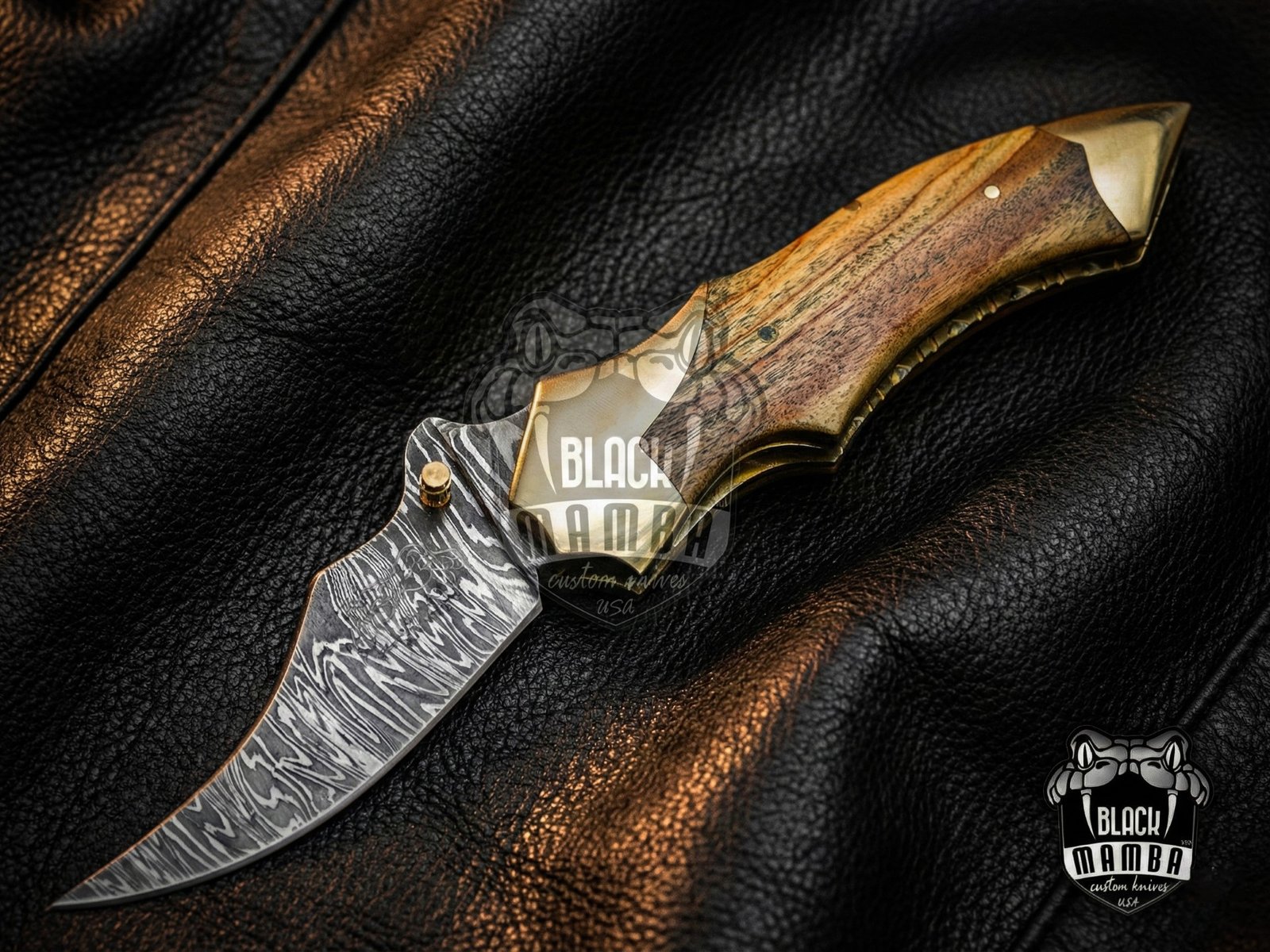
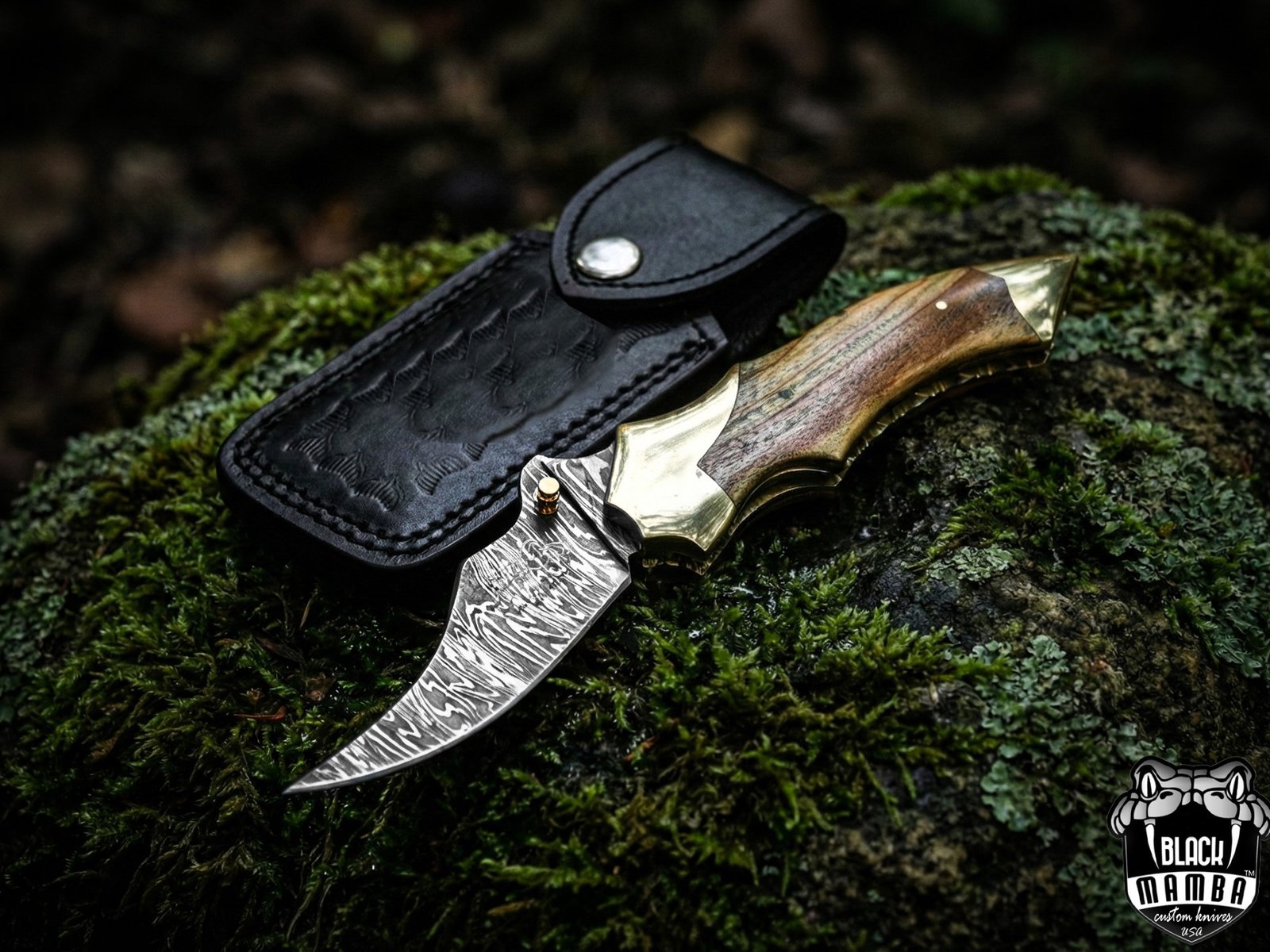
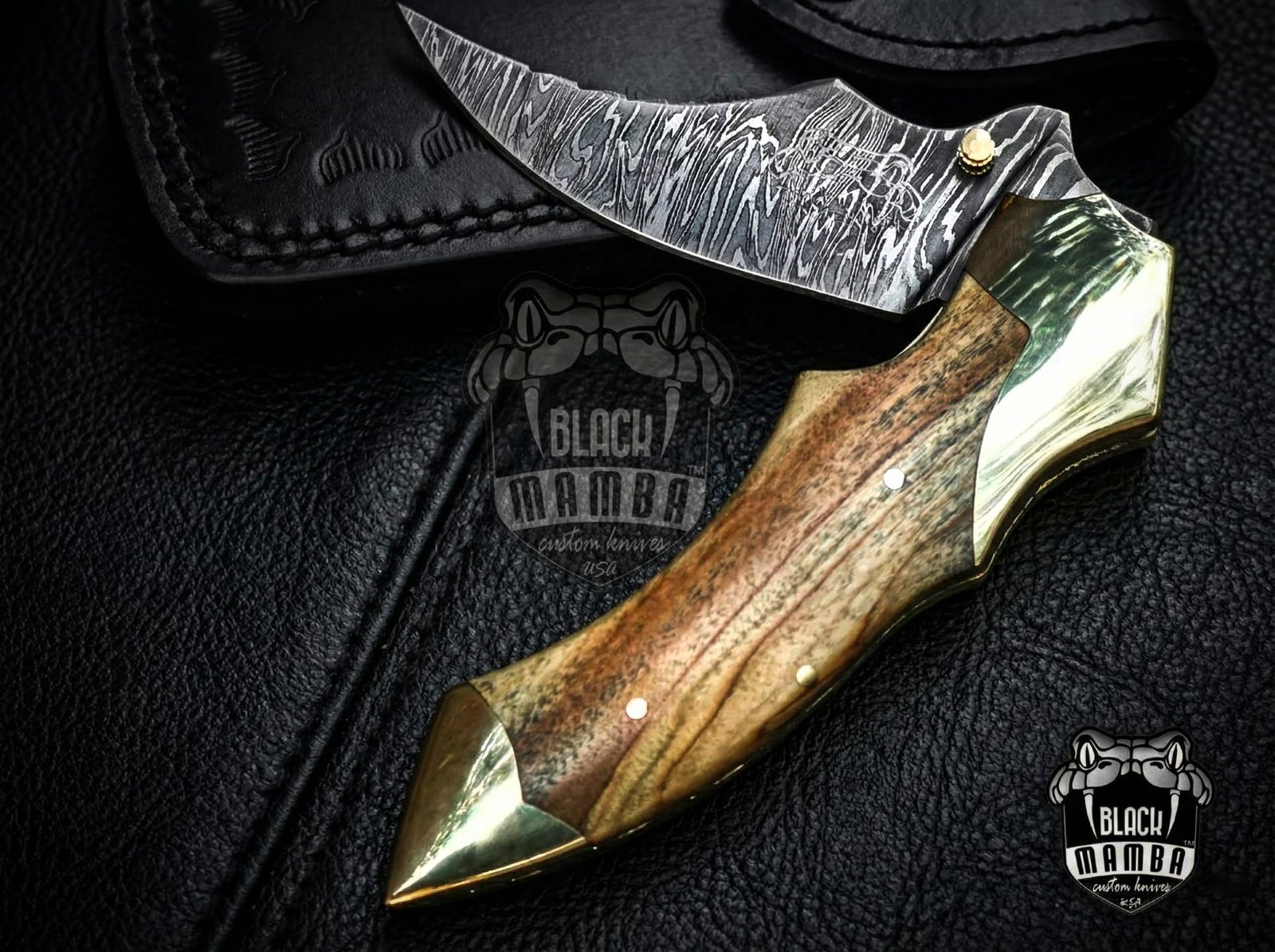
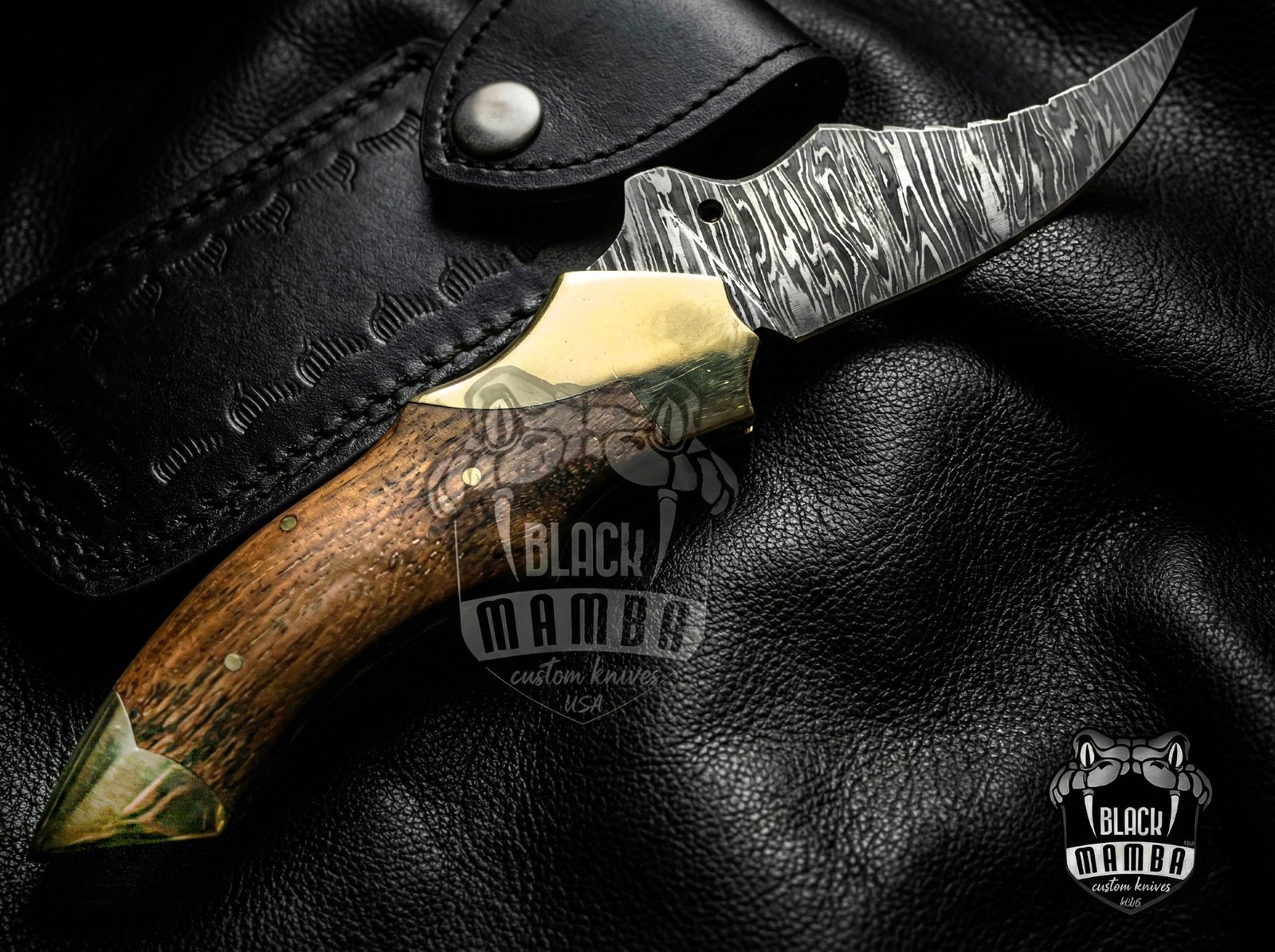
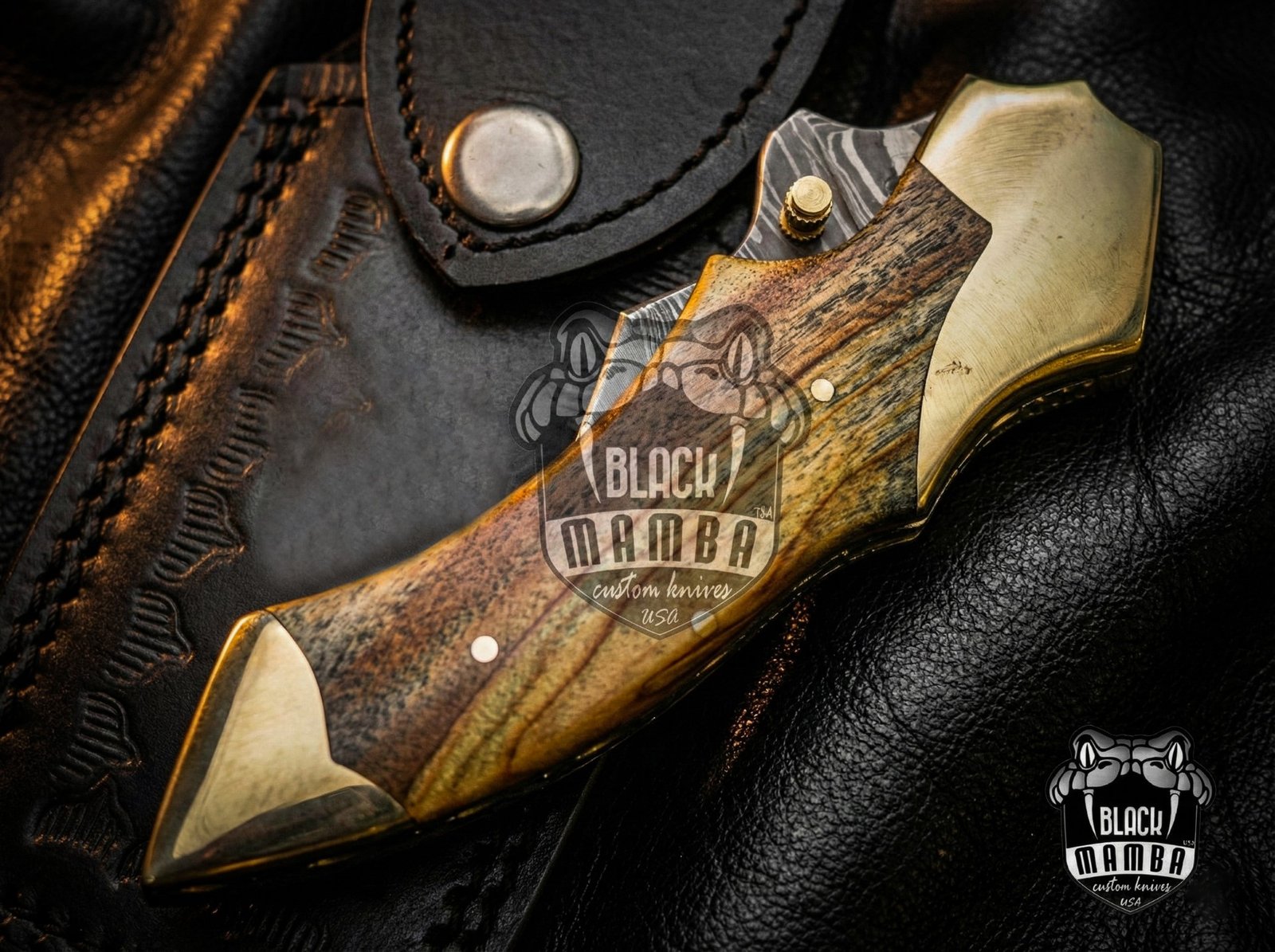
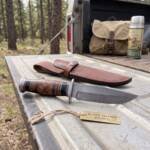
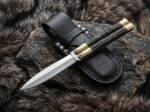
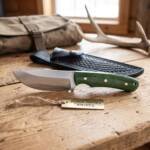
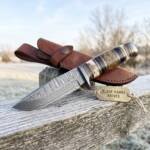
This is a folder built the slow way: a hand-forged blade, a brass bolster fitted by eye, and walnut scales shaped until they match the frame.
| Overall length | 9 inches |
| Blade length | 4 inches |
| Handle length | 5 inches |
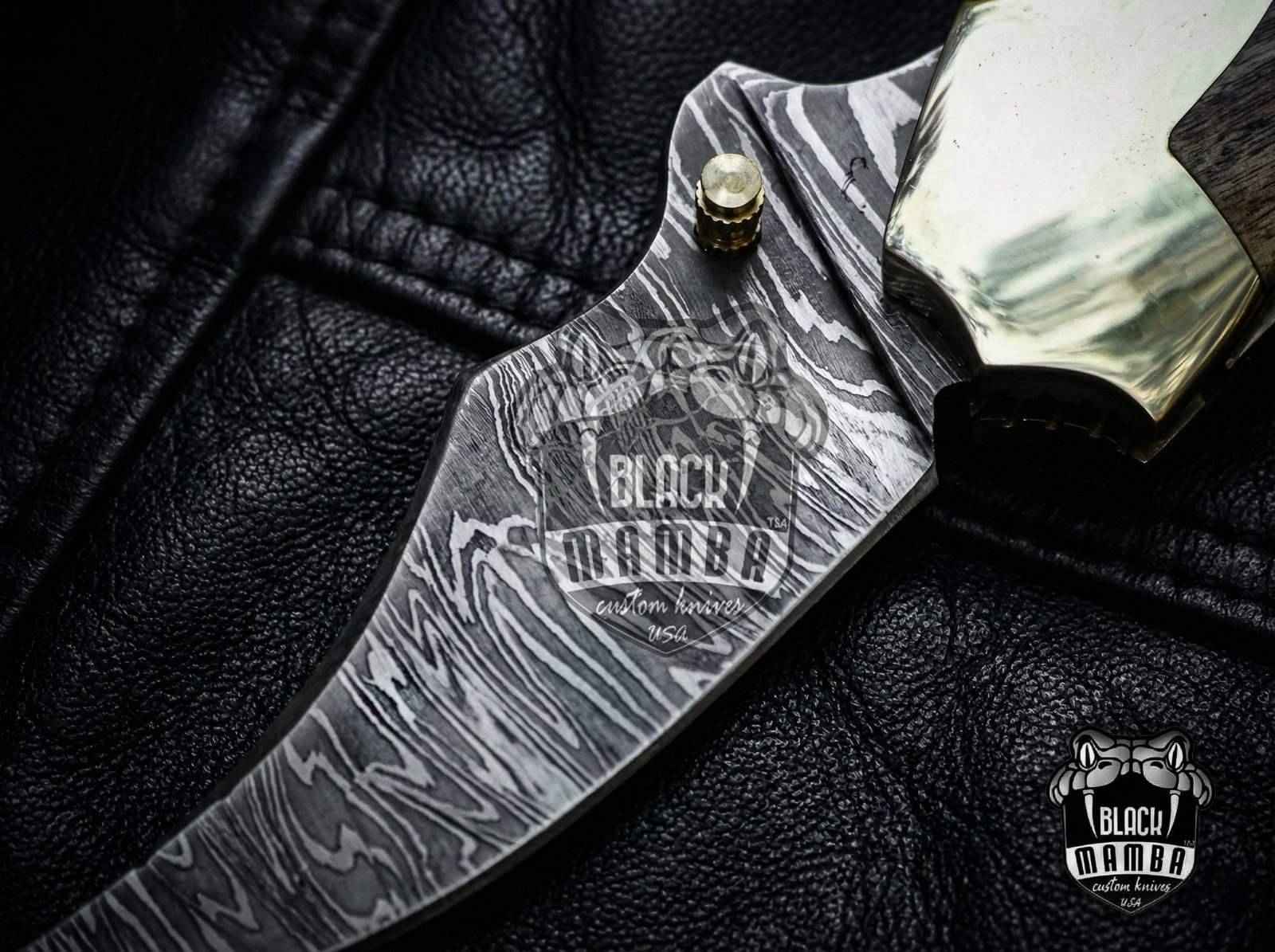
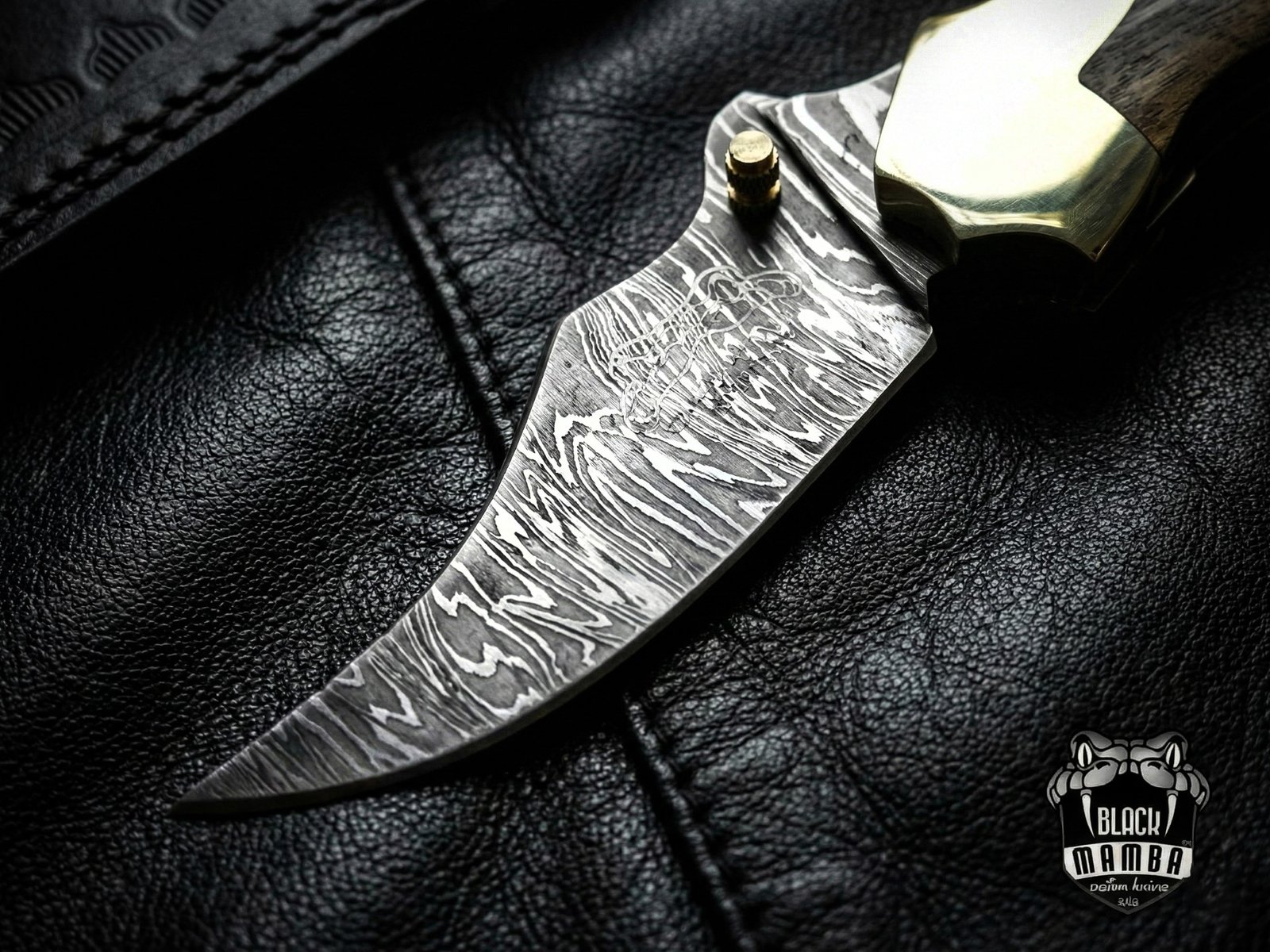
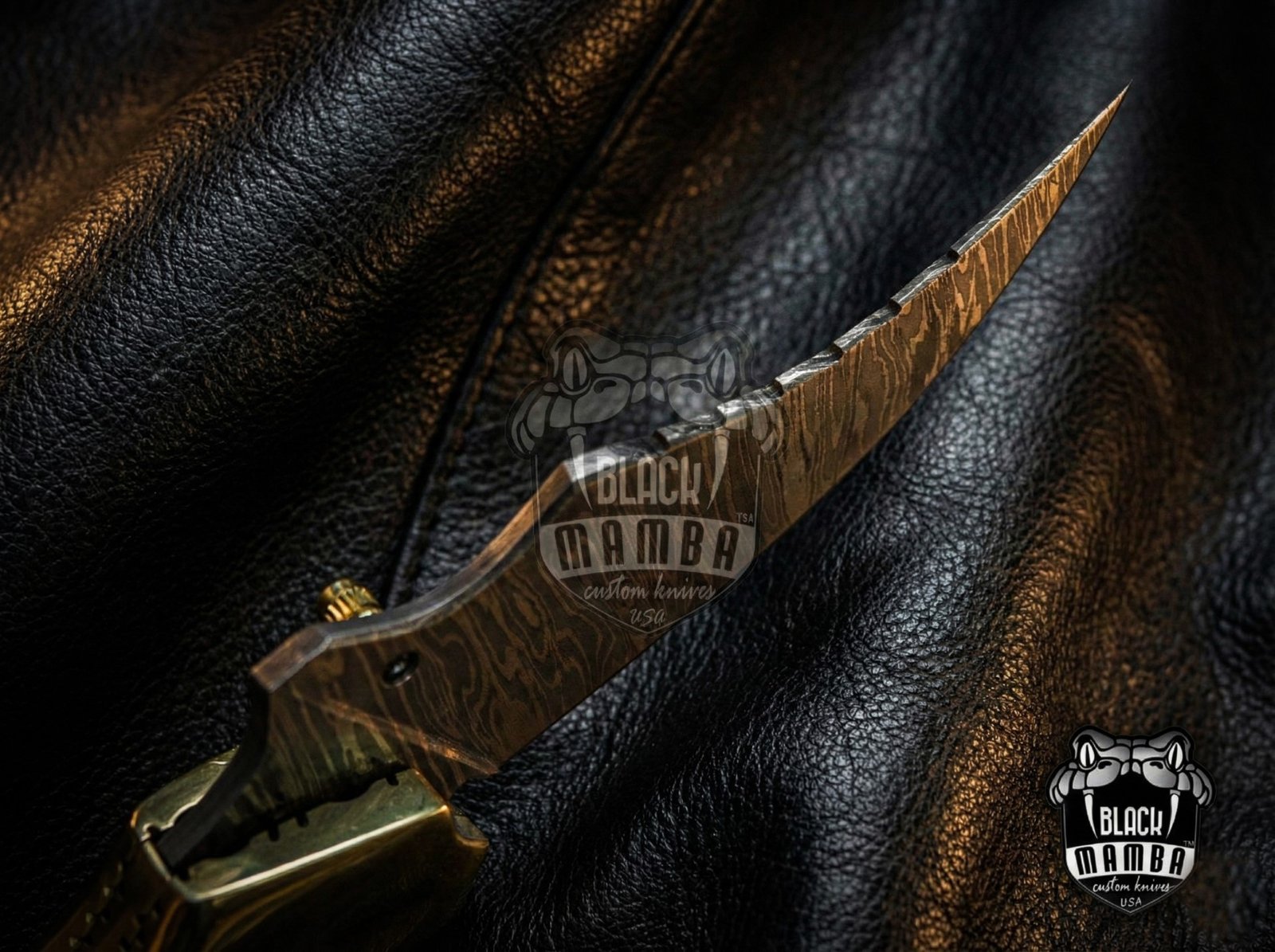
| Steel | 1095 + 15N20 Damascus |
| Hardness | 58–60 HRC, oil tempered |
| Weight | 7.7 oz |
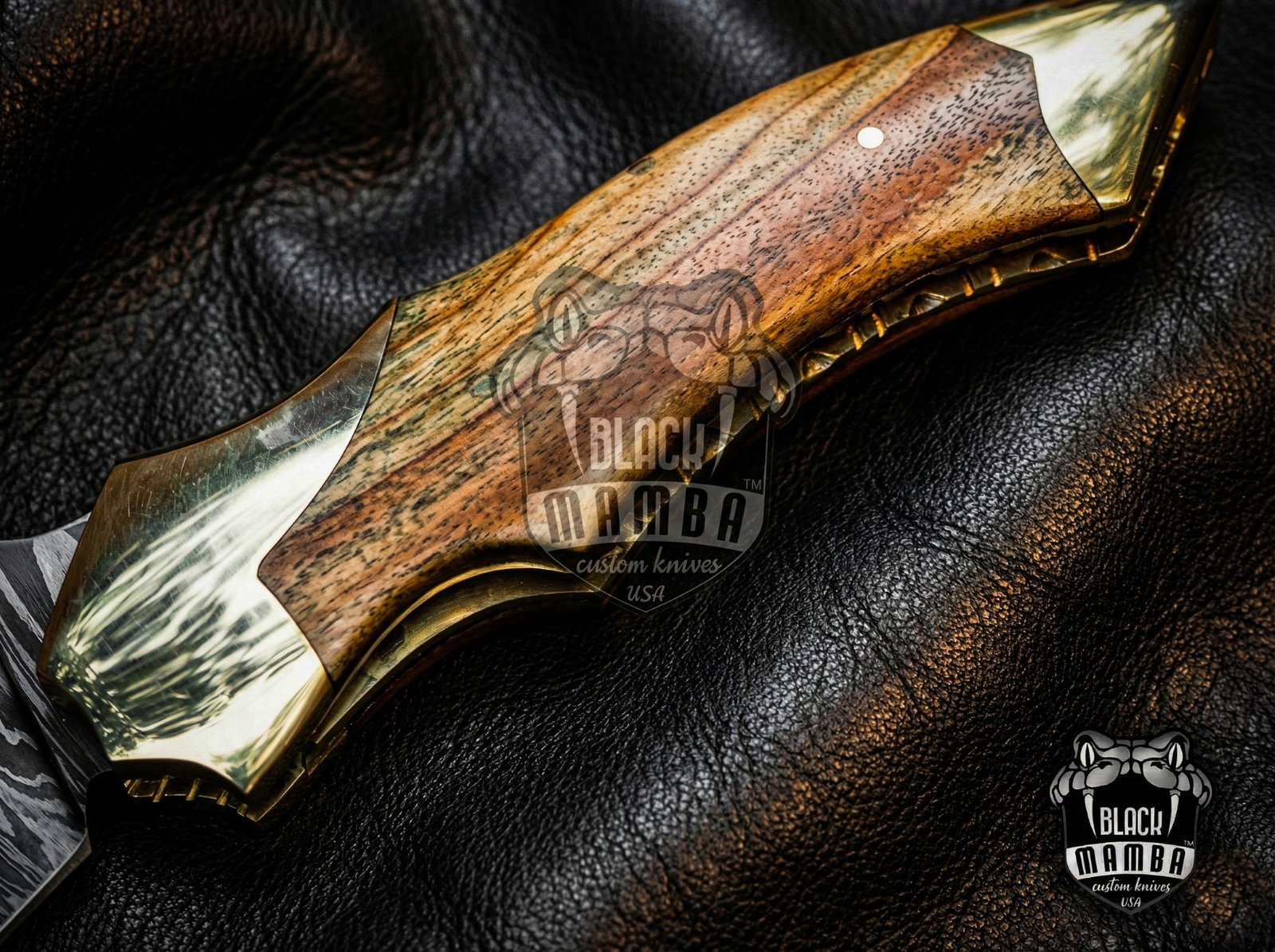
| Handle | Walnut wood handle with brass bolster |
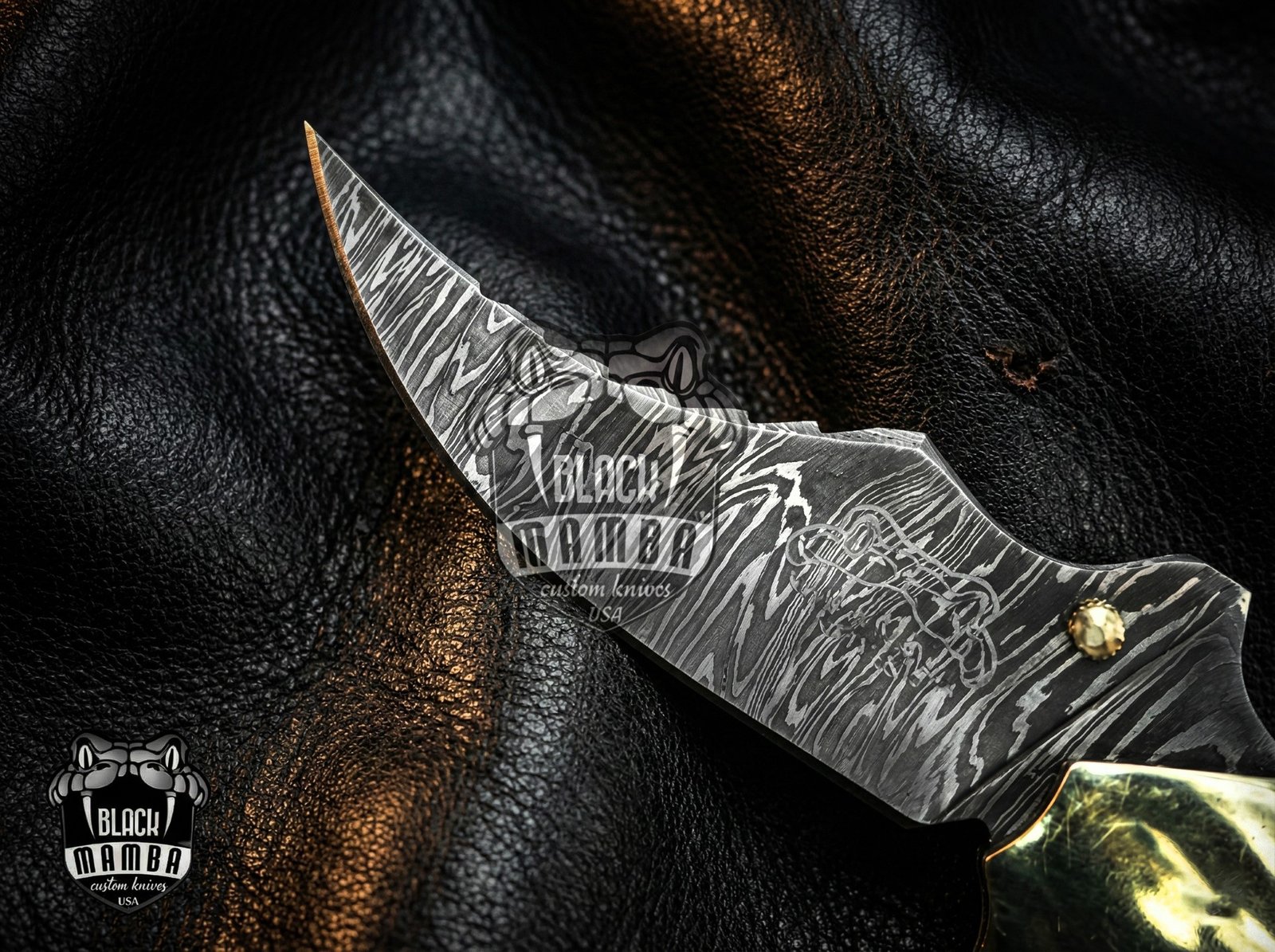
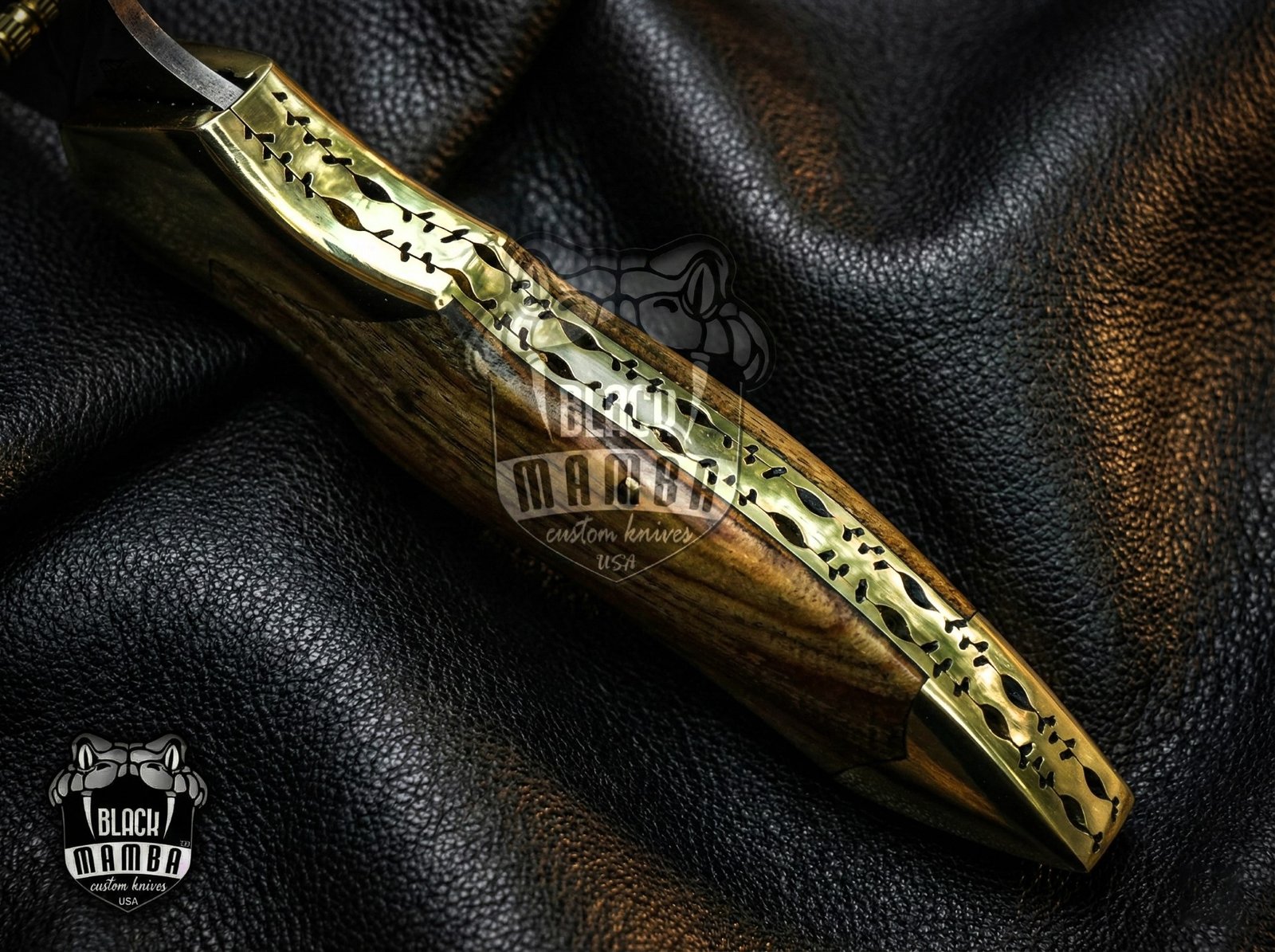
| Pattern | Wind & Mix twist Fire pattern Damascus Blade, Extreme custom Brass File-work |
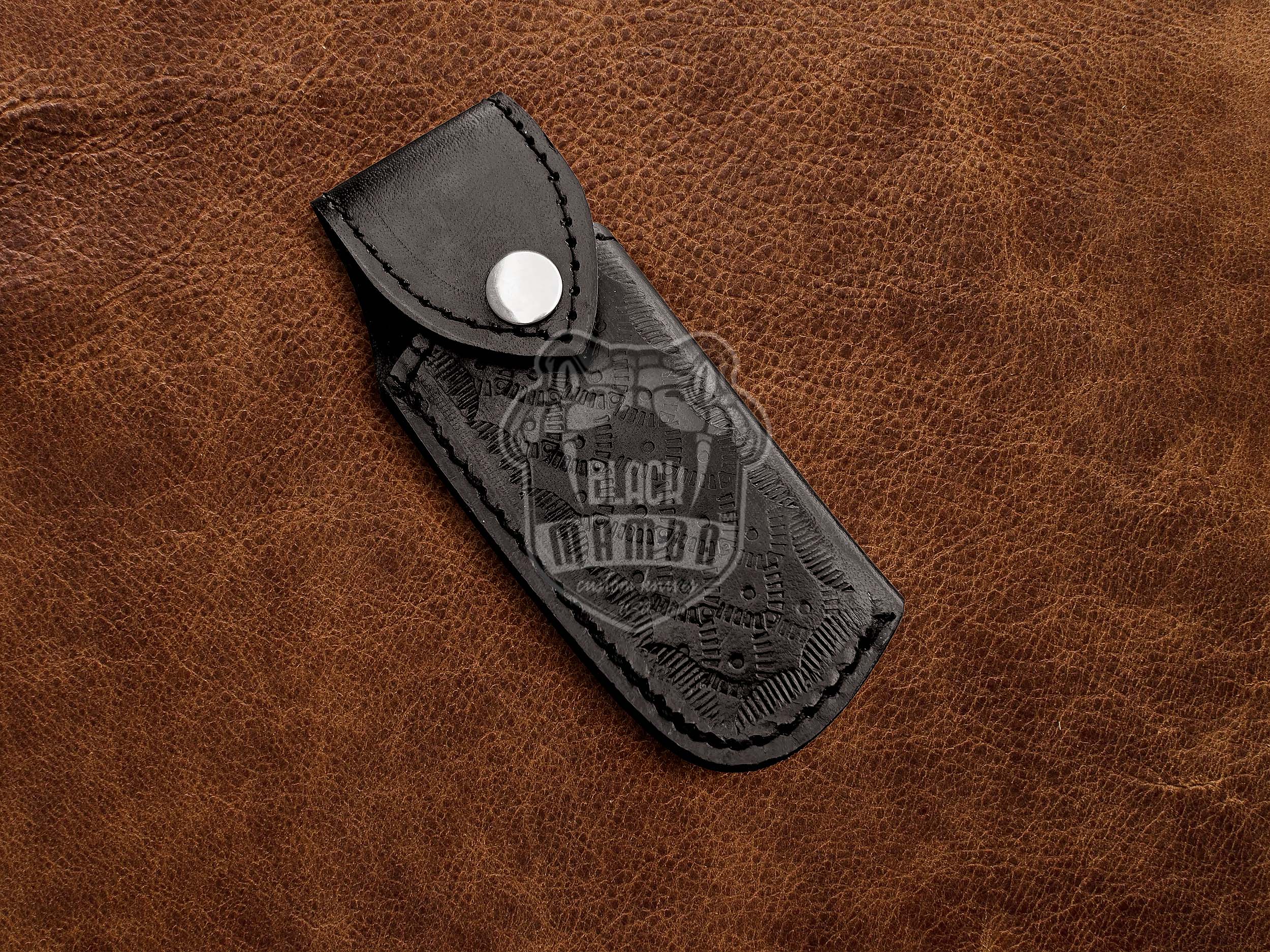
| Included | Hand-stitched leather sheath |
Made for: the person who carries one knife and wants it to be worth looking at. Nine inches open, four of it edge, 7.7 oz in the pocket. That is a substantial folder, closer to a hunting knife that happens to fold than to a slim office carry.
The recurve edge
The belly on this blade sweeps down and then back up to the point. A recurve pulls material into the edge instead of pushing it away, which is why it works so well on rope, hide and anything that wants to skid. The trade is sharpening: you want a rod or a narrow stone rather than a wide bench stone to follow the curve.
Walnut and brass
Walnut is a middle-density hardwood, so it takes an impact without denting the way softer woods do, and it darkens slowly with handling. The brass bolster adds weight at the pivot end, which is where a folder wants it — it settles the knife in your palm and stops the blade end feeling tip-heavy when open.
What 58–60 HRC buys you
Oil tempering to 58–60 HRC puts this in the band where an edge holds through real work but can still be brought back on a stone in a few minutes. Harder is not automatically better; above this range the edge gets brittle at the apex and chips instead of rolling.
Opening and closing it
The nail nick is cut deep enough to find without looking, and the spring is set firm rather than light. A stiff action on a new folder is normal and it eases within the first few weeks of use as the mating surfaces bed in.
Filework on the spine
The scalloping along the exposed spine is filed by hand, one cut at a time, after heat treatment. It is slow work and it is the detail that most clearly separates a shop-made folder from a production one.
Care: dry the blade before you close it, because a folder traps water at the pivot where you cannot see it. Oil the pivot and the blade lightly once a month. Wipe the walnut with the same oil twice a year and it will never dry out. Not sure it is genuine? Our guide on telling real Damascus from print shows what to look for.
FAQs
How does it lock? It is a lockback folder; the bar seats in a notch in the blade tang and releases with thumb pressure at the rear of the handle.
Is 7.7 oz heavy for a pocket? It is noticeable. If you want something under half that, see the sheepsfoot folder instead.
Is this a good first custom knife? Yes. Our EDC selection guide walks through blade length, weight and lock type before you commit.
Model: BMK-861
Bob Millerbernd (verified owner) –
Still waiting