

Description
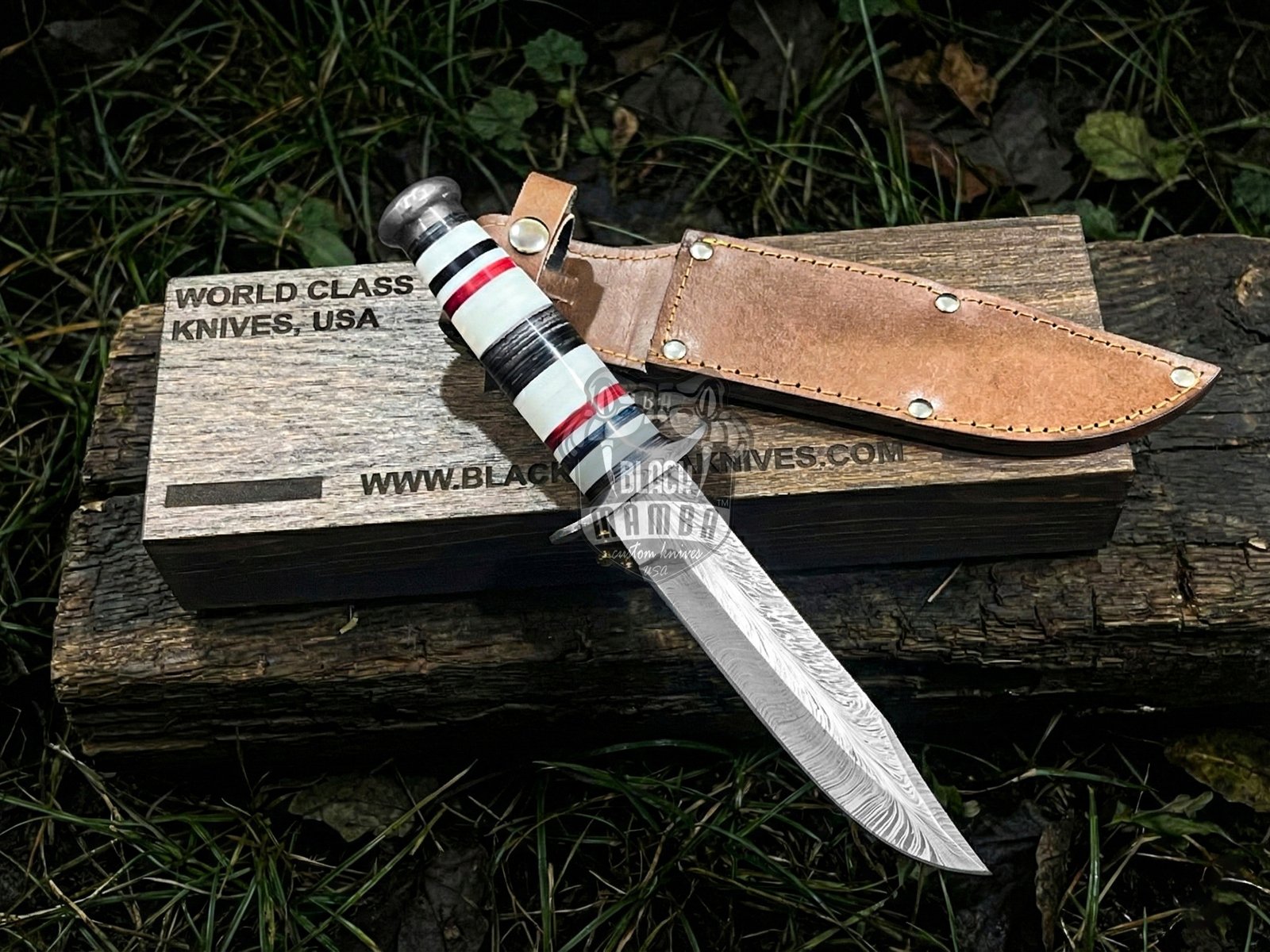
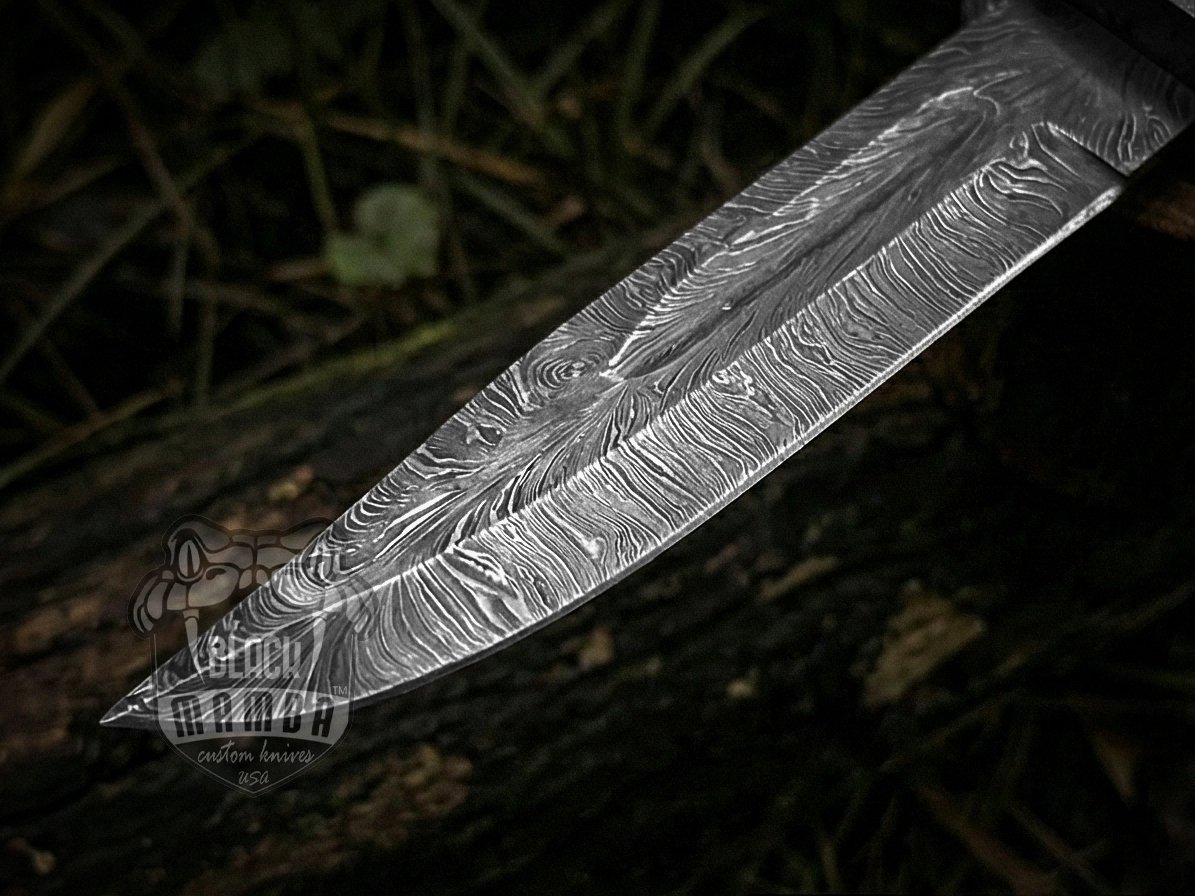
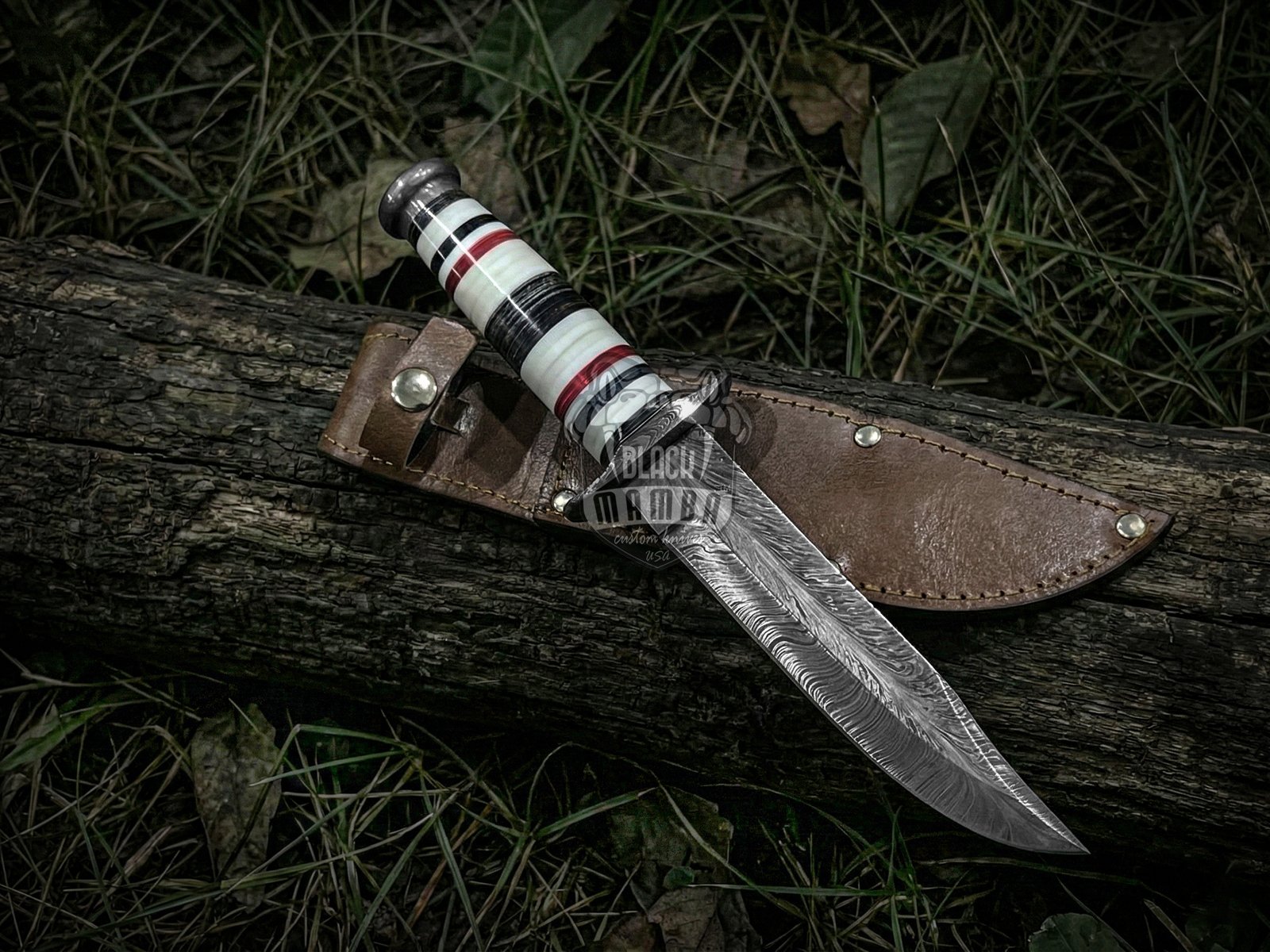
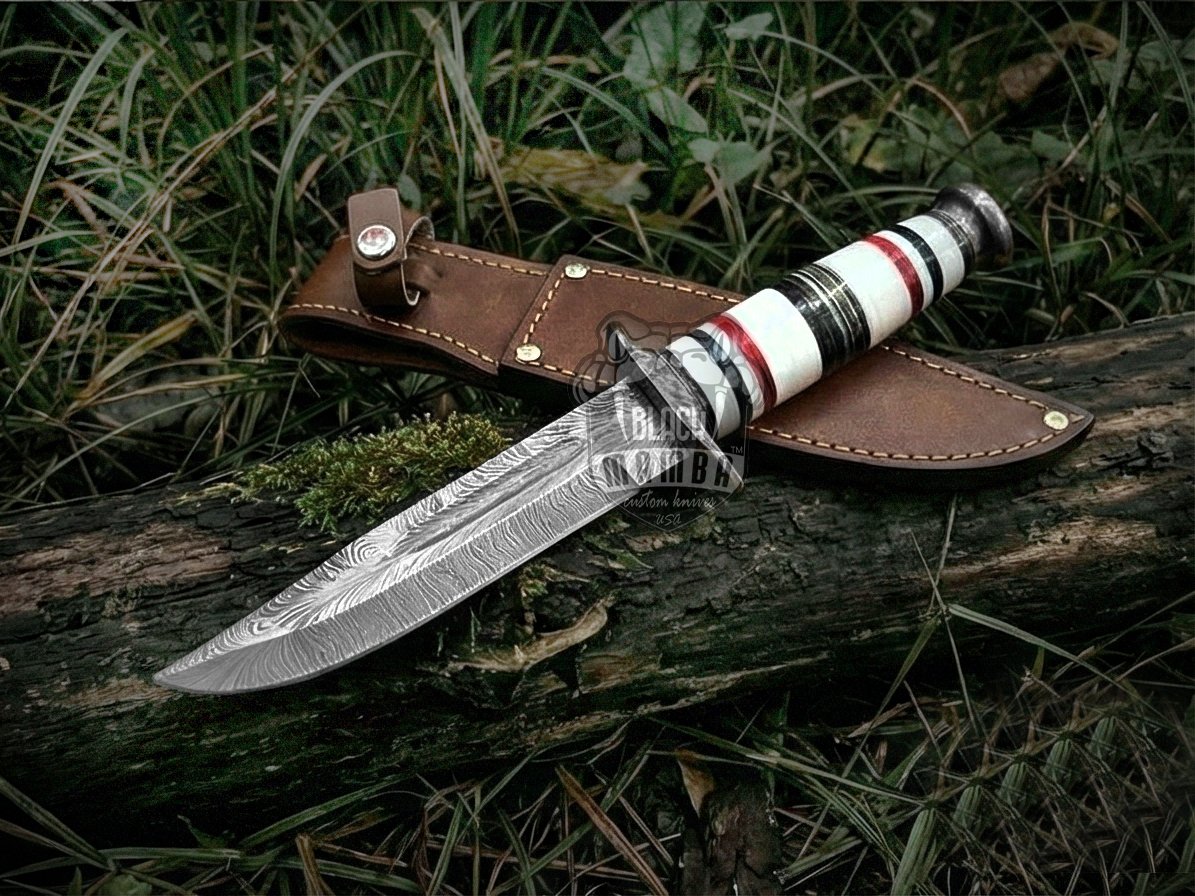
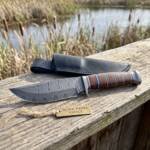
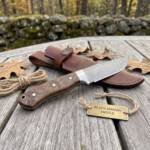
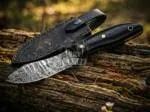
A twelve inch Damascus blade in the feather pattern, on a handle stacked from banded white, black and red spacers. It is the most graphic knife in the hunting range and the pattern is the reason.
| Overall length | 12 inches |
| Blade length | 7 inches |
| Handle length | 5 inches |
| Handle | Stacked white, black and red spacers |
| Steel | 1095 + 15N20 Damascus |
| Hardness | 58–60 HRC, oil tempered |
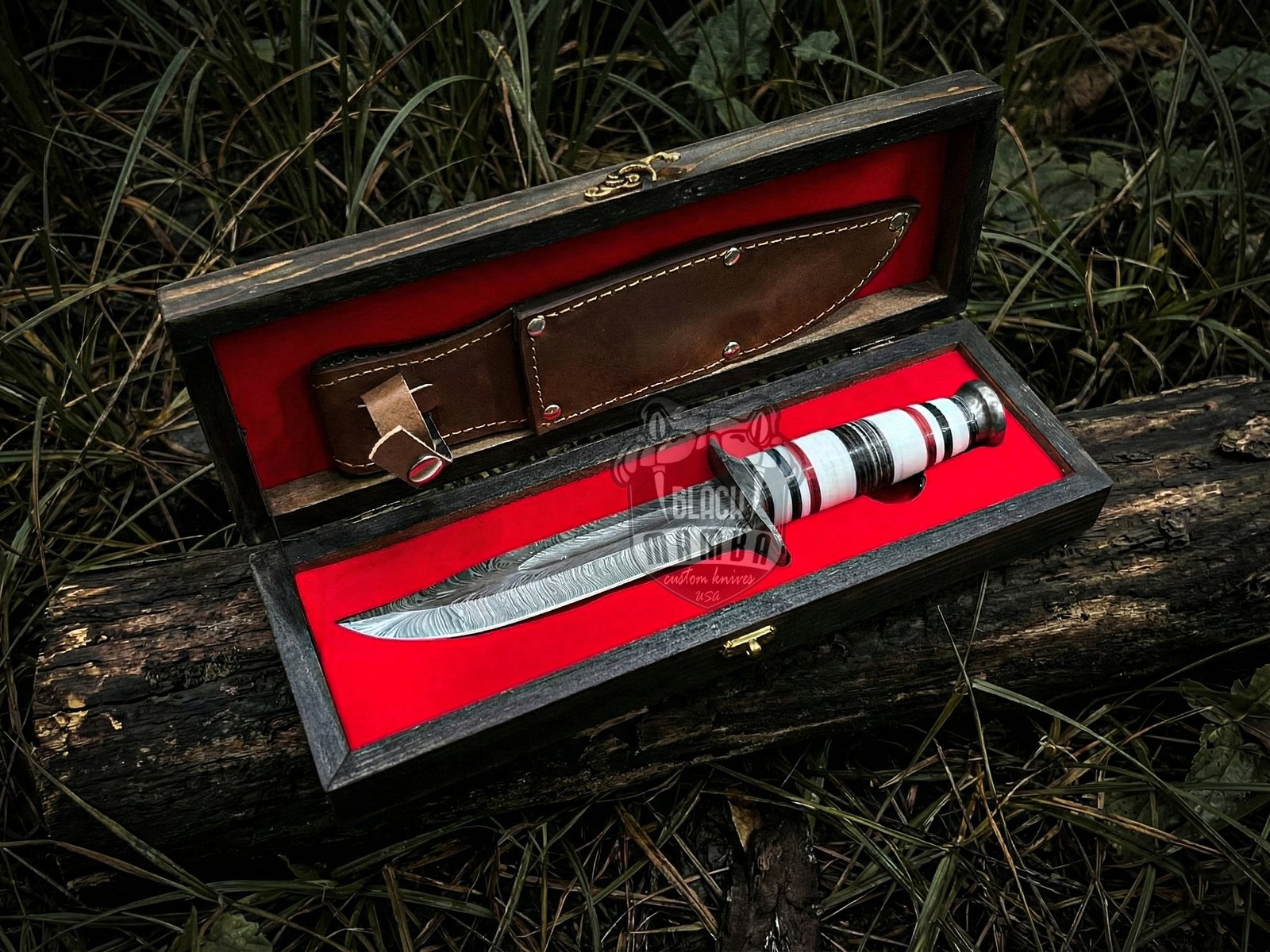
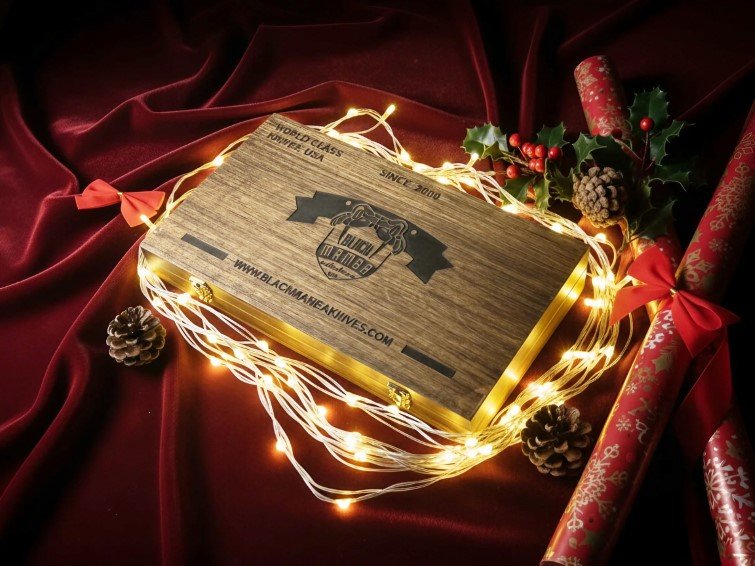
| Included | Hand-stitched leather sheath and branded wooden presentation box |
Made to be: shown. Seven inches of feather-patterned edge is a display proportion, and the stacked handle is built the way old presentation daggers were built, from rings threaded onto the tang rather than scales pinned to it.
How a feather pattern is forged
Feather is the hardest common pattern to make. The smith splits a twisted billet down its length, opens it out like a book, and forge-welds a new bar around the two halves. The layers then run away from a central spine in mirrored arcs, which is what gives the plume. A failed weld anywhere along that spine ruins the bar, so the reject rate is high and the price reflects it. Our how Damascus steel is made covers the forging sequence; the pattern reference shows feather beside raindrop and ladder.
The stacked handle
Rather than two scales pinned either side of a flat tang, this handle is built from discs of contrasting material threaded onto a narrow tang and compressed by the pommel nut. It is an old construction and it has a real advantage: the stack can be reshaped or replaced without touching the blade. The color banding is the visible edge of each disc.
Where it sits in the range
At twelve inches overall this is a large knife but not a heavy one, and the balance is behind the guard rather than out in the blade. If you want something with more mass for chopping and batoning, the larger fixed blade bowie is built for that instead.
The pommel nut does the work
On a stacked handle the threaded pommel is structural, not decorative. It compresses the whole column of discs onto the shoulder of the blade, and that clamping force is what holds the knife together. If a stacked handle ever develops play, the fix is usually a quarter turn on the pommel rather than anything to do with the discs themselves.
Care: a feather pattern is worth protecting. Keep the blade dry, oil it every few weeks, and store it out of the sheath and out of any room that gets steam. If the pattern ever looks faint, that is a film on the surface rather than the etch wearing off; a little oil and a soft cloth will bring the contrast back.
FAQs
Is feather harder to make than raindrop? Considerably. It needs an extra split-and-reweld step, and any flaw in that weld shows up down the whole blade.
Will my feather be symmetrical? Broadly, yes, but the plume shifts along the blade and no two are alike.
Can it be sharpened normally? Yes. The etch is deep enough that sharpening the edge does not erase the pattern above it.
Model: BMK-723
Nicholas Jimenez –
Got this as my brother and it exceeded what I expected. This is exactly why I keep coming back to this company.
Christine Hill –
Absolutely extremely happy by this knife. This has quickly replaced my old go to knife for field dressing. This is my new favorite in the collection.
Rebecca Brooks –
Got this for an anniversary gift and now I want one for myself too. This one’s a keeper for sure.
Antoine Gutierrez –
Wasn’t sure what to expect but this knife nailed it. Worth every penny.
Emma Peterson –
I collect knives and this one is amazing. Handle feels amazing and the balance is perfect. Took it out camping right away and it handled everything I threw at it. Definitely bookmarking this shop for future orders.
Karen Cox –
This is hands down one of the best knives I’ve bought online. Steel has a gorgeous pattern that looks different in every light. Will definitely order again for another one.
Peter Gonzalez –
Showed up right on time and looked even better than the photos. Pommel and guard are solid, no wobble anywhere on the knife. Edge retention has been great even after regular use in the field. Blade geometry makes it glide through cuts with barely any effort. Will definitely order again for another one.