


Description
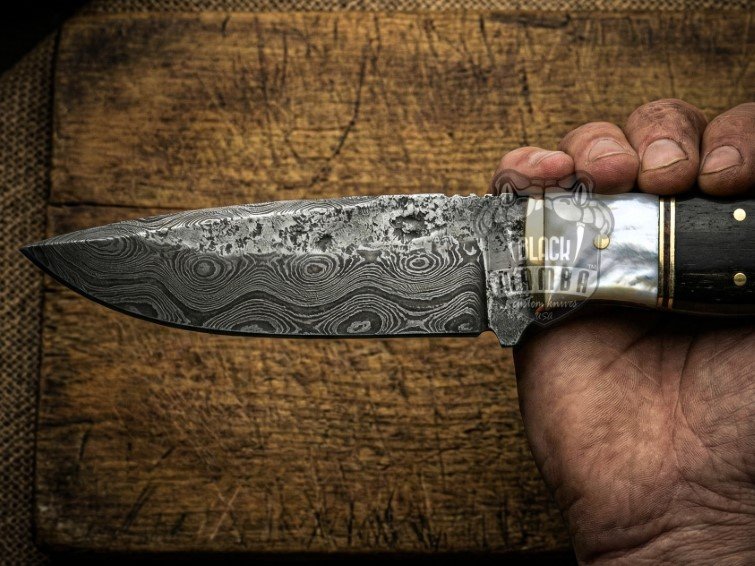
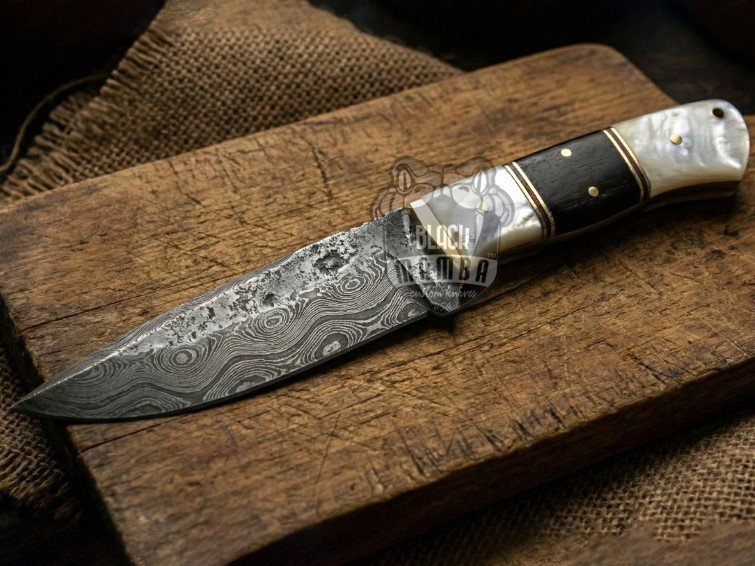
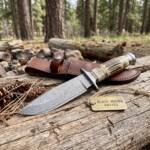
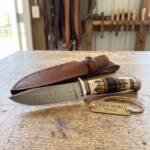
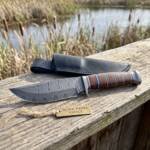
A dense pool-and-eye Damascus blade running to a handle stacked from dark wood, brass and pearl shell.
| Overall length | 9 inches |
| Blade length | 4.5 inches |
| Handle length | 4.5 inches |
| Steel | 1095 + 15N20 Damascus |
| Hardness | 58–60 HRC, oil tempered |
| Handle | Sea Shell Dark Wood Handle |
| Included | Hand-stitched leather sheath |
Who buys it: hunters who want one good knife rather than five adequate ones. Four and a half inches of edge is the size most people settle on after a season of carrying something larger.
Care: Dry it after use, oil the blade monthly, and check the brass spacer joints while you have the cloth in your hand. Those seams are where water sits on a stacked handle. It should live outside the leather, not inside it.
FAQs
What is the handle made from? A dark wood center block with brass spacer rings and pearl shell at the butt, all pinned through the tang with a brass lanyard tube.
How big is it? 9 inches overall, from a 4.5 inch blade and a 4.5 inch handle.
Is the pattern forged or etched on? Forged. Layers of 1095 and 15N20 are welded, drawn, folded and welded again, then etched so the two steels separate visually.
Reading pool and eye
The concentric rings across this blade come from dimpling the billet before it is flattened, which drags the layers into rings that open up wherever the grind cuts through them. The figure is dense here because the layer count is high and the blade is relatively narrow. Where the grind runs toward the edge you can watch the rings stretch into ovals. It is the clearest evidence that the pattern goes all the way through the steel rather than sitting on the surface.
The stacked handle
Stacking is more work than a pair of scales. Each block has to be faced flat, drilled true, and drawn tight against the next one, and a gap anywhere along the run shows immediately. Brass spacers separate the dark wood from the pearl and give a bright line at each joint. Brass is used here rather than nickel silver because it warms in tone as it ages and takes up the color of the wood beside it. It will darken over the years, and a cloth brings it back whenever you want it bright again. Our Damascus knife care notes cover keeping the joints clean over the years.
Balance and use
Field dressing is a wet job done with cold hands, so where the weight sits matters as much as the blade length. The mass here sits just forward of your index finger, which keeps the tip settled during draw cuts and stops the knife feeling handle-heavy when you choke up on it. Our hunting knife buying guide covers how to test that. If you want something built purely for the collection, the Stagwedge Damascus push dagger goes the other way.
Model: BMK-685
Christine Rodriguez –
Good quality knife for the price. Blade quality is solid. Arrived a bit less sharp than expected but a few passes on a strop fixed it. Minor nitpicks aside, good quality knife.
Roger Vance –
This is one of those purchases that just makes you smile. Edge retention has been great even after regular use in the field. Proud to support American made goods out of Memphis with this purchase. Happy customer here, through and through.
Jessica Jackson –
I collect knives and this one is beautifully made.
Pamela Alexander –
This knife is a genuine work of art. You can tell it’s real American craftsmanship out of Memphis. Shipping was quick too. Every piece of the fit and finish looks hand checked before it shipped. Already telling my friends to check this out.
Sarah Taylor –
This knife looks even better in person than in the listing photos. Handle feels amazing and the balance is perfect. This is my new favorite in the collection.