


Description
A pound of knife does the work for you
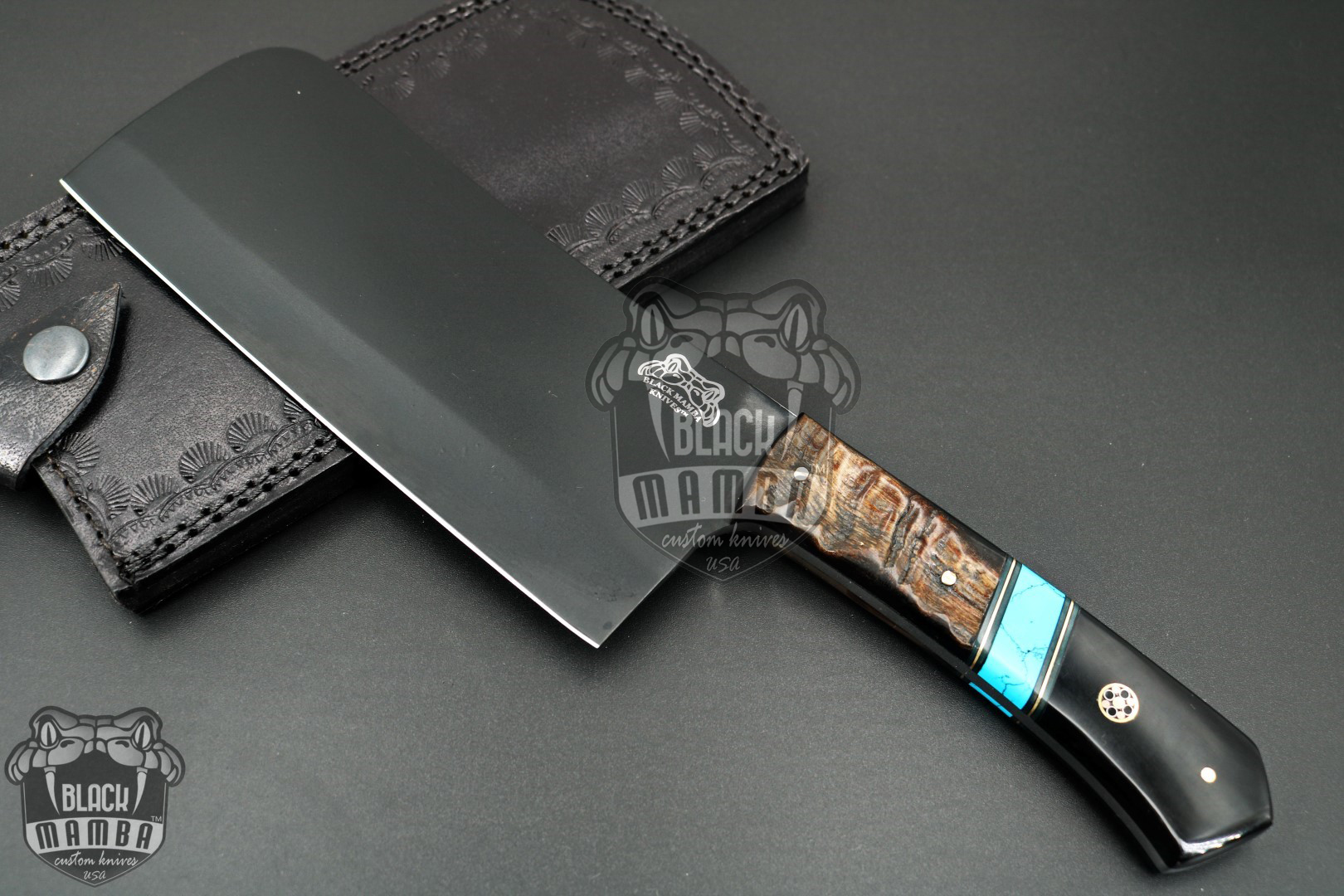
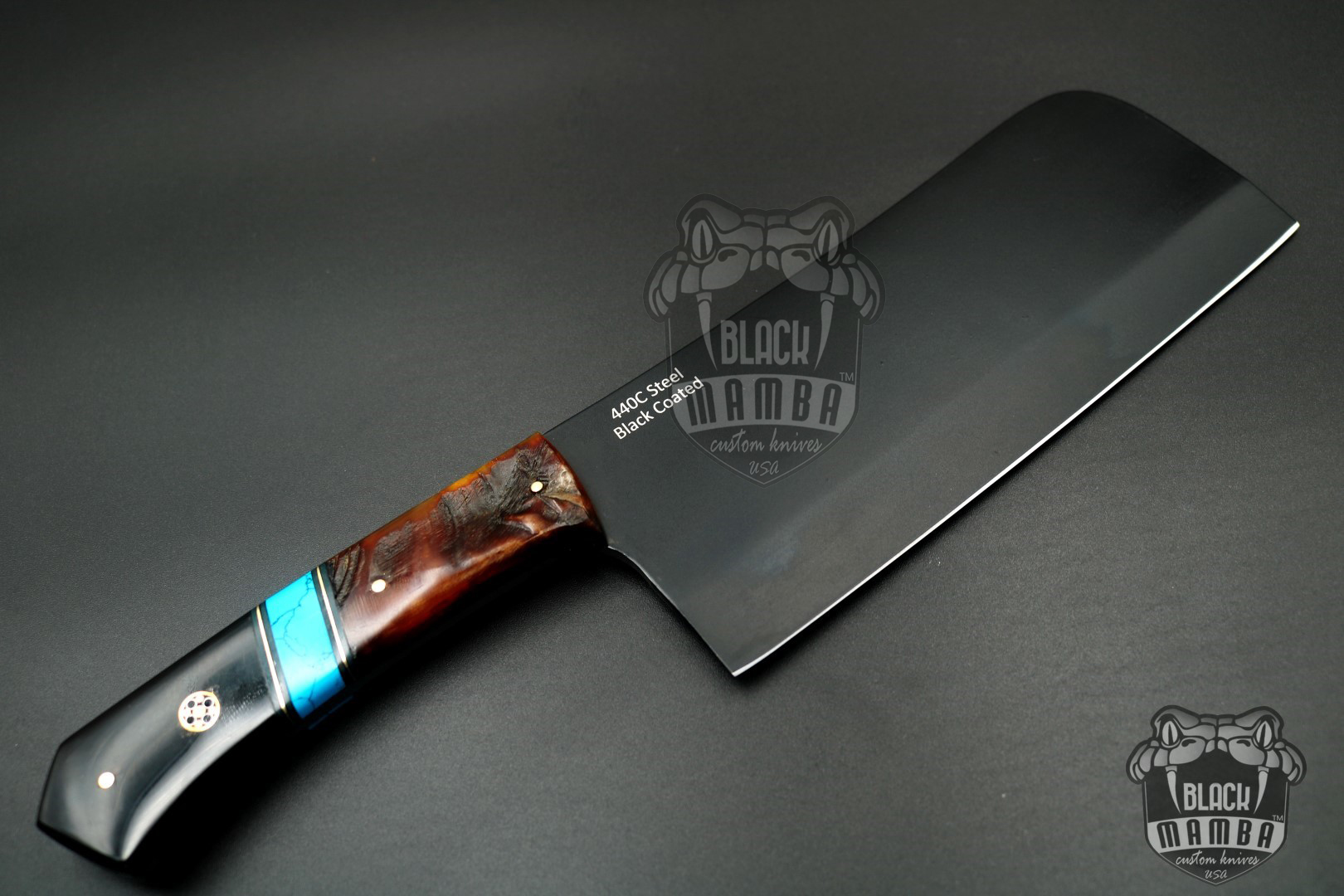
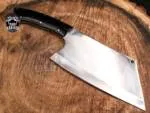
16.5 ounces is heavy for a kitchen blade, close to half again what a typical eight-inch chef knife carries, and that mass is the entire reason to own the Black Panther. You do not push a cleaver this heavy through food. You lift it and let it fall, and gravity takes care of squash, cabbage, chicken joints and rib racks on your behalf. Cooks arriving from a light Japanese-style knife tend to over-drive the first few cuts and then adapt inside a single meal. The tall blade also buys real knuckle clearance, and it gives you a face wide enough to sweep a whole board of diced onion into the pot in one pass.
| Overall length | 12 inches |
| Blade length | 7 inches |
| Handle length | 5 inches |
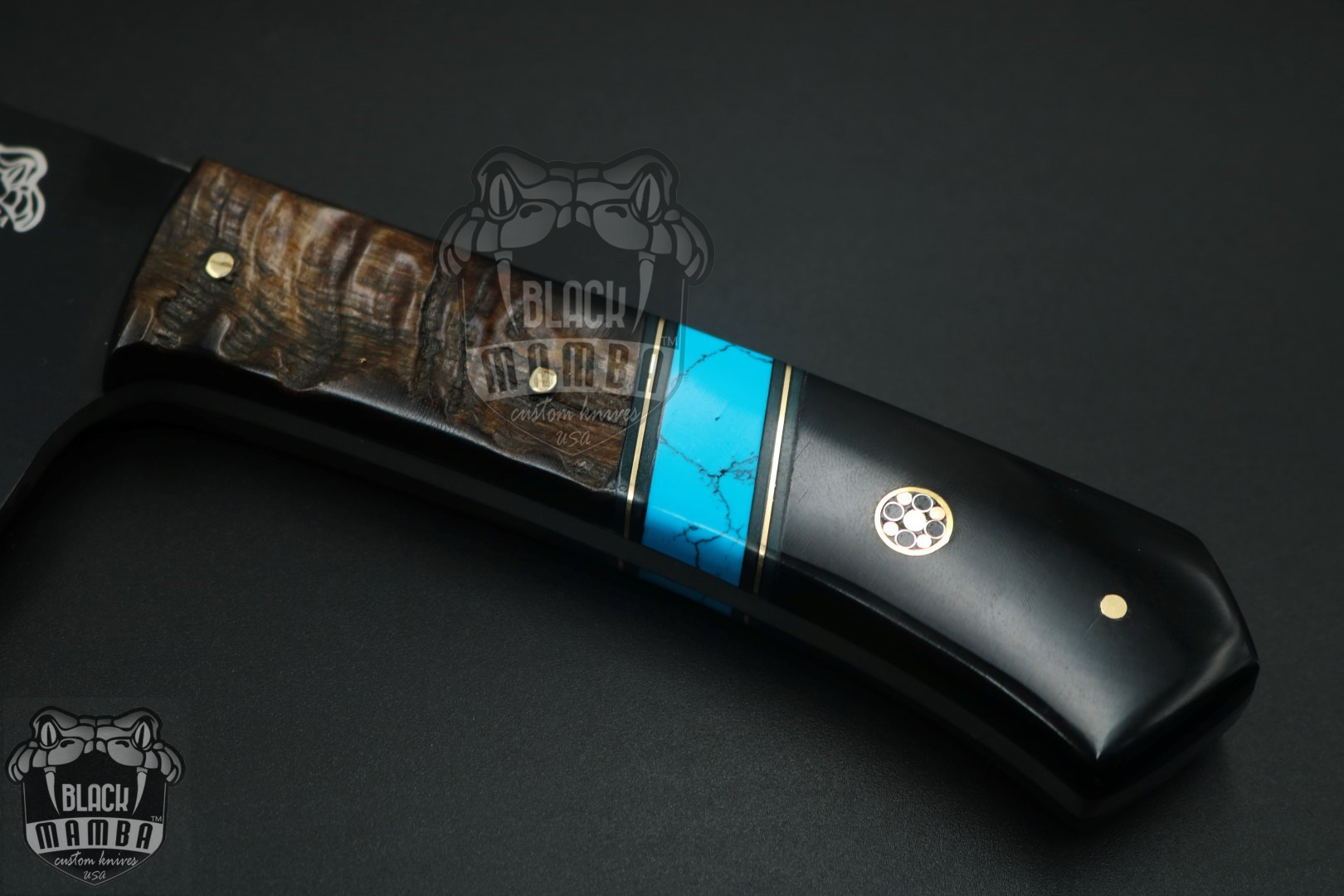
| Handle | Black horn with a pale fossil toned section and a turquoise inlay band |
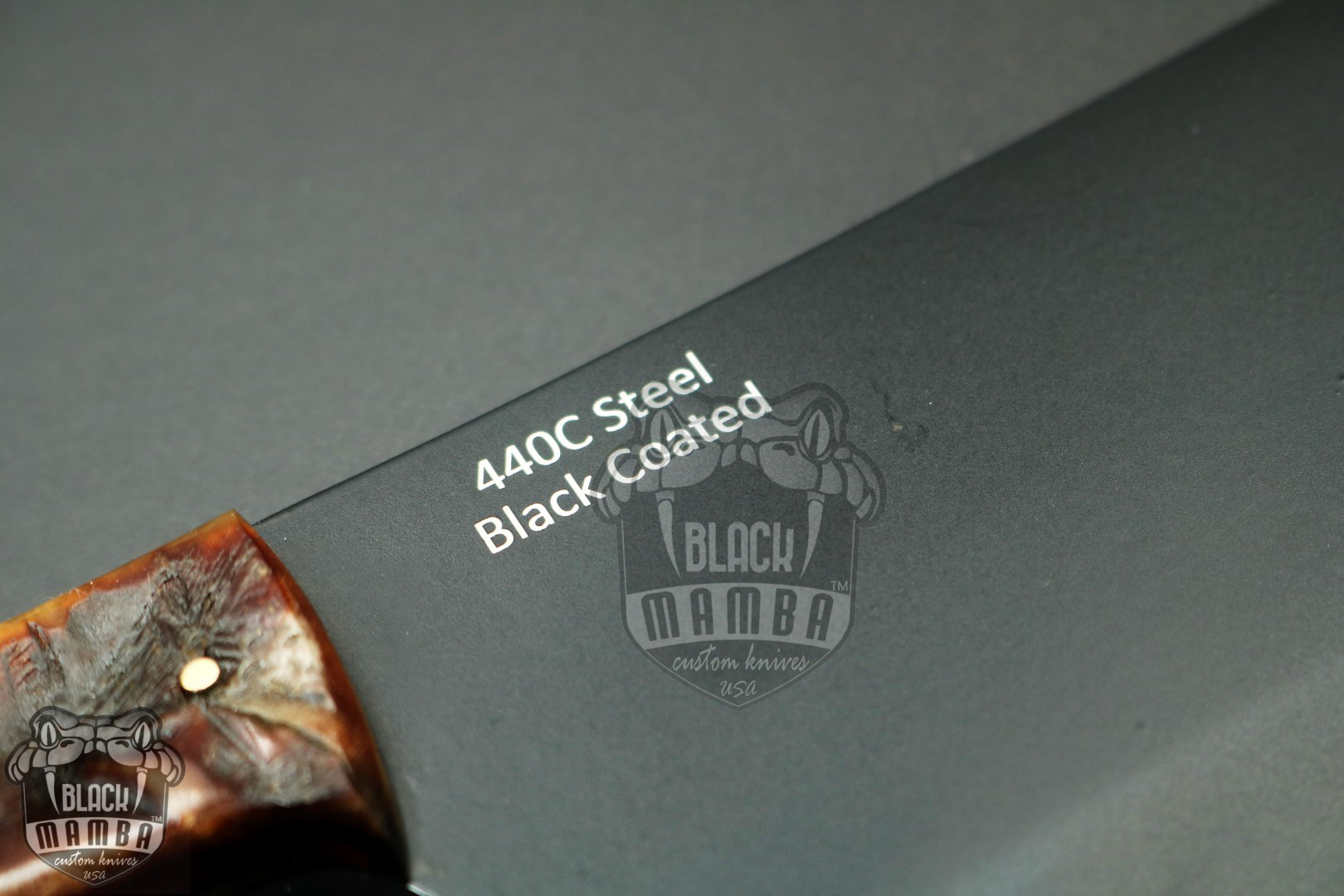
| Steel | 440C stainless steel |
| Weight | 16.5 oz |
| Included | Hand-stitched leather sheath |
What the black coating is and is not
The finish protects the flats and it gives the knife its look. It does not run out onto the cutting edge, because an edge cannot be coated and stay sharp, so the working bevel is bare steel and it will show as a bright line the first time you take the knife to a stone. That contrast is permanent and it is normal on every coated blade ever made. Expect the coating itself to pick up scuffs from board contact and from whatever else shares the drawer with it.
Stainless, so cleanup stays simple
440C does not react with what you are cutting, so there is no grey discolouration after onions or a raw rib rack, and no oil anywhere in the routine. Rinse it and towel it. Keep it off the dishwasher rack regardless, because heat and detergent ruin handles and dull edges whatever the alloy underneath. Between sharpenings, it pays to know when to hone instead of sharpen, since most heavy cleavers get ground down long before they genuinely need it. If you are weighing one alloy against another before you commit, how the common knife alloys compare is the place to start.
Who should buy one
This is a butcher’s tool and a barbecue tool before it is a vegetable knife. If your weekly cooking involves breaking down whole birds, portioning pork shoulder, splitting squash or reducing a rib rack to individual bones, the mass here saves your wrist real work over a year. If you spend most of your board time on fine dice and herbs, it is the wrong knife and a lighter blade will serve you better. Buying honestly at this weight matters more than at any other point in the range, because nobody enjoys a heavy cleaver they did not actually need.
The handle
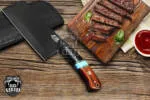
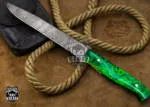
Black horn shaped into a full-tang slab handle, with a section of pale fossil-toned material and a narrow turquoise inlay band set in behind the bolster, plus a mosaic pin through the butt. It is a dressy handle bolted to a genuinely blunt-instrument blade, which is a combination we like. The proportions matter more than the decoration: the swell sits far enough back that the balance point stays out over the front of the blade where a cleaver wants it.
The sheath, and the Damascus version
The knife ships in a hand-stitched leather sheath with a tooled face and a snap strap, useful for taking it to somebody else’s kitchen and not the place to store it long term. If you want this same silhouette and this same weight in pattern-welded steel rather than a coated stainless, the Damascus chef cleaver is the other half of the pair. Both are made in Memphis, and both carry a lifetime warranty.
Model: BMK-702A
Jerry Adams –
This exceeded what I pictured in my head before ordering. Handle feels amazing and the balance is perfect. Shipping was fast and everything arrived well packaged. This is why Black Mamba Knives is my go to for anything knife related.
Anthony Martin –
Couldn’t ask for a better knife honestly. Every piece of the fit and finish looks hand checked before it shipped. So worth it.
Michelle Perez –
My skepticism about ordering online disappeared the second this arrived. Sheath snaps shut securely and doesn’t feel flimsy at all. This will not be my last order from this store.
Marcus Bryant –
So happy I finally pulled the trigger on this one. Took it out camping right away and it handled everything I threw at it. If you’re on the fence just get it. You won’t regret it.
Jeffrey Simmons –
Ordering again from this maker the second I finish writing this review. Blade holds a razor edge right out of the box. This is exactly why I keep coming back to this seller.
Kyle Sanchez –
My neighbor couldn’t stop talking about this after I unboxed it. Handle has a great grip even with wet or gloved hands. Not my first order from Black Mamba Knives and it won’t be my last. Blade geometry makes it glide through cuts with barely any effort. This is my new favorite in the collection.
Pamela Morris –
Got this for Father’s Day and now I want one for myself too. Fit and finish is museum quality. You can tell real craftsmen made this by hand. Shipping was fast and everything arrived well packaged.
Marcus Edwards –
My skepticism about ordering online disappeared the second this arrived. Leather sheath is thick and well stitched. Not the cheap stuff you usually get. Every piece I’ve gotten from Black Mamba Knives has been solid. Already planning my next pickup from this maker.
Caleb Martinez –
Showed up right on time and looked even better than the photos. Leather sheath is thick and well stitched. Not the cheap stuff you usually get. This has quickly replaced my old go to knife for field dressing. This company clearly takes pride in their work.
Raymond Kim –
Everyone who’s seen this knife has asked where I got it. Blade geometry makes it glide through cuts with barely any effort. Handle has a great grip even with wet or gloved hands. Exactly the kind of quality that keeps me coming back.
Frank Jimenez –
First rate craftsmanship on this one. This has quickly replaced my old go to knife for field dressing. Handle has a great grip even with wet or gloved hands. Every piece of the fit and finish looks hand checked before it shipped. So worth it.
Emily Ruiz –
Kept picking this knife up just to admire it after it arrived. Blade holds a razor edge right out of the box. Couldn’t be happier with this.
William Hernandez –
This is the kind of knife you show off without even meaning to. 10/10 would buy again.
Olivia Chavez –
First rate quality for the price point. Every piece I’ve gotten from Black Mamba Knives has been solid. Even the small details in the damascus pattern are crisp and clean. Leather sheath is thick and well stitched. Not the cheap stuff you usually get. This will not be my last order from this company.
Rafael Miller –
This knife punches way above its price point. This is my new favorite in the collection.
Mark Jackson –
This is exactly what I wanted and then some. Pommel and guard are solid, no wobble anywhere on the knife. Took it out camping right away and it handled everything I threw at it. This is my new favorite in the collection.
Mark Miller –
I collect knives and this one is superb. Blade holds a razor edge right out of the box. Exactly the kind of quality that keeps me coming back. I keep coming back to Black Mamba Knives because it’s always this good.
Walter Ruiz –
Photos don’t do this knife justice at all. Black Mamba Knives keeps setting the bar higher with each order.
Susan Castillo –
Photos don’t do this knife justice at all. Even the small details in the damascus pattern are crisp and clean. Steel has a gorgeous pattern that looks different in every light. Beyond happy with how this turned out.
Deborah Hunt –
Kept picking this knife up just to admire it after it arrived. Came in a nice gift box which made it feel even more special. Sheath snaps shut securely and doesn’t feel flimsy at all. Can’t recommend this enough.
Kyle Phillips –
Ended up ordering a second one after how happy I was with the first.
Sharon Castillo –
Decent buy overall, a couple small nitpicks aside. Appreciate that this is made stateside in Memphis, delivery was solid too. Sheath is nice. Wish it had more padding but it does the job. Second time ordering from Black Mamba Knives and still happy overall. Blade holds up well, edge retention could be slightly better. Glad I made this purchase.
Roger Coleman –
I collect knives and this one is impressively made. Pommel and guard are solid, no wobble anywhere on the knife. Beyond happy with how this turned out.
Walter Reed –
Absolutely really impressed by this knife. No hesitation recommending this to anyone looking.
Barbara Allen –
This exceeded what I pictured in my head before ordering. This has quickly replaced my old go to knife for field dressing. Already added a few more items from this seller to my cart.