
Description
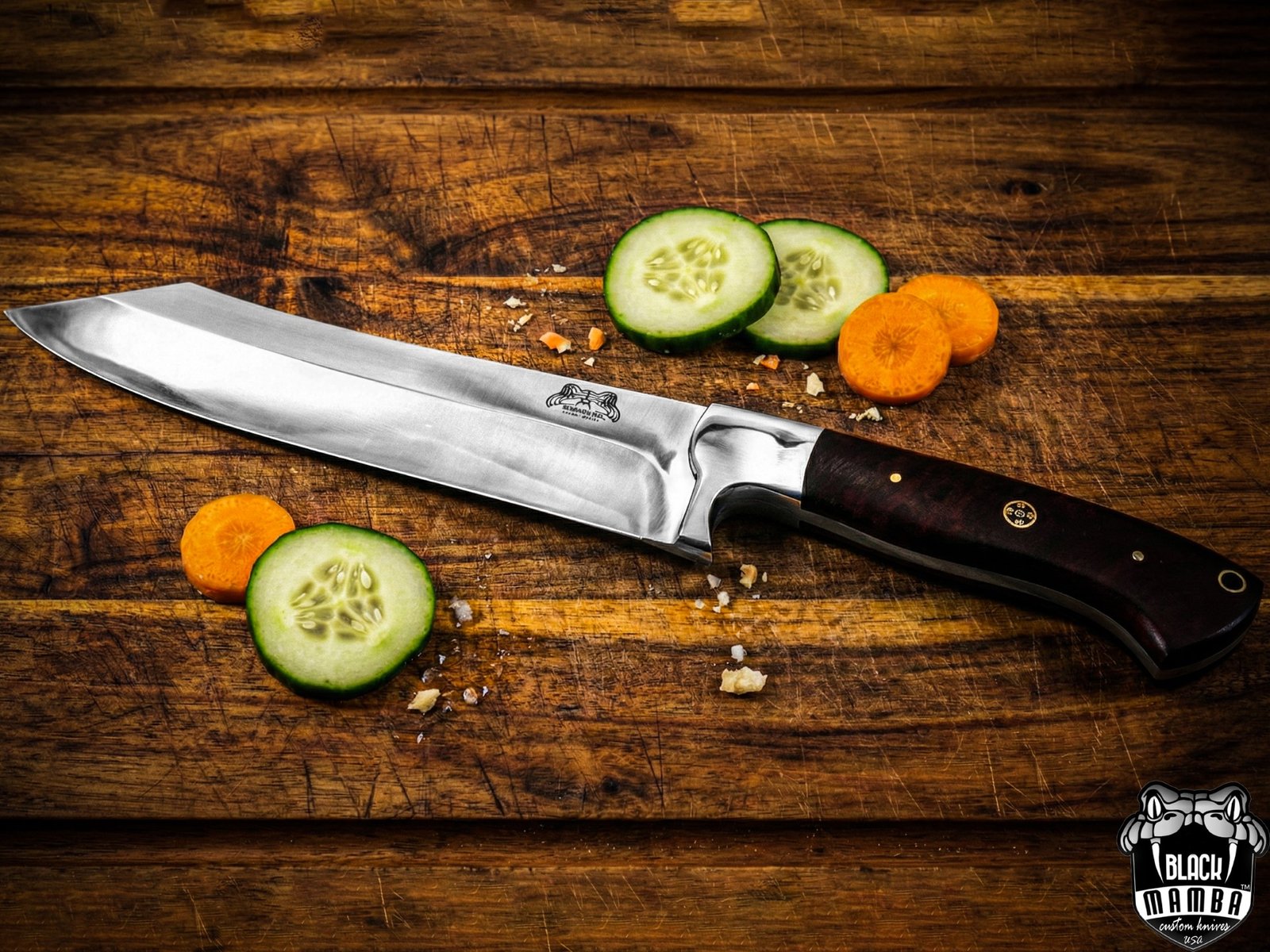
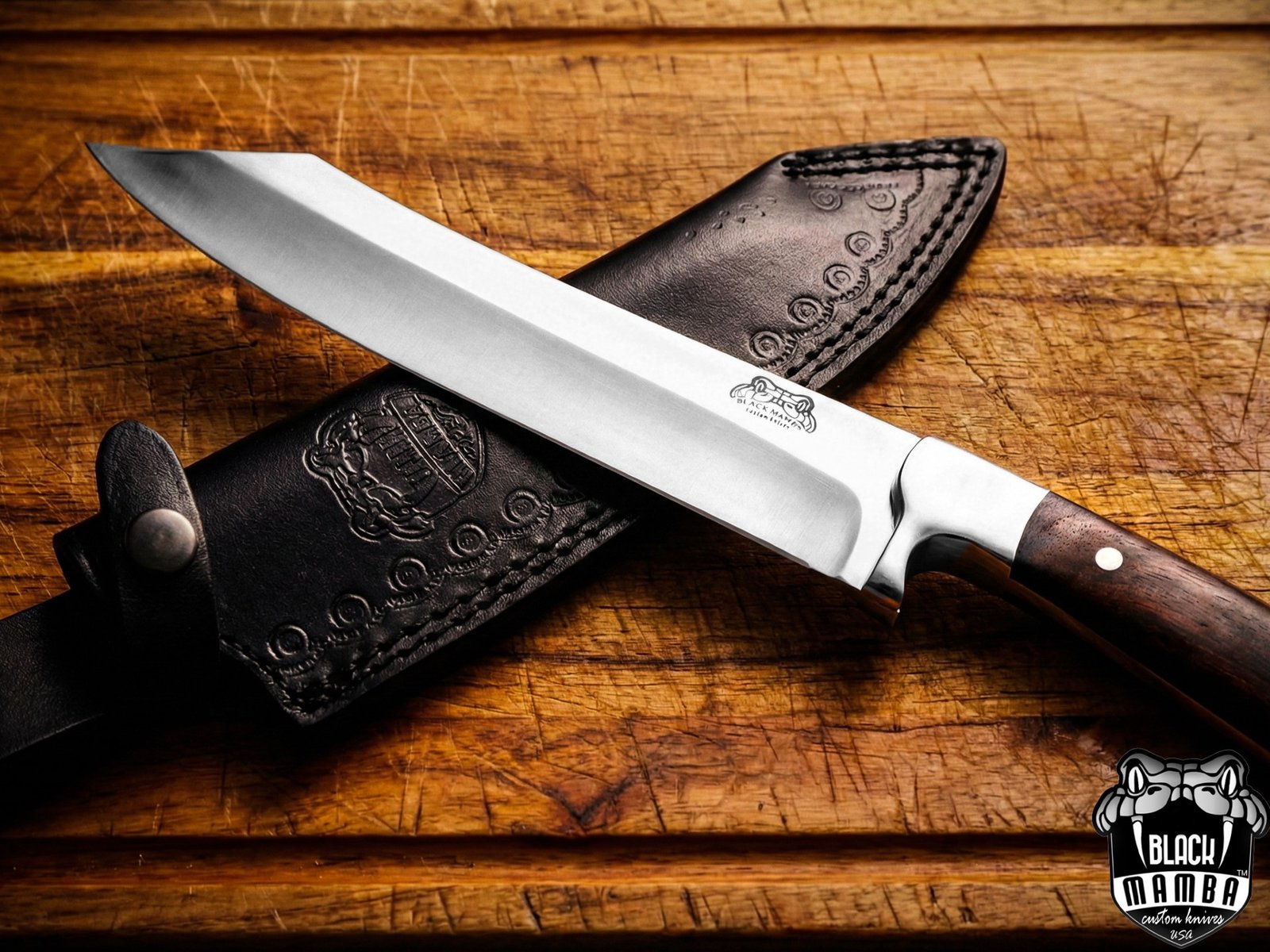
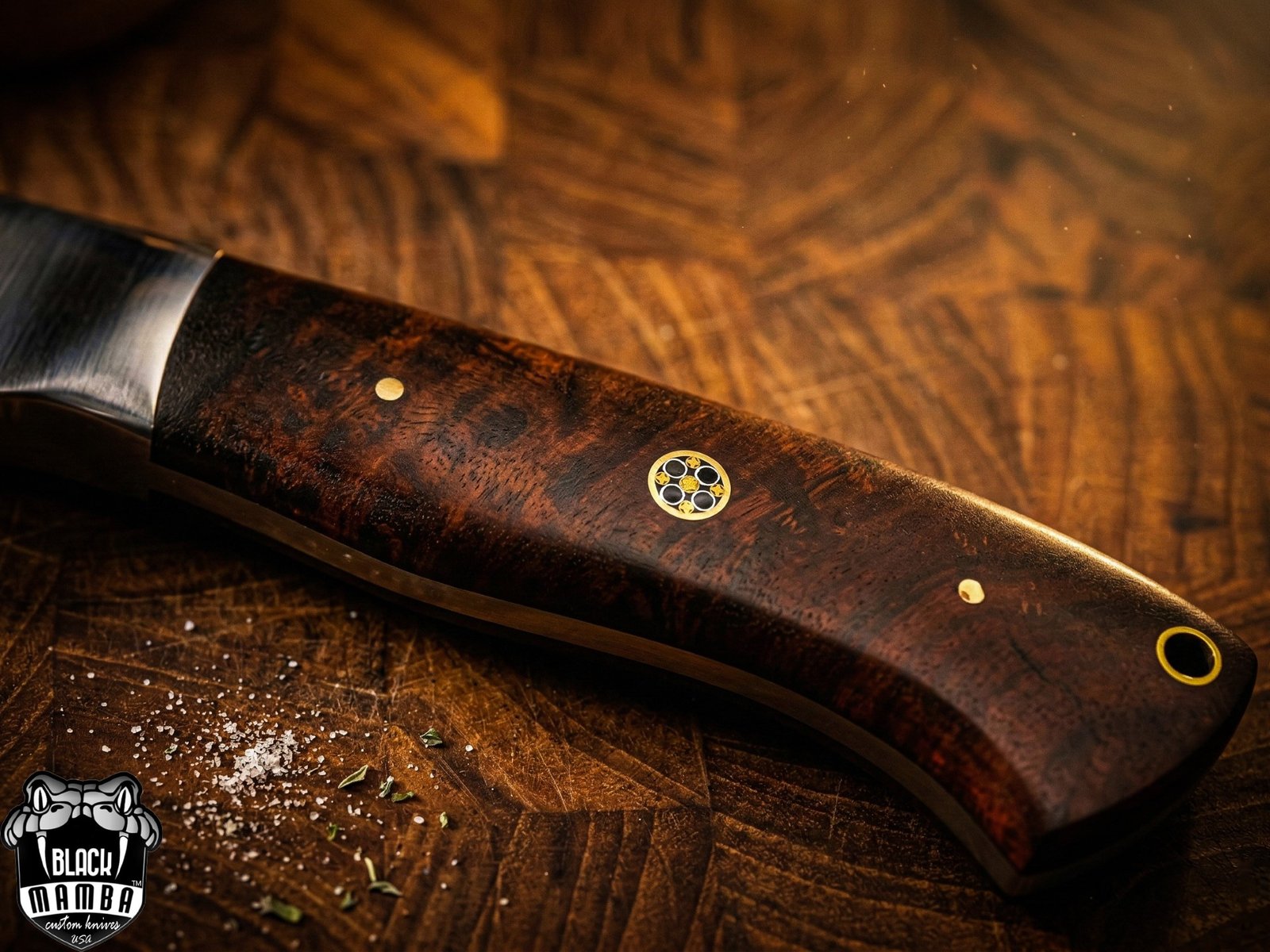
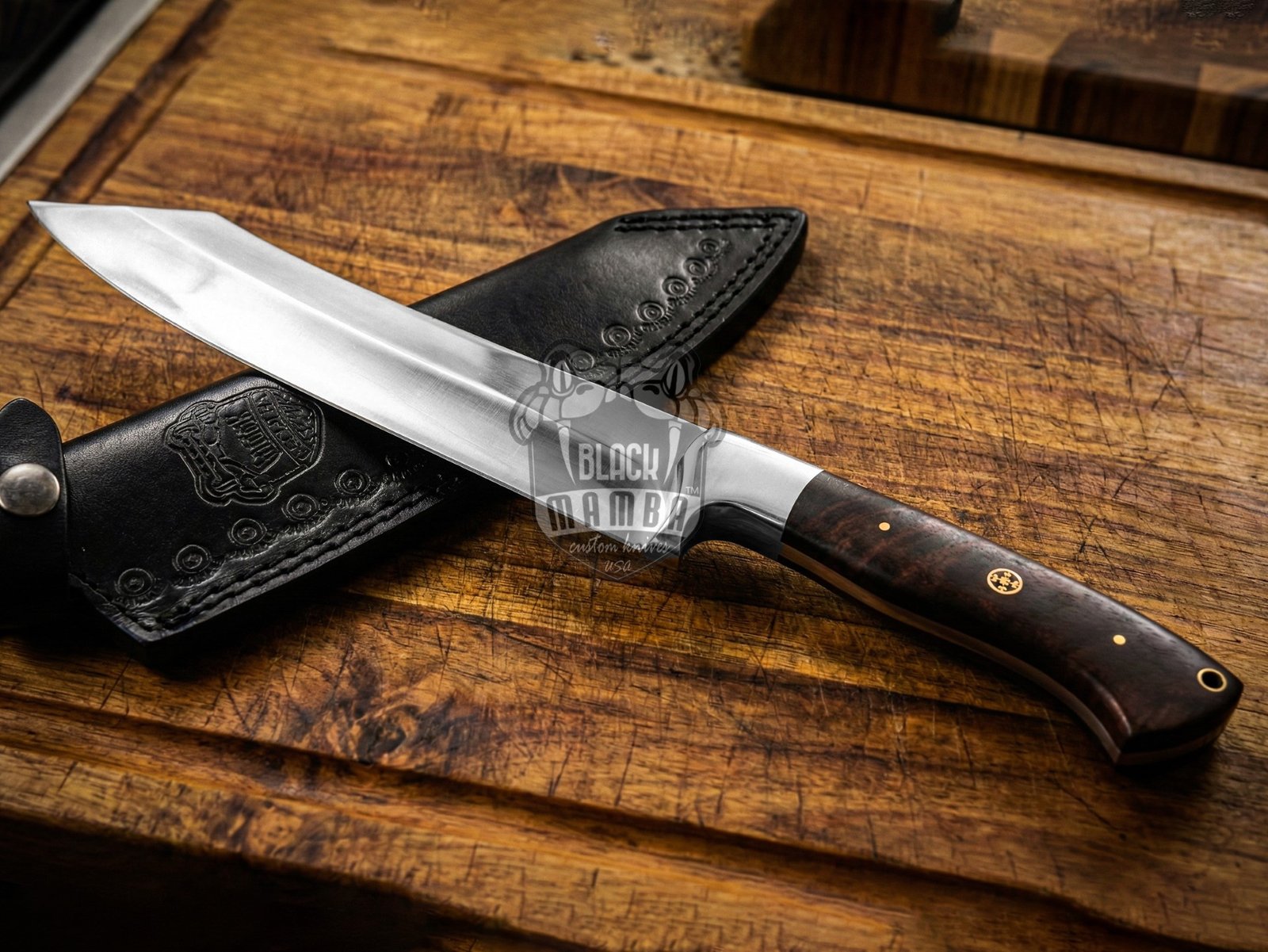
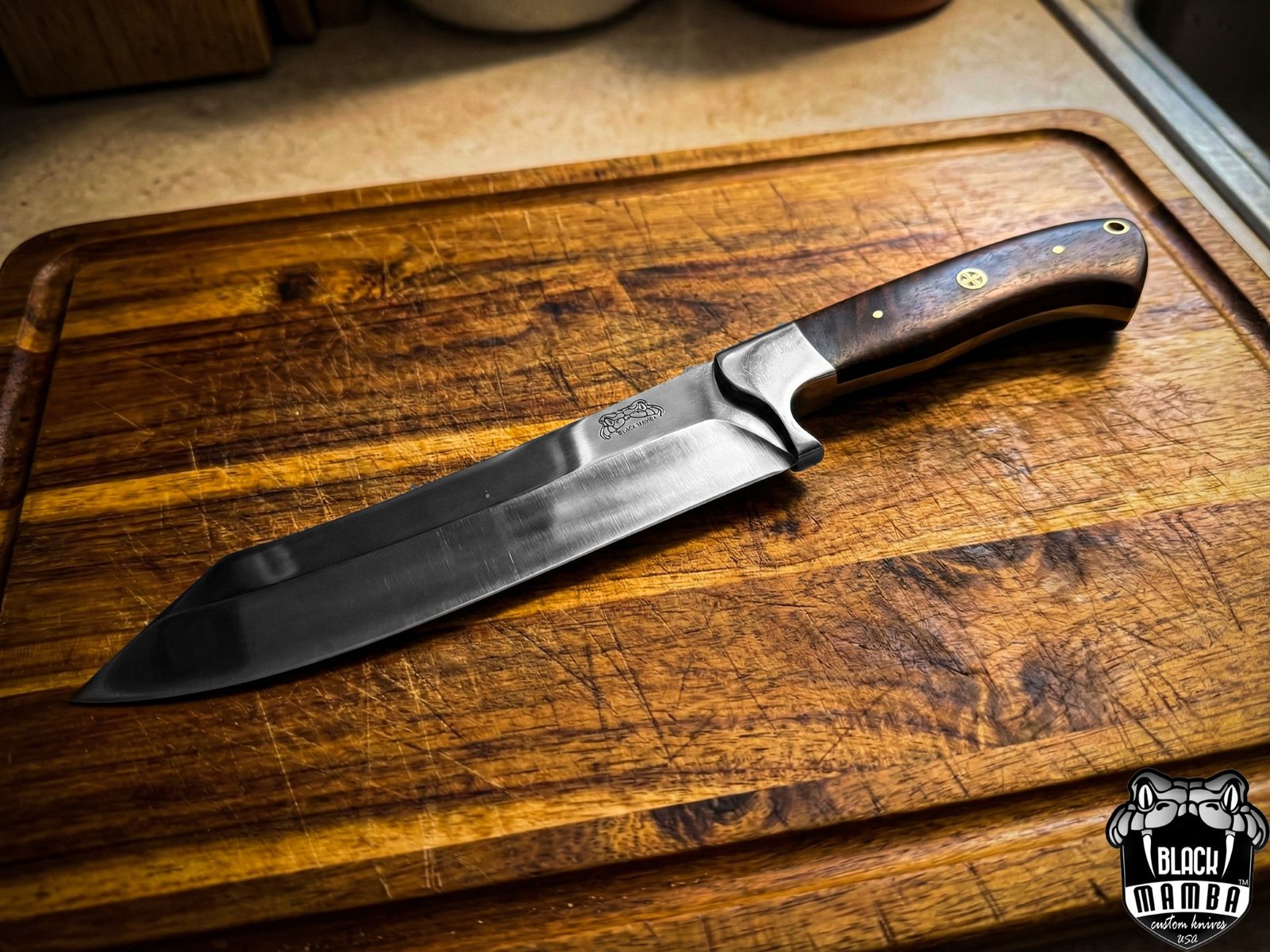
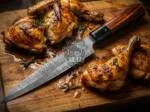
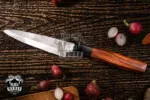
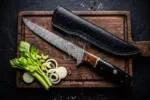
The Yukio is our long, light stainless chef knife: thirteen inches overall, a seven-and-a-half-inch blade with a swept clip and a fine point, and a five-and-a-half-inch handle of dark stabilised hardwood carried on brass pins with a brass medallion set into the butt. It arrives in a hand-stitched leather sheath.
| Overall length | 13 inches |
| Blade length | 7.5 inches |
| Handle length | 5.5 inches |
| Handle | Dark stabilised hardwood |
| Steel | 440C stainless steel |
| Weight | 11.6 oz |
| Included | Hand-stitched leather sheath |
Reach without heft
Seven and a half inches of edge at 11.6 ounces is an unusual combination, and it pushes the knife toward slicing rather than chopping. Draw it through a roast, run it down the length of a side of salmon, take long ribbons off a cabbage. Weight-forward cleavers do the opposite job well and this one does not try to compete with them. The handle is the longest on any kitchen blade we build, which suits larger hands and a pinch grip you intend to hold for an hour of prep instead of five minutes at the end of a working day.
440C is the low-maintenance choice
There is no patina to manage here and no oil bottle anywhere in the routine. This is a high-carbon stainless, and it will sit through a lemon-heavy prep session, a wet board and a fifteen-minute delay before it reaches the sink without marking. The thing you give up is working time on the edge, since 440C surrenders some retention against the harder tool steels and comes back on a stone more readily than it resists going dull in the first place. For a home kitchen that is usually the right end of the bargain to be holding. Why stainless behaves differently on a board goes into the chemistry behind it.
Keeping the edge
A blade this long asks for consistent angle control right across a long stroke, and the commonest mistake at home is rolling the wrist as you reach the tip and grinding a second, steeper bevel into the last inch. Work the edge in sections instead and check your progress with a marker if you need to. Medium and fine stones are all this alloy asks for, and diamond plates are unnecessary on it. A repeatable sharpening method is worth the twenty minutes it takes to learn once.
The handle and the sheath
The scales are stabilised timber, dark and close-figured, shaped so the palm swell sits behind the pinch rather than under it. The leather sheath is stitched by hand and is meant for carrying and gifting rather than long-term storage, because leather holds moisture against steel. Keep the knife on a magnetic strip, in a block, or in a guard, and leave the sheath in the drawer.
If you would rather have a forged pattern
Some cooks want the layered face and are happy to dry the blade every single time. If that is you, the copper Damascus chef knife does the same job in high-carbon steel and asks considerably more of you in return. Either way, the knife is ground, heat treated and finished here in Memphis, and it goes out sharp enough to work with straight from the box.
Model: BMK-152-440c
Reviews
There are no reviews yet.