
Description
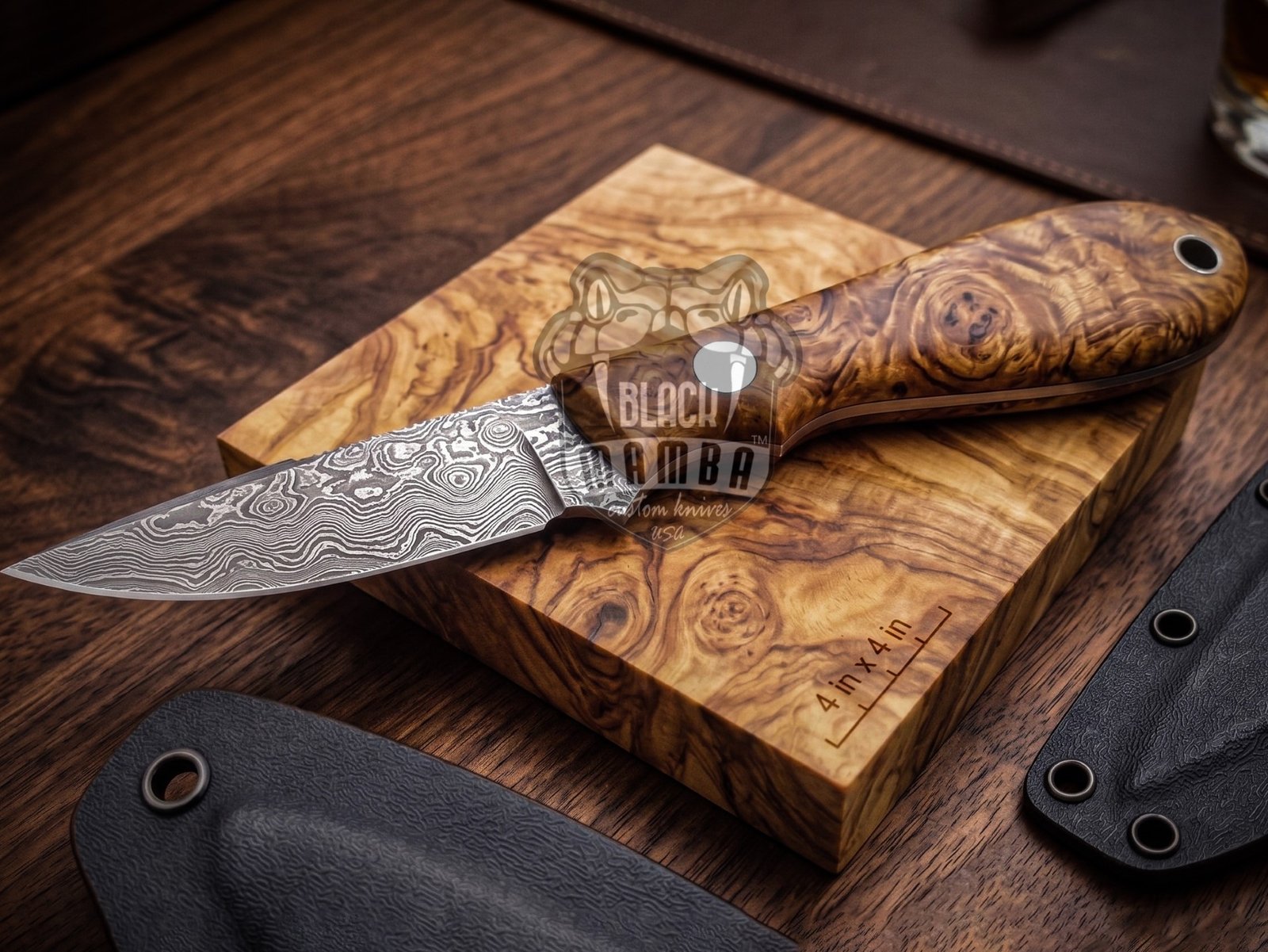
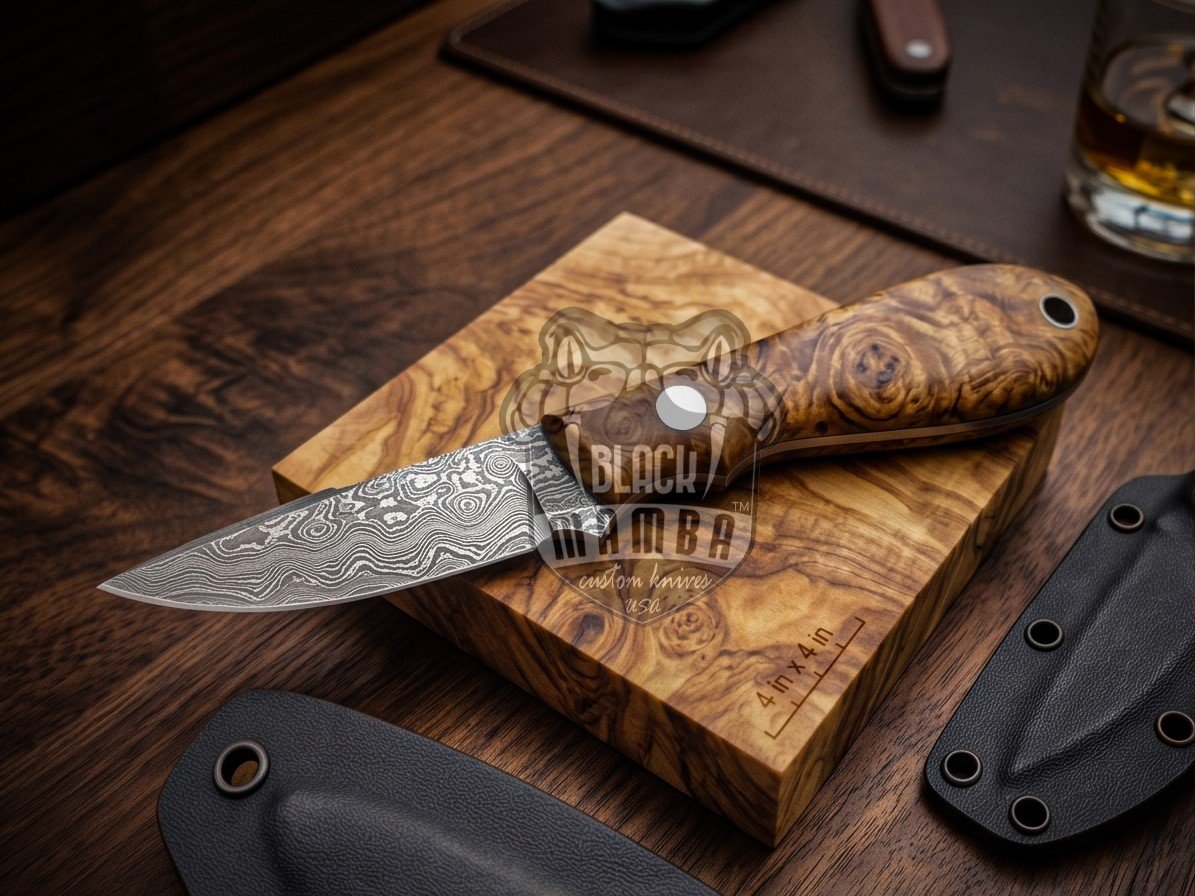
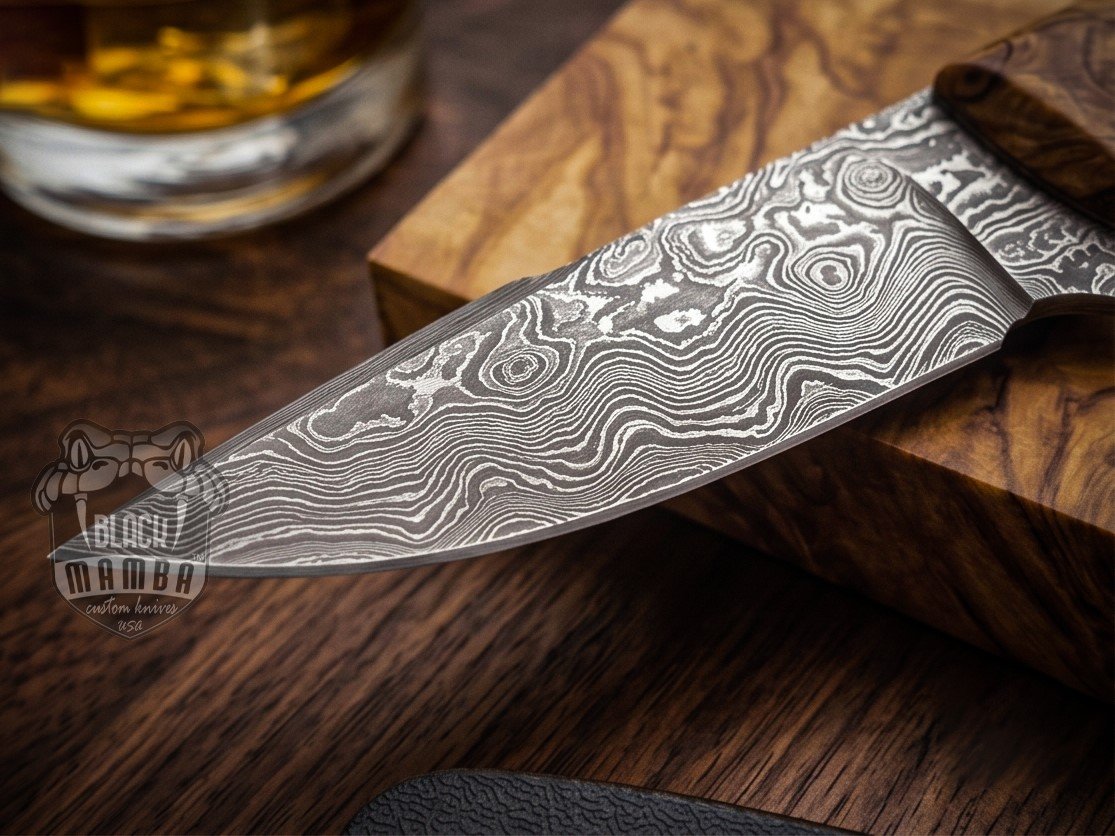
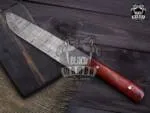
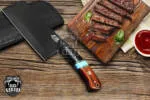
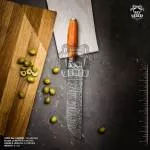
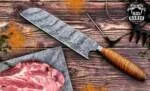
A short Damascus knife with oak scales, built for a job most knives are too big for: cutting fudge, cheese and butter into clean squares without dragging.
| Overall length | 7 inches |
| Blade length | 3 inches |
| Handle length | 4 inches |
| Steel | 1095 + 15N20 Damascus |
| Hardness | 58–60 HRC, oil tempered |
| Handle | Oak Wood & Steel pins |
| Included | Black moulded belt sheath |
Sized for: the board rather than the block. Three inches of edge on a seven inch knife means the whole thing sits inside your hand, and the handle drops below the edge line so your knuckles clear the board on a straight down cut.
Oak as a handle timber
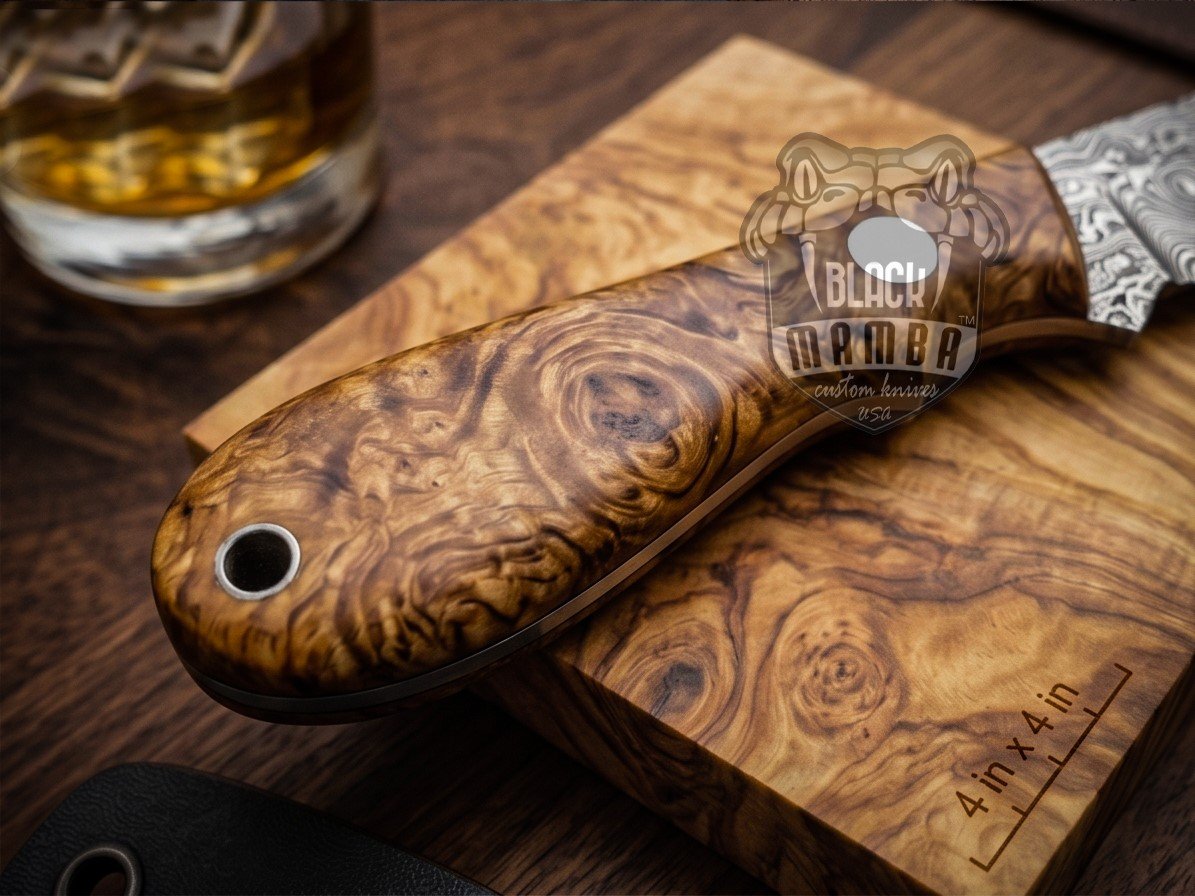
Oak is open-grained and lighter than the tropical hardwoods we usually use, which is why this knife feels front-heavy in a way rosewood-handled knives do not. That weight forward is useful here: on a soft, sticky material you want the blade falling through rather than being pushed. The pins are steel, set flush, and the figure in these scales is strong enough that no two handles come out matching.
Why a short blade for soft food
Long blades bind in fudge and caramel because there is more surface for the material to grab. A three inch edge makes a shorter, cleaner cut and clears the board faster. The bevel is ground thin behind the edge for the same reason. For everything this knife is deliberately not built to do, the full size kitchen cleaver is the other end of the scale.
Carbon steel around food
Pattern-welded 1095 and 15N20 is carbon steel, so sugar, dairy and acid all mark it. Those marks build into a grey patina that is stable and food-safe. Rust is different, and only appears when the blade is left wet. Our Damascus care guide tells the two apart, and knife types explained places this shape in the wider range.
The handle drop
Look at the profile and you will see the handle sits noticeably above the line of the edge. On a knife this short that offset is the whole ergonomic argument: it buys your knuckles clearance so you can push straight down through a slab of fudge and stop on the board without folding your wrist sideways.
Care: wash by hand in warm water immediately after use and dry it at once. Sugar left on carbon steel overnight will etch a mark you cannot buff out. Oil the blade after drying. Oak is thirstier than a tropical hardwood, so give the scales a wipe of mineral oil every couple of months rather than twice a year.
FAQs
Is it dishwasher safe? No. Heat and detergent will crack the oak and rust the steel in one cycle.
Can it be used as a paring knife? Yes. The size and grind suit paring, peeling and trimming perfectly well.
Why does the blade discolor? Carbon steel reacts to sugar and acid. It is patina, not damage, and it will even out with use.
Model: BMK-1102
Anna Scott –
Kept picking this knife up just to admire it after it arrived. Cleans up easy and hasn’t shown any rust or staining. Zero complaints from me on this purchase.
Shane Adams –
This shop clearly knows what they’re doing with quality like this. Edge held up great through a full week of daily cooking. Exactly the kind of quality that keeps me coming back.
Donna Jefferson –
This exceeded what I pictured in my head before ordering. Black Mamba Knives is quickly becoming my go to shop for knives. Balance in hand is perfect for detail work at the cutting board. Worth every penny.
Cody Martinez –
My whole family passed this knife around at dinner just to look at it. Cleans up easy and hasn’t shown any rust or staining. Edge held up great through a full week of daily cooking. Highly recommend this one. Black Mamba Knives has earned a repeat customer with this one.
Brenda Alexander –
This blade came razor sharp right out of the box. So worth it.
Jeffrey Wright –
Kept picking this knife up just to admire it after it arrived. Has become my main prep knife in the kitchen since it arrived. Love it. I keep coming back to Black Mamba Knives because it’s always this good. Good to know real Memphis craftsmen are behind this, and shipping was quick too.