
Description
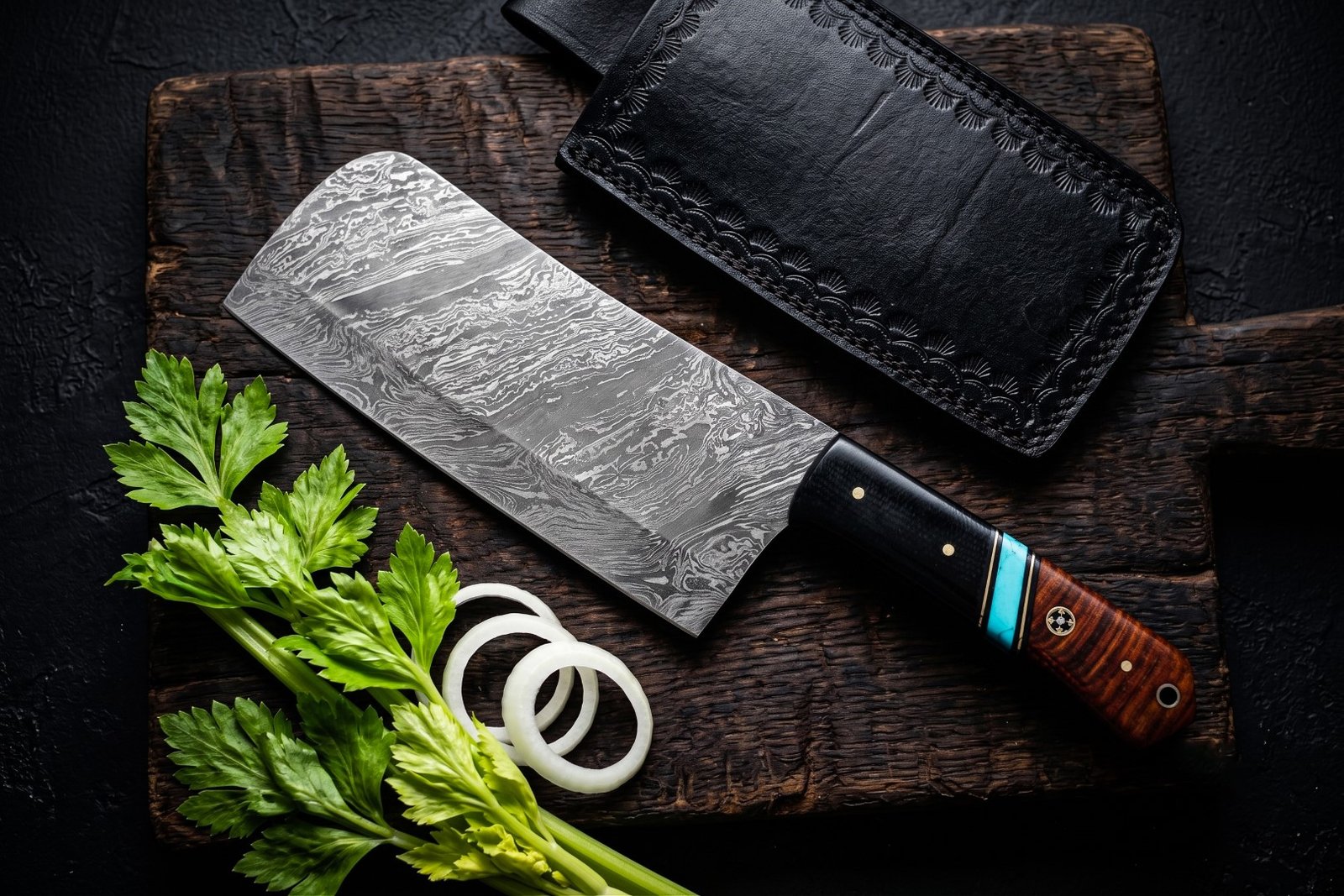
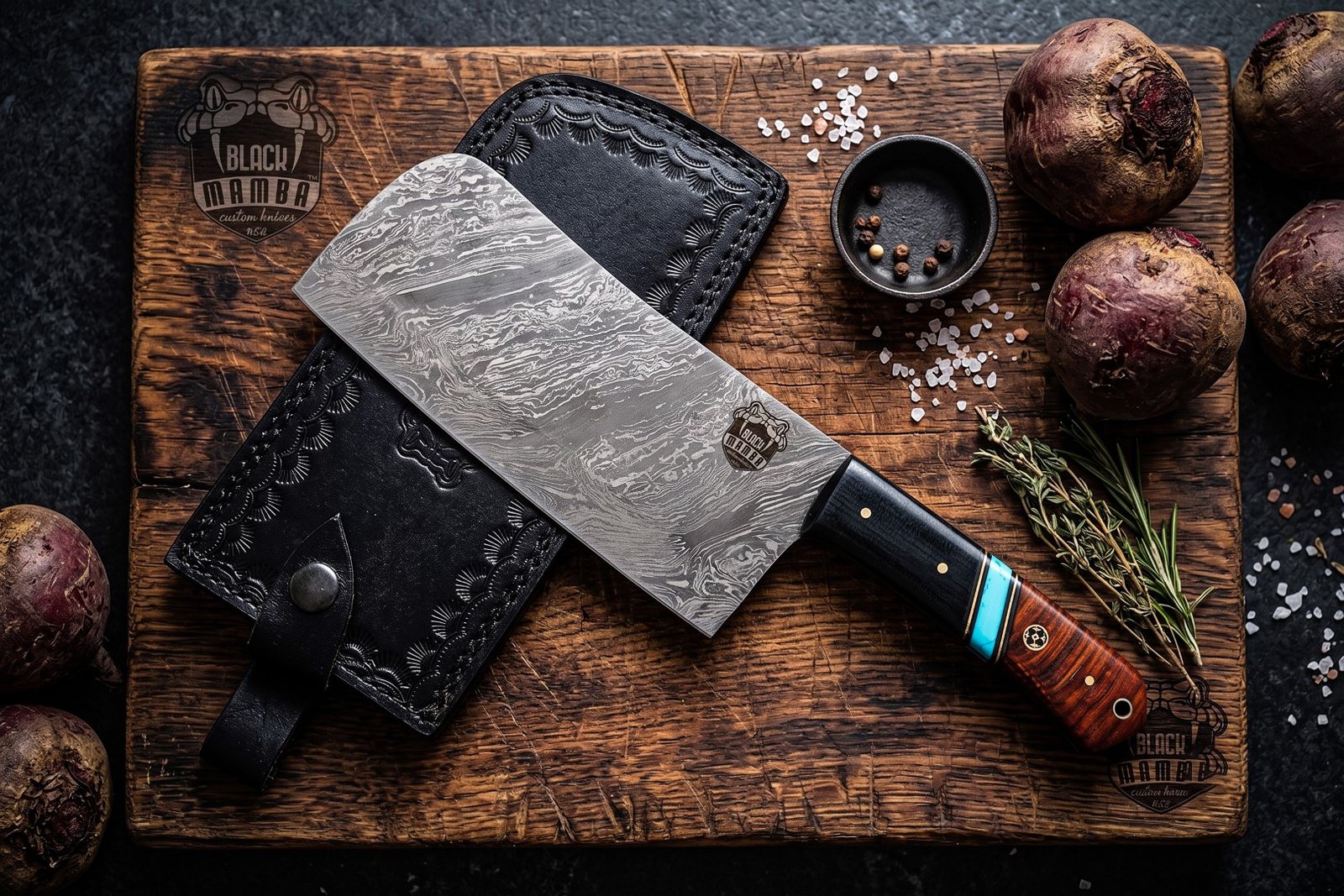
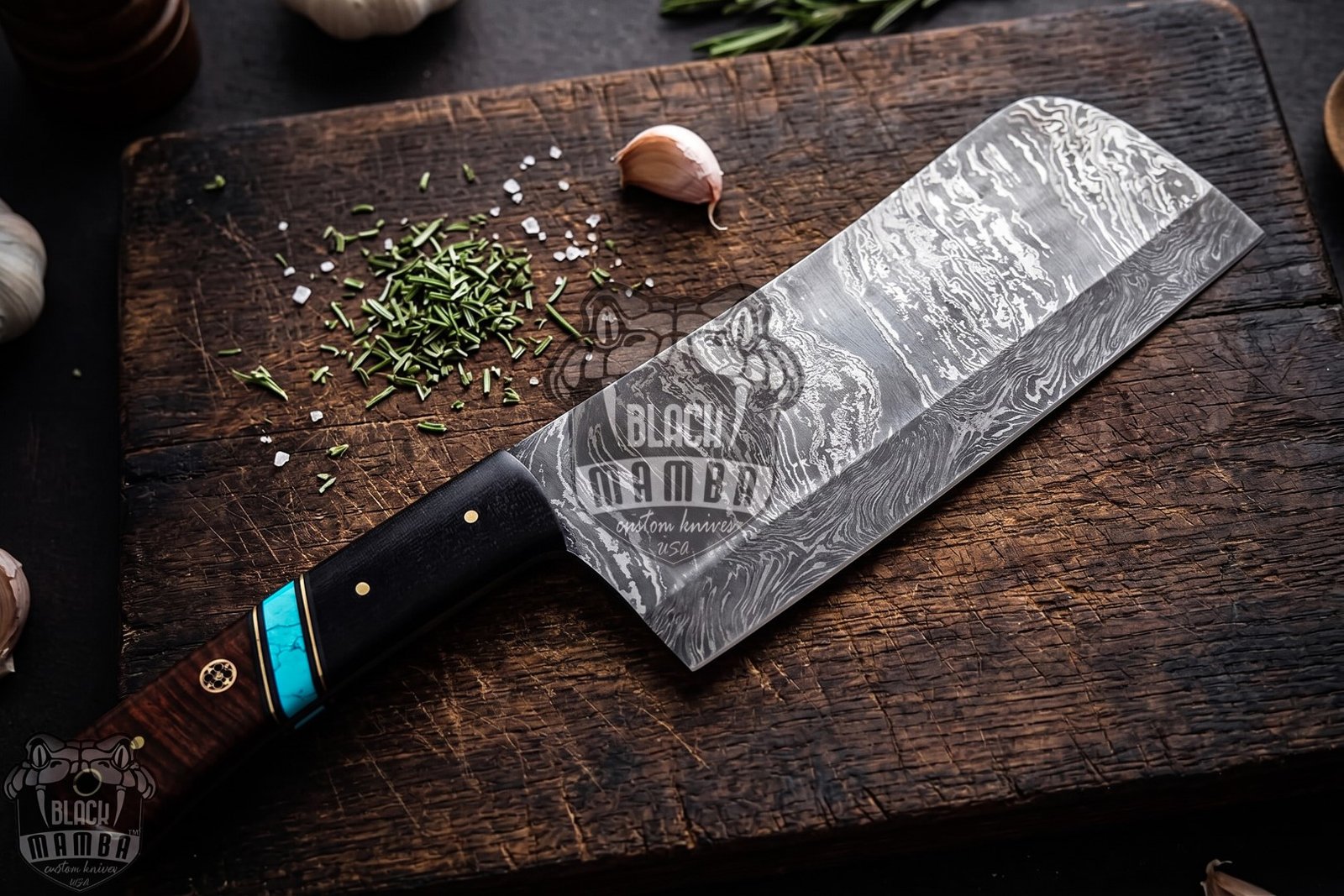
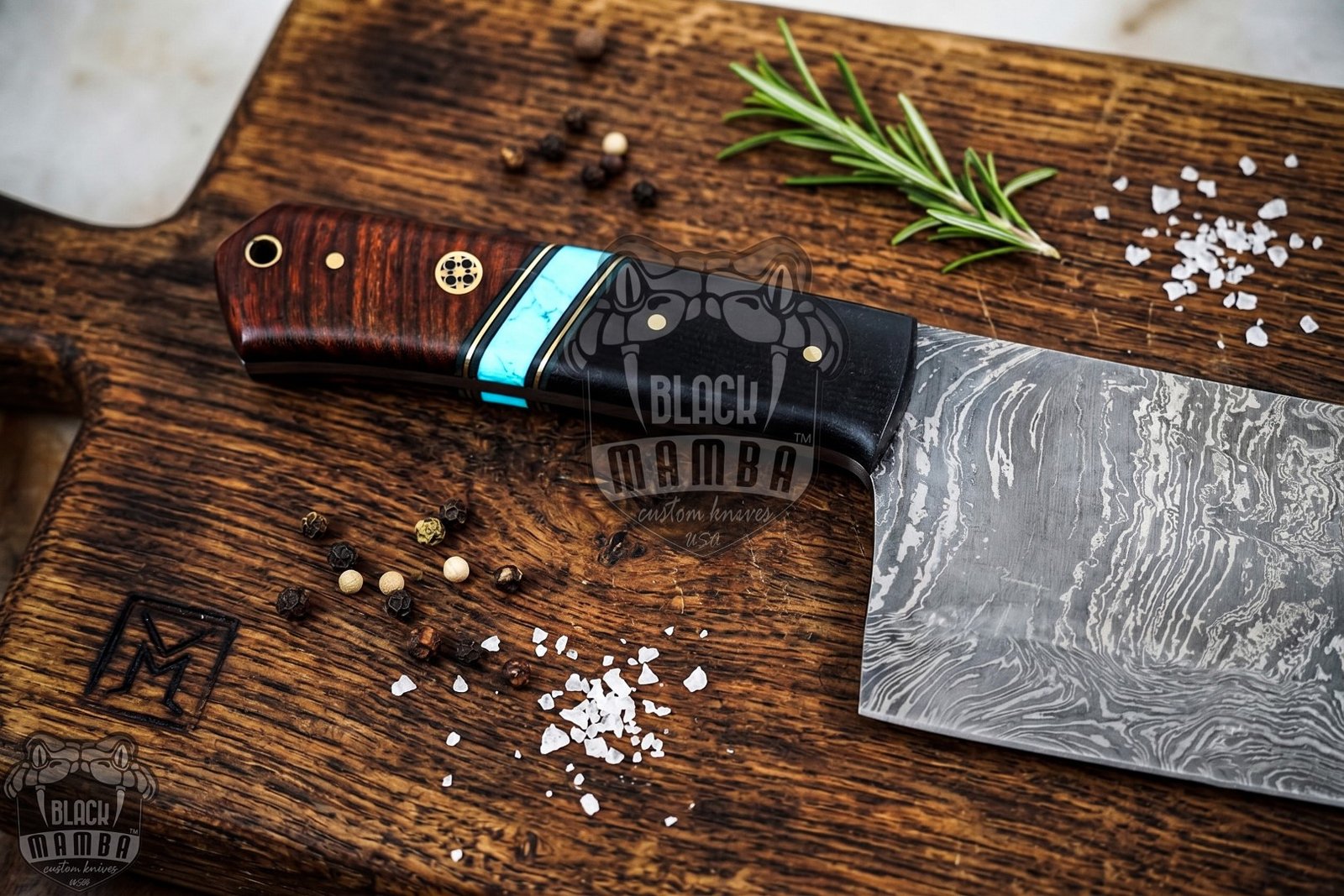
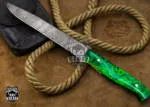
Twelve inches overall with a seven-inch blade, and fifteen ounces of it. This is a Chinese-style chef cleaver rather than a butcher’s cleaver, and that difference matters more than the name suggests. The handle is walnut with blue resin. The blade is folded Damascus at 352 layers.
| Overall length | 12 inches |
| Blade length | 7 inches |
| Handle length | 5 inches |
| Steel | 1095 + 15N20 Damascus, 352 layers |
| Hardness | 58–60 HRC, oil tempered |
| Weight | 15 oz |
| Handle | Walnut wood handle with blue resin |
| Pattern | Wind & Mix twist Fire pattern Damascus Blade, Extreme custom Brass File-work |
| Included | Hand-stitched leather sheath |
In the kitchen: vegetable prep above all. A tall, flat-profile blade lets you push-cut straight down through onions, cabbage and squash, then use the whole face as a scoop to carry them to the pot. It is also good on boneless proteins such as chicken thighs, pork loin and brisket for the smoker. The blade height gives your knuckles clearance a French chef knife does not.
This is not a bone cleaver
Say it plainly, because this is where cleavers get destroyed. The steel here is hardened into the high fifties, which is the right range for a kitchen edge and the wrong range for hammering through joints. Chicken bones, pork ribs and anything frozen will chip it. Buy a cheap soft-steel chopper for bone work and keep this one for everything else. Treated that way it outlasts every knife in the drawer.
Fifteen ounces does the work
A heavy cleaver is less tiring than a light one, which sounds wrong until you use it. You lift it and let it fall. Gravity supplies the force and your wrist only aims. The catch is control at low speed: fine julienne and thin slicing want a lighter blade you can steer. If you want one knife to do everything, a lighter chef knife at 11.6 oz is the more flexible tool.
Carbon steel in a kitchen
Both alloys in this blade are carbon steels, so it behaves nothing like the stainless knife you probably own. It takes a keener edge, gets there faster on a stone, and it reacts with food. Onions, tomato and citrus turn it gray or blue within minutes. That layer is patina, not rust, and it protects the steel underneath, but it will change how the pattern reads over the first month. Carbon versus stainless in the kitchen covers what you are signing up for.
Cleaning and oiling: hand wash only, in warm water, immediately, and dry it before you set it down. A dishwasher ruins the edge, loosens the walnut and etches the pattern flat. Once a week wipe the blade with a food-safe camellia oil if your kitchen runs humid. Hone on a ceramic rod between sharpenings and take it to a stone every few months, remembering that a chef knife bevel is shallower than a hunting knife’s and wants a lighter touch.
Kitchen questions
Is it too heavy for small hands? Possibly. Fifteen ounces held out from the body adds up over a long prep session.
Will the blue resin survive washing? Yes. Resin ignores water. The walnut around it is the part that wants oil.
Can I use it on a glass or stone board? No. Use end-grain wood or soft plastic. A hard surface rolls this edge in one session.
Model: BMK-873
Buying for groomsmen? This knife also comes as a matched set of 6, 15% less than buying six singly, and each one can carry its own engraved name.
Daniel L.: (verified owner) –
“The Damascus knife I received as a gift has quickly become a cherished possession. Its sharpness and the intricate patterns on the blade make it a joy to use.”
Emily D.: (verified owner) –
“I’m a competitive chef, and my Damascus knife is my secret weapon in the kitchen. Its sharpness and precision give me an edge in creating exceptional dishes.”
William K.: (verified owner) –
“The Damascus knife I own is a true kitchen gem. Its sharpness and the artistry of its blade patterns make it a pleasure to work with.”
Jessica R.: (verified owner) –
“I’m an outdoor enthusiast, and my Damascus knife is an indispensable tool on my camping and hiking trips. Its sharpness and durability make it an ideal companion.”
Samuel B.: (verified owner) –
“I’m a barbecue enthusiast, and my Damascus knife is my go-to tool for preparing perfect cuts of meat. Its sharpness ensures each slice is flawless.”
Olivia K.: (verified owner) –
“I purchased a Damascus knife for my son, who is a culinary student, and he couldn’t be happier with it. Its sharpness and beauty have ignited his passion for cooking.”
Jessica W.: (verified owner) –
“My Damascus knife is more than a kitchen tool; it’s a piece of functional art. Its sharpness and beauty are truly exceptional, adding elegance to my cooking.”
Daniel P.: (verified owner) –
“I’m a competitive chef, and my Damascus knife is my secret weapon in the kitchen. Its sharpness and precision give me the edge I need to create award-winning dishes.”
Emily B.: (verified owner) –
“The Damascus knife I received as a gift has quickly become the star of my kitchen. Its sharpness and the artistry of its blade patterns make it a constant source of inspiration.”
William H.: (verified owner) –
“I’m an outdoor enthusiast, and my Damascus knife is an indispensable tool on my outdoor excursions. Its sharpness and durability make it the ideal companion for various tasks in nature.”
Danny (verified owner) –
Nice knife. Hefty and sharp.
Anonymous (verified owner) –
Teresa (verified owner) –
This chef cleaver is beautiful and well made. The attention to detail in the damascus blade and handle will make this knife a family keepsake. I can’t wait to give it to a special man on father’s day.
Amy Hall –
Ordering again from this maker the second I finish writing this review. If you’re on the fence just get it. You won’t regret it.
Frank Ross –
This is exactly what I wanted and then some. This has quickly replaced my old go to knife for field dressing. Can’t say enough good things about this purchase.
Michael Alvarez –
Wasn’t sure what to expect but this knife nailed it. Came in a nice gift box which made it feel even more special. Can’t recommend this enough.
Cynthia Smith –
It’s a average knife. Nothing extraordinary though. Blade edge needed some sharpening out of the box. Sheath fit is a bit loose for my liking. Not bad, not amazing either.
Andrew Garcia –
Really happy with this knife overall. Sheath is nice. Wish it had more padding but it does the job. Blade holds up well, edge retention could be slightly better. Still very happy with it and would recommend.
Nancy Jimenez –
Showed up right on time and looked even better than the photos. Leather sheath is thick and well stitched. Not the cheap stuff you usually get. This shop just earned a repeat customer.
Amanda Allen –
This knife is a genuine work of art. Pommel and guard are solid, no wobble anywhere on the knife. This has quickly replaced my old go to knife for field dressing. Nice to support a Memphis based knife maker, shipping was fast even internationally. If you’re on the fence just get it. You won’t regret it.
Christopher Cole –
It’s a okay knife. Nothing extraordinary though. Sheath fit is a bit loose for my liking. Might work fine for casual use.