
Description
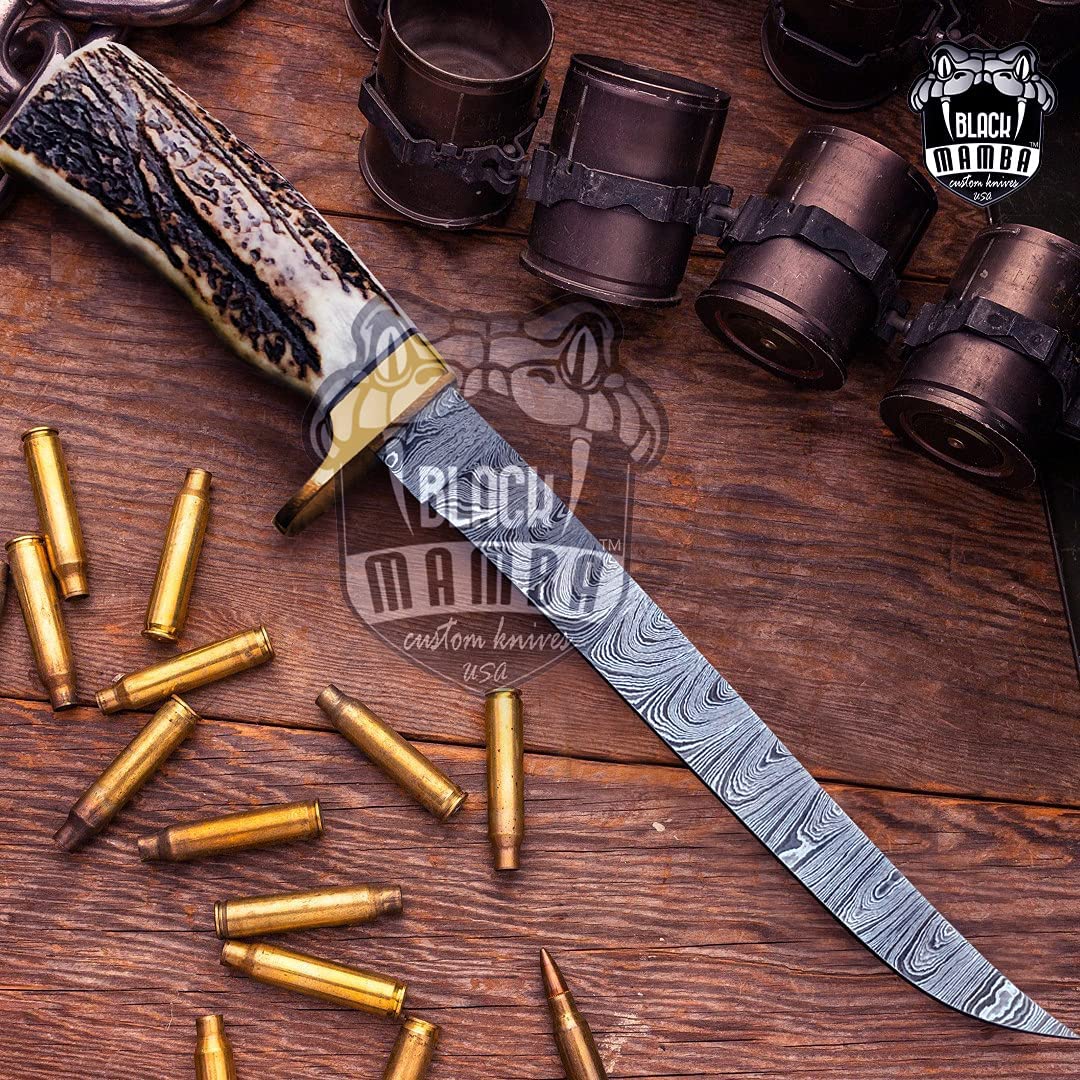
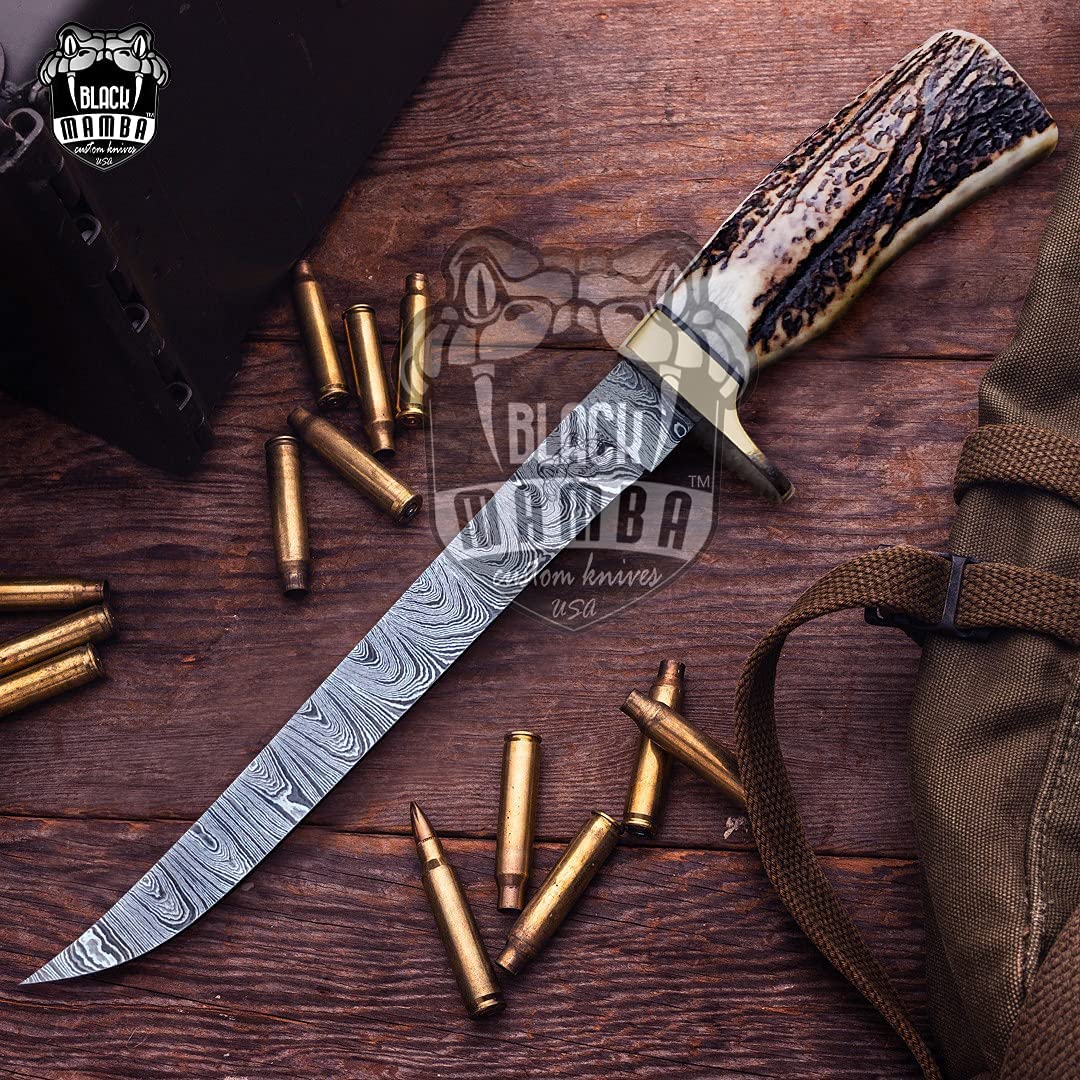
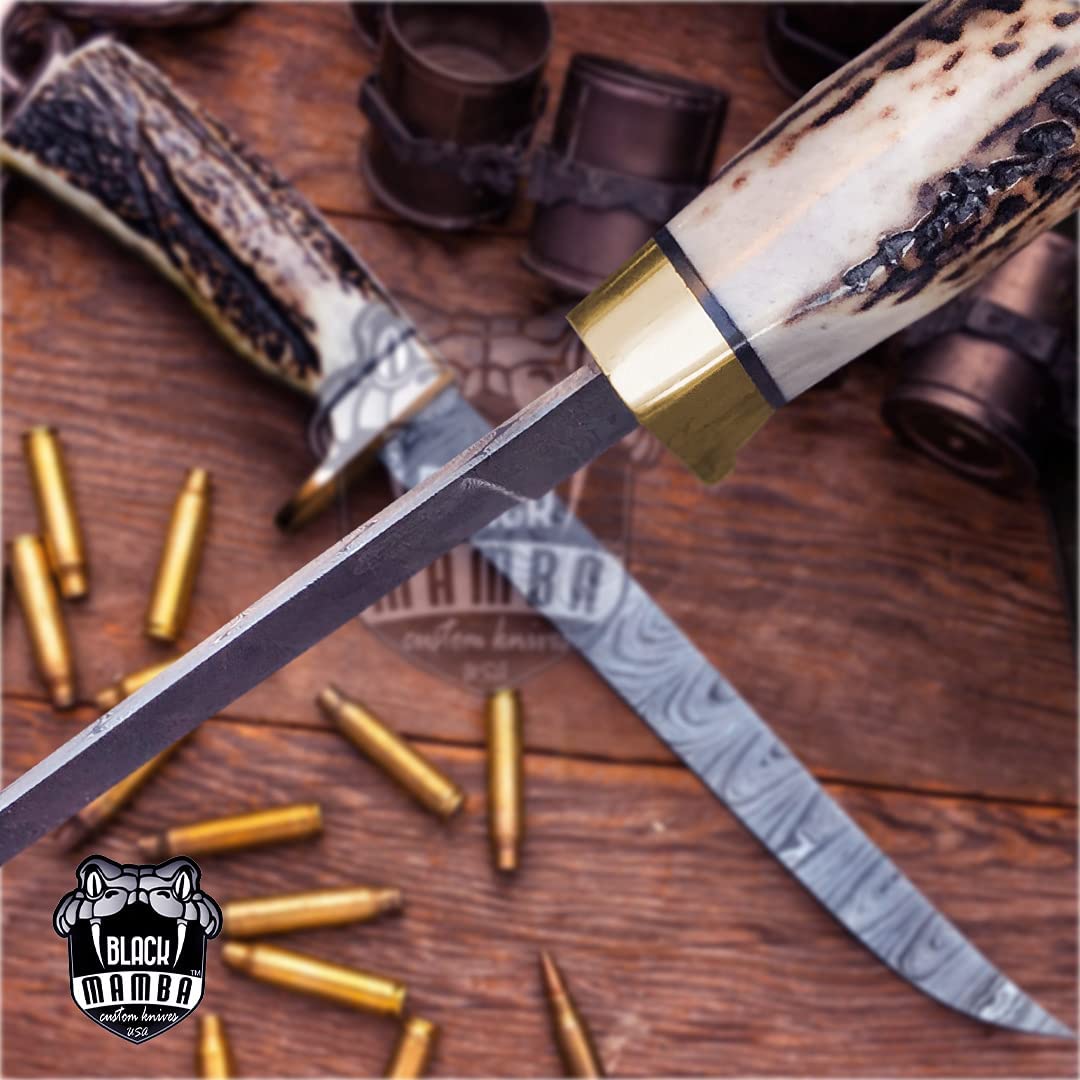
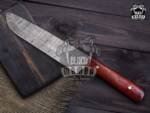
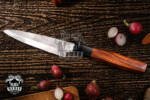
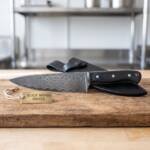
A 7.5 inch blade this narrow is built to follow a bone, not to chop through one. The handle is stag, cut from antler and left with its natural surface.
| Overall length | 13 inches |
| Blade length | 7.5 inches |
| Handle length | 5.5 inches |
| Steel | 1095 + 15N20 Damascus, 352 layers |
| Hardness | 58–60 HRC, oil tempered |
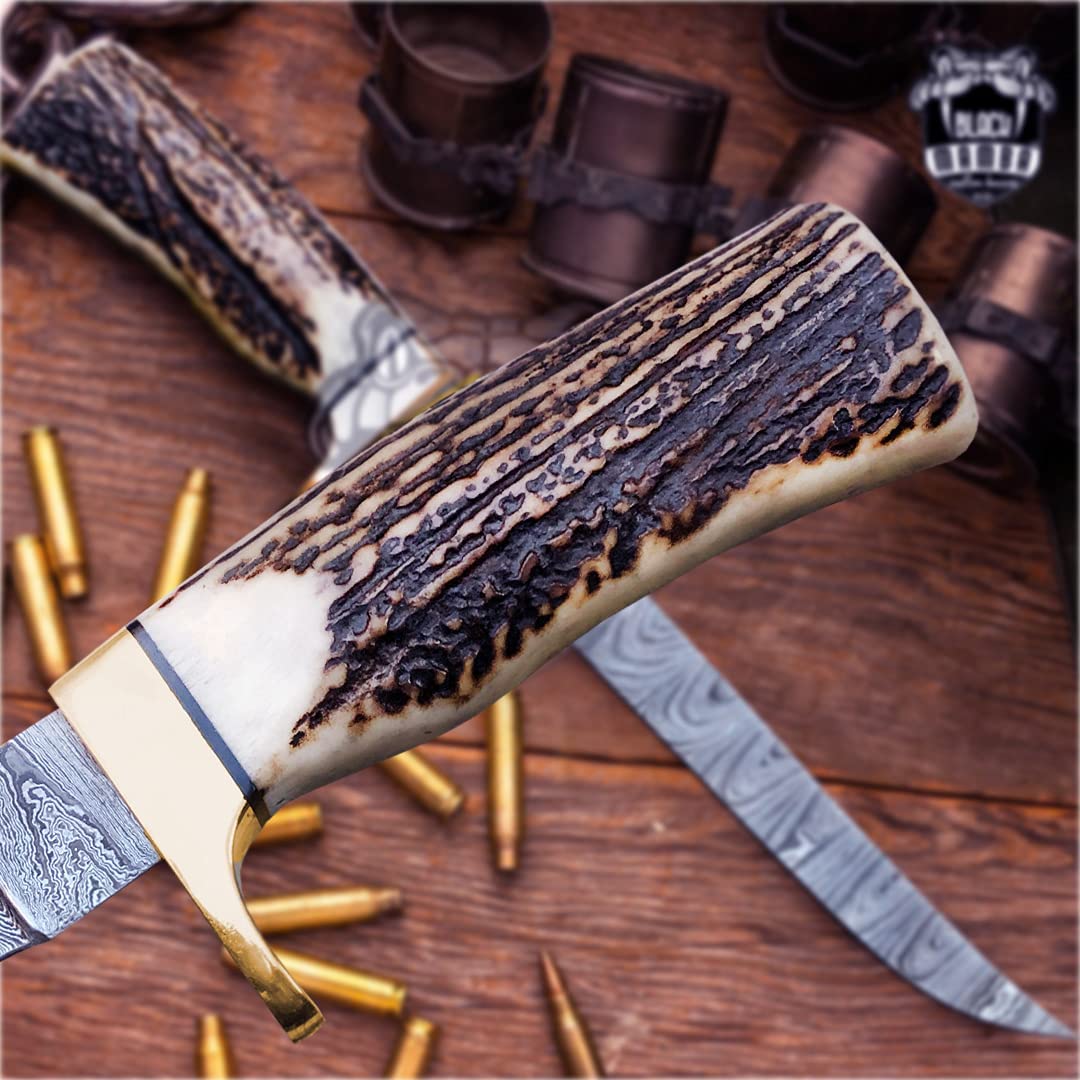
| Handle | Stag handle with brass bolster |
| Pattern | Wind & Mix twist Fire pattern Damascus Blade, Extreme custom Brass File-work |
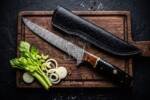
| Included | Hand-stitched leather sheath |
Intended use: breaking down fish and poultry, trimming a roast, taking a fillet off the frame in one pass. Thirteen inches overall gives you long, uninterrupted strokes, which is what produces a clean surface on fish rather than a torn one.
Why a long, thin blade
A narrow blade has less steel behind the edge, so it deflects less when it meets a rib or a joint and it follows a curve instead of fighting it. The length matters as much as the width: one continuous draw beats four short sawing strokes, and every extra stroke shows on the finished cut.
Stag
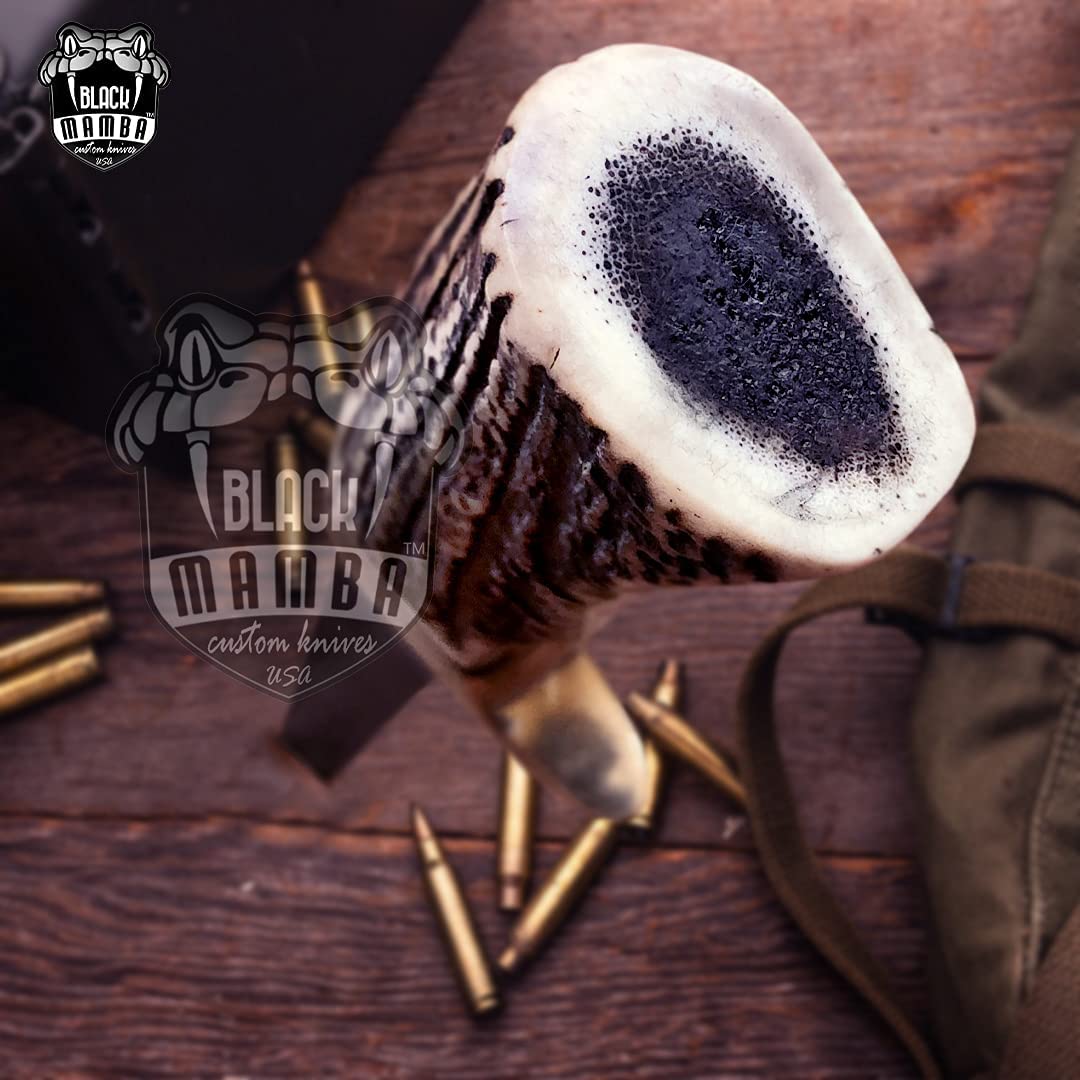
Every stag handle is different because every antler is different. The bark texture gives you grip when your hands are wet, which is exactly the condition this knife works in, and the brass bolster caps the end of the antler where it would otherwise be vulnerable. Antler is dense and hard-wearing, but it is a natural material and its color deepens with use.
Sharpening a curved edge
The upswept profile means you should sharpen in sections, rolling the knife slightly as you move toward the tip so the angle at the stone stays constant. A narrow stone or a rod is easier here than a wide bench stone.
The length in practice
Thirteen inches sounds like a lot until you use it on a whole salmon, where the blade needs to reach from spine to belly in one uninterrupted pass. On smaller work you simply choke up toward the bolster and use the front third.
Care: wash and dry by hand immediately after use, especially after fish — salt and acid are what actually damage a carbon blade. Oil the steel lightly once a month. Do not soak the handle or leave it in a dishwasher; antler will dry and check if you cook it. Our Damascus care guide has the full routine.
FAQs
Is this a boning knife or a fillet knife? It sits between the two. Our boning vs fillet comparison explains which flex and profile suits which job.
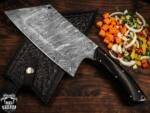
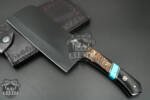
What pairs with it? Something heavy for the work it cannot do — the buffalo horn chef cleaver covers the other half of the board.
Can I use it on a board? Yes, but its strength is off the board — working along a bone or under the skin of a fish. A wide blade is better for volume dicing.
How thin is it? Thin enough to follow a rib cage without you forcing it, and thick enough that it does not flex like a dedicated filleting blade. That middle ground is deliberate.
Model: BMK-865

Caleb Cooper (verified owner) –
“This Damascus knife has added elegance to my kitchen. It’s sharp and reliable, and I enjoy using it every day.”
Charles Josiah (verified owner) –
“I received this Damascus knife as a gift, and it’s become my favorite kitchen tool. It’s versatile, sharp, and beautifully designed.”
Santiago Ezekiel (verified owner) –
“I’m not a professional chef, but this Damascus knife makes me feel like one. It’s precise and sharp, and it’s improved my cooking skills.”
Jayden Carter (verified owner) –
“This Damascus knife is the best investment I’ve made for my kitchen. It’s razor-sharp, easy to handle, and a pleasure to use.”
Anthony Thomas (verified owner) –
“I bought a Damascus knife for my son’s graduation, and he was ecstatic. It’s a symbol of his culinary journey, and he says it’s a game-changer.”
Lisa Malloy (verified owner) –
Isaac Elias (verified owner) –
“I’ve been using this Damascus knife for months, and it still feels like new. It’s sharp and reliable, and I can’t imagine cooking without it.”
Jerome Wells –
This showed up faster than expected and looked incredible. Slices through everything like butter, no sawing needed. Beyond happy with how this turned out.
Tyler Flores –
This knife is excellent. No question about it. Edge geometry makes thin slicing so much easier than my old knife. Has become my main prep knife in the kitchen since it arrived. This is the kind of purchase that makes online shopping worth it.
Linda Robinson –
Genuinely completely satisfied with how this turned out. Edge geometry makes thin slicing so much easier than my old knife. Cleans up easy and hasn’t shown any rust or staining. Handle stays comfortable even after prepping a big meal. Beyond happy with how this turned out. Black Mamba Knives keeps setting the bar higher with each order.
Dorothy Stewart –
This showed up faster than expected and looked incredible. Balance in hand is perfect for detail work at the cutting board. Highly recommend this one.
Mark Garcia –
Knew this knife was special the second I opened the box. Proud to support American made goods out of Memphis with this purchase.
Jessica Campbell –
Did not expect this level of quality for the price. Cleans up easy and hasn’t shown any rust or staining. Zero complaints from me on this purchase.
Karen Alvarez –
Kept picking this knife up just to admire it after it arrived. Slices through everything like butter, no sawing needed. Beyond happy with how this turned out. Good to know real Memphis craftsmen are behind this, and shipping was quick too.
Linda Alvarez –
Did not expect this level of quality for the price. Slices through everything like butter, no sawing needed. Cleans up easy and hasn’t shown any rust or staining. No hesitation recommending this to anyone looking.
Shane Morris –
This knife has already earned a permanent spot in my collection. 10/10 would buy again.