
Description
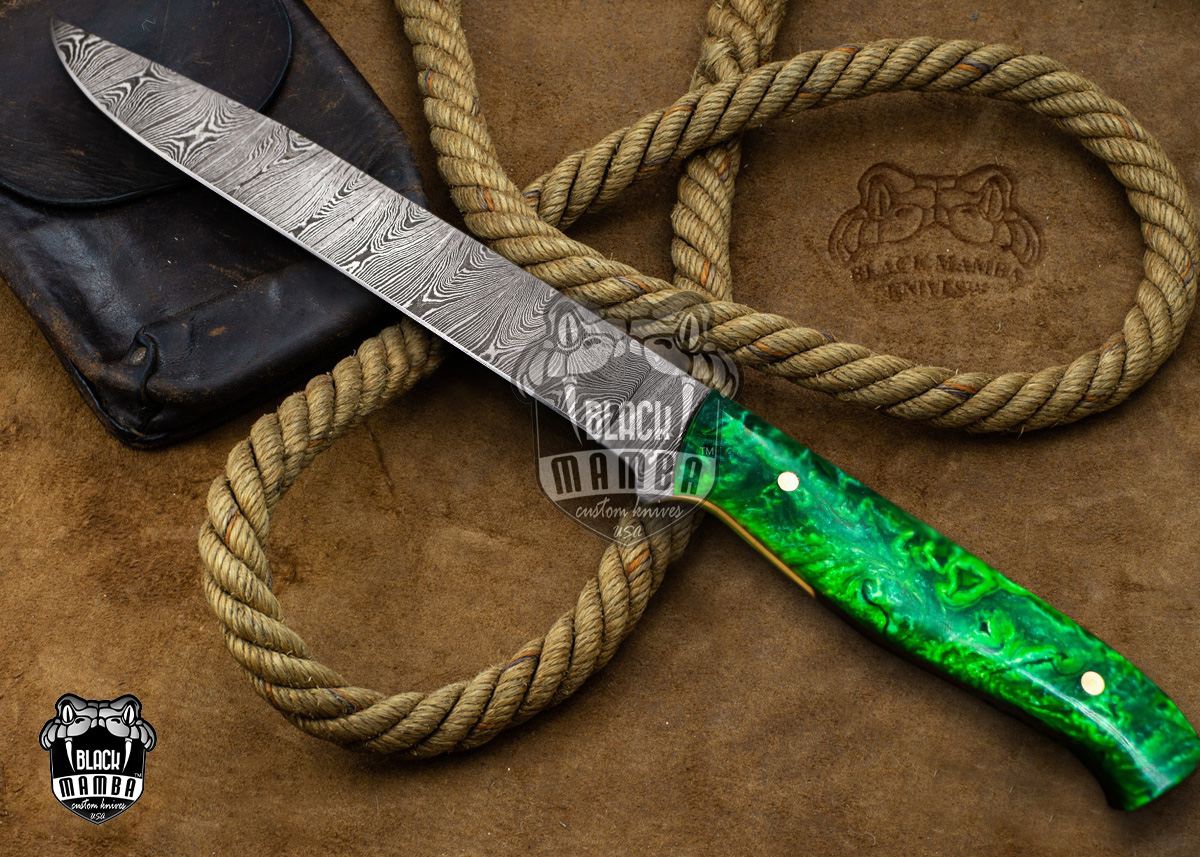
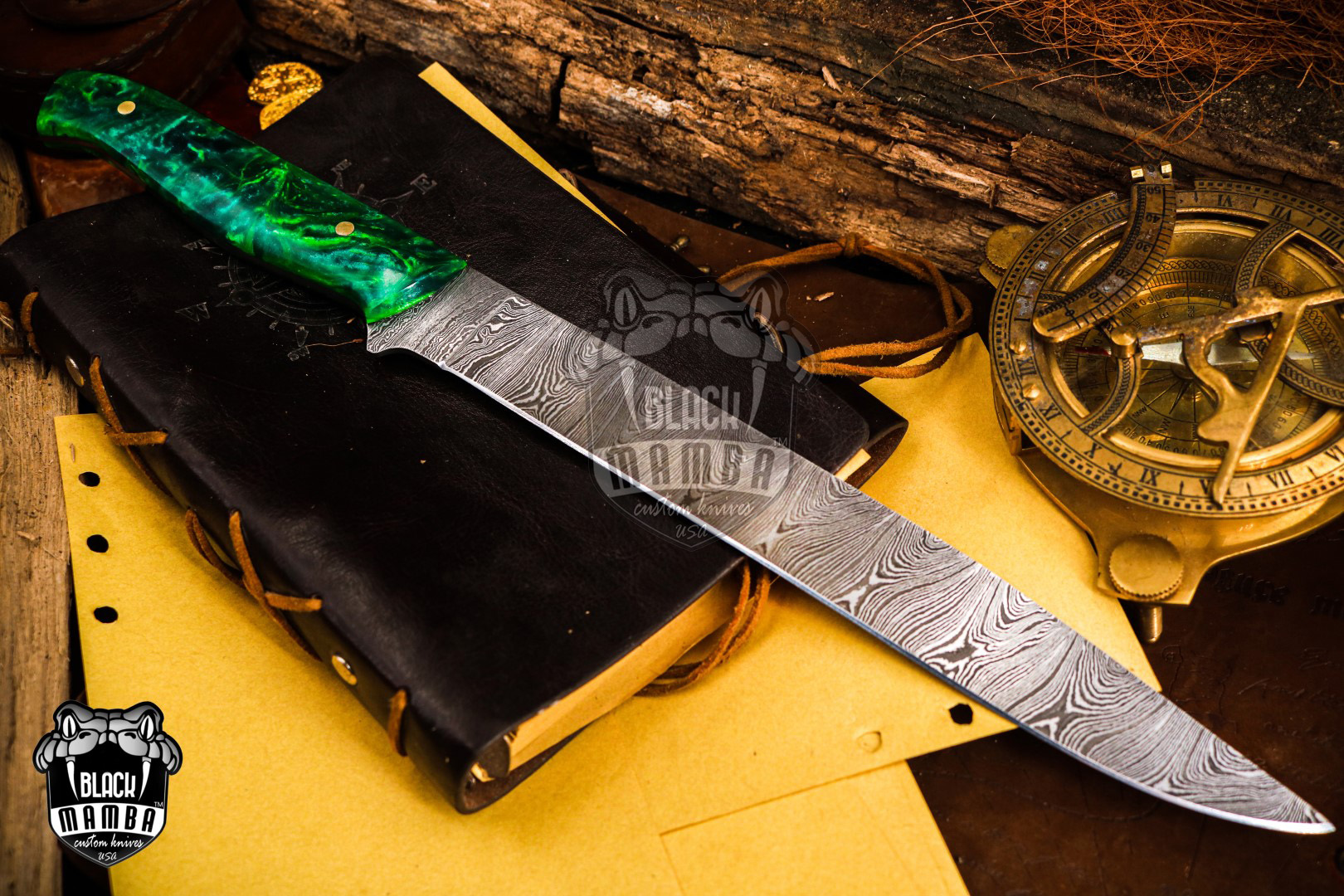
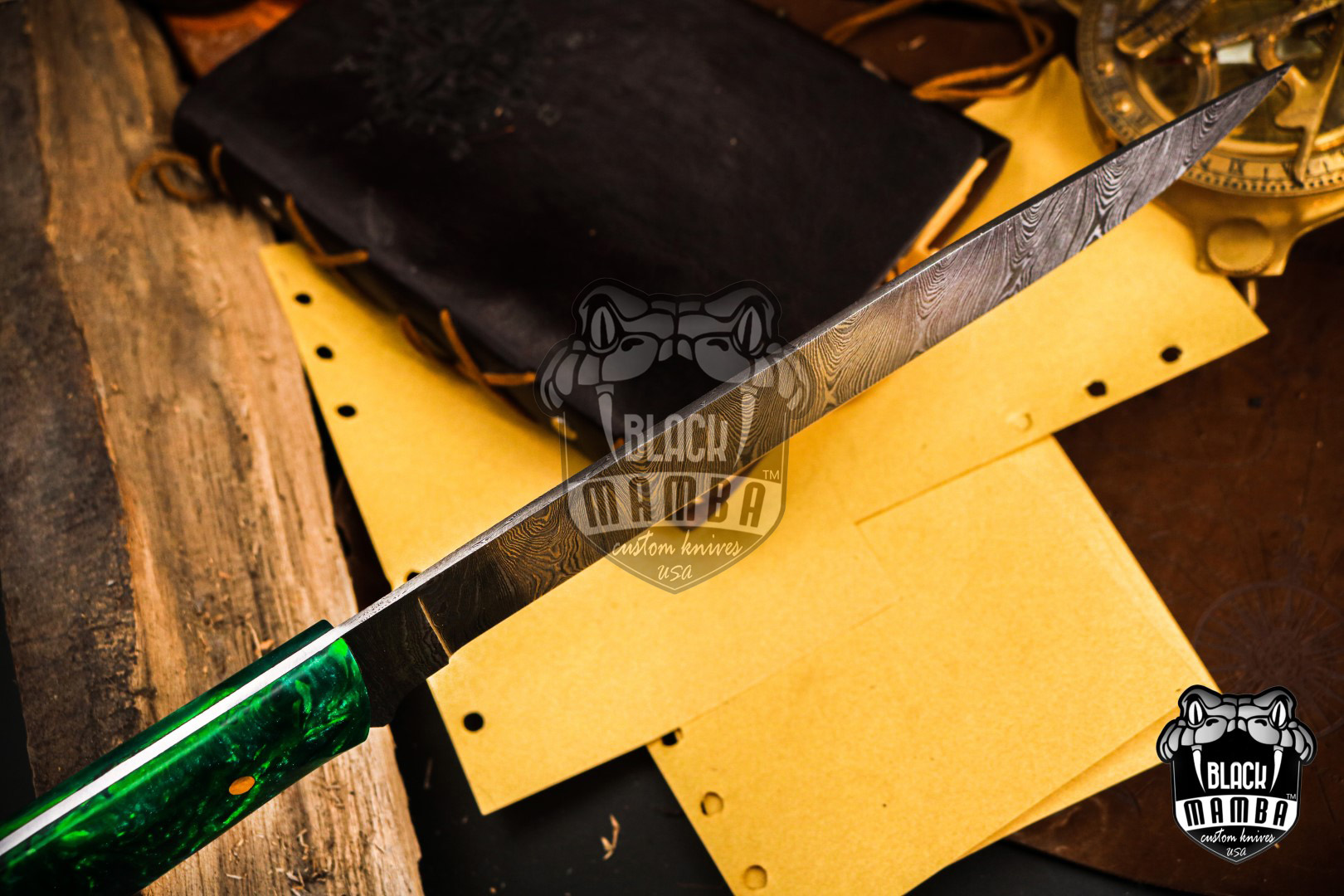
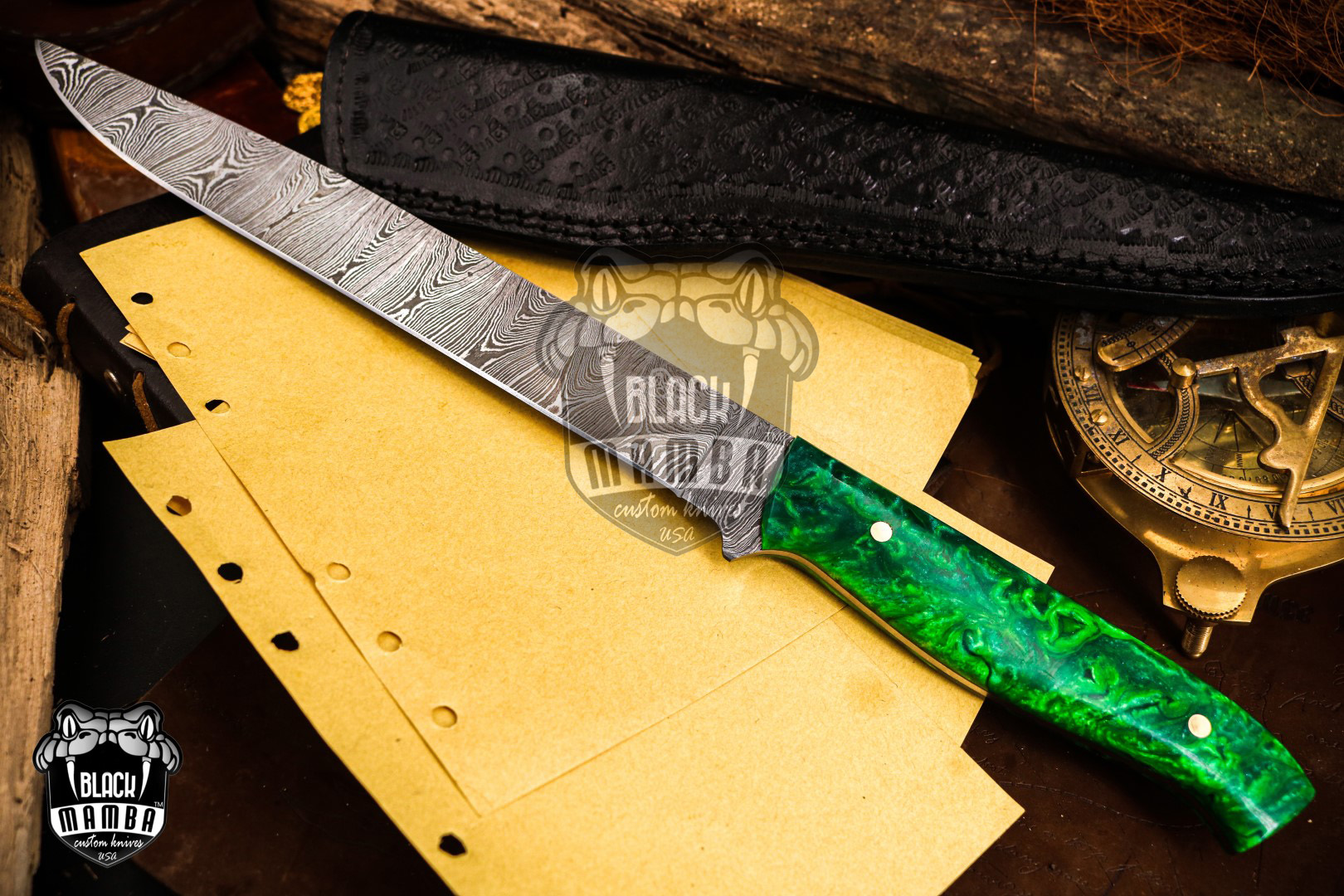
Five point two ounces across fourteen inches tells you most of what matters here: the blade is thin. It is ground for slicing rather than for chopping, which is why it sits in both the fillet and the chef’s knife categories, and why it would be a poor choice for anything with bone in it.
| Overall length | 14 inches |
| Handle length | 5 inches |
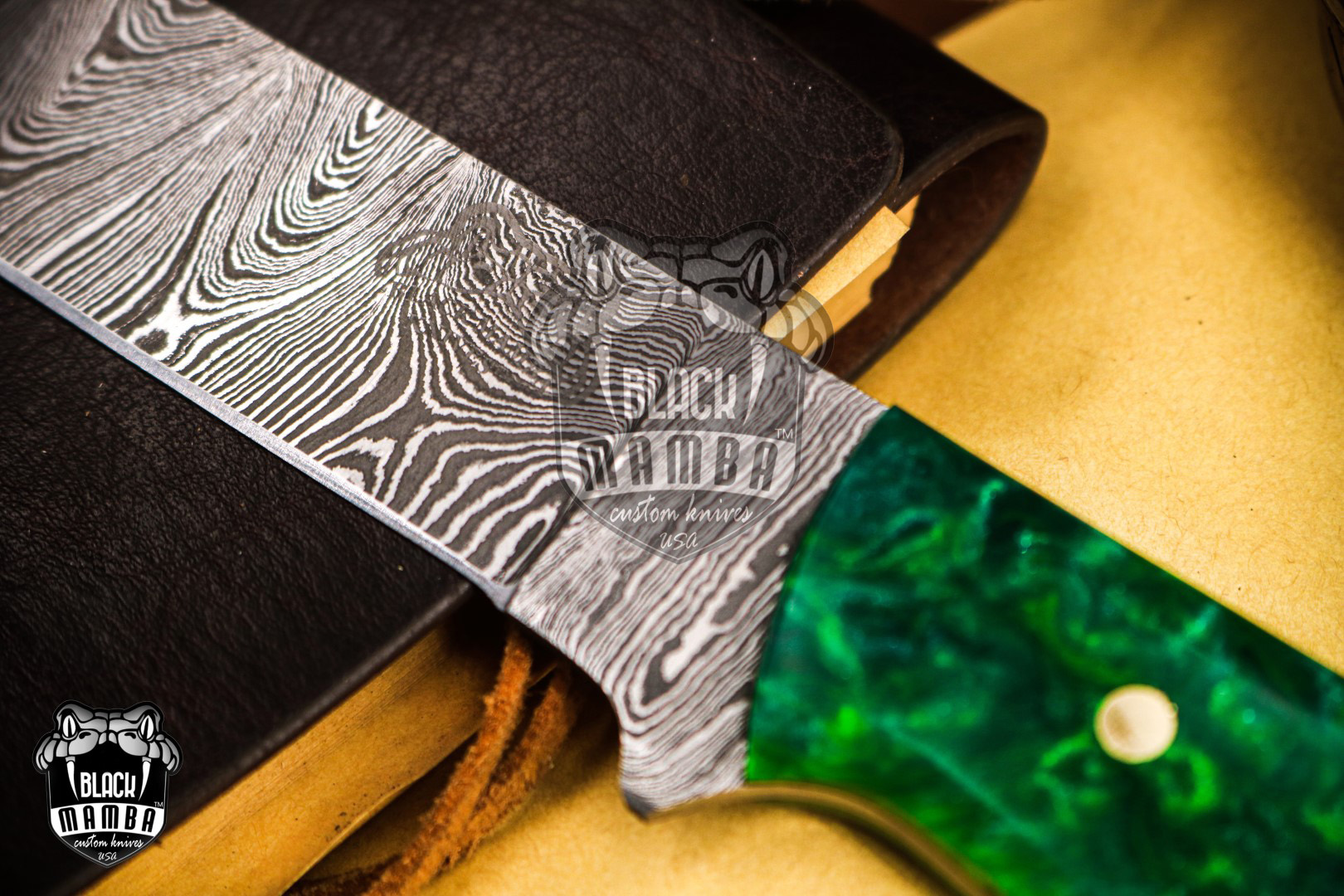
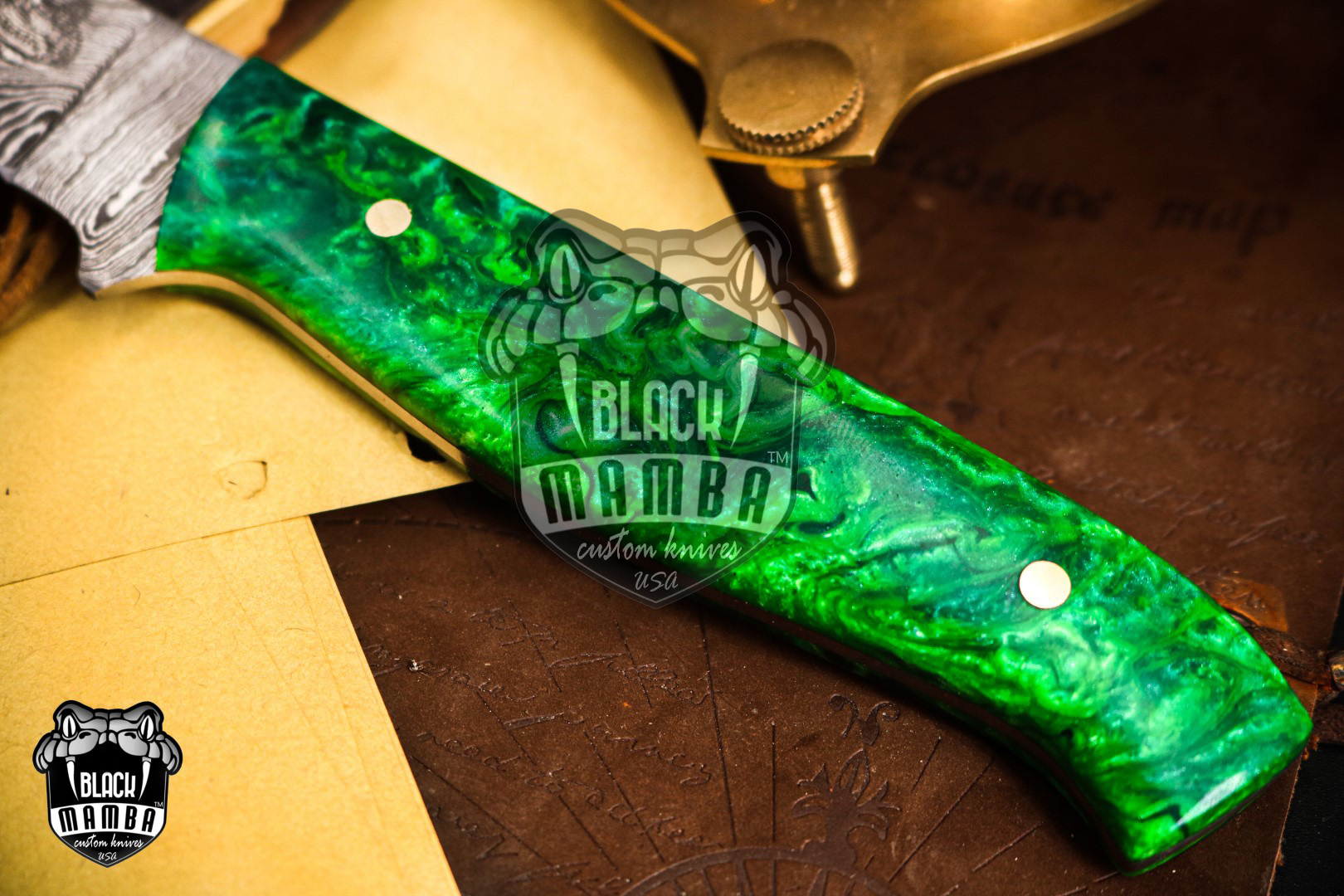
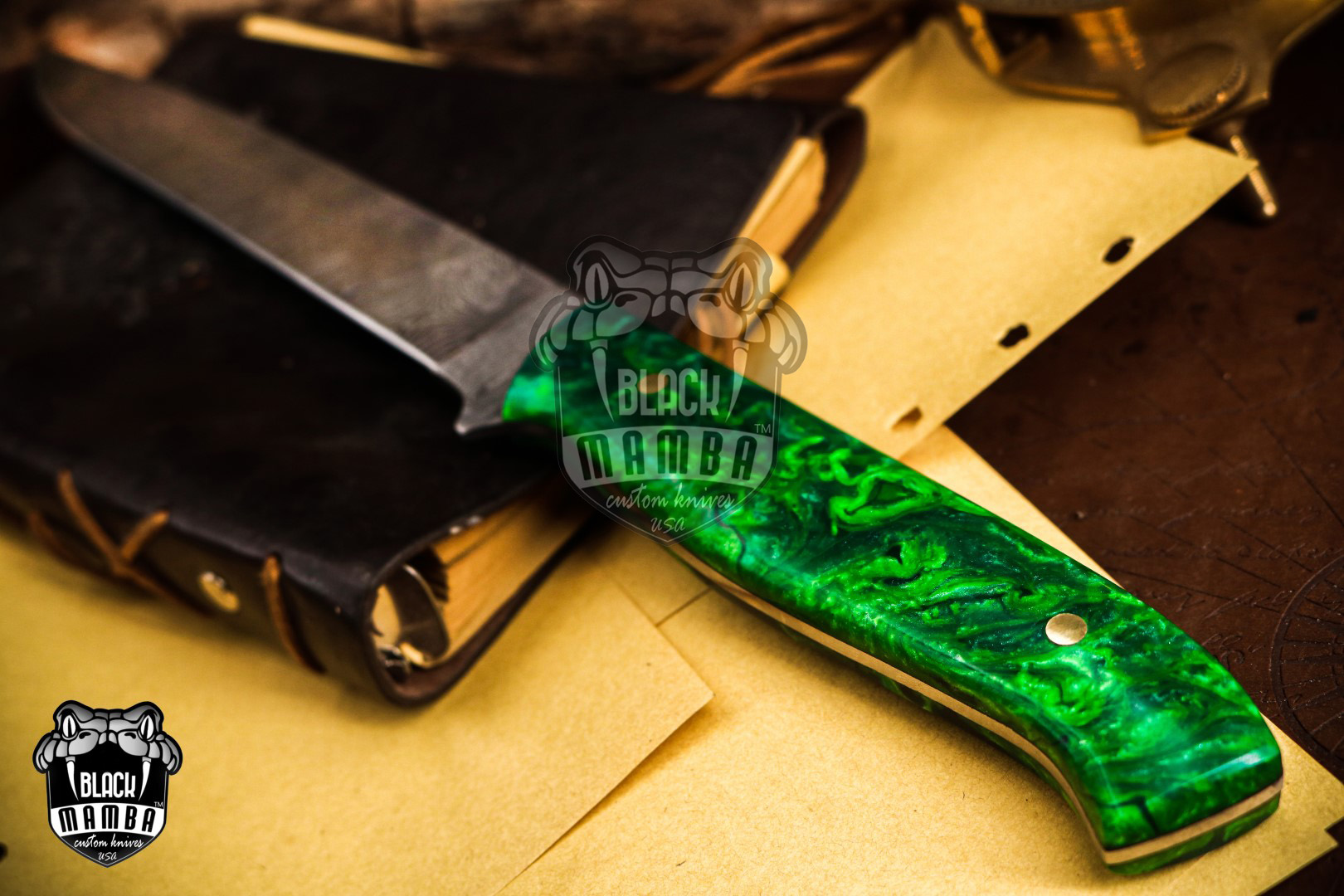
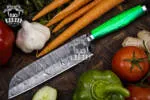
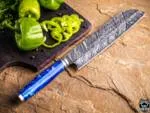
| Handle | Green resin with contrasting pins |
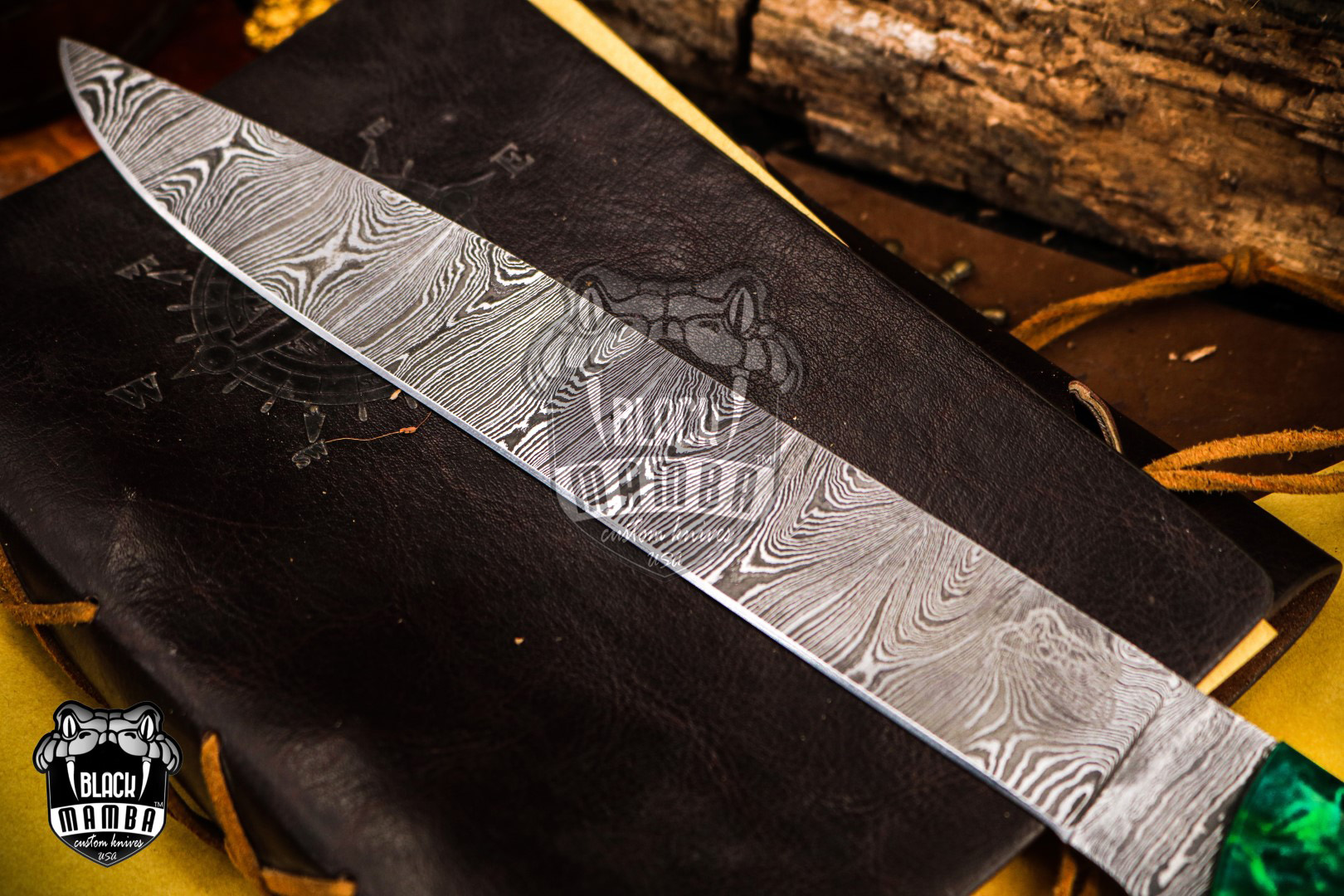
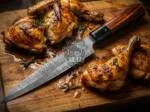
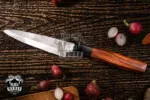
| Steel | 1095 + 15N20 Damascus, 352 layers |
| Hardness | 58–60 HRC, oil tempered |
| Weight | 5.2 oz |
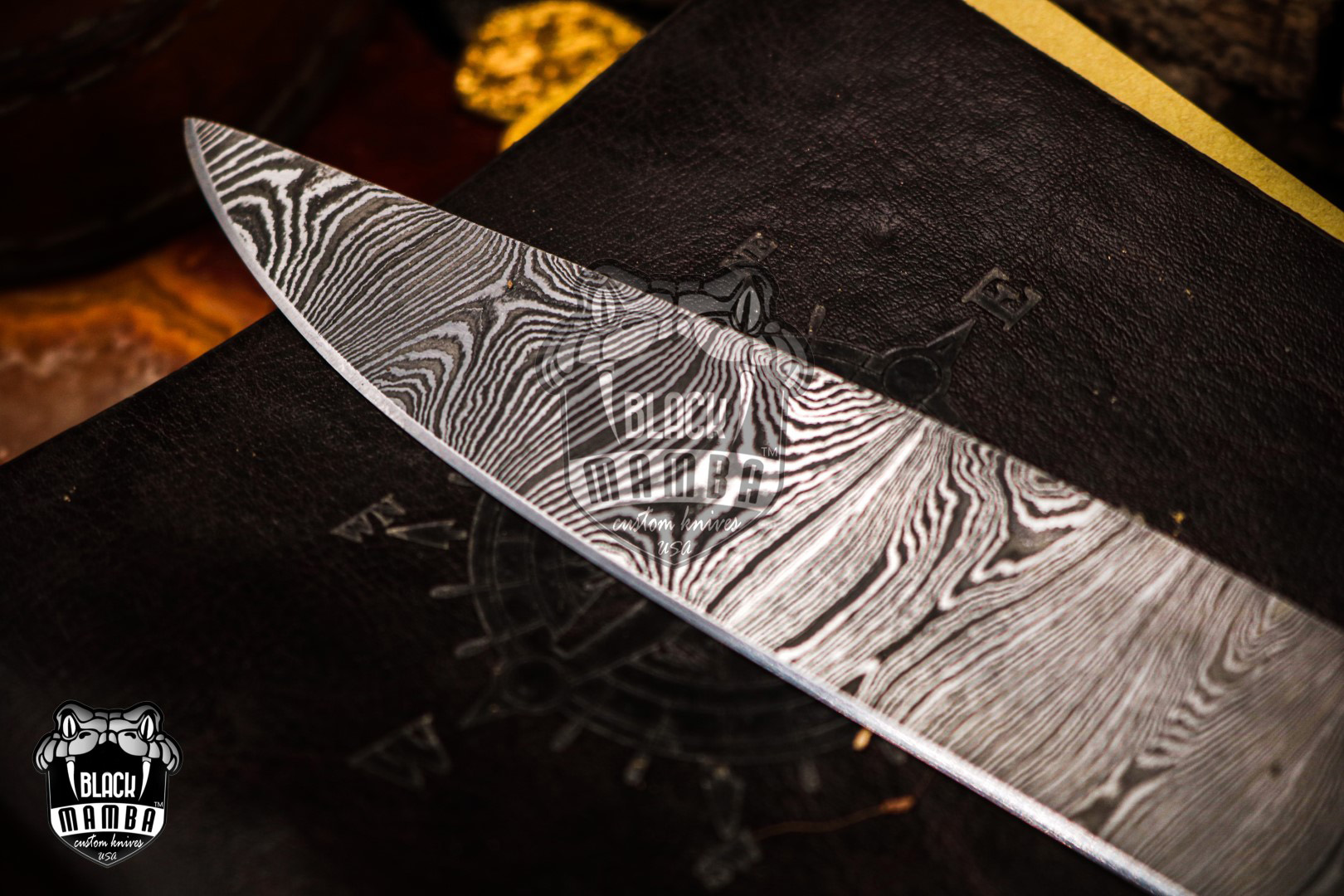
| Pattern | Wind & Mix twist Fire pattern Damascus Blade, Extreme custom Brass File-work |
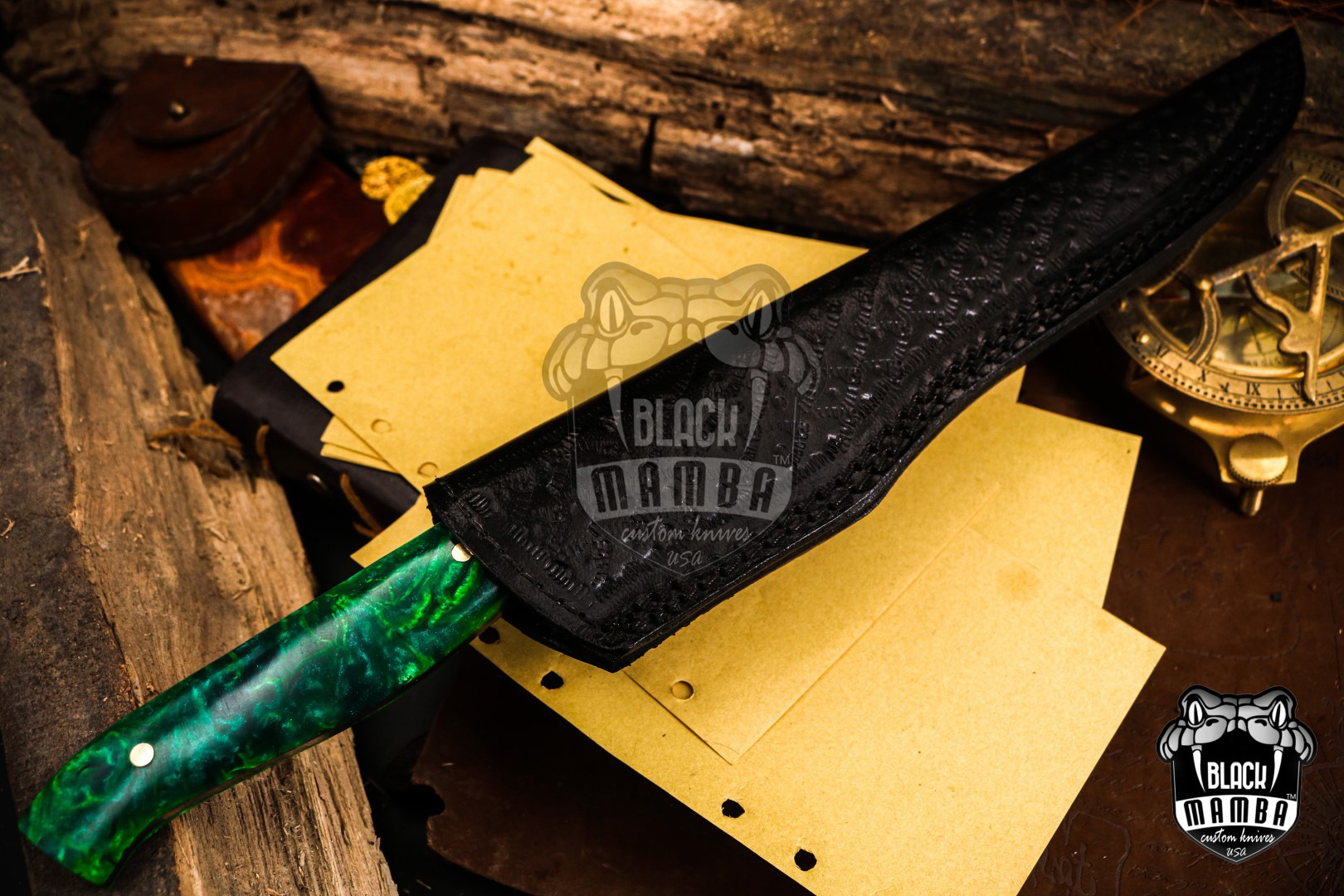
| Included | Hand-stitched leather sheath |
Built for: long, drawing cuts. Taking fillets off a fish, running under skin, breaking down soft proteins, and slicing vegetables where you want food to fall away instead of sticking. The narrow profile has enough give to follow a rib line and enough stiffness to keep a straight track through a ripe tomato.
Where it struggles
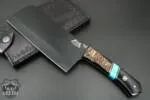
Do not send it through a chicken joint or a fish head. A thin, hard edge chips before it bends, and chips in a slender blade cost a lot of steel to grind out. Keep a heavier tool beside it for rough work; a Damascus cleaver handles everything this one should never touch.
Carbon steel in a kitchen
Here is the trade-off nobody mentions under the listing photos. Carbon Damascus takes and keeps a finer edge than most stainless, and it reacts with everything acidic you cut. Onions, lemons, tomatoes and a wet board will each leave gray marks. Within a month the surface develops a mottled patina that is stable and, once formed, protects the metal underneath. If an unchanging mirror finish matters more to you than edge feel, buy stainless instead. Our comparison of carbon and stainless kitchen knives is honest about which one wins where.
Care
Hand wash, dry at once, and never leave it standing in a sink or in a rack of dripping dishes. A dishwasher cycle will ruin the etch and the handle together. Buff the brass file-work along the spine with a plain dry rag and no compound, since anything left sitting in those grooves turns green. Hone before each session on a fine stone or a strop, since a thin edge like this is easy to keep sharp and slow to bring back once you let it go.
FAQs
Is it a fillet knife or a chef’s knife? Loosely, both. It is thinner than a chef’s knife and stiffer than a dedicated fillet blade. If you would rather buy a specialist, read boning knife vs fillet knife first.
Why a leather sheath rather than a block? Because it travels well. At home, keep it out of the sheath.
Will the pattern wash off? No. It is forge-welded through the blade, not printed onto the surface.
Model: Bmk-712
Jackson D. (verified owner) –
“I’ve recommended this Damascus knife to all my friends. It’s a reliable tool that enhances any kitchen.”
Charlotte L. (verified owner) –
“I bought a Damascus knife for my husband, and he’s thrilled with it. It’s sharp, well-crafted, and a pleasure to use.”
Mason S. (verified owner) –
“I’ve used many knives in my culinary career, and this Damascus knife is exceptional. It’s sharp, well-balanced, and has improved my cooking.”
Sarah W. (verified owner) –
“I recently purchased a Damascus knife, and I am thrilled with the quality and craftsmanship. It’s incredibly sharp and beautifully designed. Highly recommended!”