
Description
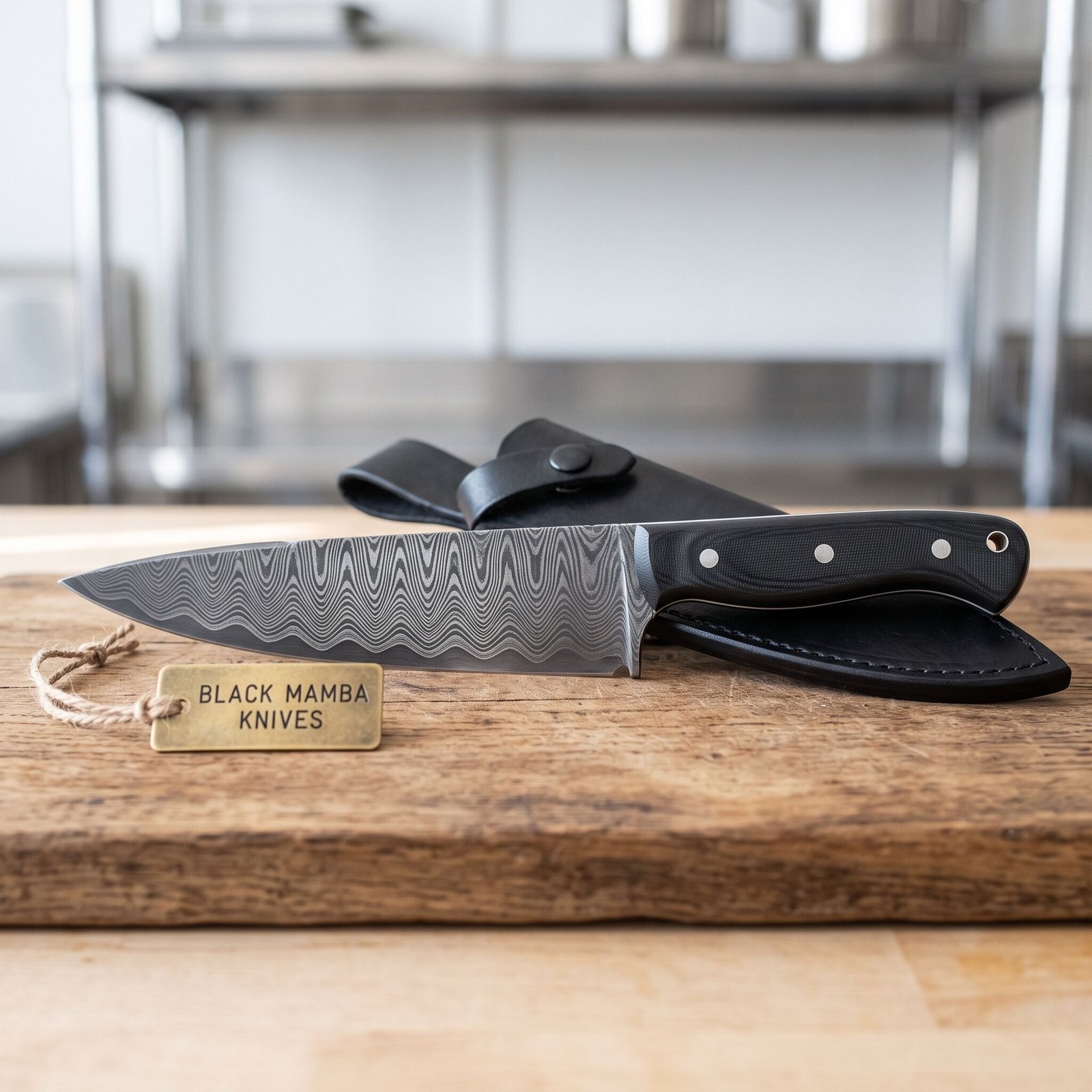
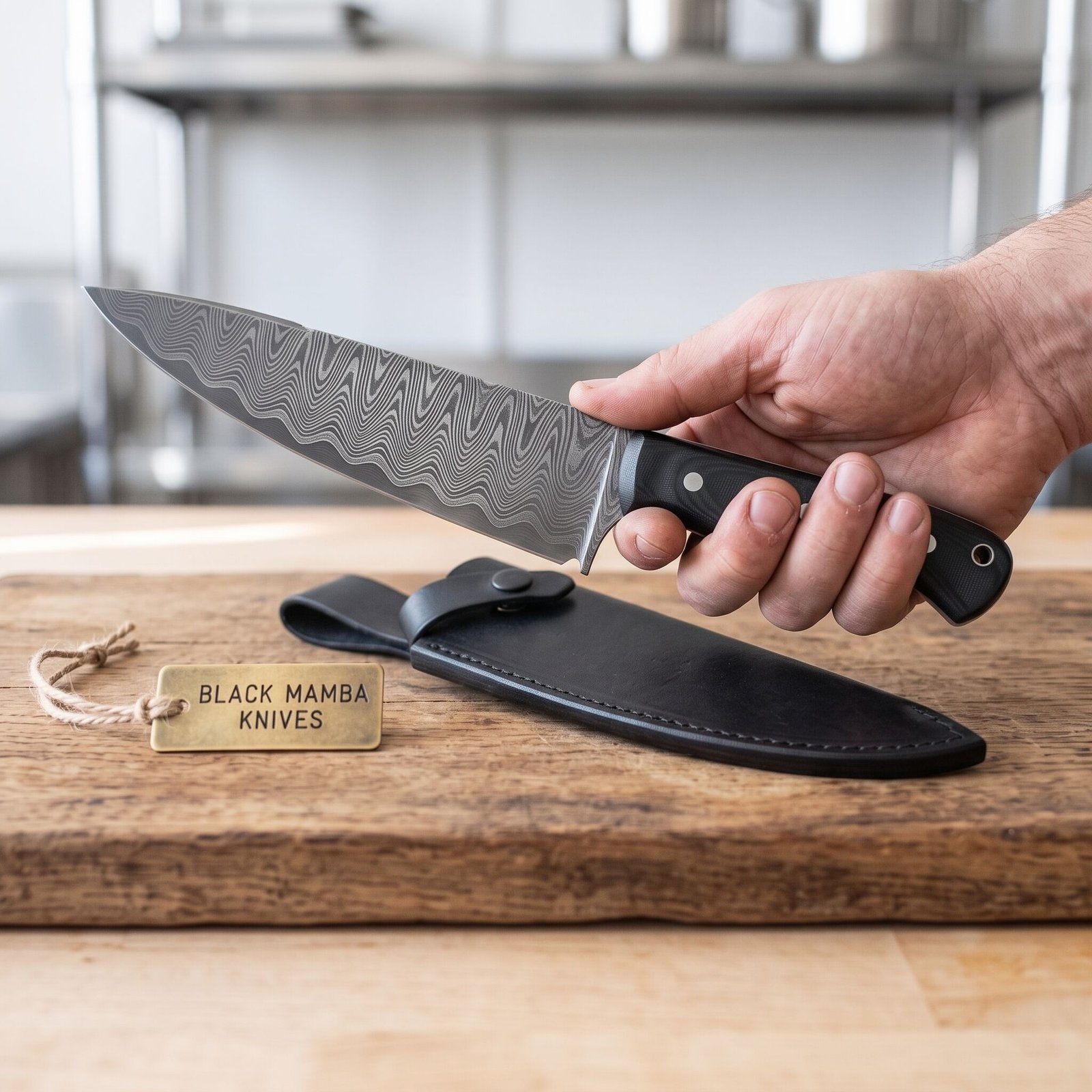
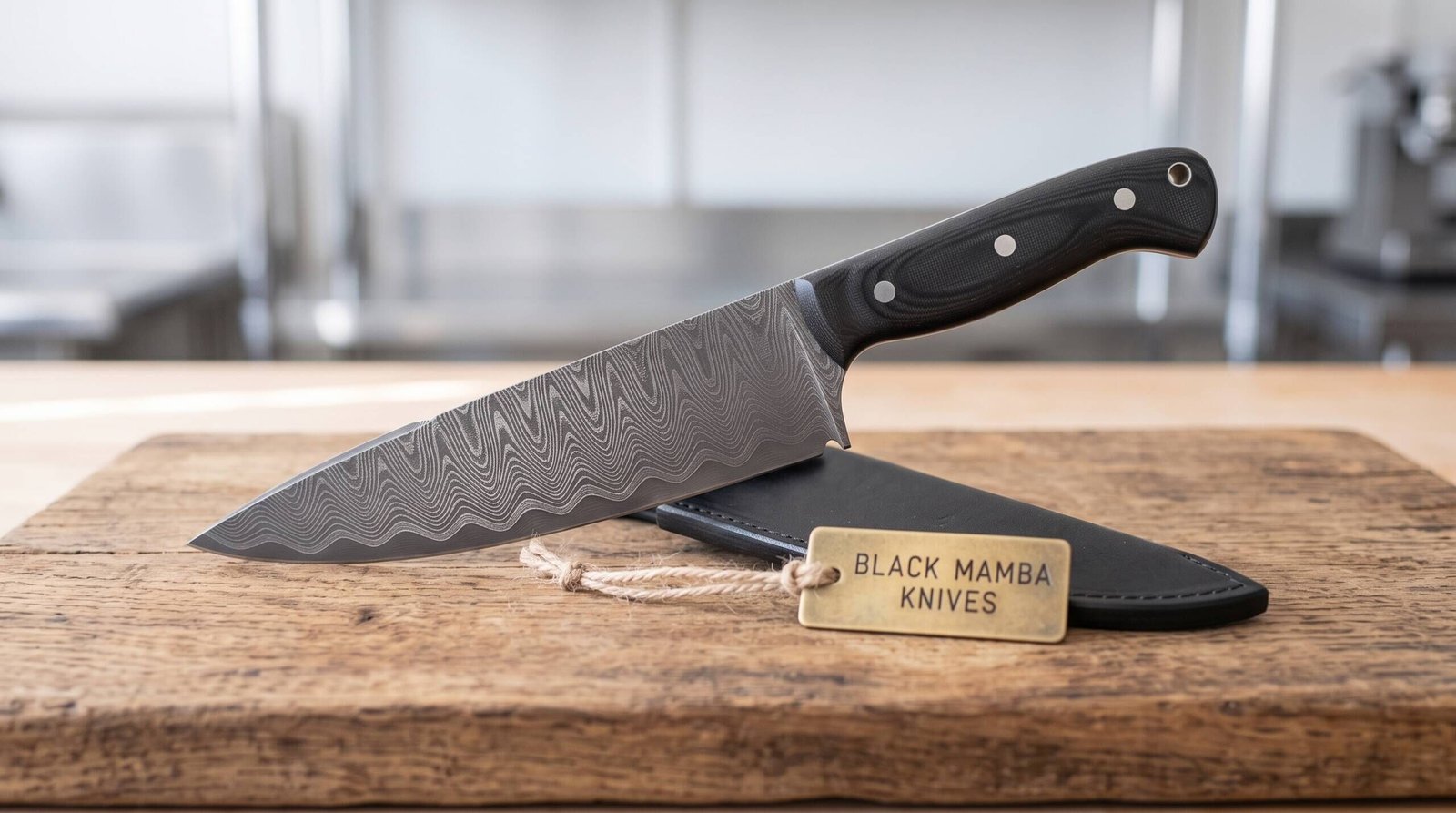
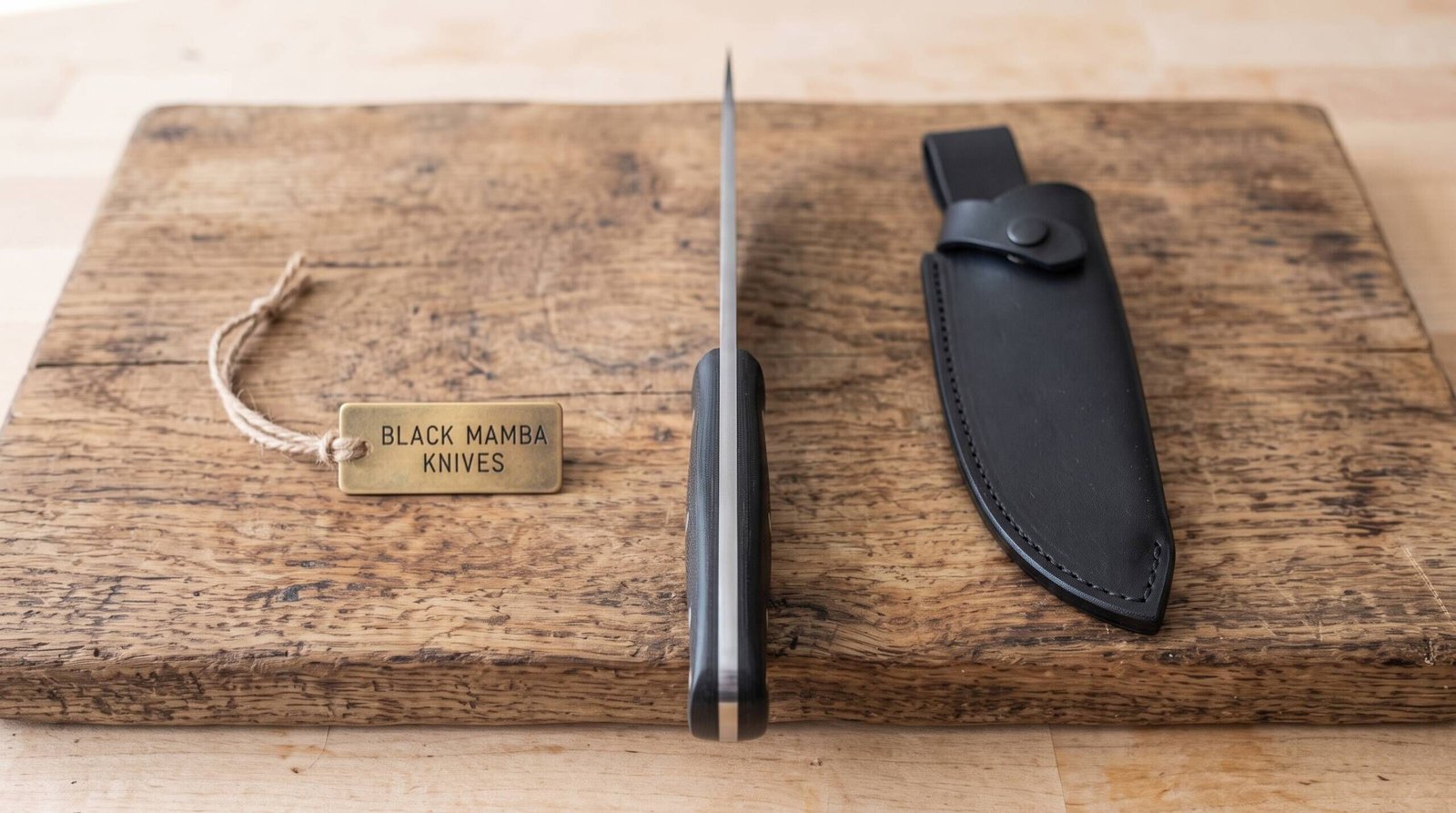
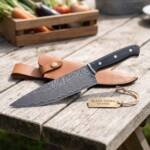
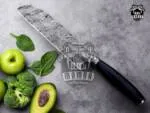
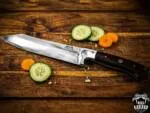
An 8.2 inch k-tip in layered steel, set into a black resin handle. The Molly is a working chef knife that happens to be worth looking at.
| Overall length | 13.5 inches |
| Blade length | 8.2 inches |
| Handle length | 5.3 inches |
| Knife type | Chef knife |
| Steel | 1095 + 15N20 Damascus, 352 layers |
| Pattern | Layered Damascus pattern, forged and acid etched |
| Hardness | 58 to 60 HRC, oil tempered |
| Guard | Steel bolster |
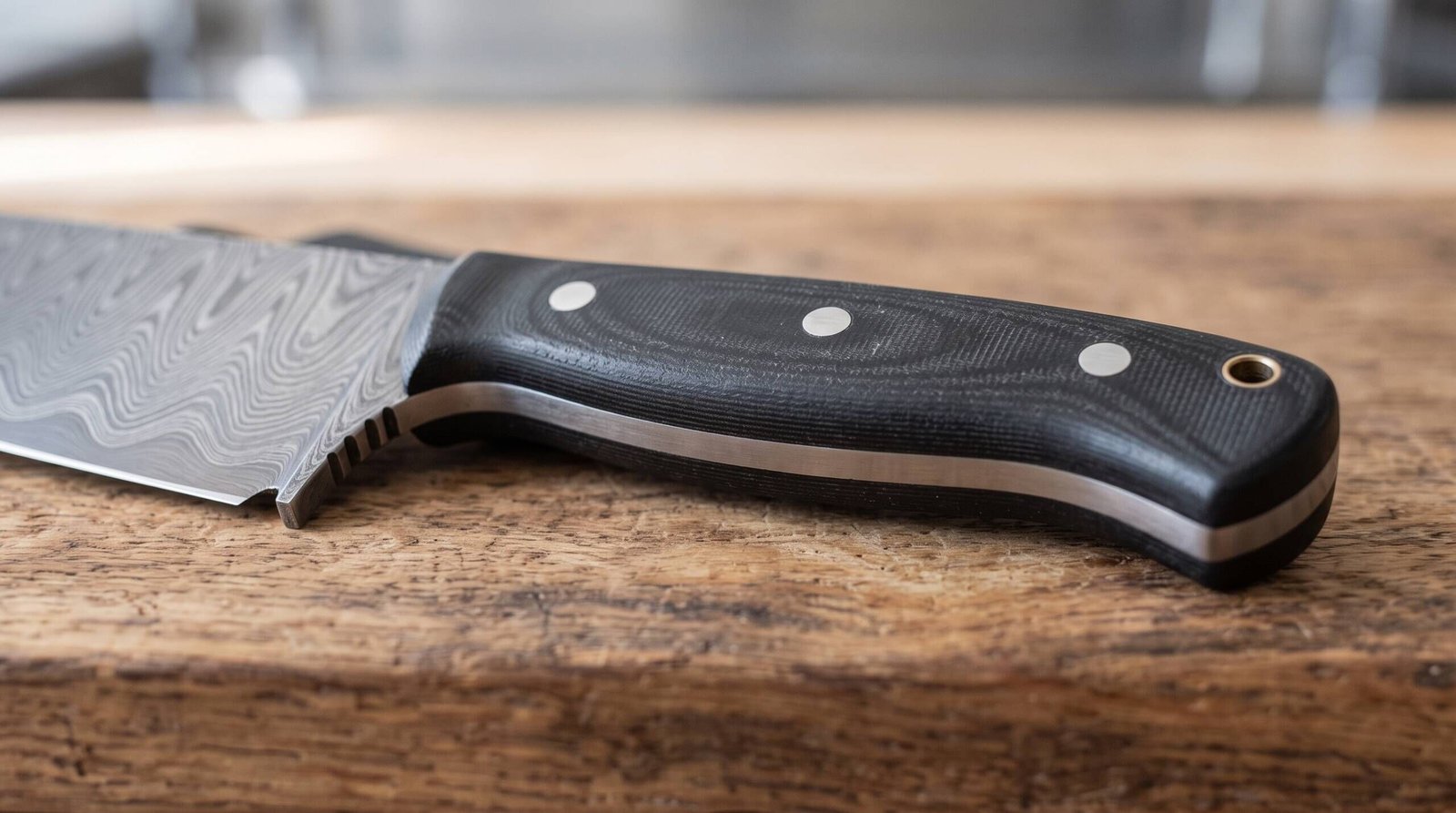
| Handle | Black resin scales with three pins |
| Weight | 9.1 oz |
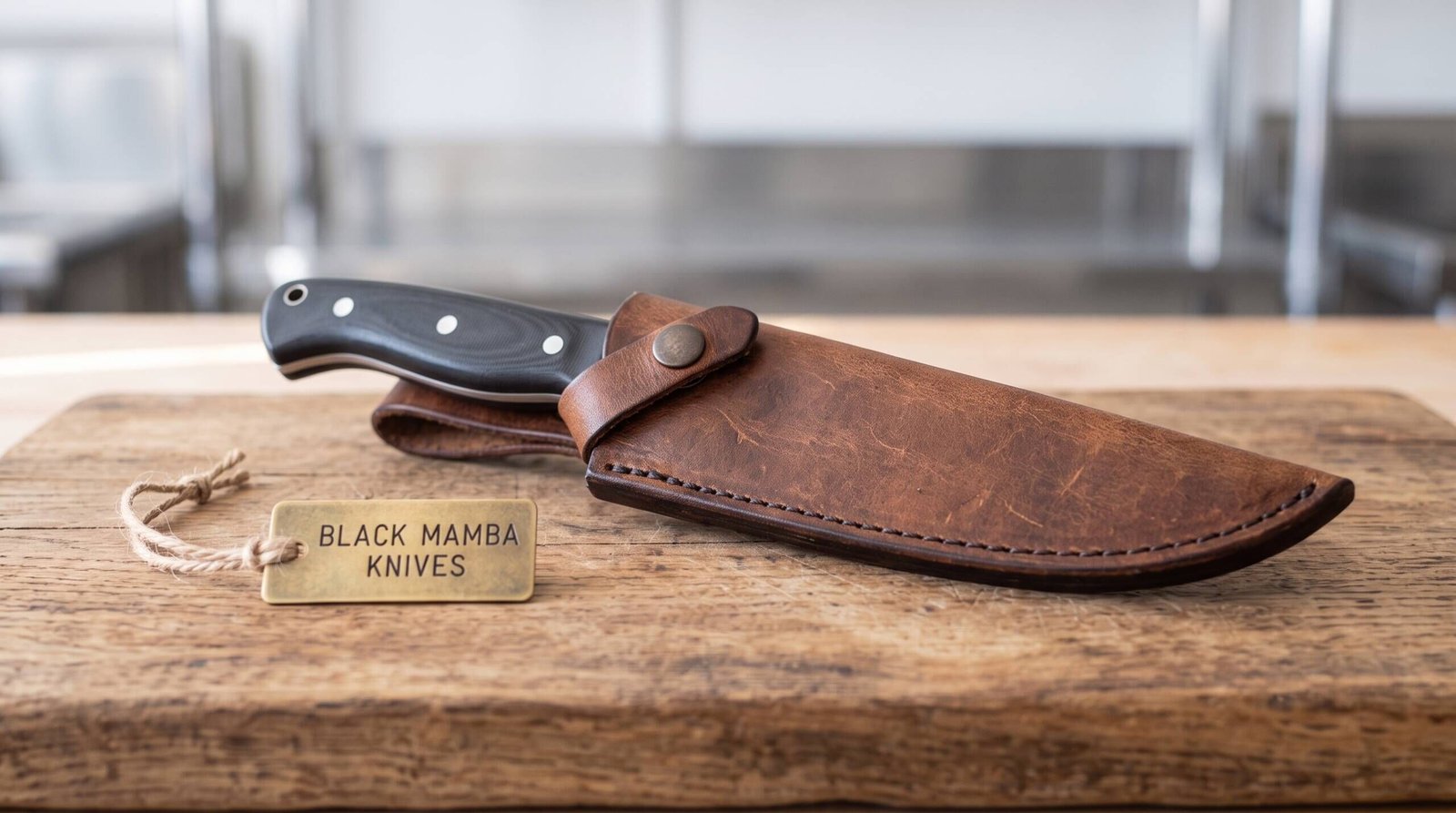
| Included | Hand stitched leather sheath |
In the kitchen: long push cuts through squash and cabbage, quick horizontal slicing off the flat, and precise tip work on shallots. The squared-off tip gives you a corner to score with, which a rounded gyuto cannot do.
Where a k-tip helps and where it hurts
The angled tip keeps the profile flat for most of the edge, so you get a clean chop rather than the rocking motion a French knife needs. The cost is that you lose the sweeping rock cut entirely. Anyone who mince-rocks garlic will find this frustrating for a week and then adapt. It is also a poor tool for jointing poultry, where a shorter stiff blade wins. See the explanation of chef knife bevels for how the grind affects release.
Resin instead of wood
The black handle is cast resin, not a natural material, and that is a deliberate choice for a kitchen. It does not absorb liquid, does not swell at the sink, and cannot harbor anything in a grain. It will not develop patina either, so if you want a handle that records its own history, this is the wrong knife. Resin does scratch. Fine scuffs from ring stones and dish racks accumulate and are easily polished out with automotive plastic polish.
Balance across 13.5 inches
Nine point one ounces on a 13.5 inch knife is moderate, and with a 5.3 inch handle the balance sits just forward of your index finger. That gives the blade enough authority to fall through a butternut without you leaning on it. Cooks moving from a light Japanese knife will notice the difference immediately.
Between uses: this is carbon-based pattern-welded steel, so it is not dishwasher safe under any circumstances and should never sit wet in a sink. Wash by hand, dry immediately, and put a drop of food-grade mineral oil on the blade if it will sit unused for a week. Onion and tomato acid will grey the surface fast. Our comparison of carbon and stainless kitchen knives explains what that patina actually does. A Damascus cleaver covers the heavy work this blade should not be asked to do.
FAQs
Will it discolor? Yes, and quickly. A grey-blue film is the steel protecting itself and does not affect the edge.
Can I cut through chicken bone? No. Use a cleaver. The tip geometry here is too fine for bone.
Is the black color all the way through? Yes, the color is in the resin, not on top of it, so scratches do not show a different shade underneath.
Model: BMK-113
Oliver K. (verified owner) –
“This Damascus knife has become an essential part of my kitchen. It’s sharp, durable, and adds a touch of sophistication to my cooking.”
Sophia G. (verified owner) –
“I’ve recommended this Damascus knife to all my friends. It’s a must-have for any kitchen, and it’s changed the way I approach cooking.”
Noah S. (verified owner) –
“I received this Damascus knife as a gift from my brother, and I’m grateful for it every day. It’s a high-quality tool that makes cooking a joy.”
JOHNNY UGALDE SALAZAR (verified owner) –
A great work of art is impressive, as you can see my name on the blade, now it is difficult for someone to take it by mistake and the work that goes into it is of the highest quality, admirable craftsmanship, the photography does not make it worth buying this knife, it is a sensory experience, you have to have it in your hands to feel what a great work of art is in your hands and admire every detail.