
Description
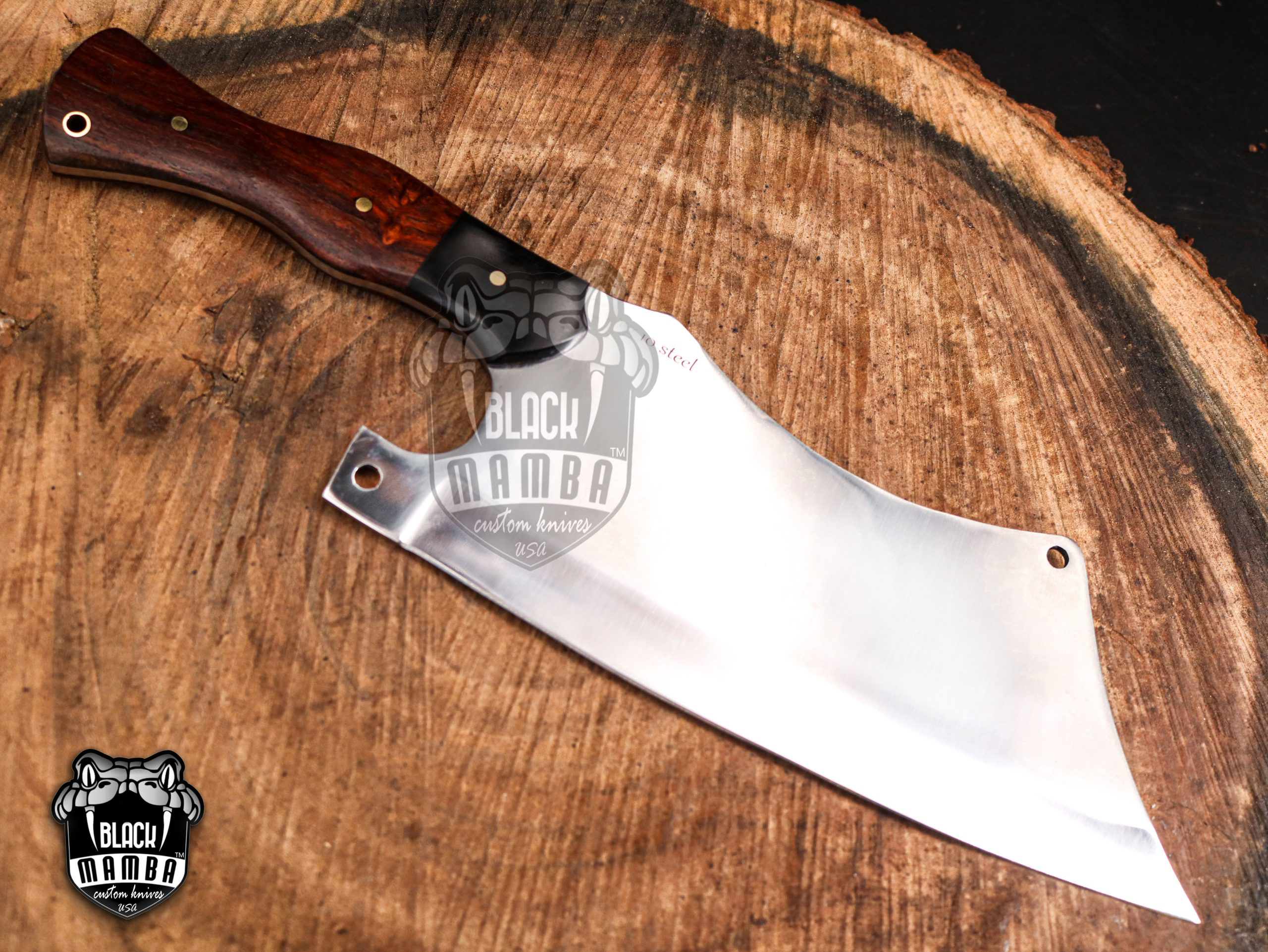
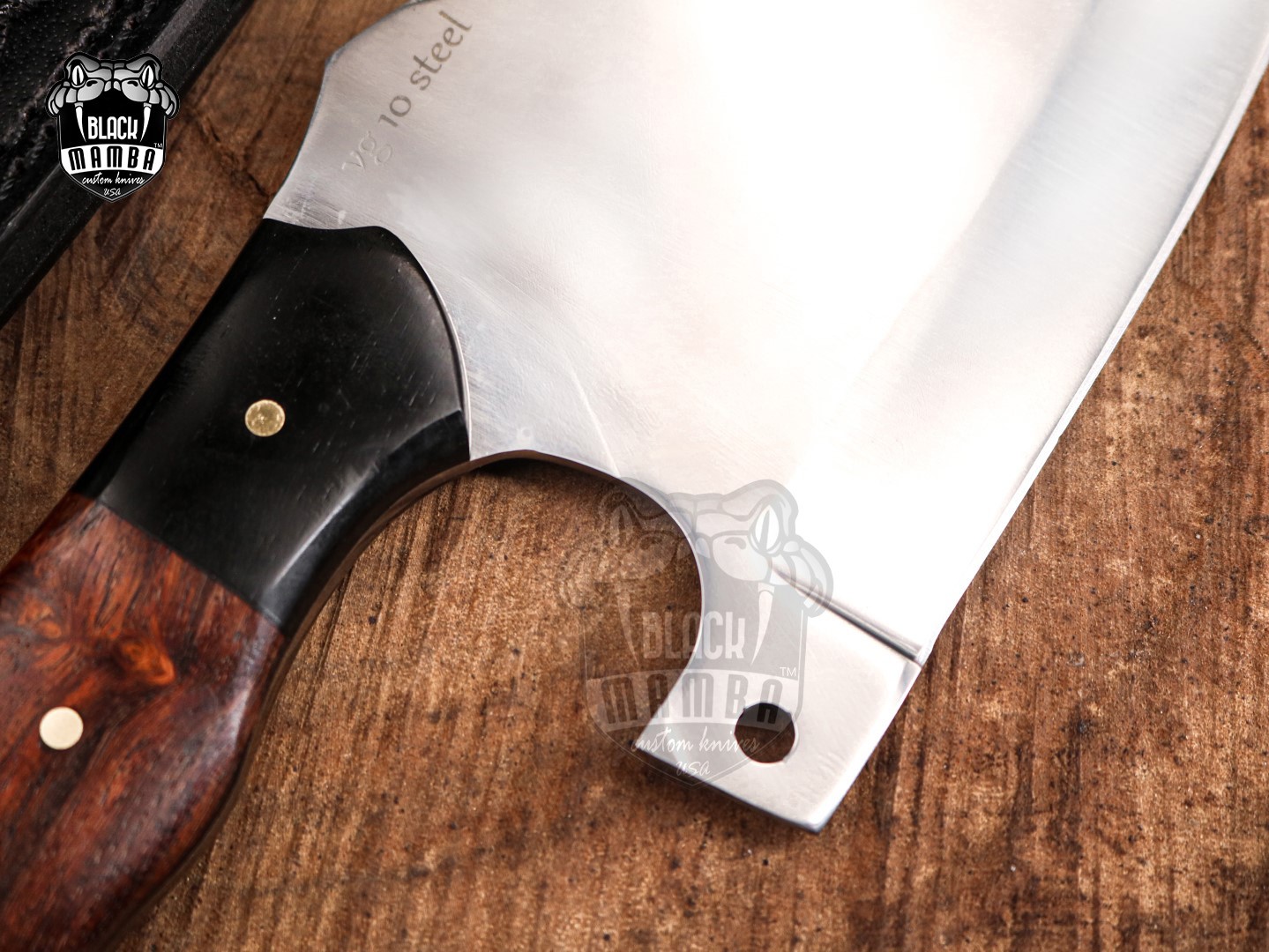
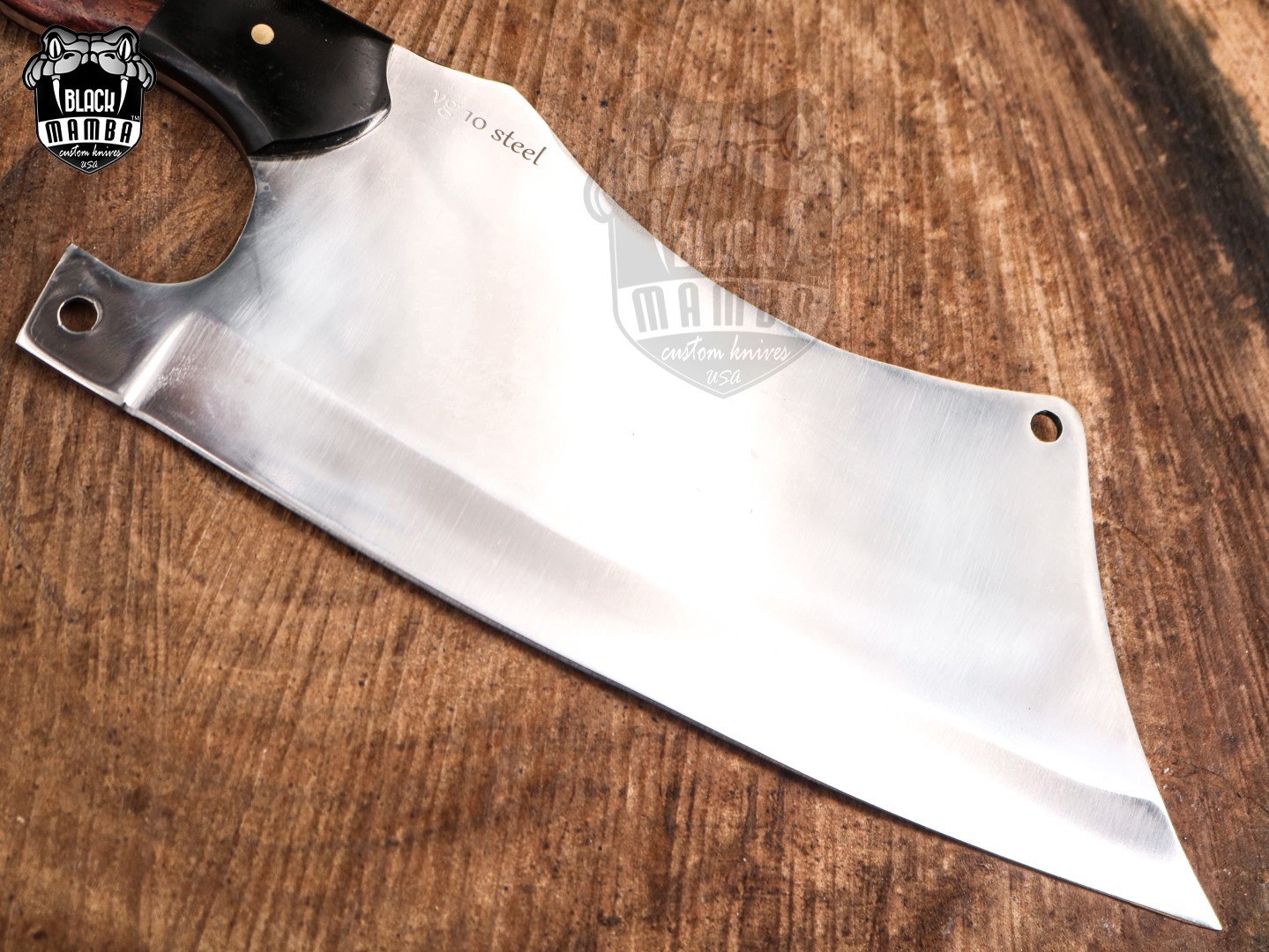
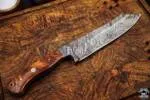
Nearly 15 inches end to end, with a 9 inch blade taken to a mirror finish and a wood handle pinned through a dark bolster.
| Overall length | 14.9 inches |
| Blade length | 9 inches |
| Handle length | 5.9 inches |
| Steel | 1095 + 15N20 Damascus, 352 layers |
| Hardness | 58–60 HRC, oil tempered |
| Weight | 18 oz |
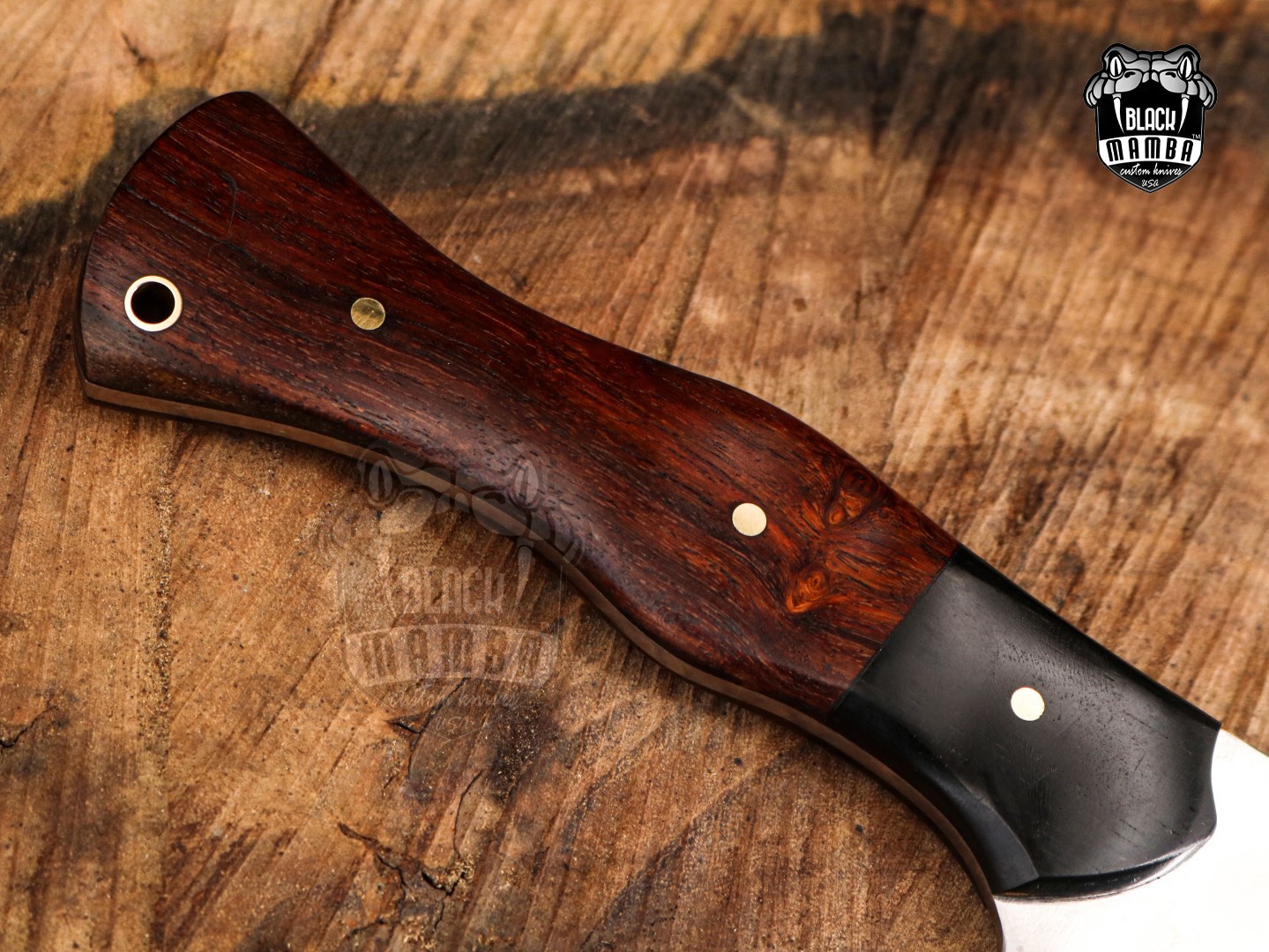
| Handle | Walnut wood handle |
| Pattern | Wind & Mix twist Fire pattern Damascus Blade, Extreme custom Brass File-work |
| Included | Hand-stitched leather sheath |
The use case: a butcher’s knife for a home kitchen. Nine inches of edge, 18 oz of mass, and a squared-off tip you can use to lever and scrape as well as cut. It is built for the sort of prep where you are working through volume rather than fussing over a single garnish.
Reading the profile
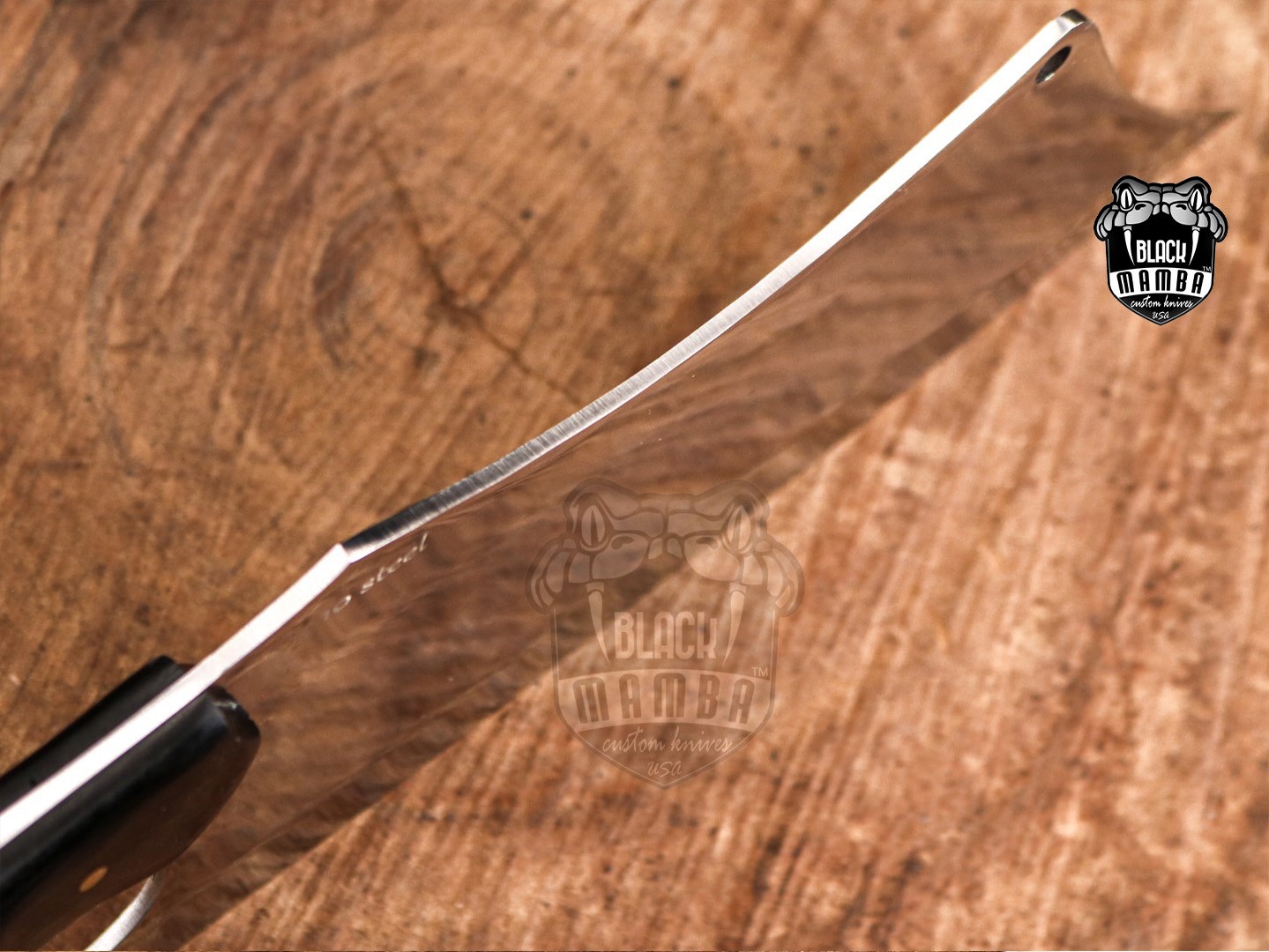
The edge runs almost dead straight for most of its length and then drops into a curve at the front. Straight sections are for push cuts and for the drop chop that a heavy knife does best; the curve at the front is what you rock on when you want to mince. Having both on one blade is the point of this shape.
Nine inches and 18 ounces
That combination puts the balance point forward of your hand. In practice you are not lifting the knife so much as raising it and letting it fall. It also means the knife is too much for a small board — give it 18 inches of working surface or you will run out of room before the knife does.
The mirror finish
A polished blade is finished at a much finer abrasive than a working satin, which takes longer to do and shows every mark afterwards. The upside is a surface with very little tooth, so wet food releases instead of clinging to the flat.
The handle and the pins
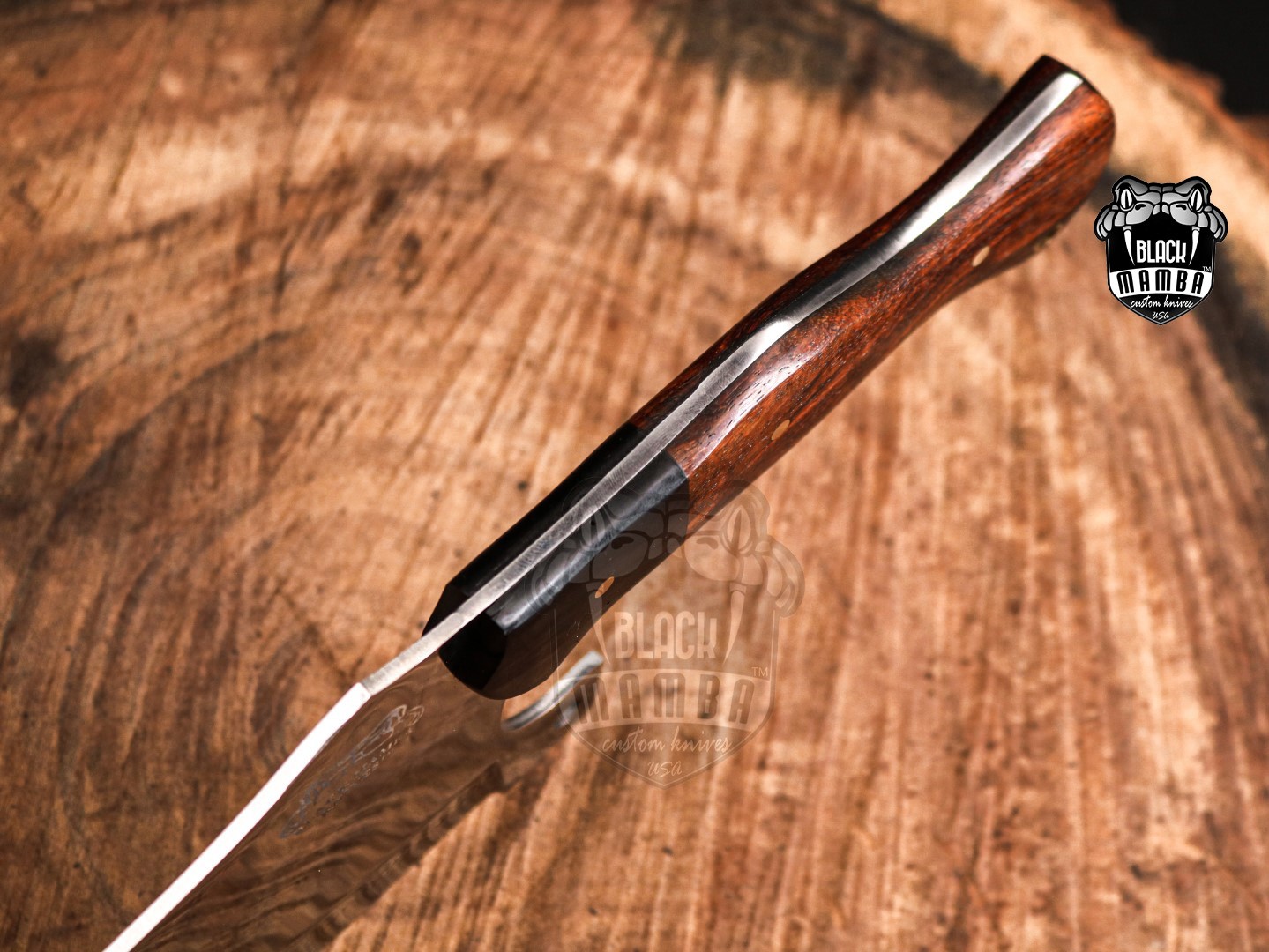
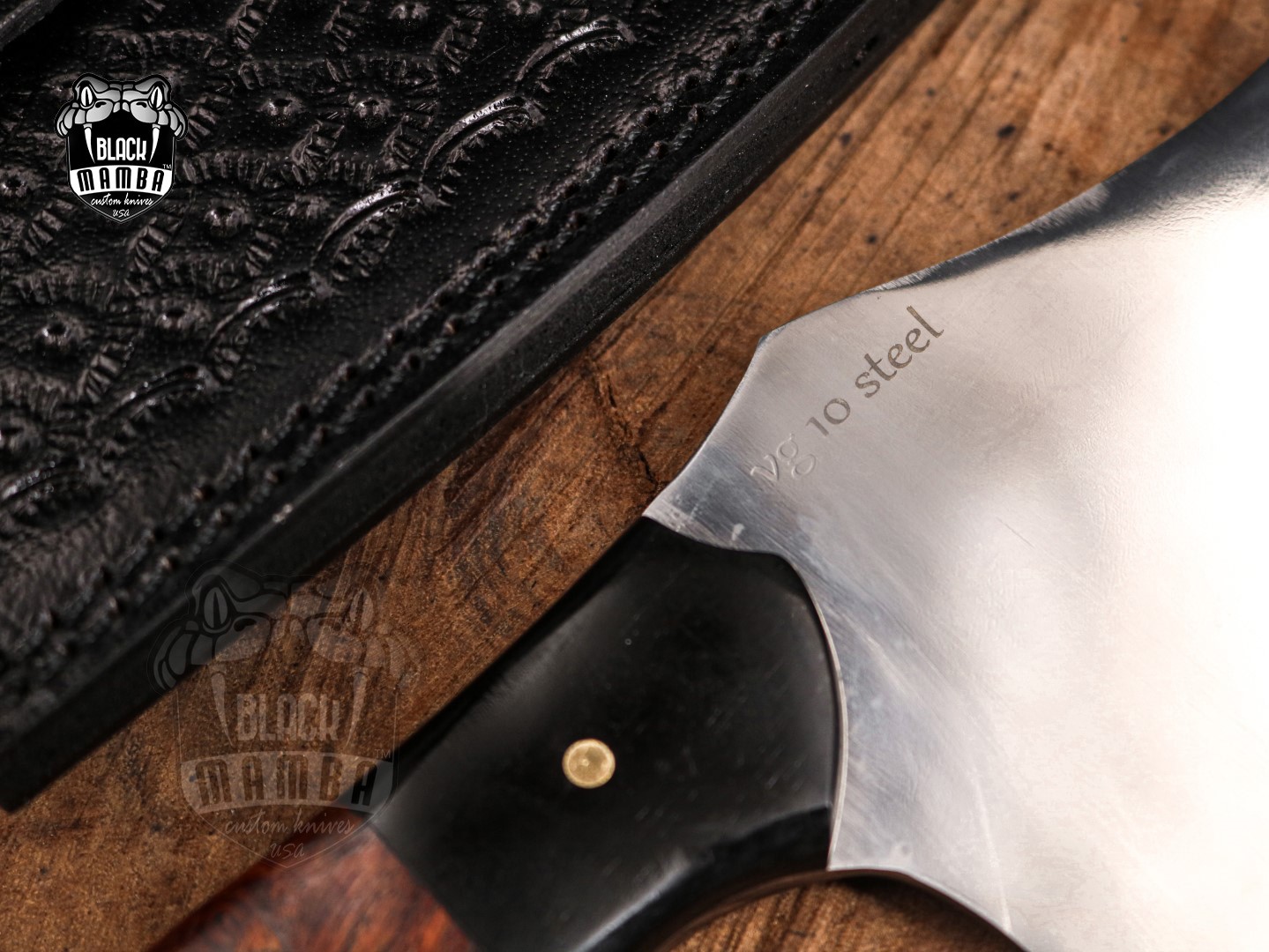
The scales are wood, pinned through the tang rather than glued to it, with a dark bolster where the handle meets the blade. Pinned construction is slower to make and much easier to repair: if a scale is ever damaged, it can be replaced without destroying the knife.
Getting the most out of the length
Nine inches of edge only pays off if you use the whole thing. Long draws rather than short sawing motions, and let the front third do the work on anything you are slicing thin.
Care: hand wash and dry it straight away, every time. A dishwasher will ruin the polish and loosen the handle pins long before it does anything useful. Keep it off the sink bottom, store it dry, and touch it up on a rod between real sharpenings — our guide to honing versus sharpening explains why those are different jobs.
FAQs
What is the difference between this and the Damascus version? Same silhouette, same 9 inch blade, completely different surface. Compare it with the pattern-welded cleaver and pick on looks.
How do I choose between a carbon and a stainless kitchen knife? Read carbon vs stainless kitchen knives — it comes down to how much maintenance you actually want to do.
Will it scratch? A polished surface shows fine marks from boards and other cutlery. That is cosmetic and it does not affect the edge.
Model: BMK-718_VG

Reviews
There are no reviews yet.