

Description
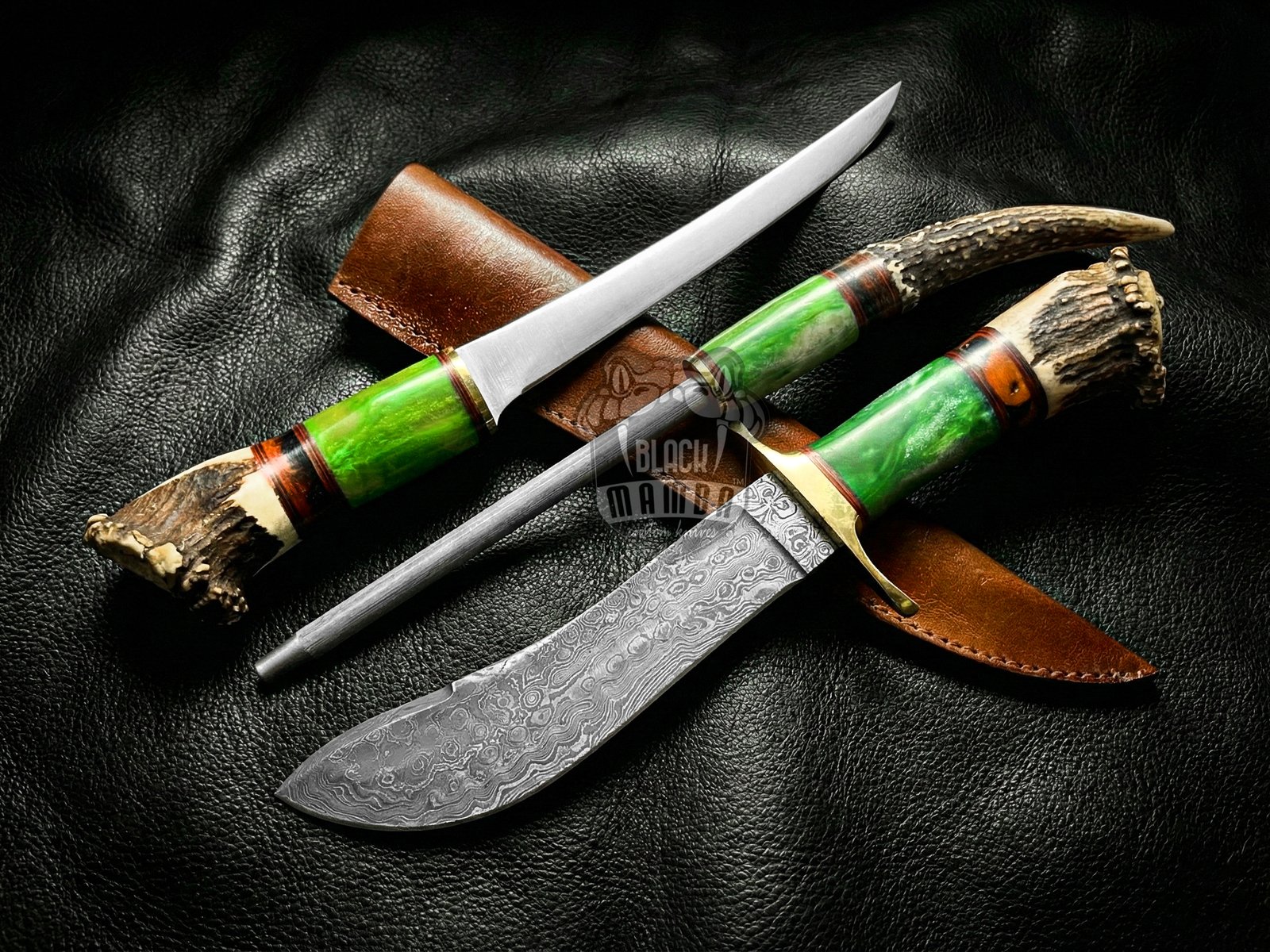
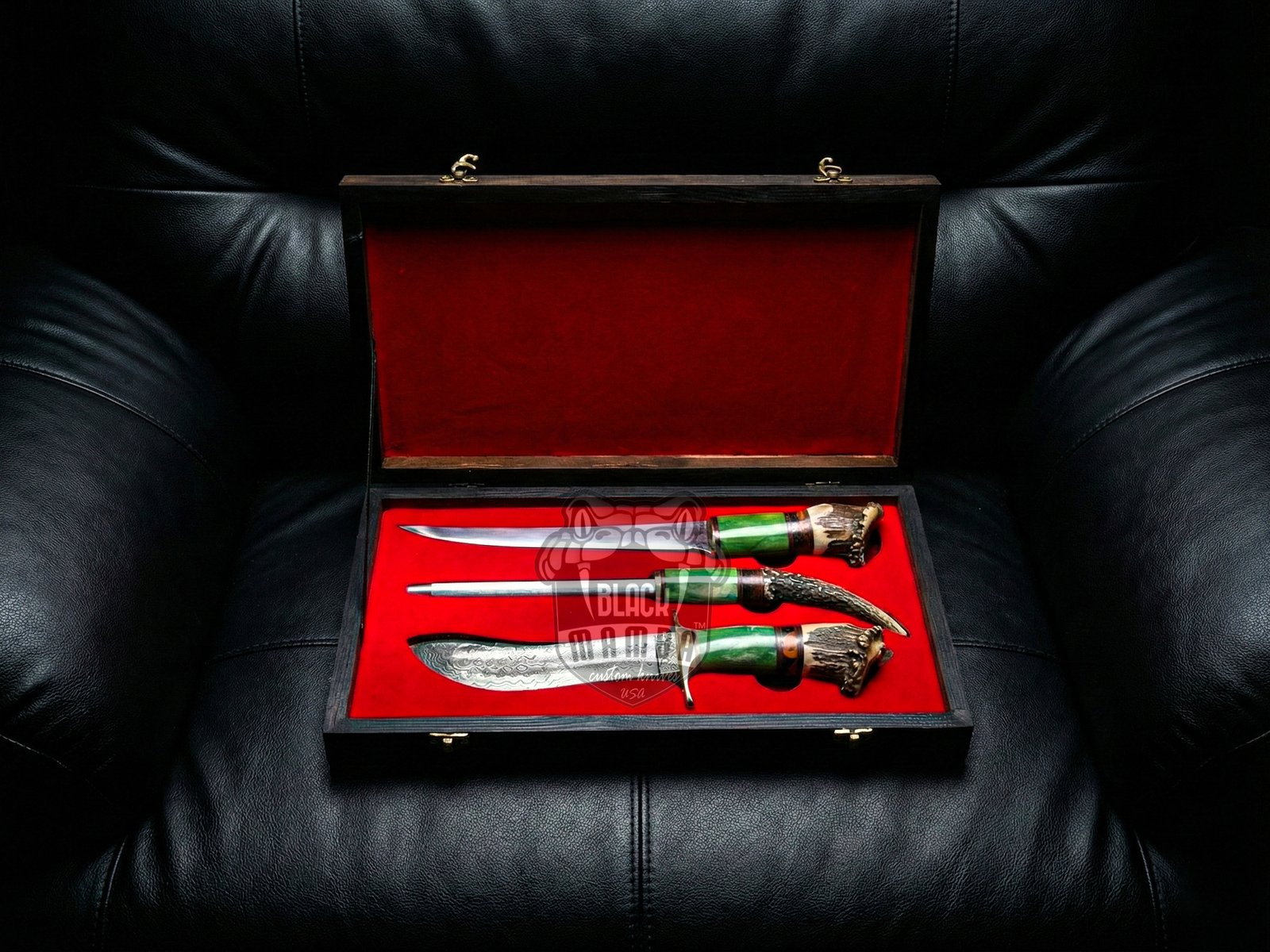
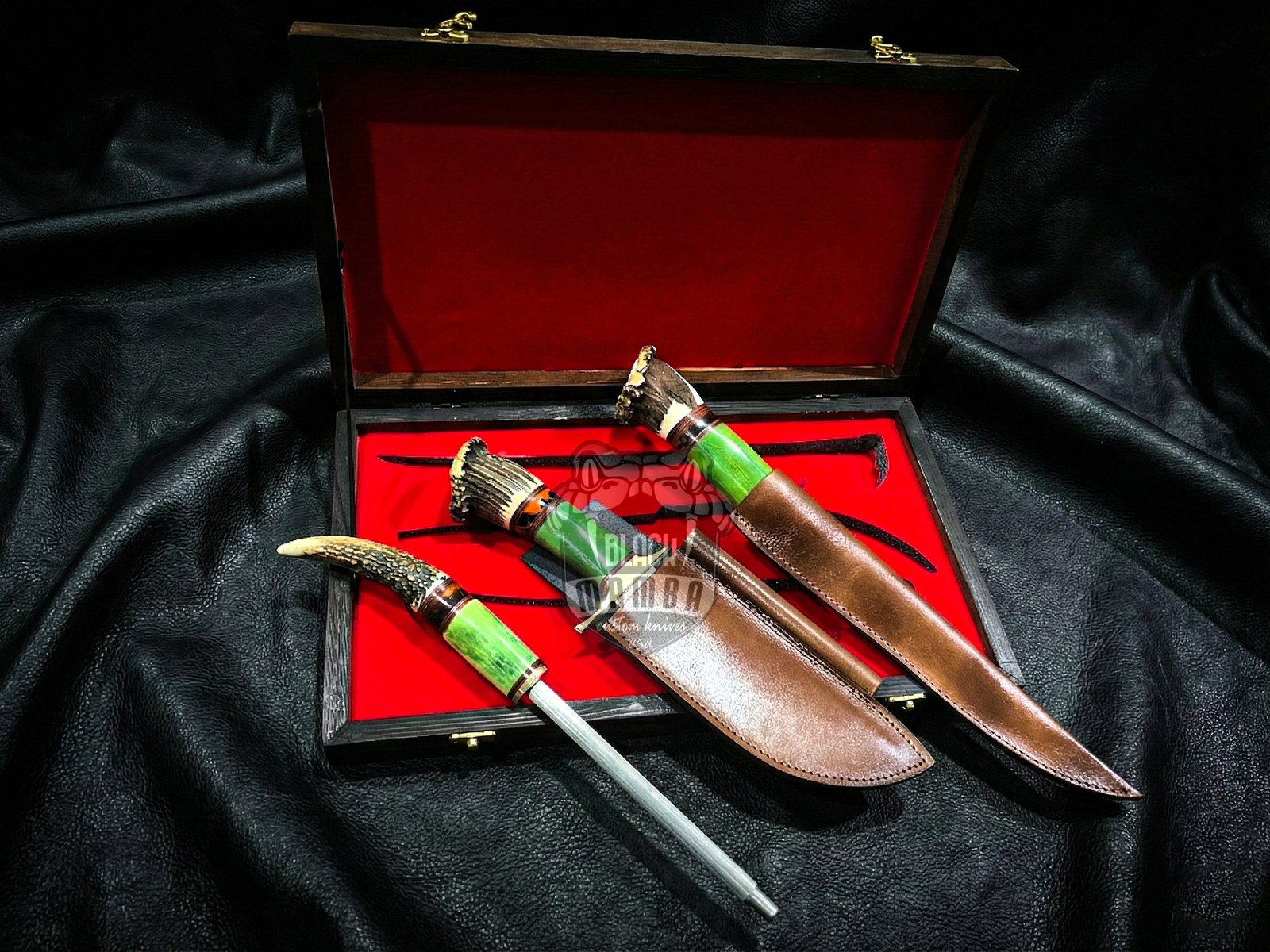
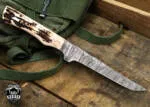
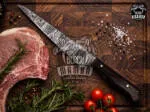
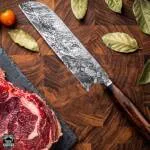
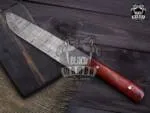
This listing is a matched pair — a broad hunter and a slim fillet blade cut to the same handle design, with a sharpening rod alongside them.
| Overall length | 11.54 inches |
| Blade length | 6.2 inches |
| Handle length | 5.3 inches |
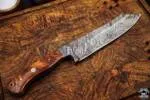
| Handle | Green stabilized wood with brass and dark red spacers and a natural stag crown |
| Steel | 1095 + 15N20 Damascus |
| Hardness | 58–60 HRC, oil tempered |
| Included | Hand-stitched leather sheath |
Goes to: the person who processes what they shoot or catch from start to finish. One blade opens and skins, the other follows the ribs and takes fillets off a frame. Buying them as a set means the two knives sit the same way in your hand, which matters more than it sounds like it should when you are switching between them with cold fingers.
Two blades, two jobs
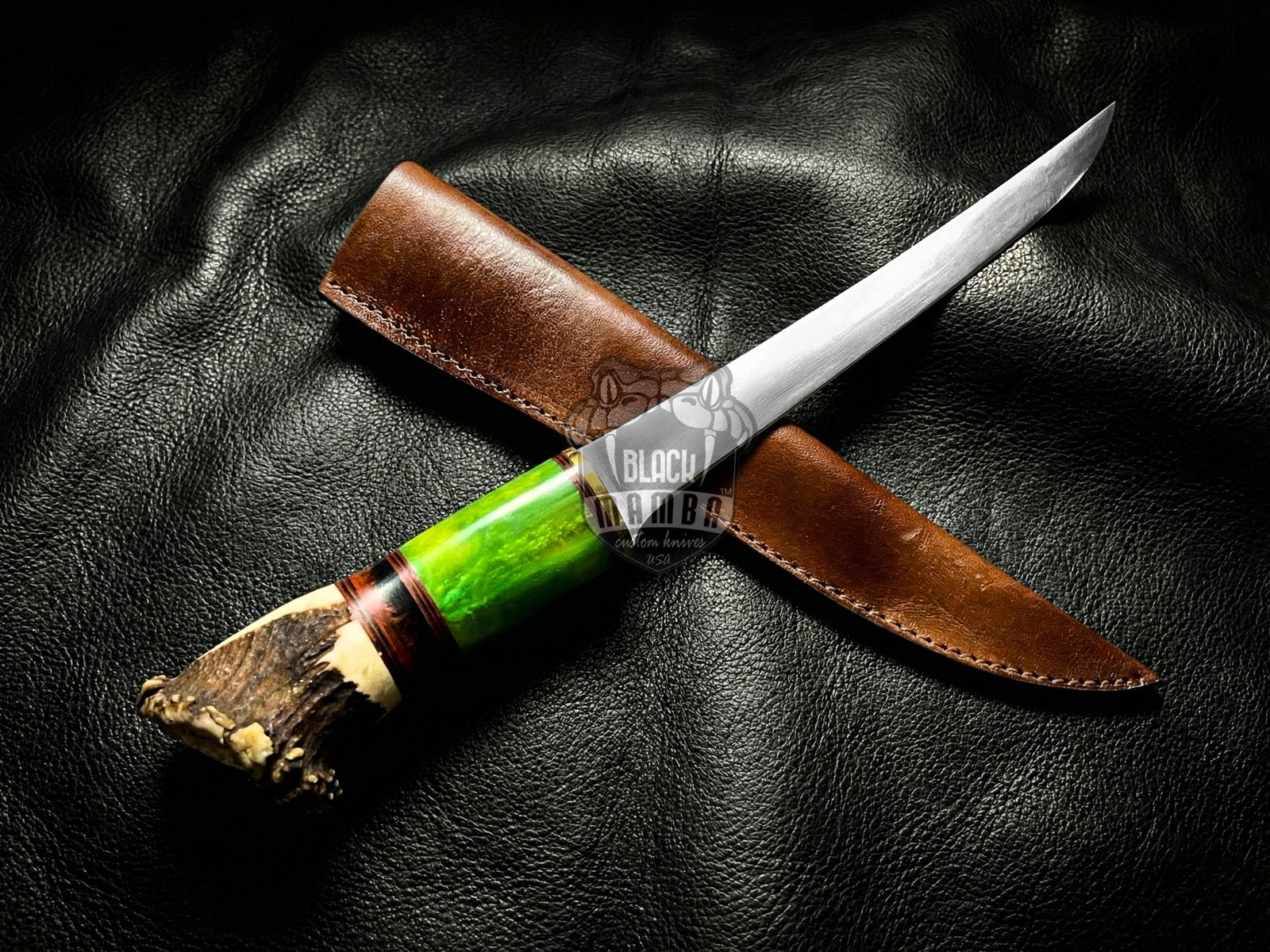
The hunter is broad and deep-bellied behind a brass guard — mass forward, made for pushing through hide and hitting joints. The fillet blade is the opposite: narrow, shallow, and ground thin enough to flex around bone. Trying to fillet with a hunter tears the flesh; trying to skin with a fillet blade bends the tip. They are not interchangeable, and that is exactly why they are sold together. If the distinction is new to you, our boning versus fillet knife guide covers where each one stops being useful.
The handles
Both knives use the same build: a green stabilized block, spacers in brass and dark red, and a natural stag crown left uncut at the butt. The crown does real work — it flares wide enough to stop a wet hand sliding back onto the blade, which is the failure mode that puts hunters in the emergency room. Stag is a natural material, so the crown on your knife will not match the photograph exactly in color or in how the burr sits. That variation is the material, not a defect. The stabilized section is resin-impregnated and shrugs off blood and water entirely.
What the rod is for
A rod straightens an edge that has rolled; it removes almost no metal. Six or eight light passes per side at a consistent angle bring a working edge back mid-job. When the rod stops helping, the edge is genuinely dull and needs a stone. Keeping those two operations separate is the biggest improvement most people can make to how sharp their knives are.
Care for the pair
Wash both blades by hand in warm water the moment you finish, dry them completely, and oil the patterned blade before it goes away — high carbon Damascus will spot overnight if you leave fish slime or blood on it. Never run either knife through a dishwasher; the heat and detergent will wreck the stag and loosen the spacers. Store them out of the sheath, and give the stag a wipe of mineral oil once or twice a year to stop it drying and checking. For a dedicated single fillet knife instead of a pair, look at the BMK-566 Damascus fillet knife.
Questions buyers ask
How stiff is the fillet blade? It has real flex through the front half and stiffens toward the ricasso, which is the usual compromise between following a rib and holding a line.
Do I need both? If you only fish, no. If you hunt and fish, the pair saves buying twice; our Damascus hunting knife guide sets out what a hunting blade must do.
Can the stag be matched between the two? They are cut from related stock, but no two crowns are identical.
Model: BMK-722
Olivia Morris –
Wasn’t sure what to expect but this knife nailed it. Every piece I’ve gotten from Black Mamba Knives has been solid.
Emily Price –
Not going to lie. This exceeded my expectations by a lot. Took it out camping right away and it handled everything I threw at it. Can’t say enough good things about this purchase.
Kyle Long –
Feels way more premium than the price suggests. You can tell it’s real American craftsmanship out of Memphis. Shipping was quick too. Edge retention has been great even after regular use in the field. Already planning my next pickup from this seller.